Stories

July 10, 2023

SHARE:

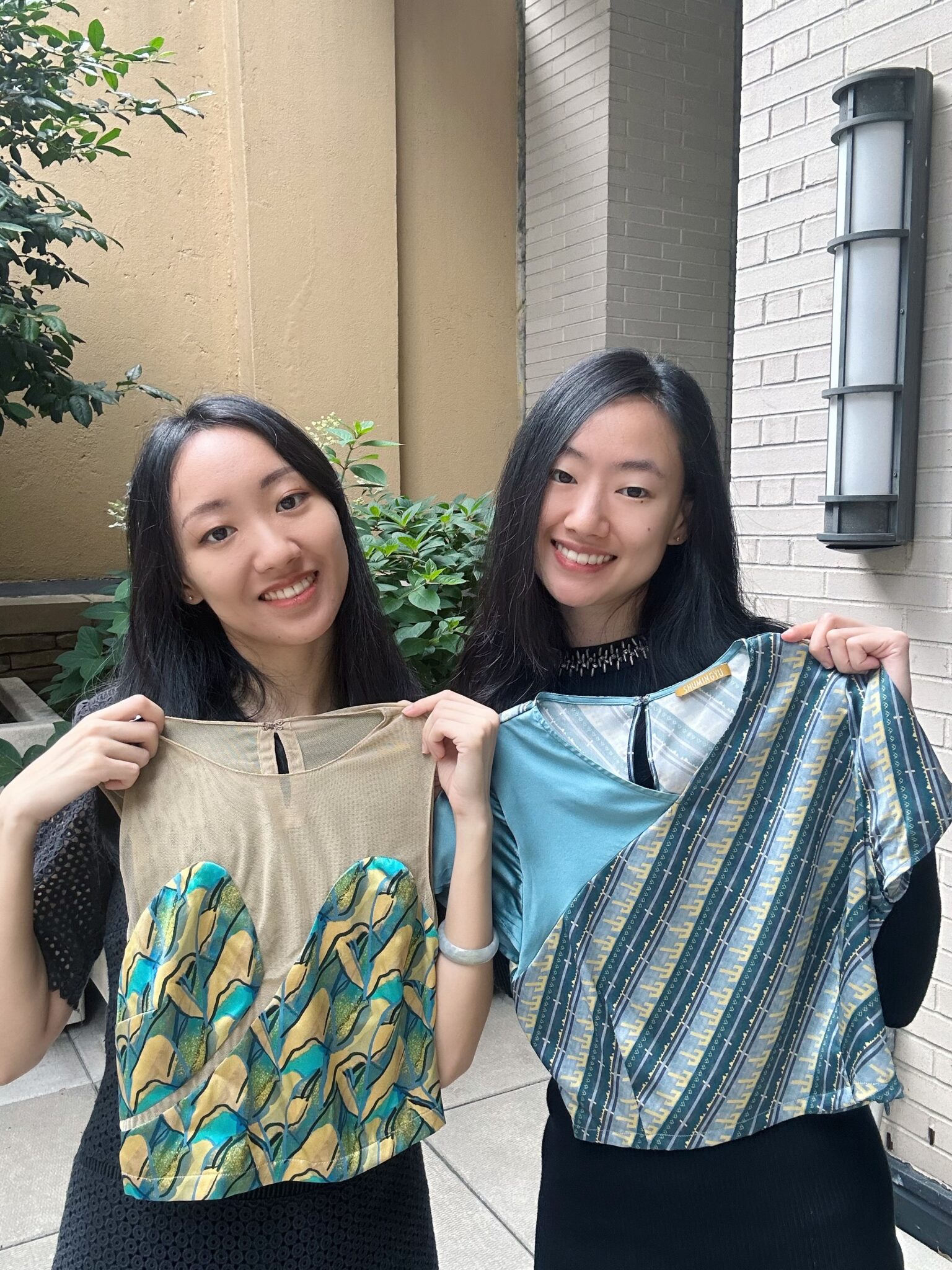
SHUMINGYU is an esteemed designer womenswear brand that finds its roots in the poetic essence of Chinese art.

Alvina Ding and Laura Ding, the talented sister team behind the brand, have embarked on a remarkable venture to preserve and interpret the artistic lineages of China through the medium of fashion.

With their deep personal connection to their heritage as second-generation Chinese Americans, their brand serves as a heartfelt expression of their cultural journey and a platform to share the cultural memories passed down through generations. The name SHUMINGYU holds great significance, as it pays tribute to the profound Chinese saying “落叶归根”, which invokes the powerful imagery of autumn leaves falling towards their roots, returning to the soil that once nurtured it.

Throughout history, Chinese artists have expressed their poetic selves through various art forms such as painting and poetry. SHUMINGYU draws inspiration from this legacy. Alvina, as the designer, and Laura, in charge of marketing, collaborate to create a collection that captures the elegant beauty inherent in Chinese aesthetics.

In an exclusive interview with Asian Hustle Network, Alvina and Laura walked us through their journey of preserving Chinese artistic lineages through fashion.

WHAT INSPIRED THEM TO CREATE SHUMINGYU

Alvina and Laura: We always had a passion for Chinese culture. As Chinese Americans, we were fortunate to grow up in a household that gave us exposure to the beauty of the culture such as its poetry and the arts, despite not being able to visit that often.

The fact that we were physically removed from the country of our cultural heritage, in many ways enabled us to appreciate the culture even more. We spent the next decade in between the U.S. and China, completing our undergraduate degrees in Beijing, kickstarting our early professional careers, and finishing graduate school in the U.S. It was during this time that the idea for SHUMINGYU was conceptualized. 

Alvina: The idea for SHUMINGYU was first planted in my mind in college, where I was formally introduced to the canon of Chinese artistic lineages as a Chinese art history major. I thought it was odd that despite the breadth and nuances of Chinese aesthetics that were crystalized over thousands of years, it was rarely reflected in modern fashion products. To me, culture should not be relegated to a museum. It has meaning only when it is a part of one’s daily life. While I was studying fashion design at Parsons and Laura was in business school, we began to turn this idea into reality. I want this type of beauty to be seen, not only in rarified spaces such as classrooms and museums but by more people through a medium such as fashion that can be a part of our everyday lives. This fuels me as a fashion designer. 

HOW SELF-DISCOVERY INFLUENCED THEIR AESTHETIC AND VISION

During our young adult years living between China and the U.S., we came to understand that identity is multifaceted.

There isn’t one way to be American, Chinese, or Chinese American. Cultural identity and heritage are not limited by where you were born or what period you are living in. It is something that is constantly evolving, passed down through generations, and shaped by the people who are currently living and breathing it.

This motivated us to combine the cultural fluency we gained over the years with design as a universal language to create SHUMINGYU. This is our way of sharing our perspectives on the beauty of Chinese aesthetics and the artistic lineages that have come before us with a global audience.

THE CREATIVE PROCESS

Alvina: I first decide on a particular theme, which is either a genre of Chinese art or a type of craft. Then I dive into research on the theme for a month or two. I read academic papers and art history books to understand the significance of this kind of genre, the elements that influenced its formation, what type of art it had an impact on later, its philosophical underpinnings, where the colors come from, and literary references. I look at the most representative pieces of art from the genre and identify the most distinctive characteristics that will define the overall feel of the collection.

During this process, I am looking at art objects that have graced the courts of emperors, the gaze of connoisseurs, and the hands of skilled artisans. From the free-spirited brushwork of ink paintings, the rhythmic flow of poetry, and the delicate luster of ceramics, all of this informs my final design decisions.

As I do the research, I see designs in my head. I visualize the images and colors and capture what I see into sketches, which I then translate into prints. Once I finish my prints, I think about what silhouettes they would work best on. From then on, it’s about deciding what fabrics work best for each design and seeing how different designs fit together into an overall collection.

SHOWCASING CULTURAL HERITAGE INTO THEIR DESIGNS

Each of our collections has a specific theme, and then we incorporate that theme into the custom prints that we develop, as well as the silhouettes of our designs. For example, our first collection ‘Of Blue Mountain and Verdant Forests’ was designed around the theme of Chinese landscape paintings. Therefore, each custom print that we developed is rooted in a piece of artwork, literature, or philosophy that is connected to landscape paintings. Our hope is that with each piece a customer wears, they can discover a new piece of culture.

Example 1:

The print of our Brushwork Dress is inspired by a brush stroke technique from the Southern Song Dynasty landscape painting The Joy of Harvest. Developed by the painter Li Tang from the Northern Song dynasty, the technique is called the “axe-cut stroke” and uses angular, staccato brushstrokes to depict the rocky surfaces of mountain peaks. The brush stroke derives its name from its visual resemblance to chopped wood and is one of two major brush strokes used to depict the texture of rocks in landscape paintings. The color of the dress is inspired by the golden brown hue of the painting scroll and the style lines are outlined in the shape of mountain ranges. The skirt hem shape is symbolic of the reflection of mountains in the water.

The Joy of Harvest is a masterpiece by Song Dynasty artist Ma Yuan (1160 – 1225), one of the most influential landscape painters of his time.

Example 2:

The print of our Spring Mountains Set is inspired by the mountain ranges from the Sui Dynasty painting Spring Excursion, widely cited as the earliest surviving work of Chinese landscape painting. The print traces the delicate, twisting brush strokes that outline the rise and fall of spring mountains in the distance. The colors are inspired by the luxurious powdered gold, malachite green, and azurite blue pigments used in the painting.

Painted by artist Zhan Ziqian, Spring Excursion was one of the first paintings to give prominence to mountains and rivers over human figures. It is considered a seminal work that marks the genesis of the most influential category of Chinese art for thousands of years to come.

FOSTERING A DEEPER APPRECIATION OF CHINESE AESTHETICS AMONG A GLOBAL AUDIENCE

We want to share the breadth, depth, and nuances of Chinese aesthetics with a global audience through our clothing. By offering an alternative aesthetic view to the exotified and caricatured version of Chinese fashion that has been perpetuated throughout the past century, we want to move beyond the set of narrow motifs that have defined what Chinese fashion can look like and open the door into a world where design is created by those who live and breathe the culture and comes from an informed and nuanced perspective.

Perhaps one of our prints will spark someone’s interest in understanding a particular artistic movement in history or thinking about how Chinese aesthetics is perceived today. If our pieces can inspire people to value culture more and spark conversations, then we’d consider that a success. 

WHAT LIES AHEAD FOR SHUMINGYU

We already have a lineup of themes for our future collections, and some designs are already in the works for our second and third collections. We also want to integrate more types of fabrics, silhouettes, and crafts into our designs.

In addition to clothing, we have future plans to expand into accessories, including handbags and fragrances. We are excited to bring our vision to life, step by step, and hope that others are excited to come along on this journey as well!

CONNECT WITH SHUMINGYU

Instagram: @shumingyuofficial

Website: shumingyu.co

Related Articles

News

Chinese Paper Company Promotes Employee Well-Being through Running Incentives

Guangdong Dongpo Paper, a paper company based in Guangdong, China, is reshaping the conventional corporate bonus structure by tying annual bonuses to employees’ physical fitness levels.

Chairman Lin Zhiyong recently revealed an unconventional program where the size of the annual bonus is directly proportional to the number of miles an employee runs each month.

Under this fitness-centric initiative, employees must achieve a monthly running target of 62 miles to qualify for an annual bonus equivalent to 130% of their monthly salary. Those covering a more modest 31 miles per month still earn a bonus equivalent to one month’s salary. As an added incentive, employees who sustain a pace of 31 miles per month for six consecutive months are rewarded with a complimentary pair of running shoes.

Lin Zhiyong, who has scaled Mount Everest twice in 2022 and 2023, justified the program and said to Business Insider, “My business can only endure if my employees are healthy.” 

While some employees have embraced the initiative as a novel way to stay fit and earn extra income simultaneously, social media platform Weibo has witnessed skepticism.

Critics question the feasibility of expecting employees to run two miles daily to meet the ambitious monthly target, speculating whether the company aims to transform its workforce into track athletes. Concerns about potential health risks have also surfaced, with some individuals fearing that the rigorous physical requirements may lead to injuries or health complications. 

Despite the mixed reactions, Guangdong Dongpo Paper’s innovative approach to employee incentives has sparked discussions about the delicate balance between workplace motivation and individual health, leaving observers curious about the long-term impact of this incentive program on both the company and its employees.

News

A Global Celebration of API Excellence in the 21st Annual Unforgettable Gala

In a dazzling celebration of Asian and Pacific Islander (API) luminaries in the entertainment industry, Character Media presented the 21st Unforgettable Gala (UNFO). This black-tie event, held at the prestigious Beverly Hilton, attracted over 700 esteemed guests, including influential entertainers, leaders, and prominent API-led brands.

This year, UNFO expanded its reach globally by partnering with AsiaLab, an entertainment platform fostering collaboration among API stars internationally, with an aim to broaden awards categories, recognizing exceptional API contributions on a global scale.

The event, which took place on December 16th, featured an exquisite three-course gourmet dinner, special on-stage moments by honorees, live entertainment, and exclusive performances. The festivities continued at an extravagant after-party, ensuring an unforgettable night for attendees.

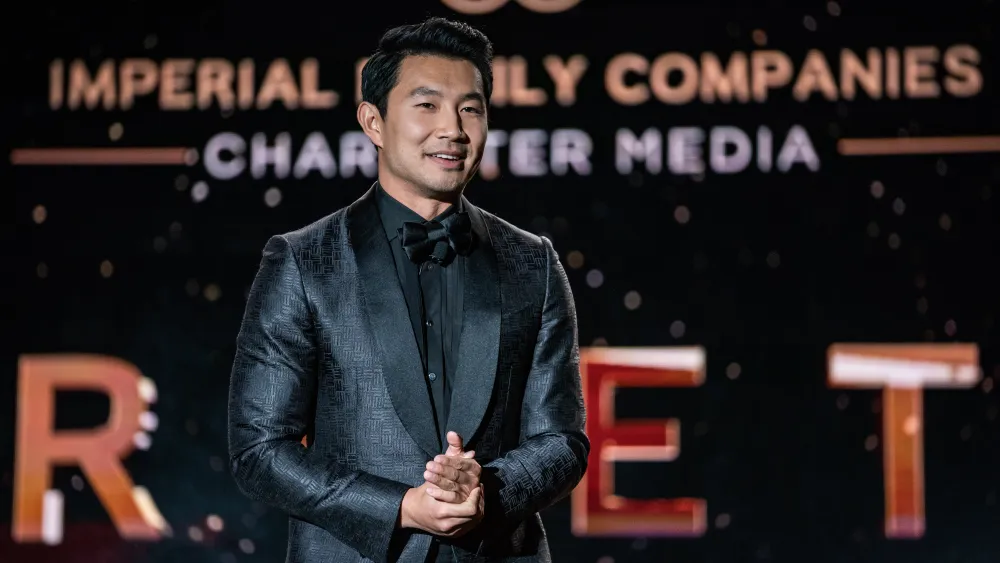
Simu Liu, Source: Variety

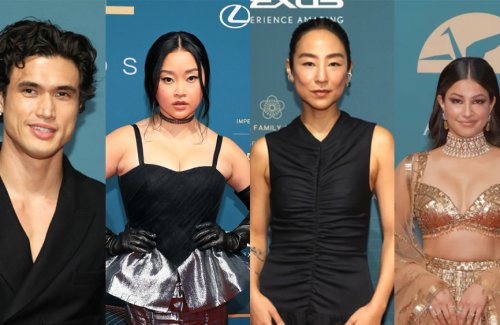
Special guests, including host Simu Liu, Selection Committee Co-Chairs Destin Daniel Cretton and Lisa Ling, added glamour to the evening. Notable honorees included Charles Melton, Steven Yeun, Greta Lee, Young Mazino, Adele Lim, Sung Jin Lee, Steven Lim, and the cast of “Never Have I Ever.” Global influencers, such as Mackenyu and Byeong Kyu Cho, were recognized for their groundbreaking contributions.

Keynote addresses by Destin Daniel Cretton and Lisa Ling, along with contributions from esteemed committee members, including Apl.de.Ap, Bing Chen, Sujata Day, Ken Jeong, Jeremy Lin, and Janet Yang, added to the event’s significance.

Founder James Ryu expressed pride in overcoming challenges, emphasizing the collective dedication and resilience of the entertainment community. The Gala not only celebrated API excellence but also highlighted the industry’s enduring commitment to inclusivity and representation.

Stories

How Saigon Cider Became The First Vietnamese Organic Cider

In every sip of cider, there’s a story waiting to be told—a narrative of flavors, a journey of craftsmanship, and a celebration of culture.

For Saigon Cider, it all began when Hannah Jefferys left her job as an architect in 2011 and moved to Vietnam when she was just 25 years old. Hannah grew up in a little place in the British countryside called Somerset, where she witnessed how cider evolved from being a farmer-associated drink to a cosmopolitan summer beverage.

Upon reaching Saigon and basking in the daily dose of sunshine, Hannah delved into the rich Vietnamese ‘nhậu’ culture, centered around shared dishes and toasts on plastic chairs lining the pavements of Saigon.

“There’s nothing quite like it elsewhere in the world — certainly not in the UK,” Hannah shared.

Yet, amidst the rich cultural tapestry, there was something she missed… cider.

A STORY OF INSPIRATION

Hannah found inspiration in the everyday scenes of Vietnamese individuals setting up shop just about anywhere and having a go. “Us British tend to think about risk rather than how things might work, and tend not to take the leap,” she says. She was also inspired by some local F&B brands that started their hustle in home kitchens, gradually expanding to a national and global scale.

This is how Saigon Cider was brought to life. What started as a humble stall at Saigon Outcast became the first organic craft cider in Vietnam.

CELEBRATING VICTORIES

Saigon Cider has notched up some impressive achievements on its journey. With their lineup of three ciders, they have been able to win 15 international awards, beating brands from established cider-making countries like the UK, US and France in some of the competitions.

Even despite the hurdles during the global pandemic and the challenges of being a small yet growing company in a bustling market, Saigon Cider has stood tall, and built a strong brand and following.

This year, Saigon Cider is entering new international markets, and they are incredibly proud to be able to share a taste of Vietnam with the world.

A NARRATIVE OF FLAVORS

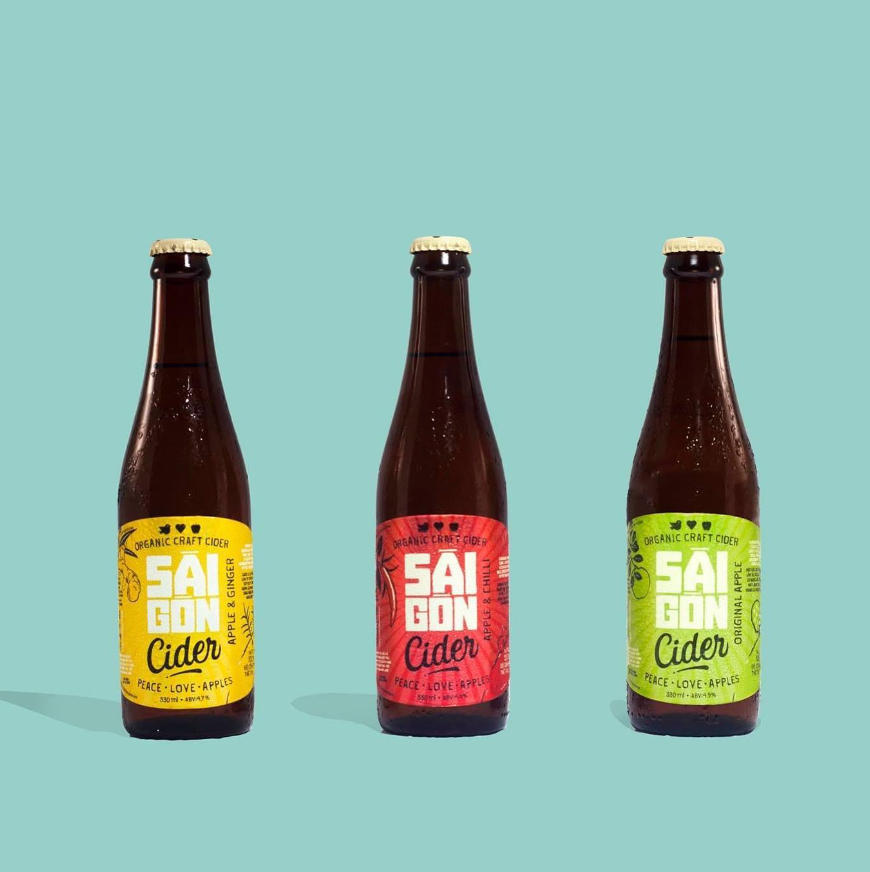
Saigon Cider currently has three delightful flavors to offer:

  1. APPLE & GINGER: A blend featuring organic apples with a punch of Vietnamese ginger. This one is a revitalizing splash of a cider.
  2. ORIGINAL APPLE: This cider is crafted from fuji, gala and other favorite organic apples, perfect for a well deserved chill break after chaos.
  3. APPLE & CHILLI: A combination of organic apples with a Vietnamese chilli kick, delivering a dose of spice and sense of mischief.

Each flavor is thoughtfully crafted to bring a delightful and invigorating experience to everyone’s palate.

A GLOBAL TASTE WITH LOCAL ROOTS

Despite cider being an original British drink, Hannah is proud to present Saigon Cider as a Vietnamese brand.

“From the start, we have been a Vietnamese brand first and foremost, and proudly so. We were created here, grown here and inspired by here and I’m now personally rooted here with my Vietnamese family. 

Our Vietnamese-ness runs through everything we do, our choices of organically farmed ingredients, our labeling and of course, our name. In export markets we retain as much Vietnamese wording on our labels as we can and we hope that we are chosen with pride by Vietnamese and that wider Asian consumers will also feel some sense of ownership over our brand,” Hannah shared with Asian Hustle Network.

The brand currently has openings for exclusive distribution deals in various countries. They would love to grow with overseas Vietnamese distributors who know how to ‘nhậu’, so now is the time to hit them up and be a part of sharing Peace, Love & Apples globally.

CONNECT WITH SAIGON CIDER

Facebook: Saigon Cider

Instagram: @saigoncider

Linkedin: Saigon Cider

Fei-Fei_Li.original-png

News

Fei-Fei Li’s Exclusion from Influential List Fuels Debate on Gender Disparity in AI Leadership

In a recent revelation, the artificial intelligence (AI) community has been thrust into a contentious discussion surrounding gender representation after the omission of Fei-Fei Li from the New York Times’ “Who’s Who Behind the Dawn of the Modern Artificial Intelligence Movement” list.

The list, published on December 3, 2023, spotlighted twelve influential figures instrumental in the growth of AI over the past decade, including industry giants such as Sam Altman, Bill Gates, Elon Musk, and Mark Zuckerberg. However, a striking absence of women, notably Fei-Fei Li, has ignited a broader conversation about gender diversity in the AI landscape.

Image Source: IEEE Spectrum

Fei-Fei Li is a distinguished computer science researcher recognized for her creation of ImageNet, a pioneering dataset, that drove progress in computer vision, and paved the way for AlexNet. Her contributions, spanning nearly 15 years as a professor at Stanford University and co-director of the Stanford University Human-Centered AI Institute, have significantly shaped the AI field.

According to VentureBeat, the New York Times described the featured individuals as “a group of researchers, tech executives and venture capitalists” who “had worked for more than a decade to fuel AI” before chatbots “exploded in popularity.”

The list’s lack of gender diversity, particularly the absence of women like Fei-Fei Li, has sparked widespread criticism and calls for a more inclusive representation of the diverse talent within the AI community.

Featured Image Source: Caltech EE