Stories

September 30, 2023

SHARE:

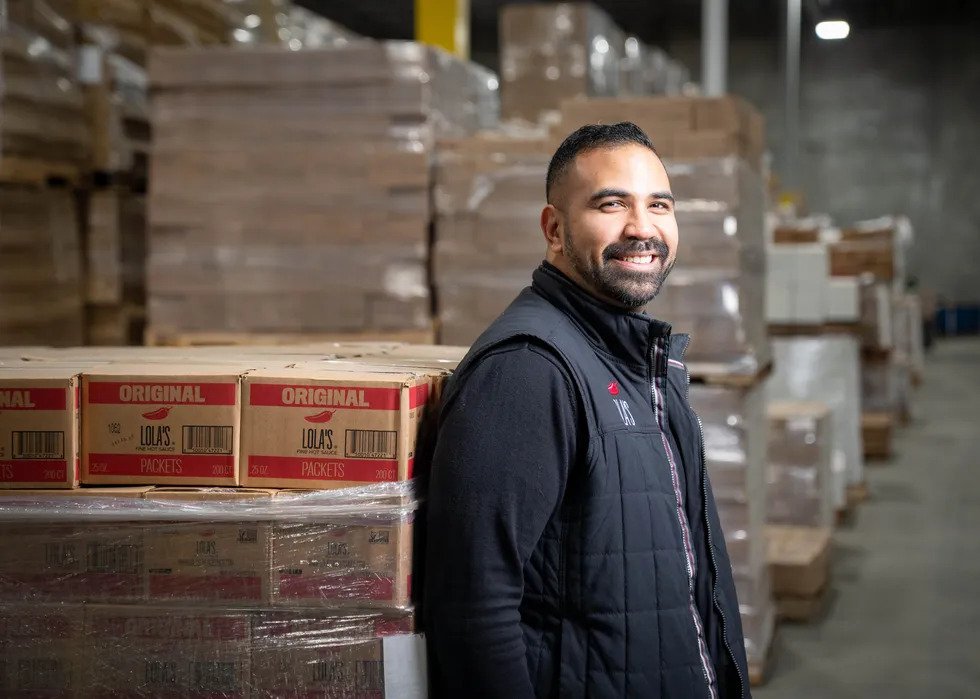
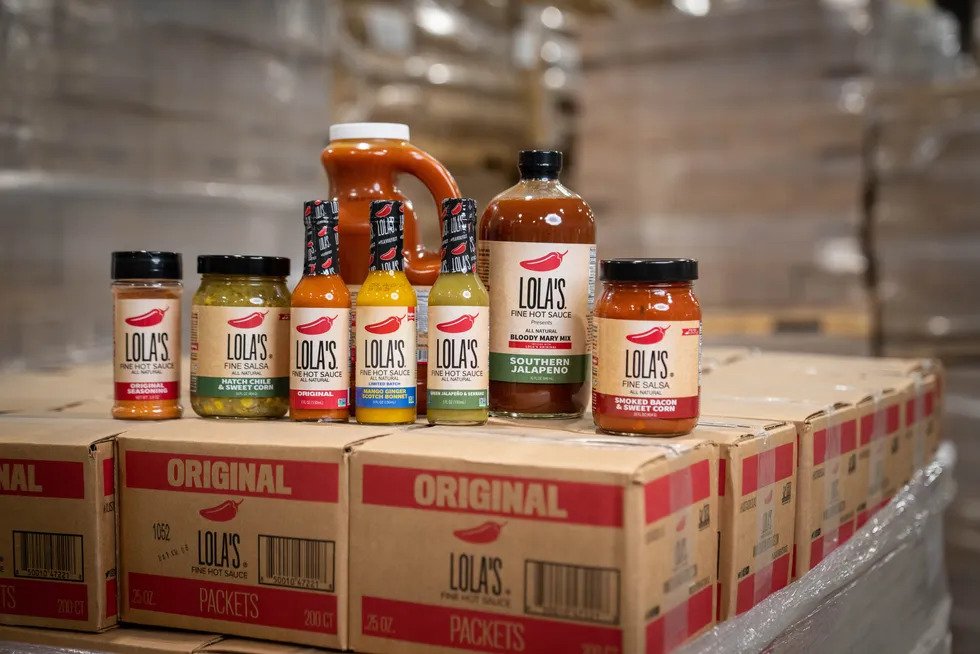
Taufeek Shah, the Founder and CEO of Lola’s Fine Hot Sauce, embodies a story that celebrates both multiculturalism and the passing down of traditions from one generation to the next.

Taufeek’s unique background, growing up with a Filipino mother and a Pakistani father who were immigrants, provided him with a rich tapestry of cultural influences. This upbringing laid the foundation for his culinary journey.

Taufeek’s parents arrived in the U.S. with dreams of a better life, despite limited resources. His father served in the military, while his mother established a medical practice in rural Northeast Iowa. Technically raised in small-town Iowa, Taufeek’s life was deeply influenced by three distinct cultures—Filipino, Pakistani, and American.

They aptly named their business “Lola’s,” a heartfelt tribute to Taufeek’s mother and a nod to the Tagalog term for grandmother.

Delightful Blend of Flavors

Taufeek’s culinary adventure was inspired by the delicious meals he savored at home. The fusion of Filipino and Pakistani flavors, combined with the locally grown peppers from Iowa farmers, crafted a one-of-a-kind gastronomic experience. This delightful blend of flavors ignited Taufeek’s vision to share these flavors with the world by bottling them.
A Humble Beginning

Taufeek’s venture into the business world began during his career in the financial services sector. He introduced his mother’s homemade hot sauce at office gatherings, and it became an immediate sensation. Encouraged by the enthusiastic feedback, he persuaded his mother to join him in sharing their family’s hot sauce with a broader audience.

Their entrepreneurial journey commenced with humble beginnings, starting at pop-up locations and farmer’s markets. As their loyal customer base expanded, Taufeek’s confidence in building a successful enterprise grew. They aptly named their business “Lola’s,” a heartfelt tribute to Taufeek’s mother and a nod to the Tagalog term for grandmother.

The Recipe for Success

The secret to Lola’s Fine Hot Sauce’s success was their dedication to preserving the original recipe. Taufeek took on multiple roles, from investor to CEO, marketer, and even delivery driver, to propel their brand forward. They started by supplying restaurants and gradually expanded into retail outlets, gaining a foothold across the nation.

Today, Lola’s Fine Hot Sauce is available in over 14,000 locations, a testament to their unwavering commitment to quality and taste.

First-Ever National Asian-Filipino-Owned Hot Sauce Brand

The mission of Lola’s Fine Hot Sauce is to provide a truly unique hot sauce for everyone to enjoy. Their hot sauce is made from the freshest ingredients and includes a blend of the world’s most unique peppers for a delectable experience. Their sauces are meant to enhance your dishes with delightful flavor, not just intense heat.

Their recent milestone of landing in over 3,600 Walgreens stores across the country makes them the first-ever national Asian-Filipino-owned hot sauce brand in the United States.

The legacy of Lola’s Fine Hot Sauce extends far beyond being a mere condiment. It serves as a symbol of family heritage, the fusion of diverse cultures, and the realization of the American dream.

CONNECT WITH LOLA’S FINE HOT SAUCE

Instagram: @LolasFineHotSauce 

Website: lolasfinehotsauce.com 
Related Articles

Image Source: Carla Tramullas / MycoWorks

Uncategorized

MycoWorks’ Sustainable Mushroom Leather Raised Over $187M From General Motors and Hollywood A-Listers

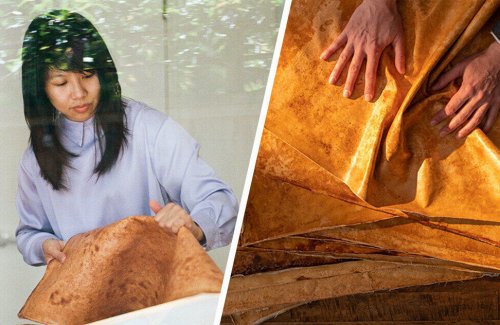
“Growing the future has only just started. This industry will continue to surprise people,” says Philip Ross, co-founder of MycoWorks, a mycelium material founder and producer.

As the innovator of high-quality mushroom “leather” for the luxurious Hermes bags, the business acquired $187 million from Natalie Portman, John Legend, and General Motors and will soon cover the latter’s electric car interiors.

Ross unintentionally discovered leather-like material in reishi mushrooms, a fungus he farmed for his cancer and AIDS more than four decades ago. He then became a mycelium artist and featured his fungus-based works at famous museums.

According to Sophia Wang, co-founder of MycoWorks whom Phil met six years before they founded the firm while working together on art ventures, Ross’s discovery marked the “leather’s” birth to the globe.

Wang and Ross continued to discover more about mycelium and later realized that the material is enticing to buyers who don’t like synthesized contaminants and materials which are produced from animals.

Alongside raising their funding source, the company also conducted a groundbreaking at South Carolina Factory with the aim of attaining a sufficient supply of their fancy product.

With about 200 employees, Matt Scullin, the company’s CEO, said that the “Brands are making very significant changes to address what is really a growing demographic of people who want to buy sustainable products that have provenance and traceability and a lower carbon footprint, lower water use—and mycelium does all of those things.”

Compared to animal leather, the mushroom leather-like material is far more environmentally friendly as the former adds up to about a million tons of carbon dioxide which is tantamount to 30 million cars’ yearly emissions.

Despite environmental and animal issues, people prefer biomaterials or “next-gen” materials over the past decade making it in-demand as multi-billion dollars are invested in the industry.

Nonetheless, Hermes’ firm in France is soon to release its $4,200-worth “Victoria” bag made from MycoWorks’ amber-hued exquisite mycelium.

Image Source: Ricci Chocolates & Michiko Liquete Facebook

Uncategorized

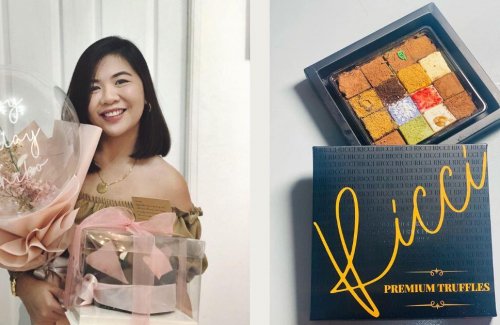
Mom Without Prior Baking Experience But Through Perseverance Finds Success With Homemade Chocolates

Despite having zero experience in baking, this mom entrepreneur was able to give birth to Ricci Chocolates, now branded as the “Home of the Best Tasting Truffles in Baguio City, Philippines” 

Mitchiko Liquete clarified that she is a dessert lover but never a chocolate fanatic. Initially having no interest in making desserts nor in cooking, she capitalized on believing in herself with the vision of making her products look off-the-peg.

To better her craft, Mitchicko heeded the DTI’s Kapatid Mentor ME (KMME) free online training program in September 2022 to learn about branding and marketing while in a ‘hit and miss’ process in chocolate-making, which she considered as a great help for business-starters like her. 

Mitchiko’s 100% homemade premium chocolates got 20 to 30 boxes of sales per day that eventually reached over and above 2,000 to 3,000 packs weekly and enabled the company to supply more than 100 resellers and distributors nationwide.

The success of Mitchicko’s purely hand-crafted, first-class, and domestically produced chocolates paved the way for opening four stores and actualized $17,000 income in one year alone making Mitchiko more than proud.

She plans to expand her sweet business by making Ricci Chocolates visible in every mall in the Philippines.

Image Source: Plant Habitat Facebook

Uncategorized

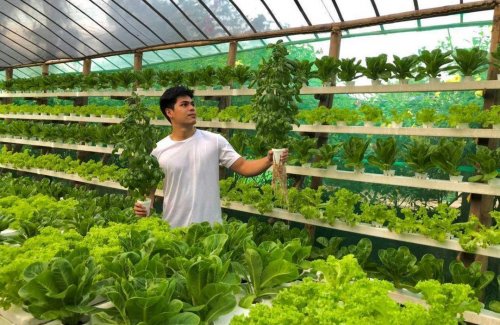
This Filipino Millennial Started With $20 To Pursue Hydroponics Farming Business

Nothing is impossible for this 21-year-old Filipino who engaged in modern farming with only $20 as a starting capital.

Despite being dissuaded by his grandfather who wanted him to become an engineer, Harold Zapata was determined to uplift farming, recognize farmers, and attest that farmers are the providers of our staple food and without them, it would be challenging for us to live.

As a farmer, his grandfather believed that farming is tantamount to poverty which made him influence his grandson to pursue a different profession.

However, the farmer’s blood runs in Harold’s veins, with Harold’s minimal capital and resourcefulness, he initially started hydroponics farming using used styrofoams which he asked from vendors in their local market.

Unlike traditional farming, hydroponics farming is cheaper as it is a type of farming where plants are grown in water and not in soil and a farmer would spend money only on styro cups, coco peat, feeds, and nutrients.

As a beginner, he only had a miniature greenhouse that could hold 80 pieces of lettuce and made him earn as much as $300 a month, which gradually allowed him to expand his business.

Harold’s hobby-turned-business serves him as a source of income not only from the harvests but from offering for-sale seedlings, building greenhouses, and providing consultations with his customers.

He also exclaimed that pursuing one’s interest unlocks many possibilities and that farming also teaches life lessons.

Image Source: Boy Isaw Instagram

Uncategorized

Hard Work Pays Off For Bringing Filipino Street Food “Boy Isaw” To New York, Now Makes 14$K A Month

The Filipino street food vendor admits that perseverance and hard work were really his main capitals in achieving his dream.

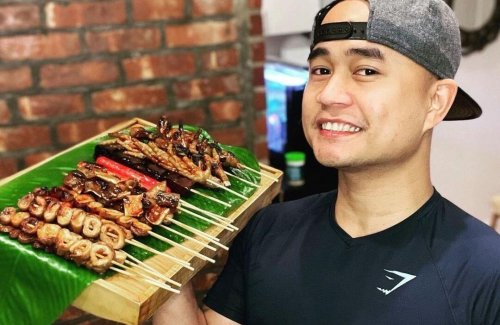
After introducing one of the most popular Filipino barbeque street food, “ihaw-ihaw,” especially the isaw (grilled chicken or pork intestines), to New York, Filipino street food seller Robin John Calalo has seen the fruits of his labor, earning more than $14,000 each month.

His shop, “Boy Isaw,” became well-known among fellow Filipinos and even foreigners who yearned for a taste of isaw, betamax (coagulated chicken blood), adidas (chicken feet), and other Filipino street food. 

Robin’s success came as a surprise considering that his small firm only had $50 when it was founded in 2019, during the onset of the pandemic. He claims that while in the supermarket, he suddenly made the decision to open his BBQ food cart due to a craving for Filipino food with his friends and family as the first customers.

According to Business News Philippines, Boy Isaw peddles in food bazaars and engages in online selling where he posts for-sale ready-to-grill street foods.

Aside from grilled food including hotdogs, chicken, and others which he posts on his Instagram, he also serves rice and chicharon bulaklak (deep-fried pork intestine) which is also a bestseller.