Stories

March 10, 2026

SHARE:

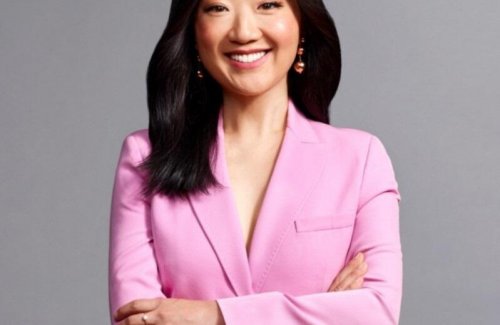
The first time Alice Shikina stepped into a Muay Thai ring, the moment felt bigger than the fight itself. The gloves were heavy, but what weighed more was everything she had been carrying in the months before.

She was in her late thirties, newly divorced, and raising two young children on her own. Her kids were just two and five years old, and the life she had carefully built no longer looked the same.

At the same time, she was trying to establish herself as a mediator and build her own business from the ground up. She didn’t know it yet, but the self-trust she was about to forge in that ring would become the foundation of how she led others through their own conflicts.

The Fight Before the Fight

Kickboxing began as a way to cope during a season that felt completely overwhelming. It gave Alice a physical outlet when her thoughts wouldn’t quiet down and her emotions felt too heavy to carry.

A few months later, Alice’s coach asked if she would consider competing. The idea unsettled her because she had never fought before and had never faced someone trained to strike back. For two months, she wrestled with the decision. What frightened her most was not losing, but the possibility of doubting herself under pressure.

When she finally committed, her routine became disciplined and demanding. She trained three hours a day, carving out time in the early mornings and late evenings while continuing to care for her children and grow her work.

The night before her first fight in Iowa, a coach told her that the real fight was already over because it happened during the grueling months of preparation. Once she realized that, her nerves calmed and a quiet steadiness took over. Even as she approached the ring to step in and fight, she felt unusually calm. She didn’t win that match, but she stayed on her feet until the final bell, and for a woman rebuilding her life, that was more than enough.

What the Ring Taught Her About Pressure

Alice went on to fight three more times. Afterwards, Alice turned her sights to competing in triathlons and even placed first in her age group at the Alcatraz Duathlon. While the medals were nice, the real reward was the quiet discipline she built through the discomfort of training.

She came to understand that fear does not simply fade with time. It softens only when you decide to move toward it.

She also learned that preparation changes how you carry yourself in difficult moments. When you put in the work, you stand differently, breathe more steadily, and think more clearly under pressure.

Today, those lessons shape how she sits with couples navigating divorce and teams facing workplace conflict. When emotions rise and conversations begin to unravel, she remains steady, drawing on the same discipline that once kept her composed in the ring.

Building Her Practice on Her Own Terms

Alice now runs Shikina Mediation and Arbitration full-time, helping divorcing couples, families, and organizations reach agreements they once thought were out of reach. Most clients come to her when communication has broken down and trust feels fragile.

Early in her career, she tried building her business by networking with attorneys, but quickly saw the bias against non-attorney mediators in a field long dominated by older white men. Instead of forcing herself into a system that did not fully welcome her, she shifted her focus to working directly with couples and workplace clients, growing her practice into a thriving full-time business over the past decade. In 2025, Alice was awarded the prestigious Raymond Shonholtz Visionary Peacemaker Award by San Francisco’s Community Boards.

Her work has expanded beyond the mediation room. She hosts the podcast, Negotiation with Alice, now over 100 episodes strong. She authored the book Negotiating with Your Kids, and continues to teach communication and conflict resolution to executives and C-Suite staff. As a second-generation Okinawan American whose parents survived the Battle of Okinawa as children, resilience runs deep in her story. 

Nothing in business, she says, will ever feel as intimidating as stepping into a ring to face an unknown opponent. In that ring, she rebuilt her confidence. At the mediation table, she now helps others rebuild their lives with clarity, courage, and peace.

Discover more from Alice Shikina here:

📍LinkedIn

Learn more about Shikina Mediation and Arbitration here:
📍Facebook

📍Website

Related Articles

Image Source: CBS

News

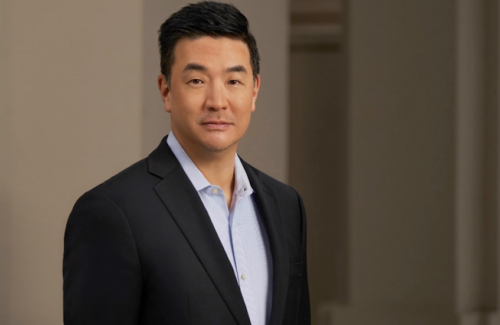
Eric Kim To Lead CBS Entertainment and Studios As New Executive Vice President

Eric Kim has been recently promoted as CBS’ Executive Vice President for Current Programs after serving as Senior Vice President in the same company where he worked for 11 years.

He succeeds Amy Resisenbach who has just advanced as President of CBS Entertainment.

Kim will now be functioning in his new position to oversee the primetime and daytime programs.

Reisenbach mentioned in Deadline that in working with Kim for more than ten years, she has always been amazed by the latter’s remarkable expertise in programming, in working with showrunners, and in dealing with people whom he works with.

While still the SVP, Kim supervised comedy and drama series production in Blue Bloods, FBI: Most Wanted, FBI: International, and CSI.

Kim had a strong background in the field working in live-action series for Nickelodeon and Teen Nick for two years and was the then-VP for Current Programming at the CW for 3 years.

Moreover, Kim has been a part of the creative team that launched the new network when The WB and UPN networks merged as well as the executive at UPN from 2004 to 2006.

Kim entered the world of the entertainment industry by working for Jonathan Demme on the Academy Award-winning Philadelphia. 

He is a graduate of the University of Pennsylvania where he took a Bachelor of Arts in English Literature.

CBS TV Studios President David Stapf said, “His (Eric’s) leadership has earned the trust and respect of both the industry and his colleagues at the Studio and Network. As Eric steps into this new role, I’m looking forward to seeing the impact he makes both within the creative community and on our series that are enjoyed by global audiences.”

Image Source: Tammy Sun Linkedin

Stories

Through Personal Experience, Tammy Sun Starts Up Carrot Fertility Company To Help Women Start Families

At 34, Tammy Sun went looking for egg fertilizing services as she thought of starting a family of her own someday. But in her quest, she, unfortunately, found out that she has “premature ovarian failure.”

The mysterious disorder indicated negative effects on Tammy’s fertility that she had to go through several egg-freezing cycles which cost her $40,000.

Working in Evernote tech company that did not have fertility treatment benefits, the medication was very costly for her.

With this in mind, Sun put up Carrot Fertility, a fertility care provider, in 2016.

Carrot Fertility partnered with different companies to include fertility services in their health coverage where employees can avail of egg freezing, IVF, adoption, pregnancy, menopause treatments, and others.

In MSNBC, the CEO and founder stated that “The company was born out of a desire to make sure that every single person, regardless of their age, their sex, their sexual orientation, gender identity, marital status, race or geography would have equal access to high-quality care.”

Not only did the service provider address women’s concerns but also men’s as according to her, fertility is a human health issue for both sexes.

A year after Carrot’s onset, it has already acquired over $200 million in investments from first-class firms and is now a partner of above 800 companies.

Supporting millions of workers, including their families, Carrot is set to process claims worth $500 million.

Tammy also revealed that 95% of their clients remain in their respective jobs because of Carrot.

Unlike other businesses which declined during the pandemic, more than a three-fold increase in the use of the platform was observed during the time and up until now as many availed of mental and emotional health services.

Many companies partnered with Carrot to encourage employees to stay especially during the Great Resignation period.

Now, Carrot Fertility is the leading global platform for fertility healthcare and family-forming benefits.

Image Source: Richie Fernandez Facebook

News

Filipino Family Grows COVID Financial Aid From Government Through Fishball Sauce Business

Filipino Richie Fernandez, a new entrepreneur, was able to launch a business venture that now generates a five-digit income with the help of $100 in financial aid from the government.

During the height of the pandemic lockdowns, Richie and his family chose to grow the help by opening Manong’s Fishball Sauce, “We thought of how to grow and prolong the money,” Richie said.

With his family’s fondness of eating street food fish balls but at the same time considering the limitations posed by the pandemic at that time, the family decided to sell bottled fishball sauce so people could just enjoy it at home with their own-cooked fish balls.

The modest family business prospered through hard work and perseverance. Not only do they sell their product in the Philippines but they now also export to Japan, Australia, Austria, and the US.

Image Source: The Sacramento Bee

News

Asian American Community Is Prospering In Folsom Sacramento County

The number of Asian American immigrants in Folsom multiplied five-fold from 2000 until last year as found out by the US Census Bureau.

Among them are Chalamcherla of India, Steven Wang of China, and Marcus Yasatuke of Japan.

51-year-old Chalamcherla long decided to come to Folsom after falling in love with the city while attending the birthday celebration of a friend’s son, but it wasn’t until 2006 that he actually did so after spending two years in Singapore and the Bay Area.

Nearly ten years after arriving in the country, Steven Wang, who is currently Folsom’s city attorney, became a citizen.

Back then, it was hard for tourists to enter the US but Wang, together with her brother and mother, swiftly passed the immigration after saying that they would be visiting Disneyland, the only place he knew. 

Wang, who is now a lieutenant colonel, has been a member of the US Army Reserve since 2004. During that time, many of his fellow soldiers were losing their lives while serving, and Wang felt in danger.

Because of this, he worked in Folsom city before finishing the necessary time to serve in his Afghanistan deployment, and he told The Sacramento Bee, “I don’t know if every company is like this, but Folsom has been quite supportive of the military.”

Additionally, in 2003, Marcus Yasutake, 45, moved to Folsom with his wife after receiving job offers from Placerville and Roseville. They were able to reside there and raise a family of three children.

Communications director Christine Brainerd of the city of Folsom said that Asian Americans are likely attracted to the area on the same note as why many citizens choose to call Folsom home.

The head of the Sacramento Asian Pacific Chamber of Commerce’s economic development team believes that the tech-based companies in Folsom may be one factor for the recent increase in Asian residents.

Marcus cited the excellent school system in Folsom as one of the reasons why he came there, whilst Chalamcherla claimed that technology plays a significant role in the city’s increasing Asian population.

Racial discrimination is far from nonexistent in Folsom. That’s why Chalamcherla urges other Asians to immerse them in Asian culture.