Stories

March 10, 2026

SHARE:

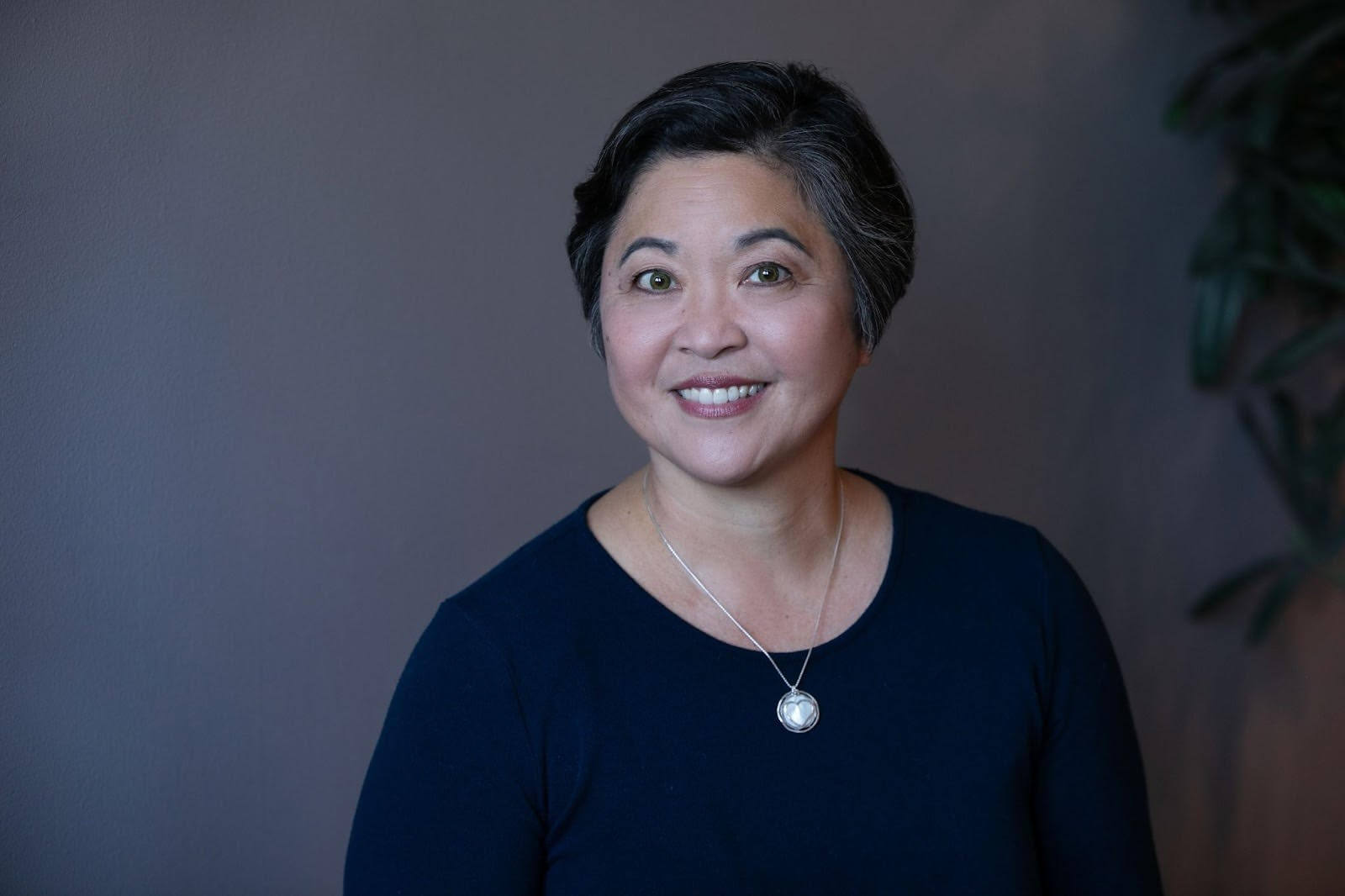
The first time Alice Shikina stepped into a Muay Thai ring, the moment felt bigger than the fight itself. The gloves were heavy, but what weighed more was everything she had been carrying in the months before.

She was in her late thirties, newly divorced, and raising two young children on her own. Her kids were just two and five years old, and the life she had carefully built no longer looked the same.

At the same time, she was trying to establish herself as a mediator and build her own business from the ground up. She didn’t know it yet, but the self-trust she was about to forge in that ring would become the foundation of how she led others through their own conflicts.

The Fight Before the Fight

Kickboxing began as a way to cope during a season that felt completely overwhelming. It gave Alice a physical outlet when her thoughts wouldn’t quiet down and her emotions felt too heavy to carry.

A few months later, Alice’s coach asked if she would consider competing. The idea unsettled her because she had never fought before and had never faced someone trained to strike back. For two months, she wrestled with the decision. What frightened her most was not losing, but the possibility of doubting herself under pressure.

When she finally committed, her routine became disciplined and demanding. She trained three hours a day, carving out time in the early mornings and late evenings while continuing to care for her children and grow her work.

The night before her first fight in Iowa, a coach told her that the real fight was already over because it happened during the grueling months of preparation. Once she realized that, her nerves calmed and a quiet steadiness took over. Even as she approached the ring to step in and fight, she felt unusually calm. She didn’t win that match, but she stayed on her feet until the final bell, and for a woman rebuilding her life, that was more than enough.

What the Ring Taught Her About Pressure

Alice went on to fight three more times. Afterwards, Alice turned her sights to competing in triathlons and even placed first in her age group at the Alcatraz Duathlon. While the medals were nice, the real reward was the quiet discipline she built through the discomfort of training.

She came to understand that fear does not simply fade with time. It softens only when you decide to move toward it.

She also learned that preparation changes how you carry yourself in difficult moments. When you put in the work, you stand differently, breathe more steadily, and think more clearly under pressure.

Today, those lessons shape how she sits with couples navigating divorce and teams facing workplace conflict. When emotions rise and conversations begin to unravel, she remains steady, drawing on the same discipline that once kept her composed in the ring.
Building Her Practice on Her Own Terms

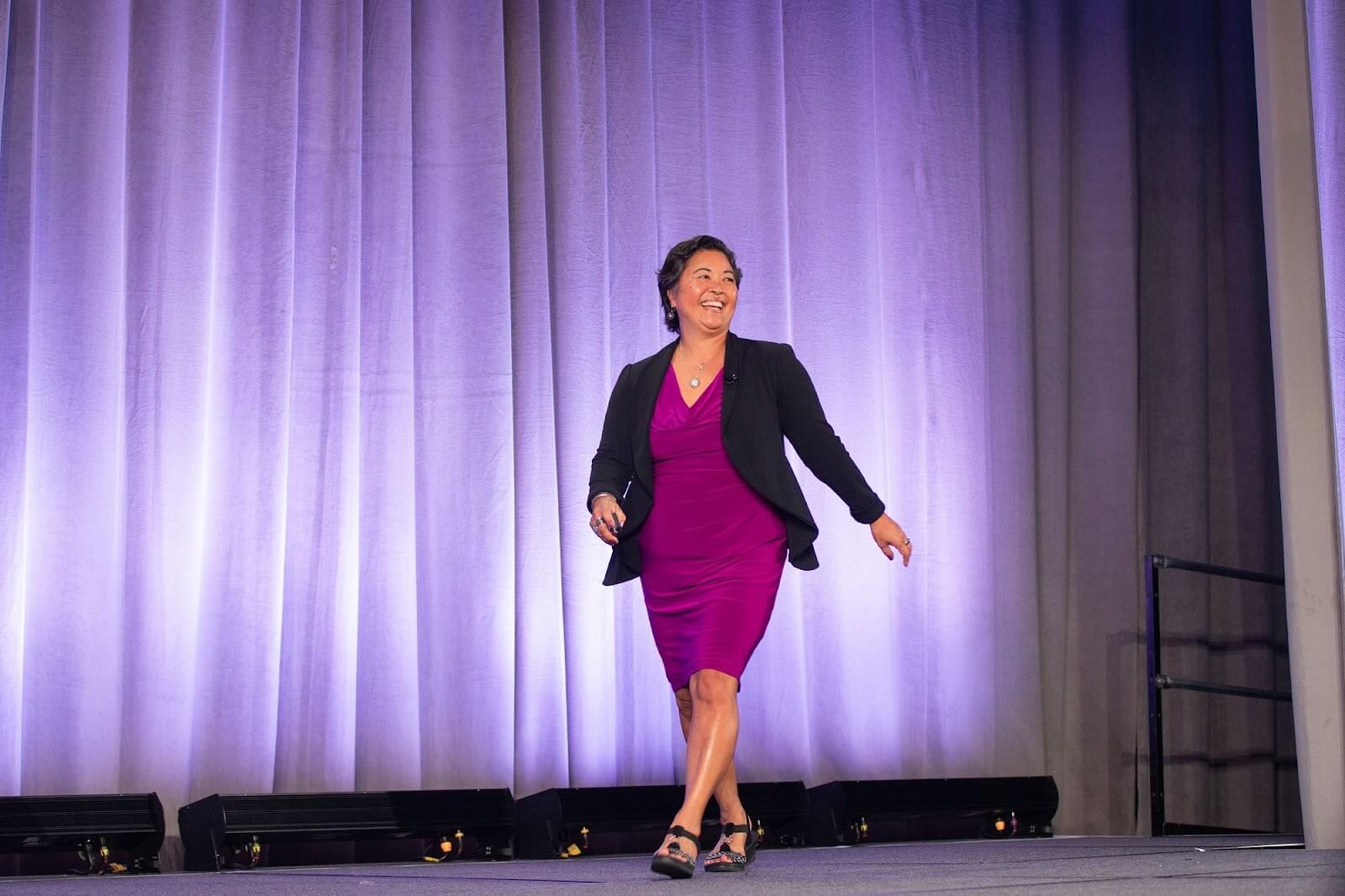
Alice now runs Shikina Mediation and Arbitration full-time, helping divorcing couples, families, and organizations reach agreements they once thought were out of reach. Most clients come to her when communication has broken down and trust feels fragile.

Early in her career, she tried building her business by networking with attorneys, but quickly saw the bias against non-attorney mediators in a field long dominated by older white men. Instead of forcing herself into a system that did not fully welcome her, she shifted her focus to working directly with couples and workplace clients, growing her practice into a thriving full-time business over the past decade. In 2025, Alice was awarded the prestigious Raymond Shonholtz Visionary Peacemaker Award by San Francisco’s Community Boards.

Her work has expanded beyond the mediation room. She hosts the podcast, Negotiation with Alice, now over 100 episodes strong. She authored the book Negotiating with Your Kids, and continues to teach communication and conflict resolution to executives and C-Suite staff. As a second-generation Okinawan American whose parents survived the Battle of Okinawa as children, resilience runs deep in her story. 

Nothing in business, she says, will ever feel as intimidating as stepping into a ring to face an unknown opponent. In that ring, she rebuilt her confidence. At the mediation table, she now helps others rebuild their lives with clarity, courage, and peace.

Discover more from Alice Shikina here:

📍LinkedIn

Learn more about Shikina Mediation and Arbitration here:

📍Facebook

📍Website

Related Articles

IMG_1735-jpg

Stories

How This Solo Female Founder Leverages Technology to Create Authentic Relationships

Ever found yourself in a new place, surrounded by unfamiliar faces, looking for friends or a community that shares your interest? Erin Zhao knows that feeling all too well.

With a childhood marked by frequent moves, each relocation brought Erin the recurring challenge of seeking kindred spirits who matched her enthusiasm for outdoor activities like cycling, golfing, and hiking. But here’s the thing: we live in an era where it’s so easy to connect with people virtually, have friends online, and yet feel like something’s missing.

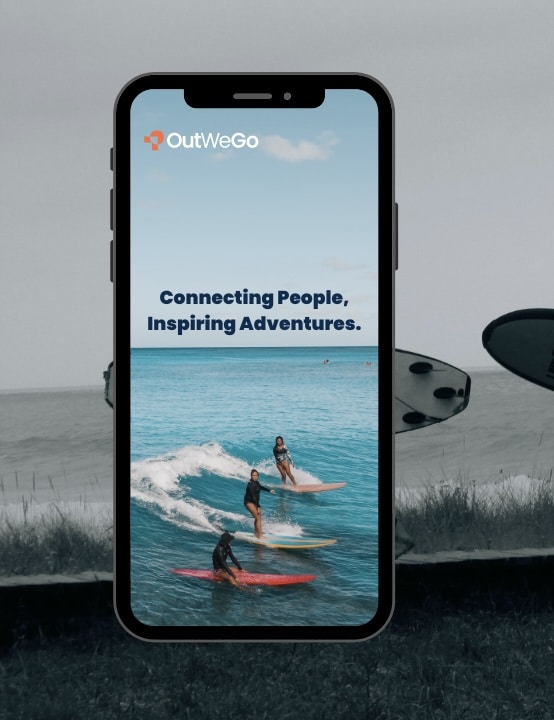
As a person who loves solving puzzles and coming up with creative solutions, Erin founded OutWeGo, a wellness platform headquartered in the Bay Area, designed to combat feelings of loneliness and disconnection by facilitating personalized activities in an exclusive and curated community.

The Challenges of Being a Solo Female Founder and First-Time Entrepreneur

Erin faced distinctive challenges on her path to establishing OutWeGo, specially as a solo female founder and a first-time entrepreneur. One of them was finding the delicate balance between technological innovation and a human-centric vision.

Creating a digital platform that encourages authentic personal connections demands not only technical skills but also a deep understanding of social dynamics and user safety. Erin tackled this challenge by immersing herself in user feedback, embracing iterative design, and ensuring the platform was not only secure but also intuitively designed.

Another challenge that Erin faced was the weight of responsibilities that comes with being a solo founder. Managing everything from product development to marketing, finance, and user experience without the buffer of co-founders meant an increased workload and the necessity for rapid up-skilling in various domains.

Erin met this challenge head-on by embracing continuous learning, taking online courses, and networking with experts to acquire knowledge beyond her initial expertise.

Creating a Solution to the Problem

While doing extensive market research, including interviews with her friends and strangers, Erin found that the struggle of having real, meaningful connections these days is widespread. She discovered that many people, particularly those relocating or seeking companionship for specific activities, faced difficulties in finding suitable partners.

Realizing the commonality of this problem, Erin saw a clear opportunity to leverage technology and create a solution with OutWeGo.

Bridging the Gap with OutWeGo

Erin’s mission with OutWeGo is clear – to facilitate genuine, meaningful connections by bridging the gap between digital interactions and real-world social experiences. The vision is to create an exclusive, curated platform where individuals bond over shared interests, particularly in outdoor and sports activities.

For the Asian community, OutWeGo serves as a powerful tool for empowerment. The platform fosters inclusivity, providing a space where Asians in the diaspora can connect with peers who share similar backgrounds, values, and passions. OutWeGo nurtures a sense of belonging and solidarity, reinforcing cultural connections and supportive networks among Asians living abroad.

OutWeGo Cycling Activity

Erin’s role in advancing overall wellness and social cohesion aligns with the principles of diversity, inclusivity, and mutual respect, making a tangible difference in the lives of the Asian community.

Connect with OutWeGo

Website: outwegosocial.com

Instagram: @outwegosocial

Linkedin: OutWeGo

107029357-1647031565961-Francis_Lau_-_B-roll_Stringoutmp400_24_35_15Still004-jpg

News

The Unspoken Truth About Early Retirement Based on This 42-Year-Old Retired Engineer

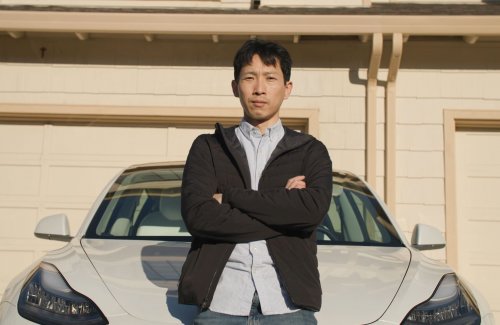
In the pursuit of early retirement, Francis, a 42-year-old electrical engineer, made headlines when he quit his job in 2017 with a substantial $1.2 million in savings and investments.

At the time, he embraced the FIRE (Financial Independence, Retire Early) movement, a concept that advocates for financial freedom and early retirement. However, Francis’s unique journey and subsequent return to work shed light on the misconceptions surrounding the desire for complete retirement.

According to CNBC, upon leaving his engineering role, where he earned a $120,000 base salary plus additional equity and bonuses, Francis discovered that a life without work became “really boring.” Contrary to the belief that most people aspire to retire early, he contends that what individuals truly seek is a sabbatical or extended break from their careers, typically lasting a year or two.

Image Source: CNBC

He had $1.2 million in savings and investments when he quit his job, and he shared that the trick to getting there was spending as little money as possible. First, he paid off his house, which cost $22,000 a year. Then, he tried hard to spend as little money as possible on everything else. 

He cut out things like streaming services and even went without a cellphone for a bit. Francis is also really good at using credit cards to get points, and he has more than 20 of them at a time. This helps him get extra value for his money.

Even though he enjoyed two years of not working and traveling, Francis got a bit bored and decided to start working again in 2019. But this time, he focused on his YouTube channel with 350,000 followers, making videos about money topics. It turns out people loved it, and he now makes around $10,000 a month from YouTube. This money covers his living costs, and whatever is left goes into his savings.

“Now I no longer call myself ‘retired’ because I am putting in my full-time effort into YouTube,” Francis shared to CNBC. “I’d like to put a lot more work into it and grow it … I think it’s a work in progress.”

Featured Image Source: CNBC

News

Chinese Paper Company Promotes Employee Well-Being through Running Incentives

Guangdong Dongpo Paper, a paper company based in Guangdong, China, is reshaping the conventional corporate bonus structure by tying annual bonuses to employees’ physical fitness levels.

Chairman Lin Zhiyong recently revealed an unconventional program where the size of the annual bonus is directly proportional to the number of miles an employee runs each month.

Under this fitness-centric initiative, employees must achieve a monthly running target of 62 miles to qualify for an annual bonus equivalent to 130% of their monthly salary. Those covering a more modest 31 miles per month still earn a bonus equivalent to one month’s salary. As an added incentive, employees who sustain a pace of 31 miles per month for six consecutive months are rewarded with a complimentary pair of running shoes.

Lin Zhiyong, who has scaled Mount Everest twice in 2022 and 2023, justified the program and said to Business Insider, “My business can only endure if my employees are healthy.” 

While some employees have embraced the initiative as a novel way to stay fit and earn extra income simultaneously, social media platform Weibo has witnessed skepticism.

Critics question the feasibility of expecting employees to run two miles daily to meet the ambitious monthly target, speculating whether the company aims to transform its workforce into track athletes. Concerns about potential health risks have also surfaced, with some individuals fearing that the rigorous physical requirements may lead to injuries or health complications. 

Despite the mixed reactions, Guangdong Dongpo Paper’s innovative approach to employee incentives has sparked discussions about the delicate balance between workplace motivation and individual health, leaving observers curious about the long-term impact of this incentive program on both the company and its employees.

News

A Global Celebration of API Excellence in the 21st Annual Unforgettable Gala

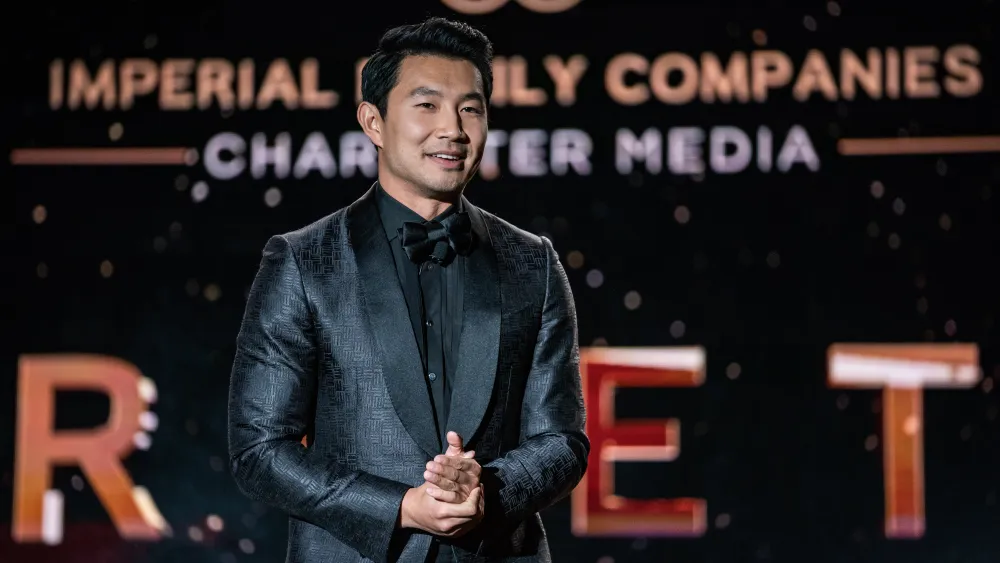
In a dazzling celebration of Asian and Pacific Islander (API) luminaries in the entertainment industry, Character Media presented the 21st Unforgettable Gala (UNFO). This black-tie event, held at the prestigious Beverly Hilton, attracted over 700 esteemed guests, including influential entertainers, leaders, and prominent API-led brands.

This year, UNFO expanded its reach globally by partnering with AsiaLab, an entertainment platform fostering collaboration among API stars internationally, with an aim to broaden awards categories, recognizing exceptional API contributions on a global scale.

The event, which took place on December 16th, featured an exquisite three-course gourmet dinner, special on-stage moments by honorees, live entertainment, and exclusive performances. The festivities continued at an extravagant after-party, ensuring an unforgettable night for attendees.

Simu Liu, Source: Variety

Special guests, including host Simu Liu, Selection Committee Co-Chairs Destin Daniel Cretton and Lisa Ling, added glamour to the evening. Notable honorees included Charles Melton, Steven Yeun, Greta Lee, Young Mazino, Adele Lim, Sung Jin Lee, Steven Lim, and the cast of “Never Have I Ever.” Global influencers, such as Mackenyu and Byeong Kyu Cho, were recognized for their groundbreaking contributions.

Keynote addresses by Destin Daniel Cretton and Lisa Ling, along with contributions from esteemed committee members, including Apl.de.Ap, Bing Chen, Sujata Day, Ken Jeong, Jeremy Lin, and Janet Yang, added to the event’s significance.

Founder James Ryu expressed pride in overcoming challenges, emphasizing the collective dedication and resilience of the entertainment community. The Gala not only celebrated API excellence but also highlighted the industry’s enduring commitment to inclusivity and representation.