Stories

June 23, 2024

SHARE:

Last year, we had the pleasure of sharing the inspiring story of Taufeek Shah and Lola’s Fine Hot Sauce in the article “The Success Behind The First-Ever National Asian-Filipino-Owned Hot Sauce Brand,” delving into the brand’s multicultural roots and its recipe for success. With a unique blend of Filipino and Pakistani flavors, Lola’s Fine Hot Sauce, founded by Taufeek and his mother, has captured the hearts and taste buds of many across the United States.

Since then, Lola’s Fine Hot Sauce has achieved remarkable growth. From expanding its product line to securing a significant distribution agreement with Walmart, the brand has continued to build on its success.

We had the honor of interviewing their CEO and founder Taufeek Shah once again to discuss the latest updates and achievements of Lola’s Fine Hot Sauce. Join us and get inspired.

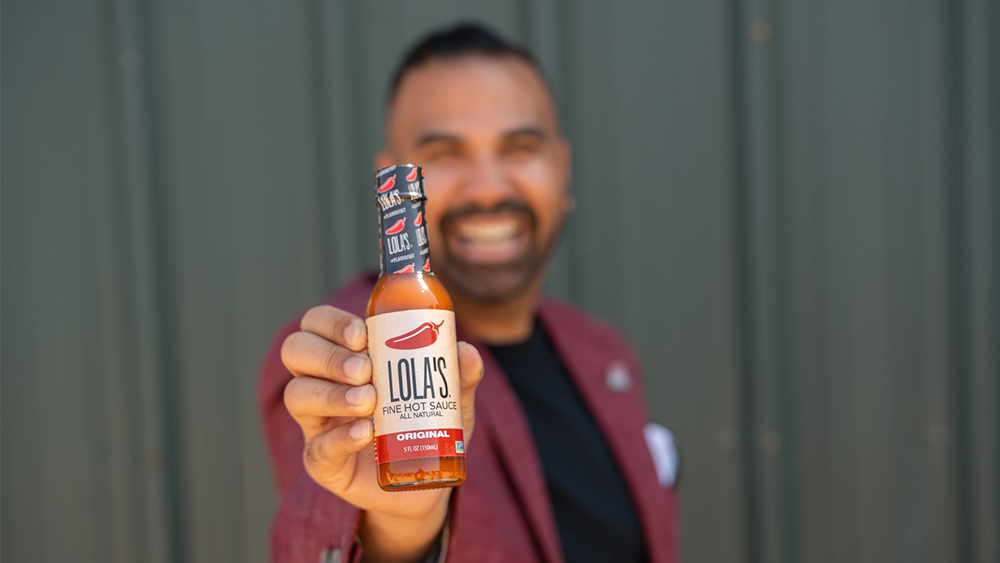
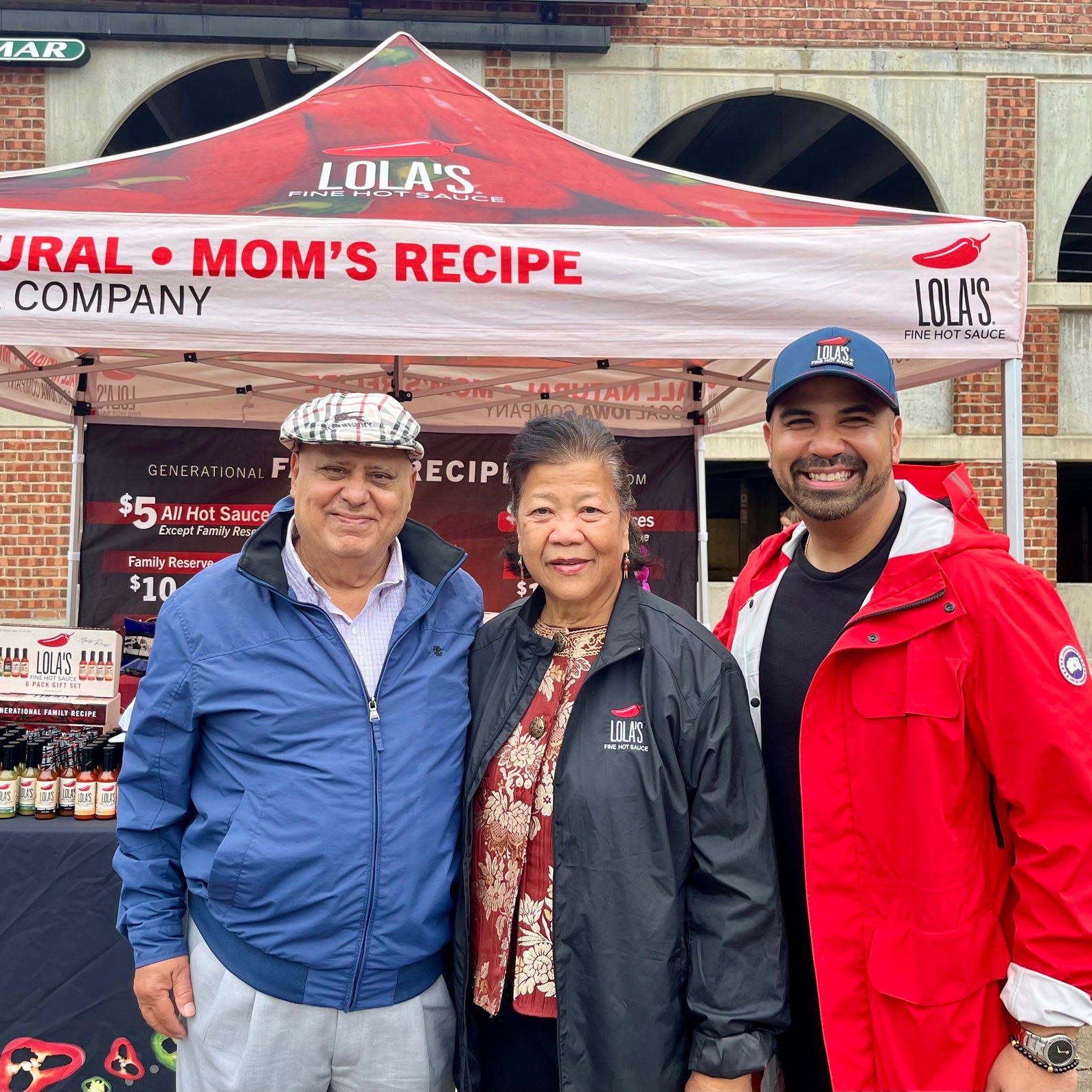
I remember when it was just my mom and I selling at farmers markets and now to see her recipes in every Walmart store in America is truly the American Dream.

Taufeek Shah, CEO and Founder of Lola’s Fine Hot Sauce

WHAT’S NEW WITH LOLA’S FINE HOT SAUCE

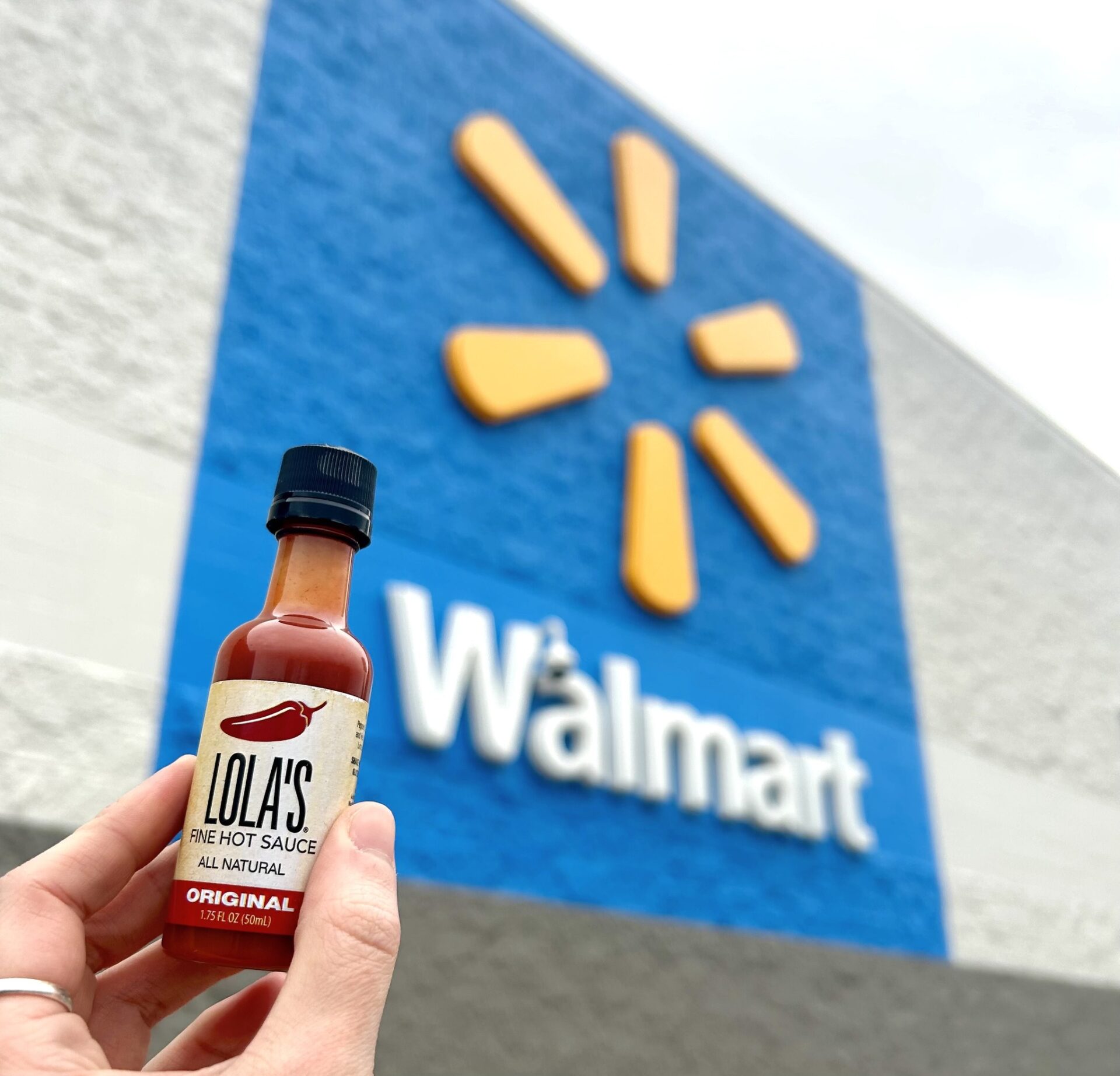
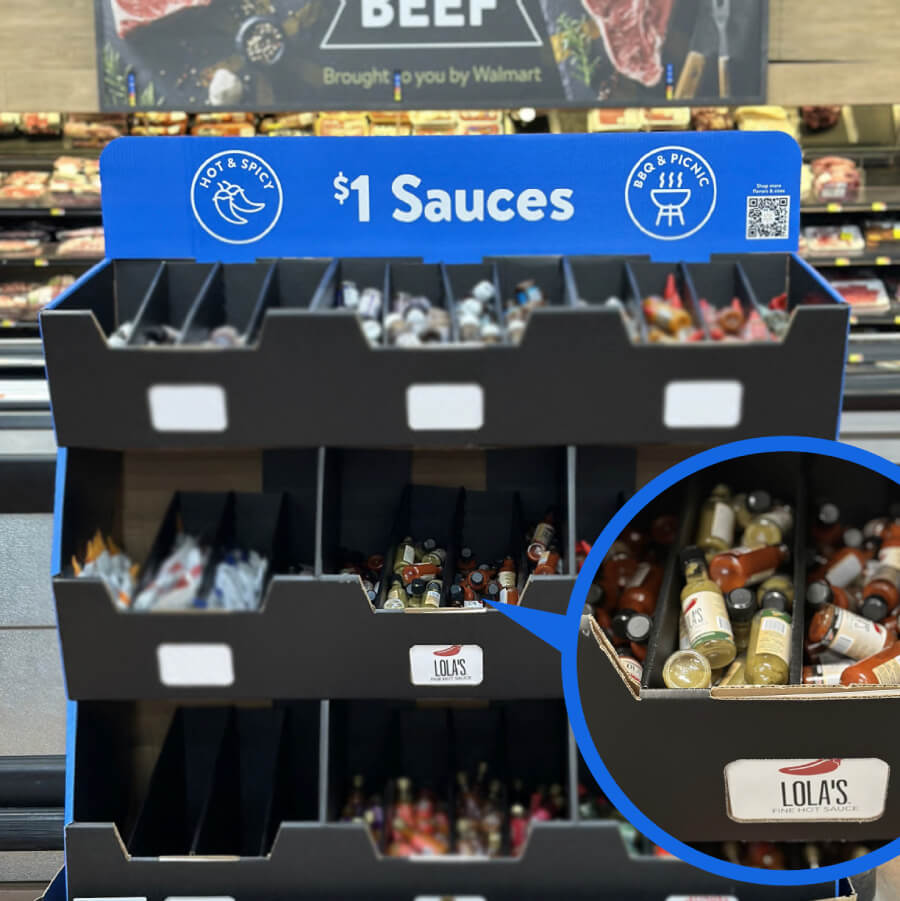
Since last year, Lola’s Fine Hot Sauce has achieved several significant milestones. We’ve expanded our product line by releasing Lola’s Fine Spicy Ketchup and AE Dairy Spicy Party Dip and introduced convenient mini bottles. Our distribution network has grown substantially, highlighted by a major partnership with Walmart: bringing our sauces to over 4,000 stores nationwide.
Product

We’ve also partnered with local farmers, packaging companies, and local supply chains to make sure our products are proudly made in America featuring fresh real all-natural ingredients.  Additionally, we’ve received numerous awards like the Best for Your Pantry Award by Better Homes and Gardens, awards in supplier diversity, and positive reviews, solidifying our reputation for quality and flavor. Overall, our growth and achievements reflect our commitment to bringing not only the best hot sauce but also our family’s recipe hot sauce to our customers while making a positive impact on the community.

HOW IT FEELS TO NOW BE AVAILABLE IN OVER 4000 WALMART STORES

It feels incredibly rewarding and humbling to see our family recipe hot sauces on the shelves of Walmart stores across the country! I remember when it was just my mom and I selling at farmers markets and now to see her recipes in every Walmart store in America is truly the American Dream.  This milestone represents years of hard work and dedication from our entire team, and it’s amazing to see our brand reach such a wide audience.
OVERCOMING PRODUCTION CHALLENGES

One of the major challenges was scaling up production to meet the demand of over 4,000 stores without compromising on quality. We had to streamline our processes, invest in new equipment, partners, and logistics, and ensure our supply chain could handle the increased volume. Great communication and great relationships with our current partners and new partners helped create new jobs within our community and also helped us understand our sauce better. Being all-natural and the amount of pepper/garlic and more that we brought in truly created an all-ships-rise in collaboration.
KEY LEARNINGS ON LARGE-SCALE PRODUCTION AND DISTRIBUTION

We’ve learned the importance of robust logistics and supply chain management. Ensuring that we have a reliable source of ingredients and efficient distribution channels is crucial. We also realized the value of maintaining flexibility in our production processes to adapt to unexpected changes in demand or supply. Additionally, building strong relationships with our retail partners has been essential in facilitating smooth operations.

FEEDBACK FROM THE CUSTOMERS

The feedback has been overwhelmingly positive. Customers love the convenience of our mini bottles, which are perfect for on-the-go use and trying out different flavors without committing to a full-sized bottle. Our expanded product line, including unique flavors like our Green Jalapeno & Serrano along with our coveted Original, has been well-received for its unique tastes with rich garlic nodes and just the right amount of heat and flavor.

LOOKING AHEAD

In the next few years, we aim to expand our product line with new and innovative flavors as well as continue to drive our signature original in both food service and retail. We also have a hot honey launching in the next few days which features a delicious flavor profile that matches our hot sauce with an all-natural honey.

We’re also looking to enter new international markets and increase our presence in existing ones. Another goal is to enhance our online shopping experience, increase direct-to-consumer sales, and expand internationally.

ADVICE FOR OTHER MINORITY-OWNED BUSINESSES

Stay true to your vision and values. Build a strong, dedicated team that believes in your mission. Networking and building relationships within the industry are crucial. Don’t be afraid to seek mentorship. But most importantly hustle – grinding hard and outworking everyone with the belief in your brand or product will get you to where you want to be.

CONCLUSION

We’re excited about the future of Lola’s Fine Hot Sauce and grateful for the support we’ve received from our customers and partners. We’re committed to continuing our journey of delivering high-quality, flavorful family recipe hot sauces while making a positive impact on our community and supplier diversity proudly made in America while staying true to our Filipino/Pakistani roots.

CONNECT WITH LOLA’S FINE HOT SAUCE

Website: lolasfinehotsauce.com

Instagram: @lolasfinehotsauce

TikTok: @lolasfinehotsauce

Facebook: Lola’s Fine Hot Sauce
X: @lolafinehotsauce

Related Articles

Image Source: Considered Objects

Stories

Japanese-American Designer Sara Sakanaka Revamps Vintage Kimonos Into Modern Clothing

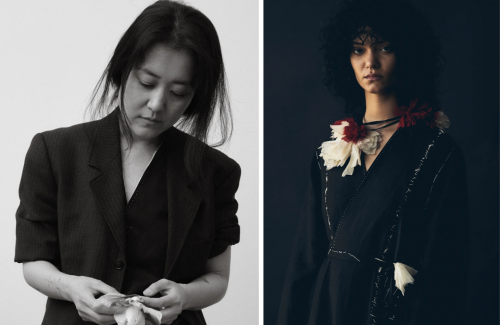
Each of us has a unique way of imparting the memories, stories, and mementos we want to pass on to our future generations. As for 39-year-old Japanese-American designer Sara Sakanaka, the way is by incorporating ancient tales into modern clothing.

In her studio in Brooklyn, Sara preserves a little drawstring bag that her grandmother sewed for her decades ago. One of Sakanaka’s oldest mementos, this heirloom represents a long-standing ideology and was made from leftover fabric.

You will also find in her studio, folded stacks of rescued textiles waiting for her to stitch them into something new, exactly like her grandmother used to do as a hobby.

After her grandmother passed away, Sara began studying the kimonos she had inherited from her. She realized that giving these garments a second chance through reconstruction was a means of healing and re-establishing her identity and cultural roots.

Her initial creation was a classic, collared, button-down shirt. She embroidered a tiered patchwork flower fashioned from leftover silk scraps inside each garment she produced.

“There’s this whole idea that objects have lives,” she says in a Vogue interview. “I like to see every piece as a truly considered object in that way,” thus, naming her label as Considered Objects.

Considered Objects offers tapered silk slacks, oversized coats, two-toned vests, draped dresses, and hand-sewn accessories. Each item is made of recyclable materials, and within each garment is a silk scrap flower and a tag. Each shirt comes with a drawstring bag, a keepsake designed to be handed on like the one she inherited from her grandma.

Image Source: Business Insider / Linkedin

Stories

These Two South Asian Millenials Are Breaking Cultural Barriers To Empower Women’s Financial Freedom and Literacy

“Our culture has countless strict gender roles, one of which is that men manage money and women don’t,” Aashka Piprottar, the founder of Boss Betis, told Wealthy Wolfe’s Parween Mander over email. “So while men get to discuss money openly and proudly, women, if they ever discuss it, do so in hushed, quick voices.”

Those gender roles convinced Aashka from a young age “that I was just destined to be ‘bad with money’ and I would just have to rely on my father — and then in the future, probably my husband — to manage the money for me,” she adds. 

Boss Betis is a community-based platform to destigmatize the conversation around money, specifically the unique challenges faced by desi women. The platform wants to instill that financial freedom and literacy are essential to women’s empowerment. 

While Wealthy Wolfe is a digital financial coaching & education platform for women of color from immigrant upbringings specifically.

Aashka also told Parween that she’s unlearned the harmful money narratives of her childhood through working in the wealth management and financial wellness space.

By 27, Parween had a $150,000 net worth, so she could support herself and her parents without feeling burdened. She advised that we must put on our financial oxygen masks first, as well as to start a  “Parent fund” account to save money for our families in case they need it, “This is a way to set a financial boundary so that you don’t feel resentful or sabotaged if they require funds from you.” Parween wrote on Business Insider.

Understanding the complexity of the South Asian culture, Parween has helped one of her clients to set up strategic savings accounts to separate her money, while still contributing funds when her client’s parents asked for it.

Parween affirms that cultural expectations and narratives play a huge role in their ability as South Asian women to make different decisions, especially when it comes to their money and building wealth. 

Image Source: Omakase Restaurant Group

Stories

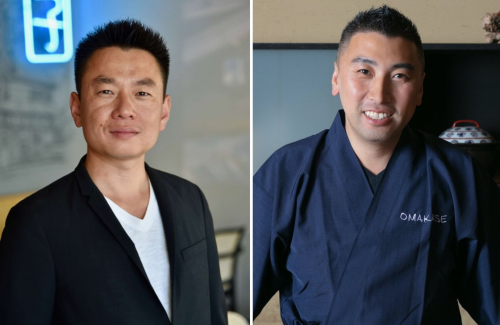
Omakase Restaurant Group: How These Two Immigrants Went From Dishwasher And Busboy To Co-Founders

Kash Feng, co-founder and CEO of Omakase Restaurant Group, moved to the Bay Area at age 18. He was the only child of factory workers, so when he moved to the U.S. in 1999 with his buddies, he borrowed $20,000 from relatives and friends, promising to return them.

Feng started working as a dishwasher at a Chinese restaurant in the East Bay, and was quickly promoted to busboy. He progressed through various industrial occupations, frequently juggling three jobs at once, while also taking English classes.

In 2007, he met Jackson Yu, who eventually became his business partner and executive chef of Omakase sushi restaurant. Like Feng, Yu also had modest beginnings. At 16, he and his parents left China and moved to the Bay Area. 

Yu was a Japanese buffet busboy and gas boy on his days off. He was once asked to help out when the sushi chef cut his fingers one day. Yu then became so skilled that he could manually shape 2,000 identically sized sushi rice balls per day. Other sushi establishments took notice of this, including the well-known Ebisu in the Sunset, where he worked for five years to master sushi making.

They were both 26 when they decided to start their own restaurant business, Live Sushi, pooling all their savings and borrowing from relatives. Their restaurant was a hit from the beginning. Eventually, they were able to pay off all their loans, and the rest is history.

Now, Omakase Restaurant Group is an ever-growing empire, with different establishments all over San Francisco.

Image Source: Shark Tank

Stories

Software Engineer Turned Crocheting Hobby Into A Six-figure Business Takes $450k Deal on ‘Shark Tank’

Justine Tiu, a former Google Classroom software engineer, started crocheting to unwind after work. After realizing its appeal, she and her ex-Wall Street director husband, Adrian Zhang, launched The Woobles, a crochet kit company.

On Friday’s “Shark Tank,” the two explained the hobby’s vast appeal. The firm made $3.1 million last year and $5.3 million since launching two years ago.

All five Sharks quickly decided they wanted a piece of the company, and they showed they were willing to betray their business partners to get it.

The Woobles is a crafting kit company that offers patterns, step-by-step video tutorials, and all the materials needed to do amigurumi crochet, a Japanese fiber art form, even if you are a complete beginner. Once your kit arrives with all the materials, a login code gives you step-by-step written and video instructions to make your craft and helpful hints when you get stuck.

Tiu and Zhang ultimately received a $450,000 investment offer from sharks Mark Cuban and Lori Greiner. In exchange, the company, which at the time of filming was on pace to generate $7 million in yearly sales, gave Cuban and Grenier a split of 6% equity.