Stories

April 2, 2026

SHARE:

Loneliness is often seen as a personal feeling, but for Simone Heng, it became a question worth exploring on a global scale.

Now, with the upcoming Chinese translation of her 2023 book, Let’s Talk About Loneliness, her message is reaching a new audience and entering a new chapter.

What began as a deeply personal experience has grown into a wider mission to make conversations about loneliness more accessible across cultures.
From Personal Isolation to a Written Voice

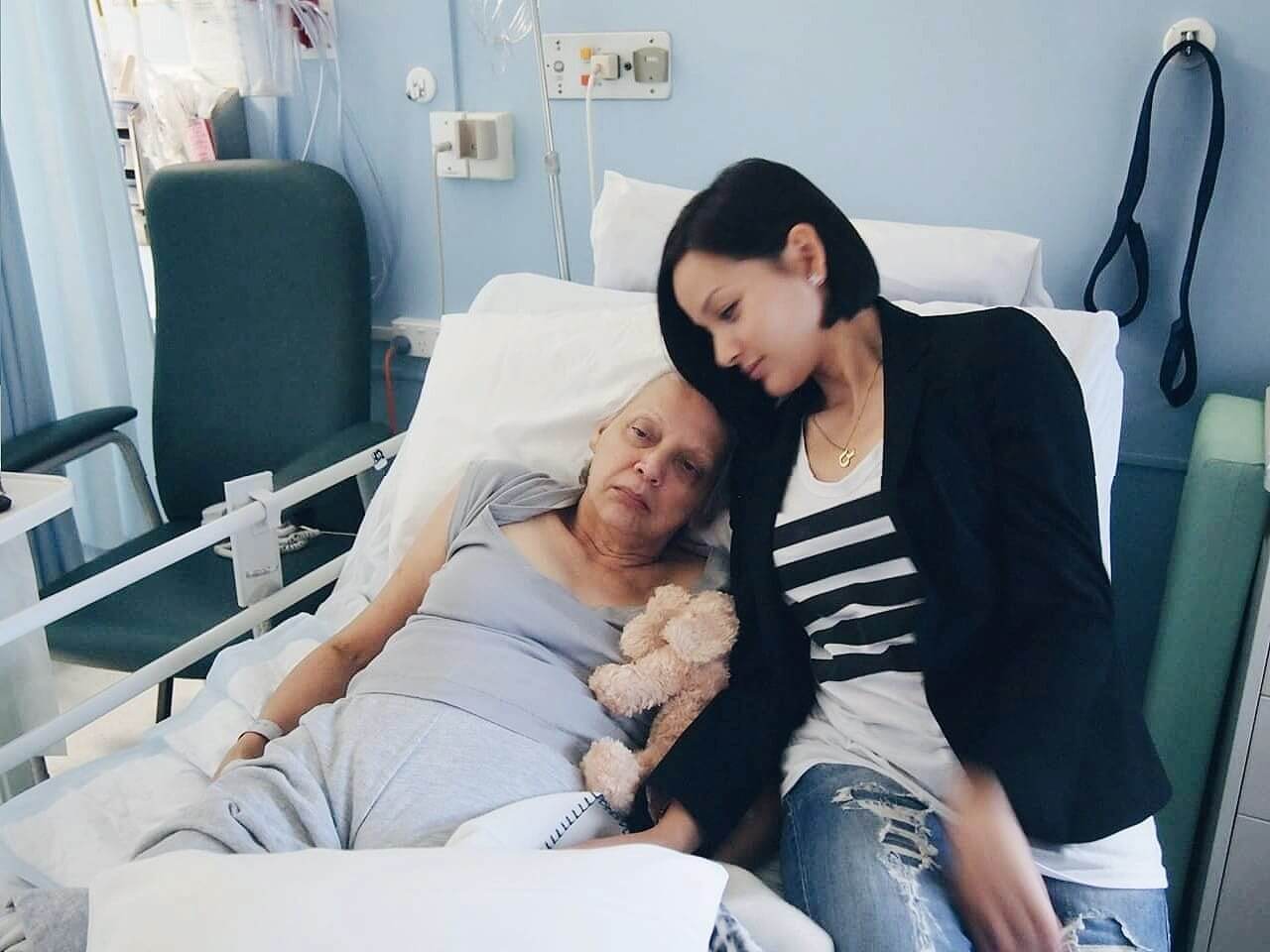
Simone Heng’s book Let’s Talk About Loneliness was born from a period of deep emotional isolation. After leaving her broadcasting career to care for her paralyzed mother, she found herself cut off from her social world. While others were building families and careers, she was navigating caregiving, grief, and isolation.

Before that chapter, her life had always been shaped by movement. She was born and is based in Singapore, grew up in Australia, studied in Switzerland, and worked in the UAE. Her background reflects a mix of cultures, even reflected in her DNA, which shows 11 different ethnicities.

But the defining moments were not just about where she had been, but what she had gone through. She lost her father at 19, and 10 years later, along with her sister, became the main support to her mother. Those experiences reshaped her priorities and slowly pulled her away from the life she was chasing.

In that quieter, more difficult season, she began asking questions she could not ignore. Why does loneliness feel so heavy, even when you are not physically alone? Why is it so hard to talk about?

Over time, Simone realized something that became central to her work. Loneliness is not simply about being alone. It is the gap between the kind and amount of connection a person wants and what they are actually experiencing.
A Book That Challenges Cultural Assumptions

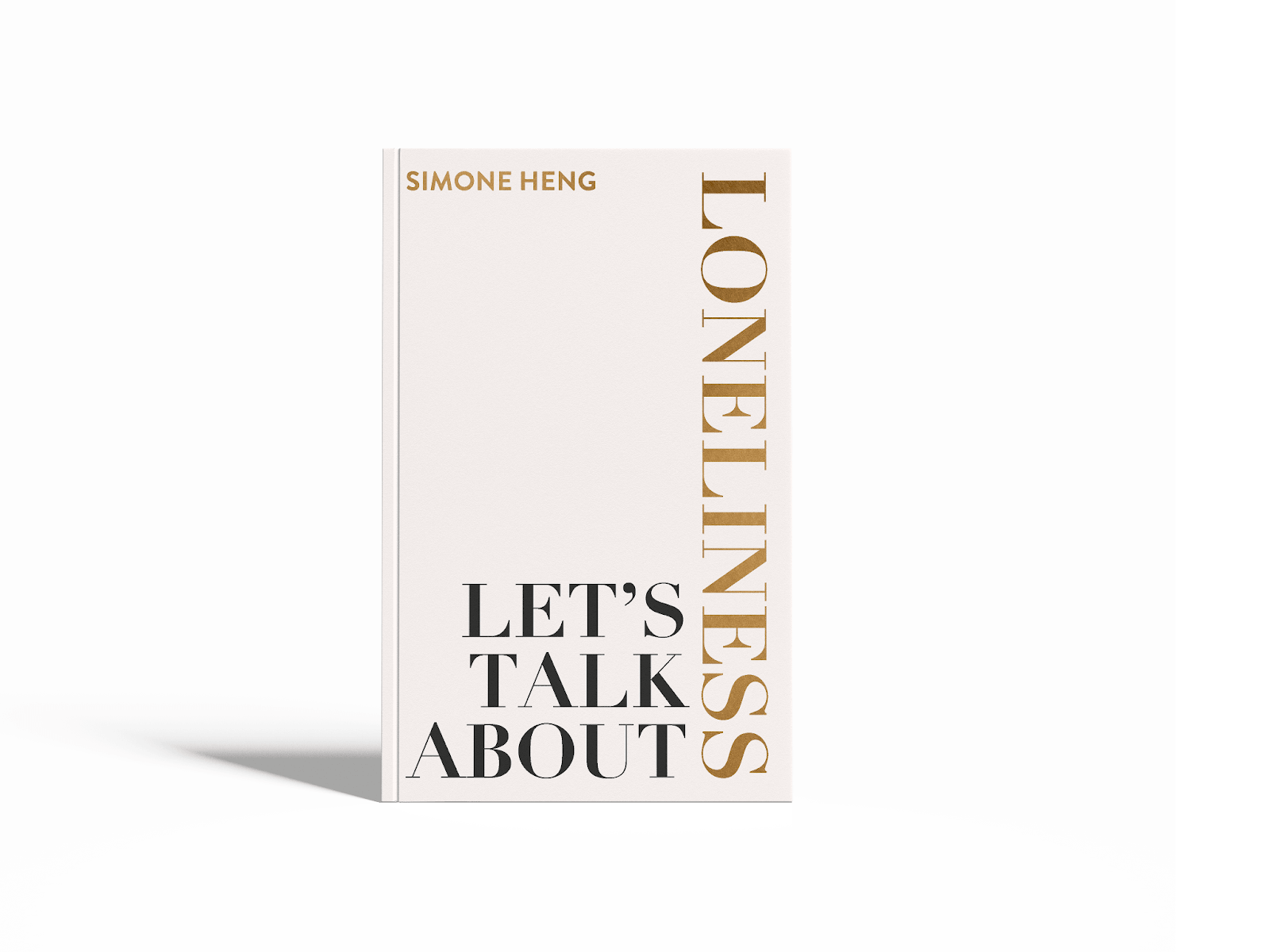
Let’s Talk About Loneliness explores an idea many people overlook. Loneliness can exist even in collectivist societies. Simone highlights how cultural expectations, emotional restraint, and unspoken pressures can make it harder to express isolation. This perspective brought a diverse lens to the dialogue on loneliness often dominated by Western viewpoints.

She points out that in cultures where people are expected to always be surrounded by family, saying “I am lonely” can carry stigma. At the same time, many connections are shaped by obligation rather than genuine emotional closeness. These kinds of relationships do not always meet deeper emotional needs, and can leave people feeling alone even when they are not physically isolated.

Retitled in Chinese as “Anyway, I Am Just as Lonely,” it will be available in Xinhua, Sisyphus, and Yanijou bookstores in China. The book blends research with lived experience, making it both informative and deeply personal. With the release of the Chinese edition, the focus is on reaching Chinese-speaking communities where conversations around loneliness are often less visible.

Building a Mission Around Human Connection

Beyond the book, Simone Heng’s work continues to focus on one idea. Human connection is not just something we hope for, but something we absolutely must learn and build, particularly in the era of AI.

After spending 15 years in broadcasting, she chose to step away and start again in 2019. It was not an easy decision, and she built her career without financial backing, relying on persistence and clarity in what she wanted to create.

Today, she is a global speaker who works with leading organizations such as Google, Meta, Harvard University, and JPMorgan. She teaches audiences how to build meaningful connections both in and beyond the workplace.

Her message continues to resonate because it speaks to something many people are quietly experiencing. Without a sense of belonging and psychological safety, it becomes harder to think clearly, create, and show up fully.

At its core, her work is a reminder that connection is not about how many people are around us. It is about how understood we feel. And sometimes, putting that feeling into words is the first step toward changing it.

Learn more about Simone Heng here:

📍Website

Related Articles

Image Source: FOX5 New York

News

Manhattan’s Chinatown Receives $20M Funding For 11 Post-pandemic Revitalization Projects

Manhattan’s Chinatown is one of the neighborhoods that has been impacted the most severely by the pandemic.

New York Governor Kathy Hochul unveiled eleven transformational projects that would be part of the initiative to help the Chinatown community reopen corridors, restaurants, businesses, and cultural institutions. 

The projects include:

  • Renovating Kimlau Square
  • Beautifying the Park Row connection to Chinatown
  • Upgrading a section of Sara D. Roosevelt Park
  • Installing murals and light projection art throughout Chinatown
  • Expanding light-up Chinatown street lanterns
  • Opening a community health & wellness center
  • Reopening the childcare and family support center at Smith Houses
  • Creating a Building Upgrades Fund
  • Creating a Chinatown welcome arch/gateway
  • Establishing Asian Culinary Arts of New York
  • Establishing the Chinatown Cultural Welcome Center

“These critical investments will transform the neighborhood and create a more vibrant and inviting destination for locals and visitors alike while enriching the neighborhood by improving foot traffic, economic and cultural activity.” Governor Hochul said in a statement.

Image Source: K.M. Cannon / Las Vegas Review-Journal

News

Rochelle Nguyen Sits As The First Asian American Nevada Senator

Clark County Commission appoints Nevada’s first Asian American senator, Rochelle Nguyen, a state assemblywoman. 

“I plan on working hard to ensure we are adequately funding our public schools, that health care is affordable as well as accessible, and that all voices are represented,” Nguyen said, who will replace former state Sen. Chris Brooks for a job in the private sector.

Nguyen was nominated by Senate Majority Leader Nicole Cannizzaro, D-Las Vegas. The new Nevada senator’s appointment to the Finance, Judiciary, and Health and Human Services committees for the next parliamentary session was made public by the Democratic caucus. She will hold the position’s vice chair.

The caucus acknowledged her efforts on “landmark” legislation, which included reforming the criminal justice system, regulating short-term rental agencies, and advocating for victims of domestic abuse.

When Brooks was elected to the state Senate in 2019, Clark County made the decision to nominate Nguyen to replace Brooks in the Assembly. She eventually won the election for the seat in both 2020 and 2022.

Image Source: Vedant Fashions

News

Vedant Fashions Founder Made It To India’s Richest List From Selling Affordable Indian Wedding Couture

Ravi Modi started Vedant Fashions in 1999 with the Manyavar brand, selling pajamas, saris, sherwanis(long-sleeved outer coats), kurtas, lehengas (ankle-length skirt), and salwar sets (trouser-and-tunic combination).

Vedant Fashions designs clothes but outsources bulk of the manufacturing. It currently has 590 outlets in 228 Indian towns and 13 in North America and the UAE. 

Manyavar is its flagship men’s line, while Mohey is its 2015 women’s collection. Both are mid-premium or affordable aspirational.

According to Forbes, Modi listed 15% of the company on the Indian stock exchanges in February—the basis of his $3.75 billion fortune that adds him to the ranks of India’s richest this year for the first time.

Modi grew up with three sisters in Kolkata. His father was a first-generation entrepreneur who opened a clothes company in 1975. Kolkata’s AC Market is one of the city’s earliest air-conditioned markets, including clothing, jewelry, and electronics retailers. 

The 45-year-old billionaire lives in a big bungalow on the outskirts of Kolkata where he grows his own fruits and vegetables. With 30 years of retail expertise, he provides a fresh perspective on money and career. “Earning wealth without earning time is meaningless,” he told Forbes.

Moreover, according to Forbes, he spends a quarter of his time on business, asset management, and philanthropy, and the rest on health, relationships, and learning. His daily activities include meditation, yoga, and studying strategies of retailers such as LVMH, Nike, and Uniqlo.

Image Source: G’s Kpop Kilig Facebook

Stories

13-Year-Old Took Her Fangirling Into Greater Heights, Opens a K-Pop Inspired Milk Tea Shop

Filipino teenager Given Mendoza turned her fangirling into a business. As a K-Pop fan, she loves collecting merch of her favorite Korean pop idols. 

Given realized that these items can increase in value. She then found a way to earn by reselling them and worked on growing the business.

With the business’ great potential, the 13-year-old launched her online store, G’s KPop Kilig, “I decided to buy some albums for myself. I also bought some extra albums to sell, to see if I can earn profit,” she told the local news.

Later on, she was able to save enough to open a physical store in Baguio City, Philippines, and sells milk tea and K-Pop merch. As an “Army ”of the popular Korean group BTS, she also incorporates some inspiration to her milk teas.