Stories

April 2, 2026

SHARE:

Loneliness is often seen as a personal feeling, but for Simone Heng, it became a question worth exploring on a global scale.

Now, with the upcoming Chinese translation of her 2023 book, Let’s Talk About Loneliness, her message is reaching a new audience and entering a new chapter.

What began as a deeply personal experience has grown into a wider mission to make conversations about loneliness more accessible across cultures.

From Personal Isolation to a Written Voice

Simone Heng’s book Let’s Talk About Loneliness was born from a period of deep emotional isolation. After leaving her broadcasting career to care for her paralyzed mother, she found herself cut off from her social world. While others were building families and careers, she was navigating caregiving, grief, and isolation.

Before that chapter, her life had always been shaped by movement. She was born and is based in Singapore, grew up in Australia, studied in Switzerland, and worked in the UAE. Her background reflects a mix of cultures, even reflected in her DNA, which shows 11 different ethnicities.

But the defining moments were not just about where she had been, but what she had gone through. She lost her father at 19, and 10 years later, along with her sister, became the main support to her mother. Those experiences reshaped her priorities and slowly pulled her away from the life she was chasing.

In that quieter, more difficult season, she began asking questions she could not ignore. Why does loneliness feel so heavy, even when you are not physically alone? Why is it so hard to talk about?

Over time, Simone realized something that became central to her work. Loneliness is not simply about being alone. It is the gap between the kind and amount of connection a person wants and what they are actually experiencing.
A Book That Challenges Cultural Assumptions

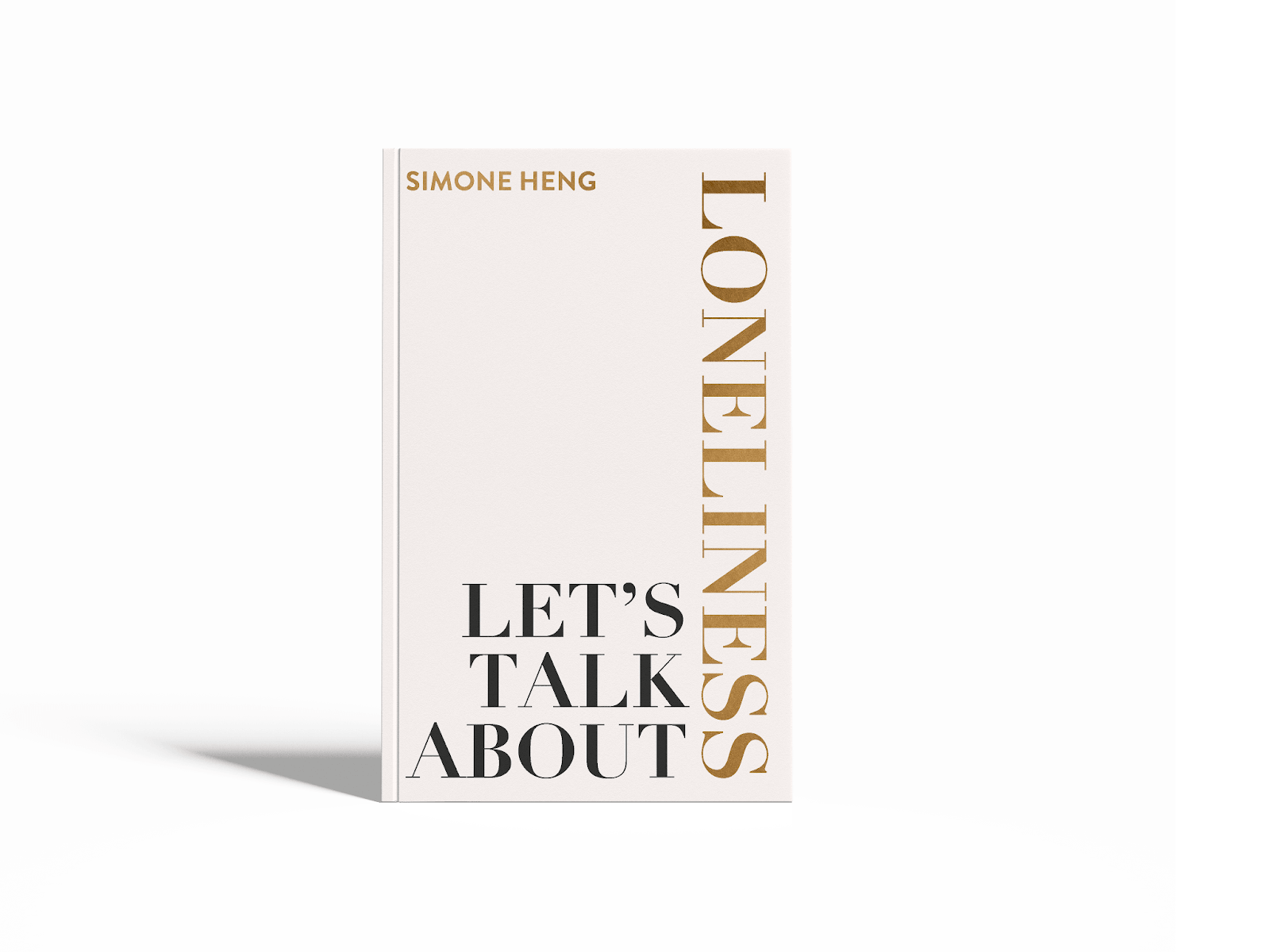
Let’s Talk About Loneliness explores an idea many people overlook. Loneliness can exist even in collectivist societies. Simone highlights how cultural expectations, emotional restraint, and unspoken pressures can make it harder to express isolation. This perspective brought a diverse lens to the dialogue on loneliness often dominated by Western viewpoints.

She points out that in cultures where people are expected to always be surrounded by family, saying “I am lonely” can carry stigma. At the same time, many connections are shaped by obligation rather than genuine emotional closeness. These kinds of relationships do not always meet deeper emotional needs, and can leave people feeling alone even when they are not physically isolated.

Retitled in Chinese as “Anyway, I Am Just as Lonely,” it will be available in Xinhua, Sisyphus, and Yanijou bookstores in China. The book blends research with lived experience, making it both informative and deeply personal. With the release of the Chinese edition, the focus is on reaching Chinese-speaking communities where conversations around loneliness are often less visible.

Building a Mission Around Human Connection

Beyond the book, Simone Heng’s work continues to focus on one idea. Human connection is not just something we hope for, but something we absolutely must learn and build, particularly in the era of AI.

After spending 15 years in broadcasting, she chose to step away and start again in 2019. It was not an easy decision, and she built her career without financial backing, relying on persistence and clarity in what she wanted to create.

Today, she is a global speaker who works with leading organizations such as Google, Meta, Harvard University, and JPMorgan. She teaches audiences how to build meaningful connections both in and beyond the workplace.

Her message continues to resonate because it speaks to something many people are quietly experiencing. Without a sense of belonging and psychological safety, it becomes harder to think clearly, create, and show up fully.

At its core, her work is a reminder that connection is not about how many people are around us. It is about how understood we feel. And sometimes, putting that feeling into words is the first step toward changing it.

Learn more about Simone Heng here:

📍Website

Related Articles

medium-jpeg

News

Phantila Phataraprasit: Embracing Thai Culture and Sustainability in Furniture

In the transition from dormitory living to her own apartment, Phantila Phataraprasit found herself grappling with a challenge familiar to many recent graduates: the quest for affordable, stylish, and eco-friendly furniture. Sustainability has played a significant role throughout her life due to her mother’s involvement in running eco-friendly lodges in Thailand.

Phataraprasit and her college friend Caitlin Ellen teamed up to start Sabai – a Thai word that means feeling comfortable and relaxed. Sabai is a direct-to-consumer furniture company that prioritizes sustainability without sacrificing affordability.

Sabai’s core mission revolves around empowering young professionals to align their values with their furniture choices. For them, achieving true sustainability involves more than using eco-friendly materials.

Their sofas, crafted in a family-owned North Carolina factory, feature Sustainable Forestry Initiative (SFI)-certified wood, recycled fiber fill, and upcycled fabrics, free from harmful chemicals. They introduced a “Repair Don’t Replace” program and a buyback initiative to ensure longevity and affordability.

After initially diversifying into various home furnishing categories, Sabai recognized that sustainability remained the driving force for their customers. They refocused their efforts on seating, catering to those with unique aesthetic preferences. This strategic shift enables them to deliver on their core sustainability promise while offering diverse design options.

Aside from this, Sabai also understands the importance of forming meaningful connections with customers. Furniture is intimate, and Sabai recognizes that today’s generation cares deeply about their living spaces.

By amplifying their sustainability initiatives and engaging with consumers, Sabai aims to inspire a lot of people to live a more sustainable lifestyle.

Featured Image Source: Medium

005_min_1_scaled.0-jpg

News

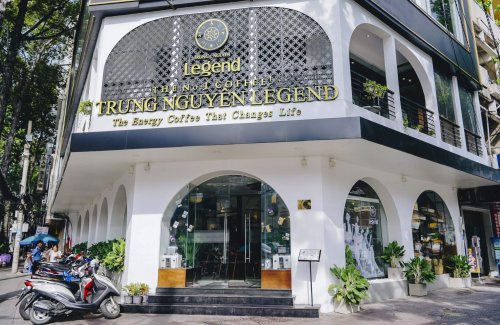
Trung Nguyên Legend Cafe Introduces Vietnamese Coffee From Saigon to U.S.

Adding a fresh chapter to its storied history, the esteemed Vietnamese coffee chain, Trung Nguyên Legend Cafe, has ventured across the Pacific to Westminster, Southern California.

With nearly three decades of experience and a robust presence in Vietnam comprising four factories and 110 stores, Trung Nguyên has also made its mark on the global stage, with distribution networks spanning over 60 countries.

Trung Nguyên Legend Cafe proudly serves phin- and espresso-based coffee drinks, crafted exclusively from 100-percent Vietnamese-grown Robusta and Arabica beans. The menu caters to diverse tastes, featuring an array of espresso-based classics such as lattes, mochas, and cappuccinos, alongside quintessential Vietnamese specialties like cà phê trứng (Vietnamese egg coffee) and cà phê chồn (civet coffee). Patrons can relish the brand’s signature dine-in coffee service, elegantly presented on ornate wooden trays, a unique experience now accessible in the U.S.

Jennie Tang, representing H & L Wholesale Food Corporation, the Los Angeles-based distribution company behind this franchise venture, underscores the essence of Vietnamese coffee culture. Beyond being a mere beverage, it embodies the art of connecting with one another while savoring the moment.

Trung Nguyên Legend Cafe is located at 9039 Bolsa Avenue #101, Westminster, CA 92683. The cafe welcomes visitors daily from 7 a.m. to 5 p.m., promising an authentic Vietnamese coffee experience.

Featured Image Source: LA Eater

337065635_5962298030490632_6699761041658586964_n-jpg

Stories

A Doctor’s Journey of Following His Passion and Becoming a Full-Time Comedian

In the world of comedy, they say that laughter is the best medicine, and for Dr. Jason Leong, this couldn’t be more true.

Up until 2010, Jason Leong’s life had followed the typical Asian narrative.

He had been a straight-laced kid, never earning anything less than an A in his exams. He secured a scholarship to pursue Medicine and eventually became a doctor in Malaysia.

Despite his initial success, the harsh reality of the workforce hit Jason hard. As a junior doctor, he endured grueling 36-hour shifts at least six times a month, with 100-hour workweeks becoming the norm. Sleep deprivation, constant hunger, overwhelming stress, and meager pay plunged him into the lowest point of his life. But things were about to change.

One day, he stumbled upon an opportunity for a monthly open mic show in Kuala Lumpur, the first of its kind in Malaysia. His wife encouraged him to try out. So he took 2 days off from work, drove 4 hours to the venue, and performed his first 5-minute standup. He left the stage saying to himself, “I want to do this forever.”

In 2011, Jason transferred to Kuala Lumpur and did regular gigs while being a full-time doctor. He loved being a doctor by day and a comedian by night, but it was still a lot of work for him. So in 2014, he made the big leap and did a not very Asian thing.

He quit being a doctor.

Having experience in the medical field not only informs Jason’s comedy, but it also makes his style a bit more unique. “The rigors of being a doctor made me all the more grateful to be able to tell jokes for a living,” he said.

At first, Jason didn’t tell his parents that he quit his job as a doctor. His parents now know of his career shift and support his journey wholeheartedly, with his mother saying, “If this comedy thing doesn’t work out, at least you have something to fall back on.” 

Jason’s comedy has since blossomed with two successful Netflix specials, “Hashtag Blessed” and “Ride With Caution.”

He boasts a portfolio of five solo one-hour specials, having graced stages at the Melbourne International Comedy Festival, featured on Comedy Central and Just For Laughs in Montreal, and won at the 7th Annual International Hong Kong Comedy Competition.

Jason is set to perform his solo show BRAIN DRAIN in Los Angeles on September 29 and San Francisco on October 4.

“Making a move to my passion and the arts is something that has allowed me to find real meaning in my work. I hope to inspire others within the Asian community to take the same risks and reach their real potential,” Jason shared with Asian Hustle Network.

CONNECT WITH JASON

Facebook: Dr. Jason Leong

Instagram: @drjasonleong

Tiktok: @drjasonleong

News

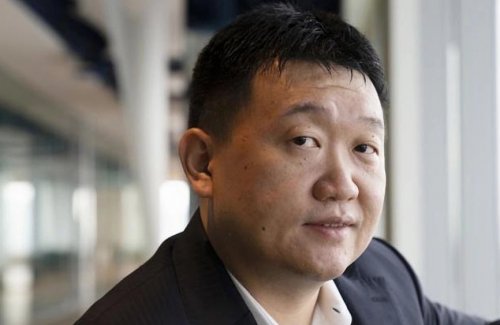
How Wang Xiaokun Turned His Milktea Business into a Billion-Dollar Success

Wang Xiaokun, a 40-year-old Chinese entrepreneur, has achieved a remarkable feat by becoming a billionaire through his milk tea venture. He is the visionary founder of Cha Panda, a Chinese tea chain.

Recent funding rounds have catapulted his tea business’s valuation to an impressive $2.1 billion. Forbes estimates Wang’s personal fortune at a staggering $1.1 billion, primarily due to his substantial 60% ownership stake in the Chengdu-based beverage chain.

Over the past three years, Cha Panda has experienced rapid expansion, now boasting an extensive network of over 7,000 stores. The chain is known for its signature beverages, including mango pomelo sago, taro bubble tea, and jasmine milk green tea, all offered at an affordable price point of $3.60 or less, as reported by Forbes.

Notably, Wang’s wife, Liu Weihong, has also enjoyed a substantial increase in her wealth, with an estimated fortune of $700 million, thanks to her 33% ownership stake in the company. She plays a pivotal role as the chair of the supervisory committee, responsible for overseeing Cha Panda’s daily operations, as indicated in a preliminary prospectus filed with the Hong Kong Stock Exchange. 

According to MSN, the roots of Cha Panda trace back to 2008 when Wang began selling fruit and bubble tea from a modest shop near a school in Chengdu, known for its spicy cuisine and as the home of giant pandas. Over the subsequent decade, Wang diligently expanded Cha Panda’s network of stores to 531 by 2020. However, the pivotal moment occurred when he embraced a franchising model.

Today, Cha Panda focuses on crafting beverage recipes and supplying ingredients like fruit and tea leaves to Cha Panda-branded beverage shops. This innovative approach allows Wang to maintain lower operational costs compared to competitors like Hong Kong-listed Nayuki Holdings, which grapple with higher employee salaries and rental expenses for their directly operated stores.

Featured Image Source: India Times