Stories

September 13, 2023

SHARE:

Founded in 2015, Pokeworks emerged as a culinary venture stemming from a shared vision. Drawing inspiration from numerous trips to Hawaii, the founders were captivated by the distinct flavors of poke, prompting them to bring this fresh, healthful, and beloved island delicacy to the mainland United States.

With a steadfast commitment to a wholesome lifestyle and premium ingredients, Pokeworks offers a culinary experience that reverberates with authenticity. Their menu artfully captures the genuine essence of Hawaiian flavors, showcasing a medley of signature creations and customizable options.

Aside from this, Pokeworks champions sustainability, prioritizing responsibly sourced seafood and conscientious material choices. This ethos extends to all aspects of the brand’s operations, affirming a holistic dedication to social and environmental responsibility.

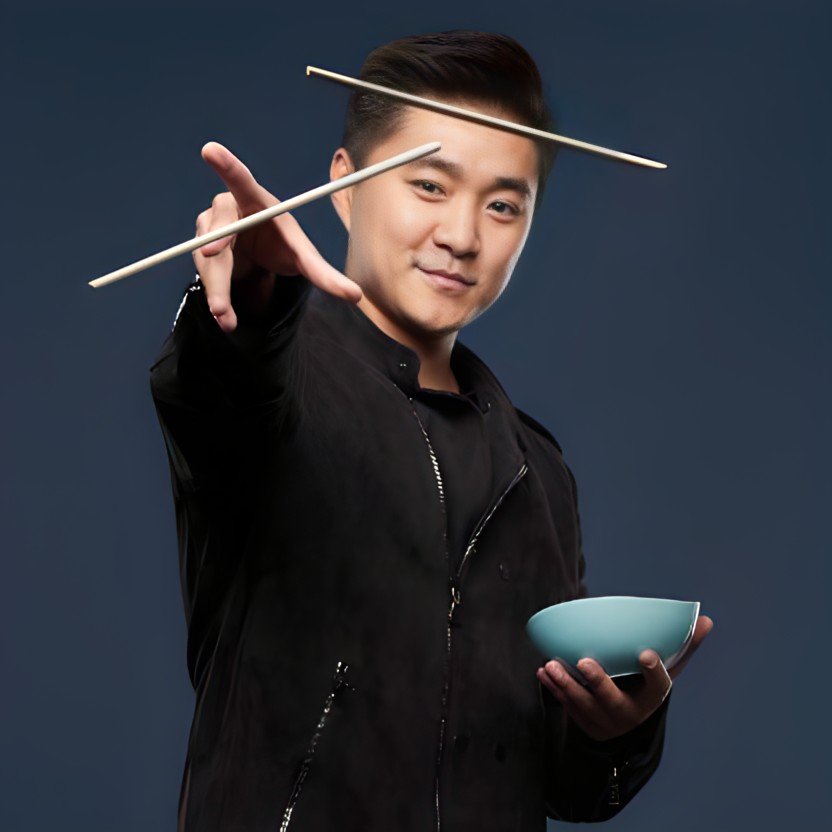
Asian Hustle Network had the chance to sit down for an interview with one of Pokeworks’ co-founders, Peter Yang. Join us as we delve deeper into their story and uncover the insights that drive their success.

HOW IT ALL STARTED

The idea of Pokeworks dates back to 2015, when my co-founders, Mike Chen and Mike Wu, met over lunch. Mike Chen just had his wedding in Maui and Mike Wu had just come back to the mainland after months in Oahu launching a restaurant. They reminisced about the delicious poke they enjoyed on the island and wondered why it’s not a staple on the mainland. We took inspiration from build-your-own fast casuals like Chipotle, and ran with the idea of “Poke Your Way”. As cliche as it sounds, we spent months R&D’ing out of Mike Wu’s garage until we all felt the flavors were perfect.

Several months later, we opened the doors to our first location in midtown Manhattan – a tiny 750-square-foot space. It was a cold December, and most of the city had left for the holidays – it was quiet… and our sales were bleak. Besides correcting our guests on the pronunciation of “poke”, I had to turn away several guests with “Sorry, no, we do not sell Pokemon cards.” Educating the market was definitely an early challenge we had to overcome.

The new year rolled around and our lines got progressively longer day after day. As business grew, we kept our heads down and continued to focus on operational excellence – great products and great guest service. Word quickly spread, and we became the popular kids on the block.

Fast forward 8 years and a pandemic later, we’re 70 locations proud across the U.S., Canada, Mexico, and Taiwan.
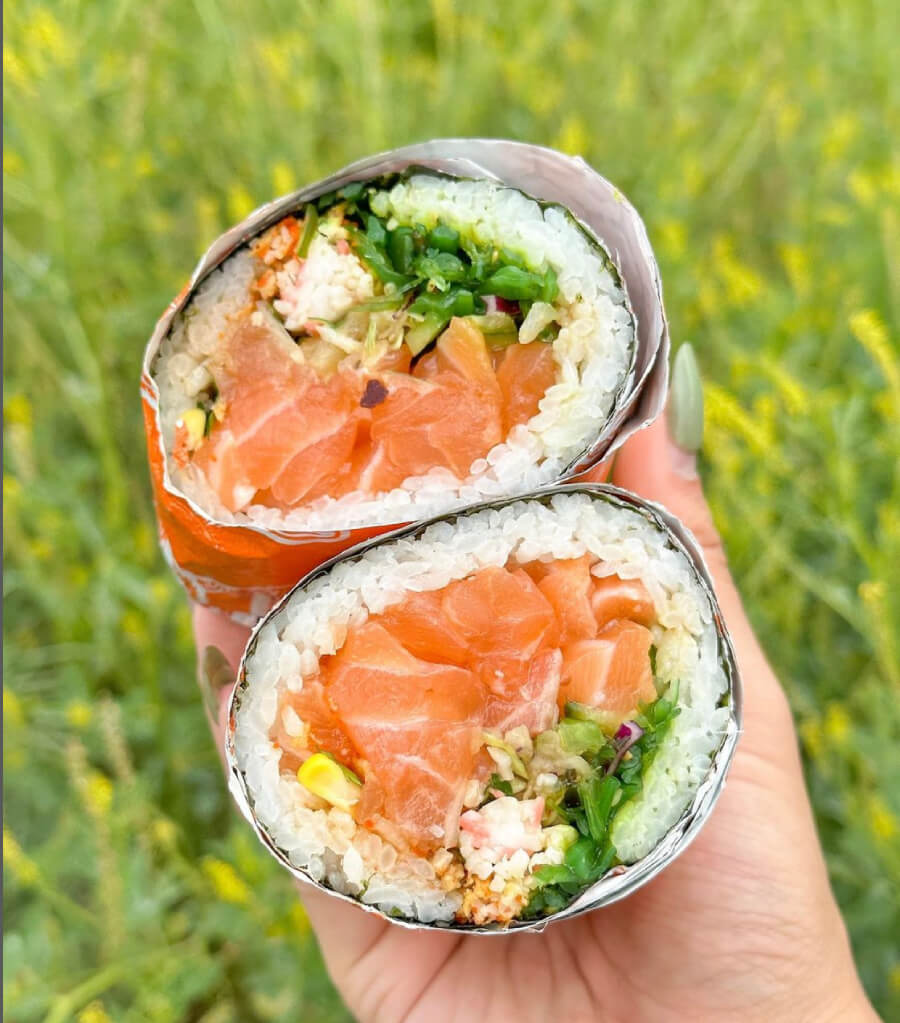
SUSHI BURRITO

THE CONCEPT OF SUSHI BURRITO

We aimed to create a handheld version of Poke by blending two of my personal favorites: a burrito and a sushi roll – what’s not to love? We had fun with it and added it to the menu.

Little did we know, this menu addition would become a turning point in our growth.

During a lunch rush one day, a representative from Business Insider walked into our tiny shop and asked if she could record a video featuring our Poke Burrito. Despite my initial hesitation – our shop was so small that my staff and I could barely squeeze another body in without slowing down our line – I agreed. Well, it was a good thing I let her shoot the video because once it was uploaded, it went absolutely viral.

It. Was. Insanity. This short 1 minute clip, triggered lines around the block for months. We had to hire bouncers for crowd control!

POKEWORKS’ COMMITMENT TO SUSTAINABILITY

Early in our brand development, the co-founders took deliberate steps to define our core values. One of them is: “Sustainability – meeting today’s needs without compromising tomorrow.” The founders understand that it goes beyond just making a profit, but how we can leave the world a better place for our children. Personally, since becoming a father recently, this sentiment has never rung louder. We want to make sure it’s not just a marketing buzzword, but a core value that helps guide our every decision. 

All of the seafood that we source carries a “Best Choice” rating by the Monterey Bay Seafood Watch, procured from vendors that are environmentally and socially responsible. Our tuna is exclusively procured from Marine Stewardship Council (MSC) certified sources, a reflection of our commitment to ending overfishing and promoting sustainable fishing practices. Our salmon holds certifications from both the Aquaculture Stewardship Council (ASC) and Best Aquaculture Practices (BAP), embodying the highest industry standards for minimizing environmental impact and upholding the well-being of communities, workers, and animals.

For many of our store build-outs, the wood used in our dining rooms is of local species and is certified by the Forest Stewardship Council. In some of our shops, the facade of our counters is made with recycled bamboo chopsticks.

Our commitment to sustainability extends to exploring alternative seafood and plant-based products. We are partnering with leading plant-based food manufacturers such as Impact Foods and Omni Foods to explore alternative seafood options. Our plant-based spam musubis are also a huge hit! We’ve also partnered with innovators like Wildtype, to explore cutting-edge cultivated seafood.

FRANCHISEE SPOTLIGHT

We seek franchisees who embody a passion for the brand and resonate with our mission statement and core values. One of which is being service-obsessed: We put the team’s needs first. We are here to serve our guests and community. We do this by being responsive, helpful, productive, and following through with our commitments, and spreading aloha.

I’d like to extend a big shout-out to Alvin Zhang, an exceptional franchisee at Pokeworks who embodies this value and who truly shines as both an entrepreneur and an outstanding individual dedicated to his community. At the peak of the pandemic, when hospitals were facing dire circumstances, Alvin and his Pokeworks team worked overtime to generously donate over 2000 poke bowls to 12 hospitals across Queens NY, and Long Island.

UPLIFTING THE AAPI COMMUNITY

We take pride in the Asian-inspired products and flavors that we serve. From spicy Sichuan poke to sweet chili gochujang poke. Sharing these flavors from our roots to the mainstream is a great privilege. 

During COVID, we partnered with Heart of Dinner to help nourish NYC’s community of Asian elders. They have a wonderful mission of supporting the AAPI community, and we’re proud to be a part of it.

We also take immense pride in having Regina Cheung, a Chinese-American, at the helm as CEO at Pokeworks, leading the charge with remarkable expertise and charisma. Furthermore, all of the co-founders are Asian-American and share the immigrant journey. 

We hope that our story and Pokeworks’ AAPI leaders can inspire future generations of AAPI entrepreneurs to dive confidently into their careers and passions. 

PETER YANG’S ADVICE TO ASPIRING ENTREPRENEURS

Don’t do it alone. Learn to ask for help. It all starts within your community.

We are very proud to say that there are a total of 8 co-founders at Pokeworks. Most advisors will tell you that’s crazy, but we made it work! We’ve learned to set aside our egos and each of us plays a distinct and vital role within the organization.

This principle aligns perfectly with another core value of ours: the incredible power of teamwork.

CONNECT WITH POKEWORKS

Instagram: @pokeworksco

Website: pokeworks.com

Franchise: pokeworksfranchise.com
Related Articles

Image Source: Dominic Lorrimer/ Australian Financial Review

News

Australian Logistics Tech Firm Shippit Procures Singapore Startup Luwjistik for $11M

Shippit has announced that it will pay $18 million to buy the logistics SaaS platform Luwjistik, based in Singapore. 

Founded by longtime friends William On and Rob Hango-Zada in 2014, with a mission to improve shipping for small businesses, as they have personally experienced the drawbacks of online shopping.

After two years of operations in the region for the Sydney-based company, the Australian logistics tech company co-founder and co-CEO William On has relocated to Singapore to lead the new expansion and manage the existing 50-person Luwjistik team.

This comes after the company raised $65 million in Series B2 funding, which helped operations in Southeast Asia, and almost seven months after it bought the last mile logistics tech platform Premonition.

Shippit’s inclusion of Luwjistik’s co-founders, who bring extensive industry experience and connections to the table, is expected to revolutionize the company’s approach. The acquisition of Luwjistik will also enable the company to provide tailored solutions for the Southeast Asian market. Therefore, Shippit can be the best option for many who manage their warehouse or search for a logistics partner.

The startup works with carriers such as Ninja Van, J&T Express, and JNE Express, as well as logistics companies such as Maersk, POS Malaysia, Lion Parcel, and Summer International.

Within a month of launching Luwjistik, the duo raised US$1.1 million (AUD$1.7 million) in a seed round led by East Ventures, including MDI-Arise Finches and Global Founders Capital.

William anticipated a significant increase in e-commerce in Southeastern Asia, which will continue if Shippit and Luwjistik join forces. Currently, they can provide a one-stop platform for enterprises and the expanding SME segment, particularly in Indonesia, Malaysia, the Philippines, and Thailand.

More than 40 million deliveries were booked via the Shippit platform in the fiscal year 2022. Since its inception in 2014, Sydney-based Shippit has fulfilled e-commerce orders worth $5.5 billion for more than 3,500 retailers.

“I strongly believe that by combining our strengths, we can continuously innovate and offer the most impactful, reliable, and relevant solutions to a fast-changing, dynamic market.” – William shared with Business News Australia.

Image Source: Social Bella

News

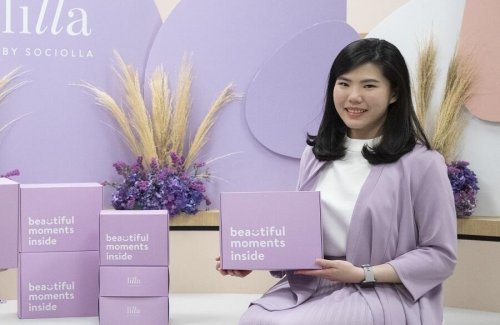
A Millennial’s Gamble Pays Off As Her New Beauty Product Line Has Just Raised Over $225M

When the pandemic struck, all Chrisanti Indiana wanted to do was help her family and create jobs in her community.

Nonetheless, as the pandemic worsened, each day appeared to be a gamble. She gambled on her dreams, created her employment opportunity, and risked everything for her family because she had no safety or security options.

The Indonesian co-founder, and chief marketing officer of Social Bella, surprised everyone by taking her successful online store offline. In 2019, her online beauty and personal care store, Sociolla, already had two physical locations in Indonesia. It currently operates 47 outlets in Indonesia and 16 in Vietnam, making its earnings multiplied by ten by the end of 2021.

It started after Indiana had finished her studies in Australia in 2015 when she moved back to Jakarta, where she conceived the idea for Sociolla.

Chrisanti found that Australia was a great place to stock up on her favorite cosmetics because of the abundance of international brands. There couldn’t have been a bigger contrast with Indonesia.

With a combined $13,000, Indiana, her brother, and a close friend founded Social Bella to provide customers with access to legitimate goods and services.

“Since we started, we ensure that we only work with authorized distributors or brand owners,” Indiana said. 

The three founders of Sociolla had bigger plans than just building an online store. They have expanded beyond offline stores to become a global beauty and personal care product distributor. In Indonesia, they also became an associate partner for numerous international brands.

‘We want to ensure that we are scaling up and reaching more and more consumers. If Social Bella becomes a unicorn, it’s a bonus.” – Chrisanti Indiana shared with CNBC.

Image Source: DoorDash

Blogs, Development, Ideas, Stories

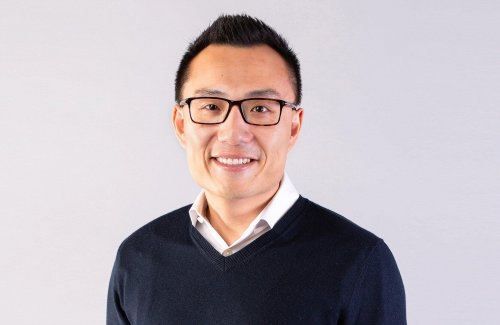
What Separates DoorDash Founder Tony Xu From The Rest Of The Tech Billionaire

Learn more about Tony Xu, the co-founder, and CEO of DoorDash, the most extensive service in the US for delivering food. Xu is a Chinese-American tech billionaire who has worked for eBay and PayPal in the past, but he attributes his current success to the experience he gained working as a dishwasher.

DoorDash went public in December 2020 after being co-founded in 2012 by a group of excellent Stanford University students, including Xu. Today, the platform has more than 6,000 employees and more than half the market share in the food ordering and delivery industry. Company earnings for 2021 were reported to be over US$4.8 billion.

Xu shared that he once felt discriminated against when surrounded by other entrepreneurs who were different from him. As the sole Asian-American cofounder of the company, he proudly and responsibly accepted the challenge. He is aware that there are not nearly as many Asian-American CEOs or other types of founders, so he remains a minority throughout this setting. He believes it serves as a gentle reminder always to recognize that and to maintain a lowly but humble attitude.

Not only has Xu found success with DoorDash, but he also serves on the board of directors for Meta, the parent company of Facebook, and was named to Fortune’s 40. He is also a huge NBA fan, leading to DoorDash becoming the league’s first official food delivery partner.

As of 2022, Xu’s net worth was estimated at US$1.3 billion, placing him at #2,190 on Forbes’ list of billionaires.

Image Source: Paulo Chun / NBC News

Stories

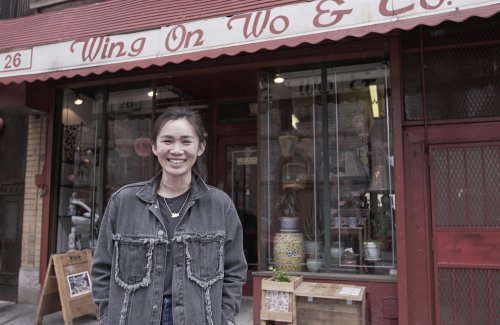
Fifth-generation Entrepreneur Reimagines NYC Chinatown Landmark While Preserving Cultural Traditions

Even though times are tough and New York’s Chinatown is on the verge of dying, there is one place where things appear to be mostly the same as they have always been.

Since Mei Lum started volunteering as a child, Wing on Wo & Co has been run by her family. Brilliant and creative heritage enterprises have withstood generations of economic ups and downs. Mei represents her family’s legacy and New Yorkers and future generations of Chinatown residents.

The 32-year-old fifth-generation owner has bigger plans. Mei revived Wing on Wo’s late-19th-century ambiance. The store was a meeting place, credit union, and informal post office for low-income Chinese employees during the Chinese Exclusion Act.

She wants to run things because she has always wanted to expand the store’s conceptual boundaries. “A business doesn’t have to be so economically driven. There can still be genuine connections, which sustain a community,” she told The Guardian.

Wing on Wo is still primarily run by the original family for over a century. For 30 years, Mei’s father Gary has chatted with clients at the counter. Lorraine, her mother, handles the website and order processing. Her 105-year-old grandmother, Nancy, promotes the store’s hand-painted wine cups, fish-shaped glazed vases, and elegant dinner plates on Instagram.

In 2016, her grandmother intended to sell the family-owned porcelain specialty shop, which was worth close to $10 million. Mei took over the business to preserve it and create a community hub. She was planning to study international relations at Columbia University, but she now wants to run the family business. She wanted the store to be a hub for activists and artists to fight gentrification and displacement.

As a result of the pandemic, Mei decided to focus her efforts on online sales, digital advertising, and social media. To ensure that the business is preserving tradition and shaping the future of Chinatown, she has added several new initiatives, such as youth programs, an artist residency, and a ceramicist fair.