Stories

September 13, 2023

SHARE:

Founded in 2015, Pokeworks emerged as a culinary venture stemming from a shared vision. Drawing inspiration from numerous trips to Hawaii, the founders were captivated by the distinct flavors of poke, prompting them to bring this fresh, healthful, and beloved island delicacy to the mainland United States.

With a steadfast commitment to a wholesome lifestyle and premium ingredients, Pokeworks offers a culinary experience that reverberates with authenticity. Their menu artfully captures the genuine essence of Hawaiian flavors, showcasing a medley of signature creations and customizable options.

Aside from this, Pokeworks champions sustainability, prioritizing responsibly sourced seafood and conscientious material choices. This ethos extends to all aspects of the brand’s operations, affirming a holistic dedication to social and environmental responsibility.

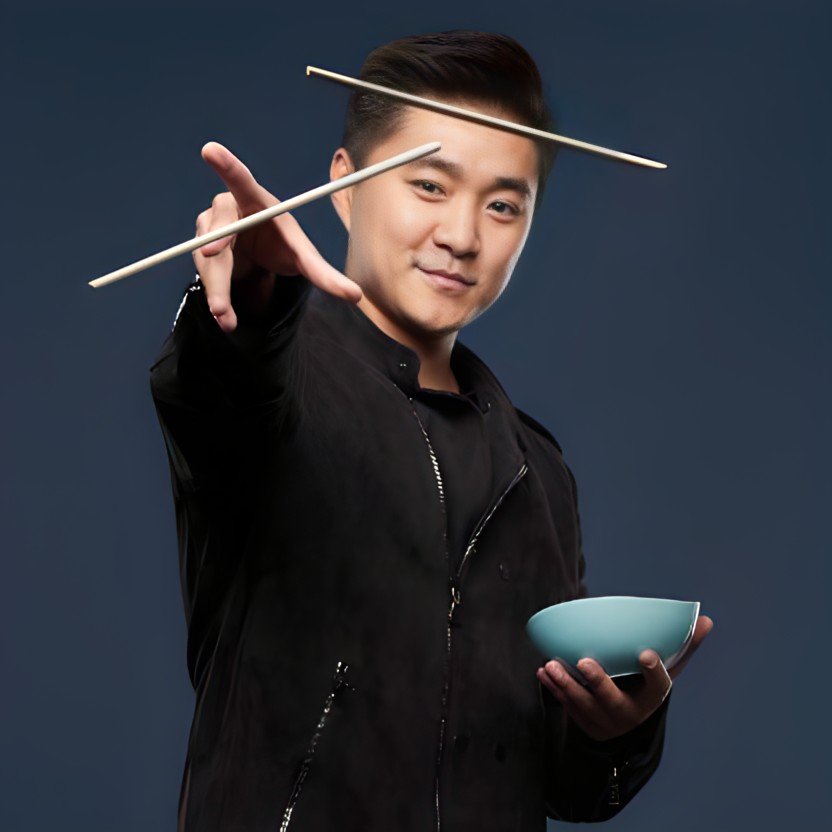
Asian Hustle Network had the chance to sit down for an interview with one of Pokeworks’ co-founders, Peter Yang. Join us as we delve deeper into their story and uncover the insights that drive their success.

HOW IT ALL STARTED

The idea of Pokeworks dates back to 2015, when my co-founders, Mike Chen and Mike Wu, met over lunch. Mike Chen just had his wedding in Maui and Mike Wu had just come back to the mainland after months in Oahu launching a restaurant. They reminisced about the delicious poke they enjoyed on the island and wondered why it’s not a staple on the mainland. We took inspiration from build-your-own fast casuals like Chipotle, and ran with the idea of “Poke Your Way”. As cliche as it sounds, we spent months R&D’ing out of Mike Wu’s garage until we all felt the flavors were perfect.

Several months later, we opened the doors to our first location in midtown Manhattan – a tiny 750-square-foot space. It was a cold December, and most of the city had left for the holidays – it was quiet… and our sales were bleak. Besides correcting our guests on the pronunciation of “poke”, I had to turn away several guests with “Sorry, no, we do not sell Pokemon cards.” Educating the market was definitely an early challenge we had to overcome.

The new year rolled around and our lines got progressively longer day after day. As business grew, we kept our heads down and continued to focus on operational excellence – great products and great guest service. Word quickly spread, and we became the popular kids on the block.

Fast forward 8 years and a pandemic later, we’re 70 locations proud across the U.S., Canada, Mexico, and Taiwan.
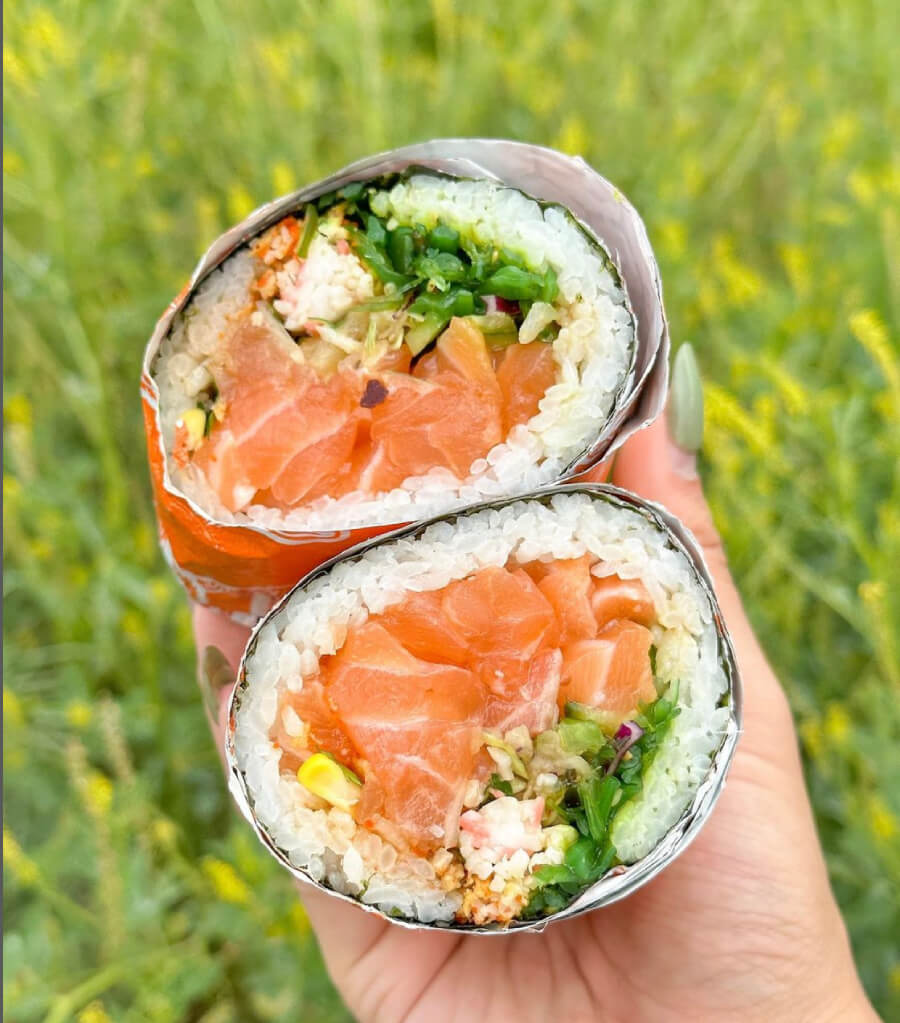
SUSHI BURRITO

THE CONCEPT OF SUSHI BURRITO

We aimed to create a handheld version of Poke by blending two of my personal favorites: a burrito and a sushi roll – what’s not to love? We had fun with it and added it to the menu.

Little did we know, this menu addition would become a turning point in our growth.

During a lunch rush one day, a representative from Business Insider walked into our tiny shop and asked if she could record a video featuring our Poke Burrito. Despite my initial hesitation – our shop was so small that my staff and I could barely squeeze another body in without slowing down our line – I agreed. Well, it was a good thing I let her shoot the video because once it was uploaded, it went absolutely viral.

It. Was. Insanity. This short 1 minute clip, triggered lines around the block for months. We had to hire bouncers for crowd control!

POKEWORKS’ COMMITMENT TO SUSTAINABILITY

Early in our brand development, the co-founders took deliberate steps to define our core values. One of them is: “Sustainability – meeting today’s needs without compromising tomorrow.” The founders understand that it goes beyond just making a profit, but how we can leave the world a better place for our children. Personally, since becoming a father recently, this sentiment has never rung louder. We want to make sure it’s not just a marketing buzzword, but a core value that helps guide our every decision. 

All of the seafood that we source carries a “Best Choice” rating by the Monterey Bay Seafood Watch, procured from vendors that are environmentally and socially responsible. Our tuna is exclusively procured from Marine Stewardship Council (MSC) certified sources, a reflection of our commitment to ending overfishing and promoting sustainable fishing practices. Our salmon holds certifications from both the Aquaculture Stewardship Council (ASC) and Best Aquaculture Practices (BAP), embodying the highest industry standards for minimizing environmental impact and upholding the well-being of communities, workers, and animals.

For many of our store build-outs, the wood used in our dining rooms is of local species and is certified by the Forest Stewardship Council. In some of our shops, the facade of our counters is made with recycled bamboo chopsticks.

Our commitment to sustainability extends to exploring alternative seafood and plant-based products. We are partnering with leading plant-based food manufacturers such as Impact Foods and Omni Foods to explore alternative seafood options. Our plant-based spam musubis are also a huge hit! We’ve also partnered with innovators like Wildtype, to explore cutting-edge cultivated seafood.

FRANCHISEE SPOTLIGHT

We seek franchisees who embody a passion for the brand and resonate with our mission statement and core values. One of which is being service-obsessed: We put the team’s needs first. We are here to serve our guests and community. We do this by being responsive, helpful, productive, and following through with our commitments, and spreading aloha.

I’d like to extend a big shout-out to Alvin Zhang, an exceptional franchisee at Pokeworks who embodies this value and who truly shines as both an entrepreneur and an outstanding individual dedicated to his community. At the peak of the pandemic, when hospitals were facing dire circumstances, Alvin and his Pokeworks team worked overtime to generously donate over 2000 poke bowls to 12 hospitals across Queens NY, and Long Island.

UPLIFTING THE AAPI COMMUNITY

We take pride in the Asian-inspired products and flavors that we serve. From spicy Sichuan poke to sweet chili gochujang poke. Sharing these flavors from our roots to the mainstream is a great privilege. 

During COVID, we partnered with Heart of Dinner to help nourish NYC’s community of Asian elders. They have a wonderful mission of supporting the AAPI community, and we’re proud to be a part of it.

We also take immense pride in having Regina Cheung, a Chinese-American, at the helm as CEO at Pokeworks, leading the charge with remarkable expertise and charisma. Furthermore, all of the co-founders are Asian-American and share the immigrant journey. 

We hope that our story and Pokeworks’ AAPI leaders can inspire future generations of AAPI entrepreneurs to dive confidently into their careers and passions. 

PETER YANG’S ADVICE TO ASPIRING ENTREPRENEURS

Don’t do it alone. Learn to ask for help. It all starts within your community.

We are very proud to say that there are a total of 8 co-founders at Pokeworks. Most advisors will tell you that’s crazy, but we made it work! We’ve learned to set aside our egos and each of us plays a distinct and vital role within the organization.

This principle aligns perfectly with another core value of ours: the incredible power of teamwork.

CONNECT WITH POKEWORKS

Instagram: @pokeworksco

Website: pokeworks.com

Franchise: pokeworksfranchise.com
Related Articles

Image by Lorephil Toledo

Uncategorized

Filipina Single Mother in Canada Grew Her Cleaning Job Into a Million-Dollar Janitorial Business

We’ve all heard the stories of people who have started with next to nothing and come out ahead. They are able to turn their passions into successful businesses while providing them with a sense of purpose. But what does it really take to become a successful entrepreneur? 

As a Filipina single mom who built a business in Canada, Lorephil Toledo had to overcome a lot of challenges before achieving success. She is now the CEO of her own company and an inspiring Filipino dreamer for female entrepreneurs around the world. 

At a young age, Lorephil was already used to running her own business. She used to sell clothes, shoes, and underwear at school to pay for her own food. She has never been shy, and she even uses her skills to provide tutoring services in order to increase her income. 

In 2011, Lorephil sought work in Canada. Her oldest was 2 and her youngest was 11 months. She was unhappy because she had to spend so much time away from her children in order to earn. 

She overcame homesickness and missed her children by cleaning. “I found myself distracted by cleaning houses because I was homesick. I’m dreaming that my children are in here while I’m doing housework. I felt good every time I cleaned the house,” she explained.

Lorephil quickly realized that she could turn her pastime into a profitable business. Lorephil started the successful CanaJan Inc., a janitorial services company. Through her entrepreneurial spirit and hard work, Lorephil was able to serve the community with the best janitorial services.  

She started out on her own and now oversees a team of 15 people. More than 350 of her clients are consistent, and she brings in millions of dollars annually. She is a multi-award winner, having been named Entrepreneur of the Year, New Citizen of the Year, and New Business of the Year in addition to being named Ambassador of the Filipino Canadian Trades. She was also invited to speak by the provincial government of Alberta.

When sharing her story, Lorephil mentioned a few of the lessons she has learned along the way. She encouraged everyone to have big goals. She believes that there is no impossibility in life, even for the poor, and that there should be no limit to one’s dreams. 

She advises to work hard, “If you want to succeed, you have to work hard for it.” She felt dreams can’t come true without labor. She worked seven days a week for her company. She got four hours of sleep, skipped holidays for five years, and reinvested her money.

Lorephil is a firm believer in the saying “ “Don’t Quit.” She is confident that every difficulty can be overcome and that there is always a way out.

She upholds that in order to properly serve your customers, you must first properly serve your team. This is her reason for treating her employees well and providing free services to her regular customers. She added,  “If you give something to the universe, it will come back double times.”

Image Source: JG Summit

Uncategorized

The Notable Filipino Entrepreneur Who Used His Peanuts Enterprise To Establish An Empire

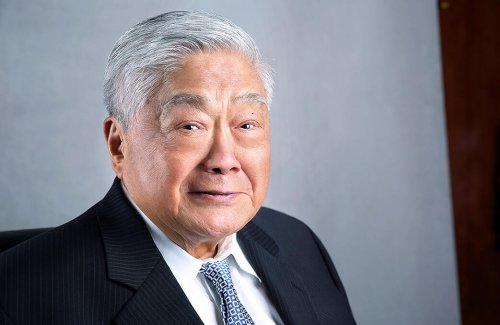
“Choose to be an entrepreneur because then you desire a life of adventure, endless challenge, and the opportunity to be your best self.” — a remarkable statement from “Big John”, the founder and former chairman of JG Summit, one of the largest companies in the Philippines. 

John Gokongwei, a Filipino businessman, investor, and philanthropist, died in 2019 at age 93, but his legacy and business lessons continue to inspire. John created JG Summit, a worldwide conglomerate with assets in one of the Philippines’ largest Telecommunications companies PLDT, Manila Electric Company, and other international companies.

John’s grandfather, Pedro Gotiaoco, was one of Cebu’s richest persons in the 19th century. He was from Fujian province in China and was the owner of the massive trading firm Gotiaoco Hermanos. However, their family went bankrupt during the Great Depression, leaving them homeless.

John, his mother, and five siblings returned to China while his father stayed in the Philippines. At 14, he started selling peanuts to support his family. He quickly realized a bicycle would help him get more done. He saved money and eventually had enough to sell his goods in nearby cities.

At 17, he followed in his family’s footsteps and entered the trading business. He used a small boat to transport goods between Cebu and Manila. 

In order to put his siblings through school in China, he had to double his work. After the war, John saw it as an opportunity to expand his trading business internationally. Amasia Trading, his first company, sold and bought goods in the United States, Manila, and the Visayas region. 

Resulting from his fruitful dealings in Amasia Trading, John finally got to see his family again. When they get back to the Philippines, they helped run their father’s business which is American-Asia Trading. 

He then got interested in the cornstarch sector but needed the funds to get started. After numerous banks turned him down to secure a loan, Dr. Albino Sycip of China Bank lent him P500,000 ($8900). John founded Universal Corn Products in 1954, and eventually expanded into variety of products, it became Universal Robina Corporation (URC).

URC became one of the country’s major food and beverage firms, while one of the Philippines’ largest business empires, the JG Summit Holdings continues to grow. He also founded Consolidated Food Corporation (later CFC), Cebu Pacific Air, and Robinson Retail Holdings. According to Forbes, John was the third richest Filipino at the time of his death.

Big John’s success was largely a result of his management style and leadership abilities, in addition to the fact that he has proven to be a crafty business leader. He will be forever remembered as a self-made billionaire who began by selling peanuts and was one of the most enduring entrepreneurs in history. 


Image Source: Brian Flaherty / The New York Times

Uncategorized

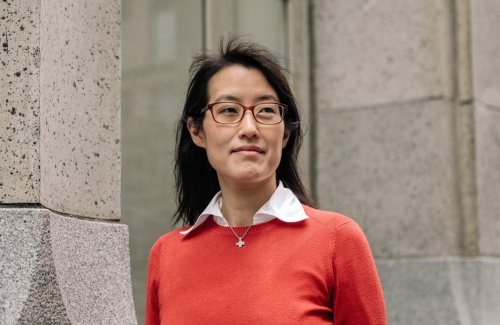
Former Reddit CEO Ellen Pao On Being A Confident Woman In The Male-Dominated Tech Industry

Greater diversity in tech overall could solve some of the industry’s biggest problems, including fighting disinformation, hate speech, and harassment in online spaces, said the former Reddit CEO, Ellen Pao in a recent podcast interview.

While women have made achievements in tech, their numbers are still low. A survey from AnitaB.org, a global group for women engineers, predicts it could take 12 years for women to see equality in the industry.

In 2012, Pao sued her then employer Kleiner Perkins Caufield & Byers for gender discrimination in San Francisco. The jury sided with the VC firm, but Pao became the face of the issue.

Pao shares with Jennifer Palmieri in her podcast that facing the Silicon Valley guys’ club inspired her to lead Reddit in 2014. During her time as the CEO of one of the biggest discussion websites, she didn’t have imposter syndrome as she had always thought that she had seen so many “horrible” male CEOs and board members.

The Taiwanese-American felt confident in her qualifications despite the Silicon Valley narrative that favors Caucasian and male college dropouts. “Maybe I’m not going to be perfect, and maybe I’m going to make mistakes, but it’s not going to be like some of these other mistakes I’ve seen.”

One of Pao’s priorities, when she was at Reddit, was strengthening the anti-harassment policy and clearing the site of nude pictures and revenge porn. Critics of the plan, mostly men, argued such measures were a form of censorship.

Today, however, Pao thinks that current tech leaders are driven to not prohibit hate speech because it boosts social media engagement and profitability.

As the majority white, male, and affluent tech leaders don’t see and experience problems the same way marginalized communities do, Pao believes that they can’t solve these issues.

Pao credits her mother, who is an engineer, for instilling in her a strong sense of right and wrong, which led her to speak up when she witnessed overqualified women and colleagues of color not getting promoted at the same pace as White men.

Image Source Colin Boyle/Block Club Chicago

Uncategorized

North Side Immigrant Rights Group Foster Community By Folk Drumming

Hana Center, a nonprofit organization for Asian American and immigrant rights, provides neighbors new opportunities to teach them traditional Korean folk drumming, which activists frequently use in their advocacy. 

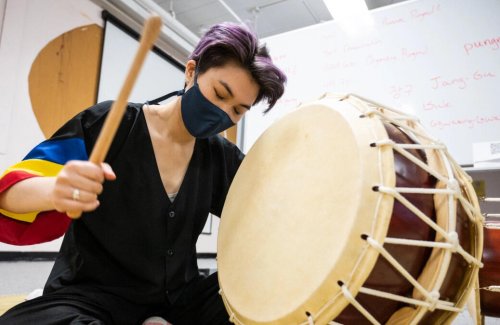
Community engagement coordinator Won Joon Lee tells Block Club Chicago that the group teaches Pungmul, a Korean folk tradition with deep historical roots. It originated in Korea’s pre-industrial farming culture and used the hourglass-shaped janggu (a double-sided drum) to protest immigration and racism. 

Lee explained that during the Japanese occupation of Korea from 1910 to 1945, public gatherings were prohibited except for musical performances, making Pungmul a form of resistance. 

In 2017, two long-standing organizations,  the Korean American Community Services, and the Korean American Resource and Cultural Center were combined to become Hana Center, named from the Korean word for “one.”

The organization has a long history of youth Pungmul programming, but this summer marked the first time the non-profit offered classes for adults interested in advocacy work. 

The first-ever class will proceed after the initial session of eight weeks has passed. As the new program expands, the instructors intend to continue enrolling new students in it on an ongoing basis.

Hana Drum School instructor Inah Jeong said Pungmul drumming is loud as planned, and they are culturally and politically distinct. Korean immigrants may connect with Chicago immigrants and join the immigrant rights and citizenship march, she tells Block Club Chicago.

The ensemble delivered its first drumming class this summer, but new students are always welcome to join in. Residents and community organizations can benefit from such events, according to the center’s administrators.

Choi tells Block Club Chicago that the current situation is both exhausting and frightening, but she believes the strong and loving communities they form may provide joy even in difficult times.

Their communities enable them to change the world now and in the future. The goal according to Choi is to turn community building into advocacy that targets racial, gender, and economic concerns along with immigrant rights.

Hana Center is located at 4300 North California Avenue in Irving Park. It also offers services to address needs related to citizenship and immigration, housing, and other areas.