Stories

September 13, 2023

SHARE:

Founded in 2015, Pokeworks emerged as a culinary venture stemming from a shared vision. Drawing inspiration from numerous trips to Hawaii, the founders were captivated by the distinct flavors of poke, prompting them to bring this fresh, healthful, and beloved island delicacy to the mainland United States.

With a steadfast commitment to a wholesome lifestyle and premium ingredients, Pokeworks offers a culinary experience that reverberates with authenticity. Their menu artfully captures the genuine essence of Hawaiian flavors, showcasing a medley of signature creations and customizable options.

Aside from this, Pokeworks champions sustainability, prioritizing responsibly sourced seafood and conscientious material choices. This ethos extends to all aspects of the brand’s operations, affirming a holistic dedication to social and environmental responsibility.

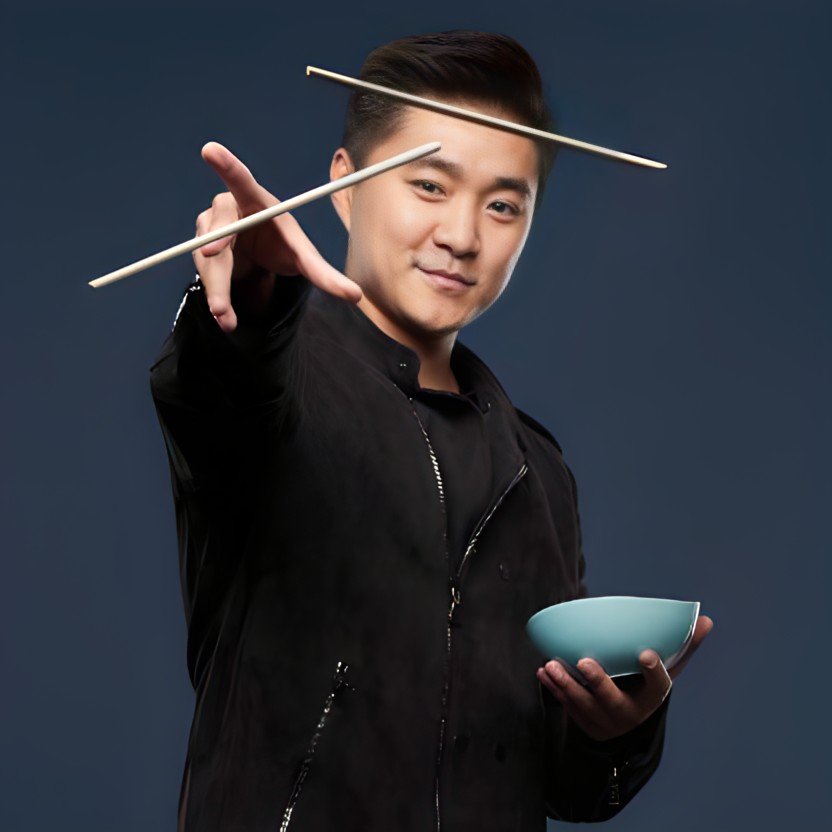
Asian Hustle Network had the chance to sit down for an interview with one of Pokeworks’ co-founders, Peter Yang. Join us as we delve deeper into their story and uncover the insights that drive their success.

HOW IT ALL STARTED

The idea of Pokeworks dates back to 2015, when my co-founders, Mike Chen and Mike Wu, met over lunch. Mike Chen just had his wedding in Maui and Mike Wu had just come back to the mainland after months in Oahu launching a restaurant. They reminisced about the delicious poke they enjoyed on the island and wondered why it’s not a staple on the mainland. We took inspiration from build-your-own fast casuals like Chipotle, and ran with the idea of “Poke Your Way”. As cliche as it sounds, we spent months R&D’ing out of Mike Wu’s garage until we all felt the flavors were perfect.

Several months later, we opened the doors to our first location in midtown Manhattan – a tiny 750-square-foot space. It was a cold December, and most of the city had left for the holidays – it was quiet… and our sales were bleak. Besides correcting our guests on the pronunciation of “poke”, I had to turn away several guests with “Sorry, no, we do not sell Pokemon cards.” Educating the market was definitely an early challenge we had to overcome.

The new year rolled around and our lines got progressively longer day after day. As business grew, we kept our heads down and continued to focus on operational excellence – great products and great guest service. Word quickly spread, and we became the popular kids on the block.

Fast forward 8 years and a pandemic later, we’re 70 locations proud across the U.S., Canada, Mexico, and Taiwan.
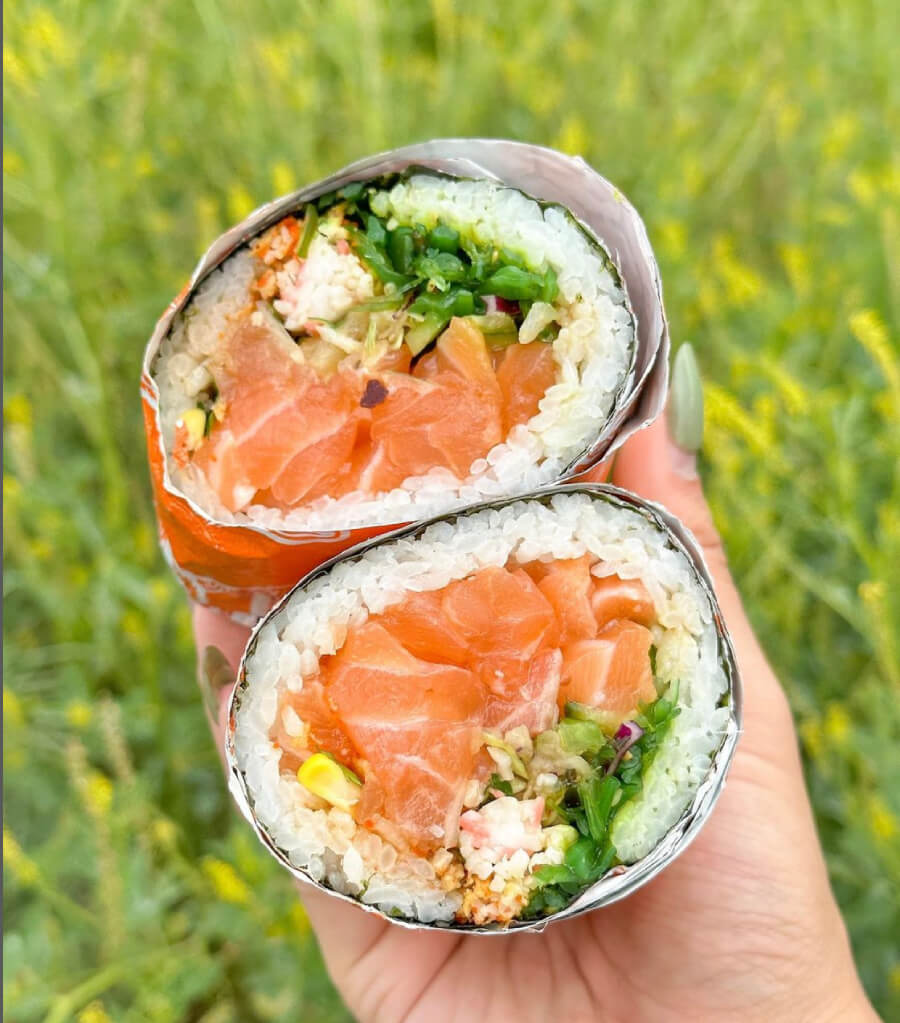
SUSHI BURRITO

THE CONCEPT OF SUSHI BURRITO

We aimed to create a handheld version of Poke by blending two of my personal favorites: a burrito and a sushi roll – what’s not to love? We had fun with it and added it to the menu.

Little did we know, this menu addition would become a turning point in our growth.

During a lunch rush one day, a representative from Business Insider walked into our tiny shop and asked if she could record a video featuring our Poke Burrito. Despite my initial hesitation – our shop was so small that my staff and I could barely squeeze another body in without slowing down our line – I agreed. Well, it was a good thing I let her shoot the video because once it was uploaded, it went absolutely viral.

It. Was. Insanity. This short 1 minute clip, triggered lines around the block for months. We had to hire bouncers for crowd control!

POKEWORKS’ COMMITMENT TO SUSTAINABILITY

Early in our brand development, the co-founders took deliberate steps to define our core values. One of them is: “Sustainability – meeting today’s needs without compromising tomorrow.” The founders understand that it goes beyond just making a profit, but how we can leave the world a better place for our children. Personally, since becoming a father recently, this sentiment has never rung louder. We want to make sure it’s not just a marketing buzzword, but a core value that helps guide our every decision. 

All of the seafood that we source carries a “Best Choice” rating by the Monterey Bay Seafood Watch, procured from vendors that are environmentally and socially responsible. Our tuna is exclusively procured from Marine Stewardship Council (MSC) certified sources, a reflection of our commitment to ending overfishing and promoting sustainable fishing practices. Our salmon holds certifications from both the Aquaculture Stewardship Council (ASC) and Best Aquaculture Practices (BAP), embodying the highest industry standards for minimizing environmental impact and upholding the well-being of communities, workers, and animals.

For many of our store build-outs, the wood used in our dining rooms is of local species and is certified by the Forest Stewardship Council. In some of our shops, the facade of our counters is made with recycled bamboo chopsticks.

Our commitment to sustainability extends to exploring alternative seafood and plant-based products. We are partnering with leading plant-based food manufacturers such as Impact Foods and Omni Foods to explore alternative seafood options. Our plant-based spam musubis are also a huge hit! We’ve also partnered with innovators like Wildtype, to explore cutting-edge cultivated seafood.

FRANCHISEE SPOTLIGHT

We seek franchisees who embody a passion for the brand and resonate with our mission statement and core values. One of which is being service-obsessed: We put the team’s needs first. We are here to serve our guests and community. We do this by being responsive, helpful, productive, and following through with our commitments, and spreading aloha.

I’d like to extend a big shout-out to Alvin Zhang, an exceptional franchisee at Pokeworks who embodies this value and who truly shines as both an entrepreneur and an outstanding individual dedicated to his community. At the peak of the pandemic, when hospitals were facing dire circumstances, Alvin and his Pokeworks team worked overtime to generously donate over 2000 poke bowls to 12 hospitals across Queens NY, and Long Island.

UPLIFTING THE AAPI COMMUNITY

We take pride in the Asian-inspired products and flavors that we serve. From spicy Sichuan poke to sweet chili gochujang poke. Sharing these flavors from our roots to the mainstream is a great privilege. 

During COVID, we partnered with Heart of Dinner to help nourish NYC’s community of Asian elders. They have a wonderful mission of supporting the AAPI community, and we’re proud to be a part of it.

We also take immense pride in having Regina Cheung, a Chinese-American, at the helm as CEO at Pokeworks, leading the charge with remarkable expertise and charisma. Furthermore, all of the co-founders are Asian-American and share the immigrant journey. 

We hope that our story and Pokeworks’ AAPI leaders can inspire future generations of AAPI entrepreneurs to dive confidently into their careers and passions. 

PETER YANG’S ADVICE TO ASPIRING ENTREPRENEURS

Don’t do it alone. Learn to ask for help. It all starts within your community.

We are very proud to say that there are a total of 8 co-founders at Pokeworks. Most advisors will tell you that’s crazy, but we made it work! We’ve learned to set aside our egos and each of us plays a distinct and vital role within the organization.

This principle aligns perfectly with another core value of ours: the incredible power of teamwork.

CONNECT WITH POKEWORKS

Instagram: @pokeworksco

Website: pokeworks.com

Franchise: pokeworksfranchise.com
Related Articles

295546115_608626004055198_2005064705537423309_n

Uncategorized

“Life as an entrepreneur is tough” Is An Understatement For Vanessa Techapichetvanich

Some business owners spend years building a company only to see it fail before it even takes off. How are you going to survive and cope? Will you just give up that dream business?

We all know that life as an entrepreneur is complex, but once you hit it, everything falls into place. Following the example of 27-year-old Thai entrepreneur Vanessa Techapichetvanich as she trusted the process and waited for the right moment to reap the benefits of her efforts.

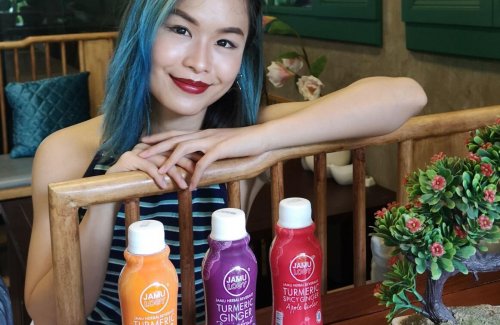
Read through as Vanessa shares her story with the AHN community about building her passion-driven business Jamulogy, a 100% plant-based Indonesian herbal tonic. She discusses her struggles that almost made her give up, and what kept her going in order to reach her successes today.

Hitting Rock Bottom At The Very Start

2 years ago, I poured all my life’s savings into building Jamulogy. I raised quite a significant amount of funding through families and angel investors, built my first factory from scratch, and lost over $1M, due to the pandemic and an over-prioritization of FoodTech R&D.

I was devastated. This tremendous loss was beyond tragic. I was at the point where I wondered whether it was stupid for me to leave my high pay corporate job only to lose all my savings along with a sum of money from my investors.

What am I going to feed myself tomorrow? What will my employees do when they lose their job? How will I regain all the money I’ve lost? How will it affect women founders’ reputation in the startup ecosystem?

These questions and my desperation kept me wide awake at night for months. I was distressed, depressed, and hopeless. It was one of the lowest moments of my life.  

It also made me realize that when someone says “life as an entrepreneur is tough”, it is very much an understatement. You’re pretty much living on the edge 24/7, giving your 10000% best while success isn’t guaranteed.

What am I going to feed myself tomorrow? What will my employees do when they lose their job? How will I regain all the money I’ve lost? How will it affect women founders’ reputation in the startup ecosystem?

-Vanessa Techapichetvanich

Shedding Some Light On Untapped Opportunities

I almost gave up. I would have.. had I not coincidentally connected with someone from AHN who is in the import and export business. One really good thing about this group is you have people from everywhere around the globe, and they are able to share insightful expertise on some stuff you’re not familiar with. 

I joined AHN more than a year ago when Facebook suggested the group to me. One day, I saw some people posted about expanding their food products to big retailers like Walmart, Wholefoods, and Costco, and from there, I got to connect with someone from San Francisco who works for a national distributor company in the US, and that’s how Jamulogy’s products entered the US market. 

This encounter shed some light on untapped opportunities and calls for a pivot in our business model. And I have been rebuilding since January. Despite the adversity I have been put through, this journey has been my greatest teacher yet.

I’m proud to share that Jamulogy is now available in 5 countries worldwide, including the US, Australia, Singapore, Hong Kong, and Thailand. Jamulogy has also recently “graduated” from Southeast Asia’s biggest FoodTech accelerator program. 

Despite the adversity I have been put through, this journey has been my greatest teacher yet.

-Vanessa Techapichetvanich

Transforming Traditional And Holistic Drinks Into Recipes Of Yummy 

Jamulogy was born out of my passion for a healthy lifestyle and my dream to bring Asian pride to the global stage. My mother is Indonesian, and I was introduced to Jamu when I was 5. The word “Jamu” itself means herbs in Indonesian. Sadly, our generation in Asia has overlooked these Indonesian herbal drinks that have over 1,300 years of history as they often associate herbal blends with older people.

Vanessa and her mother

Using modern food tech and all-natural non-GMO ingredients, we aim to recreate traditional Indonesian Jamu as a way to restore health to modern consumers. We are also committed to debunking the myth that healthy food tastes terrible.

Our concept is “From farm to bottle,” and we take every opportunity to support local farmers & growers around Asia. Each bottle contains only 40-80 calories without cane sugar or highly processed ingredients.

Going forward, we are also diverging our product offerings into herbal powder mix to cater to different consumer lifestyles across the world. 

Inspiration To Keep Going and Work Harder

What inspires me the most are our customers. I received all sorts of feedback from customers, both positive and negative. Whenever I hear our customers telling us how our products have created a value-adding impact on their health and life, I can’t help but smile to myself. 

But of course, we also received negative feedback and complaints, which I got a lot of value from as those have helped us improve, adjust, and create even better products for our customers. Truth be told, we have experimented with over 150 recipes. It was a struggle at the start, but “fall seven times, get up eight.” 

It’s the joy of being able to create a positive impact in society that keeps me going. 

It’s the joy of being able to create a positive impact in society that keeps me going. 

-Vanessa Techapichetvanich

Advice To Aspiring Entrepreneurs

  1. Don’t be afraid to ask for help when you need it. 
  2. Do not let your failures define who you are, but do learn from them. Every successful person I know has gone through several major failures before they get to where they are today.
  3. Surround yourself with like-minded people. I can’t stress enough the importance of this. 

For me, the most important traits of being an entrepreneur are a growth mindset and adaptability. It’s not about who has the most brilliant ideas or who has the highest IQ, but more so who adapts the quickest to fit the market’s needs and customers’ expectations. 

Connect With Vanessa

You may check out our IG/FB at @drinkjamulogy.

If you’re just starting an F&B business or planning on exporting to Asia and want some advice, feel free to reach out as well. I’ll try my best to answer ⭐

Image Source: Reuters / IANS

Uncategorized

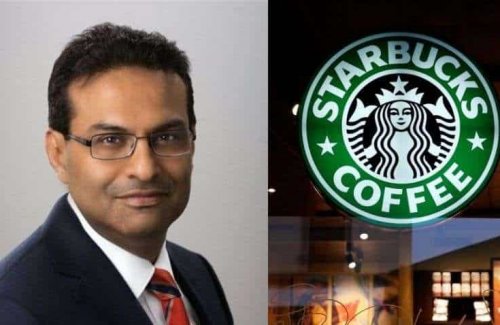
Starbucks Reveals Newest CEO Reckitt’s Laxman Narasimhan

Laxman Narasimhan, a seasoned executive with extensive experience in the consumer products industry, will succeed Howard Schultz as CEO of Starbucks.

Over the course of over 30 years, Narasimhan has led and advised several international consumer-facing companies. 

When he joined the consumer goods company Reckitt, it dealt with a cyber attack, a botched product launch, production problems, and a lackluster performance from its core brands. The company’s shareholders were very appreciative of Narasimhan’s three years as CEO, during which the company’s performance returned to levels that were considered to be sustainable.

Mellody Hobson, who chairs the board at Starbucks, also lauded Narasimhan as an “inspiring leader” who will contribute to the company’s expansion. Schultz also said that Narasimhan’s ideas would be fundamental to Starbucks as it builds on its past in this new era of greater well-being.

In the past, Narasimhan has also held executive positions at PepsiCo and McKinsey, in addition to his current role as a trustee at the Brookings Institute in Washington, District of Columbia. 

Narasimhan spent her younger years in India, but he came to the United States to earn a master’s degree and an MBA from the University of Pennsylvania (MBA). He is also proficient in three Indian languages English, Spanish, and German. The Indian languages of Hindi, Tamil, and Malayalam.

He will now be fully immersed in Starbucks over the next few months as he works and learns the plan that former CEO Schultz put in place during his brief third tenure at Starbucks. During this transitional period, Narasimhan will travel to various stores and factories to monitor the expansion and performance.

In a statement, Narasimhan remarked on how the company’s recent “reinvention” and investments in its partner and customer experiences had positioned it to meet the shifting demands of the present and prepare it for an even brighter future.

Image Source: Thuc Doan Nguyen

Uncategorized

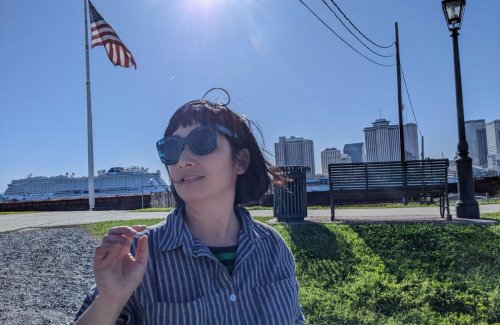
Vietnamese-American Writer Turned Down $5M To Shoot Her Own Story In New Orleans

“Everyone has tried to tell our stories on film and television, but they are inaccurate because the producers, directors, and storytellers haven’t lived it.”  — Thuc Doan Nguyen described the other filmmakers who wanted to finance her upcoming film but were never satisfied with what they could do for her story.

Nguyen was eager to continue working on her script “Scent of the Delta,” a semifinalist at the 2020 film festival that will shortly be filmed. Carrie, a multiracial lady in New Orleans, is caught between two cultures. The narrative discusses anti-Asian prejudice, Asian sex workers’ misery, human trafficking victims, and Vietnamese patriarchal standards.

This gave Nguyen focus and purpose, and she became a screenwriter. Her first assignment in New Orleans showed her how misunderstood the Vietnamese population was. She cited her family’s terrifying refugee experiences and which fueled her desire and determination to do more.

Nguyen’s initial career path never involved writing. As a 3-year-old, she was entrusted to churchwomen, whom she refers to as her American grandmothers, because her family did not speak English when they immigrated to the United States. Her family relocated to southern Maryland with new employment opportunities awaiting her parents.

Since Nguyen had already made it to the semi-finals of the 2022 festival and Sundance Film Institute had expressed interest in the script, she decided to push forward with the project. She anticipated additional difficulties and major setbacks while adapting the screenplay into a film. Vietnamese-American producers had expressed interest in funding the film, but she knew they were missing the mark. 

She believes that the production team and actors cast by the producers will not complement her story. Because of this, she has made a life-changing choice. She declined a $5 million sponsorship offer for her film and decided to make it herself. As a result of her discernment, she was able to meticulously plan out the production of the film version of the story that she envisioned. 

Her film will be developed and directed by her team and a well-known production. She chose Le Ly Haslip, who wrote Oliver Stone’s “Heaven and Earth,” and Maria Judice, a science-fiction film producer. 

Nguyen wants the audience to comprehend the genuine narrative behind her writing, as shared by people who experienced it. The film’s shooting is set to get underway in Louisiana in 2023.

This upcoming fall, she was also nominated for the 2022 Gold Fellowship Award from the Academy of Motion Picture Arts and Sciences due to her continued perseverance and incredible creative work.

Image Source: Cloversoft

Stories

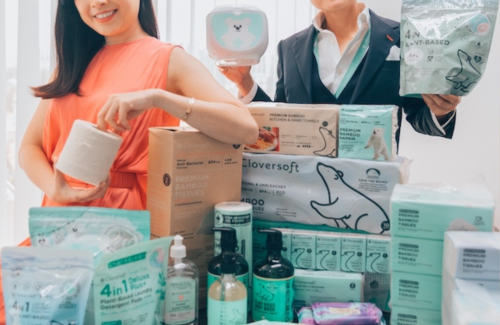
Two Former Bankers Set Out To Make Plant-Based Home Goods Using Bamboos

In order to produce environmentally friendly household goods such as tissues and wipes, Singaporeans Angela Sim and Lynn Yeo, the founders of Cloversoft, invested in bamboo trees as the material of choice. 

Bamboos were discovered to be the fastest-growing plants in the study, so they decided to cultivate them. Furthermore, unbleached bamboo does not contain any chemicals, which contributes to its sustainability.

Angela and Lynn founded Cloversoft in September 2014, and both are passionate about producing safe and environmentally friendly consumer goods. They became close friends while working at a bank for several years before launching their business. Lynn’s lifelong passion is recycling and green projects, whereas Angela strongly cares for animals.

According to Angela, a documentary on a polar bear in the Arctic brought her to tears on an aircraft back to Singapore from a business trip abroad. Because of this, she became fond of the cute critter that would eventually become Cloversoft’s mascot.

Cloversoft only uses superior, cruelty-free, vegan, and eco-friendly raw ingredients. No artificial scents, colors, alcohol, chlorine, or other chemicals that might harm the consumer were included.

Other brands may not adopt bamboo because of its higher cost, despite its environmental benefits. Angela and Lyn, however, keep prices low so people and companies may afford to go green. The duo plans to expand its operations in the United States, including Vietnam and Indonesia. 

Coversoft’s long-term objective is to build the most successful fast-moving consumer goods (FMCG) company in Singapore, with offices around the world, centered on the core values of providing products that are affordable, environmentally friendly, and derived from plants.

Lack of business experience made learning tough at first. There was no demand for their eco-friendly goods, and other corporations repeatedly turned them down. Angela admitted,  “This was one of the darkest moments in our entrepreneurship journey”.  

Fortunately, consumers now publicly acknowledge their items and frequently purchase their green products  Word-of-mouth and consumer feedback helped them quickly spread the word, and their sales grew 1,500% in one year.

They’ve also donated a portion of their revenues to Polar Bears International in Canada to help protect the polar bear population.

Cloversoft’s first year of business saw strong sales and rising client bases in Asia Pacific countries. The firm aims to become the largest FMCG company headquartered in Singapore, with branches throughout the world, by delivering safe, environmentally friendly, and fairly priced plant-based products.