Stories

November 4, 2025

SHARE:

When Nisha Desai and Alice Zhang met at Harvard Business School, neither of them expected that a casual conversation about their frustrations with therapy would spark the idea for something much bigger.

As they juggled graduate school and their own mental health, they often felt therapy wasn’t built for people like them – they spent more time explaining their background to their therapists than actually healing. 

They realized it wasn’t just them – there’s a gap in mental healthcare that left many in the Asian and multicultural community feeling unseen and misunderstood.

That shared realization became the seed for Anise Health: a platform built to make therapy culturally attuned, accessible, and truly effective for the AAPI community.

A Problem They Both Knew Too Well

Before their paths crossed, both founders had already seen the same issue from different directions.

Nisha, who grew up in Florida in a family of healthcare entrepreneurs, had always been drawn to questions of access and equity in care. After studying finance and marketing at the University of Pennsylvania’s Wharton School and earning her MBA from Harvard, she worked in healthcare investing and later in digital product management at Humana. It was there, while helping build a mental health app, that she started hearing a troubling pattern from thousands of users – the same barriers she had personally faced.

Nisha recalls that people weren’t saying therapy didn’t work. They were saying it didn’t fit, that they didn’t feel understood.

Alice, meanwhile, came to the same conclusion through her own deeply personal experiences. Born in China, raised across Japan and Canada, and now based in New York, she calls herself a “third culture kid.” Her multicultural background gave her adaptability, but also a sense of never fully belonging anywhere.

That feeling resurfaced when she sought therapy during business school. Despite being fluent in English, she found herself translating her own emotions for her therapist – explaining why criticism from parents felt like love, or why pursuing excellence felt non-negotiable.

Alice remembers feeling exhausted after each session, explaining her background again and again, and leaving each time feeling unseen.

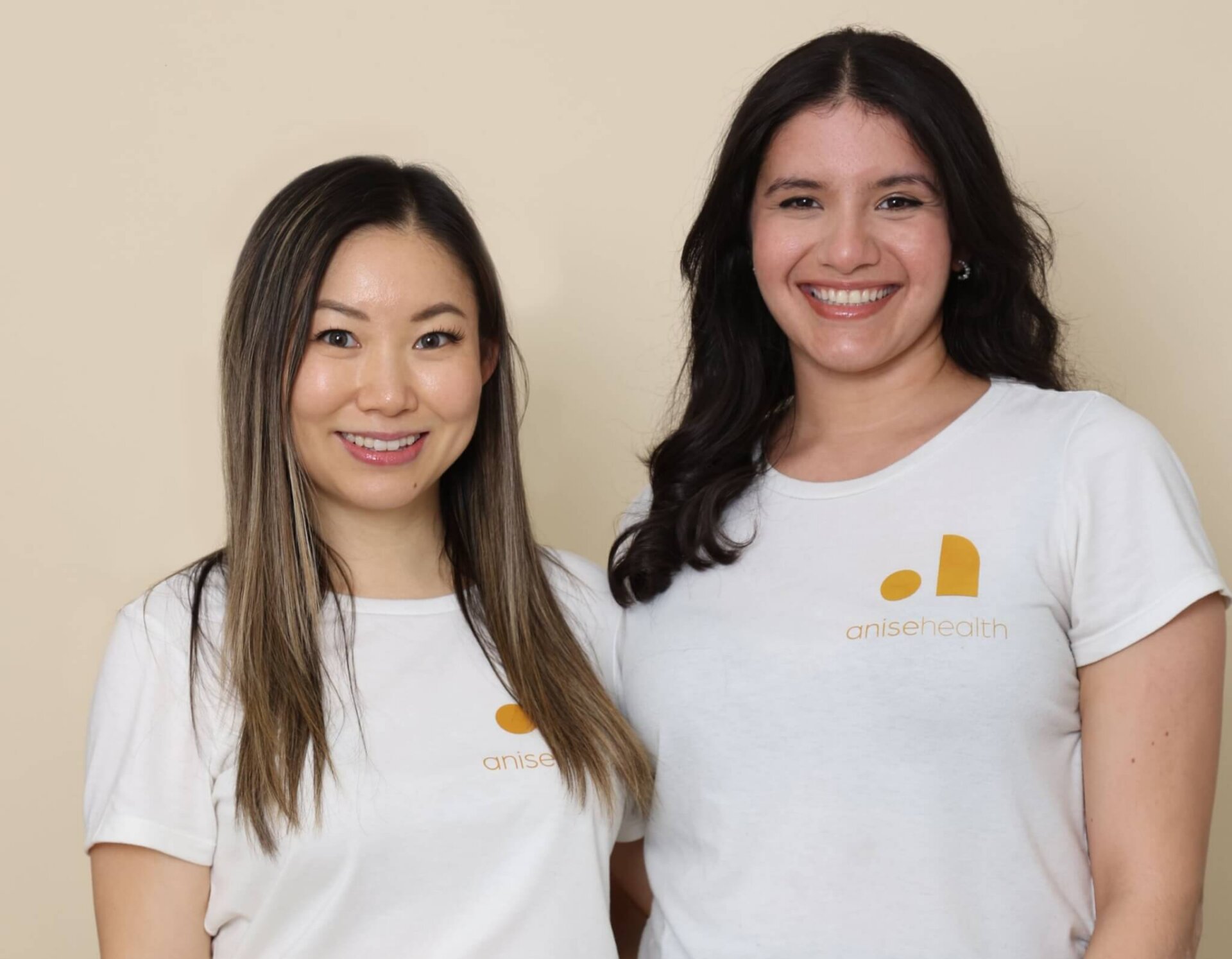
Alice Zhang (left) and Nisha Desai (right)

Building a Culturally Grounded Model of Care

After that pivotal conversation at Harvard, the two women began mapping out what culturally attuned mental health care could look like. They spoke to clinicians, patients, payors and community leaders, testing how cultural nuance could be integrated into evidence-based therapy and coaching.

They envisioned a new kind of care model: one that didn’t require clients to educate their therapists or set aside their cultural identity at the door. Instead, therapy would start from a place of understanding.

“Alice and I really built Anise to be what we believe our community has needed during our upbringing. What we kind of wished for ourselves through our own personal journeys with therapy.”

But building what didn’t yet exist came with challenges. They had to prove — to investors, clinicians, and even the broader healthcare system — that cultural context wasn’t just a “nice to have,” but essential to effective care. Many mental health professionals hadn’t been trained to deliver culturally adaptive therapy, so Anise Health had to design that framework from the ground up: provider training programs, accurate diagnostic tools, tailored care plans, curated resources and a scalable model for personalized, culturally attuned care.

Their persistence paid off. What started as late-night brainstorming sessions between classes evolved into a fully fledged mental health platform that blends clinical rigor with cultural empathy.

Growing the Movement

Since its founding, Anise Health has facilitated over 10,000 paid appointments and built a network of 60+ licensed providers across multiple states. The company is now expanding through insurance partnerships that make culturally attuned care more affordable and accessible.

Behind the scenes, Nisha leads operations and product design, while Alice drives partnerships and provider training.

Their complementary strengths, coupled with a shared sense of purpose, have helped Anise Health raise $6.4 million in funding and gain recognition as one of the top 10 most innovative Asian Pacific-led companies to watch by NYSE, Y Combinator, and Gold House.

Redefining the Future of Mental Health for Asian Communities

For both founders, Anise Health’s success goes beyond numbers. It’s about shifting how mental health is understood and delivered, starting with a community that has long been underserved and stigmatized.

“Our goal isn’t just to make care available,” Nisha says. “It’s to make it effective, culturally relevant, and sustainable within the healthcare system.”

By creating a new gold standard of culturally attuned care, Nisha and Alice aren’t just helping Asian Americans access therapy that finally feels like it speaks their language – they’re reimagining what inclusive mental health care can look like for everyone.

Learn more about Anise Health at anisehealth.co
Related Articles

Image Source: South China Morning Post

Stories

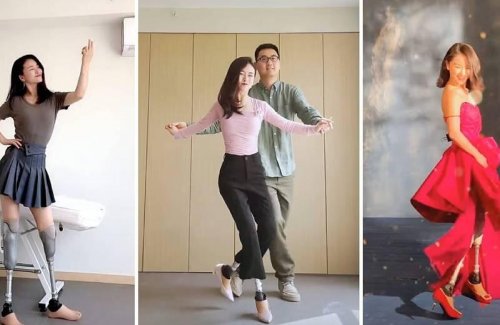
Earthquake Victim With Amputated Legs Masters Dancing With Husband’s Self-Made Prosthetic Limbs

Nothing is impossible to 30-year-old Liao Zhi of Sichuan, China who lost her legs during an earthquake in 2008 but now mastered the art of dancing while wearing high heels with her now husband’s self-made prosthetic legs.

The Chinese former dance teacher caught the online community’s attention with her talent and story being an epitome of hope and faithfulness.

“It’s like she dances with life,” a netizen commented.

During the tragic incident in Sichuan where Zhi was trapped in the ruins of a building for 30 hours, she not only lost her legs but the most important persons in her life, her 10-month-old daughter who died in the disaster and her husband who divorced her seven months after the tragedy.

Being the only one to survive in the devastated building, the brave woman neither shed a tear nor complained of everything she went through including her legs being amputated.

Instead, Zhi said that “The earthquake gave me rebirth.”

After learning to walk with her artificial limbs, Zhi moved on from the nightmare by continuing and staging her passion in different places.

Although the training had been difficult and painful, Zhi was determined in doing what she loves. 

According to the South China Morning Post, she and her husband-dance partner defeated competitors in China and won as first runner-up in the reality show Dance Out My Life in 2013. 

Her husband became her strong support in recovering from her downfall.

Despite having been through a lot, Zhi remained optimistic. “Dance is my ray of sunshine, and while I would also be fine if I didn’t dance, I would not feel the same sense of joy that it gives me when I do,” she said.

Being an inspiration to many, Zhi’s life story was turned into a play entitled Angel’s Psalm that was staged at Kwai Tsing Theatre in 2015.

In an article by CCTGN, it was said that Liao is currently a happy wife as well as a proud mother. However, she is still fighting for a higher ambition – helping more people like her to recover their life value.

Image Source: Stephen Lovekin/Shutterstock

News

‘Raya and the Last Dragon’ Actress and Director Unveils New Production Company To Uplift Marginalized Community’s Emerging Filmmakers

Kelly Marie Tran and Carlos López Estrada, the lead character and co-director of the latest Walt Disney film Raya and the Last Dragon, have created a new production company, Antigravity Academy (AGA) dedicated to developing and producing movies, television, theater, and short-form material from and about individuals from traditionally marginalized communities.

AGA appointed Jared Stern’s “A Stern Talking To” former vice president of cinema and television Winsor Yuan to lead its film and television section.

As for the short form, such as music videos, advertisements, and branded content, Doug Klinger, co-founder of Internet Music Video Database and Reprobates agent and executive producer, will be in charge.

The Antigravity Academy will also serve as a training ground for new filmmakers entering the production industry.

The novice filmmakers’ movies will be chosen, produced, and packaged under the direction of former Sundance Institute head of Artist Community and AGA founding partner Abiram Brizuela.

Tran and Estrada were quoted in the Hollywood Reporter as saying, “We couldn’t be happier about providing a creative home for emerging filmmakers looking for a window into this often insular industry.” 

The two also stated they had learned from their experiences how crucial it is to establish a network that can assist with starting up.

“We are looking forward to partnering up with the most inspiring independent voices coming from communities that have been historically overlooked and helping them usher their stories into the world,” the two added.

Image Source: Lifestyle Asia Hong Kong

Blogs, Development, Ideas

Son of Restaurant Owners Now CEO of Multi-Million Dollar Company Casetify Imparts Tips To Successful Entrepreneurship

With a feeling of discontent towards the smartphone case designs available in the market, Hongkong native Wesley Ng co-founded Casetify, a multi-million dollar company that manufactures and produces cool smartphone cases.

The 41-year-old CEO takes his business-mindedness from his parents who own a restaurant in their region.

Ng established the business in 2011 together with his friend Ronald Yeung which has now reached over 15 million phone case sales around the world.

As an entrepreneur-grown man, Ng’s mindset is to make profits. According to him, it’s the most important thing to survive, as quoted in CNBC Make It.

“It comes down to one thing — being profitable. Being profitable was super underrated until recently,” he said in a virtual interview. 

Ng proudly shared that Casetify will be attaining $300 million in returns for this year alone.

Furthermore, he advised others to venture into businesses that make fortune and are cost-effective and to learn from other entrepreneurs just like how he learned from his mom and dad.

With his success in the chosen industry, Ng imparts hints to be a self-made millionaire in business:

1.Bootstrapping. Starting with $200,000 capital, Ng shared that he and Ronald always did things and operated out of the interests of the company and not of the stakeholders.

2. Overshare your problems. Business is a give-and-take process, it’s surprising how we can learn from others. Although it may seem a weakness for others to know your struggles as an entrepreneur, it is still fundamental to share and learn from them.

3. Entrepreneurship ‘not for everyone.’ Ng shared that knowing if “it’s for you” is important and to discover if it really is, you should “work closely with a founder” or link with beginners to know how hard it will be.

The successful CEO said that being a producer of a product he is really fond of is what keeps him on the move.

Image Source: Jonathan Sanchez

Uncategorized

Learning From His Single Mom, Parent Portfolio Co-Founder Jonathan Sanchez Realizes Financial Independence at 37

Now living a financially-stable life, the couple founders of Parent Portfolio, a website that serves families to make progress with their money and helps the younger generations become financially wise, teaches their kids lessons towards a successful life.

Born to a financially precarious environment, Jonathan Sanchez was reared with a thrifty outlook by his single mom, which made him yearn for financial stability.

Sharing the same financial sentiments, or even more, with his mother made him believe that if he would be able to get a degree and land a well-paid career, he would be freed from all his money issues.

However, he then realized that his mindset was not as easy as it seemed as, despite achieving a profession together with his wife, Jacqueline Sanchez, their incomes were just enough for their family’s essential needs. 

The Sanchez couple’s life turned 360 degrees after realizing a $1 million net asset by being economical, able to save, doing part-time jobs, and venturing into real estate.

At 37, Jonathan realized his long-dreamed financial independence and stability. In 2020, he decided to share this with other people by co-founding the Parent Portfolio with his wife.

Aside from helping other people, the couple is also bound in educating their kids with the following five valuable tips they shared on CNBC: 

  1. Always rethink one-time purchases. Living within the means and spending efficiently only on what is needed; 
  2. Budgeting gives you more freedom. Planning your budget is financial freedom which benefits you over and over again; 
  3. Don’t let social media influence your spending. Do not be pressured by what you see in the public network and discipline yourself in using gadgets; 
  4. Know where the money comes in, and where it goes out. The couple exposes their children to their income resources, introduces them to the “real world” and even shows diagrams on how to deal with the people and offices they transact with; and, 
  5. Start saving early, and don’t expect to get rich overnight. Learning from the fable of The Tortoise and The Hare, the couple teaches their children of being wise and patient.

“For now, your mother and I are responsible for providing for your needs and wants. A bank is a safe place to put your money because it allows the funds to grow over time. And when you’re old enough, you can use that money for your own goals,” Jonathan tells his children.