Stories

November 4, 2025

SHARE:

When Nisha Desai and Alice Zhang met at Harvard Business School, neither of them expected that a casual conversation about their frustrations with therapy would spark the idea for something much bigger.

As they juggled graduate school and their own mental health, they often felt therapy wasn’t built for people like them – they spent more time explaining their background to their therapists than actually healing. 

They realized it wasn’t just them – there’s a gap in mental healthcare that left many in the Asian and multicultural community feeling unseen and misunderstood.

That shared realization became the seed for Anise Health: a platform built to make therapy culturally attuned, accessible, and truly effective for the AAPI community.

A Problem They Both Knew Too Well

Before their paths crossed, both founders had already seen the same issue from different directions.

Nisha, who grew up in Florida in a family of healthcare entrepreneurs, had always been drawn to questions of access and equity in care. After studying finance and marketing at the University of Pennsylvania’s Wharton School and earning her MBA from Harvard, she worked in healthcare investing and later in digital product management at Humana. It was there, while helping build a mental health app, that she started hearing a troubling pattern from thousands of users – the same barriers she had personally faced.

Nisha recalls that people weren’t saying therapy didn’t work. They were saying it didn’t fit, that they didn’t feel understood.

Alice, meanwhile, came to the same conclusion through her own deeply personal experiences. Born in China, raised across Japan and Canada, and now based in New York, she calls herself a “third culture kid.” Her multicultural background gave her adaptability, but also a sense of never fully belonging anywhere.

That feeling resurfaced when she sought therapy during business school. Despite being fluent in English, she found herself translating her own emotions for her therapist – explaining why criticism from parents felt like love, or why pursuing excellence felt non-negotiable.

Alice remembers feeling exhausted after each session, explaining her background again and again, and leaving each time feeling unseen.

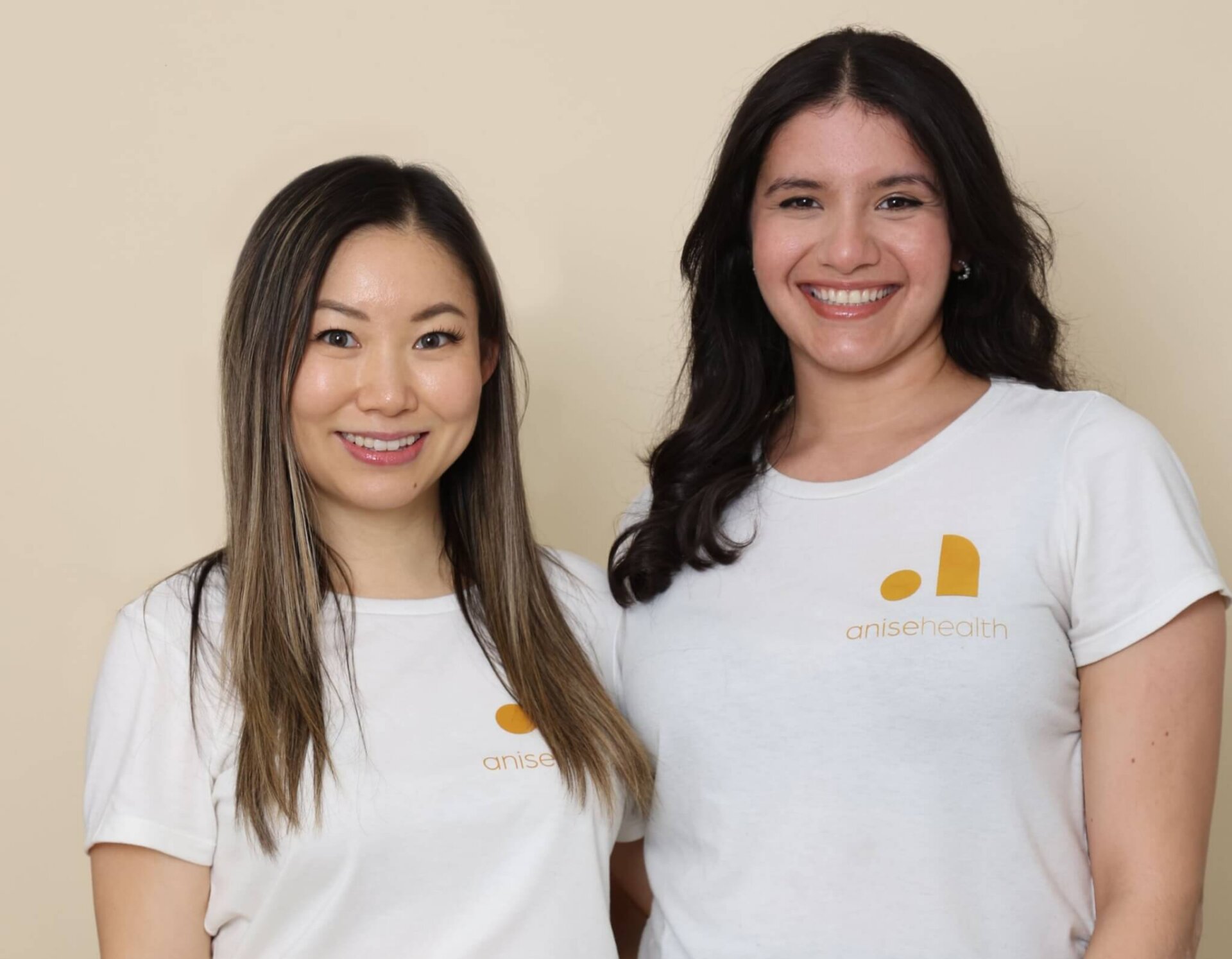
Alice Zhang (left) and Nisha Desai (right)

Building a Culturally Grounded Model of Care

After that pivotal conversation at Harvard, the two women began mapping out what culturally attuned mental health care could look like. They spoke to clinicians, patients, payors and community leaders, testing how cultural nuance could be integrated into evidence-based therapy and coaching.

They envisioned a new kind of care model: one that didn’t require clients to educate their therapists or set aside their cultural identity at the door. Instead, therapy would start from a place of understanding.

“Alice and I really built Anise to be what we believe our community has needed during our upbringing. What we kind of wished for ourselves through our own personal journeys with therapy.”

But building what didn’t yet exist came with challenges. They had to prove — to investors, clinicians, and even the broader healthcare system — that cultural context wasn’t just a “nice to have,” but essential to effective care. Many mental health professionals hadn’t been trained to deliver culturally adaptive therapy, so Anise Health had to design that framework from the ground up: provider training programs, accurate diagnostic tools, tailored care plans, curated resources and a scalable model for personalized, culturally attuned care.

Their persistence paid off. What started as late-night brainstorming sessions between classes evolved into a fully fledged mental health platform that blends clinical rigor with cultural empathy.

Growing the Movement

Since its founding, Anise Health has facilitated over 10,000 paid appointments and built a network of 60+ licensed providers across multiple states. The company is now expanding through insurance partnerships that make culturally attuned care more affordable and accessible.

Behind the scenes, Nisha leads operations and product design, while Alice drives partnerships and provider training.

Their complementary strengths, coupled with a shared sense of purpose, have helped Anise Health raise $6.4 million in funding and gain recognition as one of the top 10 most innovative Asian Pacific-led companies to watch by NYSE, Y Combinator, and Gold House.

Redefining the Future of Mental Health for Asian Communities

For both founders, Anise Health’s success goes beyond numbers. It’s about shifting how mental health is understood and delivered, starting with a community that has long been underserved and stigmatized.

“Our goal isn’t just to make care available,” Nisha says. “It’s to make it effective, culturally relevant, and sustainable within the healthcare system.”

By creating a new gold standard of culturally attuned care, Nisha and Alice aren’t just helping Asian Americans access therapy that finally feels like it speaks their language – they’re reimagining what inclusive mental health care can look like for everyone.

Learn more about Anise Health at anisehealth.co
Related Articles

News

Tina Tang’s Inspiring Journey From Corporate Worker to Startup Founder

Tina Tang’s path to entrepreneurship is a captivating story of self-discovery and determination. Initially climbing the corporate ladder in IT Consulting, she soon realized that her true calling lay in the world of startups.

The turning point came when she embarked on her graduate school journey, where she felt the world open up before her, setting the stage for her entrepreneurial adventure. This pivotal moment led to the birth of Bristles, an innovative startup that has introduced a mobile app for DIY home projects.

Growing up, Tina found solace in expressing herself through art. Her parents spoke Cantonese at home, and when she started school, she didn’t know much English. Drawing helped her to express herself because it was easier for her than speaking.

Tina ended up with a career in engineering because she was good at math, but her creative side didn’t go away. Later on, when she worked with machine learning and computer vision, her artistic side came back.

Her background in IT Consulting equipped her with invaluable skills for her entrepreneurial journey. Tina’s proficiency in technical problem-solving was complemented by her newfound ability to understand clients’ pain points and devise tech-based solutions.

According to WRAL TechWire, Bristles came from Tina’s desire to bridge the gap between technology and creativity. She saw how AI could make art better, so she used machine learning and computer vision to help people express their creativity in home design.

Tina Tang’s journey from office worker to startup founder is an inspiring story about following your passions and trying something new. Her story serves as an inspiration for aspiring entrepreneurs or anyone interested in the stories behind successful businesses.

Featured Image Source: Linkedin

cosmetics design asia-png

News

Baemin Introduces Skincare and Makeup Brand Lazy Bee in Vietnam

South Korean delivery giant, Baemin, has expanded its business horizons by venturing into the world of beauty in Vietnam. The company recently unveiled its very own beauty brand, Lazy Bee, offering a range of skincare and makeup products. This strategic move helps Baemin in diversifying its services beyond food delivery while capitalizing on the growing popularity of K-beauty trends in Vietnam.

Lazy Bee’s product lineup consists of 11 items, including facial masks, lipsticks, and toner pads. The brand’s core mission is to provide accessible and effective beauty solutions tailored to the specific needs of Vietnamese consumers. With Vietnam’s humid climate and environmental factors affecting skin, Lazy Bee focuses on creating products that address these challenges. The brand’s formulations are enriched with natural ingredients, such as calendula and red ginseng, sourced from Korea to cater to the local climate and skin types.

In its current phase, Lazy Bee products are exclusively available through the Baemin app, catering primarily to customers in Ho Chi Minh City. Baemin is actively working to enhance the user experience within the app. Additionally, the brand is organizing on-ground events in Ho Chi Minh City, offering customers the opportunity to personally experience their beauty products.

Looking ahead, Lazy Bee has ambitious plans for expansion. The brand aims to extend its reach through online sales platforms like Lazada, Shopee, and TikTok Shop in the coming months. Furthermore, Lazy Bee intends to establish a physical presence by collaborating with beauty retail chains and convenience stores. The brand is set to broaden its footprint by entering the Hanoi market and offering nationwide shipping, firmly positioning itself as a contender in Vietnam’s dynamic beauty industry.

Featured Image Source: Tin Tuc

News

Naomi Osaka Breaks Her Silence About Mental Health Struggles in Sports

In a candid discussion on mental health in sports at the Billie Jean King National Tennis Center, the four-time Grand Slam singles champion Naomi Osaka shared her personal battle with depression and how it made her “very scared of social media.” She has been an outspoken advocate for mental health in sports, and her revelations shed light on the challenges athletes face both on and off the court.

Osaka’s journey to becoming a vocal advocate began with her withdrawal from the 2021 French Open due to depression and anxiety. This incident had a significant impact on the discourse surrounding mental health in sports, prompting a much-needed conversation. During the panel discussion, which included luminaries like Olympic swimmer Michael Phelps, U.S. Surgeon General Vivek Murthy, and Dr. Brian Hainline, Osaka discussed various aspects of mental health, including the role of social media.

Osaka admitted that somewhere along the line, she got very scared of social media. This fear highlights the immense pressure athletes face in the digital age, where the relentless scrutiny of their personal lives can exacerbate mental health struggles.

During her hiatus from tennis, taken for her mental well-being and the birth of her daughter, Shai, Osaka gained a new perspective on her career. She emphasized the need to cherish every moment in the sport she loves and encouraged others to reach out for support when facing mental health challenges. She revealed to ESPN that she has plans to play again at the Australian Open next year in January.

As Osaka continues to use her platform to promote change, the sports world is gradually recognizing the significance of prioritizing mental health alongside physical performance.

Featured Image Source: Naomi Osaka

News

Expanding the Legacy of a Family-Owned Chinese Restaurant Chain

In the heart of Los Angeles is a vibrant embodiment of the American dream—a dream realized through the culinary journey of a family-owned Chinese restaurant chain.

In the early 1960s, Kai Tai Chang and his wife, May, left Hong Kong for Los Angeles, seeking a better future. Kai Tai, driven by his unwavering work ethic, found opportunities in Chinatown’s food industry. He worked tirelessly, holding multiple jobs to support his family.

Kai Tai’s dedication led him to become a chef at the Phoenix Inn, a restaurant at Ord and New High streets. Over time, a strong friendship with the retiring owner paved the way for him to purchase the restaurant.

May Chang played a pivotal role as the welcoming face of the Phoenix Inn, forging personal connections with customers. For two decades, the Chang family thrived by prioritizing personalized service, valuing their staff, and offering delicious cuisine.

In 1997, the family expanded to Alhambra, introducing a unique addition to their menu—desserts, including classic Asian treats and fresh fruit options. Their commitment to culinary excellence, even sending Elaina to Le Cordon Bleu in Pasadena to hone her pastry skills, was rewarded with success.

Image Source: KTLA

Despite the challenges posed by the pandemic, Phoenix persevered with take-out and delivery services, expanding to its 13th location in San Diego in 2023. Nick Chang, the next generation, took the reins as president in 2021, committed to maintaining their high standards of quality and exceptional customer service as they continue to grow.

The Chang family takes pride in their legacy, built on a foundation of culinary excellence and heartfelt service, reflected in the glowing Phoenix signs that now shine beyond the Southland.

Featured Image Source: KTLA