Stories

May 2, 2024

SHARE:

As we celebrate Asian Pacific American Heritage Month, we pay tribute to the Bill Imada Top 50 Unsung Heroes, individuals whose extraordinary acts of bravery, selflessness, and community service have often gone unnoticed.

Nominated by the community and acknowledged during the Uplifted Conference 2024, these heroes represent a diverse array of backgrounds and accomplishments, each leaving an indelible mark on the community.

Join us in honoring these Unsung Heroes, amplifying their remarkable achievements, and recognizing the profound impact they’ve had on shaping a more inclusive and empowered society.

The Bill Imada Top 50 Unsung Heroes 2024

Glenn Boulware

Sr. Director, Ethnic Expansion, Weee!

Glenn Boulware is the Senior Director, General Manager (Merchandising & Marketing) at Weee!, the premier online grocery platform serving Asian communities in the US. In this capacity, Glenn oversees the expansion of ethnic markets, including assortment management, supplier acquisition, category management, new user acquisition, content marketing, and user retention strategies.

Jess Choi

Asian Segment Lead, Northwestern Mutual

Jessica Choi is a dynamic and influential leader in the field of Diversity, Equity, and Inclusion and currently serves as the Asian Segment Lead at Northwestern Mutual. With over two decades of experience in corporate and nonprofit leadership, she empowers individuals to excel while fostering inclusive work environments. Jess has earned prestigious awards for her community engagement, leveraging her academic achievements and practical experience to drive business success.

jason chu

Idea Architect / Rapper, Team Not Lazy

Jason Chu is a prominent figure in the national Asian American scene, known as both a rapper and activist. With his high-energy performances and hard-hitting lyricism, Jason’s music has been featured in various mediums including video games, film, and TV shows like Valorant, Joy Ride, and Mayans MC. Beyond music, Jason is an activist educator, offering clarity and urgency on issues of history, racial justice, and Asian American political and social identity.

Andrew Dinh

Director of Talent, Clique-Now

Andrew Dinh serves as the Director of Talent at Clique-Now, a company focused on nurturing the careers of prominent Asian talent. He brings years of experience in influencer marketing and hosting webinars and workshops for platforms like TikTok and Vigo Video. Prior to talent management, he spent over a decade in education, teaching in various public and private schools in Los Angeles.

Joy Fan

Founder, CEO, re/tell

Joy Fan is a trailblazer in the retail and real estate sectors with over 15 years of experience. She recently launched a B2B booking platform using machine learning to match online brands with excess space in mixed-use storefronts, providing a solution to the evolving needs of the $17 trillion real estate industry. Additionally, she actively works with Mayor Eric Adam’s NYC Small Business Advisory Commission, ACE NEXT GEN, and NYC Chapter Lead of Stand with Asian Americans.

Christian Franz

Founder, Friends of Franz Podcast

Christian Franz is the driving force behind the Friends of Franz Podcast, a globally streamed platform aiming to debunk medical misinformation, humanize healthcare workers, and advocate for minority representation in medicine. As a registered nurse in New York City, Christian’s expertise spans cardiac surgery recovery, cardiology, and public health. He’s also the Creative Lead of “The Asian Care Unit,” promoting mentorship and activism within the API healthcare community. Beyond healthcare, Christian is a successful content creator with two YouTube Silver Creator Awards, focusing on lifestyle and entertainment topics.

Katsuhiro Furuyama

Co-President, Ascend NorCal

Katsuhiro Furuyama boasts over a decade of active involvement, starting as NorCal Co-Vice President in 2019 and currently serving as Senior HR Business Partner at Robert Half. Recognized on the DE&I Influencers list by Staffing Industry Analysts, he is committed to fostering diversity, equity, and inclusion (DE&I) in the workforce. Amidst evolving headlines, Katsuhiro remains steadfast in making DE&I a top priority, tirelessly working to transform the work environment into an inclusive space where everyone thrives.

Julia Gouw

Former President and COO of East West Bank

Julia Gouw, retired President and COO of East West Bank, is a five-time “25 Most Powerful Women in Banking” honoree. Recognized for her leadership, she champions Asian representation in entertainment, serving on the board of trustees for the Academy Museum of Motion Pictures and being honored as an “Entertainment Game Changer” at Asia Society Southern California’s 2021 U.S. She was also recently inducted into 2023 Outstanding 50 Asian Americans in Business by the Asian American Business Development Center (AABDC).

Peter Huang

Co-Founder, Golden Guide

With over two decades of experience, Peter Huang has provided leadership and operational oversight for various nonprofits, corporations, and startups, driving sustainable growth and maximizing revenue potential. Specializing in performance marketing, Peter excels in developing strategies for multi-channel marketing services, including go-to-market strategies, advertising campaigns, and lead generation.

Jane Hyun

Founder & CEO, Hyun & Associates Inc.

Jane Hyun is renowned as a leading authority in leveraging culture and diversity to drive business growth and innovation. She has worked with corporate clients worldwide, guiding leaders to bring their full selves to the workplace through her Cultural Fluency in Leadership program. With bestselling books like “Breaking the Bamboo Ceiling” and numerous media features including CNN and Harvard Business Review, Jane is committed to closing the Asian leadership gap in corporate America.

Ariba Jahan

Head of Transformation at Anomaly and Founder of Up Next In Tech

Ariba Jahan fosters change in the technology and creative sectors, using her voice to initiate vital discussions and create impact. As Head of Transformation for North America at Anomaly, she spearheads innovative solutions in digital products and organizational strategy. Ariba also founded Up Next In Tech, a podcast discussing emergent industries and responsible innovation. Her work tackles societal issues like mental health awareness and COVID-19 education.

Michelle MiJung Kim

Author & Activist, The Wake Up

Michelle MiJung Kim is the award-winning author of “The Wake Up: Closing the Gap Between Good Intentions and Real Change”. She is CEO and co-founder of Awaken, where she has consulted hundreds of giant organizations and executive leaders. Michelle also serves on the board of Asian Americans for Civil Rights and Equality (AACRE) and has been named LinkedIn’s Top Voice in Racial Equity, Fast Company’s Queer 50, and Medium’s Top Writer in Diversity three years in a row.

Jennifer Kong

Community Leader

Jennifer Kong is a powerhouse community leader known for her commitment to making a positive impact. As the Executive Director of Asians in Advertising and a member of TeachAAPI, she contributes her versatile skills to drive growth and empower others. Jennifer also supports Asian founders and community leaders through initiatives like ACE NextGen and AHN, using her warmth and approachability to foster collaboration and meaningful change.

Sumi Krishnan

Entrepreneur, Dream Life

Sumi Krishnan is an entrepreneur and artist most known for founding and building a 200-person IT and management consulting firm, which serves healthcare and national security solutions for 8 federal government agencies. With a Master’s from Harvard Kennedy School, she led growth for a civics-education platform called Resistance School and recently started pursuing her passion as a singer-songwriter in LA.

Natassia Kwan

Attorney & Activist, Sheppard Mullin LLP

Natassia Kwan, recognized by the American Bar Association as a “Top 40 Young Lawyer-On the Rise,” serves as National Alumni Co-Chair of the ABA Judicial Internship Opportunity Program (JIOP) and Co-Chair of the Minority Bar Coalition (MBC) and AABA Women’s Committee. As an immigrant and mother, Natassia is passionate about impacting positive change for future generations. Natassia also served as a Parliamentary Researcher in the United Kingdom House of Commons, culminating in a presentation to Prime Minister Gordon Brown.

Michael W. Lai

CEO & Co-Founder, AsianFeed

Michael W. Lai is the CEO and co-founder of AsianFeed, a leading Asian-centric digital media brand with over 500,000 followers and 25 million monthly reach. He also co-founded Century Glow, a skincare brand, and Potluck Showdown, an Asian-inspired entertainment brand, collaborating with major organizations like Netflix, Disney, and the White House. Michael’s innovative work has earned him a Long Island Innovator of the Year recognition, and a Clinton Foundation grant award.

David Lam

Founder, Tech2table

David Lam is the visionary behind Tech2table, leveraging his extensive experience as a Product Leader in big tech and startups. With over a decade of expertise advising and investing in various companies, David founded Tech2table as a social enterprise in April 2022. His mission is to foster a community-driven approach to empower individuals in the tech industry, ensuring everyone has a seat at the table. In less than a year, Tech2table has amassed over 500 members, established partnerships, and facilitated meaningful connections through innovative in-person dinners and experiences, with plans for global expansion underway.

Joshua Lee

Founder & CEO, Ardius

Joshua Lee is the Founder and CEO of Ardius, a SaaS platform acquired by Gusto for its expertise in tax credit optimization. With over 13.5 years of experience at Ernst & Young, Joshua led their West Coast Practice for Quantitative Services. He previously founded Two Coins Group and VentureTwelve, venture building studios that developed MVPs and spun out promising ideas into companies, resulting in over 8 exits. Currently serving as a venture partner/advisor/scout at multiple firms, Joshua’s family office invests in early-stage companies and advises startups like OrderGuru, Xrossworld, and ServiceMob.

Michelle Lee

Counsel, Stand with Asian Americans

Michelle Lee is a volunteer counsel with SwAA with a focus on supporting the Workplace Justice Initiative. Michelle most recently served as the General Counsel of Investments at Portfolio Advisors, a private investments firm with over $40 billion in assets under management during her nearly 15-year tenure. Prior to her role with Portfolio Advisors, she worked at Latham & Watkins as a corporate attorney. She graduated from Yale University and earned her law degree from Yale Law School. She is currently based in the New York area.

Soo Jin Lee

Executive Director, Yellow Chair Collective

Soo Jin Lee is a licensed marriage and family therapist, executive director of Yellow Chair Collective, and cofounder of Entwine Community. Integrating her background in fine arts, she emphasizes holistic healing and creativity in her work with individuals and groups. Furthermore, Soo Jin has co-authored a book, ‘Where I Belong: Healing Trauma and Embracing Asian American Identity,’ which provides a vital resource and healing guide for the Asian and Asian American community.

Amy Lew

API Community Supporter

Over the past decade, Amy Lew has dedicated her time to volunteer work, supporting various API non-profit organizations in the Los Angeles area. She has been actively involved with organizations such as CAPE, the Chinese American Museum, and East West Theater. Notably, she co-chairs the non-profit APA Holiday Toy Drive, which aims to provide toys to API beneficiary organizations in the LA area during the holiday season.

Helen Ma

National President, Project by Project

Helen Ma, a first-generation Chinese American born in Colombia, has dedicated herself to community service since middle school. With a background in Human Resources, she excels at aligning organizational goals with employee engagement objectives. Beyond her career, Helen serves as the National President of Project by Project, a volunteer-driven AAPI organization supporting underserved causes. She brings five years of experience in this role, previously serving as the San Francisco Chapter President.

Elenor Mak

Founder & CEO, Jilly Bing

Elenor Mak is a seasoned entrepreneur with a track record of success in both venture-backed companies and corporate innovation teams. She created Jilly Bing to break down stereotypes and provide a positive reflection of Asian-American girls through dolls. Prior to that, she co-founded Keaton Row, an e-commerce fashion company, and led the go-to-market strategy for Target’s Entrepreneur-in-Residence team. Elenor also played a pivotal role at Madison Reed, overseeing the opening of flagship locations on both the East and West coasts.

Tracey Nguyen Mang

Founder, Vietnamese Boat People Podcast & Nonprofit

Tracey Nguyen Mang left Vietnam at the age of three during the refugee exodus. In 2018, Tracey started Vietnamese Boat People (VBP), to preserve stories from her community and empower others to explore their family histories and personal narratives. Through VBP, Tracey transforms oral histories into accessible storytelling formats, lending VBP grants from institutions like the New Jersey Council for the Humanities, PRX/Google Podcast Creators Program, and NatGeo.

Jessica Millete

Founder, co-mrkt

Jessica Millete is the founder of co-mrkt, a community in Los Angeles empowering emerging AAPI creators through events and collaborations. Established in response to anti-Asian violence, co-mrkt spreads joy and supports small businesses while amplifying AAPI voices. Jessica, balancing her full-time job in music sync licensing, dedicates her free time to building and nurturing co-mrkt, driven by her passion for fostering creativity and community.

George Chunkau Mui (梅 振 球)

Founder, Asian American Executive Network

George Chunkau Mui is the Managing Partner of Global Consultants United and the Founder of the Asian American Executive Network (AAEN). He has 20 years of experience in R&D and Product Management at Lucent Technologies. In 2019, he retired from the U.S. Department of Commerce – Minority Business Development Agency. He’s dedicated to community service and has received numerous awards for his contributions. He founded AAEN in 2013 to bring executives and advocates together, organizing impactful events that benefit the community.

Linda Nguyen

Founder, The Ugly Bao

Witnessing her parents’ scarcity and career barriers, Linda Nguyen founded The Ugly Bao as a mission-driven, company focusing on hiring, training, and mentoring immigrant and first-American born folks. Her team embraces whatever life’s challenges and turns them into hopeful goals.

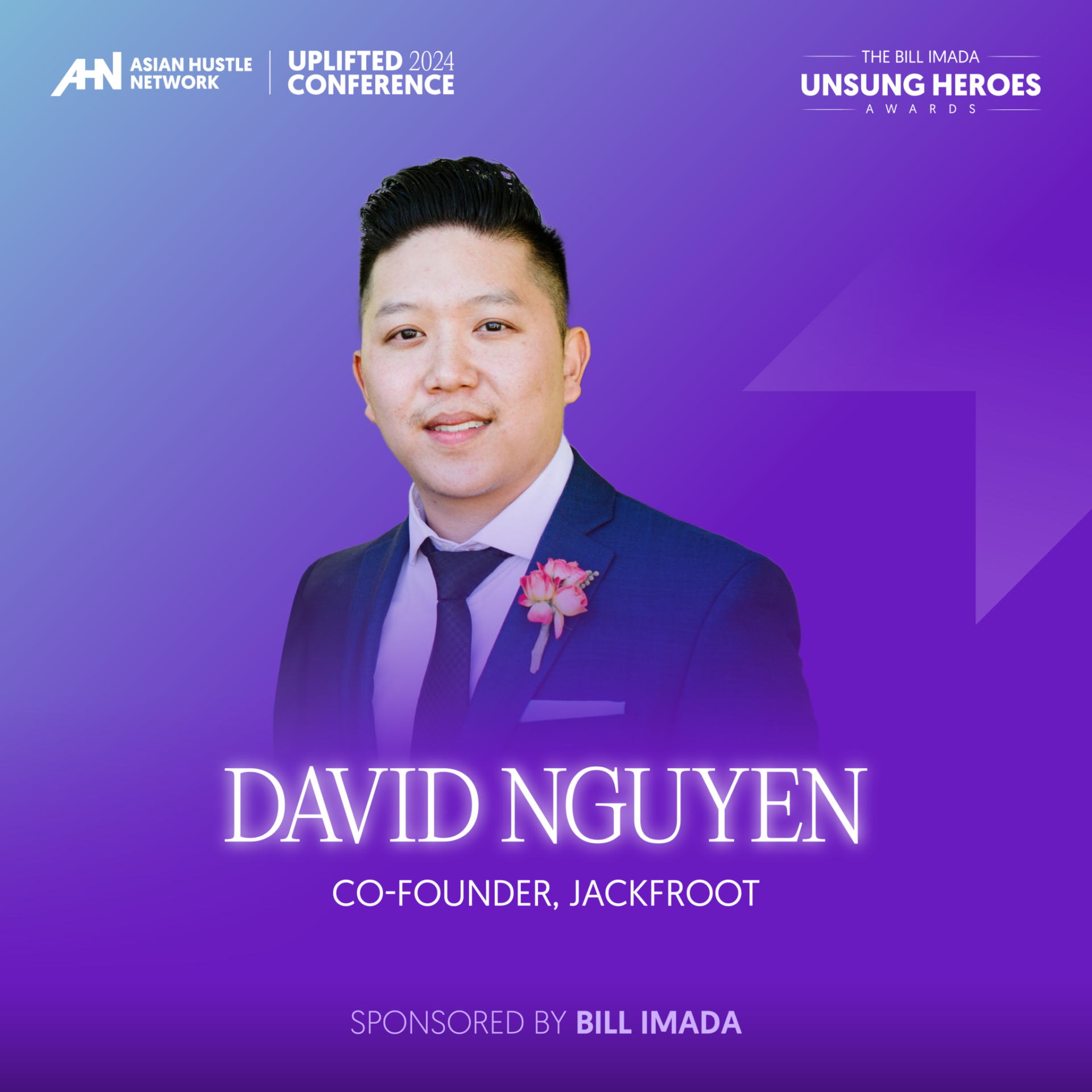
David Nguyen

Co-Founder, Jackfroot

David Nguyen was a beloved leader in the AAPI community, known for his mentorship, advocacy, and diverse talents. To many, he embodied kindness and inclusivity, having experienced the challenges of being a minority firsthand. David’s vision for Jackfroot was to create a platform where individuals could express themselves without fear of discrimination or bullying. Through his dedication to amplifying Asian American voices and championing social justice, David inspired countless individuals to stand up for what is right. Though he is no longer with us, David’s legacy lives on through Jackfroot and the lives he touched.

Anne Nguyen Oliver

Founder – CEO, House Of M Beauty

Anne Nguyen Oliver’s skincare line specializes in gentle treatments for sensitive and postpartum skin, using medicinal saffron as a key ingredient. She is passionate about inspiring the next generation of Vietnamese Americans and others to pursue their dreams and give back to the community through philanthropic endeavors.

Paige Park

Senior Loan Officer, CrossCountry Mortgage

As a dedicated loan officer, Paige Park specializes in transforming the dreams of homeownership into reality. With a track record of success, Paige takes pride in guiding individuals who have faced rejection by multiple banks to the coveted status of loan approval, empowering clients to overcome obstacles and secure the financing needed.

Esther Park

Content Creator

Esther Park, a Korean American content creator and mother, is deeply committed to the non-profit and social justice sectors. Beyond sharing motherhood and lifestyle content, she views her platform as an opportunity to effect positive change, advocating for justice and equity in a troubled world. Esther’s authentic, engaging, and down-to-earth content resonates with her followers, fostering genuine connections and meaningful engagement.

Kat Pham

Director of Partnerships & Marketing, ACE NextGen

Immigrating to the U.S. from Vietnam, Kat Pham navigated the challenges of being a first-generation immigrant and found her dream workplace in ACE NextGen, where she contributes in empowering women of color. Her contributions are proven by her work empowering AAPI millennial entrepreneurs. Beyond her career, Kat is also a yoga practitioner, mindfulness mediator, and nature lover, who strives for harmony in both physical and mental well-being.

Linda Phung

Founder, ImaginAsian Productions

With a background in events, public relations, fundraising, and youth mentorship, Linda Phung founded her own production company specializing in Asian Entertainment and promoting Asian artists. Her goal is to further uplift her community while encouraging others to get involved. Linda also volunteers her time to philanthropic causes that aim to serve underprivileged communities and advocates for the challenges the ethnic community faces.

Bhavani Rao

Founder, South Asian Women In Entertainment and Co Founder, South Asians in Entertainment

Bhavani Rao is a multifaceted entertainment industry expert known for her talents as a producer, writer, leader, and mentor. With a focus on integrating diverse cultural elements into storytelling, she has a broad range of experience in television programming, production, transmedia storytelling, and development. She is the founder of South Asian Women in Entertainment (SAWIE), dedicated to amplifying the voices of South Asian women in Hollywood to achieve greater representation and inclusion.

Stephanie Seow

Head of North America, LOVEBONITO USA LLC

Stephanie Seow is a seasoned marketing and retail strategist in the fashion eCommerce sector straddling Asia and the US. She has helped the marketing teams to foster cultural diversity and high growth of venture-backed companies. As the North American lead for Love, Bonito, Stephanie resonates with the brand’s story as a first-generation Asian American woman, making her the perfect fit to introduce Love, Bonito to the U.S. market.

Priya Shah

Founder & CEO, The Simple Good

Priya Shah, a catalyst for social consciousness, is breaking barriers and empowering communities as a Chicago-based artist, entrepreneur, and creative visionary. Through her non-profit, The Simple Good, she empowers youth globally, earning recognition from the Obama Foundation, Crain’s Business Magazine, and Forbes for her unique perspective on humanity.

Lakhi Mangahram Siap

Chief Community Connector, Chicago Asian Network

As the founder of the Chicago Asian Network (CAN), Lakhi Mangahram Siap has spent over 15 years volunteering & providing pro-bono marketing services to AAPI organizations. While his leadership within the Filipino Young Leaders Program (FYLPRO) as a founding member & Immersion Program Director has bridged the gap between the Philippines and the U.S., he also extends his commitment to other organizations such as ACENextGen, Node, Gold Futures, Kapwa Capital, & the CalAsian Chamber and the outsourcing consulting firm TAIO.CX that supports Philippine talents.

Quynh Chau Stone

President, The Source of Hope

Quynh Chau Stone, or QC, is a dynamic figure juggling roles as a minority business owner, CEO of Stone Construction Consultants, real estate strategist, devoted mother, and tireless advocate. Leading The Source of Hope, QC spearheads initiatives aiding underprivileged communities, distributing over 5000 meals monthly, mentoring, and promoting holistic health. QC embodies compassion, resilience, and unwavering dedication to service, serving as a beacon of hope and inspiration.

Chris Tashima

Co-Founder, Cedar Grove Productions

Chris Tashima, an LA-based actor and director, gained recognition as the Oscar® winning director of “Visas and Virtue,” where he also starred as Chiune Sugihara. He’s appeared in notable indie films like “Americanese” and received a Best Actor nomination for “No No Girl.” Chris began his career at East West Players and has directed stage plays such as “Nihonmachi: The Place To Be.” He’s a member of industry organizations including the Academy of Motion Picture Arts and Sciences and SAG-AFTRA.

Chris Truong

Founder – Firefighter, Ondori Hydration

Chris Truong is a firefighter/paramedic serving a large Asian community in Orange County, CA, driven by his passion to assist others and improve community engagement. Recognizing a communication gap between emergency services and the Asian community, he founded Ondori Hydration, offering the first electrolyte drink mix with authentic Asian flavors and no added sugar. In a similar way to how he became a firefighter, he started Ondori because of the need for more representation and a way to unite different communities and people.

Jeff Tsai

Founder, Operation Ninjas

Jeff Tsai specializes in empowering C-Level Executives and Business Visionaries to navigate challenges and achieve their goals. Currently serving as the National Operations Manager of ACE NextGen, Jeff is dedicated to enhancing infrastructure to meet community needs. His previous roles include Operations Director at Project by Project and Advisor at Sunny Side, focusing on mental wellness app development. With a background in Ecology & Evolution from UCSC, Jeff brings a unique perspective to creating functional workplaces in dynamic environments.

Tim Wang

Founder, TDW+Co

Tim Wang founded TDW+Co in Seattle’s Chinatown in 2004 with a vision of inspiring positive and social impact within diverse communities. Since its inception, TDW+Co has produced over 1,000 campaigns for 100 brands in 30 languages, including notable projects like the 2020 Census and COVID-19 public education campaigns. Beside TDW+CO, Tim maintains his voluntary duties for social justice and DEIB, serving as a board member for Asian Americans Advancing Justice, 4As, ThinkNW and LA, and St. Jude Children’s Research Hospital.

Wendy Wo ng

Founder, JuneAdaptive.com

Wendy Wong is a proud Chinese-Canadian female founder and first-generation immigrant from Hong Kong. Having close family members who live with disabilities and a background in Fashion and Tech, Wendy founded JuneAdaptive.com to help people who live with disabilities find easy-dressing clothing. Featured in various media outlets, JuneAdaptive.com has positively impacted hundreds of families and individuals living with disabilities.

Henry Wu

Founder / Editor in Chief, Timid Magazine

Henry Wu brought together his passions for design and photography to launch Timid Magazine. Serving as both founder and editor-in-chief, Henry leads a talented team in shaping the editorial and aesthetic direction of the magazine, which aims to uplift diverse voices and foster connections through impactful storytelling. Alongside his role at Timid, Henry is also a digital designer, focusing on product development and visual storytelling. As a self-taught fashion photographer, his work has been featured in esteemed publications such as Men’s Health, Elle Singapore, Vogue Italia, and People magazine.

Tara Yang

City Commissioner, The City of Green Bay

Tara Yang has dedicated over a decade to amplifying marginalized voices and fostering inclusivity. Recognizing systemic barriers, Tara secured her place at decision-making tables and supported the City of Green Bay Mayor, Eric Genrich, in developing GB’s first anti-discriminatory ordinance, and won an appointment as the first Asian American City Commissioner for Green Bay. In 2020, she founded Green Bay’s first Asian American Resource Center to ensure that the Asian community receives critical support.

Gloria Chang Yip

Managing Director, Head of Asian Wealth Initiatives, JP Morgan Private Bank

Gloria Chang Yip is the Managing Director and Head of Asian Wealth Initiatives at J.P. Morgan Private Bank. Specializing in assisting founders and entrepreneurs with wealth management, she oversees client relationships in lending, wealth planning, trust and estate planning, and charitable giving. Previously, Gloria held roles at Cartier and is actively involved in promoting Asian American interests and equal education opportunities. She serves in leadership positions for organizations like Asian Americans Advancing Justice Southern California and TeachAAPI, and provides executive advisory support to BrainTrust.

Linda Yoon

Founder & Co-Owner, Yellow Chair Collective

Linda Yoon is the founder, co-director, and licensed psychotherapist at Yellow Chair Collective, specializing in Asian mental health. With over a decade of experience, she has served Asian and immigrant communities in various mental health settings such as workshops on responsive care, wellness, and ADHD. She is also the co-author of “Where I Belong: Healing Trauma and Embracing Asian American Identity,” and co-founder of Entwine Community.

Michelle Yu

Emmy Award Winning Journalist, Law and Crime Trial Network

Michelle Yu is an Emmy Award-winning reporter and anchor having covered breaking news and sports for more than a decade. She is currently an anchor on Law & Crime Trial Network, founded by Dan Abrams Media. She is the first Asian female sportscaster in New York City and also travels around the country as a host for various tennis tournaments including the US Open. Before SNY, she was at NY1 News.

Carrie Zhang

Founder, Asian Mental Health Project

Carrie Zhang, activist and founder of the Asian Mental Health Project, advocates for mental health equity, focusing on AAPI and LGBTQIA+ communities and survivors of sexual violence. Established in 2019, her project aims to empower Pan-Asian communities in accessing mental healthcare. Carrie’s work has gained recognition in media outlets like Vogue and TIME, and was even featured in the Academy Award-winning movie “Everything Everywhere All at Once” by A24.

Tianyi Joe Zhu

Co-Chair, Leaders Forum

Tianyi “Joe” Zhu, the Co-Chair of Leaders Forum, was honored as one of the “Top 50 Outstanding Asian-Americans in Business” by the Asian-American Business Development Corporation in 2017 and as a Business Leader of Color by Chicago United in 2019. He was also named one of the “Top 40 Asian Pacific Americans Under 40 in Politics & Public Affairs” by NAAPPPA in 2020. Additionally, Joe serves on the Chinese Mutual Aid Association executive board, an immigrant organization that has served over 1.3 million people in its 40-year history.

Related Articles

Kevin Chou

Awaken* newsletter

Insights from Kevin Chou on Personal Growth and Finding Your Own Path

On December 15th, I had the honor to chat with Kevin Chou. Kevin is one of the foremost Asian American founders, having founded a number of gaming and web3 companies (Rally, Forte, Blocto, Gen.G, and Kabam) and currently spends his time working on Superlayer, a crypto venture studio he co-founded two years ago. Kevin also serves on the board of trustees at his alma mater UC Berkeley and notably made the largest donation to the school from an alumni under 40 years old. Without further ado:

FINDING YOUR OWN VOICE

In my research for this interview, I came across an article where Kevin said “Not working has helped me realize that by far the most important thing is finding that voice in your head that’s truly, authentically you”, but he never got around to sharing how to find your own voice, so that’s what I asked him:

One way to think about it is to try to meet as many people as possible, people that seem to inspire you–could be from all walks of life. It could be somebody in the government, the political field, someone doing nonprofit work, or even a church figure. Reach out to as many senior people, people that you admire, people whose work seems really cool. Reach out exactly like how you did. Say, “I’m a new graduate. I’m still trying to figure out what I want to do with my career. I’m really inspired by what you’ve done. Can I set up 30 minutes with you to talk about what you do, what you like about it, what advice you have, etc.?” It’s shocking how few people do this. I know it’s potentially a little scary. You’re reaching out to people who you don’t even know. 

Personalize a note, find them on LinkedIn, or social media, or email, and just send them a note. It’s actually surprising. I took a look at your note. And I was like, “You know what, it’s half an hour of my time. If I could help somebody, I think about it as just paying it forward.” I think a lot of people who’ve had some success in their life are very happy to pay it forward and try to help young people figure out what they want to do, because I think we were all there when we graduated.

On a personal note: I’ll add that my success rate with my cold emails to these founders is about 5-10%, which Kevin noted was within expectations. That’s not to discourage anyone from emailing, but to set realistic expectations as to the response rate. If your response rate is better than mine, I’d love to hear what you’re doing so I can copy you!

ON BEING ASIAN

At Asian Hustle Network, our one recurring question is: “how has being Asian qualified your experience as a founder?”, here is Kevin’s response:

I think about it all the time. I didn’t grow up in an Asian community. I grew up in a very small, rural community. So it was a lot of white and Hispanic folks, and I didn’t really have any Asian restaurants in my town. There were only two other Asian kids in my high school. When I was a kid, I thought it was weird that I was Asian. I looked different from people, ate different food than other people, and my parents didn’t speak English as fluently. I tried to blend in and not really focus on it. Then I went to college at Berkeley. There, I found a lot of friends and felt like I fit in a lot more. As a founder, it’s again, thrust into an environment with very few Asians as CEOs. There are a lot of Asians in technical roles. I think I’ve been incredibly successful. Lately, there have been more and more Asian founders, but there’s not as much of a cohesiveness around it as much as, for example, the Indian founder community is very tight. The Pakistani community is very tight. There are a lot of other ethnic communities that are founders that I think are tighter.

I had recently talked to Bryant Chou from Webflow, and his method of approaching this was to take a colorblind approach when it came to business. I mentioned to Kevin that his approach seemed the opposite of Bryant’s:

I definitely feel differently about it. I’m doing business with a lot of people. In general, when I’m doing business, I’m working with all different types of people. But in terms of people that I want to help out, it’s very natural that I’m more likely to say yes to an interview or try to help somebody else out if I see a little bit of myself in them. Ethnicity helps. I’ve done a lot of business in Asia, including having a 300 person office in China and starting an esports company called Gen.G, which is based in Seoul, Korea. 

Going to Asia, it’s a huge advantage to speak the language and understand some of the cultural aspects. I think about how I can take advantage of the good parts of being an Asian founder and entrepreneur, and then there are probably times where it’s a net negative, and I try to mitigate those as much as possible. 

For example, during COVID, there was a big group of Taiwanese American entrepreneurs, like Steve Chen from YouTube, and Kevin Lin from Twitch, and Jameson Hsu. We decided to go to Taiwan during COVID. There are lots of times where we’re celebrating Chinese New Year together, and just like Chinese New Year events that you go to, and you meet a bunch of other founders. Having kids and a family, I spend a lot of time just enjoying meeting people from those cultural events. 

Pulling on this thread, I asked Kevin what kinds of detriments he felt Asians faced:

I don’t think there’s as much of a detriment anymore. I would say in 2006, I was incredibly lucky that I was a VC. When I joined investment banking, there were like two other Asians in my hundred person office. And in all of the venture industry, there were maybe 10 Asians (circa 2005). How many CEOs were successful, CEOs of companies that were Asian, you had Jensen who ran Nvidia and that’s about it. There were just not many Asians. You think about all the .com companies, all of the e-commerce companies that were started in the late nineties and in that era of the technology world. It’s hard to think of many Asians. I would say Jerry Yang comes to mind.

Although he wasn’t the CEO initially, back then it was really hard to be a CEO who was Asian and trying to pitch to someone who’s generally not Asian. The investors do a lot of pattern matching. For example, they might think, “These kids are from MIT. That’s a good pattern match. I’m interested.” While nobody’s explicitly saying, “I don’t want to fund a woman or someone of a certain ethnicity,” they’re just pattern matching. They’re taking lots of meetings and they might think, “Something’s a little off about this one.” Think about it, how many CEOs have been Asian? It was a lot harder, but today there are a lot more, which is good. I think it’s less of an issue today. On the positive side, a lot of Asian founders get credit for being smart, being technologists, and for hustling. I don’t think it’s much of a detriment anymore the way it was 20 years ago. That’s good for the better in that regard. 

Going off his comment on the lack of Asian CEOs, I asked him what kinds of things he practiced or studied to overcome the additional headwinds he faced:

If you want to be a CEO, everyone has different perspectives on this. My perspective, especially in the context of the Asian Hustle Network, is that one of the Asian stereotypes is that they’re quiet, smart, and they work really hard, but they don’t know how to get out there. They don’t know how to sell or get deals done. So, I think being a good communicator and developing your own leadership style in a way that is authoritative, compelling, and authentic is important. Everyone has their own way of doing this, but there is a certain projection or pattern match of somebody who is going to be a good CEO. As a founder, you’ve got to be someone who can overcome obstacles, regardless of your ethnicity or gender. You have to be good at running through walls. Being good at sales, being able to get your ideas across in a compelling way, these are all incredibly important. These days you can do that via a variety of means. It doesn’t have to all be in person. 

FUNDRAISING 

I have some friends who are looking to raise a pre-seed round for their startup. But they were having some difficulty as they weren’t located in the Bay Area and didn’t have existing connections to angel investors. I wanted to see if Kevin had any advice for people in their position:

It’s definitely a lot easier if you’re from Stanford, MIT, Cal, or other top programs with a technical background. If you’re not from that, my biggest advice is to move to San Francisco or New York. If this is what you want to do, you have to do it right. If you wanted to be an actor or be in show business, you would go to New York or Los Angeles. That’s where everything is. The various angel investors, seed investors, and larger institutional investors are primarily in these two markets. I would say the Bay area still tops, but New York is a very close second these days. It’s much easier if you go out, attend some of the easier events, meet some people, spend some time networking, and then get invited to other events. You start meeting investors, figure out what events they are going to, go there and meet them, and talk to them about your ideas. There’s no substitute for meeting somebody face to face and talking.

Kevin later added a few additional thoughts:

As a young entrepreneur, there are two ways to build a company. The way I did it was through luck. I raised half a million dollars for my first round in 2006, which wasn’t a lot of money. We were incredibly frugal and had enough money to pivot a few times. This is a harder way to do it because it involves a lot of networking to find investors. I was fortunate to have spent two and a half years as a VC in the industry, so I knew a lot of VCs. My own firm and a few others were willing to write me a check, but I chose the firm I used to work with because they offered better terms. However, the best way to build a startup is raising a few hundred thousand dollars, around $200,000. Those types of deals are easier to get. Ideally, you can even avoid raising anything because what you can do is get a few friends together who are technical and build the thing, launch it, and get some success. Then raise money. It’s much easier raising money once you’ve built something than when it’s just a story.

When I say I’ve been pitched hundreds of Gen AI startups, I would say 80% of those pitches did not build anything yet. A lot of those emails start with, “I’m looking for pre-seed funding and here’s what I’m looking to try to do.” I generally don’t even read those emails. And I think a lot of other investors don’t either at this point. So if you haven’t met the team, if the team doesn’t have a really good background in exactly the area that they’re tackling, it’s an easy archive email. 

Whenever somebody built something and emailed me, “Here’s a link to the thing I built,” or “Here’s a video of the thing working,” I generally take the time to go take a look at it because I’m always interested in what’s new. I’ll take way more meetings with somebody who’s built something. 

And there you have it! Just building something and getting a few users will put you ahead of most pitches.

TAKING CARE OF YOURSELF AS A FOUNDER

The last question I asked Kevin was how he dealt with the emotional toll that being a CEO takes.

You have to have either a community or a relationship. Besides parental relationship, some meaningful relationship in your life that is going to ground you through the tough times, because without that, it’s just so easy to slip into that place. These days, it’s much more normal to talk about the importance of mental health. Mental health, emotional health is incredibly important. I think it’s all rooted in physical health, too. It’s really hard to run a startup if you’re not physically healthy. If you’re not physically healthy, that also drags down your emotional and mental health. So I think physical health is actually the very base of the pyramid.

From SoulCycles to sports, for example, I highly recommend a book that has been really helpful for me. It’s a book called Younger Next Year. This book came out, I think, over two decades ago. I recommend it to everyone. You don’t even have to read the book. The very basic thing to do is strength training two times a week, and then try to do some cardio exercises, another three to four days a week. So basically spend five or six days a week being physically active, with two of those days being strength. Exercise and eat reasonably okay. That is my number one advice to people with a stressful lifestyle. Having a grounding of physical health is super important. 

Then we get to the question that you started with, which is emotional health. Emotionally, mentally, it is incredibly important to have a community and to have a relationship that you care about. I know all this sounds like, “How am I going to do all this stressful stuff in your life?” But the whole point is, if you’re going to run a marathon, you have to pace yourself. The number one thing that I find is, if time permits, have something that you like doing. Ideally, that’s something that ties into physical health, because that way, you kill two birds with one stone. Whether it’s hiking, or a sport or something else, do things that you enjoy a few hours a week, because otherwise, you’ll just burn yourself out. So physical health, relationships for mental health, and then do some play every week.

I asked Kevin what exercises he tends to do and mentioned that I do mostly cardio:

Strength training is the number one thing that I recommend for everyone. That can come with all sorts of different things like circuit training, some sort of boot camps. It doesn’t have to be super intense, you’re not looking to necessarily get ripped and get a six pack. It’s just strength training, kind of a total body core strength training. Find something that you like that gives you energy, it could be a class, it could be one on one, it could be doing videos, something that you enjoy. Strength training doesn’t have to be a chore, it should be reasonably fun. On the cardio side, I love playing tennis, and lately pickleball. That’s what I do most of the time. On the weekends, I’m generally hiking, because I like spending time in nature with my family. 

There’s a website called Bay Area Hiker, or BA Hiker, I think. It has all sorts of great hikes that are all ranked by community. You can search by area and city. We like driving out to Half Moon Bay. Near the ocean, there’s a ton of great hikes along the one freeway. If you drive south from San Francisco, as you get towards Pacifica, there’s a lot of great hiking trails that take you above the one freeway. You get a gorgeous view of the ocean and the waves coming in. It’s just beautiful.

SHOUTOUTS 

If you like mobile games, check out Bored Button, a free mobile game where you can earn valuable loyalty points–made by one of Kevin’s companies. Bored Button is available to download on the Apple App Store, Google Play Store, and the Amazon App Store.

Thank you Kevin for speaking with us!

AdobeStock_733782428-jpg-1

News

Female Entrepreneurs Make Great Strides In Southeast Asia’s Start-up Landscape

Recent years witnessed Southeast Asia’s emergence as a dynamic center for innovation and entrepreneurship. Although the region’s entrepreneurial landscape is predominantly male-dominated, female entrepreneurs are taking actions to challenge barriers and create impact across different sectors.

According to a recent report by DealStreetAsia, female founders in Southeast Asia have raised equity funding of up to 1.41 billion USD. This accounts for 18.3% of the total private capital secured by startups in the same year, marking an outstanding rise from the 12.6% share in 2022.

Despite the pandemic-caused entrepreneurial slump, the drop for female-founded ventures was relatively low at 29.5%, showcasing the persistence and strength of female entrepreneurs. 

Late-stage startups founded or supported by women are also making waves with established companies like Singlife and Vietnamese educational services provider EQuest, attracting remarkable late-stage funding. Their success serves as inspiration for aspiring female entrepreneurs. 

In Southeast Asia, Singapore is at the forefront with female founders raising nearly $998 million in 2023. Vietnam, on the other hand, is the leader in female entrepreneurship with an impressive 53% share of total capital raised by female-led ventures. This rise of female-led startups in Southeast Asia has proven the region’s dynamism and a promising future for more inclusivity within the start-up space.

Garry Tan

Awaken* newsletter

唤醒通讯:Garry Tan (陈嘉兴)谈初创企业、倡导和克服文化心态

Edwin Ong

2024.03.06

翻译:田头草

在硅谷,极少有人能像 Y Combinator 的总裁兼首席执行官 Garry Tan (陈嘉兴) 那样高调。Garry在其辉煌的职业生涯中担任过许多不同的职务。

除了领导世界上最成功的创业加速器(Y Combinator) 之外,Garry 是 Palantir (帕浪)的第 10 名员工,共同创立了 Posterous(最早的博客网站之一),创立了 Initialized Capital(管理规模超过 32 亿 美元的风险投资基金),甚至还由投资而步入政界,成为旧金山当地政治的杰出活动家。

(译者注;Palantir 帕浪公司基本上没有中文的介绍,帕浪服务的用户牛气冲天)

(译者注:Posterous 被Twitter 于2012 年收购)

我有幸有机会了解Garry 的亚裔身份如何影响他的生活,我希望他的答案能够帮助和启发我们的读者。言归正传:

一、克服有害的心态

1. 因稀缺环境而诱发稀缺的粘性心态

Ong: 

我的经验是,工薪阶级父母(尤其是亚洲移民)的孩子往往有一种因稀缺环境而诱发稀缺的粘性心态——即使他们的社会经济地位已经有所提高。加里此前曾谈到过他的“价值 2 亿美元的错误”。也就是说,他拒绝了 Peter Thiel 成为 Palantir 创始成员的邀请。对我来说,这似乎是这种心态的体现,所以我问Garry他是如何克服的:

(译者注:Peter Thiel,“奇葩的牛人,自由穿梭于法律、金融、投资及创业之间。”)

(译者注:当时Garry 是微软高薪稳定的员工)。

Tan: 

我能够意识到这些东西是双向门。以良好的条件退出一家大型科技公司实际上意味着你可以随时回去。有单向门和双向门之分。

对于与我们一样环境长大的人来说,一切都感觉像是一扇单向门。但如果你什么时候能意识到这是错误的,那么你就改造了那些有钱人默认拥有的一些特权。

Ong: 

亚马逊创始人杰夫·贝索斯(Jeff Bezos)多次谈论单向门与双向门框架。你可以在这里听到他更深入的阐述。https://m.youtube.com/watch?v=VFwCGECvq4I&ab_channel=LexClips

(译者注:单向门VS双向门,贝佐斯认为决策有两种。一种决策是单向门(one-way door),不可逆转而且非常重要。另一种决策是双向门(two-way door),90%以上的决策都属于此。也就是说,可以制定决策并执行,一旦事实证明决策错误,马上可以推倒重来,损失不大。)

2. 亚裔社区对心理健康的耻辱感

Ong: 

亚裔社区对心理健康的耻辱感,是另一种越来越受到关注的心态。就我个人而言,因为我的移民父母为了生存而拼尽全力,我觉得我没有权利抱怨我的心理健康,因为我的生活相对安逸。我问Garry这是否引起他的共鸣以及他如何克服这种心理障碍:

Tan: 

我假装自己没有任何问题,花了很多时间试图融入其中。但最终,有关我童年的事情或不寻常的留下创伤的反应,会在我的职业生活中突然出现。在某个时候,我开始单独接受治疗,这对我帮助很大。

所有这些我无法控制的事情突然变成了我可以整合和意识到的事情,并做出更好的选择。卡尔·荣格说:你未觉察到的潜意识决定着你的人生,你却将其称之为“命运”。(译者注:荣格是瑞士心理学家、精神科医师,分析心理学的创始人。)

3. 第三种常见心态是低着头,避免搅局

Ong:

我在亚裔美国人中看到的第三种常见心态是低着头,避免搅局,即使这意味着抑制自己的想法。鉴于Garry是一个非常直言不讳的人,我问他是如何培养自信的:

Tan:

我记得在高中时,我是校报的编辑,注意到我们在比较贫困高中的学生因为同样的违规行为而受到严厉的判决和开除,而在富人区的学校则仅会受到不痛不痒的轻罚。我对此非常生气,我写了一篇文章揭露它,但被我的高中指导报纸的老师审查(没过)了。我已经快毕业,并已被斯坦福大学录取了,所以我就顺其自然了。

但在我内心深处,有一种对被压制的愤怒,我永远不会忘记。

在出报纸之前,我会使用 Pagemaker (译者注:一款页面排版软件)出版“地下”报纸,而我的英语老师会为班级复印报纸 – 这给了我一种我永远不会忘记的力量。因为否则我就是角落里骨瘦如柴的亚洲书呆子,但是当我可以传达我社区的声音,我有了立足点。我从未忘记过这一点。

二、关于亚裔社区

Ong:

关于社区的话题,我问Garry 是什么促使他成为亚裔社区的积极倡导者:

Tan: 

我对旧金山的亚裔美国人社区有强烈的团结感。我们是这座城市的重要组成部分,但我们却没有被看到。我们没有被听到。

当地领导人甚至会诋毁我们为确保亚裔美国长辈安全所做的努力。现在我知道我需要为那些没有发言权的人而战。

我发现的最酷的事情之一是一个名为“亲爱的社区”的非营利组织,它将刚新到旧金山的亚裔美国人(通常是年轻的专业人​​士)以及传统的旧金山唐人街社区联系起来。看到聪明的人们聚集在一起,为这座城市的人民而战,真是太棒了。

(译者注:了解旧金山的严重的社会现状的读者,就能更深入理解Garry 的这段话)。

Ong:

我还提到他最近去新加坡参加一个名为SWITCH的创业活动,并问他对亚洲国家涌现的创业场景有何感想:

Tan:

初创公司正在世界各地涌现。您可以从 YouTube 和网络上学习。 YC 校友遍布世界各地。我很高兴看到从湾区开始的事情现在已经成为一种全球现象,而且还在不断增长。

三、亚裔创始人经验

Ong:

在朋友的建议下,我问Garry:“我可以向哪些非技术性的亚洲创始人榜样学习?对于在初创公司作为非技术员工而言,最有价值去学习的技能是什么?” Garry的回答有点挑战了我问题的前提:

Tan:

在初创公司和技术领域,技术是关键优势。如果可以的话,请更重于科技。然后成为一名博学者:科技人员掌握软技能比反过来要容易得多。

Ong:

事后看来,我承认,如果你不愿意付出努力来成为技术人才,那么期望在科技行业获得优异成果似乎很愚蠢。他给我上了一课。

四、如何看待自己的亚裔身份

Ong:

最后,我问了Garry,和我问所有受访人的问题一样——作为创始人,他如何看待自己的亚裔身份:

Tan:

直到很晚我才想到这一点。坦白说,我试图假装这不是问题,虽然绝对存在“竹制天花板”- 既使对我来说。我没有获得晋升和/或人们认为我没有能力做我所做的事情。我会愤怒地辞掉工作,这是解决问题的一种方式,但我看到事情可以有不同的解决方式。

作为一名创始人,我发现我需要提高自己畅所欲言的能力,尤其是当我知道自己绝对正确时,要尽可能自信。

我有一种隐而不发的心理,我甚至没有意识到这是为了和谐。在没有意识到的情况下,我有时会自我放弃,然后又被动地攻击它。我不再这样做了,这是我作为领导者发展的关键一步。我希望我早点发展这种能力,这都是因为我童年时无意识的编程。

(译者注:Garry 在 14 岁时开始编程,他通过制作网页和网站的互联网部分获得每小时 7 美元的报酬。这笔收入帮助他的父母支付了买房的第一笔首付。)

Ong:

我从这次采访中得到的最大收益是,“永远正确、直言不讳”的 Garry Tan 并不总是如此,而且在某一时刻,他非常像典型的亚裔孩子。Garry 的故事证明,只要有自我意识和决心,任何人都可以实现巨大的成长并成为行业领导者。

呼吁

Ong:

如果您有一个雄心勃勃的创业想法,并希望成为一个令人惊叹的创始人社区的一部分,请申请 Y Combinator! Y Combinator 每年运行两次批次——冬季和夏季。 

2024年夏季批次的申请已开放,您可以通过 https://www.ycombinator.com/apply 进行申请

感谢Garry 接受采访!

照片来源:Y Combinator

英文采访链接

Garry Tan on Startups, Advocacy, and Overcoming Cultural Mindsets

附:福布斯中国对陈嘉兴的介绍

https://www.forbeschina.com/billionaires/61673

Siqi Chen

Awaken* newsletter

Deep Dive with Siqi Chen on Being an Asian Leader and Entrepreneur

On December 11th, I had the honor to chat with Siqi Chen. Siqi is a legendary figure in the startup space. He has led product at Zynga and growth at Postmates, served as CEO at SandboxVR, and is a 3x founder with two exits. Siqi currently works as the founder and CEO of Runway: a company which develops tools to allow businesses to painlessly model their finances. We had a great conversation which touched on topics such as high/low agency, PMF, insecurity. I thought this conversation was especially fruitful. Without further ado:

DEVELOPING AGENCY

I started out the conversation by asking Siqi if he felt he was always a high agency person, and it seemed so, he said:

Looking back, there were memorable things from my childhood that suggest that I probably did. For instance, when I was three or four, I would ride my tricycle in the yard. When my grandparents closed the gate, I would turn the tricycle around and ride it through the vegetable patch to get to the other side. That seems pretty emblematic of how I turned out. But it’s hard to tell when you’re young… One of the more profound impacts on how I turned out is–my dad is a physicist and he gave me a book by Richard Feynman when I was in the 6th grade. It’s called “Surely You’re Joking, Mr. Feynman”. That had a huge impact on my development. I recommend that book to everyone. He was a very iconic, first principles thinker, didn’t care what other people think. 

I followed up by asking how people like me can work on developing more agency. The short answer is self-awareness, but here’s the complete answer:

In my interactions with people, I think there are feedback loops that can become very productive or very negative, depending on where it starts. And I think maybe where it all starts is self-awareness. Like, what are the feedback loops that are feeding you right now? Where people become low agency, is when they ascribe blame or responsibility to people, to things outside of them. And it’s not even wrong, right? Like, we’re all affected by things outside of our control. But when everything that happens, you assign blame to something outside of you. Then you’re right, and it’s confirmatory. Next time it happens, you’re going to do it again and you increasingly get into this loop where you have less and less agency. And the converse is also true, right? If everything that happens, I could have done something about that. Increasingly, you become more capable and you have more agency. So I think it’s like identifying which feedback loop you want, and understanding what feedback loop you’re in now is probably the way to do it. 

I agreed with Siqi and added that I thought that the positive feedback loop was the more meaningful, but difficult way to live life–surprisingly, Siqi had a different opinion, explaining that a low-agency life is actually more difficult because you end up at the whim of other people, living a life you don’t want to live.

PRODUCT MARKET FIT

Naturally, as the master of all things growth, I had to ask Siqi about PMF. I started by asking him how he defined PMF:

One way I think about it is that product market fit is something that you want to always constantly be chasing. You can have perfect product market fit with the market that you have, but in order to grow you need to extend to new markets and increase the capabilities of it. There’s always going to be a customer in that new segment that is unsatisfied with your product and it’s going to feel bad.

I think it is a continuum that you chase, but there is also another part of my mental model about product market fit. I don’t think it’s a line. I think it’s actually a 2D grid. 

When I think about starting a new startup, there is like, are you even on the path to increasing product market fit? Initially, you’re just like searching in the wilderness for something. You don’t necessarily know what is the right target customer. You don’t know what the right solution is. There’s a bunch of unknowns. As you talk to more customers and you build more things, you can see further out into this forest, you can maybe see the exit from the forest, and that’s when you start getting on the tracks. 

So I think it’s very much a 2D grid, and so you want to first get on the track. To make sure that you understand what you’re doing. You have a pretty good understanding of what your ideal customer profile is, and you’re going to build towards it. Then it becomes like, okay, how many of the market can I actually service? Today is it 10, 100, a thousand? And can I expand to different segments?

Siqi also mentioned another framework he used for PMF which to me seemed retention focused:

One framework I do have is this idea of a boat. The problem with the boat is if you don’t have product market fit. The best boat will sink if there’s a hole in it. You can try to compensate by having a nicer boat, a bigger boat, or a faster boat, but if there’s a hole, you won’t be able to see it unless you focus on it. In terms of metrics, that’s retention. You could be really good at growth hacking and have a million people come in, but if they’re not sticking around, you probably do not have product-market fit.

I also brought up an article I had read recently, The Tyranny of the Marginal User, which is a great article that I recommend our readers read. Essentially, the main idea of the article is that modern apps are catering to the marginal user, the next user they’re going to get. By adding features or tuning our apps or products to reach the widest audience, the product can be degraded, especially for existing consumers. I had Siqi give his thoughts on this:

Andrew Chen referred to this as the next feature fallacy ten years ago. The next feature is the thing that’s going to get you there. What you’re describing is a version of that at scale, where you can only do the next feature because you have so many users. I think the framework that I have about this is that products are path dependent. If you start with a certain audience and a certain user base, they will lead you towards the shape of a certain product. Their asks and their problems are going to be a certain shape. That might not at all intersect with some other segment that you would find really valuable. 

If you’re building a product for a brand new startup with ten to 20 people, there’s a lot of these companies out there. It’s a pretty big market. There’s nothing wrong with that. You’re going to be building new products, but the things that they ask for a lot of the time, if not most of the time, are going to be very different from the things that an enterprise customer will ask for. If you actually want to get the enterprise with any level of latency, sooner rather than later, you have to go directly attack them. You can’t just next feature your way from there to here. You have to figure out, okay, I can focus on this product, but there is some other segment, another value we’re probably going to solve, and I’m going have to treat that almost independently of the product that I have.

I asked Siqi if he had run into this problem with Runway:

It’s a lesson I took for Runway. Initially, the thinking was, we’re going to build something for startups and just for startups. Like, companies of a certain size and we’ll grow with them. We built a product focused on reporting and Runway. It helps you understand your spend because you’re a brand new startup. What do you care about? You just care about burn. You’re not a very sophisticated business. What we quickly found is that we solved that problem.

It’s not that valuable a problem, as it turns out. Once you’re a startup, you learn that Runway tells you very succinctly, that you spend all your money on people this month and next month doesn’t change, right? Meanwhile, you have these larger companies who are making multimillion-dollar decisions, and they need some kind of modeling planning tool. These use cases are so far apart. We could have gotten a million startups, but they wouldn’t have had the pain and the detail of this problem. So we kind of threw it away after a year and focused on the SMB use case or 50,000 employees and you’re on excel, and there’s a lot of complexity. The product, as a result, looks completely different. If we kept on chasing more of those startups, the product would have looked completely different and would never have gotten us to where we are today.

I asked Siqi if they still offered the original product, turns out they’ve sunsetted it to focus their limited resources on building tools for SMBs, but they are planning to eventually go back and serve the very early startup market.

BEING ASIAN AND INSECURITIES

As Asian Hustle Network, I was obligated to ask Siqi how he felt being Asian qualified his experience as a founder–his answer was similar to Webflow cofounder Bryant Chou’s:

I try to avoid it as much as I can. Not because I’m not proud of being Asian. I think there’s plenty to be proud of. It’s generally seen as one of the model minorities. But I do think about it sometimes. I think about conflict avoidance. Or I can be introverted. And I noticed that it will surprise people who don’t know me, but I’m an INTP. I’m super introverted. And I tend to be kind of conflict avoidant. And I do wonder, when I look at people who are more outgoing and into football, would my career would have turned out better if I liked “white people” things. So I have thought about it, but I actively try to avoid thinking about it because it comes back to agency. Whether I’m Asian or not, it’s not something I can control.

I think being introverted is something a lot of Asians can relate to, so I asked him to drill down on that:

I felt like over time, you become confident in the things that you are good at. For me, at least, that was a big moment in my growth as a kid. Finding something that I could be proud of, something that I’m good at. And then you focus on that. I feel like once you have that, the introversion matters a lot less. Because you can focus on the thing that you’re good at and develop more confidence in there. As a byproduct, you sort of express or come off as less introverted.

What I took away from Siqi’s comments was that introversion/shyness and insecurity in your abilities were pretty related. I brought this up, and Siqi had a pretty interesting comment on the relationship between insecurity and extreme outcomes:

One of the things that a lot of entrepreneurs and high performing people have in common is this sense of insecurity. That also causes a desire to please people because you’re insecure. So that you have to push yourself to be better and you want to make sure other people like you because of that insecurity. And that is highly motivating for me, and I think many people. It’s like how people get, I think, to certain points in their life or certain levels of success, at least somewhat. And then once you’re there, all of those causes become less useful. Like, the insecurity, the willingness to please as a CEO, those are, like, really toxic things. That paradoxically got you to this point because it made you push yourself to be better. But once you’re there, it doesn’t get you further.  

BEING A LEADER

The last topic Siqi and I talked about was leading others, the first thing Siqi brought up was something he had recently heard in a Brian Chesky interview.

Brian described the job of a leader as believing that people can level up and exceed their own expectations and get them there. That was really a point of reflection for me. I believe in smart people and hiring and talent and all these things. But if you want to get the best out of people, the prerequisite is that you have to actually believe that they can be amazing. Because if you don’t even believe that, you’re not going to set those expectations or deal with any kind of motivation or inspiration.

I didn’t quite understand this, because I would expect Siqi to only hire people if he believed that they could be amazing. Siqi explained to me:

It’s just that my temperament is to quickly write people off. “They’re good at this particular role that we hired them for, and that’s all they’re going to do.” But people want to know that you have their interests in mind, that there is a growth path for them. If you don’t believe that there is, that’s a problem. You want to hire the best people that you can, but in how you lead and manage them, you have to always believe that they can do better than they are.

We also chatted a little about what made a good employee.

Edwin: One thing I’m curious about. What kind of person do you notice is the best employee? What matters more, their talent and technical ability or how much they believe or align with the mission of the startup?

Siqi: It’s a difficult question to answer because there’s a lot of wisdom out there that says, “This is the most important thing.” I think the reality is they’re all requirements. They’re all important. And you don’t want to compromise on any of those aspects. What are those aspects? High integrity, proactiveness, high agency. Some people think integrity is the most important thing. Others think intelligence is the most important. Those things are important, they’re all absolute requirements. You want extremely high intelligence, extremely high integrity, and extremely high self-awareness and agency. But out of all of those, I think the thing that is the most important is high agency. Intelligence is a lot of nature, so that’s fairly difficult to change, but there’s a certain baseline that you want.

But everything else outside of that is almost entirely driven by agency. Whether you are successful, whether you blame people, whether you can grow. Whether you’re a good collaborator, whether self-aware. There’s so many things that one thing affects. That is the thing that I look for the most. 

SHOUTOUTS

Runway is hiring for engineering and customer-success roles! You can check out current job openings at https://runway.com/careers/ 

[Hint: if this isn’t you but you still really want to work at Runway, I would drop Siqi a line and articulate how you would add value to the company, bonus points for bringing a demo/a plan]

If you are currently having financial planning problems, sign up for early access for Runway at https://runway.com/


Thank you to Siqi for chatting with us!