Stories

August 21, 2023

SHARE:

After decades of experience in the fashion industry in Paris, Pring Bunnag has embarked on a new venture that aims to revolutionize the perception of “made in Asia.”

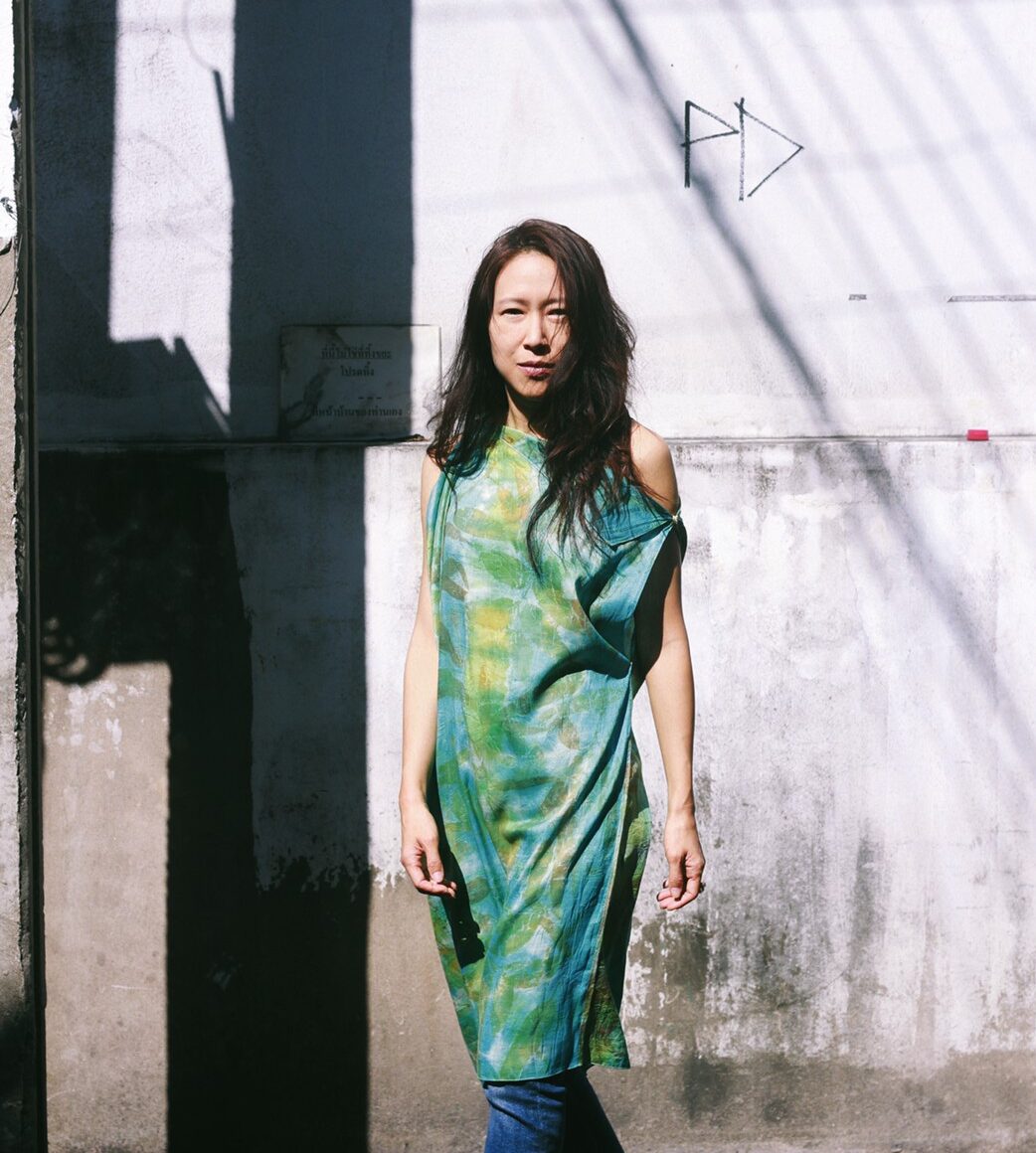
Born in Thailand, she embarked on a transcontinental journey, spending her childhood in California, where her father owned a liquor store in Long Beach. Inspired by the rich heritage of Southeast Asia, Pring introduces “SIN-Dress” to the world, a brilliant reimagining of the classic sarong, or “sin” in Thai. This modern masterpiece skillfully blends elegance and adaptability, and it was created to enhance and appreciate the attractiveness of many body types.

What sets her creations apart is the meticulous attention to detail in the production process. Each piece of artisanal Thai silk undergoes individual hand printing and hand dyeing, resulting in wearable art that empowers women to embrace their unique beauty and personal style.

Pring aims to depart from fleeting trends, labels, and the unsustainable practices associated with fast fashion. By advocating for slow and mindful consumption, she aims to redefine luxury in the Asian fashion industry, proving that it can harmonize with ethical and sustainable principles while still delivering the highest quality.

In an exclusive interview with Asian Hustle Network, Pring delves into the depths of her brand Sucette and reveals the captivating story behind SIN-Dress.

HOW SIN-DRESS CAME TO LIFE

I was inspired by the Southeast Asian garment, the sarong, or “sin” in Thai, which is essentially a piece of fabric sewn into a tube, and traditionally worn as a skirt by both men and women. 

I actually started Sucette as an artisanal shoe brand during the pandemic. I arrived in Thailand in February 2020, was 7 months pregnant, and saw Covid hit the country right after China. I ended up giving birth during the first lockdown and saw the economic devastation hit Thai artisan communities and saw the rising trend of “fast fashion”.

I was still freelancing as a shoe designer part-time and was deeply saddened by how badly Thai craftspeople were suffering economically and having to accept very low-paying and demeaning jobs to survive and I felt compelled to do something about it. 

I started Sucette as an artisanal shoe brand featuring hand-woven Thai silks and hand-carved heels but due to the complexity of shoes and not wanting to have to invest in a ton of sizing and stock, I was playing around with the idea of the sarong in my head. I loved the idea of the garment and creating something that was at once truly “Thai/ Asian” but also contemporary and universal.

I also loved to collect vintage silk sarongs but never wore them as I didn’t have the skills of tying them. I also didn’t want to have to cut them into dresses as each silk was so perfect as it is and would be a shame to cut! 

So I started to play around with the way it wrapped and one day I came up with the first “SIN-Dress”! I remember draping the entire piece of Thai silk on a mannequin and with just 2 pins, saw it hang beautifully as a tunic dress. I then added 24k gold plated brass hoops, handcrafted by a local workshop here in Bangkok, because I wanted to add a subtly luxurious and unique artisanal element. 

From then, I worked on the longer version, which is also a single piece of silk without any cuts or complicated patterns, in keeping with the “essence” of the sarong. 

My biggest inspiration is probably the way Siamese and Southeast Asian women wore the sarong historically. I loved looking at archive images, especially 19th-century photographs of women draped in beautiful silk and looking so elegant. My goal is to showcase this heritage to the world but in a contemporary way.

My other inspirations are Japanese designers, especially Issey Miyake and his invention of Pleats Please which is a conceptual collection, now renowned worldwide, but based on very Japanese ideas. 

PRING’S EXPERIENCE IN THE PARISIAN FASHION INDUSTRY

Being in Paris taught me the value of heritage and know-how and combining that rich tradition with a contemporary twist.

In Paris, heritage is absolutely everywhere you look–from the architecture to the food to the fashion and the art, but creators aren’t afraid to take that heritage and give it a contemporary make-over, while still being respectful of tradition. I also learned the value of being unique and owning your individuality.

In Thailand and perhaps in Asia there is a tendency to “copy” what the West is doing, and I believe that we have so much wealth of culture and knowledge that it is much better to showcase our own identity than to try to be like someone else. 

THE CREATIVE PROCESS

I fell in love with hand printing and dyeing silks because I found it very empowering that I could create totally unique artistic prints without having to go through the industrial process. For me, it is a similar process as artisans would do in their local communities, and I thought there is such value in making something beautiful and one-of-a-kind, for both the client and the maker.

I use a technique called “eco printing” which uses leaves and plants to print onto the silk. I also experiment with making my own natural dyes, tie-dyeing, and shibori dyeing techniques. My goal is to create wearable works of art that my clients will feel good in and hopefully keep forever. 

WHAT MAKES THE SIN-DRESS UNIQUE

Unlike a typical fashion brand, I don’t create “collections”

The SIN-Dress comes in 2 variations only, the short and long versions, and fits most body shapes and sizes. However, each dress is made from a totally unique piece of hand-printed silk therefore each dress is unique. 

My goal is to create a garment that would always fit, feel amazing on, and that each woman can style her own way to suit her individual personality. Much like the traditional sarong, there is no “correct way” to wear a “SIN-Dress”!

I always encourage my clients to have fun expressing their unique styles and to let their personalities shine. I want to create forever pieces of wearable art that are also effortless and versatile and can be worn for multiple occasions.

I’d love to be an example that it is possible to build a strong brand while going against the fashion industry’s vicious cycle of the “constant chase for newness” and overproduction. I’d also love to prove that “Made in Thailand/Asia” can be synonymous with sustainably handcrafted luxury and artistry at the highest level! 

PRING’S GOALS AND ASPIRATIONS FOR SUCETTE

I would love for the SIN-Dress to become a household name worldwide, to prove that a garment based on Asian heritage can become universally appealing and desirable!

My goals for my brand Sucette is to create beautiful wearable art in a way that also contributes to positive change–for the environment by choosing sustainable and artisanal production methods, for local communities by providing highly paid and rewarding work, and for my clients by celebrating individual style and beauty. 

CONNECT WITH PRING

Website: sucetteofficial.com

Instagram: @sucetteofficial

Facebook Page: Sucetteofficial

Sucette FB Group: Sucette Silk Couture Club
Related Articles

Image Source: Business Wire

Uncategorized

Takashi Cheng Honored With A Special Award For Exemplary Initiatives On Elevating The AAPI Creator Community

The Gala hosted by the Asian Business Association was in full swing during the evening spent celebrating AAAPI contemporaries. The evening’s events revolved around the concept of authentic old Hollywood, and its guest list included several famous personalities. 

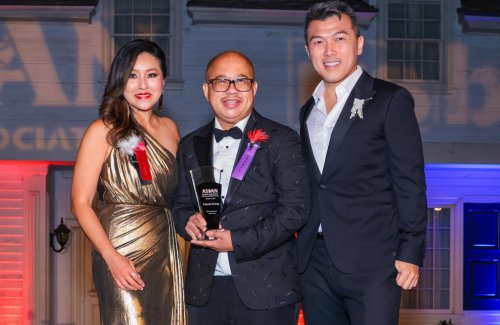
Takashi Cheng was honored with the Media Visionary of the Year Award, one of the night’s main highlights. He is one of the business leaders from the Los Angeles community who highlights the accomplishments of prosperous business owners and corporations and has contributed to advancing the ABA’s goals and mission. 

Cheng serves as the Chief Executive Officer of Society One. He is known to be a creative investor and a public intellectual. Cheng has seen many ups and downs, but he credits his success to the American Bar Association (ABA), which he calls a shelter for young professionals seeking mentorship and employment. He attributed a significant portion of his success to the support of his wife and their young children.

Cheng’s Bling Empire castmate and friend Kane Lim called him a visionary. Lim is proud and happy that Cheng is in the spotlight for investing in people and projects that aim to elevate the Asian community. He is amazed at how Cheng invests in people and projects that seek to promote the Asian community.

Besides all the recognition that night, Cheng modestly used his platform to show the world that a large investment in the AAPI creator community is needed to provide a perspective and a complete spectrum of content that better understands the underrepresented. 

Cheng pledged $100 million to create new films, programs, resources, and infrastructure for Asian American business leaders. This showed Society 1’s support for AAPI creators. He concluded that he had “come full circle” from being a spectator in the crowd to receiving recognition from highly regarded community members.

Image Source: Amberlyns Cake / Danica Lynne Casta

Uncategorized

How An Engineering Graduate Trades Hard Hats For Pastry Becomes 6-Figure Baker

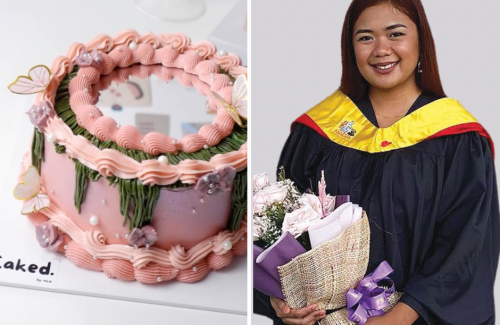
For Danica Lynne Casta, an engineer by profession turned baker, success was hers after she risked taking a big step outside her comfort zone. She now manages her online cake business under “Amberlyns Cake.”

The Filipina baker had just graduated from university when the pandemic struck. Danica began to reconsider her professional goals in baking when her family had financial difficulties, so she looked for a short-term position in the online world.  

Danica had limited experience in baking. But through hard work, she persisted in her quest to become a better baker until she became well-known for her delicious “bento cakes”.

The bento cakes were not only delicious but also the perfect size and price for those watching their spending. She also recently launched a “Selfie Mirror Cake” featuring a real mirror on top of the cake. So, you can take one-of-a-kind mirror selfies while taking a snap of your scrumptious cake.

In only one month, she turned a profit into double digits. At that moment, she knew that baking was her true calling in life. “I told my family that I was quitting my job and would be a full-time baker from now on,” she told The Philippine Star, a digital newspaper in the Philippines.

As of writing, Amberlyns Cake (@amberlynscake) got over 178k followers on Instagram and Facebook.

Image Source: CNBC Make It

Uncategorized

25-year-old Who Earns Half A Million Per Year Proves That No One Is Too Young To Be A Real Estate Investor

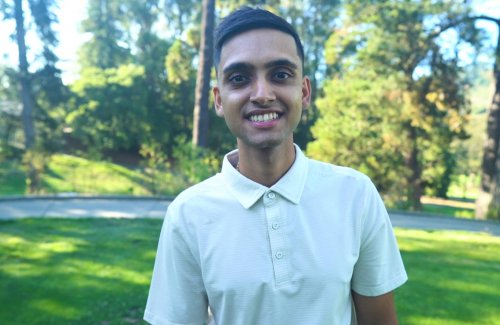
This millennial will inspire you with his quest for financial independence. Sahil Mehta earns $515,000 a year flipping houses in addition to his full-time job at Golden Gate Sotheby’s.

Mehta grew up in a low-income household. He moved to California at 16, where he started college and graduated early to launch a successful career in real estate. Today, he has already put five rental apartments into the real estate market in Berkeley and has been able to make a profit from them.

He acknowledges that prospective investors require substantial capital even to enter the game. One essential thing he considers in investing his money is making deposits into a personal retirement account. Now, Mehta puts a lot of money into himself and puts away about $10,000 monthly for real estate investments. 

The 25-year-old also invests $1,500 per month, while most financial advisers recommend saving 10% to 15% of income for retirement. Brilliant move to put some of it in an IRA, where it can multiply at 6% to 8% every year.

O’Leary, chairman of O’Shares ETFs and a judge on the new CNBC show “Money Court,” was impressed by Sahil Mehta’s connotations to stock market strategies. “That’s what you’re putting aside for your nest egg when you turn 65.”

Made with Canva

Uncategorized

Eight Trailblazing Asian Women Who Are Slaying It In Startups

When it comes to closing the gender equality gap in entrepreneurship, many barriers remain to be addressed. However, female entrepreneurs in the startup industry are now rising and have been taking center stage.

Fortune recently released a list of the 15 Most Powerful Women in Startups based on PitchBook valuation data. 

Eight women on the list are notable Asian women who are either founders of highly valued startups where they hold important jobs or chief executives of highly valued firms.

Without further ado, here are the most powerful women in charge of the most valuable private companies in the world today.


Melanie Perkins

Cofounder and CEO, Canva

Valuation: $26 billion

The Malaysian-Austrailian cofounder and CEO of design software maker Canva was valued at $40 billion in 2021, which makes it the highest-valued female-founded startup in the world. Launching their new office product, the company is ready to take on Microsoft and Google.


Divya Gokulnath

Cofounder and director, Byju’s

Valuation: $22 billion

Gokulnath cofounded India’s most valuable startup, Byju’s. The firm’s aim is to make learning engaging and effective by leveraging deep pedagogy and cutting edge technology.


Miranda Qu

Cofounder and president, Xiaohongshu

Valuation: $20 billion

Based in Shanghai, the social e-commerce app Xiaohongshu (translation: “Little Red Book”) has been key to the rise of experiential shopping in China. The innovative platform integrates the authentic content shared by its community with commerce, quickly becoming one of the most popular destinations for making lifestyle decisions.


Ruchi Kalra

Cofounder and CFO, OfBusiness; cofounder and CEO, Oxyzo

Valuations: $5 billion (OfBusiness); $1 billion (Oxyzo)

Kalra along with her husband Asish Mohapatra, cofounded the carbon management business OfBusiness and the digital lender Oxyzo. OfBusiness provides India’s SMEs access to cash flow-based financing for buying raw materials through its NBFC ‘Oxyzo Financial Services’.


Adi Tatarko

Cofounder and CEO, Houzz

Valuation: $4 billion

The Israeli-American cofounder and CEO started the home remodeling and design platform where people can browse and save beautiful photos of inspiring home, as well as find and hire the right design and construction professionals.


Eynat Guez

Cofounder and CEO, Papaya Global

Valuation: $3.7 billion

Papaya Global is a payroll platform trusted across 160+ countries and all types of employment. Based in Israel, Guez cofounded the startup after a long career in global workforce management.


April Koh

Cofounder and CEO, Spring Health

Valuation: $2 billion

Koh became the youngest woman to run a multibillion-dollar company when the startup hit its $2 billion valuation in 2021. With the mission to eliminate every barrier to mental health, Spring Health offers mental health care services as an employer-provided health benefit.


Jinglan Wang

Cofounder and CEO, Optimism

Valuation: $1.7 billion

Optimism is an Ethereum-based decentralized infrastructure platform that allows for instant transactions and scalable smart contracts.The company valued at $1.7 billion as it worked to scale Ethereum.