Stories

August 21, 2023

SHARE:

After decades of experience in the fashion industry in Paris, Pring Bunnag has embarked on a new venture that aims to revolutionize the perception of “made in Asia.”

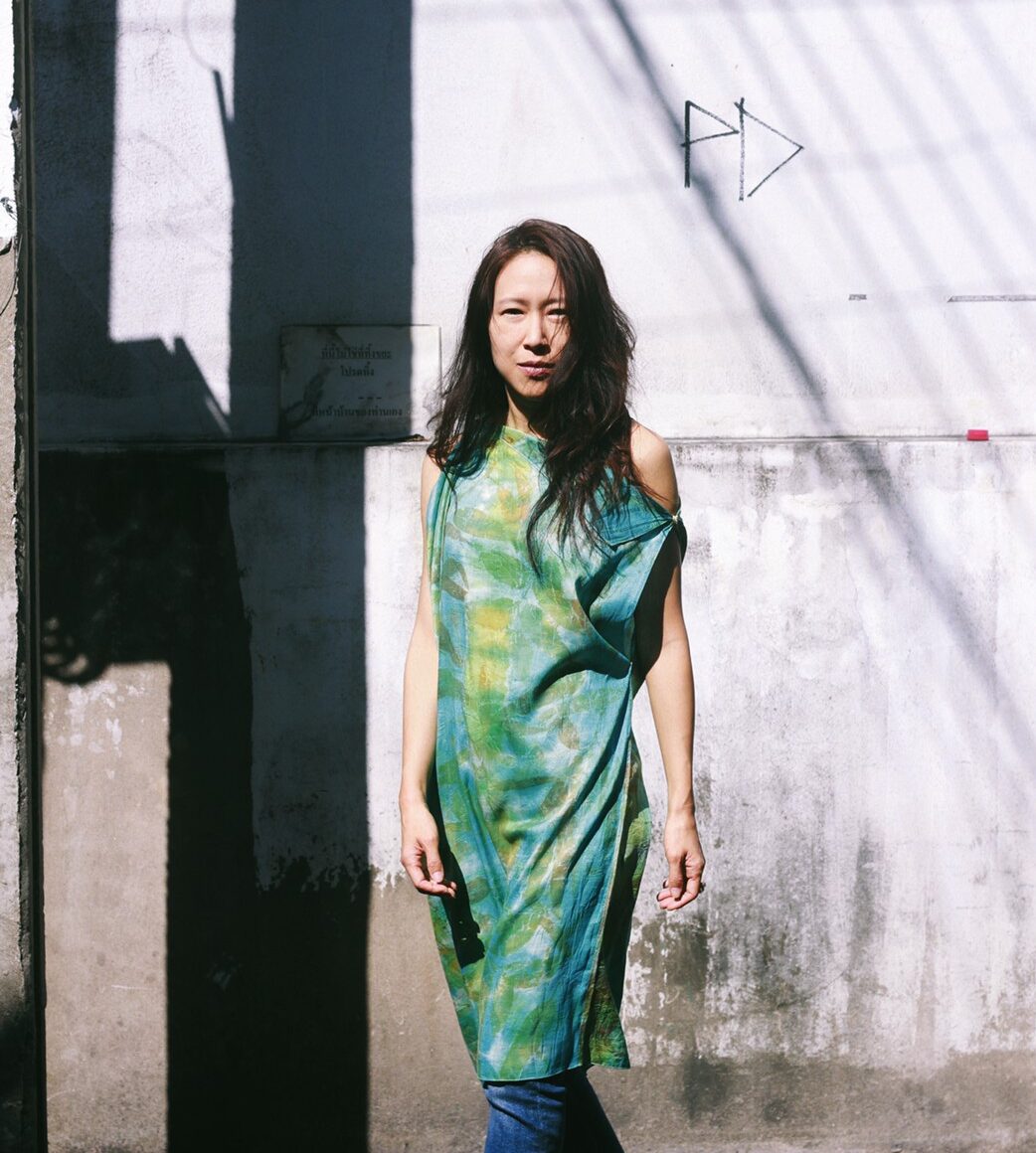
Born in Thailand, she embarked on a transcontinental journey, spending her childhood in California, where her father owned a liquor store in Long Beach. Inspired by the rich heritage of Southeast Asia, Pring introduces “SIN-Dress” to the world, a brilliant reimagining of the classic sarong, or “sin” in Thai. This modern masterpiece skillfully blends elegance and adaptability, and it was created to enhance and appreciate the attractiveness of many body types.

What sets her creations apart is the meticulous attention to detail in the production process. Each piece of artisanal Thai silk undergoes individual hand printing and hand dyeing, resulting in wearable art that empowers women to embrace their unique beauty and personal style.

Pring aims to depart from fleeting trends, labels, and the unsustainable practices associated with fast fashion. By advocating for slow and mindful consumption, she aims to redefine luxury in the Asian fashion industry, proving that it can harmonize with ethical and sustainable principles while still delivering the highest quality.

In an exclusive interview with Asian Hustle Network, Pring delves into the depths of her brand Sucette and reveals the captivating story behind SIN-Dress.

HOW SIN-DRESS CAME TO LIFE

I was inspired by the Southeast Asian garment, the sarong, or “sin” in Thai, which is essentially a piece of fabric sewn into a tube, and traditionally worn as a skirt by both men and women. 

I actually started Sucette as an artisanal shoe brand during the pandemic. I arrived in Thailand in February 2020, was 7 months pregnant, and saw Covid hit the country right after China. I ended up giving birth during the first lockdown and saw the economic devastation hit Thai artisan communities and saw the rising trend of “fast fashion”.

I was still freelancing as a shoe designer part-time and was deeply saddened by how badly Thai craftspeople were suffering economically and having to accept very low-paying and demeaning jobs to survive and I felt compelled to do something about it. 

I started Sucette as an artisanal shoe brand featuring hand-woven Thai silks and hand-carved heels but due to the complexity of shoes and not wanting to have to invest in a ton of sizing and stock, I was playing around with the idea of the sarong in my head. I loved the idea of the garment and creating something that was at once truly “Thai/ Asian” but also contemporary and universal.

I also loved to collect vintage silk sarongs but never wore them as I didn’t have the skills of tying them. I also didn’t want to have to cut them into dresses as each silk was so perfect as it is and would be a shame to cut! 

So I started to play around with the way it wrapped and one day I came up with the first “SIN-Dress”! I remember draping the entire piece of Thai silk on a mannequin and with just 2 pins, saw it hang beautifully as a tunic dress. I then added 24k gold plated brass hoops, handcrafted by a local workshop here in Bangkok, because I wanted to add a subtly luxurious and unique artisanal element. 

From then, I worked on the longer version, which is also a single piece of silk without any cuts or complicated patterns, in keeping with the “essence” of the sarong. 

My biggest inspiration is probably the way Siamese and Southeast Asian women wore the sarong historically. I loved looking at archive images, especially 19th-century photographs of women draped in beautiful silk and looking so elegant. My goal is to showcase this heritage to the world but in a contemporary way.

My other inspirations are Japanese designers, especially Issey Miyake and his invention of Pleats Please which is a conceptual collection, now renowned worldwide, but based on very Japanese ideas. 

PRING’S EXPERIENCE IN THE PARISIAN FASHION INDUSTRY

Being in Paris taught me the value of heritage and know-how and combining that rich tradition with a contemporary twist.

In Paris, heritage is absolutely everywhere you look–from the architecture to the food to the fashion and the art, but creators aren’t afraid to take that heritage and give it a contemporary make-over, while still being respectful of tradition. I also learned the value of being unique and owning your individuality.

In Thailand and perhaps in Asia there is a tendency to “copy” what the West is doing, and I believe that we have so much wealth of culture and knowledge that it is much better to showcase our own identity than to try to be like someone else. 

THE CREATIVE PROCESS

I fell in love with hand printing and dyeing silks because I found it very empowering that I could create totally unique artistic prints without having to go through the industrial process. For me, it is a similar process as artisans would do in their local communities, and I thought there is such value in making something beautiful and one-of-a-kind, for both the client and the maker.

I use a technique called “eco printing” which uses leaves and plants to print onto the silk. I also experiment with making my own natural dyes, tie-dyeing, and shibori dyeing techniques. My goal is to create wearable works of art that my clients will feel good in and hopefully keep forever. 

WHAT MAKES THE SIN-DRESS UNIQUE

Unlike a typical fashion brand, I don’t create “collections”

The SIN-Dress comes in 2 variations only, the short and long versions, and fits most body shapes and sizes. However, each dress is made from a totally unique piece of hand-printed silk therefore each dress is unique. 

My goal is to create a garment that would always fit, feel amazing on, and that each woman can style her own way to suit her individual personality. Much like the traditional sarong, there is no “correct way” to wear a “SIN-Dress”!

I always encourage my clients to have fun expressing their unique styles and to let their personalities shine. I want to create forever pieces of wearable art that are also effortless and versatile and can be worn for multiple occasions.

I’d love to be an example that it is possible to build a strong brand while going against the fashion industry’s vicious cycle of the “constant chase for newness” and overproduction. I’d also love to prove that “Made in Thailand/Asia” can be synonymous with sustainably handcrafted luxury and artistry at the highest level! 

PRING’S GOALS AND ASPIRATIONS FOR SUCETTE

I would love for the SIN-Dress to become a household name worldwide, to prove that a garment based on Asian heritage can become universally appealing and desirable!

My goals for my brand Sucette is to create beautiful wearable art in a way that also contributes to positive change–for the environment by choosing sustainable and artisanal production methods, for local communities by providing highly paid and rewarding work, and for my clients by celebrating individual style and beauty. 

CONNECT WITH PRING

Website: sucetteofficial.com

Instagram: @sucetteofficial

Facebook Page: Sucetteofficial

Sucette FB Group: Sucette Silk Couture Club
Related Articles

News

How Wang Xiaokun Turned His Milktea Business into a Billion-Dollar Success

Wang Xiaokun, a 40-year-old Chinese entrepreneur, has achieved a remarkable feat by becoming a billionaire through his milk tea venture. He is the visionary founder of Cha Panda, a Chinese tea chain.

Recent funding rounds have catapulted his tea business’s valuation to an impressive $2.1 billion. Forbes estimates Wang’s personal fortune at a staggering $1.1 billion, primarily due to his substantial 60% ownership stake in the Chengdu-based beverage chain.

Over the past three years, Cha Panda has experienced rapid expansion, now boasting an extensive network of over 7,000 stores. The chain is known for its signature beverages, including mango pomelo sago, taro bubble tea, and jasmine milk green tea, all offered at an affordable price point of $3.60 or less, as reported by Forbes.

Notably, Wang’s wife, Liu Weihong, has also enjoyed a substantial increase in her wealth, with an estimated fortune of $700 million, thanks to her 33% ownership stake in the company. She plays a pivotal role as the chair of the supervisory committee, responsible for overseeing Cha Panda’s daily operations, as indicated in a preliminary prospectus filed with the Hong Kong Stock Exchange. 

According to MSN, the roots of Cha Panda trace back to 2008 when Wang began selling fruit and bubble tea from a modest shop near a school in Chengdu, known for its spicy cuisine and as the home of giant pandas. Over the subsequent decade, Wang diligently expanded Cha Panda’s network of stores to 531 by 2020. However, the pivotal moment occurred when he embraced a franchising model.

Today, Cha Panda focuses on crafting beverage recipes and supplying ingredients like fruit and tea leaves to Cha Panda-branded beverage shops. This innovative approach allows Wang to maintain lower operational costs compared to competitors like Hong Kong-listed Nayuki Holdings, which grapple with higher employee salaries and rental expenses for their directly operated stores.

Featured Image Source: India Times

News

The Success Story of Each-A-Cup in the World of Bubble Tea

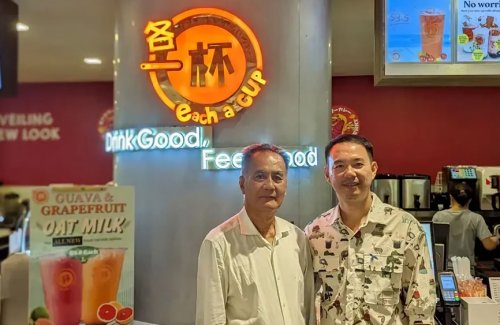
Back in 1999, Singapore was swept by the bubble tea craze. And while a lot of bubble tea shops have come and gone, Each-A-Cup kept thriving. This enduring success story is shown through the experiences of its founders: father and son, Michael and Ivan Chua.

Before entering the F&B industry, Michael Chua enjoyed a successful career as a musician, touring with Taiwanese singer Teresa Teng. However, his entrepreneurial spirit led him to start an ice cream business in Taipei, which later became Gelare. Afterward, he co-founded Healthy 2000, a beverage business in Taiwan. Sensing the growing interest in bubble tea in Singapore, Michael rebranded Healthy 2000 as Each-A-Cup in 1999, marking the beginning of their journey.

During the early years, Each-A-Cup faced fierce competition from rivals like Quickly and Happy Cup. However, they stood out due to the novelty and quality of their offerings, gaining widespread recognition.

The bubble tea industry in Singapore took a downturn in 2001 as prices dropped dramatically, and the market became oversaturated with hundreds of bubble tea shops. Many struggled to maintain quality, and even reputable brands faced losses. However, Michael remained resilient, believing in the enduring appeal of bubble tea.

Recovery came in 2003, and Each-A-Cup began rebuilding the business. Ivan, Michael’s son, joined in 2007, bringing fresh energy and ideas to the brand. The second wave of the bubble tea craze saw new players entering the market, but Each-A-Cup’s commitment to authenticity and quality set them apart.

As the founders, Michael and Ivan Chua, continue to guide the brand, the future of Each-A-Cup looks as bright as ever in the dynamic world of bubble tea.

Featured Image Source: CNA Lifestyle

Collin Hall

Stories

Celebrating Individual Narratives and Multiracial Identities Through the Book ‘Mostly Me’

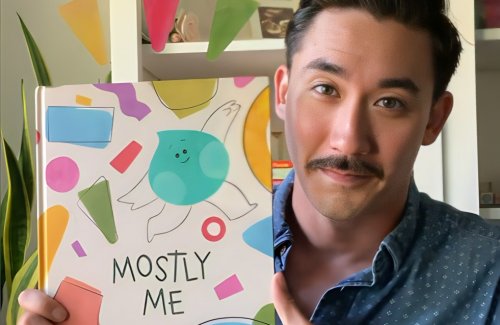
In a world where the narrative of identity often falls into predefined categories, Mostly Me by Collin Hall emerges as a refreshing beacon of self-discovery.

Released on September 18 by Gloo Books, this picture book takes readers on a captivating journey, skillfully illustrating the complexities of biracial identity.

Author and Illustrator

Written by Collin Hall and beautifully illustrated by Crystal Dawn Chaffee, both of whom share a biracial heritage, Mostly Me is a heartfelt project born from personal experiences. Collin embarked on this creative journey shortly after the birth of his first daughter, driven by a powerful desire to equip her with the tools to embrace her multiracial identity.

Collin Hall is a proud biracial Korean/American based in Austin, TX, offering a voice that resonates deeply with those navigating the intricate terrain of identity.

Diverse Representation

According to the *Cooperative Children’s Book Center’s 2022 Diversity Statistics database, only 0.7% of children’s books published in 2022 were authored by multiracial individuals and focused on multiracial characters.

Collin’s Personal Journey

Collin Hall shares, “The biggest hurdle for this project was the internal identity-wrestling before words were even on paper. Having to re-engage with a part of myself I had avoided for a long time was hard, and typically paired with a good dose of uncertainty and guilt. Finding my own footing was, and is, a process, but one that put me in a much better spot to discuss multiracial identity with my own kids in the future.”

He also shared how re-learning Korean nursery rhymes was also a challenge and that it took longer than he expected.

Embracing In-Between Spaces

Mostly Me may be short and whimsical, but it carries a profound message—it’s entirely acceptable to exist within the fluid spaces of identity. It encourages individuals to wholeheartedly embrace all aspects of their heritage, irrespective of societal expectations.

I’ve got some green, I’ve got some blue. 

Some have asked, “So what are you?” 

Not quite blue, not fully green. 

I’m something new. I’m in-between.

Affirmation and Unity

Mostly Me serves as an affirmation, resonating with Collin and Crystal’s own experiences and the experiences of every multiracial child navigating the intricate landscape of identity. It instills the confidence to boldly claim one’s space in the world, reminding us all that there is no universal guidebook for this journey. Instead, it offers the comfort of shared emotions, questions, and experiences.

Within the pages of Mostly Me, Collin Hall extends an invitation to readers to embark on a profound journey of self-discovery. This remarkable book celebrates the beauty of embracing multiracial identities, encourages us to revel in the uniqueness of our individual narratives, and, above all, empowers us to find the strength to assert our presence in a wonderfully diverse world.

As we eagerly anticipate its release, Mostly Me promises to inspire and resonate with readers of all backgrounds, young and old, seeking to understand the rich tapestry of identity that defines us all.

CONNECT WITH COLLIN HALL / MOSTLY ME

Instagram: @mistercollin

Order here: gloobooks.com/products/mostly-me

Gloo Books: @gloobooks

*Independent analysis of data accessed on 07/02/2023 by Gloo Books using the Cooperative Children’s Book Center (CCBC), School of Education, University of Wisconsin-Madison Diversity Statistics Book Search (https://ccbc.education.wisc.edu/diversity-statistics-book-search/). Permission to publish granted by the CCBC 07/13/2023.

News

Hmong Legacy Market: Bridging Cultures Through Food and Community

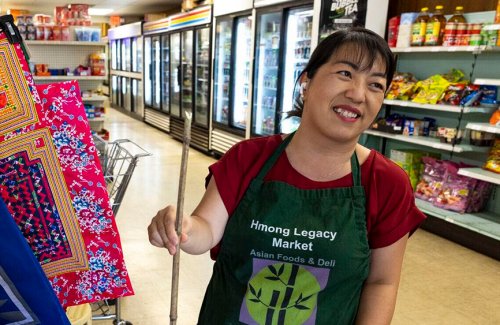
At Hmong Legacy Market, located on Madison’s South Side, you’ll discover a treasure trove of homemade Asian cuisine. From steaming bowls of beef pho to whole roasted tilapia seasoned with herbs and chili, and delightful sesame rice balls filled with mung beans and coconut, this independent Asian grocery store offers a culinary journey.

Ze Yang, one of the owners, can often be found expertly preparing dishes like squash curry. To her, food is more than sustenance; it’s a connector, a storyteller, and a unifying force that brings people together.

As a young child in the 1980s, Ze Yang lived in a refugee camp in Thailand with her family, having fled Laos during the aftermath of the Vietnam War. In 1991, Ze Yang’s family received the opportunity to immigrate to the United States, sponsored by a distant uncle who had settled in California. Their early days in the U.S. were marked by challenges—language barriers, cultural shock, and financial difficulties. However, their farming skills from Laos allowed them to grow crops like green beans, tomatoes, and peppers, which they sold to support their family.

After six years in California, Ze Yang’s family decided to move to Wisconsin, drawn by the promise of better public schools and economic opportunities. Ze Yang’s parents worked tirelessly, holding multiple jobs to make ends meet. This experience inspired Ze Yang to become a teacher, focusing on helping immigrant children adapt to the American education system.

Ze Yang’s family thrived. They bought a house, built a family, the kids went to school, but they also wanted to pursue their entrepreneurial dream. They longed to create a space where people from diverse backgrounds could gather, savor homemade dishes, and access pantry staples from across Asia. This is why they opened Hmong Legacy Market, offering an extensive array of products, from giant spring roll skins to bamboo shoot chili oil, and from mango mochi to traditional Hmong celebratory clothing.

More than just a grocery store, Hmong Legacy Market is committed to the well-being of the community. In 2021, it partnered with Public Health Madison and Dane County to serve as a mobile COVID vaccination clinic. Looking ahead, Ze Yang envisions the store’s legacy continuing to thrive, driven by the spirit of family and the desire to improve and grow.

Featured Image Source: Madison