Stories

August 21, 2023

SHARE:

After decades of experience in the fashion industry in Paris, Pring Bunnag has embarked on a new venture that aims to revolutionize the perception of “made in Asia.”

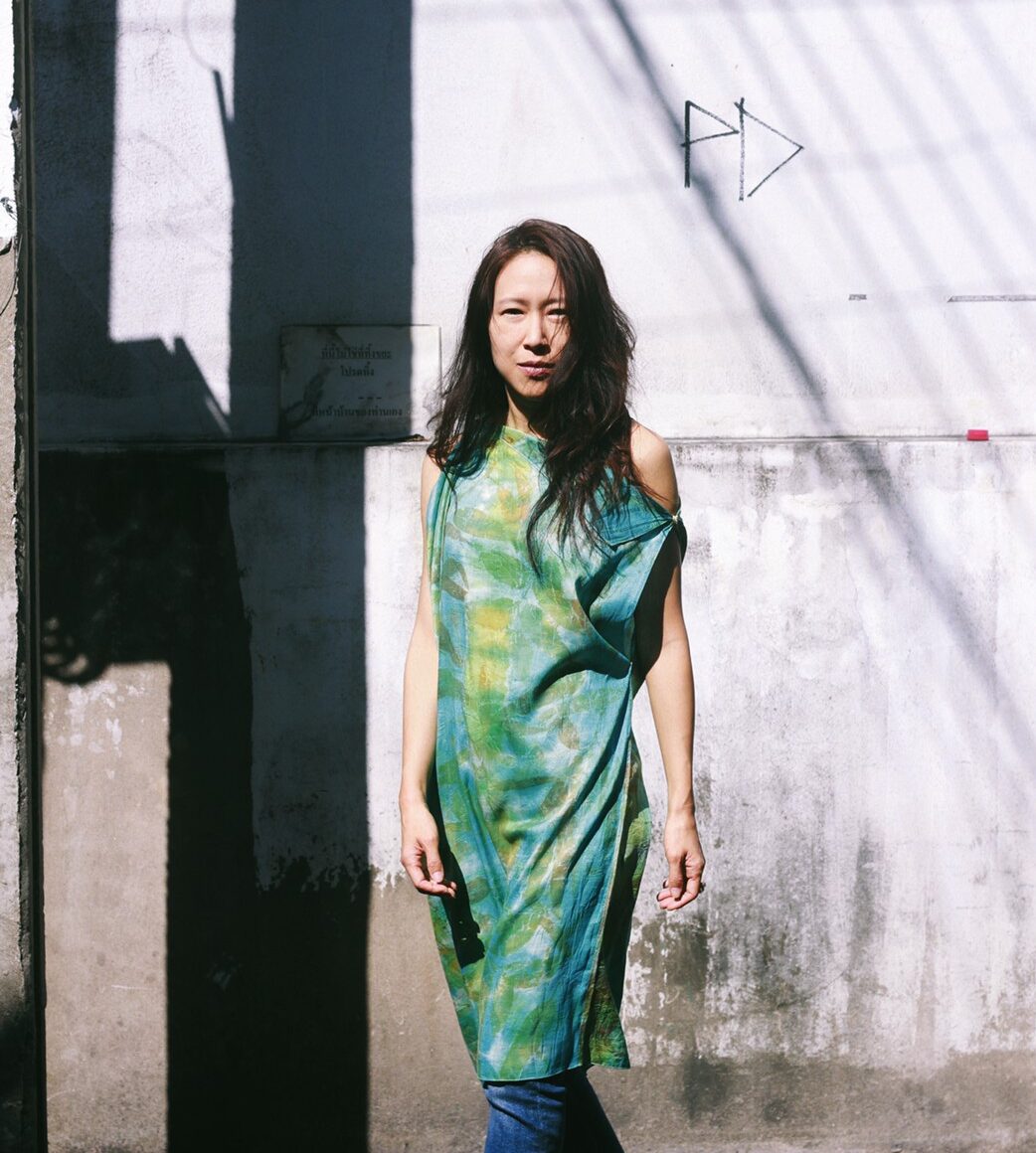
Born in Thailand, she embarked on a transcontinental journey, spending her childhood in California, where her father owned a liquor store in Long Beach. Inspired by the rich heritage of Southeast Asia, Pring introduces “SIN-Dress” to the world, a brilliant reimagining of the classic sarong, or “sin” in Thai. This modern masterpiece skillfully blends elegance and adaptability, and it was created to enhance and appreciate the attractiveness of many body types.

What sets her creations apart is the meticulous attention to detail in the production process. Each piece of artisanal Thai silk undergoes individual hand printing and hand dyeing, resulting in wearable art that empowers women to embrace their unique beauty and personal style.

Pring aims to depart from fleeting trends, labels, and the unsustainable practices associated with fast fashion. By advocating for slow and mindful consumption, she aims to redefine luxury in the Asian fashion industry, proving that it can harmonize with ethical and sustainable principles while still delivering the highest quality.

In an exclusive interview with Asian Hustle Network, Pring delves into the depths of her brand Sucette and reveals the captivating story behind SIN-Dress.

HOW SIN-DRESS CAME TO LIFE

I was inspired by the Southeast Asian garment, the sarong, or “sin” in Thai, which is essentially a piece of fabric sewn into a tube, and traditionally worn as a skirt by both men and women. 

I actually started Sucette as an artisanal shoe brand during the pandemic. I arrived in Thailand in February 2020, was 7 months pregnant, and saw Covid hit the country right after China. I ended up giving birth during the first lockdown and saw the economic devastation hit Thai artisan communities and saw the rising trend of “fast fashion”.

I was still freelancing as a shoe designer part-time and was deeply saddened by how badly Thai craftspeople were suffering economically and having to accept very low-paying and demeaning jobs to survive and I felt compelled to do something about it. 

I started Sucette as an artisanal shoe brand featuring hand-woven Thai silks and hand-carved heels but due to the complexity of shoes and not wanting to have to invest in a ton of sizing and stock, I was playing around with the idea of the sarong in my head. I loved the idea of the garment and creating something that was at once truly “Thai/ Asian” but also contemporary and universal.

I also loved to collect vintage silk sarongs but never wore them as I didn’t have the skills of tying them. I also didn’t want to have to cut them into dresses as each silk was so perfect as it is and would be a shame to cut! 

So I started to play around with the way it wrapped and one day I came up with the first “SIN-Dress”! I remember draping the entire piece of Thai silk on a mannequin and with just 2 pins, saw it hang beautifully as a tunic dress. I then added 24k gold plated brass hoops, handcrafted by a local workshop here in Bangkok, because I wanted to add a subtly luxurious and unique artisanal element. 

From then, I worked on the longer version, which is also a single piece of silk without any cuts or complicated patterns, in keeping with the “essence” of the sarong. 

My biggest inspiration is probably the way Siamese and Southeast Asian women wore the sarong historically. I loved looking at archive images, especially 19th-century photographs of women draped in beautiful silk and looking so elegant. My goal is to showcase this heritage to the world but in a contemporary way.

My other inspirations are Japanese designers, especially Issey Miyake and his invention of Pleats Please which is a conceptual collection, now renowned worldwide, but based on very Japanese ideas. 

PRING’S EXPERIENCE IN THE PARISIAN FASHION INDUSTRY

Being in Paris taught me the value of heritage and know-how and combining that rich tradition with a contemporary twist.

In Paris, heritage is absolutely everywhere you look–from the architecture to the food to the fashion and the art, but creators aren’t afraid to take that heritage and give it a contemporary make-over, while still being respectful of tradition. I also learned the value of being unique and owning your individuality.

In Thailand and perhaps in Asia there is a tendency to “copy” what the West is doing, and I believe that we have so much wealth of culture and knowledge that it is much better to showcase our own identity than to try to be like someone else. 

THE CREATIVE PROCESS

I fell in love with hand printing and dyeing silks because I found it very empowering that I could create totally unique artistic prints without having to go through the industrial process. For me, it is a similar process as artisans would do in their local communities, and I thought there is such value in making something beautiful and one-of-a-kind, for both the client and the maker.

I use a technique called “eco printing” which uses leaves and plants to print onto the silk. I also experiment with making my own natural dyes, tie-dyeing, and shibori dyeing techniques. My goal is to create wearable works of art that my clients will feel good in and hopefully keep forever. 

WHAT MAKES THE SIN-DRESS UNIQUE

Unlike a typical fashion brand, I don’t create “collections”

The SIN-Dress comes in 2 variations only, the short and long versions, and fits most body shapes and sizes. However, each dress is made from a totally unique piece of hand-printed silk therefore each dress is unique. 

My goal is to create a garment that would always fit, feel amazing on, and that each woman can style her own way to suit her individual personality. Much like the traditional sarong, there is no “correct way” to wear a “SIN-Dress”!

I always encourage my clients to have fun expressing their unique styles and to let their personalities shine. I want to create forever pieces of wearable art that are also effortless and versatile and can be worn for multiple occasions.

I’d love to be an example that it is possible to build a strong brand while going against the fashion industry’s vicious cycle of the “constant chase for newness” and overproduction. I’d also love to prove that “Made in Thailand/Asia” can be synonymous with sustainably handcrafted luxury and artistry at the highest level! 

PRING’S GOALS AND ASPIRATIONS FOR SUCETTE

I would love for the SIN-Dress to become a household name worldwide, to prove that a garment based on Asian heritage can become universally appealing and desirable!

My goals for my brand Sucette is to create beautiful wearable art in a way that also contributes to positive change–for the environment by choosing sustainable and artisanal production methods, for local communities by providing highly paid and rewarding work, and for my clients by celebrating individual style and beauty. 

CONNECT WITH PRING

Website: sucetteofficial.com

Instagram: @sucetteofficial

Facebook Page: Sucetteofficial

Sucette FB Group: Sucette Silk Couture Club

Related Articles

News

Chinese Paper Company Promotes Employee Well-Being through Running Incentives

Guangdong Dongpo Paper, a paper company based in Guangdong, China, is reshaping the conventional corporate bonus structure by tying annual bonuses to employees’ physical fitness levels.

Chairman Lin Zhiyong recently revealed an unconventional program where the size of the annual bonus is directly proportional to the number of miles an employee runs each month.

Under this fitness-centric initiative, employees must achieve a monthly running target of 62 miles to qualify for an annual bonus equivalent to 130% of their monthly salary. Those covering a more modest 31 miles per month still earn a bonus equivalent to one month’s salary. As an added incentive, employees who sustain a pace of 31 miles per month for six consecutive months are rewarded with a complimentary pair of running shoes.

Lin Zhiyong, who has scaled Mount Everest twice in 2022 and 2023, justified the program and said to Business Insider, “My business can only endure if my employees are healthy.” 

While some employees have embraced the initiative as a novel way to stay fit and earn extra income simultaneously, social media platform Weibo has witnessed skepticism.

Critics question the feasibility of expecting employees to run two miles daily to meet the ambitious monthly target, speculating whether the company aims to transform its workforce into track athletes. Concerns about potential health risks have also surfaced, with some individuals fearing that the rigorous physical requirements may lead to injuries or health complications. 

Despite the mixed reactions, Guangdong Dongpo Paper’s innovative approach to employee incentives has sparked discussions about the delicate balance between workplace motivation and individual health, leaving observers curious about the long-term impact of this incentive program on both the company and its employees.

News

A Global Celebration of API Excellence in the 21st Annual Unforgettable Gala

In a dazzling celebration of Asian and Pacific Islander (API) luminaries in the entertainment industry, Character Media presented the 21st Unforgettable Gala (UNFO). This black-tie event, held at the prestigious Beverly Hilton, attracted over 700 esteemed guests, including influential entertainers, leaders, and prominent API-led brands.

This year, UNFO expanded its reach globally by partnering with AsiaLab, an entertainment platform fostering collaboration among API stars internationally, with an aim to broaden awards categories, recognizing exceptional API contributions on a global scale.

The event, which took place on December 16th, featured an exquisite three-course gourmet dinner, special on-stage moments by honorees, live entertainment, and exclusive performances. The festivities continued at an extravagant after-party, ensuring an unforgettable night for attendees.

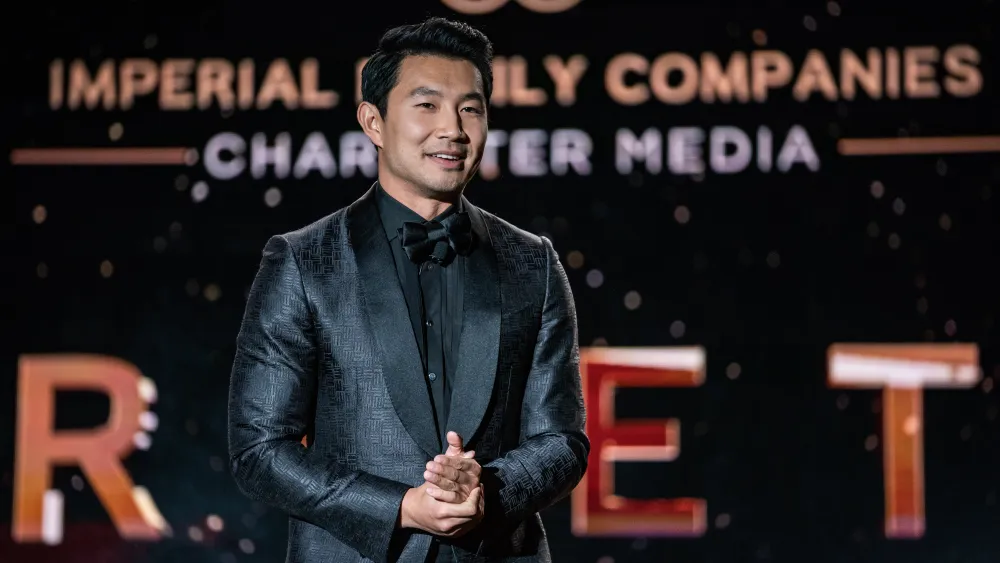
Simu Liu, Source: Variety

Special guests, including host Simu Liu, Selection Committee Co-Chairs Destin Daniel Cretton and Lisa Ling, added glamour to the evening. Notable honorees included Charles Melton, Steven Yeun, Greta Lee, Young Mazino, Adele Lim, Sung Jin Lee, Steven Lim, and the cast of “Never Have I Ever.” Global influencers, such as Mackenyu and Byeong Kyu Cho, were recognized for their groundbreaking contributions.

Keynote addresses by Destin Daniel Cretton and Lisa Ling, along with contributions from esteemed committee members, including Apl.de.Ap, Bing Chen, Sujata Day, Ken Jeong, Jeremy Lin, and Janet Yang, added to the event’s significance.

Founder James Ryu expressed pride in overcoming challenges, emphasizing the collective dedication and resilience of the entertainment community. The Gala not only celebrated API excellence but also highlighted the industry’s enduring commitment to inclusivity and representation.

Stories

How Saigon Cider Became The First Vietnamese Organic Cider

In every sip of cider, there’s a story waiting to be told—a narrative of flavors, a journey of craftsmanship, and a celebration of culture.

For Saigon Cider, it all began when Hannah Jefferys left her job as an architect in 2011 and moved to Vietnam when she was just 25 years old. Hannah grew up in a little place in the British countryside called Somerset, where she witnessed how cider evolved from being a farmer-associated drink to a cosmopolitan summer beverage.

Upon reaching Saigon and basking in the daily dose of sunshine, Hannah delved into the rich Vietnamese ‘nhậu’ culture, centered around shared dishes and toasts on plastic chairs lining the pavements of Saigon.

“There’s nothing quite like it elsewhere in the world — certainly not in the UK,” Hannah shared.

Yet, amidst the rich cultural tapestry, there was something she missed… cider.

A STORY OF INSPIRATION

Hannah found inspiration in the everyday scenes of Vietnamese individuals setting up shop just about anywhere and having a go. “Us British tend to think about risk rather than how things might work, and tend not to take the leap,” she says. She was also inspired by some local F&B brands that started their hustle in home kitchens, gradually expanding to a national and global scale.

This is how Saigon Cider was brought to life. What started as a humble stall at Saigon Outcast became the first organic craft cider in Vietnam.

CELEBRATING VICTORIES

Saigon Cider has notched up some impressive achievements on its journey. With their lineup of three ciders, they have been able to win 15 international awards, beating brands from established cider-making countries like the UK, US and France in some of the competitions.

Even despite the hurdles during the global pandemic and the challenges of being a small yet growing company in a bustling market, Saigon Cider has stood tall, and built a strong brand and following.

This year, Saigon Cider is entering new international markets, and they are incredibly proud to be able to share a taste of Vietnam with the world.

A NARRATIVE OF FLAVORS

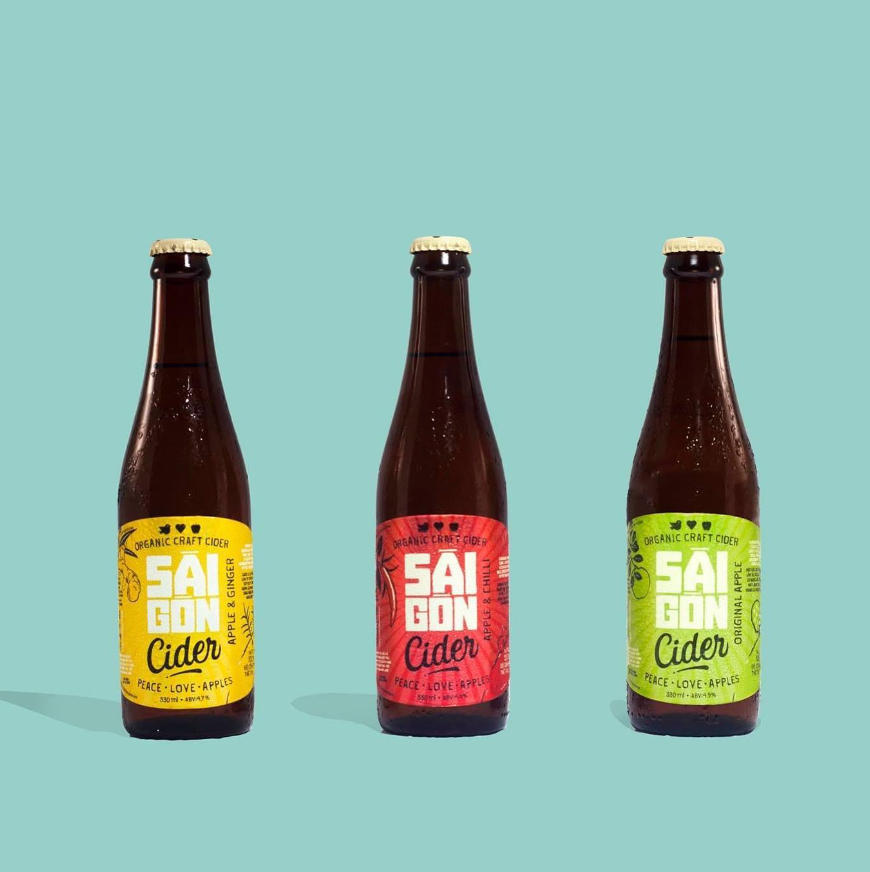
Saigon Cider currently has three delightful flavors to offer:

  1. APPLE & GINGER: A blend featuring organic apples with a punch of Vietnamese ginger. This one is a revitalizing splash of a cider.
  2. ORIGINAL APPLE: This cider is crafted from fuji, gala and other favorite organic apples, perfect for a well deserved chill break after chaos.
  3. APPLE & CHILLI: A combination of organic apples with a Vietnamese chilli kick, delivering a dose of spice and sense of mischief.

Each flavor is thoughtfully crafted to bring a delightful and invigorating experience to everyone’s palate.

A GLOBAL TASTE WITH LOCAL ROOTS

Despite cider being an original British drink, Hannah is proud to present Saigon Cider as a Vietnamese brand.

“From the start, we have been a Vietnamese brand first and foremost, and proudly so. We were created here, grown here and inspired by here and I’m now personally rooted here with my Vietnamese family. 

Our Vietnamese-ness runs through everything we do, our choices of organically farmed ingredients, our labeling and of course, our name. In export markets we retain as much Vietnamese wording on our labels as we can and we hope that we are chosen with pride by Vietnamese and that wider Asian consumers will also feel some sense of ownership over our brand,” Hannah shared with Asian Hustle Network.

The brand currently has openings for exclusive distribution deals in various countries. They would love to grow with overseas Vietnamese distributors who know how to ‘nhậu’, so now is the time to hit them up and be a part of sharing Peace, Love & Apples globally.

CONNECT WITH SAIGON CIDER

Facebook: Saigon Cider

Instagram: @saigoncider

Linkedin: Saigon Cider

Fei-Fei_Li.original-png

News

Fei-Fei Li’s Exclusion from Influential List Fuels Debate on Gender Disparity in AI Leadership

In a recent revelation, the artificial intelligence (AI) community has been thrust into a contentious discussion surrounding gender representation after the omission of Fei-Fei Li from the New York Times’ “Who’s Who Behind the Dawn of the Modern Artificial Intelligence Movement” list.

The list, published on December 3, 2023, spotlighted twelve influential figures instrumental in the growth of AI over the past decade, including industry giants such as Sam Altman, Bill Gates, Elon Musk, and Mark Zuckerberg. However, a striking absence of women, notably Fei-Fei Li, has ignited a broader conversation about gender diversity in the AI landscape.

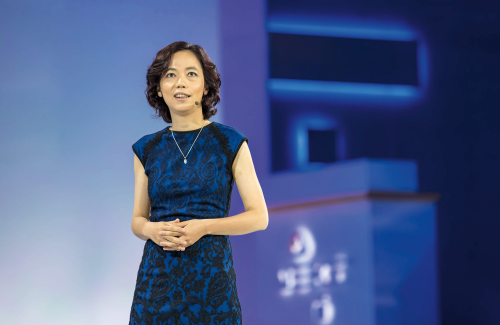
Image Source: IEEE Spectrum

Fei-Fei Li is a distinguished computer science researcher recognized for her creation of ImageNet, a pioneering dataset, that drove progress in computer vision, and paved the way for AlexNet. Her contributions, spanning nearly 15 years as a professor at Stanford University and co-director of the Stanford University Human-Centered AI Institute, have significantly shaped the AI field.

According to VentureBeat, the New York Times described the featured individuals as “a group of researchers, tech executives and venture capitalists” who “had worked for more than a decade to fuel AI” before chatbots “exploded in popularity.”

The list’s lack of gender diversity, particularly the absence of women like Fei-Fei Li, has sparked widespread criticism and calls for a more inclusive representation of the diverse talent within the AI community.

Featured Image Source: Caltech EE