Stories

August 21, 2023

SHARE:

After decades of experience in the fashion industry in Paris, Pring Bunnag has embarked on a new venture that aims to revolutionize the perception of “made in Asia.”

Born in Thailand, she embarked on a transcontinental journey, spending her childhood in California, where her father owned a liquor store in Long Beach. Inspired by the rich heritage of Southeast Asia, Pring introduces “SIN-Dress” to the world, a brilliant reimagining of the classic sarong, or “sin” in Thai. This modern masterpiece skillfully blends elegance and adaptability, and it was created to enhance and appreciate the attractiveness of many body types.

What sets her creations apart is the meticulous attention to detail in the production process. Each piece of artisanal Thai silk undergoes individual hand printing and hand dyeing, resulting in wearable art that empowers women to embrace their unique beauty and personal style.

Pring aims to depart from fleeting trends, labels, and the unsustainable practices associated with fast fashion. By advocating for slow and mindful consumption, she aims to redefine luxury in the Asian fashion industry, proving that it can harmonize with ethical and sustainable principles while still delivering the highest quality.

In an exclusive interview with Asian Hustle Network, Pring delves into the depths of her brand Sucette and reveals the captivating story behind SIN-Dress.

HOW SIN-DRESS CAME TO LIFE

I was inspired by the Southeast Asian garment, the sarong, or “sin” in Thai, which is essentially a piece of fabric sewn into a tube, and traditionally worn as a skirt by both men and women. 

I actually started Sucette as an artisanal shoe brand during the pandemic. I arrived in Thailand in February 2020, was 7 months pregnant, and saw Covid hit the country right after China. I ended up giving birth during the first lockdown and saw the economic devastation hit Thai artisan communities and saw the rising trend of “fast fashion”.

I was still freelancing as a shoe designer part-time and was deeply saddened by how badly Thai craftspeople were suffering economically and having to accept very low-paying and demeaning jobs to survive and I felt compelled to do something about it. 

I started Sucette as an artisanal shoe brand featuring hand-woven Thai silks and hand-carved heels but due to the complexity of shoes and not wanting to have to invest in a ton of sizing and stock, I was playing around with the idea of the sarong in my head. I loved the idea of the garment and creating something that was at once truly “Thai/ Asian” but also contemporary and universal.

I also loved to collect vintage silk sarongs but never wore them as I didn’t have the skills of tying them. I also didn’t want to have to cut them into dresses as each silk was so perfect as it is and would be a shame to cut! 

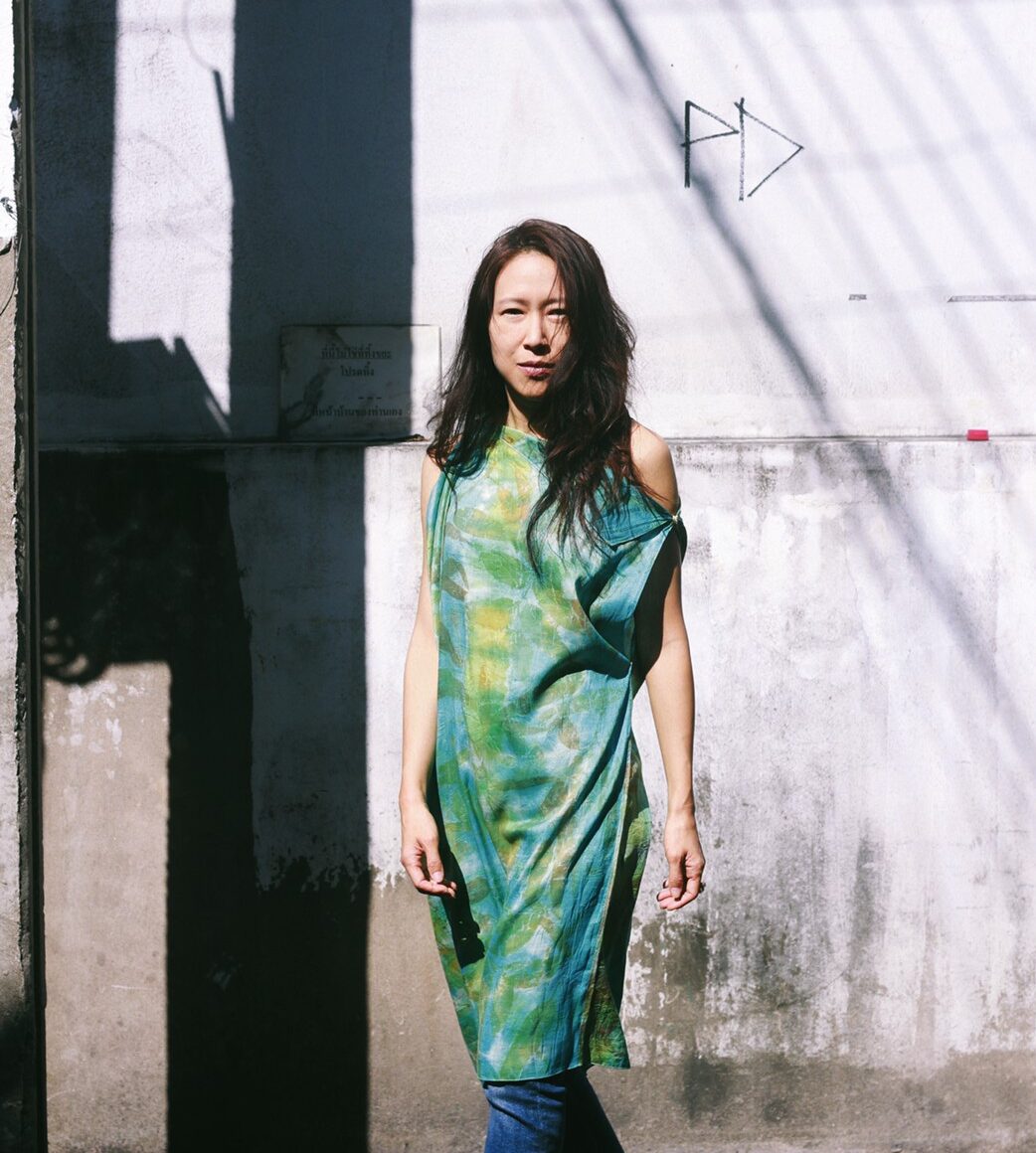
So I started to play around with the way it wrapped and one day I came up with the first “SIN-Dress”! I remember draping the entire piece of Thai silk on a mannequin and with just 2 pins, saw it hang beautifully as a tunic dress. I then added 24k gold plated brass hoops, handcrafted by a local workshop here in Bangkok, because I wanted to add a subtly luxurious and unique artisanal element. 

From then, I worked on the longer version, which is also a single piece of silk without any cuts or complicated patterns, in keeping with the “essence” of the sarong. 

My biggest inspiration is probably the way Siamese and Southeast Asian women wore the sarong historically. I loved looking at archive images, especially 19th-century photographs of women draped in beautiful silk and looking so elegant. My goal is to showcase this heritage to the world but in a contemporary way.

My other inspirations are Japanese designers, especially Issey Miyake and his invention of Pleats Please which is a conceptual collection, now renowned worldwide, but based on very Japanese ideas. 

PRING’S EXPERIENCE IN THE PARISIAN FASHION INDUSTRY

Being in Paris taught me the value of heritage and know-how and combining that rich tradition with a contemporary twist.

In Paris, heritage is absolutely everywhere you look–from the architecture to the food to the fashion and the art, but creators aren’t afraid to take that heritage and give it a contemporary make-over, while still being respectful of tradition. I also learned the value of being unique and owning your individuality.

In Thailand and perhaps in Asia there is a tendency to “copy” what the West is doing, and I believe that we have so much wealth of culture and knowledge that it is much better to showcase our own identity than to try to be like someone else. 

THE CREATIVE PROCESS

I fell in love with hand printing and dyeing silks because I found it very empowering that I could create totally unique artistic prints without having to go through the industrial process. For me, it is a similar process as artisans would do in their local communities, and I thought there is such value in making something beautiful and one-of-a-kind, for both the client and the maker.

I use a technique called “eco printing” which uses leaves and plants to print onto the silk. I also experiment with making my own natural dyes, tie-dyeing, and shibori dyeing techniques. My goal is to create wearable works of art that my clients will feel good in and hopefully keep forever. 

WHAT MAKES THE SIN-DRESS UNIQUE

Unlike a typical fashion brand, I don’t create “collections”

The SIN-Dress comes in 2 variations only, the short and long versions, and fits most body shapes and sizes. However, each dress is made from a totally unique piece of hand-printed silk therefore each dress is unique. 

My goal is to create a garment that would always fit, feel amazing on, and that each woman can style her own way to suit her individual personality. Much like the traditional sarong, there is no “correct way” to wear a “SIN-Dress”!

I always encourage my clients to have fun expressing their unique styles and to let their personalities shine. I want to create forever pieces of wearable art that are also effortless and versatile and can be worn for multiple occasions.

I’d love to be an example that it is possible to build a strong brand while going against the fashion industry’s vicious cycle of the “constant chase for newness” and overproduction. I’d also love to prove that “Made in Thailand/Asia” can be synonymous with sustainably handcrafted luxury and artistry at the highest level! 

PRING’S GOALS AND ASPIRATIONS FOR SUCETTE

I would love for the SIN-Dress to become a household name worldwide, to prove that a garment based on Asian heritage can become universally appealing and desirable!

My goals for my brand Sucette is to create beautiful wearable art in a way that also contributes to positive change–for the environment by choosing sustainable and artisanal production methods, for local communities by providing highly paid and rewarding work, and for my clients by celebrating individual style and beauty. 

CONNECT WITH PRING

Website: sucetteofficial.com

Instagram: @sucetteofficial

Facebook Page: Sucetteofficial

Sucette FB Group: Sucette Silk Couture Club

Related Articles

photos_by_monika_ami_img_6623

Stories

The Power of Representation: Ami Desai’s Impact on Media and Beauty

The path to success in content creation is never paved with roses, and no one understands this quite like Ami Desai. From her beginnings in broadcast journalism to becoming a well-known beauty and lifestyle influencer, Ami has shaped her career through authenticity, adaptability, and a strong dedication to representation.

As an Indian-American raised in Los Angeles, Ami grew up as a first-generation South Asian immigrant, a generation that deeply felt the need for greater South Asian representation in the media. After earning her degree from UC Berkeley and a master’s from Boston University, she built a solid media foundation through roles at CNN and Inside Edition. During this time behind the scenes, she discovered her passion for on-camera hosting, eventually landing her dream role as the host of the first digital show for Oprah.com. In 2011, Ami made a pivotal move by hosting a luxury travel show in India, which allowed her to reconnect with her roots and gain international exposure.

Simultaneously, Ami began building her own beauty business with her family. She went on to become one of the first South Asian content creators to collaborate with major brands like Toyota and Pampers on large campaigns, while also highlighting important Indian traditions and holidays such as Diwali. Recognizing the lack of representation for her ethnicity in the media and beauty industries, Ami founded her life’s mission, merging her experiences as a host, makeup artist, and mom to help other women advocate for themselves while balancing various roles. This gap in representation became her motivation to amplify underrepresented voices and promote diversity.

In 2016, Ami took a leap of faith, leaving traditional media behind to forge her own path in the influencer space. Despite pitching herself as a contributor or expert to various outlets, she faced rejection, which drove her to create her own content on social media platforms. Through this experience, she realized that content creation involved more than just posting visually appealing images—it required strategic planning, engagement tracking, and brand pitching. Even as the industry pushed her to narrow her niche, Ami confidently embraced her multifaceted identity, sharing content that reflected her life as a mother, beauty expert, and entrepreneur. This authenticity deeply resonated with her audience, ultimately helping her build a loyal fanbase connecting creators and audiences.

In the latest episode of the Creators Podcast, presented by Asian Hustle Network in collaboration with Meta Prosper, Ami shares a story of resilience, adaptability, and a deep dedication to her community. Whether you’re an aspiring content creator, a beauty lover, or someone who enjoys learning about authentic journeys, this episode is filled with valuable insights and inspiration.

Connect with Ami Desai:

Instagram: @amidesai

E3JPPIEBT5HCFPAJYT6B5GYEDU-jpg

News

Is the Model Minority Myth an Obstacle to Real Representation?

The Trap of Positive Stereotypes

The original “Charlie’s Angels” was a successful hit, not only because it made $93 million and grossed more than $264 million at global offices, but it also created exposure for Asian American representation.

Lucy Liu plays Alex Munday, a strategist, expert martial artist, and agent. Munday’s parents were Havard professors of economics and philosophy, and she, at an early age, was a child prodigy excelling at chess, equestrianism, fencing, archery, and gymnastics. Besides that, she holds a medical degree, spent her teenage years learning with a Tibetan guru, danced with the Stuttgart Ballet, and was a part-time aerospace engineer and on-call consultant for NASA. 

Lucy Liu as Alex Munday in 'Charlie's Angels' (Image source: 'Charlie's Angels' - 2000)

Lucy Liu as Alex Munday in ‘Charlie’s Angels’ (Image source: ‘Charlie’s Angels’ – 2000)

Does the entire introduction sound familiar? Swap out the name Alex Munday for your overachieving Asian cousin, sibling, or the “top Asian kid” your parents always compare you to, and you’d likely end up with a strikingly similar description.

It is undeniable that contemporary films, comedies, memes, and other forms of content have taken extensive lengths to represent Asian culture. Yet, they have also perpetuated a troubling stereotype. To complicate matters, many within the Asian community unknowingly reinforce these portrayals, cementing these narratives even further.

The article’s purpose is not to mock or diminish the accomplishments of any individual, community, or effort in striving for representation and equality. On the contrary, it is essential to celebrate the contributions of the many talents and media that have significantly advanced global awareness and appreciation of Asian culture and heritage. Hence, the article wishes to provide a nuanced perspective on contemporary topics while providing debate on the norms, beliefs, and habits created in our society.

What is the Model Minority Myth?

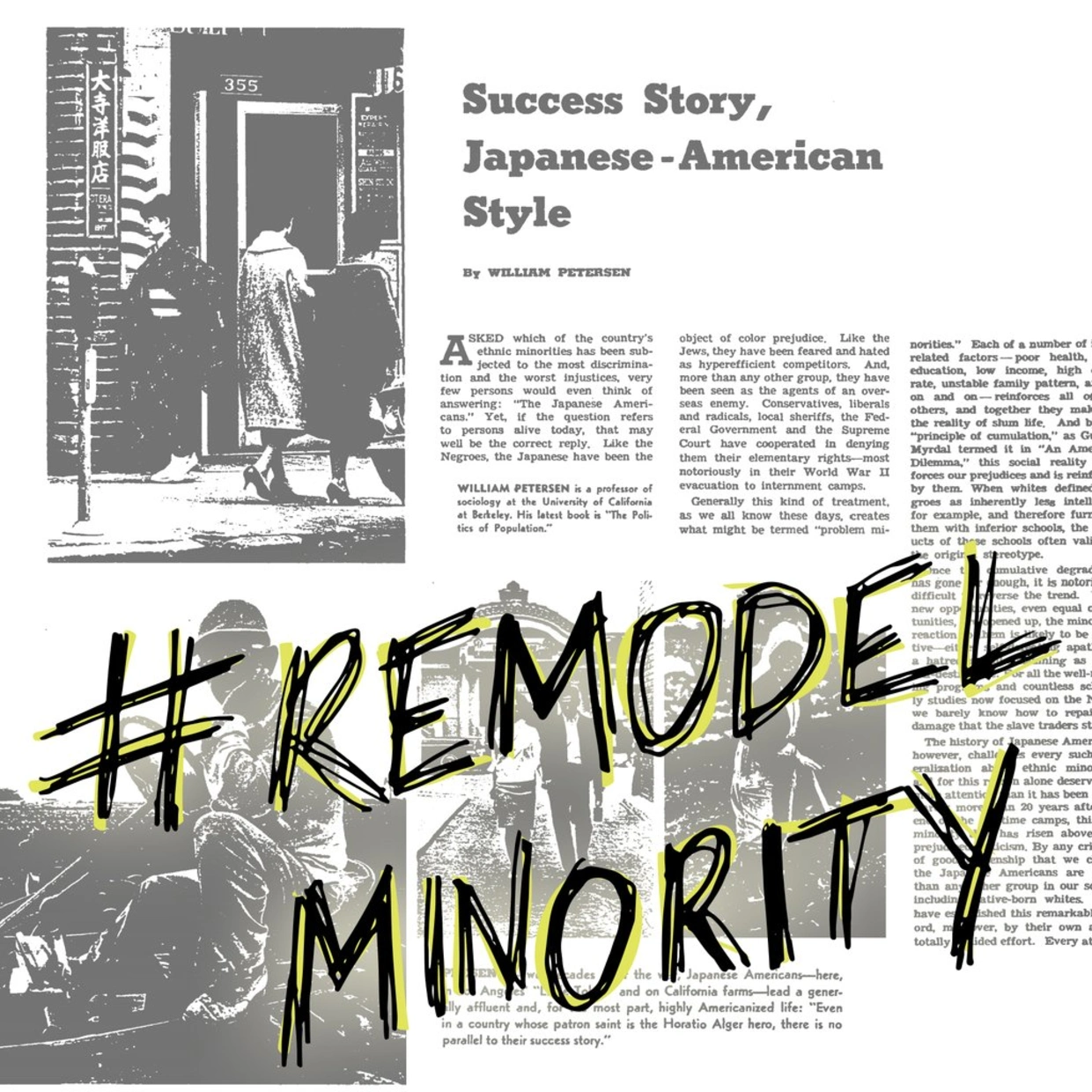
According to the University of Michigan, Densho, and other sources, after World War II, the United States underwent significant changes in its laws and policies to address mounting international criticism of racial prejudice and ongoing protests from ethnic communities within the country. 

“Success Story, Japanese American Style” by William Petersen (Image source: Smithsonian APA)

“Success Story, Japanese American Style” by William Petersen (Image source: Smithsonian APA)

As PBS illustrates, new regulations like the Chinese Exclusion Act shifted toward dismantling exclusionary measures and advocating for Asian communities and immigrants, particularly skilled and educated migrants. The University of Michigan further exemplifies, articles like “Success Story, Japanese American Style” by William Petersen began to appear  – praising how despite years of racial prejudice and discrimination, Japanese Americans were still able to achieve great socioeconomic status thanks to hard work and other cultural values of discipline and compliance to social hierarchy. 

By focusing on the facets of income, education level, and low crime rates as the definition of success instead of underlining economic and social factors, Asian Americans are often portrayed as hardworking, disciplined, and intelligent—a concept scholars refer to as the model minority. 

Model Minority Myth in Silencing Activism

While this stereotype may appear beneficial on the surface, Ted-Ed, in collaboration with Densho, emphasizes that there are no “good” stereotypes. As cited by PBS, cultural historian Robert G. Lee argues that such inclusion does not promote equity but instead undermines activism and disregards the struggles of other marginalized groups.

This is significant because the model minority myth obscures disparities within the diverse Asian American community, perpetuating the misconception that Asian identity is monolithic, often reduced to just China, Korea, and Japan. Furthermore, the stereotype marginalizes individuals who fail to meet its expectations, silencing those who speak out against it.

Societal pressure on Asian individuals (Image source: Kamanaoleeward)

Societal pressure on Asian individuals (Image source: Kamanaoleeward)

For instance, an Asian student with subpar grades might be labeled as lazy rather than being understood in the context of contributing factors like economic hardship or family struggles. The danger of accepting “positive” stereotypes lies in their ability to perpetuate harmful narratives and create unrealistic standards, fostering a cycle of self-framing that damages both individuals and the broader Asian community.

When Representation Unintentionally Reinforces Stereotypes

Let’s use another example to understand this dichotomy. 

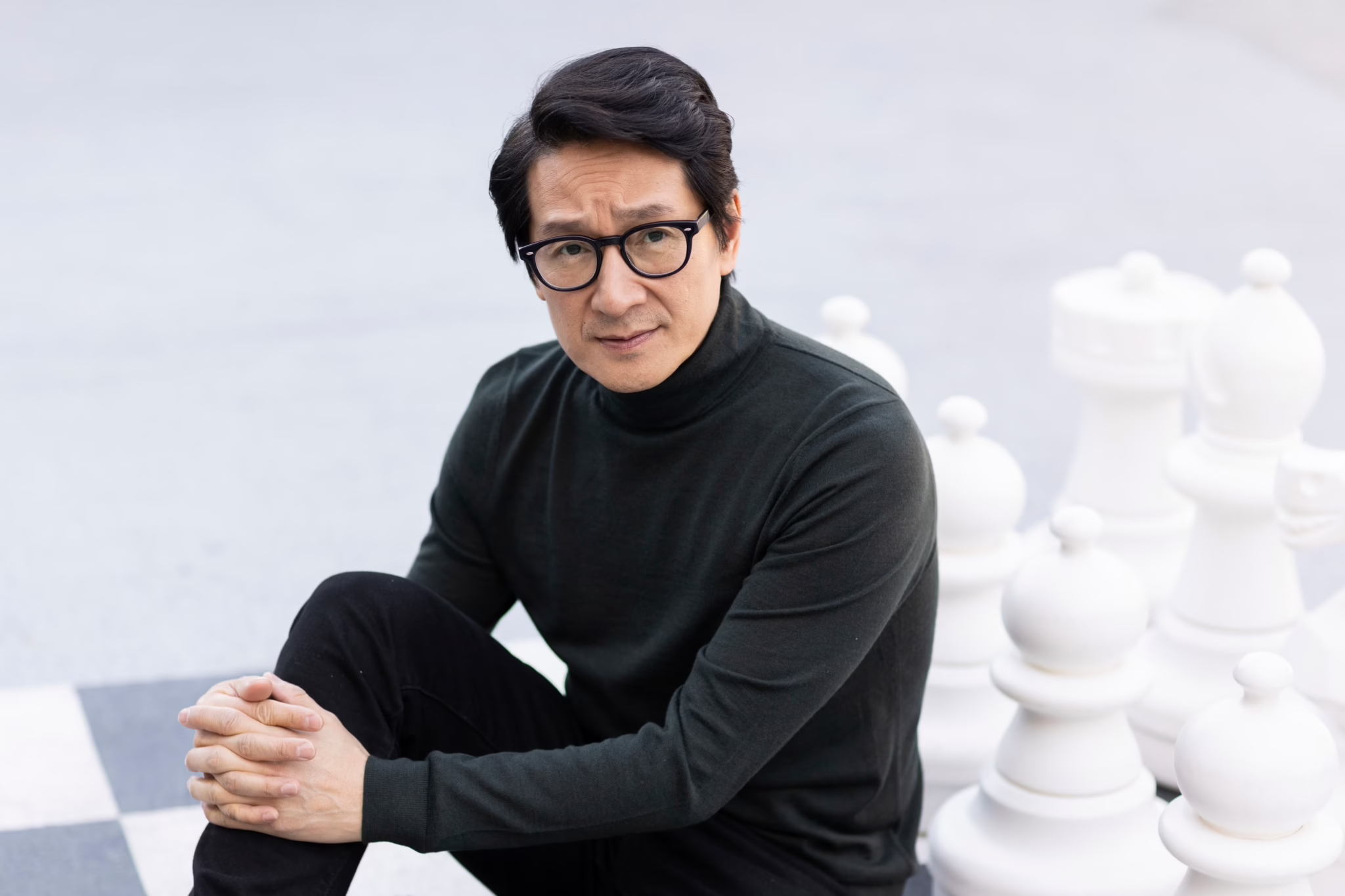
Ke Huy Quan, the American actor of Vietnamese descent, is well known in the notorious “Indiana Jones and The Temple of Doom”, “Everything Everywhere All At Once”, and “Loki” Season 2. His selection as an exemplar highlights how his journey encapsulates the model minority stereotype and demonstrates how Asian communities may unconsciously perpetuate such narratives.

In “Indiana Jones and the Temple of Doom”, Quan portrays Short Round, a clever Japanese sidekick aiding Dr. Jones on his adventures. Ironically, this character aligns with the early stages of the model minority stereotype. Short Round comes from a disadvantaged background, surviving through pickpocketing, but his association with Dr. Jones transforms him into a more thoughtful and capable individual, elevating his social status by the film’s conclusion.

In “Everything Everywhere All At Once”, Quan embraces the archetype of the modern Bruce Lee or Jackie Chan—a martial arts expert and mentor to the protagonist, reminiscent of Mr. Miyagi in “The Karate Kid”. Finally in Loki Quan plays Ouroboros, a lovable and intelligent technician who once was a writer and a teacher of theoretical physics at Cal Tech. 

Ke Huy Quan (Image source: The Independent)

Ke Huy Quan (Image source: The Independent)

In a meta and somewhat ironic twist, both Ke Huy Quan’s career and the roles he portrays reflect how Asians may unknowingly perpetuate the stereotypes they are often subject to. While Quan’s rise to fame is a testament to his dedication and perseverance, his portrayal of characters like the “witty young sidekick” learning from a Caucasian hero, the martial arts mentor, and the intellectual expert, inadvertently reinforces the very tropes that have shaped the Asian image in media. Despite his immense talent and the love he has earned within the Asian community, these roles contribute to the ongoing cycle of cultural expectations and representation.

Breaking the Myth of the Model Asian

It is entirely debatable that it is not the fault of the actors. We admire Ke Huy Quan for his remarkable journey and his representation of the Asian community. Nevertheless, through observing content produced by modern media, one will recognize certain tropes from the Asian community. 

Steven He satirizes Asian parents, Jimmy O. Yang joking about Asian habits, Lily in “Pitch Perfect”, Rajesh Koothrappali in “The Big Bang Theory”, Louis and Jessia Huang in “Fresh Off The Boat”, and the list goes on. Even the news you see about an “Asian underdog politician” rising to power or the “overlooked Asian business owner” continues to reinforce these themes. While these portrayals are well-intended, they still fall into a pattern of representation that, ironically, reflects the very stereotypes they aim to challenge.

These stereotypes create an environment of competition and segregation in the Asian community, where individuals feel pressured to conform to a specific image. To maintain an idealized representation, certain behaviors become expected, specific careers are favored, and everyone feels compelled to excel in particular areas.

A ramification of this mindset would be far-reaching. For example, economic struggles may be ignored, as the stereotype dictates that all Asians should be successful. Mental health issues among children are dismissed because it is assumed that the Asian parenting and education system naturally fosters resilience. Furthermore, social problems like drug use or teenage pregnancy are seen as impossible within this community because Asians are stereotypically perceived as disciplined and morally upright. These misconceptions, while seemingly small, perpetuate harmful beliefs and ultimately hinder inclusivity, reinforcing negative stereotypes that shape the broader perception of the Asian community.

Shaping Our Own Story in Media and Beyond

“There are more Asians than any kind of race on the planet. That means we are the majority, we dictate normal behavior,” Ronny Cheng states in his comedy skit.

Asia comprises 59% of the world’s population, hence we are the majority. However, this work is not a manifesto calling for the unification of an ideal but serves as a reflection of the society we live in. The media plays a pivotal role in shaping our perception. The argument is not to elicit a conspiracy theory but to help readers ponder the question, how do we want to be represented? Thanks to pioneers like Lucy Liu and Ke Huy Quan, the Asian community has gradually won more exposure from media outlets. Now, it is the turn of the new generation to represent the Asian community in all its diversity and complexity.

Sources:

The Conversation, Pew Research Center, Adoptive Families, 2 Sao, Vietcetera, TruTV, USA Today, Tien Phong, Screen Rant, Marvel, Mary Sue, Indiana Jones Wiki Fandom, Charlie Angels Wiki Fandom, Vanity Fair, Washington Post, Ted Ed, Densho, PBS, University of Michigan.

american-dream-2-scaled-jpg

News

The American Dream: A Promise, a Paradox, and the Asian Experience

The Immigrant Struggle

“We dream of going to America, to change our lives, we believed. But my life changed so much. I felt sad about life, didn’t know the language, and didn’t know the roads. I had no friends, so I felt very sad.” – Phong, a Vietnamese American expat interviewed by the Pew Research Center.

“I sometimes, just a little, wish that I would disappear so that my parents and my sister could be better off.” – Nolan, an Asian American interviewed by the Pew Research Center.

Dreams vs. Reality

The American Dream is often celebrated as a path to success, yet its reality is far more nuanced. Tales of rags to riches from Asian peers suggest its promise, but the Pew Research Center reports that one in ten Asian Americans still live in poverty as of 2024. The issue lies not solely in the Dream itself but in how it is constructed and understood.

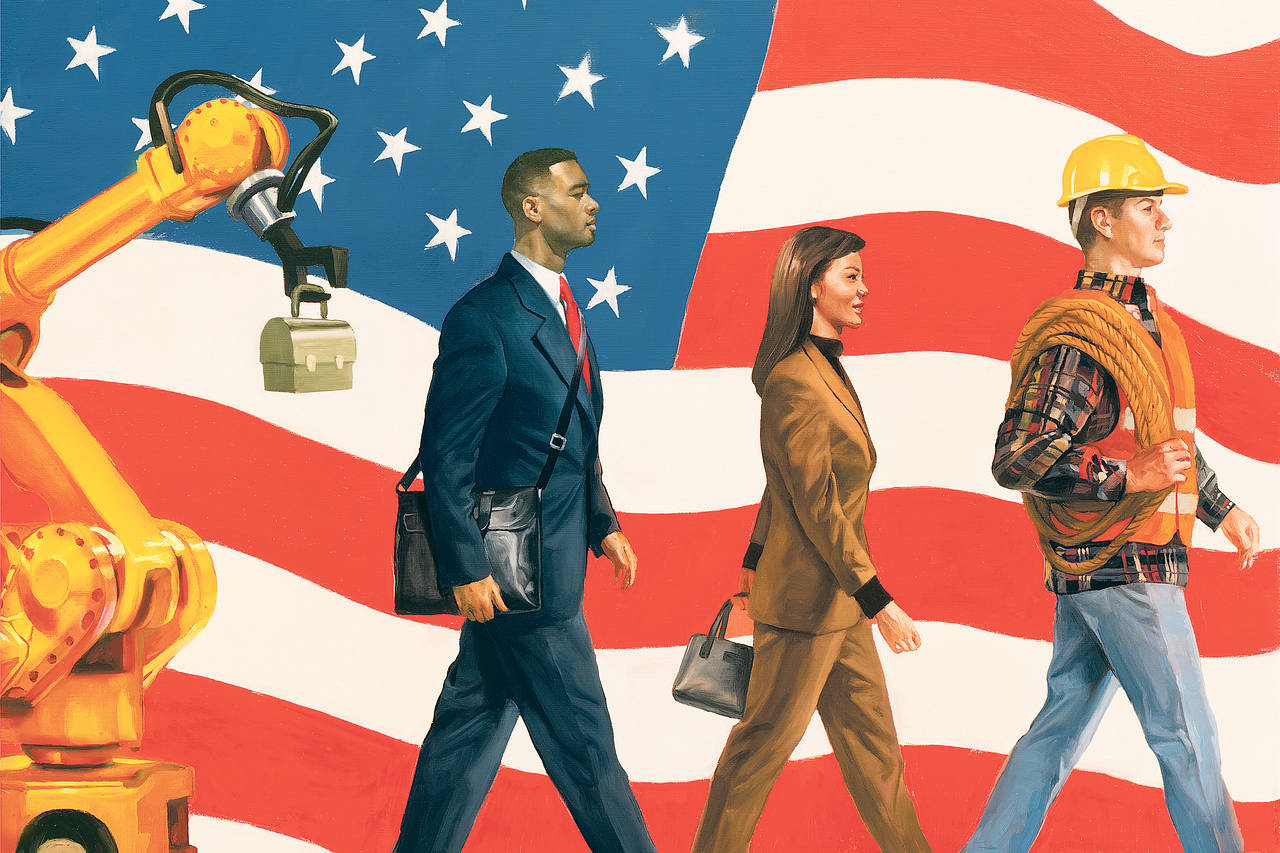
For many Asians, the American Dream is synonymous with upward mobility achieved through hard work and resilience—a belief that effort alone can overcome systemic barriers. But resilience, by its nature, demands enduring hardship and accepting foreignness, perpetuating a narrative that reinforces isolation and discrepancy.

The American Dream is synonymous with upward mobility achieved through hard work and resilience (Image Source: Roberto Parada)

The American Dream is synonymous with upward mobility achieved through hard work and resilience (Image Source: Roberto Parada)

The Illusion of Gold

The idolization of a Western nation paved in gold is an illusion that perpetuates xenophobia and the model minority myth. This ideological flaw is alluring and dangerous. We have all heard heartbreaking stories of illegal labor exports and stowaway immigrants. Yet we tend to remember the rags-to-riches stories because it is comforting to view ourselves as the ones who might make it. All while labeling these immigrants as illegal, the other, the individual Asian Americans who will live in poverty. But by doing so, we have fallen trapped in the American Dream, clawing our way to the top for the sake of others. 

After the pandemic, anti-Asian and hate crimes have increased. The encounter paints a reflection of our society, there is no line between the one and the other nine, we are Asians and that is our identity. Then is the American Dream a lie? Not necessarily—but it is far from universal.

Community as the Key

Like all dreams, it is what we make of it.  Whether in America, Asia, or any part of the world, opportunities coexist with difficulties. Moving to another country means tackling obstacles such as language and cultural barriers alongside the burden you once had at home. Statistics show that 61% of Asian adults seek family and friends when facing financial burdens. This can become challenging when migrating to a new country. 

The key lies in recognizing that success is not achieved alone. Building networks and fostering solidarity within communities can challenge the isolating demands of resilience and redefine the Dream as a collective effort toward meaningful progress.

The American Dream is both a beacon of hope and a paradox. For many Asian Americans, the pursuit of upward mobility comes with sacrifices that are often overlooked. Yet, success doesn’t need to be a solitary journey. By embracing shared struggles and fostering a supportive community, one can find hope by redefining what the American Dream truly means.

Sources: Pew Research Center – 1 in 10: Redefining the Asian American Dream (Short Film), Pew Research Center – The Hardships and Dreams of Asian Americans Living in Poverty, Edelman, C&EN, Reappropriate.

A Test-jpg

News

Chicago’s Gangnam Market Rings in Lunar New Year With Food and Tradition

Year of the Snake has arrived, and Chicago’s Gangnam Market slithered into the year with an exciting two-day celebration on January 25 and 26. Since its launch in December 2024, Gangnam Market has quickly established itself as one of Chicago’s go-to spots for Asian culinary delights. This event further solidified Gangnam Market’s vision of bringing Asian culture forward.

The 28,000-square-foot “American-Asian hybrid” grocery store has gathered communities of diverse backgrounds into one place, all honoring and embracing the rich traditions of the Lunar New Year. The weekend celebration offered attendees an exciting lineup of activities, from electrifying cultural performances to mouthwatering food.

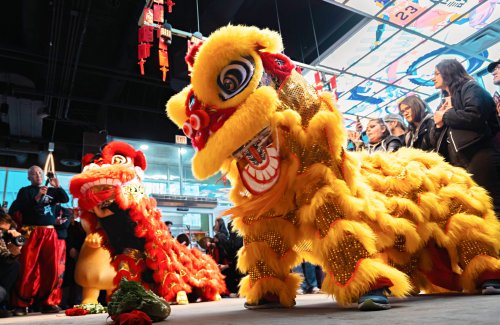
One of the event’s prominent features is the lion dance and drumming performance by Yu’s Lion Dance Sports Association of Chicago, captivating audiences with an energetic and meaningful display of fortune and prosperity. Adding a playful touch, Pokémon characters also held special meet-and-greets that attracted children and fans alike. (Who doesn’t love Pokémon anyway?) Guests also received lucky red envelopes with coupons for exclusive prizes at the event.

Lion dancers, drummers, and Pikachu captivate the crowd at Gangnam Market’s Lunar New Year celebration.

Food lovers were definitely not left out, with live demonstrations of Tanghulu-making (Chinese candied fruit skewers) and more than a dozen market vendors offering a taste of classic and contemporary Asian delights, with free food and drink samplings.

One of the event’s sweet treats is Tanghulu – candied fruit on skewers with a crispy sugar coating.

Reflecting on the successful turnout, Gangnam Market owner Kenny Yang expressed his gratitude for the community’s eager participation and commitment to heritage preservation. “We were overwhelmed and humbled by the incredible response, and thank all who came out to celebrate Lunar New Year with us.”