Stories

August 21, 2023

SHARE:

After decades of experience in the fashion industry in Paris, Pring Bunnag has embarked on a new venture that aims to revolutionize the perception of “made in Asia.”

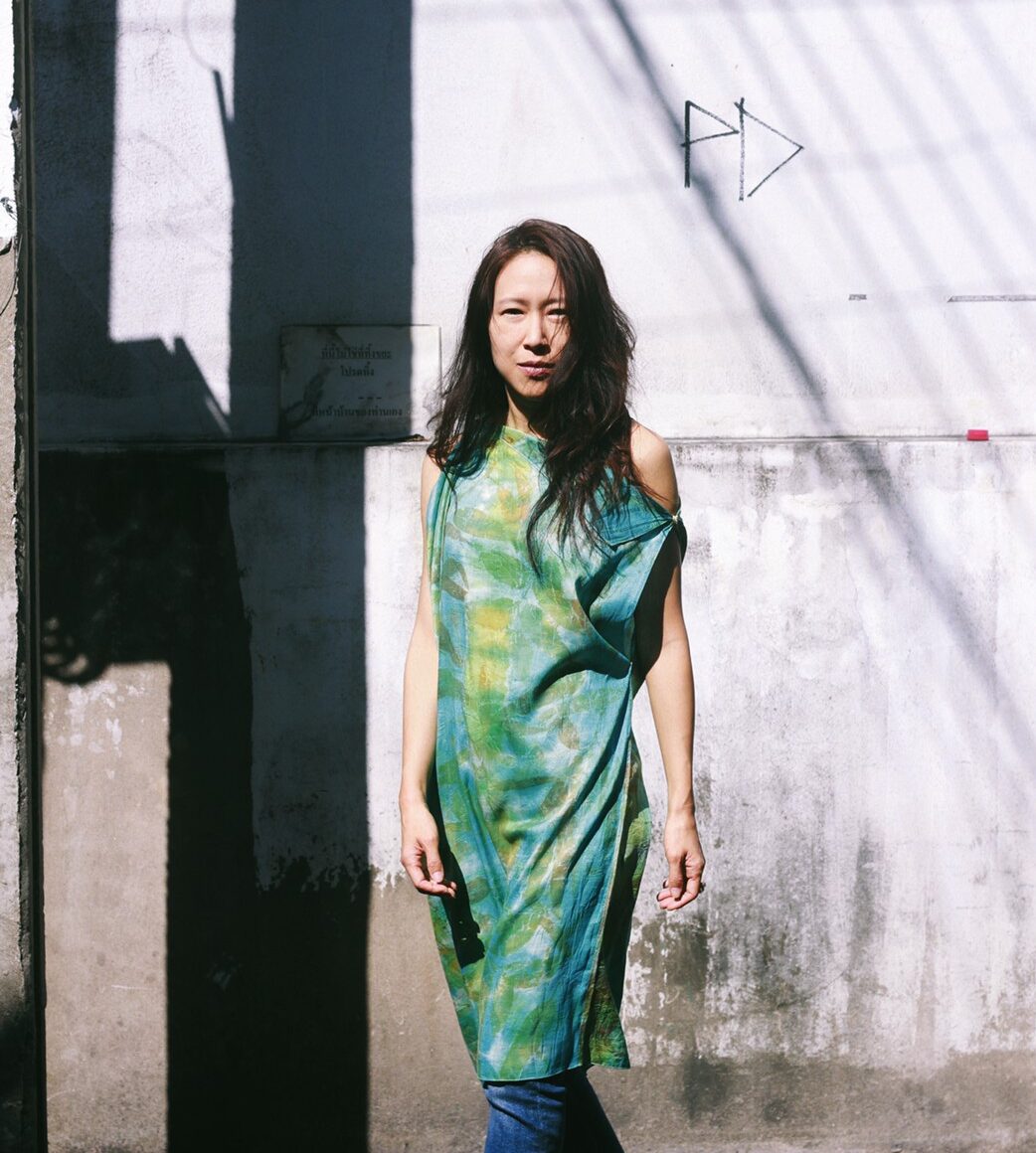
Born in Thailand, she embarked on a transcontinental journey, spending her childhood in California, where her father owned a liquor store in Long Beach. Inspired by the rich heritage of Southeast Asia, Pring introduces “SIN-Dress” to the world, a brilliant reimagining of the classic sarong, or “sin” in Thai. This modern masterpiece skillfully blends elegance and adaptability, and it was created to enhance and appreciate the attractiveness of many body types.

What sets her creations apart is the meticulous attention to detail in the production process. Each piece of artisanal Thai silk undergoes individual hand printing and hand dyeing, resulting in wearable art that empowers women to embrace their unique beauty and personal style.

Pring aims to depart from fleeting trends, labels, and the unsustainable practices associated with fast fashion. By advocating for slow and mindful consumption, she aims to redefine luxury in the Asian fashion industry, proving that it can harmonize with ethical and sustainable principles while still delivering the highest quality.

In an exclusive interview with Asian Hustle Network, Pring delves into the depths of her brand Sucette and reveals the captivating story behind SIN-Dress.

HOW SIN-DRESS CAME TO LIFE

I was inspired by the Southeast Asian garment, the sarong, or “sin” in Thai, which is essentially a piece of fabric sewn into a tube, and traditionally worn as a skirt by both men and women. 

I actually started Sucette as an artisanal shoe brand during the pandemic. I arrived in Thailand in February 2020, was 7 months pregnant, and saw Covid hit the country right after China. I ended up giving birth during the first lockdown and saw the economic devastation hit Thai artisan communities and saw the rising trend of “fast fashion”.

I was still freelancing as a shoe designer part-time and was deeply saddened by how badly Thai craftspeople were suffering economically and having to accept very low-paying and demeaning jobs to survive and I felt compelled to do something about it. 

I started Sucette as an artisanal shoe brand featuring hand-woven Thai silks and hand-carved heels but due to the complexity of shoes and not wanting to have to invest in a ton of sizing and stock, I was playing around with the idea of the sarong in my head. I loved the idea of the garment and creating something that was at once truly “Thai/ Asian” but also contemporary and universal.

I also loved to collect vintage silk sarongs but never wore them as I didn’t have the skills of tying them. I also didn’t want to have to cut them into dresses as each silk was so perfect as it is and would be a shame to cut! 

So I started to play around with the way it wrapped and one day I came up with the first “SIN-Dress”! I remember draping the entire piece of Thai silk on a mannequin and with just 2 pins, saw it hang beautifully as a tunic dress. I then added 24k gold plated brass hoops, handcrafted by a local workshop here in Bangkok, because I wanted to add a subtly luxurious and unique artisanal element. 

From then, I worked on the longer version, which is also a single piece of silk without any cuts or complicated patterns, in keeping with the “essence” of the sarong. 

My biggest inspiration is probably the way Siamese and Southeast Asian women wore the sarong historically. I loved looking at archive images, especially 19th-century photographs of women draped in beautiful silk and looking so elegant. My goal is to showcase this heritage to the world but in a contemporary way.

My other inspirations are Japanese designers, especially Issey Miyake and his invention of Pleats Please which is a conceptual collection, now renowned worldwide, but based on very Japanese ideas. 

PRING’S EXPERIENCE IN THE PARISIAN FASHION INDUSTRY

Being in Paris taught me the value of heritage and know-how and combining that rich tradition with a contemporary twist.

In Paris, heritage is absolutely everywhere you look–from the architecture to the food to the fashion and the art, but creators aren’t afraid to take that heritage and give it a contemporary make-over, while still being respectful of tradition. I also learned the value of being unique and owning your individuality.

In Thailand and perhaps in Asia there is a tendency to “copy” what the West is doing, and I believe that we have so much wealth of culture and knowledge that it is much better to showcase our own identity than to try to be like someone else. 

THE CREATIVE PROCESS

I fell in love with hand printing and dyeing silks because I found it very empowering that I could create totally unique artistic prints without having to go through the industrial process. For me, it is a similar process as artisans would do in their local communities, and I thought there is such value in making something beautiful and one-of-a-kind, for both the client and the maker.

I use a technique called “eco printing” which uses leaves and plants to print onto the silk. I also experiment with making my own natural dyes, tie-dyeing, and shibori dyeing techniques. My goal is to create wearable works of art that my clients will feel good in and hopefully keep forever. 

WHAT MAKES THE SIN-DRESS UNIQUE

Unlike a typical fashion brand, I don’t create “collections”

The SIN-Dress comes in 2 variations only, the short and long versions, and fits most body shapes and sizes. However, each dress is made from a totally unique piece of hand-printed silk therefore each dress is unique. 

My goal is to create a garment that would always fit, feel amazing on, and that each woman can style her own way to suit her individual personality. Much like the traditional sarong, there is no “correct way” to wear a “SIN-Dress”!

I always encourage my clients to have fun expressing their unique styles and to let their personalities shine. I want to create forever pieces of wearable art that are also effortless and versatile and can be worn for multiple occasions.

I’d love to be an example that it is possible to build a strong brand while going against the fashion industry’s vicious cycle of the “constant chase for newness” and overproduction. I’d also love to prove that “Made in Thailand/Asia” can be synonymous with sustainably handcrafted luxury and artistry at the highest level! 

PRING’S GOALS AND ASPIRATIONS FOR SUCETTE

I would love for the SIN-Dress to become a household name worldwide, to prove that a garment based on Asian heritage can become universally appealing and desirable!

My goals for my brand Sucette is to create beautiful wearable art in a way that also contributes to positive change–for the environment by choosing sustainable and artisanal production methods, for local communities by providing highly paid and rewarding work, and for my clients by celebrating individual style and beauty. 

CONNECT WITH PRING

Website: sucetteofficial.com

Instagram: @sucetteofficial

Facebook Page: Sucetteofficial

Sucette FB Group: Sucette Silk Couture Club
Related Articles

Image Source: shout.sg

Stories

Former Foodpanda Rider Launches Dessert Bar Serving Coriander Gelato, Mala Waffles

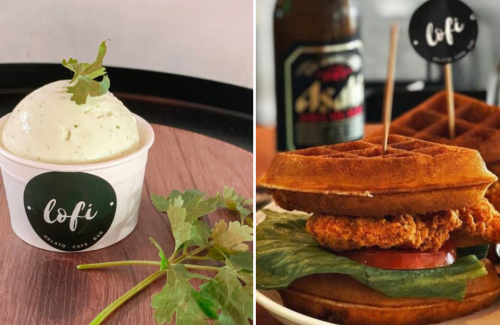
Combining sweet cream with the sharp zing of coriander, this gelato flavor apparently converted over 80% of coriander haters who tried it, as per Eat Book Singapore.

Bryan Liew launched his dessert cafe LoFi Bar at the height of the pandemic, with no prior F&B experience except being a Foodpanda rider.

According to Vulcan Post, Bryan’s purpose behind launching his cafe was simple: to fulfill Singaporeans ‘ habit of “eating and hunting for food ” during the COVID-19 pandemic. 

The 27-year-old earned a Malaysian and UK digital marketing degree and started as a Retail Marketer in 2017 before becoming a Senior Operations Manager. He quit his job on the first day of Singapore’s ‘circuit breaker’ lockdown.

Bryan used his digital marketing skills and did thorough consumer research to attract more consumers during the lockdown. When his restaurant opened, he surveyed every customer for feedback.

He innovated his menu with unique food like coriander ice cream which is currently their best seller, and the sweet, spicy, and savory Mala chicken waffles.

As a former Foodpanda rider, he understands the challenges riders face and makes food collecting easier, especially those with beverages, which are well-packed to minimize spillage.

Make sure to visit LoFi Bar when you travel to Singapore!

IMG_4416

Stories

Teen Brothers Build Non-Profit To Empower Underprivileged Kids Through Educational And Enrichment Programs

Founded in 2016, Ethan and Dylan sell what first started as Ethan’s Legenade at Summer Concerts, Sports Tournaments, Taste of Elk Grove, and various fundraisers. The brothers also get invited to private events to be speakers so they can share their moving stories.  

They speak to youth groups to inspire young kids and were invited on TV in local morning shows Good Day Sacramento, and Fox40 News. On top of that, they manage to keep up with the Honors Program in school, and extracurricular activities. 

Good Day Sacramento, a local morning show, in July 2019

There are currently 6 locations Legenade Children’s Fund sends to in the Philippines – Marikina, Cebu, Cotabato, Antique, Anao and Mexico in Pampanga. With the help of the catholic convent, Daughters of Divine Zeal, where Dylan and Ethan’s great aunt is a nun there.

They also have volunteers and coordinators the brothers meet through family and friends who still live in the Philippines. For them, it’s very important to have proper connections there to keep these programs going. The program sends help twice per year before the school season starts and during the Christmas season.

Back to School Program in Antique, Philippines 2021

Ethan and Dylan shared with Asian Hustle Network their journey as early founders, advice to their peers and future generations, and their hopes to find a mentor to help them grow toward their goals.

13-year-old Ethan runs with their school Cross Country and Track Team, while 16-year-old Dylan is in the Cyber Patriots, a cybersecurity club in school where they compete with other schools nationwide. 

Since their launch, the brothers have been in at least 5-7 big events every year — with Elk Grove Giant Pumpkin Festival as the biggest, which attracts more than 60,000 people every year.

The Young and Simple Legendaries

Ethan: Hi, my name is Ethan Black. I’m the CEO of Legenade Children’s Fund. I’m 13 years old, going into 8th grade. I like running, like Cross Country and Track. I like to hang out with friends, and also be on the computer playing games. 

Dylan: My name is Dylan Black (16 years old) and I’m a junior at Franklin High School. My interests lie in finance, business, and engineering. 

Dylan (right) and Ethan (right) With Elk Grove City Councilmember, Stephanie Nguyen
Dylan and Ethan at Taste of Elk Grove in 2017

How It All Started

Ethan:  Legenade started with a business called Ethan’s Legenade that I started when I was about 7 years old. It means “Legendary Lemonade”. I met another local nonprofit through my mom, and I decided I wanted to help them so I made Ethan’s Legenade and sold lemonade. I gave 50% of the profit that came from Ethan’s Legenade to the local nonprofit. After doing that for about 3-4 years, my grandma helped us turn it into a nonprofit which is known today as Legenade Children’s Fund. 

Dylan: My brother wanted to help a charity owned by a friend of ours. To help that charity, he decided to open a lemonade stand and donate 50% of the profits. We attended small events and sold lemonade there, and that’s how we made our initial profits and we expanded from there into other sorts of events. 

Ethan’s very first event – Summer Concert in Elk Grove May 2016
Chicks in Crisis is the charity that Ethan wanted to help in the beginning. So he sold lemonade and donated half his earnings to them. He still supports them to this day.

Legenade’s Big Vision, Mission, and Goal

Ethan: Our motto is “Helping Kids Become Legendary”, which basically means helping them so they can be the best they can be. We mainly focus on children’s education through 5 different programs. Our goal is to help kids and communities all around the world. 

5 Legenade’s Programs are: Back to School Program, Future Legends Scholarship, Color the World Project, STEAM Programs, and Community Outreach

Dylan: I would like our nonprofit to have a well-established local and international presence to help kids with the education of all forms. That’s my goal, that’s my vision, that’s my mission. 

Achievements and Learnings

Ethan:  A few years back in 2019, we got Rookie Business of the Year from the Elk Grove Chamber of Commerce for being the best new business. I guess another achievement is actually turning into a nonprofit, coming from Ethan’s Legenade to becoming an official nonprofit. I’ve learned more about how to run a business. I was probably naive about how to run one when I was first starting out when I was 7. I’m more careful about making decisions. I’ve learned how kids live in other countries. 

Receiving the “Rookie Business of the Year 2019” award presented by the Elk Grove Chamber of Commerce. Dylan and Ethan are the youngest entrepreneurs in their city.

Whenever I heard stories about the Philippines, it was always worse than the life that we have here, so we shouldn’t take stuff for granted. You’d think that stories like that are exaggerated, but from the photos I’ve seen, it’s not. Their conditions are not ideal. So for example, we ship out toy cars, the ones you pull back to wind up and let go. Then we realized that they can’t play with them because they don’t even have concrete. Their houses are built on dirt. We learned to pay more attention to their living conditions and what they need so we can send them the proper help. 

Dylan: Our biggest achievement would probably be becoming an official nonprofit because it allows us to coordinate and organize resources to give to our donation recipients. Another one of our biggest achievements is the number of people we have helped. We’ve helped several thousands of people in some way, shape, or form. I’ve learned that I really like business and finance, and most likely do that in the future as a career. I’ve also learned that people can accomplish a lot and all they need is a little push from an outside force, maybe in the form of a donation. 

Legenade’s Current Project 

Ethan: Right now, school is about to start so we’re focused on the Back to School Program. We provide backpacks and school supplies to about 1000 students in multiple locations in the Philippines. We have Future Legends Scholarship where we sponsor gifted students and pay for their tuition fees so they can stay in school. A lot of them leave school so they can work to help their families. We help them finish high school at least. Closer to the holidays, we do community outreach locally here in Elk Grove, and Christmas Programs in the Philippines, and send toys and food to the kids and their families. 

Community Outreach Food Program – Anao and Mexico, Pampanga, Philippines.

Dylan: My current project is expanding our sphere of influence to reach more people with advertising and campaigns. Also to get our Legenade bottled at a bottling facility in high numbers so we can get them in vending machines and stores. Relying on donations from people means that the people we are helping are at the mercy of your kindness. When you sell a product, we can more reliably help people. We are grateful to our donors, but it’s better to be self-sufficient so our programs can be consistently well funded. 

The Founders’ Hope For Legenade 10 Years From Now

Ethan: I’d like to see Legenade 10 years from now being one of the biggest nonprofits in America, maybe in the Top 10 charities. We also want to help in more places internationally and nationally so instead of just here in Elk Grove, CA, maybe we can find people to help in all 50 states. Also internationally, instead of just in the Philippines, we can help somewhere else in Asia, Africa, or Southern America. We also want to visit our programs in the Philippines and meet the kids we’re helping. We can’t afford that right now so they just send us pictures and videos.  

Dylan: I hope that in 10 years, Legenade will have helped many people go to school and get credentials from high school, and even college. Also, be able to help more areas and not just have focused efforts in a couple of cities, but in many places. Education is important because it helps you make good decisions and helps you help other people and it lifts everybody up. I can’t help people if I don’t have an education. 

Advice To Young Generation

Ethan: I don’t want to sound generic. Do not wait, or like, don’t procrastinate. If you have an idea and you know it’s good, then go for it. Even if it turns out to be bad, then you can classify that as a learning experience. 

Dylan: Your plans don’t have to be big and grandiose. You can start off small and can go from there. Don’t overwhelm yourself by trying to reach huge goals, just spread it up into several smaller goals. And don’t let anything stress you out. Avoid things that stress you out. 

Raising money during the pandemic. May 2021

Seeking Entrepreneurs and Mentorship

Dylan:  Our goal is to get Legenade bottled. I’m hoping to reach out to other entrepreneurs who have gone through the process, and are willing to share what they’ve learned with us.

Ethan: We’re trying to get into mass producing our Legenade, but we have very little experience in doing so. We’re trying to collect as many contacts who can help us make it happen. Of course, we always need donations to keep our programs going. Please consider sharing your blessings. Any amount will help a lot.

Image Source: Startup Grind

Stories

The Rise of Young CEO Mehak Vohra: From College Dropout to Successful Marketing Mentor

After dropping out of school, Mehak Vohra spent the next two years working her way up the corporate ladder before establishing SkillBank, where she can now assist people land jobs at marketing agencies across the United States. 

Vohra was an experienced ghostwriter and copywriter from an agency, which inspired her to establish her marketing.

When the 21-year-old growth hacker attempted to launch Skilbank, it was initially conceived as a growth marketing training program geared toward newly established technology businesses. She first started the organization during the pandemic in 2019 and aspired to train a workforce that could soon fill entry-level positions in marketing. 

She has also established relationships with her business partners, who are her primary motivation in maintaining a healthy balance within the company and developing productive plans. 

Even though the pandemic has made people jobless, Vohra had the chance to build up the organization to help service workers upskill and gain employment. Skillbank was able to raise $1.5 million thanks to the support of investors like Jason Calacanis, Hawke Media Ventures, Soma Capital, Hustle Fund Champion Hill Labs, Transcend Network, John Kobs, Nelson Wang, Saunder Schroeder, Zack Bloom, and TikTok’s own Josh Richards and Griffin Johnson.

Investors have teamed up with Skillbank partly because they want to contribute to the funding of technologically savvy marketers. They believed that despite marketers’ best efforts, they are not educated in the field and often lack a solid foundation. They also liked that SkillBank was making their training easily accessible and thought the standard education model could use some improvements. “Mehak is a rockstar, and we believe she is the person to get this to success,” said Erik Huberman, CEO of Hawke Media, in praise of Vohra’s decision to Skillbank.

Skillbank just closed a funding round that helped numerous marketers make a career change and, as a result, increase their remuneration. Vohra also has designs for growing SkillBank’s business. At this time, a subscription to SkillBank’s courses starts at $4999, or $7199 if paid in installments. The SkillBank team may be small at the moment, but they have big plans to take on industry leaders like Masterclass and General Assembly.

Nothing can prevent anyone from becoming successful; even a student who quit school and later decided she wanted to devote her life to assisting others in achieving their goals can turn her dreams into a reality.

Image Source: houstoniamag.com/SHANNON O’HARA

Stories

From A Struggling Restaurateur To Successful Netflix Chef

The ability to cook does not, however, automatically translate into the capacity to manage a restaurant. The food industry is a fiercely competitive one.

Fortunately for Vietnamese chef Nikki Tran, he succeeded as an “accidental chef” despite his previous failures in the restaurant industry. But what exactly is the secret to his success? 

Nikki launched his first restaurant in Vietnam but was doomed to flop from the beginning because of its quick decline. It started on a drunken night when he drafted his first business plan. He had put down a deposit on a new location that same night, hired a chef, and opened a new restaurant within a week. 

The only problem was that the chef didn’t show up which caused trouble on the first day it was open. The restaurant also struggled to bring in customers despite the backing of Nikki’s famous actress friend, which resulted in a steady loss of revenue. 

Nikki recognized his missteps and realized he was not as well prepared as he thought. Consequently, he worked to improve and reinvent his culinary skills. It did not end up being a challenge for him; instead, he worked toward opening a second restaurant in Houston, Texas, when he returned to the United States. 

At that time, he got hooked on crawfish and began eating them frequently. He took it to Vietnam and experimented with it using a typical technique of its culture. His family, friends, and the first people in Vietnam are thrilled to try it out, and they’ve called it “Viet-Texan cuisine.”

This innovation, which was his take on the now-classic Viet-Cajun crawfish boil made using Vietnamese river prawns, became the one that accidentally brought and pushed him into the international limelight.

Soon, he was profiled by media outlets such as Vice, NBC’s Travel Voyager, Houston Eater, and Netflix. He did not let his first failure or lack of experience prevent him from pursuing his dreams and developing relationships until he became a Netflix star. He is also a familiar face in David Chang’s Ugly Delicious, Phil Rosenthal’s Somebody Feed Phil, and the critically acclaimed Street Food: Asia.

Today, Nikki operates three locations of his restaurant, known as “Ku Ba Quán.” And even though he is known for breaking the rules of traditional Vietnamese cuisine and blending in international influences whenever he feels it is appropriate, he has the impression that he has always gone his own way.