Stories

July 5, 2023

SHARE:

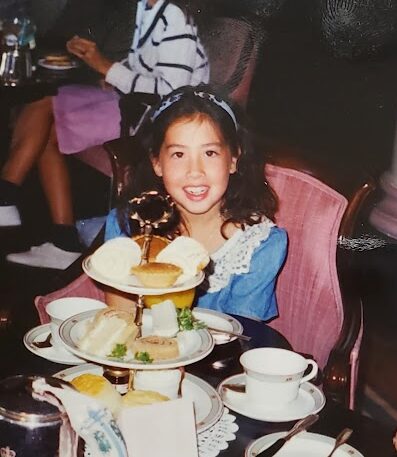
Christine Holmes grew up feeling different from her peers due to being a bi-racial Taiwanese-American.

Christine was often referred to as either the “Asian girl” by her non-Asian friends and the “White girl” by her Asian peers until eventually, they referred to her as “Whasian girl,” which she liked because it represented both of her ethnicities.

She struggled to embrace her cultural background and wished to be fully White. It took her long before she learned to love her identity and cultural heritage, but she did.

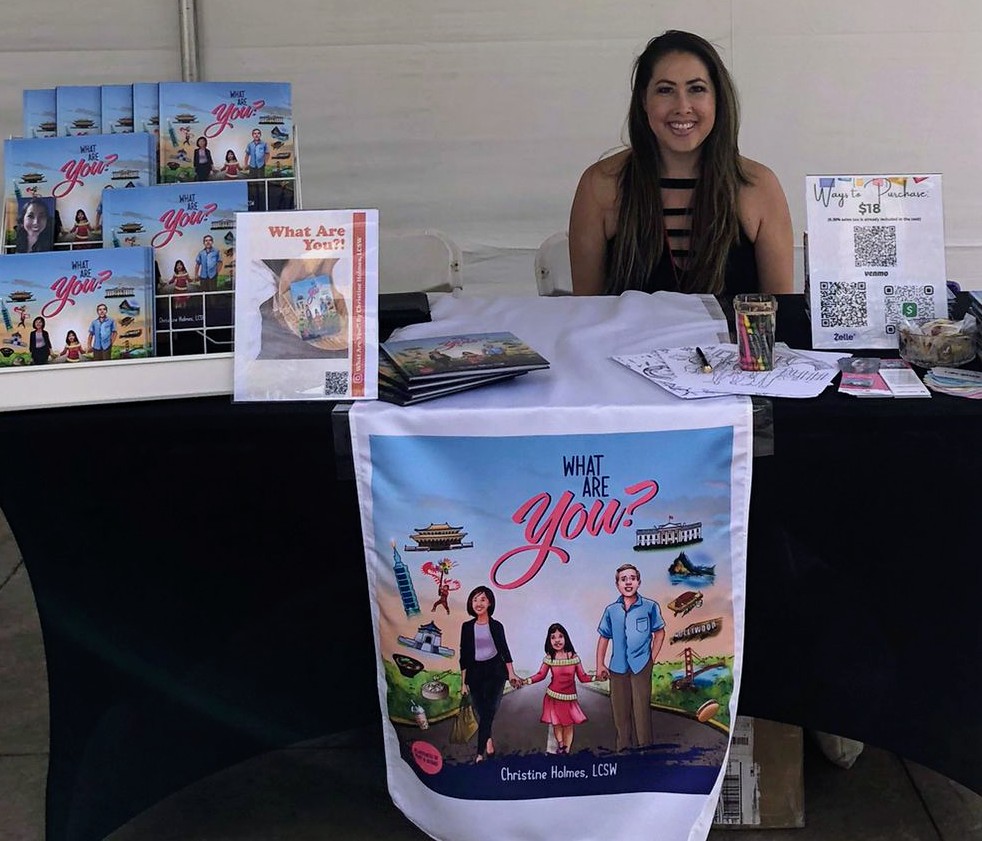
Inspired by her personal experiences, she wrote the book “What Are You?” to provide representation in children’s literature for mixed Asian children.

The book touches on her personal struggles with food and language, among other things, and highlights the importance of representation in literature for children who come from mixed cultural backgrounds.

GROWING UP WITH A TAIWANESE MOTHER AND AN AMERICAN FATHER

Christine grew up in Irvine, CA, where the population was predominantly white and Asian. However, there were very few mixed children, which made Christine feel very different from her peers, who were either fully White or fully Asian.

As a child, Christine was immersed in Chinese School, Chinese Choir, piano, and tennis, which made her feel even more different from her peers because most of them were fully Asian.

Christine’s dad, who is White but very much into Asian culture and a world-renowned Master of martial arts, made it very important for them that Christine knew her Taiwanese/Chinese culture. Christine’s mother cooked Chinese food for most dinners, and her first language was Mandarin.

Their home is filled with beautiful Chinese/Taiwanese antiques, and they used to visit Taiwan every year until Christine was in junior high/high school.

CHALLENGES OF BEING THE “WHASIAN” GIRL

“To my White friends, I was the Asian girl but to my Asian friends, I was the White girl until I got into high school and my friends decided to call me the “Whasian” girl which I preferred since it represented both of my ethnicities.”

Christine felt different from everybody growing up, which bothered her internally. In fact, she had a teacher in her Chinese school that wasn’t very nice to her because even though she can speak Chinese, she couldn’t write Chinese like the other children. This treatment left Christine feeling isolated and alone, until she eventually quit Chinese school altogether.

Her non-Asian friends also often made comments about the food her mom would bring to potlucks or the bags she would use to pack her lunch, making her feel ashamed of her culture. When her mom spoke Mandarin, her non-Asian friends would be offended and ask why she had to speak Mandarin in front of them. She would have to explain that it was sometimes easier for her mom to speak in her native language than speak English. This made her feel uncomfortable, and she would get angry at her mom for it.

At this point, she wished that she was fully White, perhaps because being White and blonde was considered the most beautiful when she was growing up. Her mom used to pinch her nose to make it look “taller” and less stubby like a typical Asian nose. Some of her Asian peers even told her that she was lucky to be at least half White compared to them being fully Asian.

THE TURNING POINT

It wasn’t until college that she fully embraced being mixed and started to love her identity. Christine found herself surrounded by a diverse group of friends who not only accepted her but celebrated her mixed heritage.

“In college, most of my friends were either mixed or of different ethnicities other than White or full Asian. And, they embraced me,” she said.

They appreciated the unique perspective she brought to the table and encouraged her to embrace her identity. For the first time in her life, Christine felt truly proud of her background and of who she is.

WRITING THE BOOK

Christine’s personal experiences served as the inspiration behind her book, “What Are You?” which is a story about her life growing up as a mixed-race individual in a predominantly white and Asian community.

Christine wrote the book when she realized there were no books that represented mixed Asian children. Despite being able to find books for her own children who are half Black, she couldn’t find any for children who were mixed Asian. So, she decided to create something that represented kids like herself.

“I think the part of the book that was most emotionally challenging was writing about the food and how embarrassed I was about my mom packing me Asian food even though I secretly loved it.” Christine admits to feeling a lot of guilt now as an adult for all the times she blamed and got mad at her mom as a child.

REPRESENTATION IN CHILDREN’S LITERATURE

Christine strongly believes in the power of representation and the need for diverse books that accurately reflect the experiences of mixed-race individuals. Having grown up without any books that reflected her own identity, she recognizes the importance of seeing oneself represented in literature.

She saw firsthand how much her own children appreciated books with characters that looked like them and had similar cultural backgrounds. Writing her book, “What Are You?”, she received overwhelming positive feedback from other mixed Asian individuals who wished they had a book like this when they were children.

Despite increased awareness and acceptance of mixed-race identities in modern times, Christine recognizes that children may still struggle with their identity and the pressure to choose one ethnicity over the other. Her book seeks to empower mixed-race children to embrace and celebrate all aspects of their identity.

OVERJOYED BY THE POSITIVE FEEDBACK

Christine initially had doubts about the book’s reception due to her own insecurities about putting herself out there. However, the encouraging and uplifting words from her readers have exceeded her expectations.

“I was featured on a TikTok page, twice, by someone with 1 million followers, who’s sister bought the book for her. She shared that my book had emotionally resonated with her in many ways. It was then that I realized the impact that my book has had on some people.”

HOPE FOR THE FUTURE

Christine hopes that her book will inspire readers to embrace their identity, no matter where they come from. She wants readers to know that they don’t have to choose between different cultural backgrounds and can be proud of their unique mix.

“I hope they embrace their cultural background, and they are proud of their roots.”

By highlighting her personal experiences, Christine hopes her book will contribute to a larger conversation about identity and belonging in our society today, and ultimately help break down barriers and build more inclusive communities.
CONNECT WITH CHRISTINE

Website: publishyourgift.lpages.co/christine/

Instagram: @whatareyoubook  

Facebook:  What Are You? Book

TikTok: @whatareyoubook 
Related Articles

TheBurgNews-jpeg

News

Harrisburg Coffee Shop Celebrates Representation with ‘HAAPI Mornings’

Something special is brewing at Harrisburg’s Elementary Coffee Co.

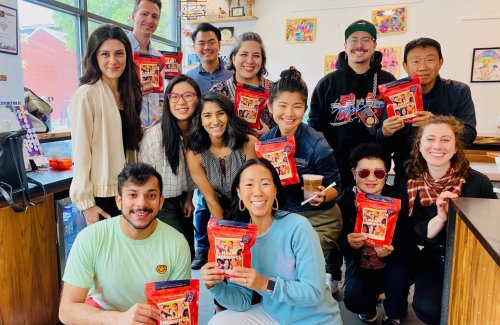
Elementary Coffee Co. partnered with the Harrisburg Asian American Pacific Islander (HAAPI) group to introduce a brand-new coffee called “HAAPI Mornings.” This tasty blend is inspired by Vietnamese flavors and was launched during AAPI Heritage Month in May. The goal is to show more people from different backgrounds and cultures, making them feel included and seen.

“It’s all about visibility and representation,” Ellen Min, a member of HAAPI, said to The Burg News. “The more representation and visibility, the less we are excluded.”

It all started when members of the HAAPI group visited a coffee shop in New York City that had special Asian coffees. They thought it would be great to have something like that in their own city.

So, they talked to Andrea Grove, the owner of Elementary Coffee Co., and she jumped at the idea. They worked together to create a unique blend using beans from India and making it a dark roast for a rich taste.

Besides the yummy “HAAPI Mornings” coffee, Elementary Coffee Co. also offers other special drinks inspired by Vietnam. You can try the traditional Vietnamese hot and iced coffee, as well as the Ube Iced Latte and Saigon Iced Coffee.

Image Source: The Burg News

“Coffee really brings people together, and this coffee is doing that in such an impactful way,” Andrea Grove said to The Burg News.

Featured Image Source: The Burg News

Dr Lanna Photo-jpg

Stories

A Urologic Surgeon’s Entrepreneurial Leap into Aesthetic Medicine

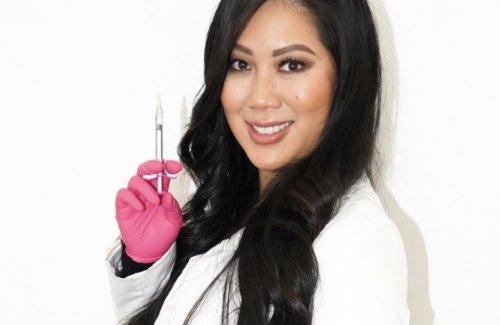
Dr. Lanna Cheuck, an Ivy-League Trained, Board Certified Urologic Surgeon turned entrepreneur has made a significant impact in the field of aesthetic medicine.

Today, she is the proud owner of LC Medical, a medical spa in Manhattan, and also leads FACE Med-Spa Training, where she shares her expertise with fellow medical professionals.

She has been featured in esteemed publications like Forbes and has been recognized as a Key Opinion Leader in the industry. Nevertheless, she remains grounded and motivated by the positive transformations she brings to her patients and the opportunity to guide others on their own professional journeys.

Beyond her entrepreneurial endeavors, Dr. Cheuck continues to excel as a Board Certified Urologic surgeon, practicing at Jacobi Hospital. She is a respected educator, sharing her knowledge on topics such as penile rehabilitation and making significant contributions to the ISSM.

In an interview with Asian Hustle Network, Dr. Lanna Cheuck shares her remarkable journey and insights into the world of aesthetic medicine. Join us as we delve into her experiences, challenges, and triumphs, discovering how she defied conventions and built a thriving career that empowers both herself and others.

HUMBLE BEGINNINGS OF DR. LANNA CHEUCK

I was born in Chinatown in the Smith Housing Projects and was later moved out to live with my grandparents on Long Island in the middle of second grade as the crime was increasing in our building and my parents had been mugged and beaten up multiple times.

My parents immigrated from China during the Cultural Revolution. They built a raft to escape to Macau, then paid to be smuggled through a vegetation boat before coming to Hong Kong. I grew up very poor and was one of five Asians living in a predominantly white neighborhood on Long Island.

For as long as I remember I wanted to become a Urologic Surgeon, but I didn’t realize the sacrifices I would make to get there. While it is a male-dominated field, I remember at the time I was one of 8% of women in urology.

I had my first child born prematurely with special needs and blindness and took off six months to be with her in the ICU. It was at this time that I realized if I wanted to provide for my family, especially my daughter who will be dependent on me and my husband for a very long time, then I would need to find a new trajectory to help me become more financially independent.

DR. LANNA CHEUCK’S RESILIENCE IN THE FACE OF INEQUALITY AS A UROLOGIC SURGEON

I asked the administrator at the hospital for a salary increase and he told me that I needed to prove why I needed to make more. So, I went and got a different job offer to become a program director of a New York City Academic Institution as their residency director with a 40% pay increase. 

When I presented my job offer to the hospital administrator, he took one look and told me that I should leave and he could not match my salary. It was also at this time that my male counterparts were making six figures more than me while I was working with the toughest patients and doing the toughest work.

CHALLENGES AND OBSTACLES SHE OVERCAME

My father started as a busboy in a restaurant, then became a taxi cab driver, worked at a sweatshop, and then got into the spa business. He opened up a Spa called Eden Day Spa on Broadway. He asked me to help and that’s when I figured I can help my family business and go into aesthetics as a physician.

My biggest obstacle was being under the radar and so I couldn’t really grow. I asked the hospital administrator at the hospital for permission to pursue my second job and he gave me permission.

I was working full-time as a urologic surgeon doing the most difficult surgeries and on nights and weekends, I was taking care of my child and working at my father’s spa trying to grow the aesthetics part of the business.

I remember waiting for one patient to come at 9:00 pm because that was the only time I had available. I was missing my newborn and questioning whether this was worth it. In the beginning, it was very tough to garner any patients, I usually had one patient a week and most of the time they were a no-show. I would wait for hours and drive an hour from Harlem in hopes of seeing even one patient. The obstacles were juggling time, family, wondering if I was making the right decision, and whether or not it was worth being away from my child who was also breastfeeding. 

DR. LANNA CHEUCK EMPOWERING THE AESTHETIC MEDICINE COMMUNITY

I realized that if nobody put me on their platform then I would make my own, therefore, I opened my own aesthetic training business.

When I was first starting, I took two training courses and realized that these courses do not prepare you for the field of aesthetic medicine neither clinically nor from a business standpoint.

As a surgeon, I’ve always been the type to see one; do one; teach one, and that’s exactly what I did. I started an online community for physicians to pivot into aesthetic medicine because one of the things we were never taught in school was business. Since then, I’ve trained hundreds–if not thousands–of physicians and nurses. Some other huge and field-relevant accomplishments include being featured in Forbes and named a Key Opinion Leader for InMode and Galderma as well as a GAIN Trainer. 

HER ADVICE TO ASPIRING ENTREPRENEURS

Network with as many people as you know, be a connector.

Help other people and let everyone else know what you need, if you don’t ask you’ll never know how they could’ve helped you. Additionally, since I’m a visionary, I realized that I need processes and systems in place and strong integrators who help me to fulfill my visions.

This means hiring people who have strengths in other areas that I would consider my weaknesses thus allowing me to build a team that is good at operations.

We were never taught business in medical school which means everything from there on out is learning, absorbing, networking, connecting, and making opportunities out of meeting new people and helping others.

MOST REWARDING ASPECT OF HER CAREER TRANSITION

The most rewarding aspects of my career transition include feeling more valued by my work, patients, and staff and being compensated for something I’m good at, my techniques, and making people feel more confident.

I’m lucky to have patients from all walks of life; from the nurse’s aide who puts away money under her mattress to see me, to the successful CEOs, celebrities, models, actors, dancers, teachers, healthcare professionals, etc. What keeps me pushing forward is that I’m able to help other people pivot and transition.

CONNECT WITH DR. LANNA

Instagram: @doctorlanna

Website: doctorlanna.com

Business Insider-jpg

News

Hmong Entrepreneurs are Making an Impact in the US Culinary Cuisine

In recent times, Hmong cuisine and culture have been experiencing a remarkable surge in popularity and recognition within the United States, thanks to the efforts of Hmong restaurateurs and farmers.

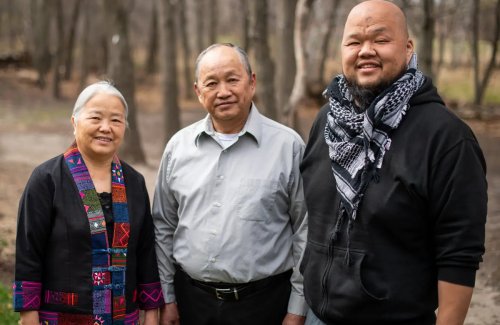
One chef, Yia Vang, defied his parents’ wishes to have a traditional career and decided to follow his passion for cooking. Today, he takes immense pride in showcasing Hmong foodways to the world, weaving incredible stories through his culinary creations.

Different chefs are drawing in new customers by sharing dishes that remind them of home-cooked meals. The use of fresh Hmong-produced ingredients have been appealing to many.

Young Hmong entrepreneurs are also making a difference by starting businesses and helping older Hmong Americans enter larger markets. They have been instrumental in reshaping the economic landscape of the community.

Hmong farmers have also been pivotal in shaping the agricultural landscape of the United States. With over 50% of growers at the Twin Cities’ metro markets being Hmong, they have significantly contributed to the nation’s production of strawberries and poultry.

Initiatives like the Hmong American Farmers Association’s Food Hub have provided farmers with opportunities to grow and sell their produce, allowing the Hmong community to thrive in the agricultural sector.

The future looks promising for Hmong businesses and farmers as they continue to preserve their traditions while embracing new opportunities. Their dedication to their cultural heritage and entrepreneurial spirit are driving innovation and making a positive impact in the US.

Featured Image Source: Business Insider

5280 Magazine-jpg

News

Denver’s First Vietnamese Coffee Shop Celebrates Their Second Anniversary

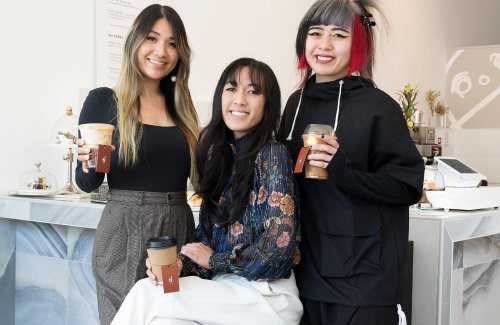
Tí: Cafe Ta, the first-ever Vietnamese coffee shop in Denver, celebrated its second anniversary with joy and pride. Founded by three sisters, Sashaline, Shominic, and Shasitie Nguyen, the café has become a warm and welcoming space for people to connect over coffee and culture.

The idea for the café came from the sisters’ love for their Vietnamese heritage. They wanted to share the joy of Vietnamese coffee with Denver’s residents and visitors. Opening during the pandemic was a leap of faith, but the response has been overwhelmingly positive.

The café offers a unique blend of flavors by using robusta beans and sweet condensed milk in their coffee. They take pride in slow-dripping the coffee through traditional filters, keeping the essence of Vietnamese coffee culture alive.

Beyond coffee, Tí serves up a variety of drinks like Vietnamese egg coffee, sodas with lychee whipped cream, and matcha drinks. They also host themed weeks, like Anime Week, where they serve beverages inspired by popular anime shows.

Despite opening amid the challenges of the pandemic, Tí: Cafe Ta has experienced overwhelming support from Denver residents. They have been embraced as a place where people can gather, share cultural experiences, and engage in conversation.

Looking ahead, the Nguyen sisters aspire to expand their brand while staying true to their roots. The goal is to continue curating new menu items, hosting more events, and fostering an even stronger sense of community within Denver and beyond.

Their vision for the next two decades includes opening new stores in different states, all while maintaining a commitment to delivering authentic Vietnamese coffee culture and providing a warm, inviting space for coffee enthusiasts and curious visitors alike.

Featured Image Source: 5280 Magazine