Stories

July 5, 2023

SHARE:

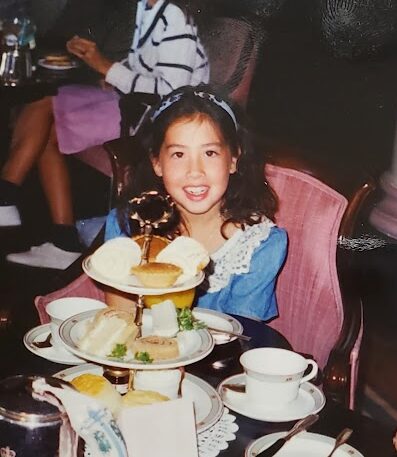
Christine Holmes grew up feeling different from her peers due to being a bi-racial Taiwanese-American.

Christine was often referred to as either the “Asian girl” by her non-Asian friends and the “White girl” by her Asian peers until eventually, they referred to her as “Whasian girl,” which she liked because it represented both of her ethnicities.

She struggled to embrace her cultural background and wished to be fully White. It took her long before she learned to love her identity and cultural heritage, but she did.

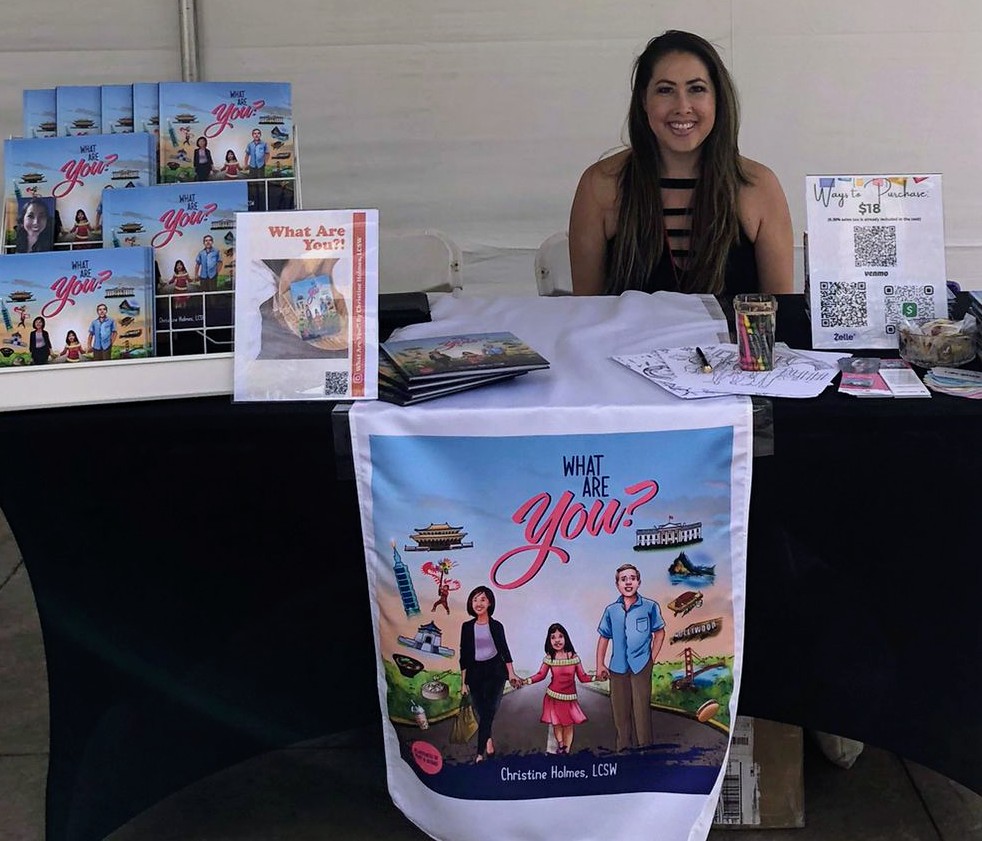
Inspired by her personal experiences, she wrote the book “What Are You?” to provide representation in children’s literature for mixed Asian children.

The book touches on her personal struggles with food and language, among other things, and highlights the importance of representation in literature for children who come from mixed cultural backgrounds.

GROWING UP WITH A TAIWANESE MOTHER AND AN AMERICAN FATHER

Christine grew up in Irvine, CA, where the population was predominantly white and Asian. However, there were very few mixed children, which made Christine feel very different from her peers, who were either fully White or fully Asian.

As a child, Christine was immersed in Chinese School, Chinese Choir, piano, and tennis, which made her feel even more different from her peers because most of them were fully Asian.

Christine’s dad, who is White but very much into Asian culture and a world-renowned Master of martial arts, made it very important for them that Christine knew her Taiwanese/Chinese culture. Christine’s mother cooked Chinese food for most dinners, and her first language was Mandarin.

Their home is filled with beautiful Chinese/Taiwanese antiques, and they used to visit Taiwan every year until Christine was in junior high/high school.

CHALLENGES OF BEING THE “WHASIAN” GIRL

“To my White friends, I was the Asian girl but to my Asian friends, I was the White girl until I got into high school and my friends decided to call me the “Whasian” girl which I preferred since it represented both of my ethnicities.”

Christine felt different from everybody growing up, which bothered her internally. In fact, she had a teacher in her Chinese school that wasn’t very nice to her because even though she can speak Chinese, she couldn’t write Chinese like the other children. This treatment left Christine feeling isolated and alone, until she eventually quit Chinese school altogether.

Her non-Asian friends also often made comments about the food her mom would bring to potlucks or the bags she would use to pack her lunch, making her feel ashamed of her culture. When her mom spoke Mandarin, her non-Asian friends would be offended and ask why she had to speak Mandarin in front of them. She would have to explain that it was sometimes easier for her mom to speak in her native language than speak English. This made her feel uncomfortable, and she would get angry at her mom for it.

At this point, she wished that she was fully White, perhaps because being White and blonde was considered the most beautiful when she was growing up. Her mom used to pinch her nose to make it look “taller” and less stubby like a typical Asian nose. Some of her Asian peers even told her that she was lucky to be at least half White compared to them being fully Asian.

THE TURNING POINT

It wasn’t until college that she fully embraced being mixed and started to love her identity. Christine found herself surrounded by a diverse group of friends who not only accepted her but celebrated her mixed heritage.

“In college, most of my friends were either mixed or of different ethnicities other than White or full Asian. And, they embraced me,” she said.

They appreciated the unique perspective she brought to the table and encouraged her to embrace her identity. For the first time in her life, Christine felt truly proud of her background and of who she is.

WRITING THE BOOK

Christine’s personal experiences served as the inspiration behind her book, “What Are You?” which is a story about her life growing up as a mixed-race individual in a predominantly white and Asian community.

Christine wrote the book when she realized there were no books that represented mixed Asian children. Despite being able to find books for her own children who are half Black, she couldn’t find any for children who were mixed Asian. So, she decided to create something that represented kids like herself.

“I think the part of the book that was most emotionally challenging was writing about the food and how embarrassed I was about my mom packing me Asian food even though I secretly loved it.” Christine admits to feeling a lot of guilt now as an adult for all the times she blamed and got mad at her mom as a child.

REPRESENTATION IN CHILDREN’S LITERATURE

Christine strongly believes in the power of representation and the need for diverse books that accurately reflect the experiences of mixed-race individuals. Having grown up without any books that reflected her own identity, she recognizes the importance of seeing oneself represented in literature.

She saw firsthand how much her own children appreciated books with characters that looked like them and had similar cultural backgrounds. Writing her book, “What Are You?”, she received overwhelming positive feedback from other mixed Asian individuals who wished they had a book like this when they were children.

Despite increased awareness and acceptance of mixed-race identities in modern times, Christine recognizes that children may still struggle with their identity and the pressure to choose one ethnicity over the other. Her book seeks to empower mixed-race children to embrace and celebrate all aspects of their identity.

OVERJOYED BY THE POSITIVE FEEDBACK

Christine initially had doubts about the book’s reception due to her own insecurities about putting herself out there. However, the encouraging and uplifting words from her readers have exceeded her expectations.

“I was featured on a TikTok page, twice, by someone with 1 million followers, who’s sister bought the book for her. She shared that my book had emotionally resonated with her in many ways. It was then that I realized the impact that my book has had on some people.”

HOPE FOR THE FUTURE

Christine hopes that her book will inspire readers to embrace their identity, no matter where they come from. She wants readers to know that they don’t have to choose between different cultural backgrounds and can be proud of their unique mix.

“I hope they embrace their cultural background, and they are proud of their roots.”

By highlighting her personal experiences, Christine hopes her book will contribute to a larger conversation about identity and belonging in our society today, and ultimately help break down barriers and build more inclusive communities.
CONNECT WITH CHRISTINE

Website: publishyourgift.lpages.co/christine/

Instagram: @whatareyoubook  

Facebook:  What Are You? Book

TikTok: @whatareyoubook 

Related Articles

image

Development

Mastering SEO: Tips to Elevate Your Business Game With AHN

SEO can be a tad bit difficult, especially when you have to worry about your business as well. We understand and have prepared some valuable tips to improve your SEO game!

Use an Advanced Keyword Glossary

Creating a keyword glossary can be a game-changer for your business. With 52% of Google searches being informational, a well-crafted glossary helps you plan content strategically and stay ahead of the curve.

Find the Question Behind the Query

Keywords are crucial, but thinking ahead is key. Consider your buyers’ needs and how your chosen keywords can provide the solutions they’re searching for.

Publish Optimized Content

Impactful content resonates with both search engines and audiences. Focus on relevance and depth, and use your keyword glossary to solve your customers’ problems effectively.

Why AHN Solutions?

While these tips are extremely valuable for improving your SEO game, having a professional handle will not only save resources but also boost results. AHNS’ services in branding, SEO, and website development will take care of the technical details, so you can focus on growing your business.

If you want to learn more about our services, visit the AHN Solutions website at asianhustlenetwork.com/services/

{"ARInfo":{"IsUseAR":false},"Version":"1.0.0","MakeupInfo":{"IsUseMakeup":false},"FaceliftInfo":{"IsChangeEyeLift":false,"IsChangeFacelift":false,"IsChangePostureLift":false,"IsChangeNose":false,"IsChangeFaceChin":false,"IsChangeMouth":false,"IsChangeThinFace":false},"BeautyInfo":{"SwitchMedicatedAcne":false,"IsAIBeauty":false,"IsBrightEyes":false,"IsSharpen":false,"IsOldBeauty":false,"IsReduceBlackEyes":false},"HandlerInfo":{"AppName":2},"FilterInfo":{"IsUseFilter":false}}

Stories

Beyond Fashion: JINZA Oriental Couture’s Journey of Empowerment

“What fuels my passion is the personal stories of each of my clients. They teach me something new every day—whether it’s their high standards, attention to detail, or unique perspectives on the world,” states Grace Pei, founder of JINZA Oriental Couture.

Recognizing the power of handcrafted wedding dresses to connect people with their cultural heritage and express their unique stories, Grace is on a mission to highlight the beauty and sophistication of Chinese culture through JINZA Oriental Couture. 

The First Threads

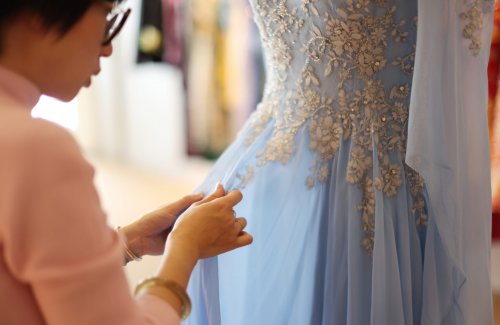
Initially, JINZA Oriental Couture specialized in Western wedding dresses and custom evening gowns at Jinza Couture Bridal. But one fateful day, Grace was approached by a third-generation Asian American bride who wanted a custom Qipao for her wedding reception. 

Grace recalls, ‘This request sparked my journey into researching the Qipao and uncovering what had been lost over the years. Through this process, I discovered that my grandmothers used to wear tailored Qipaos in their time, and I began exploring my family roots.’ 

This reflective journey ignited a new passion in Grace: creating hand-embroidered designs that reflect her client’s unique family histories, cultural heritage, and personal stories. 

With a decade of expertise in bespoke fashion, JINZA Oriental Couture now specializes in handcrafted Chinese wedding dresses, Qipaos/Cheongsams, and Tang suits – all designed and made locally in Los Angeles for weddings and cultural celebrations.

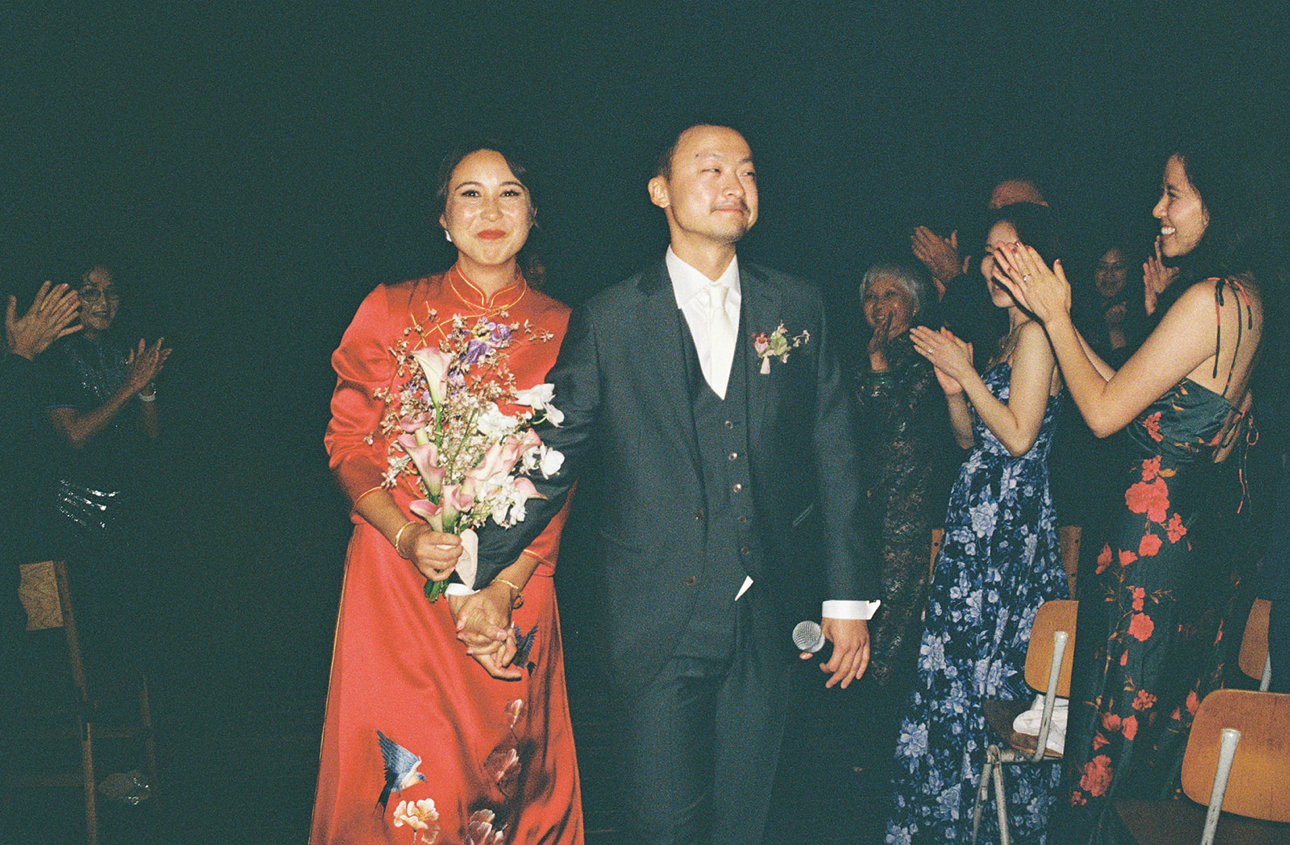
Qipao Wedding Dress at Modern Tea Ceremony (Image source: JINZA Oriental Couture)

Qipao Wedding Dress at Modern Tea Ceremony (Image source: JINZA Oriental Couture)

Unraveling Tangles

Asian fashion has evolved dramatically over the years, with many traditional elements fading from modern designs. As a result, much of this cultural heritage has been lost or overlooked.

“One of the biggest challenges I’ve faced in my business journey is overcoming the misconception that Qipao and Cheongsam should be inexpensive or easily replaceable. Many people ask, “Why should I invest in something I can buy on Amazon or Etsy for $200?” Grace explains.

As the gap between mainstream fashion and Asian fashion narrows, Grace points out that these traditional dresses have become occasional pieces—costumes for special events rather than meaningful, handcrafted works of art. 

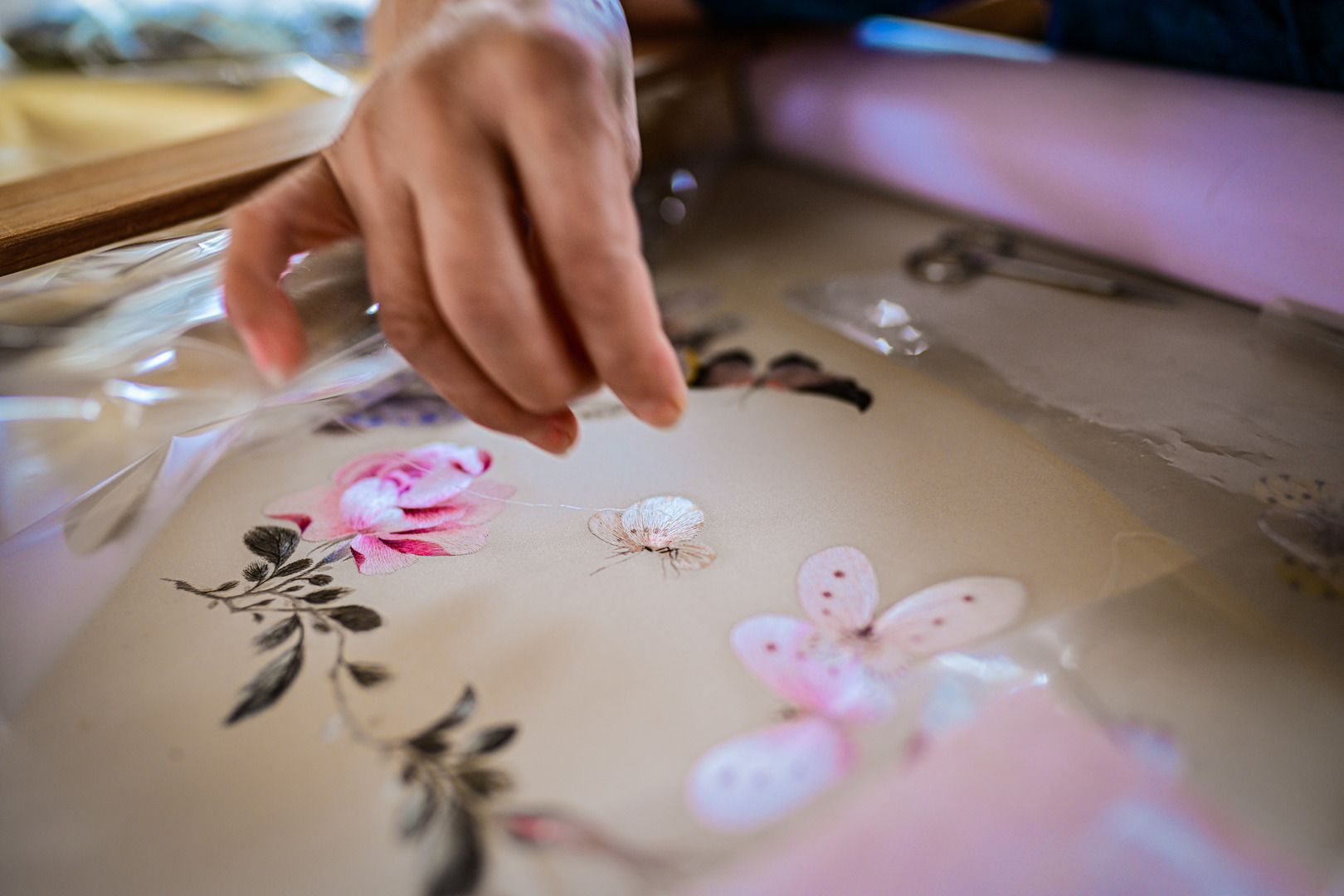
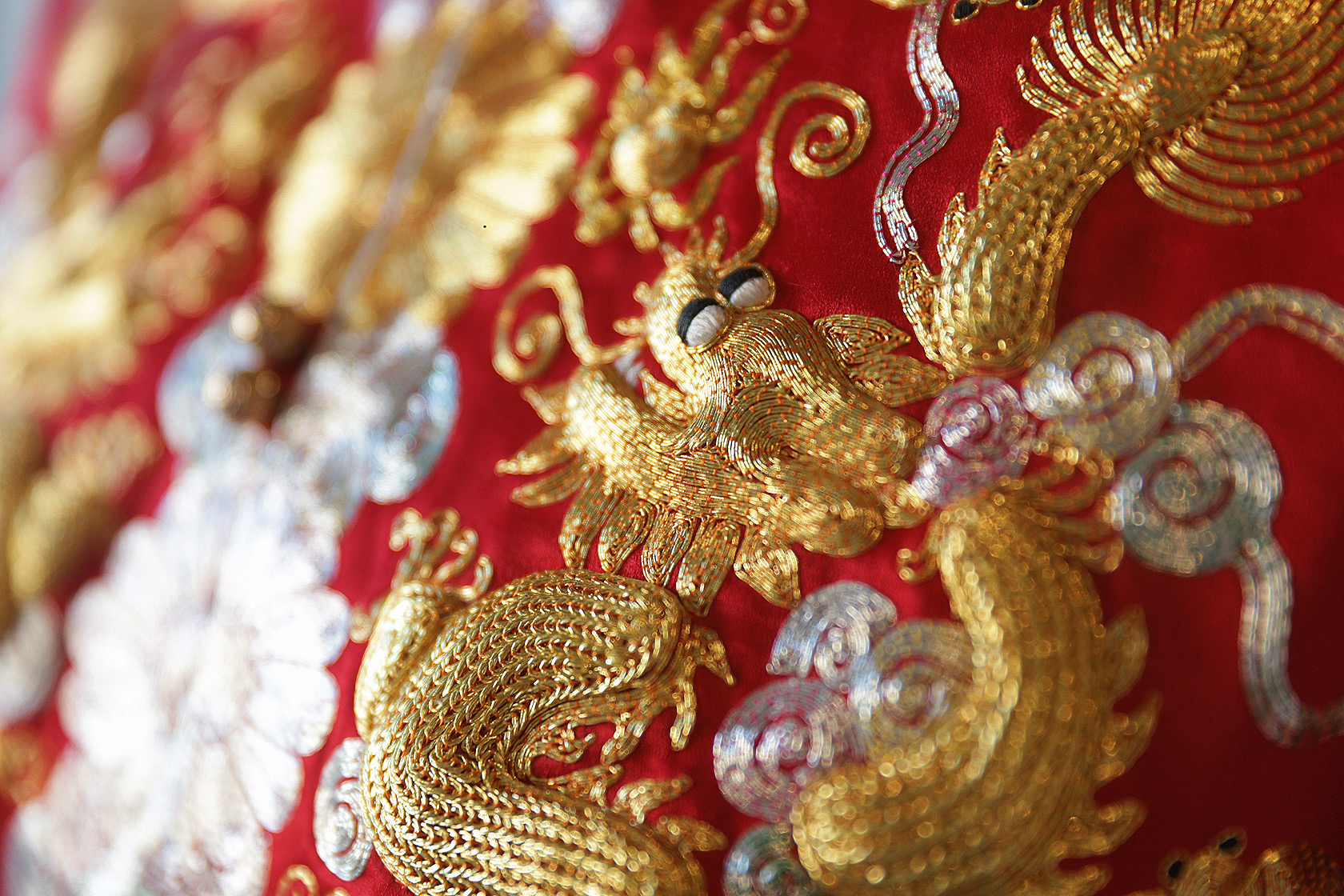
To address this, Grace focuses on educating her clients about the value of bespoke fashion: the intricate embroidery, high-quality fabrics, and cultural heritage woven into every piece.

“At Jinza Oriental Couture, we see our mission as both an artistic pursuit and a learning journey alongside our clients. Every client brings a unique story, and we don’t aim to replicate what was done centuries ago but instead incorporate meaningful elements that speak to their identity today.” 

Artisan hand stitching embroidery (Image source: JINZA Oriental Couture)

Artisan hand stitching embroidery (Image source: JINZA Oriental Couture)

Threads of Resilience

“As a mother of two and a first-generation immigrant, I am most proud of the resilience I’ve shown throughout my journey,” Grace exclaims.

Whether overcoming depression or battling an avoidant mindset, Grace’s resilience has transformed JINZA Oriental Couture into more than a fashion brand, but a place for preserving culture and identity.

Grace’s resilience wasn’t built overnight but grew through her passion for helping her community. By preserving cultural heritage through bespoke fashion, she tirelessly designs intricate dresses that tell the unique stories of her clients’ identities.

Grace happily recalls, “Hearing their stories, especially when they share old family albums of grandmothers wearing Qipao, often brings tears to my eyes. The hand stitches, still vibrant and beautiful after 100 years, remind me that clothing can carry a story all on its own.”

From custom Qipaos and Cheongsams to Chinese wedding dresses, each piece reflects the personal histories of her clients. Grace’s vision for JINZA Oriental Couture extends beyond fashion—it’s about supporting female leaders, uplifting the Asian community, and ensuring these cultural treasures are passed down to future generations.

When asked which Asian or Asian American—real or fictional—she’d invite to wear one of her dresses, Grace responds, “Lisa Ling (a previous client) and Ronny Chieng are both role models for me due to their commitment to telling powerful stories, standing up for their communities, and offering true support. Phillip Lim is also a successful example of an Asian American designer who has carved out his own voice in the fashion world, and his influence and individuality would be a perfect match for the ethos of Jinza Oriental Couture.” 

A piece from JINZA Oriental Couture (Image source: JINZA Oriental Couture)

Lessons in Resilience and Unity

The two most important lessons Grace has learned from her entrepreneurial journey with JINZA Oriental Couture are authenticity and community.

“My advice to Asian creatives, founders, and entrepreneurs is to always be authentic. There were times when I wanted to take shortcuts or find quicker ways to get things done, but I learned that staying true to who you are and doing the right things, even if they take longer, is what truly matters. Another important piece of advice is to belong to a community you truly believe in. It will make things a lot easier, even when things don’t go as expected. When we, as a community, stay true to our values and support each other, we can create a stronger and more united future,” Grace affirms.

When asked about her future plans, Grace excitedly shares that she’s honing her storytelling skills to speak more boldly about heritage, culture, and community. She’s also open to collaborations, partnerships, and creating more content to amplify her mission.

Grace concludes, “Together, we are stronger, and by working together, we can have a greater impact. I look forward to the possibilities that lie ahead and the opportunities to connect with like-minded individuals and organizations.”

Please Include Contact

Website: JINZA Oriental Couture

Instagram: @jinzaoriental

Linkedin: Grace Pei

Facebook: Jinza Oriental Couture

ObFgA9tc-jpeg

Stories

Eunice Chen’s Táng Transforms Childhood Night Market into a Moving Animated Story

After transitioning from her career as a teacher to an animation artist and illustrator, the talented Eunice Chen once again decided to test her abilities by creating an animated short film project called Táng (糖).

“人算不如天算” — in Chinese belief, every encounter is predestined and our current state is the fruit of past karma. One life ago, we were somehow, unknowingly, cultivating our karmic connections, which ultimately led to this present life’s encounters or coincidences.

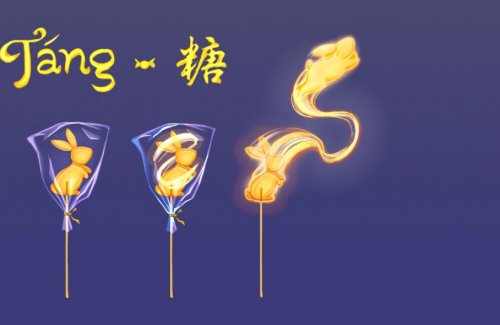
Táng is a movie about one of those by-chance encounters as well that integrates the art of 糖画 (tánghuà). Through the lens of tánghuà – a traditional Chinese sugar-painting art, this unexpected relationship arrives and flourishes into a confounding yet paramount work of fatherhood, family, and fate. 

THE INSPIRATION BEHIND TÁNG

Growing up between the U.S. and Taiwan, Eunice developed deep-rooted cultural memories that shaped her appreciation for her heritage. In this new venture, she continues exploring culture—this time, through nostalgia.

Where should we begin? Back to her childhood in Taiwan, like every other child, Eunice loved going out and visiting open-air markets. Bustling lines of food vendors, jittery echoes of chatters, and also a rare occasion when one can play games without their parents’ side eyes, open markets are the idols of many young children in Taiwan. It is also where she was introduced to the art of sugar-painting.

Reflecting on this memory, Eunice shares:

Yes, the idea of this story first came from my childhood memories of visiting open-air markets and night markets in Taiwan. Whenever I visited those markets, I would always make sure to visit the candy stalls, where master candy makers sculpted these lollipops that were amazing pieces of art and also very tasty confections. And I’ve always had a giant sweet tooth, so I started my film out of a place of joy.

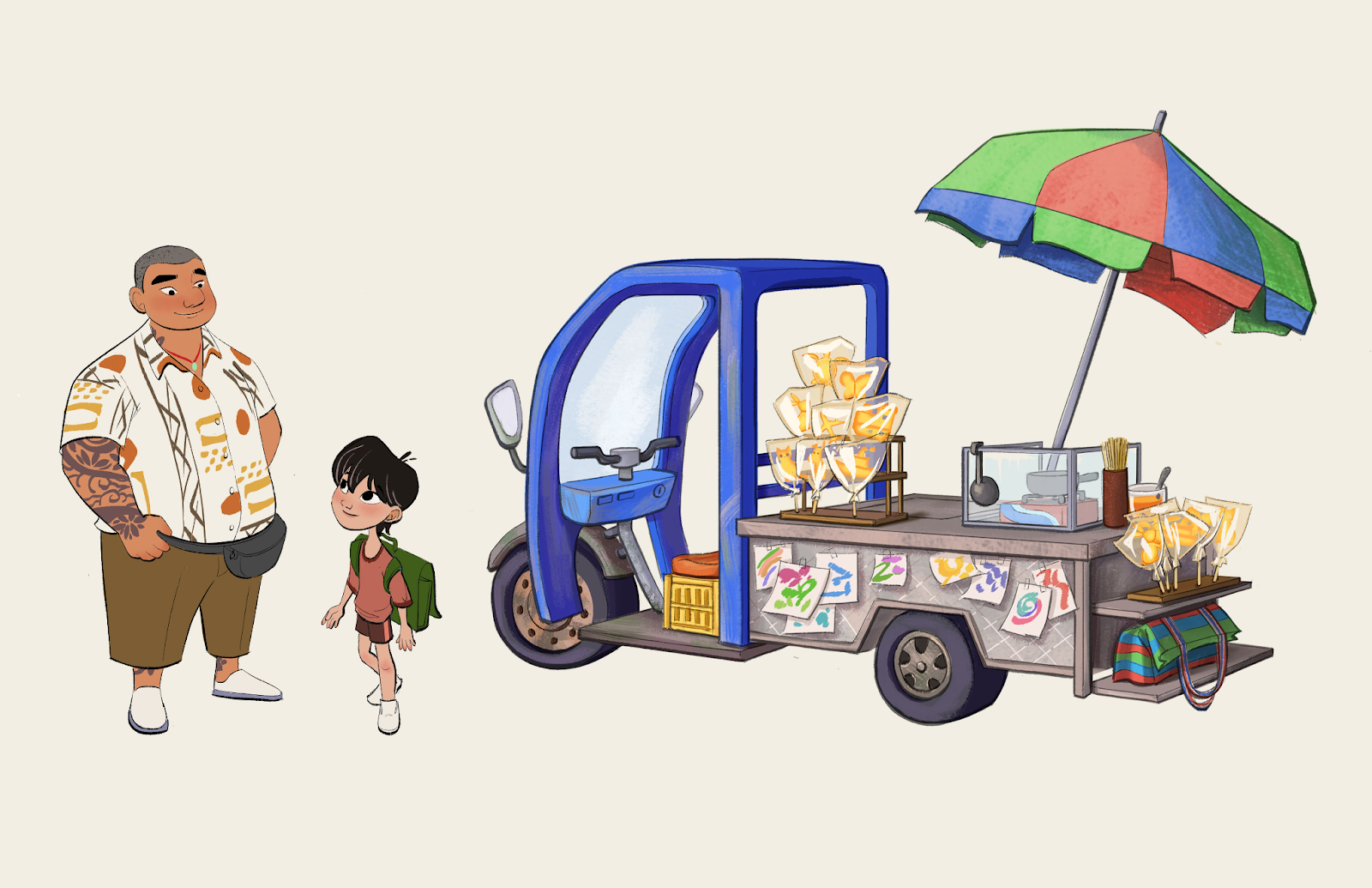
The short film centers around the meaningufl connection between a sugar-painting street vendor (left) and a student.
The short film centers around the meaningful connection between a sugar-painting street vendor (left) and a student.

A REFRESHING TAKE ON FATHERHOOD AND FAMILY

In Chinese families, “血浓于水” (Blood is thicker than water) has long been a staple for centuries—that family is of utmost importance, and the bloodbound places more value than strangers. It is only natural that the concept of a “chosen family” may irk some, who put a sense of filial piety and duty in high regard.  

Of course, it feels almost peculiar for Eunice Chen – the eldest child, who has switched careers, from landing a “safe” job at teaching to taking a more off-the-beaten-path direction towards doll-making and now…animation artist and now…film director!! So expect the unexpected layers and nuances Eunice has painted Táng. Táng is more than just a love letter to Taiwanese night markets. It’s one that Eunice picks up the lack of positive portrayals of father-and-son relationships in the Asian community.

“When someone makes art or a film, sometimes they are painting a world they wish they had or would like to see in the future. I wish I had seen more strong bonds between Asian fathers and sons as I grew up,” Eunice shares. 

While Táng’s messaging can cover this complex matter only to a certain extent; here, Eunice is after something more personal for many Asians: “a healing balm” for those with similar experiences. However, Eunice adds that she’s been seeing a lot of change in parenting recently. She says, “I am super proud of how intentional and hands-on Asian fathers from my generation (and beyond) have been with their children!”

Now, Eunice is bringing Táng to life, but she needs our support.

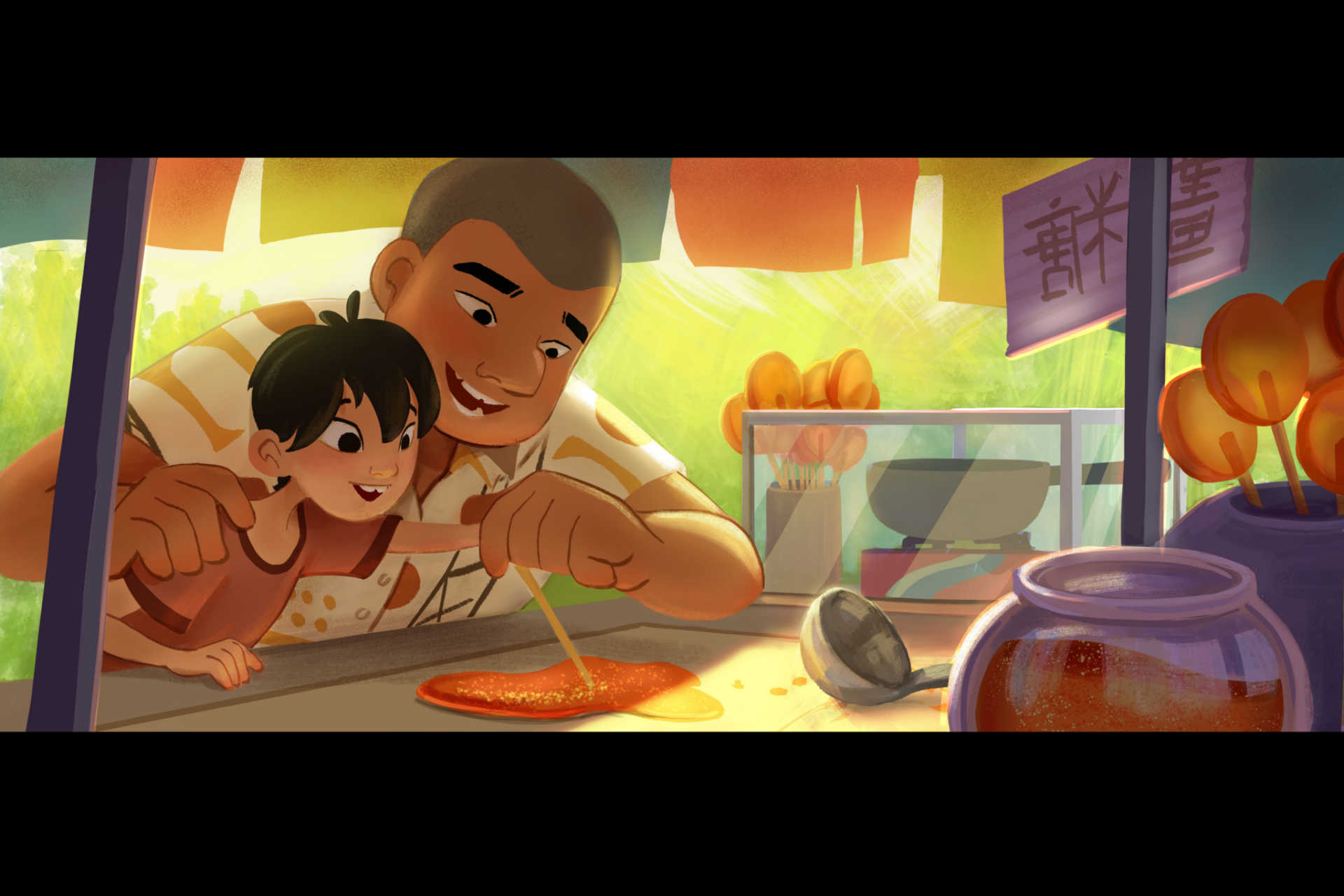
A scene involving the art of sugar-painting.

JOIN THE JOURNEY: SUPPORT TÁNG

The idea for Táng came to Eunice during a storyboarding class, when asked to create quick story concepts. Táng was one of the ideas she came up with, leading her to develop a script—her first ever. While world-building and character design might be her forte, the real challenge followed: securing funding. Facing multiple rejections, it took one “yes” from what she thought would be her final meeting to reignite her determination. 

The initial funding allowed her to assemble a small but passionate team, who have since created the film’s first three minutes. Now, they need additional support to complete the project, leading to the launch of their Kickstarter campaign.

But independent films—especially ones that bring forward Asian heritage and underrepresented narratives—need tremendous community support. 

Supporting the Táng crowdfunding campaign is a step forward to preserving a piece of cultural heritage while amplifying nuanced Asian fatherhood stories, and ensuring that art like this can continue to thrive. 

Donate NOW and be part of this journey!

CONNECT WITH EUNICE CHEN

“Keep working on your art and portfolio. Get to know people already working in the industry and learn from them. And make art that comes from the heart and makes you happy. It’s going to be very difficult, especially given the current state of things in the animation industry as a whole, but if this is truly what you want, then don’t give up!”

Instagram: @eunicesketches

Website: eunicesketches.com 

Duolingo Shares Climb 7% as Users Swarm to App to Learn Mandarin-png

News

Love, Bonito x Asian American Girl Club Present the ‘TrailBlazer’ Collaboration

Love, Bonito and Asian American Girl Club have joined forces to launch the TrailBlazer Collaboration—a tribute to Asian American women breaking barriers, redefining leadership, and inspiring future generations. This campaign celebrates five extraordinary women, each donning a unique limited-edition Love, Bonito x Asian American Girl Club blazer that serves as a true reflection of their confidence, resilience, and identity.

Meet the Trailblazers:

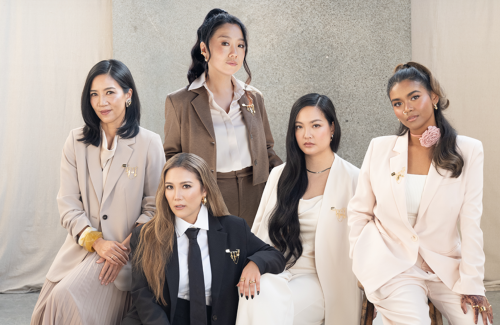
  • Ally Maki – Actress, Advocate, and Founder of Asian American Girl Club, Ally embodies power and purpose in the RuchedReady® Rachel Blazer—made for the woman who rolls up her sleeves and gets things done
  • Sherry Cola – Comedian, Actress, and Storyteller, Sherry embodies authenticity in the Alya Boxy Crop Blazer, a reflection of her bold humor and vibrant energy.
  • Amanda Nguyen – Astronaut and Founder of Rise, Amanda exudes resilience and advocacy in the RuchedReady® Lapelles Soft Blazer, a symbol of strength and justice.
  • Michelle Kwan – Olympic Figure Skater and Diplomat, Michelle showcases her grace and determination in the RuchedReady® Classic Regular Fit Blazer, a nod to her unwavering spirit both on and off the ice.
  • Paravi – Popstar and Actress, Paravi brings her dreamy vibes and fearless creativity to the RuchedReady® Aera Slim Blazer—because bold artistry deserves a bold fit.
The Trailblazers (from left to right): Michelle Kwan, Ally Maki, Sherry Cola, Amanda Nguyen, Paravi

A Mission-Driven Collaboration

“At Love, Bonito, we share a common mission with Asian American Girl Club—to champion and uplift Asian American women in spaces where they have long been underrepresented,” said Dione Song, CEO of Love, Bonito. “This Trailblazers collaboration is a tribute to the trailblazers shaping industries, breaking barriers, and inspiring communities worldwide.”

A Pin with Purpose

Every detail in this collection carries a deeper meaning. Each blazer from the collaboration comes with a custom pin set representing a trailblazer’s journey:

  • The Phoenix – A symbol of resilience and rebirth, reminding women of their power to rise after every challenge.
  • The Sakura – Representing renewal and growth, celebrating transformation and new beginnings.
  • The Ginkgo – A timeless emblem of endurance and strength, honoring those who stand firm in adversity.

Now More Than Ever

“Asian American women have always driven powerful change, though our stories have often gone untold,” said Ally Maki, Founder of Asian American Girl Club. “Through Trailblazers, we’re affirming that our impact and leadership across all industries has always been—and will continue to be—undeniable.”

Join the Movement

Discover the TrailBlazer Collection at https://www.lovebonito.com/us/global/trailblazers-aagc 

About Love, Bonito: 

Love, Bonito is the leading female-founded fashion brand in Southeast Asia, dedicated to empowering women through thoughtful, versatile designs. With a deep understanding of the modern woman’s needs, Love, Bonito creates timeless and functional pieces that blend style with confidence. More than just a fashion brand, Love, Bonito is committed to fostering a strong, supportive community—championing women in every stage of their journey through representation, storytelling, and purpose-driven initiatives.

About Asian American Girl Club: 

Asian American Girl Club (AAGC) is a cultural force and community-driven brand dedicated to amplifying the voices and experiences of Asian and Asian American women. Founded by actress Ally Maki, AAGC creates space for connection and representation through fashion, media, and storytelling. With a mission to break stereotypes and celebrate identity, AAGC is more than a brand—it’s a movement empowering the next generation to be seen, heard, and unapologetically themselves.

Credits: Love, Bonito x Asian American Girl Club