Stories

December 1, 2023

SHARE:

In a world where living spaces are getting smaller and furniture quality is declining, one entrepreneur is striving to make a difference.

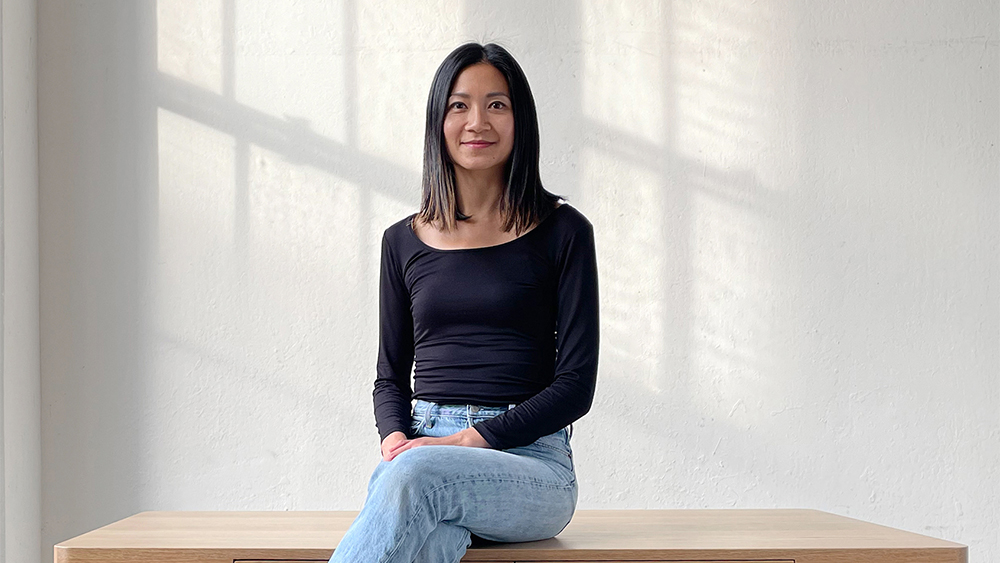
Yvonne Hung, a city-dweller who has lived in some of the world’s largest metropolitan areas, knows firsthand the challenges and constraints of living in small apartments. It can be difficult to have friends over because there isn’t enough space or seats.

For this reason, she founded Otelier in 2020, a San Francisco-based furniture studio with a focus on sustainability, and providing innovative products that are useful even for small spaces.

Yvonne believes that the home is the most intimate social space, and people shouldn’t have to sacrifice that due to a lack of space. Her latest project is called the Quartet, a multi-functional side table that unstacks into four stools.

While the retail industry and consumers have embraced fast furniture with low prices, poor construction, copied designs, and single usage, Otelier is committed to changing that. Yvonne and her team are determined to create sustainable, high-quality furniture that will stand the test of time. With Otelier, urban dwellers no longer have to choose between comfort and the environment, and Quartet is just the beginning of a new era in furniture design.

Quartet, a side table that transforms into four stools.

OTELIER STRADDLES BETWEEN A DESIGN STUDIO AND AN E-COMMERCE BRAND

I’ve always had an obsession with cities—the way they develop over time, how they are shaped by their geographies and industries, and of course how culture and way of life make each city unique.

In fact, I started my career in urban planning, which is what I studied at the Harvard Graduate School of Design. My goal, as cheesy as it sounds, has always been to make the world a better place to live for all. With Otelier, I’m trying to do it at a much smaller scale—the home—because that allows me to get up close and personal with users, and also be hands-on with the creative process.

So much of my design principles still go back to urban planning. For example, I chose to focus on apartment living because higher-density housing is a much more efficient and sustainable way to accommodate a growing population, as compared to single-family homes which encourage urban sprawl. Likewise, sustainability and the cradle-to-cradle approach is always a huge factor in the product design process because protecting the earth is always top of mind.

This generation is going through a lot of changes—higher housing prices, more frequent moving, and smaller apartments are some trends that make life different from what it was 20+ years ago. Activities that used to take place in person, such as work and meetings, now happen online. Social media is both hastening new ideas and increasing anxiety. I think there are many opportunities to address these issues. For me, it’s starting with the most intimate space, the home, and how we can make it a happy experience.

Otelier straddles between a design studio and an e-commerce brand. It’s rare to be both. Most consumer furniture brands aren’t strong on design—there’s a lot of copying of whatever’s trending—and most design studios don’t follow through with the manufacturing and sales process. 

I aspire to do both under Otelier. As a designer, I want to explore and experiment, whether it’s with product ideas, new materials, or collaborations with little constraint. And as an entrepreneur, I want to create an e-commerce brand whose products make an impact at scale.  I’m still figuring out how to do both with very limited resources as a solopreneur.

BIGGEST CHALLENGES AND OPPORTUNITIES IN SUSTAINABLE FURNITURE DESIGN

It seems there’s a race to the bottom in the consumer furniture industry—make it as cheap as possible, sell more, and maximize profits. It’s no wonder why the EPA says the US produces 12 million tons of furnishing waste a year. Not only are these items going into the landfill, but they also contain a lot of non-recyclable and/or non-biodegradable materials. The challenge is that now consumers are trained to believe their furniture should be dirt cheap and don’t realize these problems, similar to the case of fast fashion. 

There’s also a lot of greenwashing everywhere. For example, using recycled plastic bottles is great, but turning them into something that cannot be recycled again is worse than just making another plastic bottle from it because it could then be recycled several more times.

One of my pet peeves is when companies call plastic leather vegan leather. It’s just plastic! Otelier is far from perfect, but I am committed to being honest and looking for the best alternatives that are currently available and financially feasible.

Fortunately, I do think there is a subset of mindful consumers that want high-quality furniture that’s sustainably produced. There are several smaller independent brands, like Otelier, that are trying to address this problem in the furniture space, and a lot of material science and manufacturing companies exploring more sustainable alternatives.

That said, when it comes to innovation on the sustainability front, it’s easy to design or prototype a concept, but much harder to make it commercially viable. I’m fascinated by a lot of the new materials that are currently in development, such as bioplastics. I’m also interested in blockchain for tracking supply chains. But in reality, these ideas are far from being commercially available, especially to small companies like Otelier.

My long-term goal is to have two areas of focus: one for blue sky explorations, including the use of new materials, and a second for producing durable and commercially viable products for the masses. For now, since I’m bootstrapping, the current focus is more on commercially viable products using what’s available today.

There’s plenty we can do now to improve the furniture industry. Taking a methodical approach, I typically break down a product into its materials, manufacturing, logistics & transportation, usage, and end-of-life condition, and then minimize the footprint for each factor. 

MAKING SURE OTELIER PRODUCTS ARE SUSTAINABLE

I use materials that are biodegradable and/or recyclable and minimize the use of petroleum-based plastics for both our products and packaging. The Quartet, for example, uses wood and suppliers that are certified by the Forest Stewardship Council (FSC) to ensure that we’re sourcing from sustainably managed forests. I also use hardwood because it’s more durable since longevity is key to sustainability. Metals are also great for durability and recyclability. My hope is that we create zero landfill waste.  

Otelier is not perfect; I still rely on the existing transportation and energy systems that are available today. For what I cannot control, I use carbon offsets so that our products are carbon neutral. And I also plant trees to compensate for the wood used in our products.

If all businesses take responsibility for their own environmental footprint, we’d be in a much better place.

THE GOAL IS TO ENCOURAGE MENTAL AND PHYSICAL WELLNESS AT HOME

I’m still at a very early stage with Otelier, but I have so many ideas! It takes me a lot of time to develop each since I work alone. 

I think the way this generation lives, post-COVID, requires more flexibility from our home, no matter if you’re living alone or have a family with kids. Some recurring themes in my furniture are multi-functionality and space-saving features. I also am fascinated by objects that are interactive. In a way, I enjoy designing experiences enabled by an object rather than the object itself. For example, the Quartet is a side table that unstacks into four stools. But the goal is to encourage friendship and bonding at home. The furniture is a means to that end.

Eat-Work Table, designed for people working from their kitchen or dining rooms. The height-adjustable table can be used as a dining table.

LONG-TERM GOALS FOR OTELIER

The ultimate goal is to build a brand that creates beautiful and useful furniture that enriches the lives of urban citizens, while also being sustainable and accessible. I hope Otelier will be an international brand, given that apartment living is relevant everywhere. 

From a service perspective, my vision is to create a platform that sells both new and used Otelier furniture.Resale is really a key to countering the fast-furniture problem. Although our furniture is heirloom quality, I think most people of this generation would prefer to just sell their used furniture rather than passing it down to their kids and grandkids. So making resale easy is a service that could benefit everyone.

Innovation is really important to me. I’m not here to create what already exists. I really hope that Otelier can pioneer commercializing some of the sustainable materials that are currently in development. It’s still early days, so there are lots to explore, learn, and create.

CONNECT WITH YVONNE

Website: https://otelier.com

Instagram: @otelier_home

Facebook: @otelierhome

Tiktok: @otelier.com

Kickstarter: https://www.kickstarter.com/projects/otelier/quartet-a-side-table-that-transforms-into-four-stools?ref=8rnt6m

Related Articles

News

Marquis Blends Asian Roots and Modern Flair with Innovative Energy Drinks

The energy drink industry is on an exciting upswing, having expanded by a remarkable $7 billion over the past half-decade. Stepping into this dynamic field is Marquis, a family-founded beverage brand rooted in AAPI heritage. Their approach involves crafting a sparkling drink featuring a unique caffeine blend, setting them apart in the market.

Unlike most energy drinks and functional beverages that cram 200 to 300 milligrams of caffeine into each serving, Marquis opts for a milder 100 milligrams. Interested buyers can find Marquis beverages both on the official website, drinkmarquis.com, and select Target stores, including the Downtown branch located at 735 S. Figueroa Street, as well as local Erewhon Markets.

LA natives Christopher Lai and Danny Huang, co-founders of Marquis, are leading the charge for a healthier caffeine experience. Lai shared with LA Downtown News that around 90% of American adults consume caffeine daily, but Marquis’ caffeine drink comes with added benefits.

Marquis crafts its beverages with organic ingredients, sidestepping added sugars and excess calories. Their concoction combines green tea, green coffee, and yerba mate to offer a balanced, natural energy lift throughout the day. Huang emphasized their ability to provide sustained, natural energy with a fraction of the usual caffeine content.

Marquis beverages boast antioxidants, vitamins B and C, setting them apart in promoting health-conscious choices. Lai’s focus on differentiation from other energy drink companies reflects in Marquis’ careful crafting and dedication to responsible caffeine consumption.

The brand’s flavors, including citrus yuzu, lychee peach, mango ginger, super berry, and pineapple passion, carry a unique touch shaped by their “Asian-ness,” as described by Huang. Their latest flavor, lemon lavender, adds a botanical dimension. Huang revealed that these flavors are a testament to their history, culture, and personal experiences, a way to share nostalgia and love with the world.

Featured Image Source: LA Magazine

Screen Shot 2023-07-09 at 2.39.59 PM-png

Stories

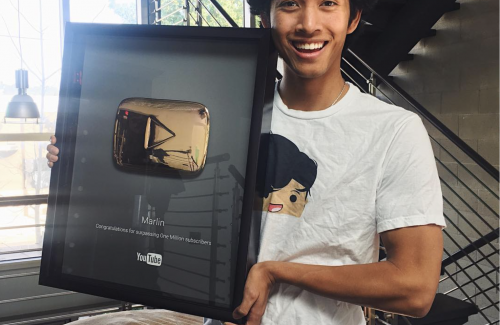
An Entrepreneur’s Dream to Bring a Taste of Cambodia to the World and the Miracle That Started It All

Marlin Chan is a remarkable individual whose journey embodies determination and triumph in the face of adversity. Born to Cambodian immigrants, Marlin’s family overcame hardships that spanned continents, shaping the very essence of his character.

His parents faced the harsh realities of the 1970’s Cambodian Genocide that forced their separation for nearly 2 decades. After being apart for 18 years, a fortunate stroke of serendipity allowed them to miraculously reunite and lead to the birth of the miracle baby Marlin.

Inspired by his grandmother’s beef crisps, Marlin started a business venture called “Yay’s” to pay homage to his culture. Through Yay’s, Marlin continues his family’s legacy of hard work and determination, sharing a unique taste of Cambodia to the world.

Asian Hustle Network had the privilege to sit down with Marlin Chan and delve into his inspiring journey. Join us as we explore his remarkable story of strength, dreams, and resilience.

CHALLENGES THAT MARLIN’S PARENTS FACED AS CAMBODIAN IMMIGRANTS

During the Cambodian Genocide, my parents faced the challenge of survival, as those of higher status, like artists, government officials, and intellectuals were among the first to be targeted and eliminated. 

Because there were countless horror stories of Khmer U.S. Air Force members being killed upon arrival at the Phnom Penh’s air station, it prevented my dad from returning home after serving the U.S. Air Force to save his family. This marked the onset of my parents 18-year separation.

Amid their time in the work camps, my mom tragically lost my sister to chickenpox and malnutrition due to the mistreatment by the Khmer Rouge. This tragic event left her devastated. To escape the work camps, my mom and her family had to navigate minefields at night to be unseen.

Like many immigrants, my dad faced the challenge of not knowing the English language upon his arrival in America so he turned to television to learn how to speak the language. Meanwhile, my mother successfully made her way to America to start a new life and began selling noodles on the streets of Stockton, California to support our family.

THE REMARKABLE REUNION OF LONG-LOST LOVE AFTER 18 YEARS

One day, my father visited a local donut shop for the first time to meet with an old friend, and the donut shop owner recognized him from their days in Cambodia. 

As the owner was inquiring about my mother, he revealed that the last he heard about her and her family’s whereabouts was in Stockton, California. My father’s face drained of color, and he froze upon hearing this shocking revelation. Immediately, he asked if the owner had their contact information and without skipping a beat, he got in touch and embarked on a road trip to Northern California the very next morning.

Upon arriving in Stockton, California, my dad found my mom, still hopeful and strong-willed as she had always been, but her health wasn’t in the best condition. She was living in a one-bedroom shared apartment with multiple other families. They promptly went for health check-ups and discussed restarting a life together again. In that same year, I was born on October 7, 1993. The Stockton Newspaper published an article of Marlin Chan as the miracle baby that beat the odds of survival with my parents’ long-lost reunion and my mother’s ability to bear children at forty.

LESSONS THAT SHAPE MARLIN’S JOURNEY

As a child of Cambodian immigrants, here are some of the things I learned:

  • Stay curious, for knowledge is a treasure that never diminishes and our curiosity fuels our drive to innovate. 
  • Having a positive outlook can transform our perception of life, particularly during trials.
  • Material wealth is temporary. The value in developing your knowledge and skills is what truly holds the key to unlocking your infinite potential for abundance, which created a drive for me to continually invest in myself.

Relentlessness and grit are values I learned from my parents’ stories at a young age. I come from a determined, resilient family that fights for love. Hearing stories of my mom walking from Cambodia to the border of Thailand in search of refuge taught me the power of determination. Based on these principles, I have always believed in my potential and fostering a strong work ethic. While I may not always be the most attractive or intelligent person in the room, I strive to outwork everyone to the best of my abilities.

FACING FAILURE, FINDING STRENGTH

When I was eighteen years old, I was selected as one of the top 10 finalists to compete on ‘Internet Icon,’ a show created by Ryan Higa, my content creator idol. Unfortunately, I ended up placing 8th on the show, and as a young eighteen-year-old, I was devastated. I doubted whether I could become a full-time content creator if I couldn’t win this competition.

In the following year, I took a service industry job at Chipotle and completely stopped making videos. By the end of that year, I felt a renewed sense of fervor and determination to pursue my career in content creation. The skills I learned from my job at Chipotle, such as executing with excellence to avoid repetition, transferred to my work ethic for content creation.

By doing something that wasn’t creative, it shifted my perspective with content creation and allowed me to pursue my passions with more fervor and focus. I realized that I would only be a failure if I gave up since you miss 100% of the shots you don’t take. This experience resonated with the Japanese proverb, “Fall seven times, stand up eight.”

Over the next three years, I moved to Los Angeles, California, and gained over 1 million subscribers, turning content creation into a full-time job. I learned that if I could visualize my goals, they could become my reality, or even exceed beyond my imagination.

LOOKING AHEAD

My greatest accomplishment would be giving my parents a better life and inspiring kids to foster their talents and pursue their passions.

Looking ahead, my goals for the future are centered around bringing joy and delight to the world with my food and creations. I aspire to represent Asian Americans, who are under-represented in American media and encourage my Asian community to share a piece of their culture with others.

My dream is to become the first Cambodian American to bring a taste of Cambodia to every home with Snack Yay’s on a global scale. Bringing exposure to the Cambodian community would be a true fulfillment of my mission in life.

ABOUT HIS BRAND YAY’S

My Grandma, known as ‘Yay’ in Khmer, has been crafting beef crisps since the early 90’s to cover her apartment rent in Stockton, California. Beef crisps consist of thinly sliced marinated beef air-dried to a delightful crunch with flavor profiles that offer a symphony of umami, sweetness, and spiciness. Consumer goods expert Kathryn Tuttle described them as a fusion of ‘Beef Carpaccio meets potato chips meets bright Asian flavors.’ What sets these apart from traditional American beef jerky is their light and crispy texture. While regular beef jerky takes about 3 hours to dehydrate, beef crisps demand up to 20 hours for that perfect crispiness.

Growing up, I thought beef crisps was a snack that was readily available in stores. My earliest memories involved enjoying this delectable treat outdoors, helping my grandma sell them to our community. The concept of making Yay’s as a brand first came to me in December 2017. Though the idea took root then, I didn’t start the business until June 2023. Pioneering and expanding something unprecedented like this has not been an easy feat. It was very discouraging at first to reach out to over 57 different manufacturers and be told numerous times that it couldn’t be done because of the technical hurdles in producing beef jerky with this level of crispiness.

Yay’s is currently self-manufactured to ensure we use the highest quality ingredients. Every bag we send out meets our standards because we take the time to slow-dry the meat for over 20 hours, while typical beef jerky takes 3 hours to produce.

We initially started out in a small commercial kitchen in Camarillo, California, and transferred to a medium-sized commercial kitchen in New Jersey this year to increase production. We are sourcing USDA Prime meat from the same suppliers that many Michelin-starred restaurants in New York City use. Every bag of Yay’s is handcrafted because we value quality. For me, the possibility of sharing a taste of Cambodia to the world is a dream come true.

MARLIN CHAN’S INSPIRATIONAL MESSAGE TO YOUNG AAPI INDIVIDUALS

Never give up. Remember to focus on your own journey because you are uniquely you, and your authenticity is your ultimate gift to share with the world. Being referred to as a miracle baby since birth has shaped my perspective to preserve through the seasons of life and be grateful of the blessings in my life. Maintaining a positive attitude is a powerful tool to develop unwavering confidence in your potential to achieve anything you set your mind to.

CONNECT WITH MARLIN CHAN

Instagram: @marlinramseychan

Youtube: @snackmarlin

Yay’s Instagram: @snackyays

SBS

News

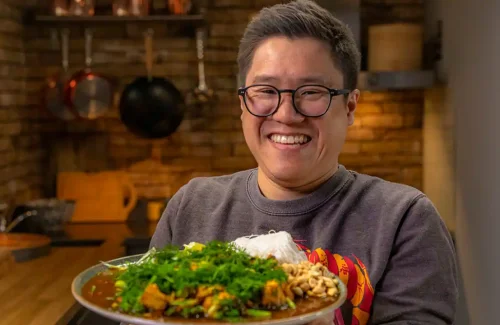
He Used to Dislike Food, But Now He’s a Chef Mastering Asian Flavors

Chef Jeremy Pang’s journey into the world of cooking took an unexpected turn from his childhood aversion to food. In his early years, he confessed that he had a distaste for meals.

However, his life took an exciting turn when his family relocated to Singapore, exposing him to open-air food markets, where culinary artisans specialized in single dishes. This experience transformed his perspective, igniting a passion for Asian cuisine that would shape his career.

The pandemic prompted a shift in Pang’s family dynamic, leading him to cook with his son and discover his preferences. Through this shared experience, they explored crafting homemade pizzas and flapjacks. This is when they found out that his son really likes the flavors of Chinese food, like light and tasty dishes with fish and crispy veggies.

An advocate of the Asian tradition of feasting, Pang believes that sharing multiple dishes is integral to the dining experience. This philosophy, deeply ingrained in his approach to cooking, led him to create “Simple Family Feasts,” a guide designed to make the concept accessible to all.

Image Source: Irish News

Central to Pang’s culinary finesse is his artful balancing act of flavors and textures. He highlights the significance of contrast – harmonizing crispy and tender, soft and resilient, while incorporating fresh vegetables or quick-fried selections. This balance is the key to an unforgettable dining experience.

Featured Image Source: SBS

img_2350-jpg

Stories

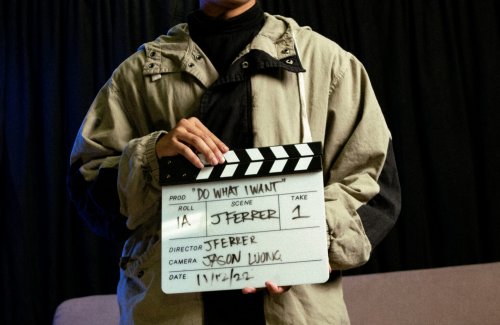
JFERRER’s Mission to Empower Young Asian Creatives Through His Documentary

JFERRER is a talented Creative Director from Southern California. His journey began in high school when he discovered his love for film. Little did he know that this passion would lead him to an incredible path of self-discovery and empowerment.

It was in college that JFERRER embraced his cultural heritage as a Filipino American, realizing the significance of being Asian in shaping his identity. Despite facing doubts from others, he remained determined to pursue his dreams. This led him to create a documentary titled “DO WHAT I WANT,” shining a spotlight on the incredible work of young Asian creatives.

Now, JFERRER is gearing up for his next mission with “DO WHAT I WANT: SPIN OFF EDITION,” focusing on up-and-coming Asian American DJs in Southern California. Join us as we delve deeper into his story and his mission through an insightful interview with Asian Hustle Network.

THE ARTISTIC VOYAGE OF JFERRER

The world of music has been a constant inspiration for me. When I listen to a song, my mind instinctively creates music video scenes that synchronize perfectly with each beat. I knew that I had to make these vivid visions into reality and on the screen. I started taking clips of videos and putting them into music and created a whole new vibe and energy for the song. It was exciting to help people experience the song in a whole new way.

As my passion for storytelling through visuals grew, so did the scope of my aspirations. Beyond music videos, I became interested in capturing and celebrating diverse narratives and talent. This interest and experience took on a life of its own and I became involved with crafting and managing live events tailored specifically for emerging creatives.

These events became platforms for budding talents to shine, fostering a community of artistic expression and collaboration. I realize that creativity knows no bounds and I want to unleash it and inspire others to find their own creative gifts.

THE IMPACT OF HIS CULTURAL UPBRINGING ON HIS CREATIVE DIRECTION

I grew up in a Filipino American family. Throughout my life, I’ve been fortunate to be surrounded by creative family members and friends. Knowing the immense talent and gifts of Asian Americans around me, yet seeing the simple, one-dimensional portrayals of Asian/Asian American characters in movies and television was disappointing.

I want to showcase the rich diversity and talents of Asian Americans and promote positive and authentic representation.

BREAKING BOUNDARIES WITH “DO WHAT I WANT”

Asian Americans do not rely on their creative side to make money. If we wanted financial stability, we would typically look at careers in the medical field, business, or engineering, right? Creative energy would just be reserved for hobbies. But why can’t it be our full-time career? That’s what I wanted to challenge in “Do What I Want”. I wanted to break free from the stereotypes and challenge the notion that you can’t be successful doing something creative and fun. 

I believe in eliminating the fear of pursuing our passions and going against the grain. We have the power to choose our own paths and find immense success in doing what we love. This is the essence of the documentary I want to create – to shine a light on a community of like-minded individuals who have shattered barriers and defied expectations.

In this documentary, we will meet incredible artists, each driven by their unique passions and determined to leave their mark on the creative world. They stand as living examples of why this project exists – to showcase Asian creatives who fearlessly pursued their dreams, despite parental and societal pressures.

The title “DO WHAT I WANT” embodies the spirit of this documentary, as each person featured chose to follow their heart’s desires. They rejected the notion that their career should be dictated by others and, instead, embraced their true calling. This is a celebration of those who broke free from the confines of societal expectations and carved out their own path to success.

NAVIGATING CHALLENGES AND SEIZING OPPORTUNITIES AS A YOUNG CREATIVE

In the realm of young creatives today, networking their art stands as a paramount challenge. Excelling in their craft is undoubtedly crucial, yet without the ability to effectively brand their work and themselves, opportunities for exposure may be limited.

Embracing the significance of self-branding, however, holds the key to unlocking a broader audience and creating a multitude of opportunities that lie ahead. So, dare to showcase your true potential, and let your art shine brightly in the vast sea of possibilities. Together, your creativity and strategic branding will pave the way for a remarkable journey of growth and success. Keep believing in yourself, and the world will undoubtedly take notice of your inspiring creations.

A MESSAGE OF EMPOWERMENT FOR ASIAN AMERICAN ARTISTS THROUGH DO WHAT I WANT

I believe that “DO WHAT I WANT” has the power to ignite a flame of empowerment within the Asian and Asian American communities. It serves as a reminder for individuals to embrace their authenticity and follow their true passions, refusing to conform to societal norms or the cookie-cutter lifestyle. I envision a wave of inspiration, encouraging people to break free from limiting beliefs and embrace the unique paths that await them.

“DO WHAT I WANT” carries a profound significance for Asian American youth. As they witness the success and creativity of these artists, they can find a sense of connection and envision their own future selves achieving greatness. The documentary not only inspires confidence but also fosters a sense of community and unity among Asian Americans, reminding them that they too, can embrace their dreams and make a lasting impact in the world.

INSIGHTS AND ADVICE FROM JFERRER

Throughout my creative journey, the most valuable lesson I’ve learned is the importance of letting go of seeking validation from others. Happiness cannot be solely dependent on the approval of others. While I appreciate and consider the professional opinions of others when it comes to my work, I firmly believe that I must retain ownership of my decisions. Embracing this mindset empowers me to stay true to my vision and creative expression, paving the way for genuine fulfillment and growth.

By freeing myself from the need for constant validation, I can embark on a path driven by authenticity and self-belief. This newfound sense of independence fuels my creativity and allows me to push boundaries without being confined by external expectations. As I continue to evolve creatively, I welcome constructive feedback and embrace the opportunities to learn and grow, but I will always hold firm to my convictions, knowing that the true essence of my work lies within my passion and dedication to making a meaningful impact.

CONNECT WITH JFERRER

Instagram: @itsjferrer