Stories

November 28, 2023

SHARE:

Canh-Vinh Nguyen is an embodiment of what it means to lead a purpose-driven life.

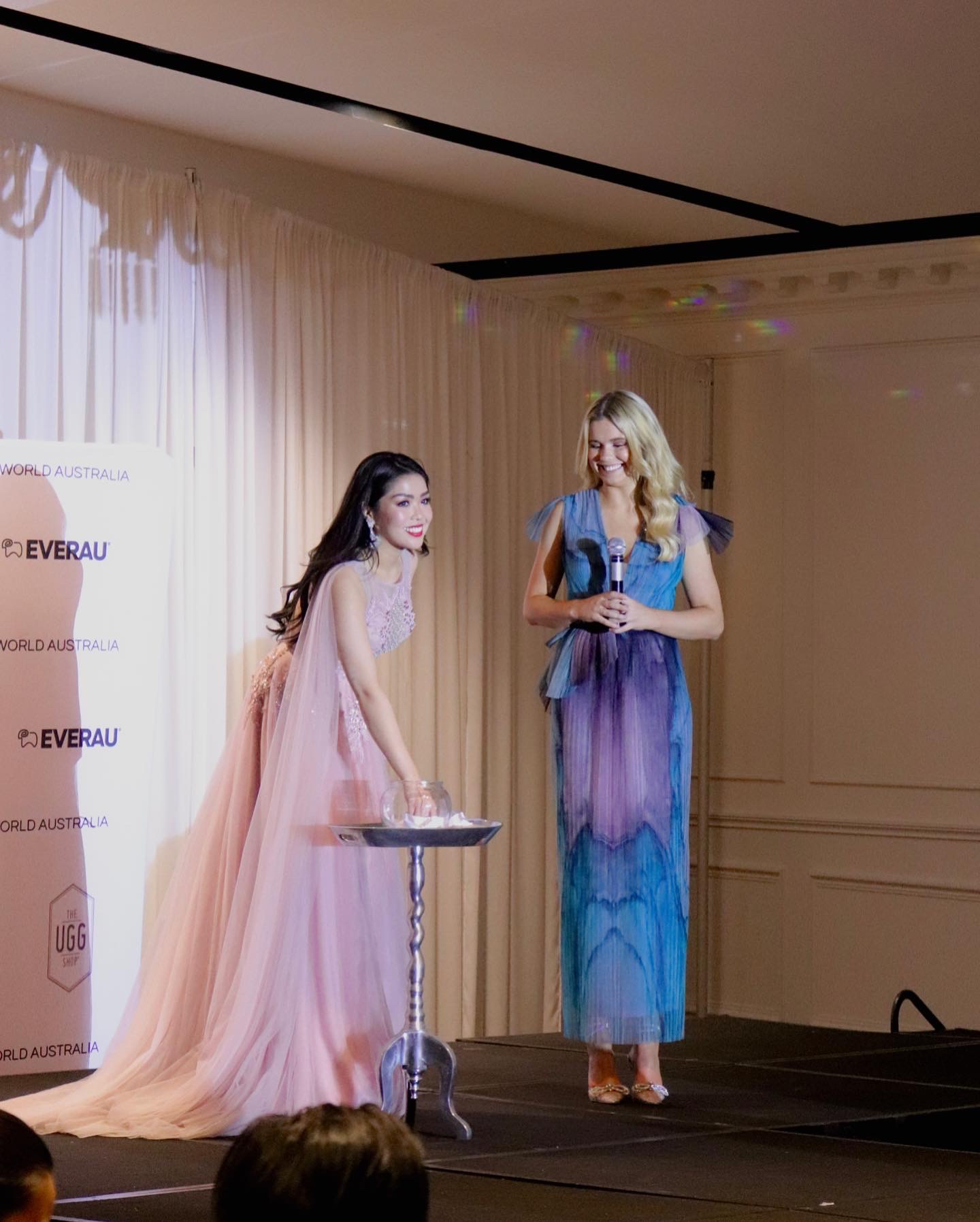
Canh-Vinh’s passion for serving her community and promoting human equity is truly inspiring. Her tireless dedication to making a positive impact on the lives of others has earned her the title of Miss World Australia’s 2023 state finalist.

At the age of 18, Canh-Vinh laid the foundation for her community service by establishing a charity called “Canh-Vinh and You Incorporated”. What started as a small initiative has since grown into an impactful organization that continues to make a difference in people’s lives. Her charity work was only the beginning of her efforts to serve her community.

Over the years, she has also served as a consumer advisor for the local health system, volunteering as social support in the emergency department, rehabilitation, and short-stay ward at the local hospital.

Canh-Vinh’s story is an inspiration to people of all ages and backgrounds, and serves as a reminder that we all have the power to make a difference in the world, no matter how small our actions may seem.

“I am genuinely excited to share my journey, my passion, and my unwavering dedication with others, spreading the message that “anything is possible” and hopefully making some meaningful connections. Together, let us create a world that embraces inclusivity and compassion,” Canh-Vinh told AHN.
CANH-VINH’S EXPERIENCES AND ACHIEVEMENTS

As an Australian Vietnamese, I am proud of my heritage and forever grateful for the opportunities this country has provided not only to my family but to many others as well.

Being the first person in my family to attend university, I am a woman in STEM, with a bachelor’s degree in biomedicine, achieving first-class honors, and a completed Master’s of Research focused on metastatic cancers, my ultimate goal is to become a physician. I strongly believe that everyone deserves to understand and feel empowered in managing their health while having access to the best possible care. This pursuit is fueled by my gratitude for the incredible healthcare system we have in Australia, as it saved my mother’s life and protected us from the hardships faced by others if we were anywhere else in the world.

Throughout my educational journey, I have remained dedicated to serving the community. Moreover, I am deeply committed to inspiring young individuals to give forward and recognize their potential to create significant change, particularly in this challenging world and specially for the less fortunate. Alongside our charity projects, volunteering for my local community has been a transformative experience in my life. It has sustained me on my toughest days, knowing that my actions can bring something positive to the world.

In addition to my academic pursuits and charitable work, I actively volunteer and contribute as a consumer advisor for Western Health, the fastest-growing health provider managing both large and small public hospitals in my local community. Through this role, I have been involved in significant projects such as the opening of the Joan Kirner Hospital, the planning and review of the New Footscray Hospital Project, and the initiation of the planning for the New Melton Hospital.

Furthermore, I proudly serve as Vice President of the Lions Club of Sunshine, a local community club that engages in various initiatives. These include fundraising through sausage ‘snag’ sales, preventing neighborhood crimes by installing anti-theft screws for number plates, supporting farmers affected by floods through tree planting initiatives, and providing aid to Polynesian island countries like Samoa by sending containers with essential goods for hospitals, schools, clothing, and toys.

CANH-VINH AND YOU INCORPORATED

My vision is to create a more equitable world by sharing the privileges I have received in life, even though my efforts may not be as significant as others’. I believe that gratitude is my greatest strength, and I possess the ability to connect with others and bring them together.

This mindset has guided me since founding our Australian registered charity, “Canh-Vinh and You Incorporated” at the age of eighteen, driven by the belief that every moment counts and embracing the philosophy of “live as if you’ll die tomorrow.” However, achieving this dream did not happen overnight. It was a culmination of multiple events and the support of other members, mentors, and supporters.

From a young age, I witnessed the philanthropic work of my parents in Vietnam, where they set aside savings to provide rice for their former village. During high school, I had the privilege of attending an all-girls Brigidine high school with a strong emphasis on justice and fundraising clubs. This experience was transformative as it allowed me to discover my leadership potential and taught me how to represent others and manage projects.

After graduating, I desired to continue volunteering with friends, but it was challenging to garner interest. However, by identifying the limitations of existing projects and the creativity constraints felt by my friends, the idea of starting our own charity sparked. Overcoming initial challenges and skepticism, we persevered and successfully registered the charity, obtaining the necessary tax exemption and gift receipts with the assistance of a free legal aid service. The journey was far from easy, filled with late nights, setbacks, discouragement, and tears. However, when I shifted my perspective and found empowerment in realizing that the criticism and doubt from others were projections of their own limitations, not reflective of our potential it made all the difference.

Today, almost a decade later, I am proud to say that our charity is still entirely volunteer-run. Although time constraints and periodic dormancy pose challenges, we remain highly efficient, utilizing every dollar fundraised and profit for our charity projects. We strive to be a trusted point of contact for individuals seeking to contribute and provide assistance. Over the years, we have helped tens of thousands of families through our projects, including donations of rice, noodles, condiments, funding eye surgeries, scholarships, and more.

Our focus is on supporting lonely and homeless elderly individuals, people with disabilities, those affected by Agent Orange, and orphans. Above all, we aim to instill compassion in everyone who crosses our path, whether through attending an event, volunteering or engaging with us. We understand that life can become busy, and even if someone’s involvement with our charity is brief, we hope that the seed of compassion we plant will one day blossom into something amazing.

MISS WORLD AUSTRALIA

Being a state finalist for Miss World Australia has granted me increased visibility and recognition, enabling me to forge valuable collaborations, partnerships, and connections with like-minded individuals and organizations who share similar aspirations. My primary goal is to inspire younger generations to fearlessly pursue their passions and make a positive impact in their communities. This objective is deeply significant to me as I firmly believe that the way we inspire and guide the younger generation today will shape our future and the destiny of our world.

A core aspect of my advocacy revolves around promoting the importance of volunteerism and dispelling the misconception that it is a fading practice. Countless individuals in our world require assistance without expecting anything in return. It is particularly challenging for those who face disadvantages and lack the same privileges and opportunities as others. By acknowledging our blessings, gratitude becomes a compelling force that propels us forward, fostering a sense of purpose and empathy.

Through my voice and influence, I am dedicated to empowering and uplifting others, urging them to join causes, create meaningful change, and embrace a sense of belonging to something greater than themselves. A quote that I love by Dr. Brené Brown beautifully encapsulates this sentiment: “Belonging is being part of something bigger than yourself. But it’s also the courage to stand alone and to belong to yourself above all else.” It highlights the importance of both finding connection and staying true to oneself in the pursuit of making a difference.

Moreover, my increased visibility and recognition have provided an invaluable opportunity to raise awareness for the charity I founded nearly a decade ago. Our organization operates solely through the selfless efforts of volunteers, ensuring that every donation directly benefits those in need. It brings me immense pride and joy to know that the hard-earned contributions from our supporters have a meaningful impact on the lives of the less fortunate.

WHAT KEEPS CANH-VINH MOTIVATED

In times of adversity, it has been gratitude that helped me shift my perspective and find the silver linings. 

I have come to realize what fuels me is not just self-belief and confidence but it is gratitude, a powerful driving force that propels me forward. It is being grateful for the privileges I have had in this life that has motivated me to work harder each day to be of service to others. Instead of dwelling on what I lacked or the challenges I faced, I focused on the progress I had already made and teachers’ and mentors’ willingness to invest their time and energy in my growth. This shift in mindset allowed me to tap into my resilience and find the courage to persevere. 

Moreover, gratitude fueled my passion for making a difference in the lives of others. Recognizing the privileges and opportunities I have been given, I felt a deep sense of responsibility to give back and contribute to the well-being of those less fortunate. It motivated me to use my skills, knowledge, and resources to uplift others, whether through volunteering, mentoring, or advocating for meaningful causes.

IMPORTANCE OF HAVING A SENSE OF PURPOSE ACCORDING TO CANH-VINH

In my opinion, a sense of purpose is not only highly important but also deeply transformative. It serves as a driving force that provides motivation, meaning, resilience, and a sense of fulfillment in life. When we have a clear sense of purpose, it guides our actions, shapes our identity, and gives us a profound understanding of the “why” behind our existence.

During moments of doubt or uncertainty, our sense of purpose acts as a beacon of light, lifting us up and reminding us of our intrinsic value and the impact we can have on the world. It serves as a powerful source of inspiration, urging us to persevere, overcome obstacles, and continue striving toward our goals.

While it is true that nothing in this material world can be held onto forever, cultivating a sense of purpose allows us to transcend the temporary nature of our existence. It enables us to focus on the legacy we can leave behind and the positive contributions we can make. Embracing the law of impermanence, which teaches us that everything has a beginning, middle, and ending, encourages us to make the most of the time we have on this earth. By nurturing a sense of purpose and using our time, talents, and resources to create a positive ripple effect, we can make a difference that extends far beyond our own lifetime. I think this is where true fulfillment resides – in knowing that our actions have the potential to touch the lives of others and contribute to a more compassionate, harmonious, and interconnected world.

THE IMPACT SHE HOPES TO ACHIEVE

One of the primary goals of my work is to inspire others to take action against injustices. I firmly believe that everyone has the power to create change, and even small contributions can make a significant difference. Like many others, I am an ordinary individual without inherent power or influence, but I refuse to let that discourage or underestimate me. While volunteering may not be a difficult task in itself, what makes it truly noble is people who choose to spend their time doing something for others knowing it cannot be returned. My father once shared a valuable lesson with me: “When you help someone in need, they may someday be the ones to extend a helping hand to others.” The idea that I could become a ripple, contributing to the larger wave of positive action and lasting impact, fills me with a lot of happiness. 

I guess, ultimately, I hope that in some way, my actions and words can ignite a spark within others, leading them to accomplish even greater things.

ADVICE FOR YOUNGER PEOPLE IN MAKING A DIFFERENCE

My advice would be to begin your journey by starting locally. Take the time to explore the issues or causes that deeply resonate with you and make you feel passionate. Educate yourself on the topic, gaining a deeper understanding of the challenges and potential solutions.

Next, reflect on your unique skills, talents, and interests. Consider how you can apply these strengths to make a meaningful difference in your community. It could be as simple as offering a helping hand to your neighbors, volunteering at a local community organization, supporting a youth group, or assisting at a hospital. Remember that you don’t always need to have pre-existing skills; the most important thing is to take the initiative and show up! The rest will follow as you learn and grow along the way.

It’s important to have an open mindset and embrace the possibility of trial and error. There may be times when you join an organization or group that doesn’t align perfectly with your vision or passion. Don’t let this discourage you. Keep persevering and believe that there is a place out there that shares your passion and works towards the same goals. Trust that with dedication and an open heart, you will find a meaningful avenue to contribute to your community. And most importantly, enjoy the journey and have fun while making a difference!

CONNECT WITH CANH-VINH

Facebook: Canh-Vinh Nguyen | Canh-Vinh | Canh-Vinh and You Incorporated

Instagram: @canhvinhau | @canhvinhandyou

YouTube: Canh-Vinh | Canh-Vinh and You Incorporated
Related Articles

Wei Deng

Awaken* newsletter

Navigating Pivots and Perseverance: Wei’s Journey with Clipboard Health

Wei Deng is the Co-Founder and CEO of Clipboard Health, a company that connects healthcare facilities with local professionals who can work unfilled shifts. Since Clipboard’s inception in 2016, Clipboard Health has filled millions of shifts for thousands of facilities nationwide, putting millions of dollars in the pockets of healthcare professionals. Throughout her journey, Wei has never lost sight of her ultimate mission of helping people socioeconomically. In this interview with AHN, she discusses her upbringing and the early days of her founder’s journey.

HanYue: Tell us about the early days of Clipboard Health, what type of challenges did you have to overcome? 

Wei: It wasn’t called Clipboard Health when I started. It was initially a way to refinance student loans. I spent time talking to customers, figuring out who wanted to buy the fintech products, and talking to different customers again but I just didn’t feel the pull of the market, but I noticed that nurses wanted help finding a job. However, the hospitals only wanted to help people with experiences. So I pivoted to a clinical fellowship to help train nurses, figuring out what the clinical partners need, and help nurses find jobs. 

After pivoting through 6-7 different ideas – I finally landed on the Clipboard Health model, a marketplace that helps with nurse staffing. In the early days, we were very much focused on launching a product and talking to users.

Edwin: How do you judge when to pivot and when to stop working on an idea?

Wei: I wish there was a magic formula – but there isn’t. Having seen some other friends who have found PMF was helpful. For our products, our customers could live with it or without it. They didn’t have any strong opinions about it. That was a sign to me that it’s not working. For most ideas, I gave it to 3-6 months. What was frustrating is that sometimes you would have some initial glimmer of hope – some people are using it, and you wonder to yourself, is that a real sign?

For a good product, I found out that even if the product isn’t built out, people still want to use it, and people care about it a lot. You can feel the pull of the market. 

HanYue: There is clearly an unrelenting drive to pursue entrepreneurship, what kept you going during the early days? 

Wei: Quitting just never occurred to me. In the beginning, I mostly called the things I worked on projects, and when they didn’t work out,  I just never gave up.

Of course, there were frustrating moments: when I first went fundraising, I got told no 16 times. I was a solo founder, so there was no one to help me. I taught myself coding and sales to get started. I think the big realization is that even if you encounter nos and the product is not working, as long as you keep working and don’t quit, you are getting closer to a yes. 

HanYue: That was really inspiring – as long as you keep working, you are getting closer to a yes. Want to switch gears a little bit, how did you meet your co-founder? What was it like building out the initial team? 

Wei: In the early days, it was just me. My husband joined me after 3 years. By that time we already raised Series A, we were growing and had some traction. He initially joined to help out for 3 months, then stayed on for a few years.

Building out the team, we had a lot of trials and errors. We definitely made some mistakes – I had engineers whom you couldn’t get ahold of even when I was trying to fire them. We had one head of sales who built out our sales team but it turned out he was working for a competitor at the same time and was giving them our customer list, and all the people who worked for him were also working for the competitor. But luckily, some good people stayed and really they are what made us successful. 

HanYue: Tell us about the people who stayed. What made them successful? 

Wei: Oh, I love talking about this because it is what we look for during hiring. They have to care about the problem a lot. It is actually very obvious whether people are just here to collect paychecks, going through the motions, or if they really care about the problem. 

They are really curious. They are always looking for clues. If a customer says no, or churns, they are always digging in and figuring out why, instead of taking it as a given – oh they just didn’t want to use the product.

They also have ownership and initiative. They never just bring a list of problems. The best people I’ve had, they’ve brought me problems I didn’t know we had, and they’ve already thought about how to solve them. 

So initiative, ownership, and curiosity are our people and company values. 

HanYue: That’s wonderful to hear that there is such a close alignment between the people’s values and company values. What was your proudest achievement so far?

Wei: Honestly, I think it’s assembling a great team. We’ve gone through a lot of great pains in hiring, but now we have an awesome team to move together. Nowadays, even if I pull my foot off the gas, they are still serving our customers the best they can, and that is very special. 

The second thing is the customers we’ve been able to help, but that is honestly more of a proxy of how great our team is. 

HanYue: Tell us a bit about your upbringing. How has being Asian influenced your entrepreneurship journey and your general approach to life?

Wei: I grew up with my mom and my dad. We grew up in Kentucky, there were not a lot of Asians in Kentucky. 

My dad had this mentality: you don’t need permission to learn something. I remember trying to go to a national science fair – I was 16 and needed to learn calculus, but calculus was a college-level class and I was thinking, “Oh, maybe I can’t because I had to wait to learn calculus later.” My dad just said, get a textbook and figure it out yourself. That’s something I carried forward in life.

When I started, I didn’t have to have someone who knew how to code, I could just learn coding myself and get started. I never did sales before and didn’t have someone I could rely on for sales, but I could just pick up a phone and start doing cold calls. It’s the sense that nothing is beyond my reach, you don’t need to wait for the perfect moment or something/someone to depend on to get started. 

There weren’t many Asians in the area I was from. We stuck together but we were also super competitive with each other. There were two people in high school I was constantly competing against, and I think in a lot of ways it brought out the best in me. Personally, I am not competitive, but I found having someone neck-to-neck with you really makes me thrive. 

HanYue: Congrats on the unicorn status – it’s an incredible achievement! What suggestion do you have for founders who are still searching for product market fit out there?

The only thing that matters is to understand the customer’s pain points deeper than anything else. Rather than spending time on solutions, spend more time on understanding the problem. Actually, you might find that you are not even starting with the right customers – you might have to pivot a few times to find the right customers.

When you find them – look at their habits. People who are saying they want to lose weight, but if they are not going to the gym or tracking their calories or metrics, then weight loss is just not that big of a deal to them.

When talking to them, you need to look for: Are they spending money on it? Are they spending a lot of money but still can’t solve the problem? That is a potential area you can go to. The chances are that you can find a lot of good solutions –  you can have the greatest AI and greatest product, but if it is not solving a real problem, then no one will end up paying for the solution. 

Edwin: Are there mechanisms and processes you use to tease this information out? 

Wei: We just look at their behaviors. Are they spending money? Is the pain point really painful? 

When it came to staffing, it was obvious, that the customers we talked to were spending all of this money to putting together spreadsheets and tracking attendance. It was clearly a big pain point they wanted to solve. 

My father passed last year, I remember spending so much time looking for a caregiver for him. If someone gave me a set of solutions, even if not super built out – just a list of caregivers or a list of places that could care for him, I would definitely want to talk to that person. 

HanYue: Thanks for sharing a deeply personal moment with us. It really makes sense that as founders we needed to find the most painful problem to solve. Where do you go from here? What’s next for Clipboard Health?

Wei: Personally, I have two kids and I spend a lot of time with them. For the company, we want to continue expanding beyond healthcare professionals. We started with nursing – but we wanted to allow workers of all industries the benefits of flexibility and economic empowerment. 

At Clipboard Health, we also have an internal MBA-like program. If you are a product manager but want to learn, we will teach you cross-functional skills – engineering, sales, and other things.

The hypothesis is that eventually if people leave and want to go and start their own company, I could enable them to have a much broader scope than just their own focus. We have engineers doing sales, customer support, and product and they all love it because they get to implement and continue to broaden their scope. One of our heads of sales was a product manager – they kept asking questions and wanted to learn about sales so they got the chance to lean into their curiosity.

I want to scale this program up as the company scales up to develop people. Because if you invest in people internally, what you get is phenomenal: People who are already invested in your culture, and know your product really well have more methods to help your customers and grow better. 

Edwin: I see some parallels to your journey as well – the early days when you had to teach yourself coding and sales. One thing you talked about is expanding to verticals, how are you finding the new verticals? 

Wei: We have a more systematic approach: we read the Bureau of Labor Statistics, and try to look at professions that need help. Maybe some professions are losing steam, etc. We also have lots of customers in healthcare and there is a a surprising number of professions to fill up there – we need janitors to clean up, cooks to cook for the dining hall, servers and waiters, and trainers for physical therapy patients. There are some natural adjacent areas. Customers are providing those insights to us and where they need help.

Edwin: Are you afraid of losing focus? 

Wei: Focus is overrated, You should try to be good at some core competencies – but it all depends on how you define your core. if we define our core as a flexible labor marketplace, then we have lots of room to build. 

If you look at any ambitious company, they have a ton of products and they might seem totally unorthodox to each other. Amazing doesn’t look focused: they have AWS and it has nothing to do with selling books. Or if you think of people around you, some of them are good at maths, instruments and some type of sports. No one is like: you should only be good at math – people develop expertise in multiple areas. 

There is certainly a concern about chasing shiny new projects. We try to only pursue things that we have pre-thought out and really ask ourselves – do we want to be more ambitious than we currently are, or are we just chasing a shiny new object? 

Wei’s journey with Clipboard Health underscores the importance of persistence, adaptability, and deep customer understanding. Her story is a testament to the power of resilience in entrepreneurship, demonstrating that with unwavering determination and a keen focus on solving real problems, success is within reach. The AHN team thanks Wei for having this conversation with us! 

Walden Lam

Awaken* newsletter

From Hong Kong to Silicon Valley: Unspun’s Journey to Revolutionize Sustainable Fashion

In this interview, we delve into the inspiring journey of Walden Lam, the co-founder of Unspun, a company on a mission to revolutionize the fashion industry through sustainable practices and innovative technology. Walden shares his story, from his early exposure to manufacturing in Hong Kong to the challenges of raising capital for a deep-tech venture in Silicon Valley. He discusses the initial years of Unspun, the complexities of operating a global supply chain, and his vision for the future. Walden also reflects on how his Asian heritage has influenced his entrepreneurial journey and offers valuable advice for young entrepreneurs.

HanYue: Tell us about how Unspun was started. 

Walden: I grew up in Hong Kong, in a family that did manufacturing, so I always had exposure to that. I graduated undergrad during the financial crisis, which forced me to reconsider my career paths. My initial projects out of undergrad were climate-related, exposing me to the complex problems and the structured, yet often inflexible, approaches usually taken in strategy consulting. 

HanYue: What were the first 2-3 years of Unspun like? 

Walden: My journey to the GSB was fueled by hypotheses about consumer-facing ventures. Just weeks before graduation, I learned through a Design school blast about a co-founder opportunity that aimed to bring additive manufacturing (like 3D printing) to commercial applications. This meeting, where I saw a desktop mockup, changed the trajectory of my life. Every Silicon Valley VC then was really scared of “deep-tech” companies, it was a hard time raising capital for what we wanted to do.

HanYue: What was it like to operate a company that has operations on both coasts? 

Walden: In the early years, Unspun resembled an R&D company, keeping our product development under wraps until late 2022. After going through a hardware accelerator and securing government grants, we spent our initial months in Shenzhen and Hong Kong, leveraging the good manufacturing ecosystem. Operating on both coasts highlighted the benefits of a global supply chain, essential for managing garment production still predominantly based in Asia, but processed globally.

HanYue: What is next for Unspun? What is your vision? 

Walden: Our unwavering vision focuses on reducing emissions globally—a significant challenge given the industry’s varied estimates on emission impacts, ranging from 4-9%. Our goal is not just to be a standalone brand but to influence the industry by integrating lower-impact practices into their manufacturing practices. We’re starting with basic products and gradually expanding into more refined and performance-oriented categories, aiming to transform efficiency and cost into a platform beneficial for all.

HanYue: How has being Asian influenced your entrepreneurship journey? 

Walden: Growing up in Hong Kong has shaped my approach to both life and business. It has fostered a curiosity and a desire to break out of local confines, driving me to pursue opportunities abroad. I always raise my hand when it comes to getting out of my own environment. Back in my consulting days, I volunteered for a project in Nigeria – my colleagues thought I was crazy. 

But I always had the notion that there’s so much that happens outside your own bubble. This openness has been instrumental in building a company with a flexible, global perspective, partnering with brands and manufacturers across continents. With the company, we now have brand partners in the EU, manufacturing partners in Asia, and capital partners elsewhere. That opened up lots of opportunities. Our goal is to influence a global industry, we need that mindset and curiosity.

HanYue: It sounds like growing up in Hong Kong has given you open-mindedness and the courage that you are not afraid to deal with people and environments different from yours. That is VERY precious. What advice would you give to young entrepreneurs these days? 

Walden: My advice for young entrepreneurs is to adopt a long-term perspective. Do not be afraid of having a contrarian view.  We are really focused on building a cross-generational company that endures and transcends time. 

Another piece is to think more like an architect of your own company, and less about your individual contribution, hopefully charting a course for the company that can sustain you, you don’t have to do everything all by yourself.

HanYue: That’s a really insightful take. Where can we find Unspun jeans now? 

Walden: You can find more about us at unspun.io, where you can shop for our customized jeans online. We also launched a small collection at NY Fashion Week, which is still available. 

As Unspun continues to push the boundaries of sustainable fashion, Walden Lam’s journey serves as a testament to the power of innovation and global collaboration. Keep an eye on Unspun as they strive to reshape the industry, one custom pair of jeans at a time.

Stories

Sophia Li Unites Two Cultures for Climate Action and Social Advocacy

AHN and Meta Prosper have partnered on a new podcast series highlighting API creators. Meta Prosper is dedicated to amplifying and supporting the API community and driving economic growth and equitable representation. The Creators Podcast series delivers stories on how creators achieved success and created impact through their platforms, serving as an inspiration for the community.

In the fourth episode of Creators Podcast, we embark on an empowering journey as AHN and Meta Prosper sit down with Sophia Li, a phenomenal Chinese American journalist, climate advocate, and public speaker. In this episode, Sophia Li addresses her cultural heritage and how she raises awareness of complicated subjects including climate justice, civil rights, and technology with ease. 

Even though Sophia was born and raised in the US, she spent two years of childhood with her grandparents in Shandong, China before returning to the US for preschool. Her adjustment to the US culture, along with Buddhist influence throughout childhood, has turned her cross-cultural journeys and wisdom into impact, bridging the two worlds apart into one globally mutual cause – sustainability. 

Sophia has always been a social advocate. After graduating with a Bachelor of Arts in Fashion Design and Merchandising, her paper on cotton globalization enabled her to receive a $2,000 grant from Cotton Inc., travel the world for fashion studies, and land a four-year position at Vogue.

Now, leveraging her platform and knowledge, she co-founded STEWARD, a project that emphasizes sustainability in the world of Web3 while serving as the co-chair of the World Economic Forum’s Web3 Sustainability Coalition. 

Moreover, Sophia does not stop at climate change but she’s also a vocal advocate for social justice. Sophia is an official United Nations Human Rights Champion and a strong supporter of the #StopAsianHate movement and youth education. 

Listen to the Creators Podcast featuring Sophia Li here.

CONNECT WITH SOPHIA LI

Instagram: @sophfei

Website: sophfei.com

image1-png

Awaken* newsletter

Transforming the Future of Work: An Insightful Conversation with JJ on Entrepreneurship, Innovation, and Personal Growth

In this candid conversation, JJ reflects on his remarkable journey, from gaining admission to Stanford GSB to founding Onloop. He discusses his proudest achievements, the challenges of building a pioneering company, and the invaluable lessons learned along the way. JJ also shares his vision for Onloop in the evolving landscape of remote work and generative AI, his approach to angel investing, and offers insightful advice for aspiring entrepreneurs. Join us as we delve into the experiences and insights of a trailblazing entrepreneur committed to transforming the future of work.

HanYue: You have accomplished a lot in your career. What’s your proudest achievement so far?

JJ: My proudest achievement remains getting into the Stanford GSB MBA program. Before Stanford, I had spent my entire life in Asia. Moving to Stanford marked a significant shift in both my career and personal development. Immersing myself in the challenging yet enriching environment of the Bay Area was transformative, and I just returned there for my 10-year reunion.

HanYue: Can you tell us about the origins of Onloop?

JJ: Onloop originated from personal frustrations I encountered while managing teams at Uber for 3.5 years, especially with inefficient HR processes. This led to extreme frustration with the outdated systems. After leaving Uber in September 2019, I started OnLoop to solve some of these frustrations. We developed our first product around changing how performance reviews get done using GPT3 in early 2021. We’ve come a long way building out our platform and focused on helping every manager become a great manager using habit-forming technology and applied AI It’s been an exhilarating journey, shaping a company that contributes to the evolving future of work landscape especially given all the transformative impact of distributed & hybrid work as well as the maturity of large language models (LLMs).

HanYue: What have you learned from building Onloop?

JJ: Building Onloop has taught me that a founder’s longevity hinges on their conviction in their mission and the people they surround themselves with. Pioneering in any field is incredibly challenging—far more so than creating a copycat startup. Jensen Huang famously said he’d say ‘hell no’ if asked to do it all over again. The world resists change, and you must consistently challenge the status quo. 

Growing up in an Asian household where academic success was prioritized and entrepreneurship was uncommon, taking a non-salary path wasn’t easy. This background often amplifies the voices of doubt during challenging times, yet confidence and eloquence are the most significant drivers of success in the early days. 

Life in your late 30s and 40s has many more responsibilities with respect to family so it’s not always easy to take the plunge, but the learning experience from entrepreneurship is absolutely invaluable. I’m better off for it, even if things don’t pan out as expected. Starting a company is like becoming a parent—it’s a transformative experience that teaches you new ways to live.

HanYue: What’s your vision for Onloop?

JJ: Our vision at Onloop is to help knowledge workers fully realize their potential during this era of significant transformation. The rise of remote work and the advent of generative AI—akin to an industrial revolution for knowledge workers—presents new challenges and opportunities. We aim to help these professionals optimize their careers in a rapidly changing environment. The knowledge work sector is vast and often influenced by chance, especially in job placement – knowledge worker wages are a multi-trillion dollar asset class allocated by chance. My goal is to develop and disseminate optimal strategies for knowledge workers, enabling them to seize the best opportunities available.

HanYue: Tell me about your angel investing career and how it impacts your entrepreneurship journey.

JJ: I don’t subscribe to the notion of work-life balance but prefer to maintain a purpose portfolio, which currently includes my family, OnLoop, and enhancing Singapore’s status as a global hub, especially for highly innovative companies. My approach to angel investing focuses more on the people than the ideas themselves, reinforcing my belief that the right people drive success. And I apply this same principle in my work with other CEOs and founders.

While I believe any manager can become great with the right support, a CEO doesn’t have a direct manager, making coaching essential. I therefore coach a handful of founder CEOs and  this interaction offers mutual learning opportunities and enhances my own growth as a CEO/founder 

Talking about angel investing, it isn’t just for the rich and wealthy. I have made six investments so far in the range of US$1,000 through syndicates to US$15,000 in certain founders that I know personally. I have learned that while my bets on ideas have failed, my bets on people have not. This supports my hypothesis that early-stage investing is 80% about the founding team. 

Lastly, having become a Singaporean last year, I feel even more committed to the Singaporean ecosystem and proud to build in it.

HanYue: Advice for young entrepreneurs these days? 

JJ: When I was single and enjoyed partying, I never imagined I’d find myself here today. People seek pleasure when they lack purpose, as Victor Frankl famously spoke about. Today, living a life of purpose is crucial for happiness — it involves engaging in activities that you deeply enjoy and believe are your calling. This philosophy has guided both my personal and professional life and serves as my constant motivation. 

JJ’s journey exemplifies the blend of purpose and innovation needed to navigate the evolving landscape of modern work. His insights into entrepreneurship, the importance of mission-driven leadership, and the power of transformative technology offer invaluable guidance for the next generation of innovators.