Stories

January 18, 2023

SHARE:

First Slurp! 

Food is a way for us to connect and tell stories by engaging all of our senses. Nielsen Noodles is a series where we gather to share our own stories while discussing insights and current events over a bowl of instant noodles. We virtually shared a bowl of noodles with Michael Lai, CEO and Co-Founder of Famous Media Group and AsianFeed, along with Randall Yip, Founder and Executive Editor of AsAmNews; two trailblazers in AANHPI news and journalism. 

(Top) Randall Yip , (Bottom L-R) Patricia Paturangi, Michael Lai

Which noodle dish did you choose to bring to the conversation?

Randall brought a bowl of wonton noodle soup from his family’s favorite hole in the wall, sharing, “All of my favorite items thrown into one… I picked this because it reminds me of my mom …  she loved to sit around the table and get the family together and just talk, that was her excuse to get the family together.”  

Michael shares, “I brought my favorite brand of instant ramen, I usually add an egg and some bok choi… I always remember coming home from practice, my parents were a little too tired to cook so we all would eat instant noodles and share conversations about our days. Memories and nostalgia from childhood are what these noodles remind me of.” 

Tell us about your news outlet, what is the story behind founding each of your outlets?

Randall recalled growing up in a time where the only Asian American role model on TV was Bruce Lee. While he and his friends idolized the kung fu star, he felt his community was missing critical daily representation in news.

“I wanted to share a different light, we tried to focus on Asian Americans who were role models breaking stereotypes. On the second front, we wanted to have a daily news site because Asian Americans were missing a news site where you could follow Asian American News on a daily basis. So from the very beginning, we’ve operated 365 days a year and we have not deviated from that, ” says Randall.

Michael comes from a different generation of representation. While striving for authentic storytelling connects both Michael and Randall, Michael aims to build a community of Gen Zers through short form, sociable content.

 “We’re an Asian-centric digital media brand, founded just last year, and grown to more than 200,000 followers across social channels. Designed at conception as a media brand to celebrate the shared cultural experiences of the younger generations in America and around the world. 

Growing up I was one of three Asian Americans in my entire school district, I often felt alienated from my Asian American identity. Outside of my parents, there weren’t really many opportunities for me to connect with others who shared my culture and ethnic background… My goal was to create a digital space that I feel I would have benefited from when I was younger, where stories that were important to me were the focus and where I could connect with others who shared similar cultural experiences.” says Michael. 

Why is it so important that diverse media be well-represented in the industry?

Nielsen research has found that certain shows with diverse representation both in front and behind the scenes, attracted more of that audience group – we want more of what’s familiar. From a similar standpoint, it’s also important to have diverse-owned media equally represented in the media ecosystem. 

“There are so many diverse community-centric stories to be told. The only way to make sure these stories are told in an authentic manner is for them to be told by members of the community in front of the camera, and behind the camera as well. It’s so important because there are so many cultural nuances and contextual clues that I think are important. Audiences these days can really tell when something is just superficial versus something that is truly authentic and a project designed to forward and advance the community,” notes Michael. 

He continues to say, “Especially this younger generation growing up, I think there are so many independent content creators emerging, creating amazing content that resonates not only with their own individual community, but also with the broader community at large. I think that is super important, and a trend that will continue to really advance the representation.”

Why is it so important for advertisers to invest in Asian American-owned media?

When we think of advertisers, we often think of Fortune 500 companies and major brands but in a community, such as Asian Hustle Network, we have inspiring entrepreneurs building Asian American-owned businesses. This year Nielsen started a Diverse-owned Media Initiative to help raise visibility of diverse media suppliers so they have a fair and equitable chance to get in front of ad buyers. 

Randall says, “I think the smart brands realize that they can’t continue doing what they have been doing. They need to expand their reach and customer base.” 

Michael says, “[Advertisers] are really starting to realize that Asian Americans are an important audience too. I think we’re one of the most rapidly growing consumer demographics in terms of pace of growth and authentic messaging is important… For advertisers to want to connect with those audiences, I think it’s extremely important, specifically for Asian Americans, to diversify their marketing budgets to allocate some of that budget for those audiences. 

Michael explains further “It’s not just Asian-Americans consuming this content, there are so many instances where K-POP, BTS, Blackpink, Squid-game, Korean dramas, as well as other Asian Entertainment groups. It’s just amazing how widespread it has become, it’s not just Asian-Americans, it’s really everybody is engaging as a whole in these stories that are inherently culturally Asian-based.

Final Slurp!

Michael and Randall have many things in common, especially their desire to champion equity in journalism, entertainment, and storytelling.

Randall urges up-and-comers: “Every brand comes with its own story, every entrepreneur has their own story to tell. Don’t be afraid to tell your story and don’t be afraid to pitch it to media outlets. You’re going to find that there will be a lot of interest…Be Inspiring!” 

Media is where the unique stories and voices of our community can be found. As our community becomes even more diverse, providing opportunities for greater equity in media and enabling more diverse voices becomes even more critical. The people behind the stories who are from our community — from journalists to media owners — continue to stand together to open up more opportunities for future generations of storytellers. Thank you Michael and Randall for paving the way with your passion and commitment.

Watch the full Nielsen Noodles episode here!

Learn more about Nielsen at www.nielsen.com.
Related Articles

Image Source: Natalie Naudus

Uncategorized

This Mom Took a Career Switch and Is Now Making Six Figures as a Book Narrator

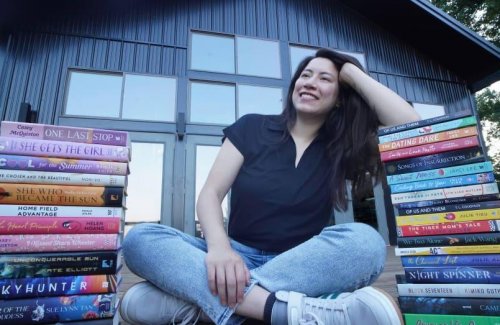
Natalie Naudus’ voice actor journey began when she realized that narrating audiobooks could be a promising career option. She found that audiobooks were one of the fastest-growing areas of content creation and that most of them were recorded by voice actors in high-quality at-home studios. 

The mother of two decided to pursue it as a new career because she believed that many aspects of the genre she cherished as a classical singer could be incorporated into this new line of work. She now earns six figures annually.

Natalie’s husband helped her set up a home studio. A platform called ACX, which connects narrators with authors, agents, and publishers, gave her her first book job. To make her name and voice more well-known within the community, she started going to events related to book narration. 

During the 2020 pandemic, she decided to share snippets of her book narrator life on Tiktok and Instagram. She wishes others could appreciate this profession as much as she does. This exposure increased her popularity and fan base. Book gigs from publishers who wanted to hire her to publish her works also began to flood in. With this strong online presence, she acknowledged it as one of the most important decisions she has ever made for her professional advancement.

Currently, she still manages to put in a productive 40 hours a week between recording, administrative duties and reading up on material for her next book. Major publishers typically offer her a starting rate of $225 per finished audio hour. 

After three years as a voice actor, she finally reached the six-figure mark in earnings and enabled her to purchase the land for their mountaintop home, as well as upgrade her recording booth.

Natalie had recorded almost 400 books over five years. She is also an award-winning audiobook narrator of more than 250 titles.  Her story shows that taking a chance on a new career path can pay off in ways one never expects.– “It was a difficult decision to give up my opera dreams. But I wouldn’t be where I am today if I hadn’t left it behind and taken this chance.” she tells CNBC’s Make It.

Source Image: Turis.app

Uncategorized

This CEO Transformed Lost Fishing Nets Into Sustainable One-Of-A-Kind Bikinis

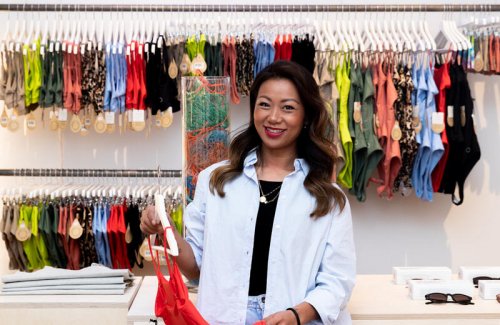
Plastic pollution harms our planet and health, but thankfully, companies like Copenhagen Cartel are combating this environmental problem by converting lost or abandoned fishing nets into bikinis with a modern twist on an ancient textile tradition.

Copenhagen Cartel’s founder and ocean lover, Katrine Lee Larsen, was motivated to help mitigate the adverse effects of plastic use and came up with a “brilliant solution” destined to become a global superstar.

Launched in 2019, Copenhagen Cartel has produced swimwear and athletic wear from ocean waste plastic. The deadly ‘ghost nets’ that would otherwise waste away in the ocean and kill countless marine life can be put to good use in this way. Compared to making brand-new nylon, Copenhagen Cartel’s manufacturing process uses less energy and resources.

Larsen views each day as a fresh challenge while launching her own company. Moreover, as a true nature lover, she has been guided and helped by her purpose. She feels the entrepreneurial world is dominated by masculine values that leave little room for feelings and higher goals. However, her experience has shown that a focused, emotional strategy can be very beneficial. She believes a new era of entrepreneurs will emerge due to shifting to a mindset that values meaning over financial gain.

Larsen is an entrepreneur herself, and she has been through the experience of seeing the ocean being depleted of its resources. Despite this, she knows that there is still room for change, which drives her to continue to assist the environment and natural resources.

Image Source: Sean Berry

Uncategorized

Ann Mukherjee: First Woman of Color CEO of Liquor Brands Shares An Incredible Outlook To Grow

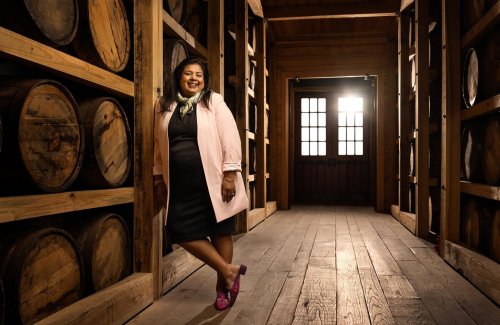
Indian American Ann Mukherjee CEO and chairman of Pernod Ricard, has been a model for success and women’s empowerment. At 56 years old, she is currently managing the world’s second-largest seller of wine and spirits and is also renowned for top-shelf liquor brands such as Absolut, Jameson, and Malibu. In an industry dominated by men, she is the first woman of color to hold the highest position for alcoholic beverage brands.

As soon as she assumed the position of CEO in 2019, she realized that there was a stereotype rooted in an exaggerated machismo of being a self-confident leader. After giving it some thought, she concluded that those beliefs were not only completely false but also destructive, so she chose to disregard them. 

Mukherjee thought the most challenging part of being a CEO was knowing when to ask for help or admit you couldn’t do it alone. She believes it is essential for a leader to accurately understand herself and her people and then learn from them. Although confident in her abilities, she also recognizes the importance of showing humility and honesty.

She also reveals how her failure became the key to her success. She has become more resilient because she has learned to change course when necessary and take advantage of setbacks to advance. And while also acknowledging her drawbacks, she stresses the value of accepting failures. 

Her one piece of advice for anyone just starting in their career is, “Do not worry about fitting in, and do not be afraid to speak up, because when you have confidence in yourself, anything is possible,” she shared with CNBC’s Make It.

Mukherjee is well aware that to be an effective leader, she must first be able to love herself without condition, taking into account all of her attributes, including her strengths, weaknesses, opportunities, and threats. And with that comes the realization that knowing one’s shortcomings can better help one deal with and overcome those. This is the only way for her to achieve genuine personal and professional development.

Image Source: Forbes

Uncategorized

Korean Startup Dongnae Makes Apartment Hunting More Affordable And Accessible

Its key product, Dongnae FLEX, offers short-term, fully-furnished rentals with low deposits, appealing to fresh graduates or travelers unable to cough up the hefty deposits typically required of Korea’s apartments.

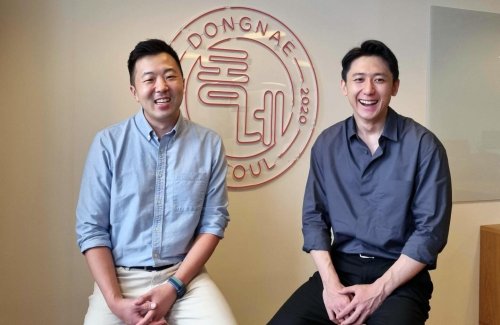
Former WeWork executives Insong Kim and Korean-American Matthew Shampine founded Dongnae in 2020. They are “Making it a better experience for the brokers, for the landlords, and especially for the tenants,”  Shampine said in an interview.

Dongnae has welcomed local and global investors. Its $21m series A funding round in March included Lyft and Doordash backer NFX, Airbnb backer MetaProp, and Korea’s oldest investment fund Daol Investment and Hana Financial.

More than 80% of Korean household wealth is in real estate, but it’s increasingly harder to become a homeowner. In Seoul, South Korea’s capital and most populated city, the average apartment price doubled between 2017 and 2021.

The startup company began as a listing platform for renters to book agency visits, but it was unsuccessful. Shampine believes the business model’s early failure generated “good and healthy” but painful reflections. According to Forbes, conversations with customers, brokers, and team members on the ground informed Dongnae’s goal of “becoming the supply, instead of hunting for the supply.” 

The firm switched to serviced apartments in July 2021. At the end of its current investment, the business had 60 apartment buildings; now it has 80 across 12 Seoul districts.

Dongnae wants to offer more home services to its residents in the future, taking advantage of Korea’s booming market for furniture and other lifestyle goods.