Stories

January 18, 2023

SHARE:

First Slurp! 

Food is a way for us to connect and tell stories by engaging all of our senses. Nielsen Noodles is a series where we gather to share our own stories while discussing insights and current events over a bowl of instant noodles. We virtually shared a bowl of noodles with Michael Lai, CEO and Co-Founder of Famous Media Group and AsianFeed, along with Randall Yip, Founder and Executive Editor of AsAmNews; two trailblazers in AANHPI news and journalism. 

(Top) Randall Yip , (Bottom L-R) Patricia Paturangi, Michael Lai

Which noodle dish did you choose to bring to the conversation?

Randall brought a bowl of wonton noodle soup from his family’s favorite hole in the wall, sharing, “All of my favorite items thrown into one… I picked this because it reminds me of my mom …  she loved to sit around the table and get the family together and just talk, that was her excuse to get the family together.”  

Michael shares, “I brought my favorite brand of instant ramen, I usually add an egg and some bok choi… I always remember coming home from practice, my parents were a little too tired to cook so we all would eat instant noodles and share conversations about our days. Memories and nostalgia from childhood are what these noodles remind me of.” 

Tell us about your news outlet, what is the story behind founding each of your outlets?

Randall recalled growing up in a time where the only Asian American role model on TV was Bruce Lee. While he and his friends idolized the kung fu star, he felt his community was missing critical daily representation in news.

“I wanted to share a different light, we tried to focus on Asian Americans who were role models breaking stereotypes. On the second front, we wanted to have a daily news site because Asian Americans were missing a news site where you could follow Asian American News on a daily basis. So from the very beginning, we’ve operated 365 days a year and we have not deviated from that, ” says Randall.

Michael comes from a different generation of representation. While striving for authentic storytelling connects both Michael and Randall, Michael aims to build a community of Gen Zers through short form, sociable content.

 “We’re an Asian-centric digital media brand, founded just last year, and grown to more than 200,000 followers across social channels. Designed at conception as a media brand to celebrate the shared cultural experiences of the younger generations in America and around the world. 

Growing up I was one of three Asian Americans in my entire school district, I often felt alienated from my Asian American identity. Outside of my parents, there weren’t really many opportunities for me to connect with others who shared my culture and ethnic background… My goal was to create a digital space that I feel I would have benefited from when I was younger, where stories that were important to me were the focus and where I could connect with others who shared similar cultural experiences.” says Michael. 

Why is it so important that diverse media be well-represented in the industry?

Nielsen research has found that certain shows with diverse representation both in front and behind the scenes, attracted more of that audience group – we want more of what’s familiar. From a similar standpoint, it’s also important to have diverse-owned media equally represented in the media ecosystem. 

“There are so many diverse community-centric stories to be told. The only way to make sure these stories are told in an authentic manner is for them to be told by members of the community in front of the camera, and behind the camera as well. It’s so important because there are so many cultural nuances and contextual clues that I think are important. Audiences these days can really tell when something is just superficial versus something that is truly authentic and a project designed to forward and advance the community,” notes Michael. 

He continues to say, “Especially this younger generation growing up, I think there are so many independent content creators emerging, creating amazing content that resonates not only with their own individual community, but also with the broader community at large. I think that is super important, and a trend that will continue to really advance the representation.”

Why is it so important for advertisers to invest in Asian American-owned media?

When we think of advertisers, we often think of Fortune 500 companies and major brands but in a community, such as Asian Hustle Network, we have inspiring entrepreneurs building Asian American-owned businesses. This year Nielsen started a Diverse-owned Media Initiative to help raise visibility of diverse media suppliers so they have a fair and equitable chance to get in front of ad buyers. 

Randall says, “I think the smart brands realize that they can’t continue doing what they have been doing. They need to expand their reach and customer base.” 

Michael says, “[Advertisers] are really starting to realize that Asian Americans are an important audience too. I think we’re one of the most rapidly growing consumer demographics in terms of pace of growth and authentic messaging is important… For advertisers to want to connect with those audiences, I think it’s extremely important, specifically for Asian Americans, to diversify their marketing budgets to allocate some of that budget for those audiences. 

Michael explains further “It’s not just Asian-Americans consuming this content, there are so many instances where K-POP, BTS, Blackpink, Squid-game, Korean dramas, as well as other Asian Entertainment groups. It’s just amazing how widespread it has become, it’s not just Asian-Americans, it’s really everybody is engaging as a whole in these stories that are inherently culturally Asian-based.

Final Slurp!

Michael and Randall have many things in common, especially their desire to champion equity in journalism, entertainment, and storytelling.

Randall urges up-and-comers: “Every brand comes with its own story, every entrepreneur has their own story to tell. Don’t be afraid to tell your story and don’t be afraid to pitch it to media outlets. You’re going to find that there will be a lot of interest…Be Inspiring!” 

Media is where the unique stories and voices of our community can be found. As our community becomes even more diverse, providing opportunities for greater equity in media and enabling more diverse voices becomes even more critical. The people behind the stories who are from our community — from journalists to media owners — continue to stand together to open up more opportunities for future generations of storytellers. Thank you Michael and Randall for paving the way with your passion and commitment.

Watch the full Nielsen Noodles episode here!

Learn more about Nielsen at www.nielsen.com.
Related Articles

Image Source: South China Morning Post

Stories

Earthquake Victim With Amputated Legs Masters Dancing With Husband’s Self-Made Prosthetic Limbs

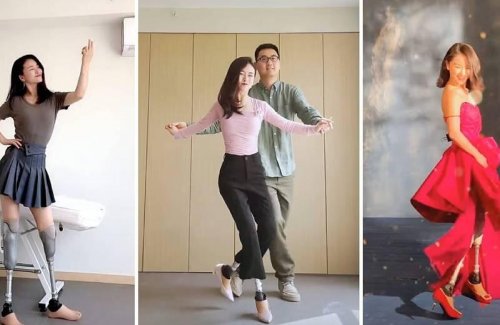
Nothing is impossible to 30-year-old Liao Zhi of Sichuan, China who lost her legs during an earthquake in 2008 but now mastered the art of dancing while wearing high heels with her now husband’s self-made prosthetic legs.

The Chinese former dance teacher caught the online community’s attention with her talent and story being an epitome of hope and faithfulness.

“It’s like she dances with life,” a netizen commented.

During the tragic incident in Sichuan where Zhi was trapped in the ruins of a building for 30 hours, she not only lost her legs but the most important persons in her life, her 10-month-old daughter who died in the disaster and her husband who divorced her seven months after the tragedy.

Being the only one to survive in the devastated building, the brave woman neither shed a tear nor complained of everything she went through including her legs being amputated.

Instead, Zhi said that “The earthquake gave me rebirth.”

After learning to walk with her artificial limbs, Zhi moved on from the nightmare by continuing and staging her passion in different places.

Although the training had been difficult and painful, Zhi was determined in doing what she loves. 

According to the South China Morning Post, she and her husband-dance partner defeated competitors in China and won as first runner-up in the reality show Dance Out My Life in 2013. 

Her husband became her strong support in recovering from her downfall.

Despite having been through a lot, Zhi remained optimistic. “Dance is my ray of sunshine, and while I would also be fine if I didn’t dance, I would not feel the same sense of joy that it gives me when I do,” she said.

Being an inspiration to many, Zhi’s life story was turned into a play entitled Angel’s Psalm that was staged at Kwai Tsing Theatre in 2015.

In an article by CCTGN, it was said that Liao is currently a happy wife as well as a proud mother. However, she is still fighting for a higher ambition – helping more people like her to recover their life value.

Image Source: Stephen Lovekin/Shutterstock

News

‘Raya and the Last Dragon’ Actress and Director Unveils New Production Company To Uplift Marginalized Community’s Emerging Filmmakers

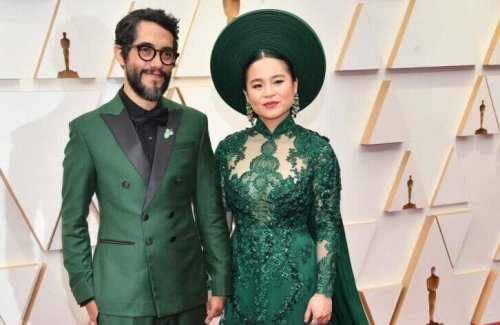
Kelly Marie Tran and Carlos López Estrada, the lead character and co-director of the latest Walt Disney film Raya and the Last Dragon, have created a new production company, Antigravity Academy (AGA) dedicated to developing and producing movies, television, theater, and short-form material from and about individuals from traditionally marginalized communities.

AGA appointed Jared Stern’s “A Stern Talking To” former vice president of cinema and television Winsor Yuan to lead its film and television section.

As for the short form, such as music videos, advertisements, and branded content, Doug Klinger, co-founder of Internet Music Video Database and Reprobates agent and executive producer, will be in charge.

The Antigravity Academy will also serve as a training ground for new filmmakers entering the production industry.

The novice filmmakers’ movies will be chosen, produced, and packaged under the direction of former Sundance Institute head of Artist Community and AGA founding partner Abiram Brizuela.

Tran and Estrada were quoted in the Hollywood Reporter as saying, “We couldn’t be happier about providing a creative home for emerging filmmakers looking for a window into this often insular industry.” 

The two also stated they had learned from their experiences how crucial it is to establish a network that can assist with starting up.

“We are looking forward to partnering up with the most inspiring independent voices coming from communities that have been historically overlooked and helping them usher their stories into the world,” the two added.

Image Source: Lifestyle Asia Hong Kong

Blogs, Development, Ideas

Son of Restaurant Owners Now CEO of Multi-Million Dollar Company Casetify Imparts Tips To Successful Entrepreneurship

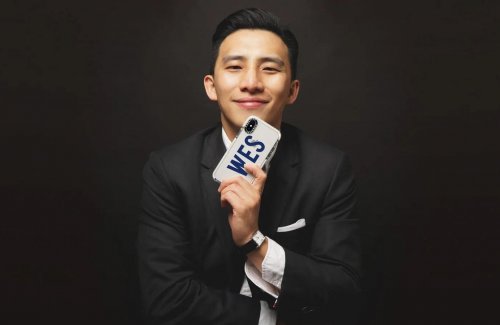
With a feeling of discontent towards the smartphone case designs available in the market, Hongkong native Wesley Ng co-founded Casetify, a multi-million dollar company that manufactures and produces cool smartphone cases.

The 41-year-old CEO takes his business-mindedness from his parents who own a restaurant in their region.

Ng established the business in 2011 together with his friend Ronald Yeung which has now reached over 15 million phone case sales around the world.

As an entrepreneur-grown man, Ng’s mindset is to make profits. According to him, it’s the most important thing to survive, as quoted in CNBC Make It.

“It comes down to one thing — being profitable. Being profitable was super underrated until recently,” he said in a virtual interview. 

Ng proudly shared that Casetify will be attaining $300 million in returns for this year alone.

Furthermore, he advised others to venture into businesses that make fortune and are cost-effective and to learn from other entrepreneurs just like how he learned from his mom and dad.

With his success in the chosen industry, Ng imparts hints to be a self-made millionaire in business:

1.Bootstrapping. Starting with $200,000 capital, Ng shared that he and Ronald always did things and operated out of the interests of the company and not of the stakeholders.

2. Overshare your problems. Business is a give-and-take process, it’s surprising how we can learn from others. Although it may seem a weakness for others to know your struggles as an entrepreneur, it is still fundamental to share and learn from them.

3. Entrepreneurship ‘not for everyone.’ Ng shared that knowing if “it’s for you” is important and to discover if it really is, you should “work closely with a founder” or link with beginners to know how hard it will be.

The successful CEO said that being a producer of a product he is really fond of is what keeps him on the move.

Image Source: Jonathan Sanchez

Uncategorized

Learning From His Single Mom, Parent Portfolio Co-Founder Jonathan Sanchez Realizes Financial Independence at 37

Now living a financially-stable life, the couple founders of Parent Portfolio, a website that serves families to make progress with their money and helps the younger generations become financially wise, teaches their kids lessons towards a successful life.

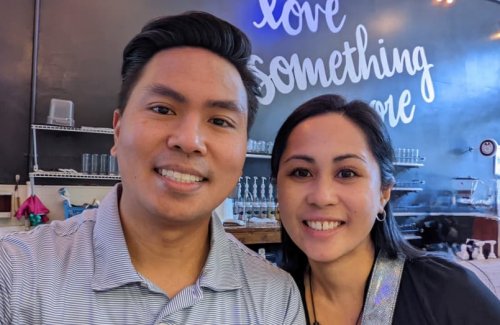
Born to a financially precarious environment, Jonathan Sanchez was reared with a thrifty outlook by his single mom, which made him yearn for financial stability.

Sharing the same financial sentiments, or even more, with his mother made him believe that if he would be able to get a degree and land a well-paid career, he would be freed from all his money issues.

However, he then realized that his mindset was not as easy as it seemed as, despite achieving a profession together with his wife, Jacqueline Sanchez, their incomes were just enough for their family’s essential needs. 

The Sanchez couple’s life turned 360 degrees after realizing a $1 million net asset by being economical, able to save, doing part-time jobs, and venturing into real estate.

At 37, Jonathan realized his long-dreamed financial independence and stability. In 2020, he decided to share this with other people by co-founding the Parent Portfolio with his wife.

Aside from helping other people, the couple is also bound in educating their kids with the following five valuable tips they shared on CNBC: 

  1. Always rethink one-time purchases. Living within the means and spending efficiently only on what is needed; 
  2. Budgeting gives you more freedom. Planning your budget is financial freedom which benefits you over and over again; 
  3. Don’t let social media influence your spending. Do not be pressured by what you see in the public network and discipline yourself in using gadgets; 
  4. Know where the money comes in, and where it goes out. The couple exposes their children to their income resources, introduces them to the “real world” and even shows diagrams on how to deal with the people and offices they transact with; and, 
  5. Start saving early, and don’t expect to get rich overnight. Learning from the fable of The Tortoise and The Hare, the couple teaches their children of being wise and patient.

“For now, your mother and I are responsible for providing for your needs and wants. A bank is a safe place to put your money because it allows the funds to grow over time. And when you’re old enough, you can use that money for your own goals,” Jonathan tells his children.