Stories

January 18, 2023

SHARE:

First Slurp! 

Food is a way for us to connect and tell stories by engaging all of our senses. Nielsen Noodles is a series where we gather to share our own stories while discussing insights and current events over a bowl of instant noodles. We virtually shared a bowl of noodles with Michael Lai, CEO and Co-Founder of Famous Media Group and AsianFeed, along with Randall Yip, Founder and Executive Editor of AsAmNews; two trailblazers in AANHPI news and journalism. 

(Top) Randall Yip , (Bottom L-R) Patricia Paturangi, Michael Lai

Which noodle dish did you choose to bring to the conversation?

Randall brought a bowl of wonton noodle soup from his family’s favorite hole in the wall, sharing, “All of my favorite items thrown into one… I picked this because it reminds me of my mom …  she loved to sit around the table and get the family together and just talk, that was her excuse to get the family together.”  

Michael shares, “I brought my favorite brand of instant ramen, I usually add an egg and some bok choi… I always remember coming home from practice, my parents were a little too tired to cook so we all would eat instant noodles and share conversations about our days. Memories and nostalgia from childhood are what these noodles remind me of.” 

Tell us about your news outlet, what is the story behind founding each of your outlets?

Randall recalled growing up in a time where the only Asian American role model on TV was Bruce Lee. While he and his friends idolized the kung fu star, he felt his community was missing critical daily representation in news.

“I wanted to share a different light, we tried to focus on Asian Americans who were role models breaking stereotypes. On the second front, we wanted to have a daily news site because Asian Americans were missing a news site where you could follow Asian American News on a daily basis. So from the very beginning, we’ve operated 365 days a year and we have not deviated from that, ” says Randall.

Michael comes from a different generation of representation. While striving for authentic storytelling connects both Michael and Randall, Michael aims to build a community of Gen Zers through short form, sociable content.

 “We’re an Asian-centric digital media brand, founded just last year, and grown to more than 200,000 followers across social channels. Designed at conception as a media brand to celebrate the shared cultural experiences of the younger generations in America and around the world. 

Growing up I was one of three Asian Americans in my entire school district, I often felt alienated from my Asian American identity. Outside of my parents, there weren’t really many opportunities for me to connect with others who shared my culture and ethnic background… My goal was to create a digital space that I feel I would have benefited from when I was younger, where stories that were important to me were the focus and where I could connect with others who shared similar cultural experiences.” says Michael. 

Why is it so important that diverse media be well-represented in the industry?

Nielsen research has found that certain shows with diverse representation both in front and behind the scenes, attracted more of that audience group – we want more of what’s familiar. From a similar standpoint, it’s also important to have diverse-owned media equally represented in the media ecosystem. 

“There are so many diverse community-centric stories to be told. The only way to make sure these stories are told in an authentic manner is for them to be told by members of the community in front of the camera, and behind the camera as well. It’s so important because there are so many cultural nuances and contextual clues that I think are important. Audiences these days can really tell when something is just superficial versus something that is truly authentic and a project designed to forward and advance the community,” notes Michael. 

He continues to say, “Especially this younger generation growing up, I think there are so many independent content creators emerging, creating amazing content that resonates not only with their own individual community, but also with the broader community at large. I think that is super important, and a trend that will continue to really advance the representation.”

Why is it so important for advertisers to invest in Asian American-owned media?

When we think of advertisers, we often think of Fortune 500 companies and major brands but in a community, such as Asian Hustle Network, we have inspiring entrepreneurs building Asian American-owned businesses. This year Nielsen started a Diverse-owned Media Initiative to help raise visibility of diverse media suppliers so they have a fair and equitable chance to get in front of ad buyers. 

Randall says, “I think the smart brands realize that they can’t continue doing what they have been doing. They need to expand their reach and customer base.” 

Michael says, “[Advertisers] are really starting to realize that Asian Americans are an important audience too. I think we’re one of the most rapidly growing consumer demographics in terms of pace of growth and authentic messaging is important… For advertisers to want to connect with those audiences, I think it’s extremely important, specifically for Asian Americans, to diversify their marketing budgets to allocate some of that budget for those audiences. 

Michael explains further “It’s not just Asian-Americans consuming this content, there are so many instances where K-POP, BTS, Blackpink, Squid-game, Korean dramas, as well as other Asian Entertainment groups. It’s just amazing how widespread it has become, it’s not just Asian-Americans, it’s really everybody is engaging as a whole in these stories that are inherently culturally Asian-based.

Final Slurp!

Michael and Randall have many things in common, especially their desire to champion equity in journalism, entertainment, and storytelling.

Randall urges up-and-comers: “Every brand comes with its own story, every entrepreneur has their own story to tell. Don’t be afraid to tell your story and don’t be afraid to pitch it to media outlets. You’re going to find that there will be a lot of interest…Be Inspiring!” 

Media is where the unique stories and voices of our community can be found. As our community becomes even more diverse, providing opportunities for greater equity in media and enabling more diverse voices becomes even more critical. The people behind the stories who are from our community — from journalists to media owners — continue to stand together to open up more opportunities for future generations of storytellers. Thank you Michael and Randall for paving the way with your passion and commitment.

Watch the full Nielsen Noodles episode here!

Learn more about Nielsen at www.nielsen.com.
Related Articles

IMG_7442-jpg

Stories

Immigrant Mother Pursues Her Passion for Fashion After Long Deferral to Raise Her Children

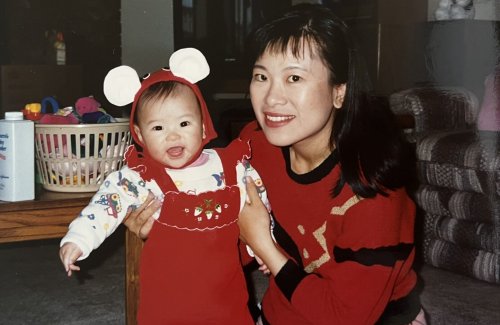
Michelle Jing Chan is a Chinese American artist and children’s book illustrator who, in an interview with Asian Hustle Network, opens up about her mother’s remarkable journey as a first-generation immigrant and the profound impact it has had on their relationship.

Michelle’s mother, May, is a survivor of Mao Zedong’s reign. She emigrated from Guangzhou, China, to California, facing numerous challenges along the way. She pursued her passion for fashion, but eventually put her dreams on hold to raise Michelle and her brother in Colorado.

After retirement, May embarked on a new venture where she creates Chinese-inspired baby clothes and puts them up for sale. The response from the community has been overwhelmingly positive, with many people showing keen interest in purchasing her creations.

In this article, Michelle shares a heartfelt glimpse into her mother’s story and their shared journeys. Join us as we explore May’s experiences as a first-generation immigrant, from surviving challenging times to embracing a new life in the United States.

HER MOTHER’S IMMIGRANT JOURNEY

Michelle: I’m a Chinese American artist and children’s book illustrator. I grew up in Colorado and now live in the Pacific Northwest. Although my background is in engineering and business, my passion is in art and storytelling–particularly in stories that empower queer and Asian youth to be their authentic selves.

My mom is a first-generation immigrant who grew up in Guangzhou, China, and emigrated to California in her early twenties. In China, she and her family survived Mao Zedong’s reign and the struggles that it brought, including facing famine, almost losing one of her sisters in an accident at a labor camp, and being targeted by Red Guards for my grandfather’s opposition to Mao during the Cultural Revolution.

When they emigrated to the US, they lived near LA and had a robust community of other Chinese immigrants. However, my mom and her family were poor and didn’t speak English. The rest of her family all found service jobs. Similarly, my mom worked as a waitress at a restaurant near Hollywood.

PUTTING DREAMS ON HOLD

Early in the morning before the restaurant opened, she would attend adult English classes. She always had an interest in fashion and it became even stronger after working near Hollywood and seeing designers and celebrities come into the restaurant. She saved up enough money to go to school and study fashion design. During that time, she continued to work at the restaurant on weekends and at a fashion company after school.

After completing her program, she planned to enter the fashion industry in California. However, she met my dad, a first-generation immigrant from Hong Kong, through a family friend. They got married and she moved to Colorado where my dad lived, and they had me and my brother shortly afterwards. In Colorado, opportunities in fashion design were much scarcer than in LA.

She decided to put her own dreams on the back burner and became a stay-at-home parent, dedicating the next decade and a half of her life to raising me and my brother. It wasn’t until I was in high school that she started working again, and she didn’t return to the fashion industry until a few additional years later.

MICHELLE’S RELATIONSHIP WITH HER MOM

Growing up, I was very close to my mom, but I don’t think I fully grasped the emotional weight of what it must have been like for her to sacrifice her career for her children. I definitely took for granted the fact that my mom was always able to pick us up after school and had the time and energy to make clothes and Halloween costumes for us, tailor clothes if they didn’t fit, and come up with other creative craft projects to keep us entertained.

As an adult now–especially as a creative myself–I understand more fully how isolating and difficult that sacrifice must have been. Also, our town in Colorado is conservative and not very diverse, so the adjustment for her coming from LA must have also been challenging and lonely. What strikes me now is how unselfish and giving she is. She has never voiced resentment for the educational or creative opportunities that I’ve had even though she didn’t have access to those same doors herself.

While my parents and I didn’t see eye to eye on my career in children’s book illustration at first, they are now some of my biggest cheerleaders. In fact, being in a creative career myself has allowed me to bond with my mom in a new way as she is embarking on her own creative journey. We can now connect over our creative passions, which is a new dimension to our relationship that didn’t exist before.

CREATING CHINESE-INSPIRED BABY CLOTHES

My mom loves kids and designing kids’ clothes. As I mentioned earlier, she made clothes for us growing up–including many of our Halloween costumes! She also loves Chinese fashion and still has suitcases of clothes from her life in LA. As she and my dad are now retired, pursuing this new venture seemed like a natural integration of these interests.

She uses Gerber brand onesies and transforms them into Chinese-inspired designs by adding ribbons, gold fabric, and traditional qipao-style buttons. She sews all these designs by herself in my childhood home.

She’s blown away by the response to her shop so far and is still processing the influx of orders! (Thank you again to the AHN community!) She wants to expand into clothes for toddlers and perhaps someday, older kids as well. In my eyes, the sky’s the limit for her and her talent and I’m excited to see where she goes from here.

VALUES MICHELLE INHERITED FROM HER MOM

The biggest thing she has taught me is how to have a strong work ethic. My mom, dad, and my grandparents work harder than anyone I know. Now as an adult, I carry that with me always.

MICHELLE’S MESSAGE TO HER MOM

Thank you for everything you’ve done for me and my brother. I know it’s a debt I will never be able to repay, but I hope I can give you a small fraction by supporting your creative dreams like you’ve come to support mine.

CONNECT WITH MICHELLE

Instagram: @michellieart

Twitter: @michellieart

Tiktok: @michellieart

Website: michellejingchan.com

CONNECT WITH MAY

Instagram: @pandacub.babywear

Website: etsy.com/shop/PandaCubBabyWear

The Spruce Eats-jpg

News

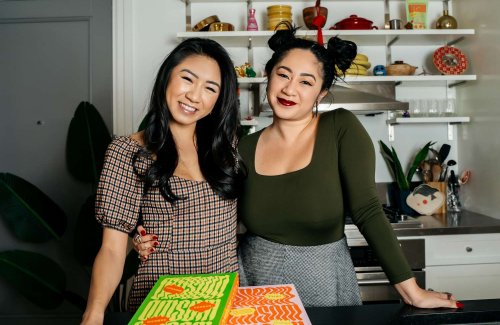
Vietnamese-Owned Food Brand Takes Over Whole Foods’ Instant Noodle Aisle with Bold Asian Flavors

Omsom is a vibrant Asian food brand, owned by Vietnamese sisters Vanessa and Kim Pham, that has been on a mission to reclaim and celebrate the true flavors of Asian cuisine.

Aside from providing delicious food, Omsom aims to promote and educate on the richness of Asian-American culture on a national scale. Since its founding in 2020, the brand has fearlessly embraced its heritage, evident in its bold brand names, products, and engaging storytelling across digital and physical channels.

Now, Omsom is making waves by expanding its presence in Whole Foods with its latest offering, Omsom Saucy Noodles. These flavorful noodles come in enticing varieties such as Soy Garlic, Coconut Lemongrass Curry, Garlic Black Pepper, and Chili Sesame, priced at $4.99 MSRP. Last year, Omsom introduced its line of sauces, including Krapow, Vietnamese BBQ, Yuzu Misoyaki, and Spicy Bulgogi, to Whole Foods stores nationwide.

Omsom’s expansion to Whole Foods is an important milestone since it allows the brand to reach a bigger audience and migrate from online presence to in-store availability. Customers may now readily access Omsom products locally and get a taste of the vivid Asian flavors thanks to the fast expanding community of over 175,000 people.

Omsom competes in the instant noodle market that is dominated by well-known brands like Kraft Heinz and Nissin Foods, but the company distinguishes itself by providing convenience and quality. Unlike the conventional dry powder seasoning found in many instant noodle products, the company takes pleasure in providing sauces of restaurant-quality.

“But at the end of the day, I think when you’re playing in a category like noodles, like it’s got to be the taste; it’s got to be the product. And I think we’re bringing something really unique to the category,​” Kim Pham explains to Food Navigator.

Featured Image Source: The Spruce Eats

LA Times-jpeg

News

How a Local Grocery Turned into One of The Largest Supermarket Chains in The US

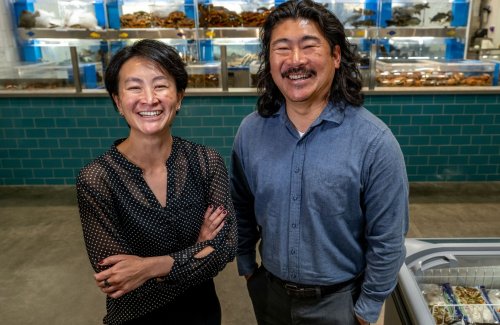
99 Ranch is a beloved Asian supermarket chain turned into a national powerhouse, under the management of the second-generation owners, Jonson and Alice Chen.

Established in 1984 in Westminster by their Taiwanese immigrant father, Roger Chen, the grocery store has now evolved into one of the largest Asian supermarket chains in America, with 58 stores in 11 states and its headquarters in Buena Park, California.

Catering extensively to ethnically Chinese communities, 99 Ranch Market has become more than just a grocery store for many Asian Americans in California. The name “99 Ranch” carries a double meaning: “ranch” symbolizes freshness, while “99,” pronounced “jiu jiu” in Mandarin Chinese, conveys longevity – signifying the company’s pursuit of near perfection with a commitment to constant improvement.

Jonson and Alice Chen represent the new generation of leadership steering the nearly 40-year-old grocery chain’s expansion across the United States. As children, they spent countless weekends at the store and their childhood experiences provided them with valuable insights and knowledge.

Today, the company grows most of its produce on specialty farms across the United States and Mexico, with a team of over 7,000 employees, 82% of whom are bilingual, to cater to the diverse needs of their customers.

According to Yahoo FInance, Part of 99 Ranch’s success lies in its responsiveness to the changing tastes of its customers. As trends evolve, the company actively includes Filipino ingredients, skewers, and spicy Sichuan flavors in their offerings.

As the Chen siblings carry the legacy of 99 Ranch forward, their commitment to serving their community and striving for excellence remains steadfast, ensuring the supermarket chain’s continued success on a national scale.

Featured Image Source: LA Times

tatler asia - maia & elaine-jpeg

News

These Dynamic Female Duos are Redefining the Food and Beverage Industry

The food and beverage industry, long dominated by men, is witnessing a transformation as a new wave of young female duos are making their mark and reshaping the sector to reflect their own vision. These inspiring women are blending their Asian heritage with a global upbringing and a willingness to take risks, showcasing the power of collaboration and innovation.

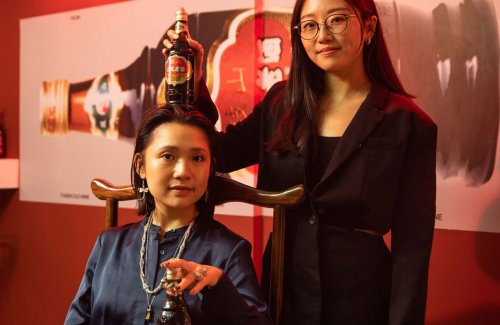
Elaine Chen and Maia Mah perfectly demonstrate this, as the regional director and creative director of Fukien Old Wine, a 181-year-old Chinese cooking wine brand. They organized a cocktail pop-up event at Soho House Hong Kong, combining traditional Chinese wine with modern trends.

Despite facing initial skepticism from their male-led head office, Chen and Mah are determined to introduce new ideas and adapt to societal changes. The success of the event surprised their colleagues, highlighting the duo’s ability to think outside the box.

Meanwhile, in Taiwan, Square Jao, a production designer, and her partner Lily Lin opened Plants Eatery, the country’s first gluten-free, whole-food restaurant. After the Fukushima disaster, Jao and Lin embarked on a mission to promote sustainable eating and raise awareness about the impact of food choices on the environment.

While vegetarianism is already popular in Taiwan, Jao and Lin’s restaurant offers strictly plant-based, gluten-free options, avoiding processed mock meats. Aside from their restaurant, they also published a cookbook in hopes to influence culinary schools to embrace plant-based and gluten-free cuisine, according to Tatler Asia.

In Japan, Eri Miyagi and Miki Nomura, both third-culture kids raised in the US, co-founded Cabi, a condiment brand aimed at introducing the flavors of Japan to Gen Z and Millennial home cooks. Cabi’s debut seasonings, including umami dashi soy sauce, sweet yuzu vinegar, and zesty sansho peppercorn miso, are designed to be versatile and cater to the modern urban lifestyle.

The rise of these female duos serve as an inspiration for a lot of underrepresented individuals, and remind us that with the proper determination and great collaboration, anything is possible.

Featured Image Source: Tatler Asia