Stories

July 5, 2023

SHARE:

In the bustling world of Hollywood, where dreams are forged and narratives come to life, Korean American screenwriter William Yu has emerged as a rising force.

Hailing from Philadelphia, Hong Kong, Boston, and New York, and now based in Los Angeles, William has taken the leap from having a successful advertising career into the world of screenwriting, fueled by a desire to create ambitious stories with vibrant and nuanced characters and to challenge the boundaries of Asian American representation.

William writes sharp, biting stories about witty underdogs who rise to upend the systems that they’ve been held back by.

Projects like “Good Boy,” a dramedy exploring the clash between personal dreams and familial expectations, and his feature romantic comedy “It Was You,” recognized by the esteemed Black List, showcase William’s talent and ambition. As an alum of the prestigious Sundance Episodic Labs and the NBCU Launch TV Writers Program, his work not only contributes to the larger conversation on Asian American representation in the entertainment industry but also pushes the boundaries of storytelling.

In an interview with Asian Hustle Network, William gives us a front seat on his journey as a screenwriter. Join us as we delve into his inspiring story.

TRANSITIONING FROM HIS ADVERTISING CAREER TO BECOMING A SCREENWRITER

Before becoming a screenwriter, I worked in advertising as a Creative Strategist for some years. Having this professional background not only gave me the structure and discipline that I’ve carried over to writing but also instilled a self-starter mindset that gets excited by creative ideas that go against the grain.

Two things happened. The first: I hit a quarter-life crisis after finding a list of goals I had written down after I graduated college. I realized that I had accomplished most of these milestones, but was finding my mental health was quickly deteriorating to the point where I had to make a change.

The second: I had recently created a project called #StarringJohnCho that sparked a viral, global conversation about Asian representation in media. Seeing so many communities engage in this movement demonstrated to me that a profound cultural shift was happening. I could either sit on the sidelines in advertising and continue to critique Hollywood from the outside, or I could dive into this world, participate in the craft, and write the stories I wish I knew. So, I took the leap.

CHALLENGES OF BEING A SCREENWRITER FROM AN UNDERREPRESENTED BACKGROUND

I entered Hollywood because I wanted to expand the definition and labels that have traditionally been assigned to the Asian American community, to go from “good” and “bad” to “awkward” and “messy” and “joyful” and “gut-wrenching.” But as much as I want to create characters and narratives that are rooted in my experience, I need to write stories that are first and foremost–entertaining.

As a screenwriter from an underrepresented group, there is always a well-intentioned instinct to cast our people in a soft, non-offensive glow. But who wants to watch that film or TV series? Part of the representation that I want to add to is demonstrating that as much as we are brave and tenacious, we are also flawed and dangerous, whether that’s in a small indie project or a massive studio tentpole. I believe that the faster we can jump into that conversation, exciting stories are destined to follow.

ABOUT THE DRAMEDY “GOOD BOY”

The short film is a proof of concept for a TV series I’m developing that’s been workshopped through the Sundance Episodic Labs. It’s a personal story that’s loosely based on my time working at Bodega – the world-famous sneaker shop started in Boston – and various conversations and feelings that I’ve had with exes, best friends, my family, and other people that I love.

Streetwear is a world where the clash of cultures is the point. There is no “right answer” – It’s funny and ugly and inspiring. Isn’t that the case for life as well?

‘Good Boy’ was my way of reflecting on moments in my life when I’ve felt cared for, hurt, joyous, and lost. I tried to not just depict what I was feeling, but also reflect on why I felt those feelings. When I first started writing the original pilot script in the Fall of 2019, I was simultaneously embracing my own agency in my life. My hope is that this story might nudge others to also own their journeys moving forward.

MORE OF WILLIAM’S PROJECTS

I’m extremely proud of ‘It Was You,’ my feature romantic comedy that’s like if Nora Ephron’s ‘You’ve Got Mail’ was set in Manhattan Chinatown. The script was voted to the annual Black List – a compilation of the most well-liked unproduced scripts in Hollywood – and ‘Crazy Rich Asians’ director Jon M. Chu is attached as a producer. I’m such a massive fan of those ‘90s-era rom-coms and this story was such a light to write during the pandemic. 

My latest TV project is a political scandal drama called ‘Koreagate’ which is based on the true story set in the 1970s of a charming swindler in Washington D.C. known as “The Asian Gatsby” who was found to be bribing U.S. Congressmen in the name of South Korean interests. It’s a wild, pulpy, fast-paced tale in the vein of The Wolf Of Wall Street and The Post that showcases America at its best and its worst. And it all really happened!

WILLIAM’S CONTRIBUTION TO ASIAN AMERICAN REPRESENTATION IN THE ENTERTAINMENT INDUSTRY

My main goal as a storyteller is to create ambitious stories with vibrant and nuanced characters. If I can hold up my end of the equation, I believe the representation conversation will only expand and grow in complexity.

What’s so exciting is that this is a LARGE conversation, there are so many voices and stories from our community that have yet to come to the forefront. And when we all overlap and intersect and discuss, that’s when the magic happens.

WILLIAM’S ASPIRATIONS LOOKING FORWARD AS A SCREENWRITER

First off, my biggest hope right now is that the WGA strike ends soon and that the studios pay us writers what we deserve.

What excites me is continuing to push my ideas to new heights in terms of scale and wonder. Stories that push the boundaries of the imagination. That wink at you while flipping you off. I’ve been working on a family adventure blockbuster and romance crime drama lately, and have a romantic comedy feature script that takes a surprise turn into a thriller in the works next. Right now, I feel drawn to stories that feel twisted and that showcase characters brushing up against the extremities of who they are.

ADVICE TO THOSE WHO WANT TO START A CAREER IN THE ENTERTAINMENT INDUSTRY

I can only really speak for the screenwriting side of things. This industry may seem like it’s an image-driven business, but it’s actually a product-driven one.

Everyone has an idea for a story, so make sure you’re the one that has a script (or scripts!) ready to go when someone asks. Know that there are lots of stories of those who follow the “rules” or those who are “exceptions”, but know that there is no “right way” of making it in this industry. Lastly: Be kind.

CONNECT WITH WILLIAM

Instagram: @its_willyu

Twitter: @its_willyu

Website: itswillyu.com

Stream Good Boy

Good Boy Instagram: @goodboyteevee

Good Boy Twitter: @goodboyteevee

Good Boy Website: goodboytv.com

Related Articles

medium-jpeg

News

Phantila Phataraprasit: Embracing Thai Culture and Sustainability in Furniture

In the transition from dormitory living to her own apartment, Phantila Phataraprasit found herself grappling with a challenge familiar to many recent graduates: the quest for affordable, stylish, and eco-friendly furniture. Sustainability has played a significant role throughout her life due to her mother’s involvement in running eco-friendly lodges in Thailand.

Phataraprasit and her college friend Caitlin Ellen teamed up to start Sabai – a Thai word that means feeling comfortable and relaxed. Sabai is a direct-to-consumer furniture company that prioritizes sustainability without sacrificing affordability.

Sabai’s core mission revolves around empowering young professionals to align their values with their furniture choices. For them, achieving true sustainability involves more than using eco-friendly materials.

Their sofas, crafted in a family-owned North Carolina factory, feature Sustainable Forestry Initiative (SFI)-certified wood, recycled fiber fill, and upcycled fabrics, free from harmful chemicals. They introduced a “Repair Don’t Replace” program and a buyback initiative to ensure longevity and affordability.

After initially diversifying into various home furnishing categories, Sabai recognized that sustainability remained the driving force for their customers. They refocused their efforts on seating, catering to those with unique aesthetic preferences. This strategic shift enables them to deliver on their core sustainability promise while offering diverse design options.

Aside from this, Sabai also understands the importance of forming meaningful connections with customers. Furniture is intimate, and Sabai recognizes that today’s generation cares deeply about their living spaces.

By amplifying their sustainability initiatives and engaging with consumers, Sabai aims to inspire a lot of people to live a more sustainable lifestyle.

Featured Image Source: Medium

005_min_1_scaled.0-jpg

News

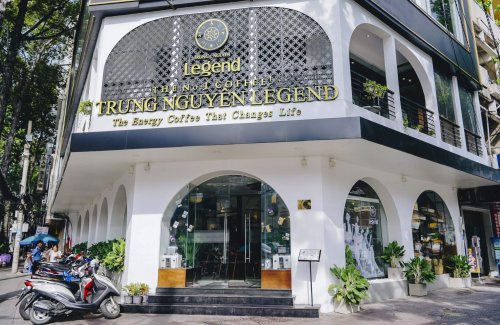
Trung Nguyên Legend Cafe Introduces Vietnamese Coffee From Saigon to U.S.

Adding a fresh chapter to its storied history, the esteemed Vietnamese coffee chain, Trung Nguyên Legend Cafe, has ventured across the Pacific to Westminster, Southern California.

With nearly three decades of experience and a robust presence in Vietnam comprising four factories and 110 stores, Trung Nguyên has also made its mark on the global stage, with distribution networks spanning over 60 countries.

Trung Nguyên Legend Cafe proudly serves phin- and espresso-based coffee drinks, crafted exclusively from 100-percent Vietnamese-grown Robusta and Arabica beans. The menu caters to diverse tastes, featuring an array of espresso-based classics such as lattes, mochas, and cappuccinos, alongside quintessential Vietnamese specialties like cà phê trứng (Vietnamese egg coffee) and cà phê chồn (civet coffee). Patrons can relish the brand’s signature dine-in coffee service, elegantly presented on ornate wooden trays, a unique experience now accessible in the U.S.

Jennie Tang, representing H & L Wholesale Food Corporation, the Los Angeles-based distribution company behind this franchise venture, underscores the essence of Vietnamese coffee culture. Beyond being a mere beverage, it embodies the art of connecting with one another while savoring the moment.

Trung Nguyên Legend Cafe is located at 9039 Bolsa Avenue #101, Westminster, CA 92683. The cafe welcomes visitors daily from 7 a.m. to 5 p.m., promising an authentic Vietnamese coffee experience.

Featured Image Source: LA Eater

337065635_5962298030490632_6699761041658586964_n-jpg

Stories

A Doctor’s Journey of Following His Passion and Becoming a Full-Time Comedian

In the world of comedy, they say that laughter is the best medicine, and for Dr. Jason Leong, this couldn’t be more true.

Up until 2010, Jason Leong’s life had followed the typical Asian narrative.

He had been a straight-laced kid, never earning anything less than an A in his exams. He secured a scholarship to pursue Medicine and eventually became a doctor in Malaysia.

Despite his initial success, the harsh reality of the workforce hit Jason hard. As a junior doctor, he endured grueling 36-hour shifts at least six times a month, with 100-hour workweeks becoming the norm. Sleep deprivation, constant hunger, overwhelming stress, and meager pay plunged him into the lowest point of his life. But things were about to change.

One day, he stumbled upon an opportunity for a monthly open mic show in Kuala Lumpur, the first of its kind in Malaysia. His wife encouraged him to try out. So he took 2 days off from work, drove 4 hours to the venue, and performed his first 5-minute standup. He left the stage saying to himself, “I want to do this forever.”

In 2011, Jason transferred to Kuala Lumpur and did regular gigs while being a full-time doctor. He loved being a doctor by day and a comedian by night, but it was still a lot of work for him. So in 2014, he made the big leap and did a not very Asian thing.

He quit being a doctor.

Having experience in the medical field not only informs Jason’s comedy, but it also makes his style a bit more unique. “The rigors of being a doctor made me all the more grateful to be able to tell jokes for a living,” he said.

At first, Jason didn’t tell his parents that he quit his job as a doctor. His parents now know of his career shift and support his journey wholeheartedly, with his mother saying, “If this comedy thing doesn’t work out, at least you have something to fall back on.” 

Jason’s comedy has since blossomed with two successful Netflix specials, “Hashtag Blessed” and “Ride With Caution.”

He boasts a portfolio of five solo one-hour specials, having graced stages at the Melbourne International Comedy Festival, featured on Comedy Central and Just For Laughs in Montreal, and won at the 7th Annual International Hong Kong Comedy Competition.

Jason is set to perform his solo show BRAIN DRAIN in Los Angeles on September 29 and San Francisco on October 4.

“Making a move to my passion and the arts is something that has allowed me to find real meaning in my work. I hope to inspire others within the Asian community to take the same risks and reach their real potential,” Jason shared with Asian Hustle Network.

CONNECT WITH JASON

Facebook: Dr. Jason Leong

Instagram: @drjasonleong

Tiktok: @drjasonleong

News

How Wang Xiaokun Turned His Milktea Business into a Billion-Dollar Success

Wang Xiaokun, a 40-year-old Chinese entrepreneur, has achieved a remarkable feat by becoming a billionaire through his milk tea venture. He is the visionary founder of Cha Panda, a Chinese tea chain.

Recent funding rounds have catapulted his tea business’s valuation to an impressive $2.1 billion. Forbes estimates Wang’s personal fortune at a staggering $1.1 billion, primarily due to his substantial 60% ownership stake in the Chengdu-based beverage chain.

Over the past three years, Cha Panda has experienced rapid expansion, now boasting an extensive network of over 7,000 stores. The chain is known for its signature beverages, including mango pomelo sago, taro bubble tea, and jasmine milk green tea, all offered at an affordable price point of $3.60 or less, as reported by Forbes.

Notably, Wang’s wife, Liu Weihong, has also enjoyed a substantial increase in her wealth, with an estimated fortune of $700 million, thanks to her 33% ownership stake in the company. She plays a pivotal role as the chair of the supervisory committee, responsible for overseeing Cha Panda’s daily operations, as indicated in a preliminary prospectus filed with the Hong Kong Stock Exchange. 

According to MSN, the roots of Cha Panda trace back to 2008 when Wang began selling fruit and bubble tea from a modest shop near a school in Chengdu, known for its spicy cuisine and as the home of giant pandas. Over the subsequent decade, Wang diligently expanded Cha Panda’s network of stores to 531 by 2020. However, the pivotal moment occurred when he embraced a franchising model.

Today, Cha Panda focuses on crafting beverage recipes and supplying ingredients like fruit and tea leaves to Cha Panda-branded beverage shops. This innovative approach allows Wang to maintain lower operational costs compared to competitors like Hong Kong-listed Nayuki Holdings, which grapple with higher employee salaries and rental expenses for their directly operated stores.

Featured Image Source: India Times