Stories

August 29, 2024

SHARE:

Navigating the world of law and order as an Asian American can be convoluted. However, as John D. Tran Talks about working with start-ups like AHN, overcoming industry barriers, and the power of mentorship.

A fun fact that encapsulates John’s impact is that he was the trademark attorney who helped protect and register the ASIAN HUSTLE NETWORK name back in 2019—a contribution that underscores his dedication to empowering the Asian American community.

As a Partner at the Rhema Law Group®, John has spent over 20 years working as a Registered Patent Attorney, Intellectual Property Counsel & IP litigator, driven by a mission to aid startups & emerging companies navigating the complex business world. 

Finding Balance & Purpose in the Madness

In 2012, with the arrival of their boy-girl twins, John and his wife Rosalind Ong switched gears. Both seasoned lawyers at larger firms, the duo seized this joyful moment and joined forces to partner at a private law firm, Rhema Law Group, which specializes in intellectual property, business, and corporate law. While people may think being a lawyer trades much of one’s freedom for endless tedious readings into acts and regulations, John finds a nice work/life balance being a “cool” dad to twins (double the coolness), playing basketball, and being an avid sports fan, but finds ultimate enjoyment in spending time with friends and family.  

Protecting the Interests of Start-Ups & Emerging Businesses

Working as a lawyer for startups can be tough, considering how new and fragile they are in the market. While his work requires a focus on quality, integrity, and community, John treats startups with extreme care and attention, prioritizing personalization and case-by-case flexibility for each of his clients. He understands that these new businesses often operate on tight budgets, but also wants his clients to recognize the importance of investing in intellectual property protection right from the start. 

This is not just about legal protection—it’s an act of partnership, building relationships with the clients, getting to know who they are, and helping them grow. John said in an interview with AHN:

“With start-ups, even those backed by investors or venture capitalists, you’re usually dealing with a limited budget that needs to be responsibly allocated across various areas, such as R&D, marketing, sales, employment, and more. A good IP attorney will understand these constraints and focus on identifying the core IP of the start-up that needs to be protected from the outset while determining which IP can be addressed later.

Also, we find it important to conduct IP ‘think tank’ sessions, where we work closely with our clients to identify what protectable IP the company has and then develop an overall IP portfolio strategy. From trademarks, patents, copyrights and even trade secrets, approaching a business’s IP ensures that the start-up’s IP is properly protected at every stage of its growth. It’s incredibly rewarding to work with start-ups and emerging companies, watching them grow and mature over the years, and being a small part of their journey to success.”

John finds pride in working with primarily Vietnamese, Asian and minority-run companies.  His client list ranges from the small entrepreneur with an idea to multi-million dollar manufacturers with hundreds of employees working overseas. 

Building Leaders and Communities

His legal acumen has been shaped by mentorship, as he profoundly affirms his gratitude and advocacy for what mentorship has given him, “I think mentorship is so important, and I wouldn’t be where I am today without being fortunate enough to be mentored by some great people in my life, both professionally and personally.”

Above all, mentorship is not just a veteran-novice work of professional guidance, but, to John, it is a way of personal growth for everyone involved. This mindset coheres with his work ethic, where he hones his expertise (as startups can be quite a hard case to crack, your honor) while supporting their growth. 

“Mentoring builds up individuals, individuals build up communities, and communities raise families, support businesses, and can become the social networks that bring people together. For me, personally, mentorship has been a valued and rewarding part of my life. My wife and I have been fortunate to mentor several individuals for over 15 years, many of whom we met while volunteering at a leadership camp for foster care and at-risk teens.”

For John, mentorship is about time, consistency, and authenticity—qualities he embodies both professionally and personally.

“One particular mentee has become a little brother to me. We have mentored Salesi since he was 12, and then he served in the Army after high school and later worked at our law firm as a paralegal. Now, we’re proud to say that he has just been accepted to law school on scholarship! He was the first in his family to graduate from college and is now on his way to becoming a lawyer. Watching him grow and being there with him through the years has been such a rewarding experience, and it truly highlights the power of mentorship.”

A photo of John D. Tran (L) with his mentee who served in the Army and has just been accepted to law school on scholarship.

Navigating the Legal Landscape as an Asian American

Now, let’s get to the part where most Asian parents will be intrigued to see—being an Asian American attorney. There’s nothing that excites them more than when their kids come home and say “I want to be an attorney.” Respect, stability, and profitability—needless to say more. However, as an Asian American attorney in a predominantly white male-dominated industry, John has faced a sense of isolation and underrepresentation within the industry, forging the urge to always have to outperform himself. 

“I remember the first time I appeared in court on a case—the judge looked at me, smiled, and asked if I was still in law school because I looked so young (haha). It’s that Asian curse! But thinking back now, although there have been great strides made in recent times, the legal industry is still greatly underrepresented when it comes to Asian American attorneys. In my field of intellectual property law, I primarily practice before the federal courts, which are still largely dominated by older white males. That’s just the way it is, and as an Asian American attorney, you can sometimes feel like you’re the only one and feel pressure to prove that you belong in such a competitive space.”

John has overcome them by focusing on his craft and building a reputation for doing great work. John’s advice to aspiring legal professionals all comes down to self-awareness and passion, emphasizing the importance of choosing a practice area that aligns with one’s strengths and personality, as well as the value of giving back through mentorship and community service.

“Matching your personality and skill set to a particular area of law is often overlooked. For example, if you’re an extrovert who likes to be ‘in the action’ of things, becoming a transactional attorney who drafts contracts and agreements at your desk all day may not be the best fit for you. Conversely, if you’re more of an introvert, choosing to become a litigator where you’re in court frequently and presenting oral arguments to a judge or jury may not be a good fit either… Additionally, I think serving on some non-profit organizations and local organizations are things that help provide joy & fulfillment, including what we talked about earlier regarding the power of mentorship.”

Connect With John D. Tran / Rhema Law Group®

“One thing I love about the law is that, for the most part, it is impartial.  So, if you’re a good attorney doing great work, it doesn’t matter if you’re white, black, brown, or blue,, there’s no limits to what you can achieve and accomplish.”

X: @patentjt

Website: www.rhemalaw.com 

Contact:  jdt@rhemalaw.com | 949-852-4430 
Related Articles

News

How College Dropout Sanjith Konda House Became a Successful Entrepreneur

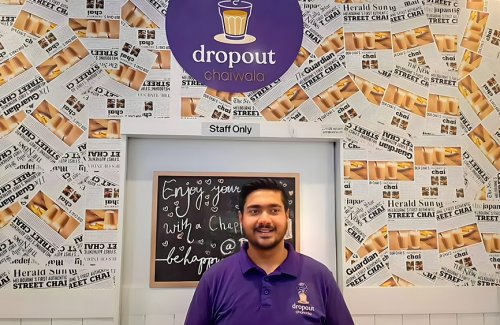
Sanjith Konda House, an 18-year-old from Bengaluru, India, set off on a conventional journey to Australia to pursue a Business Studies degree at La Trobe University in Melbourne. However, he made an unconventional turn, abandoning his studies in pursuit of an entrepreneurial dream that would later become a successful enterprise, ‘Dropout Chaiwala.’

Sanjith’s bold decision to step away from academia during his fifth semester in exchange for a tea business venture demonstrated exceptional courage, a trait deeply ingrained by his upbringing.

Supported by his parents—a father employed as a mechanical engineer at a Saudi Arabian oil company and a homemaker mother—Sanjith had always been instilled with the values of responsibility and independence beyond his years.

With an initial investment of $120,000, Sanjith, alongside his friends Asar Ahmed Syed, Preetam Akula, and Arun P. Singh, set up their first ‘Dropout Chaiwala’ outlet on Elizabeth Street. Their menu started simple, offering just five varieties of chai, but they gradually began to catch the attention of students and office-goers alike.

Despite facing initial obstacles, Sanjith’s unwavering determination was the driving force behind the business’s growth. By March, they had a mobile chai truck in operation, catering to university events, festivals, and weddings. Another significant milestone came in August with the opening of a third store on La Trobe Street.

Under Sanjith’s dynamic leadership and with the dedication of his team, which included Apoorva Singla overseeing the Elizabeth store, Dropout Chaiwala expanded its menu to include light snacks. Within a year, the business generated $600,000 in sales and provided employment to 40 individuals, turning Sanjith’s bold leap of faith into a thriving success.

Featured Image Source: India Times

News

BLACKPINK, TXT, Jung Kook, and Stray Kids Dominate the 2023 MTV VMAs

The 2023 MTV Video Music Awards proved to be an unforgettable night for K-pop, as three South Korean groups left an indelible mark on the music industry. These victories not only celebrated their remarkable talents but also emphasized the growing influence of K-pop worldwide.

The MTV Video Music Awards 2023 unfolded on September 12 at the Prudential Center in Newark, New Jersey.

TXT – Tomorrow X Together, affectionately known as TXT, had a groundbreaking night, bagging the Push Performance of The Year award for their electrifying single “Sugar Rush Ride.” The group also graced the stage with a spectacular performance of their new hit “Back for More,” featuring the sensational artist Anitta. In a fierce competition with nominees like Ice Spice, Jvke, Saucy Santana, and Reneé Rapp, TXT emerged victorious, marking their first-ever VMA win.

Stray Kids – Stray Kids joined the ranks of VMA winners, securing their first-ever VMA in the Best K-Pop category for their track “S-Class.” Their performance of the song during the show captivated the audience and showcased their incredible talent. Competing against esteemed K-pop acts like Aespa, Blackpink, Fifty Fifty, Seventeen, and TXT, Stray Kids’ victory is a testament to their growing influence in the industry.

BLACKPINK –  BLACKPINK, the global sensation, achieved an historic feat by winning the prestigious “Best Group of the Year” award. This victory is especially significant as it had been an astonishing 24 years since a girl group last held this honor – TLC in 1999.

BTS – While the spotlight shone on these remarkable wins, it’s crucial to acknowledge BTS’s continued dominance in the K-pop world. With an impressive nine VMA trophies to their name, BTS remains at the pinnacle of the K-pop genre, even during their well-deserved hiatus. Jung Kook also achieved a historic milestone by winning the ‘Song of the Summer’ award for his collaboration with Latto, securing the Moonman award.

The 2023 MTV VMAs will be remembered as a pivotal moment in K-pop history, with TXT, Stray Kids, BLACKPINK, and BTS making headlines and solidifying their status as global music icons. As K-pop’s influence continues to surge worldwide, we eagerly anticipate more groundbreaking achievements from these talented artists in the years to come. 

Featured Image Source: Lifestyle Asia HK

Peter Yang-jpg

Stories

The Inspiring Story of How Pokeworks Became the Largest Poke Chain in the US

Founded in 2015, Pokeworks emerged as a culinary venture stemming from a shared vision. Drawing inspiration from numerous trips to Hawaii, the founders were captivated by the distinct flavors of poke, prompting them to bring this fresh, healthful, and beloved island delicacy to the mainland United States.

With a steadfast commitment to a wholesome lifestyle and premium ingredients, Pokeworks offers a culinary experience that reverberates with authenticity. Their menu artfully captures the genuine essence of Hawaiian flavors, showcasing a medley of signature creations and customizable options.

Aside from this, Pokeworks champions sustainability, prioritizing responsibly sourced seafood and conscientious material choices. This ethos extends to all aspects of the brand’s operations, affirming a holistic dedication to social and environmental responsibility.

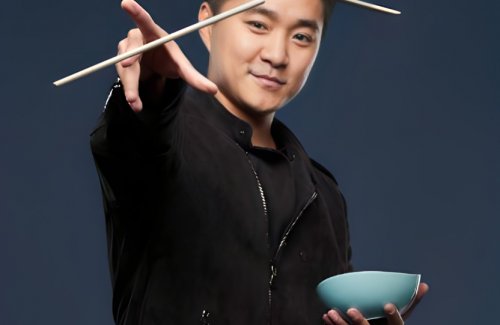
Asian Hustle Network had the chance to sit down for an interview with one of Pokeworks’ co-founders, Peter Yang. Join us as we delve deeper into their story and uncover the insights that drive their success.

HOW IT ALL STARTED

The idea of Pokeworks dates back to 2015, when my co-founders, Mike Chen and Mike Wu, met over lunch. Mike Chen just had his wedding in Maui and Mike Wu had just come back to the mainland after months in Oahu launching a restaurant. They reminisced about the delicious poke they enjoyed on the island and wondered why it’s not a staple on the mainland. We took inspiration from build-your-own fast casuals like Chipotle, and ran with the idea of “Poke Your Way”. As cliche as it sounds, we spent months R&D’ing out of Mike Wu’s garage until we all felt the flavors were perfect.

Several months later, we opened the doors to our first location in midtown Manhattan – a tiny 750-square-foot space. It was a cold December, and most of the city had left for the holidays – it was quiet… and our sales were bleak. Besides correcting our guests on the pronunciation of “poke”, I had to turn away several guests with “Sorry, no, we do not sell Pokemon cards.” Educating the market was definitely an early challenge we had to overcome.

The new year rolled around and our lines got progressively longer day after day. As business grew, we kept our heads down and continued to focus on operational excellence – great products and great guest service. Word quickly spread, and we became the popular kids on the block.

Fast forward 8 years and a pandemic later, we’re 70 locations proud across the U.S., Canada, Mexico, and Taiwan.

SUSHI BURRITO

THE CONCEPT OF SUSHI BURRITO

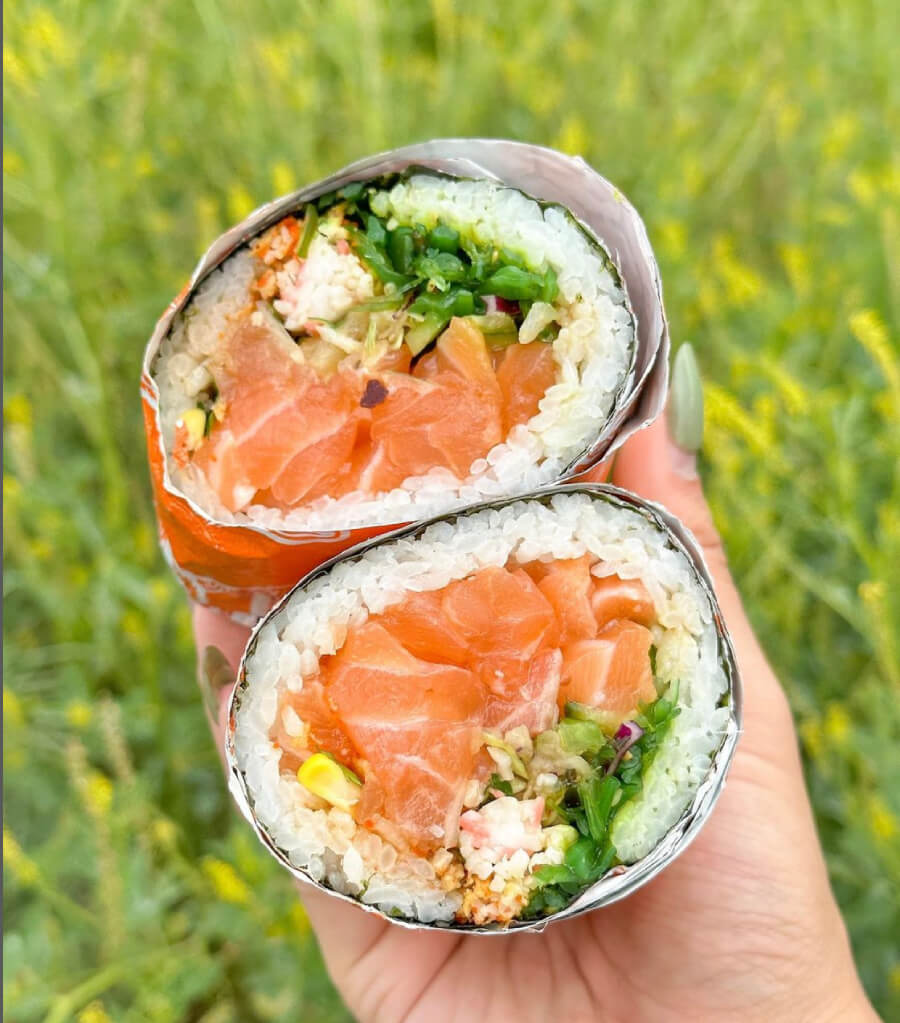
We aimed to create a handheld version of Poke by blending two of my personal favorites: a burrito and a sushi roll – what’s not to love? We had fun with it and added it to the menu.

Little did we know, this menu addition would become a turning point in our growth.

During a lunch rush one day, a representative from Business Insider walked into our tiny shop and asked if she could record a video featuring our Poke Burrito. Despite my initial hesitation – our shop was so small that my staff and I could barely squeeze another body in without slowing down our line – I agreed. Well, it was a good thing I let her shoot the video because once it was uploaded, it went absolutely viral.

It. Was. Insanity. This short 1 minute clip, triggered lines around the block for months. We had to hire bouncers for crowd control!

POKEWORKS’ COMMITMENT TO SUSTAINABILITY

Early in our brand development, the co-founders took deliberate steps to define our core values. One of them is: “Sustainability – meeting today’s needs without compromising tomorrow.” The founders understand that it goes beyond just making a profit, but how we can leave the world a better place for our children. Personally, since becoming a father recently, this sentiment has never rung louder. We want to make sure it’s not just a marketing buzzword, but a core value that helps guide our every decision. 

All of the seafood that we source carries a “Best Choice” rating by the Monterey Bay Seafood Watch, procured from vendors that are environmentally and socially responsible. Our tuna is exclusively procured from Marine Stewardship Council (MSC) certified sources, a reflection of our commitment to ending overfishing and promoting sustainable fishing practices. Our salmon holds certifications from both the Aquaculture Stewardship Council (ASC) and Best Aquaculture Practices (BAP), embodying the highest industry standards for minimizing environmental impact and upholding the well-being of communities, workers, and animals.

For many of our store build-outs, the wood used in our dining rooms is of local species and is certified by the Forest Stewardship Council. In some of our shops, the facade of our counters is made with recycled bamboo chopsticks.

Our commitment to sustainability extends to exploring alternative seafood and plant-based products. We are partnering with leading plant-based food manufacturers such as Impact Foods and Omni Foods to explore alternative seafood options. Our plant-based spam musubis are also a huge hit! We’ve also partnered with innovators like Wildtype, to explore cutting-edge cultivated seafood.

FRANCHISEE SPOTLIGHT

We seek franchisees who embody a passion for the brand and resonate with our mission statement and core values. One of which is being service-obsessed: We put the team’s needs first. We are here to serve our guests and community. We do this by being responsive, helpful, productive, and following through with our commitments, and spreading aloha.

I’d like to extend a big shout-out to Alvin Zhang, an exceptional franchisee at Pokeworks who embodies this value and who truly shines as both an entrepreneur and an outstanding individual dedicated to his community. At the peak of the pandemic, when hospitals were facing dire circumstances, Alvin and his Pokeworks team worked overtime to generously donate over 2000 poke bowls to 12 hospitals across Queens NY, and Long Island.

UPLIFTING THE AAPI COMMUNITY

We take pride in the Asian-inspired products and flavors that we serve. From spicy Sichuan poke to sweet chili gochujang poke. Sharing these flavors from our roots to the mainstream is a great privilege. 

During COVID, we partnered with Heart of Dinner to help nourish NYC’s community of Asian elders. They have a wonderful mission of supporting the AAPI community, and we’re proud to be a part of it.

We also take immense pride in having Regina Cheung, a Chinese-American, at the helm as CEO at Pokeworks, leading the charge with remarkable expertise and charisma. Furthermore, all of the co-founders are Asian-American and share the immigrant journey. 

We hope that our story and Pokeworks’ AAPI leaders can inspire future generations of AAPI entrepreneurs to dive confidently into their careers and passions. 

PETER YANG’S ADVICE TO ASPIRING ENTREPRENEURS

Don’t do it alone. Learn to ask for help. It all starts within your community.

We are very proud to say that there are a total of 8 co-founders at Pokeworks. Most advisors will tell you that’s crazy, but we made it work! We’ve learned to set aside our egos and each of us plays a distinct and vital role within the organization.

This principle aligns perfectly with another core value of ours: the incredible power of teamwork.

CONNECT WITH POKEWORKS

Instagram: @pokeworksco

Website: pokeworks.com

Franchise: pokeworksfranchise.com

AHN STORIES-png

Stories

How Uji Time Dessert Brings East Asian Flavors to the Bay Area

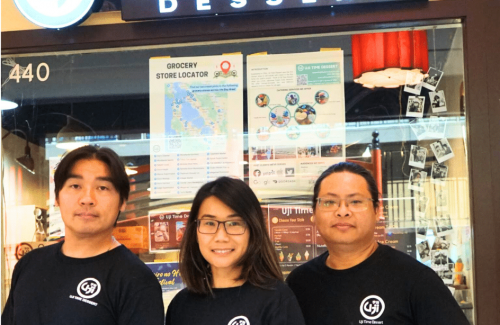
Sharon Ku, born and raised in Hong Kong, is one of the co-founders behind Uji Time Dessert, a delightful dessert store in the Bay Area.

Sharon has been working in the food industry for the past 15 years since she graduated from UC Berkeley with a major in Nutrition Science.

Through Uji Time Dessert, Sharon and her team bring together the best of East Asian flavors and desserts, making them accessible to everyone. The pop-up store’s authenticity and creativity garnered massive success, and it became the first dessert shop of its kind in the Bay Area.

In an interview with Asian Hustle Network, Sharon Ku shared her journey as an entrepreneur. Read through as we discover how she turned her passion into a thriving business, and how she found inspiration within the community.

HOW IT ALL STARTED

Uji Time Dessert opened its first pop-up store in April 2016. Together with John Ip and Benson Leung, we have been taking far east flavors and desserts and making them mainstream in the Bay Area. Our famous Fish Cone, called Taiyaki, is our take on the traditional Japanese dessert in the shape of a fish, usually filled with red bean paste. The pop-up was a great success because of its authenticity. Uji Time Dessert was the first dessert store selling Taiyaki soft serve in the Bay Area.

Uji Time Dessert loves to combine and meld elements from multiple traditional desserts to create affordable treats for everyone. Our goal is simple – think of Uji Time Dessert when you crave Japanese fusion-style desserts.

Uji Time Dessert regularly offers Instagrammable, fun, and delicious desserts and ice cream for all ages. It has transformed into a full-scale dessert cafe, from Fish Cone (Taiyaki), black sesame soft serve, lychee ice cream mochi, Matcha Latte, Earl Grey puddings, to Hojicha and Genmaicha ice cream. Depending on the season, Uji Time Dessert offers limited production seasonal flavors, such as strawberry rose and lavender in soft serve or ice cream.

During COVID, we connected with many local businesses to do cross-promotion and share resources. We offer our stores as pick-up locations for other business owners. Other business owners help to promote our brand and products.

In 2022, Uji Time Dessert expanded its footprint to Seattle, Washington, and Albuquerque, New Mexico. Uji Time Dessert continues to seek opportunities to serve our customers.

NAVIGATING THROUGH THE COVID-19 CHALLENGES

COVID hit hard across Bay Area San Francisco in 2020. Our sales dropped to 0% as we only sold soft-serve ice cream. Our stores were forced to close for 3-12 months. We closed two stores permanently.

Despite COVID-19 challenges, we expanded from 0 to 25 local supermarkets. Closing three stores didn’t stop us; we opened three new locations and have more coming in Palm Springs and New Mexico with our licensed partners.

These difficulties brought our team closer and made us stronger. From a small ice cream shop, we now distribute to various locations in the Bay Area. The growth and partnerships showcase our resilience and quality. I’m inspired and confident in our continued success.

SUPPORT AND INSPIRATION WITHIN THE COMMUNITY

I’m grateful to the Asian Hustle Network community for sharing inspiring stories of persistence, and for the connections I’ve made in this group.

I met Jing who has a passion for helping small businesses, the owner of Kaya Bread, and other inspiring individuals. Connecting with like-minded entrepreneurs and supporting my brand growth has been invaluable. 

Once again, I want to express my gratitude to the Asian Hustle Network for providing a platform that facilitates learning, sharing, and gaining inspiration. I am truly thankful for the opportunity to be part of this community and to share my story of resilience, growth, and the joy of forging connections to support others in building their own brands.

Processed with VSCO with fa1 preset

VALUABLE LESSONS AS A SUCCESSFUL ENTREPRENEUR

I would suggest everyone not to give up.

We should not focus on what might stop us from achieving our goals. We should think of what we can do to make a change. Don’t be afraid and try to reach out. Many experienced entrepreneurs would love to share their experiences and thoughts with you.

CONNECT WITH UJI TIME DESSERT

Instagram: @ujitimedessert

Tiktok: @ujitimedessert

Facebook: Uji Time Dessert