Stories

August 29, 2024

SHARE:

Navigating the world of law and order as an Asian American can be convoluted. However, as John D. Tran Talks about working with start-ups like AHN, overcoming industry barriers, and the power of mentorship.

A fun fact that encapsulates John’s impact is that he was the trademark attorney who helped protect and register the ASIAN HUSTLE NETWORK name back in 2019—a contribution that underscores his dedication to empowering the Asian American community.

As a Partner at the Rhema Law Group®, John has spent over 20 years working as a Registered Patent Attorney, Intellectual Property Counsel & IP litigator, driven by a mission to aid startups & emerging companies navigating the complex business world. 

Finding Balance & Purpose in the Madness

In 2012, with the arrival of their boy-girl twins, John and his wife Rosalind Ong switched gears. Both seasoned lawyers at larger firms, the duo seized this joyful moment and joined forces to partner at a private law firm, Rhema Law Group, which specializes in intellectual property, business, and corporate law. While people may think being a lawyer trades much of one’s freedom for endless tedious readings into acts and regulations, John finds a nice work/life balance being a “cool” dad to twins (double the coolness), playing basketball, and being an avid sports fan, but finds ultimate enjoyment in spending time with friends and family.  

Protecting the Interests of Start-Ups & Emerging Businesses

Working as a lawyer for startups can be tough, considering how new and fragile they are in the market. While his work requires a focus on quality, integrity, and community, John treats startups with extreme care and attention, prioritizing personalization and case-by-case flexibility for each of his clients. He understands that these new businesses often operate on tight budgets, but also wants his clients to recognize the importance of investing in intellectual property protection right from the start. 

This is not just about legal protection—it’s an act of partnership, building relationships with the clients, getting to know who they are, and helping them grow. John said in an interview with AHN:

“With start-ups, even those backed by investors or venture capitalists, you’re usually dealing with a limited budget that needs to be responsibly allocated across various areas, such as R&D, marketing, sales, employment, and more. A good IP attorney will understand these constraints and focus on identifying the core IP of the start-up that needs to be protected from the outset while determining which IP can be addressed later.

Also, we find it important to conduct IP ‘think tank’ sessions, where we work closely with our clients to identify what protectable IP the company has and then develop an overall IP portfolio strategy. From trademarks, patents, copyrights and even trade secrets, approaching a business’s IP ensures that the start-up’s IP is properly protected at every stage of its growth. It’s incredibly rewarding to work with start-ups and emerging companies, watching them grow and mature over the years, and being a small part of their journey to success.”

John finds pride in working with primarily Vietnamese, Asian and minority-run companies.  His client list ranges from the small entrepreneur with an idea to multi-million dollar manufacturers with hundreds of employees working overseas. 

Building Leaders and Communities

His legal acumen has been shaped by mentorship, as he profoundly affirms his gratitude and advocacy for what mentorship has given him, “I think mentorship is so important, and I wouldn’t be where I am today without being fortunate enough to be mentored by some great people in my life, both professionally and personally.”

Above all, mentorship is not just a veteran-novice work of professional guidance, but, to John, it is a way of personal growth for everyone involved. This mindset coheres with his work ethic, where he hones his expertise (as startups can be quite a hard case to crack, your honor) while supporting their growth. 

“Mentoring builds up individuals, individuals build up communities, and communities raise families, support businesses, and can become the social networks that bring people together. For me, personally, mentorship has been a valued and rewarding part of my life. My wife and I have been fortunate to mentor several individuals for over 15 years, many of whom we met while volunteering at a leadership camp for foster care and at-risk teens.”

For John, mentorship is about time, consistency, and authenticity—qualities he embodies both professionally and personally.

“One particular mentee has become a little brother to me. We have mentored Salesi since he was 12, and then he served in the Army after high school and later worked at our law firm as a paralegal. Now, we’re proud to say that he has just been accepted to law school on scholarship! He was the first in his family to graduate from college and is now on his way to becoming a lawyer. Watching him grow and being there with him through the years has been such a rewarding experience, and it truly highlights the power of mentorship.”

A photo of John D. Tran (L) with his mentee who served in the Army and has just been accepted to law school on scholarship.

Navigating the Legal Landscape as an Asian American

Now, let’s get to the part where most Asian parents will be intrigued to see—being an Asian American attorney. There’s nothing that excites them more than when their kids come home and say “I want to be an attorney.” Respect, stability, and profitability—needless to say more. However, as an Asian American attorney in a predominantly white male-dominated industry, John has faced a sense of isolation and underrepresentation within the industry, forging the urge to always have to outperform himself. 

“I remember the first time I appeared in court on a case—the judge looked at me, smiled, and asked if I was still in law school because I looked so young (haha). It’s that Asian curse! But thinking back now, although there have been great strides made in recent times, the legal industry is still greatly underrepresented when it comes to Asian American attorneys. In my field of intellectual property law, I primarily practice before the federal courts, which are still largely dominated by older white males. That’s just the way it is, and as an Asian American attorney, you can sometimes feel like you’re the only one and feel pressure to prove that you belong in such a competitive space.”

John has overcome them by focusing on his craft and building a reputation for doing great work. John’s advice to aspiring legal professionals all comes down to self-awareness and passion, emphasizing the importance of choosing a practice area that aligns with one’s strengths and personality, as well as the value of giving back through mentorship and community service.

“Matching your personality and skill set to a particular area of law is often overlooked. For example, if you’re an extrovert who likes to be ‘in the action’ of things, becoming a transactional attorney who drafts contracts and agreements at your desk all day may not be the best fit for you. Conversely, if you’re more of an introvert, choosing to become a litigator where you’re in court frequently and presenting oral arguments to a judge or jury may not be a good fit either… Additionally, I think serving on some non-profit organizations and local organizations are things that help provide joy & fulfillment, including what we talked about earlier regarding the power of mentorship.”

Connect With John D. Tran / Rhema Law Group®

“One thing I love about the law is that, for the most part, it is impartial.  So, if you’re a good attorney doing great work, it doesn’t matter if you’re white, black, brown, or blue,, there’s no limits to what you can achieve and accomplish.”

X: @patentjt

Website: www.rhemalaw.com 

Contact:  jdt@rhemalaw.com | 949-852-4430 
Related Articles

107308298-1695918669890-107308298-1695912316230-230920-mi-10-MM-jae-byun00_00_21_07Still021_REV-jpg

News

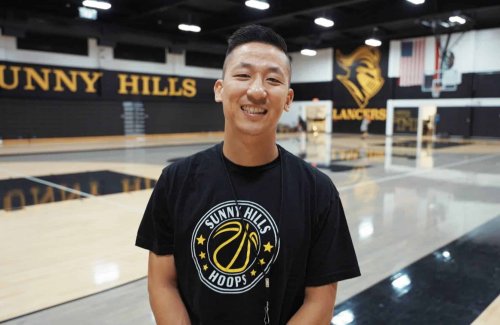
A Teacher and Basketball Coach’s Path to a Six-Figure Income in Orange County

Meet Jae Byun, a math teacher and basketball coach in Orange County, California, who’s making a six-figure salary doing what he loves.

Originally majoring in business economics at the University of California, Irvine, Jae initially set his sights on a financial industry career. However, after completing internships in that field, he felt a desire for something different.

During his senior year in 2013, he accepted a coaching position at his former high school in Orange County, guided by the stability and income potential his coaches emphasized in the teaching profession.

“It wasn’t going to make me a millionaire, but it was going to allow me to have time and freedom. That really appealed to me,” he said to CNBC.

Born in South Korea, Jae moved to California at a young age and grew up valuing hard work, learning from his truck driver father and spa worker mother. His parents were concerned about him at first and disappointed that he took a career in education, but eventually, they came around with the fact and loved that Jae now lives with them. Jae is paying them $800 for rent and helping with household expenses, even though they told him that he didn’t need to.

Image Source: CNBC

It took Jae about six years to reach his current salary of nearly $115,000, including coaching stipends and summer programs. He actively manages his money, saving half of his monthly income and investing in retirement accounts. Even with some unexpected expenses, Jae remains committed to financial stability.

Looking ahead, Jae plans to generate extra income and ensure a comfortable retirement for his parents.

Featured Image Source: CNBC

IMG_1735-jpg

Stories

How This Solo Female Founder Leverages Technology to Create Authentic Relationships

Ever found yourself in a new place, surrounded by unfamiliar faces, looking for friends or a community that shares your interest? Erin Zhao knows that feeling all too well.

With a childhood marked by frequent moves, each relocation brought Erin the recurring challenge of seeking kindred spirits who matched her enthusiasm for outdoor activities like cycling, golfing, and hiking. But here’s the thing: we live in an era where it’s so easy to connect with people virtually, have friends online, and yet feel like something’s missing.

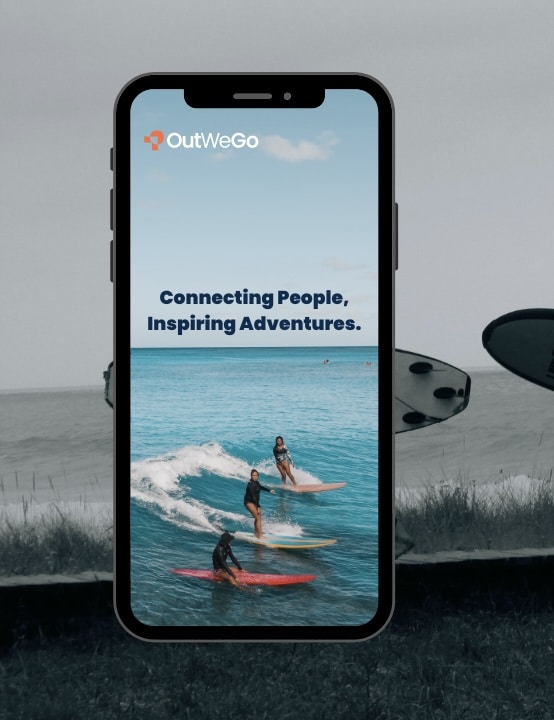
As a person who loves solving puzzles and coming up with creative solutions, Erin founded OutWeGo, a wellness platform headquartered in the Bay Area, designed to combat feelings of loneliness and disconnection by facilitating personalized activities in an exclusive and curated community.

The Challenges of Being a Solo Female Founder and First-Time Entrepreneur

Erin faced distinctive challenges on her path to establishing OutWeGo, specially as a solo female founder and a first-time entrepreneur. One of them was finding the delicate balance between technological innovation and a human-centric vision.

Creating a digital platform that encourages authentic personal connections demands not only technical skills but also a deep understanding of social dynamics and user safety. Erin tackled this challenge by immersing herself in user feedback, embracing iterative design, and ensuring the platform was not only secure but also intuitively designed.

Another challenge that Erin faced was the weight of responsibilities that comes with being a solo founder. Managing everything from product development to marketing, finance, and user experience without the buffer of co-founders meant an increased workload and the necessity for rapid up-skilling in various domains.

Erin met this challenge head-on by embracing continuous learning, taking online courses, and networking with experts to acquire knowledge beyond her initial expertise.

Creating a Solution to the Problem

While doing extensive market research, including interviews with her friends and strangers, Erin found that the struggle of having real, meaningful connections these days is widespread. She discovered that many people, particularly those relocating or seeking companionship for specific activities, faced difficulties in finding suitable partners.

Realizing the commonality of this problem, Erin saw a clear opportunity to leverage technology and create a solution with OutWeGo.

Bridging the Gap with OutWeGo

Erin’s mission with OutWeGo is clear – to facilitate genuine, meaningful connections by bridging the gap between digital interactions and real-world social experiences. The vision is to create an exclusive, curated platform where individuals bond over shared interests, particularly in outdoor and sports activities.

For the Asian community, OutWeGo serves as a powerful tool for empowerment. The platform fosters inclusivity, providing a space where Asians in the diaspora can connect with peers who share similar backgrounds, values, and passions. OutWeGo nurtures a sense of belonging and solidarity, reinforcing cultural connections and supportive networks among Asians living abroad.

OutWeGo Cycling Activity

Erin’s role in advancing overall wellness and social cohesion aligns with the principles of diversity, inclusivity, and mutual respect, making a tangible difference in the lives of the Asian community.

Connect with OutWeGo

Website: outwegosocial.com

Instagram: @outwegosocial

Linkedin: OutWeGo

107029357-1647031565961-Francis_Lau_-_B-roll_Stringoutmp400_24_35_15Still004-jpg

News

The Unspoken Truth About Early Retirement Based on This 42-Year-Old Retired Engineer

In the pursuit of early retirement, Francis, a 42-year-old electrical engineer, made headlines when he quit his job in 2017 with a substantial $1.2 million in savings and investments.

At the time, he embraced the FIRE (Financial Independence, Retire Early) movement, a concept that advocates for financial freedom and early retirement. However, Francis’s unique journey and subsequent return to work shed light on the misconceptions surrounding the desire for complete retirement.

According to CNBC, upon leaving his engineering role, where he earned a $120,000 base salary plus additional equity and bonuses, Francis discovered that a life without work became “really boring.” Contrary to the belief that most people aspire to retire early, he contends that what individuals truly seek is a sabbatical or extended break from their careers, typically lasting a year or two.

Image Source: CNBC

He had $1.2 million in savings and investments when he quit his job, and he shared that the trick to getting there was spending as little money as possible. First, he paid off his house, which cost $22,000 a year. Then, he tried hard to spend as little money as possible on everything else. 

He cut out things like streaming services and even went without a cellphone for a bit. Francis is also really good at using credit cards to get points, and he has more than 20 of them at a time. This helps him get extra value for his money.

Even though he enjoyed two years of not working and traveling, Francis got a bit bored and decided to start working again in 2019. But this time, he focused on his YouTube channel with 350,000 followers, making videos about money topics. It turns out people loved it, and he now makes around $10,000 a month from YouTube. This money covers his living costs, and whatever is left goes into his savings.

“Now I no longer call myself ‘retired’ because I am putting in my full-time effort into YouTube,” Francis shared to CNBC. “I’d like to put a lot more work into it and grow it … I think it’s a work in progress.”

Featured Image Source: CNBC

News

Chinese Paper Company Promotes Employee Well-Being through Running Incentives

Guangdong Dongpo Paper, a paper company based in Guangdong, China, is reshaping the conventional corporate bonus structure by tying annual bonuses to employees’ physical fitness levels.

Chairman Lin Zhiyong recently revealed an unconventional program where the size of the annual bonus is directly proportional to the number of miles an employee runs each month.

Under this fitness-centric initiative, employees must achieve a monthly running target of 62 miles to qualify for an annual bonus equivalent to 130% of their monthly salary. Those covering a more modest 31 miles per month still earn a bonus equivalent to one month’s salary. As an added incentive, employees who sustain a pace of 31 miles per month for six consecutive months are rewarded with a complimentary pair of running shoes.

Lin Zhiyong, who has scaled Mount Everest twice in 2022 and 2023, justified the program and said to Business Insider, “My business can only endure if my employees are healthy.” 

While some employees have embraced the initiative as a novel way to stay fit and earn extra income simultaneously, social media platform Weibo has witnessed skepticism.

Critics question the feasibility of expecting employees to run two miles daily to meet the ambitious monthly target, speculating whether the company aims to transform its workforce into track athletes. Concerns about potential health risks have also surfaced, with some individuals fearing that the rigorous physical requirements may lead to injuries or health complications. 

Despite the mixed reactions, Guangdong Dongpo Paper’s innovative approach to employee incentives has sparked discussions about the delicate balance between workplace motivation and individual health, leaving observers curious about the long-term impact of this incentive program on both the company and its employees.