Stories

August 29, 2024

SHARE:

Navigating the world of law and order as an Asian American can be convoluted. However, as John D. Tran Talks about working with start-ups like AHN, overcoming industry barriers, and the power of mentorship.

A fun fact that encapsulates John’s impact is that he was the trademark attorney who helped protect and register the ASIAN HUSTLE NETWORK name back in 2019—a contribution that underscores his dedication to empowering the Asian American community.

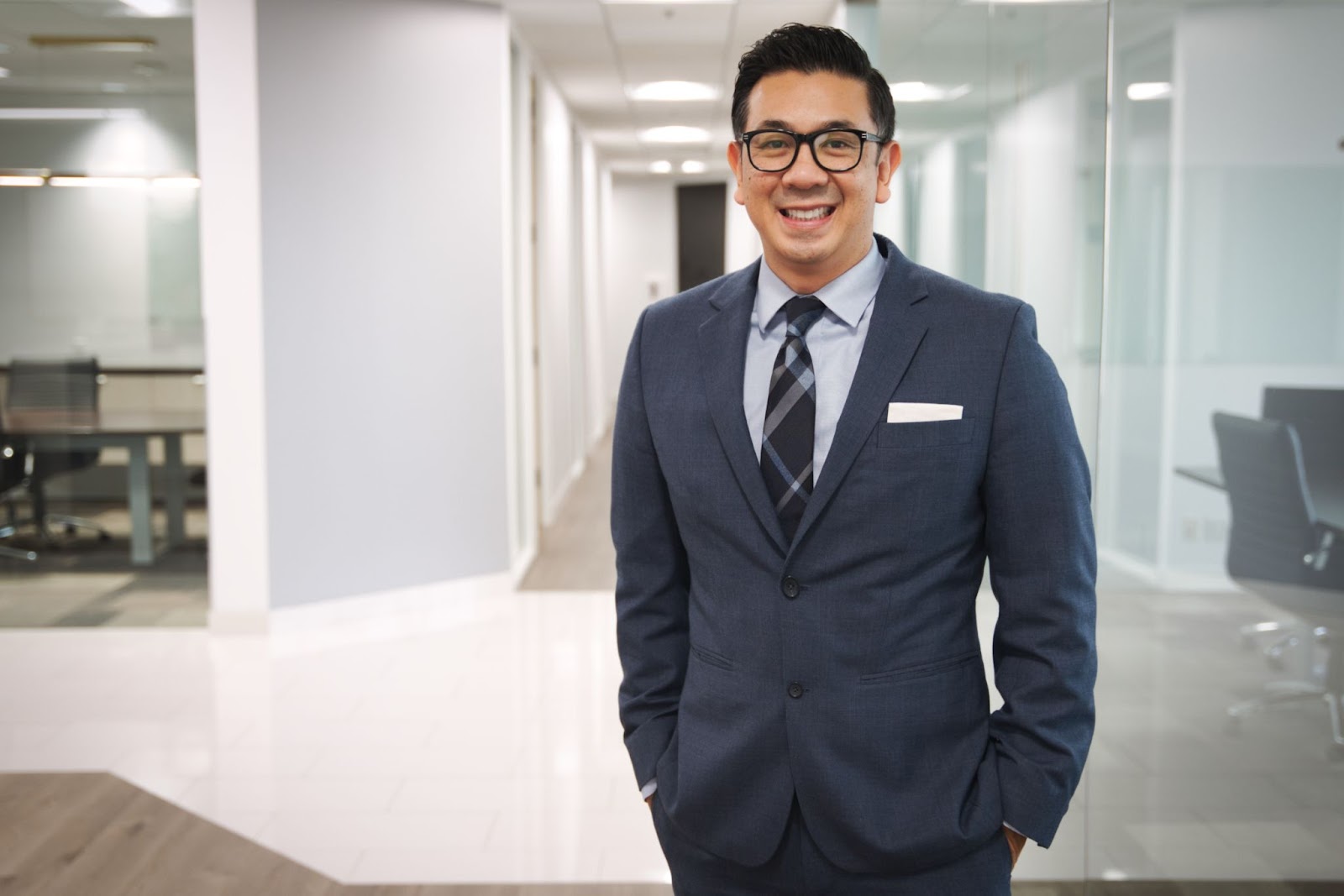
As a Partner at the Rhema Law Group®, John has spent over 20 years working as a Registered Patent Attorney, Intellectual Property Counsel & IP litigator, driven by a mission to aid startups & emerging companies navigating the complex business world. 
Finding Balance & Purpose in the Madness

In 2012, with the arrival of their boy-girl twins, John and his wife Rosalind Ong switched gears. Both seasoned lawyers at larger firms, the duo seized this joyful moment and joined forces to partner at a private law firm, Rhema Law Group, which specializes in intellectual property, business, and corporate law. While people may think being a lawyer trades much of one’s freedom for endless tedious readings into acts and regulations, John finds a nice work/life balance being a “cool” dad to twins (double the coolness), playing basketball, and being an avid sports fan, but finds ultimate enjoyment in spending time with friends and family.  

Protecting the Interests of Start-Ups & Emerging Businesses

Working as a lawyer for startups can be tough, considering how new and fragile they are in the market. While his work requires a focus on quality, integrity, and community, John treats startups with extreme care and attention, prioritizing personalization and case-by-case flexibility for each of his clients. He understands that these new businesses often operate on tight budgets, but also wants his clients to recognize the importance of investing in intellectual property protection right from the start. 

This is not just about legal protection—it’s an act of partnership, building relationships with the clients, getting to know who they are, and helping them grow. John said in an interview with AHN:

“With start-ups, even those backed by investors or venture capitalists, you’re usually dealing with a limited budget that needs to be responsibly allocated across various areas, such as R&D, marketing, sales, employment, and more. A good IP attorney will understand these constraints and focus on identifying the core IP of the start-up that needs to be protected from the outset while determining which IP can be addressed later.

Also, we find it important to conduct IP ‘think tank’ sessions, where we work closely with our clients to identify what protectable IP the company has and then develop an overall IP portfolio strategy. From trademarks, patents, copyrights and even trade secrets, approaching a business’s IP ensures that the start-up’s IP is properly protected at every stage of its growth. It’s incredibly rewarding to work with start-ups and emerging companies, watching them grow and mature over the years, and being a small part of their journey to success.”

John finds pride in working with primarily Vietnamese, Asian and minority-run companies.  His client list ranges from the small entrepreneur with an idea to multi-million dollar manufacturers with hundreds of employees working overseas. 

Building Leaders and Communities

His legal acumen has been shaped by mentorship, as he profoundly affirms his gratitude and advocacy for what mentorship has given him, “I think mentorship is so important, and I wouldn’t be where I am today without being fortunate enough to be mentored by some great people in my life, both professionally and personally.”

Above all, mentorship is not just a veteran-novice work of professional guidance, but, to John, it is a way of personal growth for everyone involved. This mindset coheres with his work ethic, where he hones his expertise (as startups can be quite a hard case to crack, your honor) while supporting their growth. 

“Mentoring builds up individuals, individuals build up communities, and communities raise families, support businesses, and can become the social networks that bring people together. For me, personally, mentorship has been a valued and rewarding part of my life. My wife and I have been fortunate to mentor several individuals for over 15 years, many of whom we met while volunteering at a leadership camp for foster care and at-risk teens.”

For John, mentorship is about time, consistency, and authenticity—qualities he embodies both professionally and personally.

“One particular mentee has become a little brother to me. We have mentored Salesi since he was 12, and then he served in the Army after high school and later worked at our law firm as a paralegal. Now, we’re proud to say that he has just been accepted to law school on scholarship! He was the first in his family to graduate from college and is now on his way to becoming a lawyer. Watching him grow and being there with him through the years has been such a rewarding experience, and it truly highlights the power of mentorship.”

A photo of John D. Tran (L) with his mentee who served in the Army and has just been accepted to law school on scholarship.

Navigating the Legal Landscape as an Asian American

Now, let’s get to the part where most Asian parents will be intrigued to see—being an Asian American attorney. There’s nothing that excites them more than when their kids come home and say “I want to be an attorney.” Respect, stability, and profitability—needless to say more. However, as an Asian American attorney in a predominantly white male-dominated industry, John has faced a sense of isolation and underrepresentation within the industry, forging the urge to always have to outperform himself. 

“I remember the first time I appeared in court on a case—the judge looked at me, smiled, and asked if I was still in law school because I looked so young (haha). It’s that Asian curse! But thinking back now, although there have been great strides made in recent times, the legal industry is still greatly underrepresented when it comes to Asian American attorneys. In my field of intellectual property law, I primarily practice before the federal courts, which are still largely dominated by older white males. That’s just the way it is, and as an Asian American attorney, you can sometimes feel like you’re the only one and feel pressure to prove that you belong in such a competitive space.”

John has overcome them by focusing on his craft and building a reputation for doing great work. John’s advice to aspiring legal professionals all comes down to self-awareness and passion, emphasizing the importance of choosing a practice area that aligns with one’s strengths and personality, as well as the value of giving back through mentorship and community service.

“Matching your personality and skill set to a particular area of law is often overlooked. For example, if you’re an extrovert who likes to be ‘in the action’ of things, becoming a transactional attorney who drafts contracts and agreements at your desk all day may not be the best fit for you. Conversely, if you’re more of an introvert, choosing to become a litigator where you’re in court frequently and presenting oral arguments to a judge or jury may not be a good fit either… Additionally, I think serving on some non-profit organizations and local organizations are things that help provide joy & fulfillment, including what we talked about earlier regarding the power of mentorship.”

Connect With John D. Tran / Rhema Law Group®

“One thing I love about the law is that, for the most part, it is impartial.  So, if you’re a good attorney doing great work, it doesn’t matter if you’re white, black, brown, or blue,, there’s no limits to what you can achieve and accomplish.”

X: @patentjt

Website: www.rhemalaw.com 

Contact:  jdt@rhemalaw.com | 949-852-4430 

Related Articles

Image Source TomoCredit

Uncategorized

TomoCredit Raised Its Value To $222M To Help Gen-Z Build Credit Fast

TomoCredit announced that it had raised $22 million in a Series B funding round, giving it a post-money valuation of $222 million. 

It has also secured $100 million in debt financing and has raised $39 million in equity since its launch.

The newly acquired funds will be put to use by the corporation in the form of product line expansion, which may include the provision of mortgages and automobile loans. 

Kristy Kim founded TomoCredit in 2019 to help international students get credit. Three and a half years later, the fintech no longer focuses just on immigrants but is now also eyeing domestic students and SMBs that want to “build credit fast”. They received 2.5 million applications over time.

TomoCredit provides users credit limits of up to $30,000. It earns revenue from merchant interchange fees, not consumers. It doesn’t require a credit check, a deposit, or an APR.

According to TechCrunch, the firm doesn’t use FICO scores to underwrite, unlike many other credit offerings. Tomo Score, a “proprietary” underwriting algorithm, identifies “high potential borrowers” without credit scores. 

“Our customers are not in financial trouble…Once you identify them and give them a card, they spend a lot and don’t default. Our performance has been great and that gave us and our investors the confidence to scale.” Kim told TechCrunch.

Morgan Stanley’s Next Level Fund and Mastercard participated in the equity portion of the deal including GoldHouse, Asian Hustle Network, and Hyphen Capital, while Silicon Valley Bank provided the debt.

Alice Vilma co-manages Morgan Stanley’s Next Level Fund, which invests in early-stage innovation and tech-enabled enterprises with women or diverse founding teams, said that she was amazed by Kim’s ability to recognize a need as a young female immigrant and create a financial product.

“As a first-generation South Korean immigrant, I wanted to help immigrant communities to reach their American Dream faster with TomoCredit,” Kim told TechCrunch. “It has been wonderful to partner with minority-focused funds who truly understand Tomo’s mission.”

Ai Nguyen

Uncategorized

“My dad left our family for another woman when I was around 6 years old”

You might have heard a tale similar to this one here and there, but for every family who is now going through this — it feels like the beginning of the end. 

What more if your father left your family when you were young and just beginning a new life in a foreign place?

Nevertheless, it is utterly devastating that some even end up questioning themselves, “what have I done wrong or what should I have done right?” But eventually, you’ll come to the conclusion that you should just accept it, keep a positive attitude and figure out how to go on living your life without a father figure.

But what if one day your father knocks on your door and asks if he could come back to your family’s life?

Here’s Ai Nguyen, A Life and Business Breakthrough Coach, who shares a powerful story through her voice and experience of her 80-year-old dad.

The Crucial Memory

Last week, I celebrated my dad’s 80th birthday.  It was a deeply healing experience for me. Many of you don’t know this, but my dad left our family for another woman when I was around 6 years old, about a year after we had immigrated from Vietnam over to America. Here we are in a strange new country, and then he left us.

One of the last memories I had at that time was that he took me to the bus stop in the morning for school and told me that he was leaving the family and wasn’t coming back. That was it. I came home from school and he was gone.

For decades, I had blocked out this CRUCIAL memory of the bus stop day. It was brought out again during a healing hypnosis session I had last year. While growing up, he would come and visit our family from Guam every few years to attend any huge celebrations such as family weddings. 

Here we are in a strange new country, and then he left us.

-Ai nguyen

The Comeback

But then, about 18 years ago, he asked us if he could come back because he was struggling with his business. He was basically going to be homeless if we didn’t take him in.

This was such a stressful time in my life because we had to learn to build a life without him fully being there and then we had to also learn to accept him as he came back. Long story short, when he came back, even though he stayed, he had lost his power in the family.

We weren’t interested in what he had to say. I wasn’t interested in his opinions. Because, honestly, he lost our respect when he left the family. So, we had never celebrated his birthday.   

My dad had to learn how to make peace with himself. He practiced Buddhism, spirituality, and yoga to calm his internal state.

Long story short, when he came back, even though he stayed, he had lost his power in the family.

-Ai nguyen

The Celebration of Birthday and Healing

Fast forward to last week, his birthday party, my husband Dave and I flew back to St. Louis, Missouri to celebrate this with my family. My dad has been asking the family for the past year to do a party for him. He had an inkling that he would die soon and it was important for him to experience this. And so we made tons of food and brought the whole family together.

And there was a moment where I caught him feeling super happy, in front of the colorful walls, getting photos taken by me. Like a child’s smile when they are being acknowledged and celebrated. I caught it in the moment and in the photos.  

Ai’s father all smiles for his 80th birthday

And all of a sudden..

A deep level of compassion and forgiveness fell into my body.

(As I am writing this, I am CRYING. Nose dripping, wiping my shirt all over my face type of crying)

I suddenly realized that this man is 80 years old. And now he’s finally being celebrated. My heart felt the pain of living in a body for 80 years and not experiencing the greatest, most loving moments in life.  

I felt compassion for the pain of him having to forgive himself for his mistakes. I felt compassion for him, probably realizing he could have done more in his lifetime, but he didn’t get to do so. I felt compassion for him for having to release guilt, shame, and resentment over the years. Because death is near, and he simply wants to be acknowledged.

At that moment, I saw the inner child in him; the child who just wants more praise, love, and attention on this special day. And I wish if I had been quicker in my realization, that I had taken more pictures, to make him laugh, and make it even more of a special day for him. 

(A moment of regret showed up for me)

I suddenly realized that this man is 80 years old. And now he’s finally being celebrated. My heart felt the pain of living in a body for 80 years and not experiencing the greatest, most loving moments in life.  

-ai nguyen

This was the level of compassion that I had prayed for, and I wasn’t ready to fully receive it for many years until I participated in this birthday party.

I got balloons with his favorite celebration colors: red and gold. (Coincidentally, his outfit matched my balloon colors).  Intuitively, I knew what he wanted. If my sister had not asked me to be in charge of the balloons and decorations at the last minute, I would have missed out on seeing the joy and happiness in my dad.  

It was as though SPIRIT planned all of this to happen FOR ME.

I share this story with you because I want you to know that we all have the opportunity to experience forgiveness and healing. Be present, be open, and compassionate and spirit will give you powerful insights. Life flies by fast. Always celebrate yourself. Find gratitude and greatness in your reality and everything will shift for you!

Lastly, you have the power to turn your pain into your purpose.

Ai Nguyen

Your Life and Business Breakthrough Coach

Image Source Esquire Philippines

Uncategorized

Filipino Founder of Mega Sardines William Lim Shares Business Wisdom

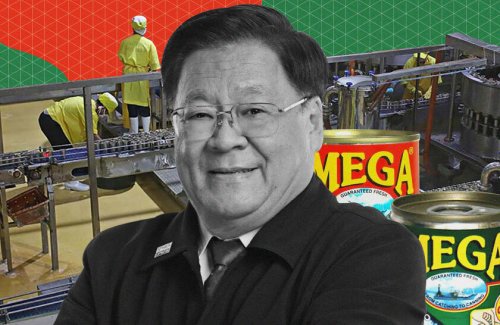
Mega Global Corporation began as a fishing vessel in 1975 and is now one of the Philippines’ most successful canned sardine manufacturers. It has 88 ships, two functioning factories, one under development, and two headquarters.

The company’s founder William Lim said that her wife was from a fishing family and his enthusiasm for fishing sparked his successful business – but his entrepreneurial journey wasn’t easy.

Be a risk-taker

He advised taking calculated risks and anticipating outcomes. “When we came up with advertisements, in three to six months, our sales started to improve slowly. You need to spend to build your brand name so people will have confidence in your product,” he told Esquire.

Good Brand Communication

By learning how to communicate effectively to store owners and consumers about your brand, you will be able to differentiate it from its competitors. “Because nobody knew our brand, supermarket owners did not want to accept our products to be on their shelves,” he told Esquire Magazine, he had to personally visit the stores to convince them for a chance to sell their product. 

Adapt to the times

Simply abandoning ineffective old methods, and always taking opportunities to improve.

Remain focused on your vision

Never forget what the goal was when starting and always remember what the company stands for. He added that when it comes to making decisions about the company, these guiding principles will serve as the primary motivation and compass. “If you keep changing your focus, you have less time to succeed. You have to put your heart and mind to your vision and never give up, no matter the odds,” he tells Philstar.

Image Source Sharon Cuneta Youtube Vlog

Uncategorized

Filipino-Chinese Lester Yu Of Fruitas Holdings Inc. Further Expands His 25+ Brand Portfolio

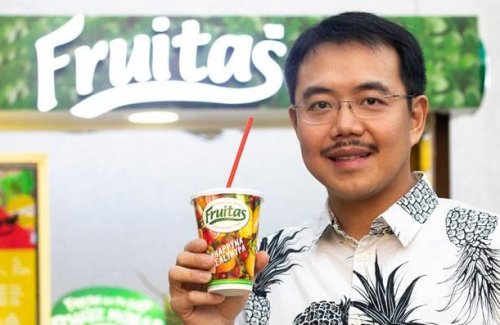
One of the leading groups in the food cart industry in the Philippines, Fruitas Holdings Inc., owned by Chinese-Filipino entrepreneur Lester Yu, has expanded its brand portfolio with the acquisition of Ling Nam, a 72-year-old establishment that operates three locations in Manila, Philippines. 

Fruitas’ wholly-owned subsidiary Soykingdom bought 100% of LN Banaue Inc. This firm operates Ling Nam restaurants such Peter K. Fung and Wanton Parlor.

Established in the 1950s, Ling Nam has long served authentic Cantonese noodles, congee, and dim sum. Beef Wanton Noodles, along with various other sizzling and mouth-watering dishes, can be found on the menus of restaurants in Manila’s Banawe and T. Alonzo districts in Quezon City.

Yu’s 25+ brand portfolio is one of the assets to be purchased as part of the acquisition. Soykingdom will pay 60% of the acquisition price when the deal closes. The remaining 40% will be paid till March 2023. The acquisition price is less than 10% of Fruitas’ March 31 assets and book value.

Fruitas had 720 stores across the country as of the end of December 2021, according to Bilyonaryo where they provided customers with fresh fruit shakes and juices, lemonade, coolers, milk tea, desserts, meat-filled pastries, soya-based products, baked goods, and lechon.