Stories

August 24, 2023

SHARE:

JFERRER is a talented Creative Director from Southern California. His journey began in high school when he discovered his love for film. Little did he know that this passion would lead him to an incredible path of self-discovery and empowerment.

It was in college that JFERRER embraced his cultural heritage as a Filipino American, realizing the significance of being Asian in shaping his identity. Despite facing doubts from others, he remained determined to pursue his dreams. This led him to create a documentary titled “DO WHAT I WANT,” shining a spotlight on the incredible work of young Asian creatives.

Now, JFERRER is gearing up for his next mission with “DO WHAT I WANT: SPIN OFF EDITION,” focusing on up-and-coming Asian American DJs in Southern California. Join us as we delve deeper into his story and his mission through an insightful interview with Asian Hustle Network.

THE ARTISTIC VOYAGE OF JFERRER

The world of music has been a constant inspiration for me. When I listen to a song, my mind instinctively creates music video scenes that synchronize perfectly with each beat. I knew that I had to make these vivid visions into reality and on the screen. I started taking clips of videos and putting them into music and created a whole new vibe and energy for the song. It was exciting to help people experience the song in a whole new way.

As my passion for storytelling through visuals grew, so did the scope of my aspirations. Beyond music videos, I became interested in capturing and celebrating diverse narratives and talent. This interest and experience took on a life of its own and I became involved with crafting and managing live events tailored specifically for emerging creatives.

These events became platforms for budding talents to shine, fostering a community of artistic expression and collaboration. I realize that creativity knows no bounds and I want to unleash it and inspire others to find their own creative gifts.

THE IMPACT OF HIS CULTURAL UPBRINGING ON HIS CREATIVE DIRECTION

I grew up in a Filipino American family. Throughout my life, I’ve been fortunate to be surrounded by creative family members and friends. Knowing the immense talent and gifts of Asian Americans around me, yet seeing the simple, one-dimensional portrayals of Asian/Asian American characters in movies and television was disappointing.

I want to showcase the rich diversity and talents of Asian Americans and promote positive and authentic representation.

BREAKING BOUNDARIES WITH “DO WHAT I WANT”

Asian Americans do not rely on their creative side to make money. If we wanted financial stability, we would typically look at careers in the medical field, business, or engineering, right? Creative energy would just be reserved for hobbies. But why can’t it be our full-time career? That’s what I wanted to challenge in “Do What I Want”. I wanted to break free from the stereotypes and challenge the notion that you can’t be successful doing something creative and fun. 

I believe in eliminating the fear of pursuing our passions and going against the grain. We have the power to choose our own paths and find immense success in doing what we love. This is the essence of the documentary I want to create – to shine a light on a community of like-minded individuals who have shattered barriers and defied expectations.

In this documentary, we will meet incredible artists, each driven by their unique passions and determined to leave their mark on the creative world. They stand as living examples of why this project exists – to showcase Asian creatives who fearlessly pursued their dreams, despite parental and societal pressures.

The title “DO WHAT I WANT” embodies the spirit of this documentary, as each person featured chose to follow their heart’s desires. They rejected the notion that their career should be dictated by others and, instead, embraced their true calling. This is a celebration of those who broke free from the confines of societal expectations and carved out their own path to success.

NAVIGATING CHALLENGES AND SEIZING OPPORTUNITIES AS A YOUNG CREATIVE

In the realm of young creatives today, networking their art stands as a paramount challenge. Excelling in their craft is undoubtedly crucial, yet without the ability to effectively brand their work and themselves, opportunities for exposure may be limited.

Embracing the significance of self-branding, however, holds the key to unlocking a broader audience and creating a multitude of opportunities that lie ahead. So, dare to showcase your true potential, and let your art shine brightly in the vast sea of possibilities. Together, your creativity and strategic branding will pave the way for a remarkable journey of growth and success. Keep believing in yourself, and the world will undoubtedly take notice of your inspiring creations.

A MESSAGE OF EMPOWERMENT FOR ASIAN AMERICAN ARTISTS THROUGH DO WHAT I WANT

I believe that “DO WHAT I WANT” has the power to ignite a flame of empowerment within the Asian and Asian American communities. It serves as a reminder for individuals to embrace their authenticity and follow their true passions, refusing to conform to societal norms or the cookie-cutter lifestyle. I envision a wave of inspiration, encouraging people to break free from limiting beliefs and embrace the unique paths that await them.

“DO WHAT I WANT” carries a profound significance for Asian American youth. As they witness the success and creativity of these artists, they can find a sense of connection and envision their own future selves achieving greatness. The documentary not only inspires confidence but also fosters a sense of community and unity among Asian Americans, reminding them that they too, can embrace their dreams and make a lasting impact in the world.

INSIGHTS AND ADVICE FROM JFERRER

Throughout my creative journey, the most valuable lesson I’ve learned is the importance of letting go of seeking validation from others. Happiness cannot be solely dependent on the approval of others. While I appreciate and consider the professional opinions of others when it comes to my work, I firmly believe that I must retain ownership of my decisions. Embracing this mindset empowers me to stay true to my vision and creative expression, paving the way for genuine fulfillment and growth.

By freeing myself from the need for constant validation, I can embark on a path driven by authenticity and self-belief. This newfound sense of independence fuels my creativity and allows me to push boundaries without being confined by external expectations. As I continue to evolve creatively, I welcome constructive feedback and embrace the opportunities to learn and grow, but I will always hold firm to my convictions, knowing that the true essence of my work lies within my passion and dedication to making a meaningful impact.

CONNECT WITH JFERRER

Instagram: @itsjferrer
Related Articles

Image Source: The Sacramento Bee

News

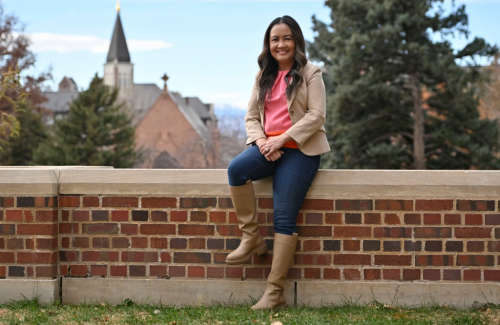
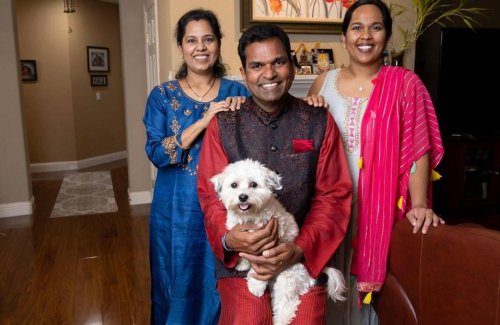
Asian American Community Is Prospering In Folsom Sacramento County

The number of Asian American immigrants in Folsom multiplied five-fold from 2000 until last year as found out by the US Census Bureau.

Among them are Chalamcherla of India, Steven Wang of China, and Marcus Yasatuke of Japan.

51-year-old Chalamcherla long decided to come to Folsom after falling in love with the city while attending the birthday celebration of a friend’s son, but it wasn’t until 2006 that he actually did so after spending two years in Singapore and the Bay Area.

Nearly ten years after arriving in the country, Steven Wang, who is currently Folsom’s city attorney, became a citizen.

Back then, it was hard for tourists to enter the US but Wang, together with her brother and mother, swiftly passed the immigration after saying that they would be visiting Disneyland, the only place he knew. 

Wang, who is now a lieutenant colonel, has been a member of the US Army Reserve since 2004. During that time, many of his fellow soldiers were losing their lives while serving, and Wang felt in danger.

Because of this, he worked in Folsom city before finishing the necessary time to serve in his Afghanistan deployment, and he told The Sacramento Bee, “I don’t know if every company is like this, but Folsom has been quite supportive of the military.”

Additionally, in 2003, Marcus Yasutake, 45, moved to Folsom with his wife after receiving job offers from Placerville and Roseville. They were able to reside there and raise a family of three children.

Communications director Christine Brainerd of the city of Folsom said that Asian Americans are likely attracted to the area on the same note as why many citizens choose to call Folsom home.

The head of the Sacramento Asian Pacific Chamber of Commerce’s economic development team believes that the tech-based companies in Folsom may be one factor for the recent increase in Asian residents.

Marcus cited the excellent school system in Folsom as one of the reasons why he came there, whilst Chalamcherla claimed that technology plays a significant role in the city’s increasing Asian population.

Racial discrimination is far from nonexistent in Folsom. That’s why Chalamcherla urges other Asians to immerse them in Asian culture.

Image Source: The Denver Post

News

Denver’s Vietnamese Refugees Share New Life While Keeping Family’s Heritage

Because of the chaos that was happening in their homeland in the 1970s, thousands of Vietnamese fled and some, later on, found a home in Colorado.

The melancholic memory is still fresh for Nga Vương-Sandoval, who, at the age of three, had to temporarily stay in refugee camps in the Philippines, Guam, and Arkansas.

She was with the about 2 million people who were unhoused and still have from within the shock of their suffering. 

It had been very challenging for them as they had to leave behind the good life they have in Vietnam and even depart from their relatives in order for them to leave safely.

Starting their life all over again, Denver has become a home to the 24,000-man Vietnamese Americans.

After being able to establish their community and found a home in the place, Nga said “I’m proud to say that it’s the city that I love, it’s the state that I love.”

Meanwhile, Vo, a 21-year-old grandchild of a Vietnamese who grew up in Aurora after his grannies and parents left Vietnam in the 1990s to seek a better life, had the experience of living in “a very diverse place.”

Knowing very little about his family’s past in Vietnam, he conducted a research project to unleash an “inherently American story,” according to him. 

Enabling people to have a glimpse of the refugees from a different perspective, Vo made use of his relatives as objects of his photography.

“Even though we moved here, they still lived a very Vietnamese life,” Vo said in Denver Post, 

It was also in his research that he found out how the majority of his family members were able to escape Vietnam while being robbed of cash and gold on their way.

He also mentioned how his family kept their culture by still practicing them in Denver which contributed to what America is, a place with diverse cultures. 

Despite having to start from scratch, they were able to begin life anew and even owned an Asian supermarket, Asian cinema, and Truong An Gifts.

His family also started the Far East Center shopping mall in 1987, home to him and his cousins and even to the Asian community.

Image Source: Silicon India

News

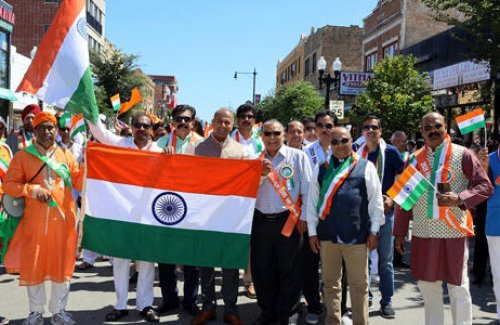
South Asians Found Second Home in Devon Avenue’s “Little India”

At Devon Avenue in Chicago, immigrants from India discovered a taste and comfort of their home country.

The area, commonly referred to as “Little India,” has served as a shelter for Indians who miss their culture.

Finding a home in it, Indians such as National Indo-American Museum board member Beverly Kumar, go there every now and then, especially when she craves Kalakand, a traditional Indian fudge.

According to Kumar, “It’s very comforting knowing that just 14 miles away from my house, there is an essence of Little India.” She also mentioned how reminiscing it is to see familiar sights, sounds, scents, and flavors when visiting Devon Avenue since it makes her feel as though she has never left home.

The area not only became a haven for Indians, but also for other South Asians who opened grocery stores, sari and jewelry stores, as well as many other enterprises in addition to food stores.

In the middle of 1960s, the place it became the second and fourth-largest enclave for Indian and Pakistani Americans, respectively.

The Federal Immigration and Naturalization Act of 1965 ushered in the first wave of South Asian immigration, which established settlements for South Asian professionals in Chicago, while the second phase arrived in the 1980s and 1990s.

Psychotherapist Ranjana Bhargava was one of the first immigrants who yearned for vegan food and searched for spices to sate her craving for Indian cuisines, which she found at Mexican places.

Between the first and second waves, businesses such as The Sari Palace sari store and Indian grocery stores began to thrive there.

Since then, a new community has been created where Indians continue to practice their culture through activities like viewing Indian movies, getting together, playing instruments, performing traditional dances, and eating.

The once Jewish-dominated place became a mainly Indian community which captivated more visitors where one can meet not only Indians but people of different races.

Image Source: Olivier Koning / Honolulu Magazine

Stories

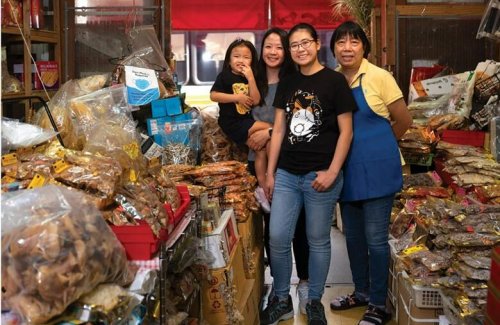
Chinatown’s Oldest and Most Respected Businesses Proudly Carried On By Next Generation

The blood of entrepreneurship runs through the veins of Chinatown’s Chinese food business owners, as three of the longest-running businesses have their children enter the management fields of their family business.

Tony and Selina Chun, together with Alan and Helen Chun, who have been in the business for decades, fully trusted their children to run the meat market company they bought in the 1980s.

The older generation passed it down to their children believing that they would treat it the same way they had after 40 years of building and creating the Chinatown cornerstone with crispy roast pigs, burnished roast ducks, and glazed char siu along with butcher store and seafood vendor.

Frankie, 35, and his cousins are now in charge of running the company that they established through diligence and thrift. Given that they have a family business to manage, Frankie has known since then that he won’t take long in any career.

He was reported in Honolulu magazine as saying, “I knew that anything I was going to pursue wasn’t going to be lengthy, because the family would always ask us back for support.”

He and his cousins learned the operations as a result of early exposure to the business and used them as a means of support, which pleased their parents, especially when they took their first vacation in four decades.

Meanwhile, Liana Fang, whose parents Wesley and Jie Mei Fang founded Sing Cheong Yuan Bakery, assists in running the business.

The pair bought the bakery from its original owners and then expanded it by bringing in more goods. The homemade goods were prepared using original family recipes that they later improved.

The 27-year-old claims she adores Chinatown but acknowledges that she is more passionate about cooking than baking. “It’s so authentic. I love Asian food, the fresh markets, the mom-and-pop shops,” she said.

Completing the list, the 33-year-old daughter of Sun Chong supermarket co-owner Ann Sung also contributes to management of the business.

Sun helps them sell their products and other items by marketing it online and by helping accomplish other stuff needed in the business.

Sun, who grew up at the shop with her cousins, said that their business is like a thread that can connect generations. She also claimed that coming home after studying abroad was like paying back her mother, who had done everything for her. Sun plans to update and improve her mother and aunt’s traditional business structure.