Stories

August 24, 2023

SHARE:

JFERRER is a talented Creative Director from Southern California. His journey began in high school when he discovered his love for film. Little did he know that this passion would lead him to an incredible path of self-discovery and empowerment.

It was in college that JFERRER embraced his cultural heritage as a Filipino American, realizing the significance of being Asian in shaping his identity. Despite facing doubts from others, he remained determined to pursue his dreams. This led him to create a documentary titled “DO WHAT I WANT,” shining a spotlight on the incredible work of young Asian creatives.

Now, JFERRER is gearing up for his next mission with “DO WHAT I WANT: SPIN OFF EDITION,” focusing on up-and-coming Asian American DJs in Southern California. Join us as we delve deeper into his story and his mission through an insightful interview with Asian Hustle Network.

THE ARTISTIC VOYAGE OF JFERRER

The world of music has been a constant inspiration for me. When I listen to a song, my mind instinctively creates music video scenes that synchronize perfectly with each beat. I knew that I had to make these vivid visions into reality and on the screen. I started taking clips of videos and putting them into music and created a whole new vibe and energy for the song. It was exciting to help people experience the song in a whole new way.

As my passion for storytelling through visuals grew, so did the scope of my aspirations. Beyond music videos, I became interested in capturing and celebrating diverse narratives and talent. This interest and experience took on a life of its own and I became involved with crafting and managing live events tailored specifically for emerging creatives.

These events became platforms for budding talents to shine, fostering a community of artistic expression and collaboration. I realize that creativity knows no bounds and I want to unleash it and inspire others to find their own creative gifts.

THE IMPACT OF HIS CULTURAL UPBRINGING ON HIS CREATIVE DIRECTION

I grew up in a Filipino American family. Throughout my life, I’ve been fortunate to be surrounded by creative family members and friends. Knowing the immense talent and gifts of Asian Americans around me, yet seeing the simple, one-dimensional portrayals of Asian/Asian American characters in movies and television was disappointing.

I want to showcase the rich diversity and talents of Asian Americans and promote positive and authentic representation.

BREAKING BOUNDARIES WITH “DO WHAT I WANT”

Asian Americans do not rely on their creative side to make money. If we wanted financial stability, we would typically look at careers in the medical field, business, or engineering, right? Creative energy would just be reserved for hobbies. But why can’t it be our full-time career? That’s what I wanted to challenge in “Do What I Want”. I wanted to break free from the stereotypes and challenge the notion that you can’t be successful doing something creative and fun. 

I believe in eliminating the fear of pursuing our passions and going against the grain. We have the power to choose our own paths and find immense success in doing what we love. This is the essence of the documentary I want to create – to shine a light on a community of like-minded individuals who have shattered barriers and defied expectations.

In this documentary, we will meet incredible artists, each driven by their unique passions and determined to leave their mark on the creative world. They stand as living examples of why this project exists – to showcase Asian creatives who fearlessly pursued their dreams, despite parental and societal pressures.

The title “DO WHAT I WANT” embodies the spirit of this documentary, as each person featured chose to follow their heart’s desires. They rejected the notion that their career should be dictated by others and, instead, embraced their true calling. This is a celebration of those who broke free from the confines of societal expectations and carved out their own path to success.

NAVIGATING CHALLENGES AND SEIZING OPPORTUNITIES AS A YOUNG CREATIVE

In the realm of young creatives today, networking their art stands as a paramount challenge. Excelling in their craft is undoubtedly crucial, yet without the ability to effectively brand their work and themselves, opportunities for exposure may be limited.

Embracing the significance of self-branding, however, holds the key to unlocking a broader audience and creating a multitude of opportunities that lie ahead. So, dare to showcase your true potential, and let your art shine brightly in the vast sea of possibilities. Together, your creativity and strategic branding will pave the way for a remarkable journey of growth and success. Keep believing in yourself, and the world will undoubtedly take notice of your inspiring creations.

A MESSAGE OF EMPOWERMENT FOR ASIAN AMERICAN ARTISTS THROUGH DO WHAT I WANT

I believe that “DO WHAT I WANT” has the power to ignite a flame of empowerment within the Asian and Asian American communities. It serves as a reminder for individuals to embrace their authenticity and follow their true passions, refusing to conform to societal norms or the cookie-cutter lifestyle. I envision a wave of inspiration, encouraging people to break free from limiting beliefs and embrace the unique paths that await them.

“DO WHAT I WANT” carries a profound significance for Asian American youth. As they witness the success and creativity of these artists, they can find a sense of connection and envision their own future selves achieving greatness. The documentary not only inspires confidence but also fosters a sense of community and unity among Asian Americans, reminding them that they too, can embrace their dreams and make a lasting impact in the world.

INSIGHTS AND ADVICE FROM JFERRER

Throughout my creative journey, the most valuable lesson I’ve learned is the importance of letting go of seeking validation from others. Happiness cannot be solely dependent on the approval of others. While I appreciate and consider the professional opinions of others when it comes to my work, I firmly believe that I must retain ownership of my decisions. Embracing this mindset empowers me to stay true to my vision and creative expression, paving the way for genuine fulfillment and growth.

By freeing myself from the need for constant validation, I can embark on a path driven by authenticity and self-belief. This newfound sense of independence fuels my creativity and allows me to push boundaries without being confined by external expectations. As I continue to evolve creatively, I welcome constructive feedback and embrace the opportunities to learn and grow, but I will always hold firm to my convictions, knowing that the true essence of my work lies within my passion and dedication to making a meaningful impact.

CONNECT WITH JFERRER

Instagram: @itsjferrer
Related Articles

Image Source: Considered Objects

Stories

Japanese-American Designer Sara Sakanaka Revamps Vintage Kimonos Into Modern Clothing

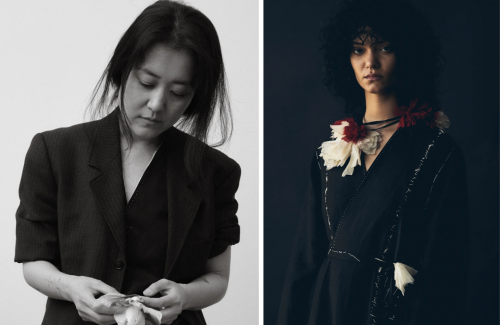
Each of us has a unique way of imparting the memories, stories, and mementos we want to pass on to our future generations. As for 39-year-old Japanese-American designer Sara Sakanaka, the way is by incorporating ancient tales into modern clothing.

In her studio in Brooklyn, Sara preserves a little drawstring bag that her grandmother sewed for her decades ago. One of Sakanaka’s oldest mementos, this heirloom represents a long-standing ideology and was made from leftover fabric.

You will also find in her studio, folded stacks of rescued textiles waiting for her to stitch them into something new, exactly like her grandmother used to do as a hobby.

After her grandmother passed away, Sara began studying the kimonos she had inherited from her. She realized that giving these garments a second chance through reconstruction was a means of healing and re-establishing her identity and cultural roots.

Her initial creation was a classic, collared, button-down shirt. She embroidered a tiered patchwork flower fashioned from leftover silk scraps inside each garment she produced.

“There’s this whole idea that objects have lives,” she says in a Vogue interview. “I like to see every piece as a truly considered object in that way,” thus, naming her label as Considered Objects.

Considered Objects offers tapered silk slacks, oversized coats, two-toned vests, draped dresses, and hand-sewn accessories. Each item is made of recyclable materials, and within each garment is a silk scrap flower and a tag. Each shirt comes with a drawstring bag, a keepsake designed to be handed on like the one she inherited from her grandma.

Image Source: Business Insider / Linkedin

Stories

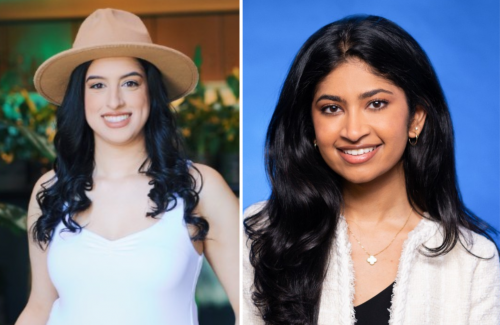
These Two South Asian Millenials Are Breaking Cultural Barriers To Empower Women’s Financial Freedom and Literacy

“Our culture has countless strict gender roles, one of which is that men manage money and women don’t,” Aashka Piprottar, the founder of Boss Betis, told Wealthy Wolfe’s Parween Mander over email. “So while men get to discuss money openly and proudly, women, if they ever discuss it, do so in hushed, quick voices.”

Those gender roles convinced Aashka from a young age “that I was just destined to be ‘bad with money’ and I would just have to rely on my father — and then in the future, probably my husband — to manage the money for me,” she adds. 

Boss Betis is a community-based platform to destigmatize the conversation around money, specifically the unique challenges faced by desi women. The platform wants to instill that financial freedom and literacy are essential to women’s empowerment. 

While Wealthy Wolfe is a digital financial coaching & education platform for women of color from immigrant upbringings specifically.

Aashka also told Parween that she’s unlearned the harmful money narratives of her childhood through working in the wealth management and financial wellness space.

By 27, Parween had a $150,000 net worth, so she could support herself and her parents without feeling burdened. She advised that we must put on our financial oxygen masks first, as well as to start a  “Parent fund” account to save money for our families in case they need it, “This is a way to set a financial boundary so that you don’t feel resentful or sabotaged if they require funds from you.” Parween wrote on Business Insider.

Understanding the complexity of the South Asian culture, Parween has helped one of her clients to set up strategic savings accounts to separate her money, while still contributing funds when her client’s parents asked for it.

Parween affirms that cultural expectations and narratives play a huge role in their ability as South Asian women to make different decisions, especially when it comes to their money and building wealth. 

Image Source: Omakase Restaurant Group

Stories

Omakase Restaurant Group: How These Two Immigrants Went From Dishwasher And Busboy To Co-Founders

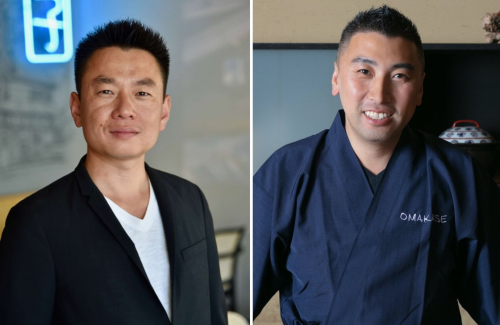
Kash Feng, co-founder and CEO of Omakase Restaurant Group, moved to the Bay Area at age 18. He was the only child of factory workers, so when he moved to the U.S. in 1999 with his buddies, he borrowed $20,000 from relatives and friends, promising to return them.

Feng started working as a dishwasher at a Chinese restaurant in the East Bay, and was quickly promoted to busboy. He progressed through various industrial occupations, frequently juggling three jobs at once, while also taking English classes.

In 2007, he met Jackson Yu, who eventually became his business partner and executive chef of Omakase sushi restaurant. Like Feng, Yu also had modest beginnings. At 16, he and his parents left China and moved to the Bay Area. 

Yu was a Japanese buffet busboy and gas boy on his days off. He was once asked to help out when the sushi chef cut his fingers one day. Yu then became so skilled that he could manually shape 2,000 identically sized sushi rice balls per day. Other sushi establishments took notice of this, including the well-known Ebisu in the Sunset, where he worked for five years to master sushi making.

They were both 26 when they decided to start their own restaurant business, Live Sushi, pooling all their savings and borrowing from relatives. Their restaurant was a hit from the beginning. Eventually, they were able to pay off all their loans, and the rest is history.

Now, Omakase Restaurant Group is an ever-growing empire, with different establishments all over San Francisco.

Image Source: Shark Tank

Stories

Software Engineer Turned Crocheting Hobby Into A Six-figure Business Takes $450k Deal on ‘Shark Tank’

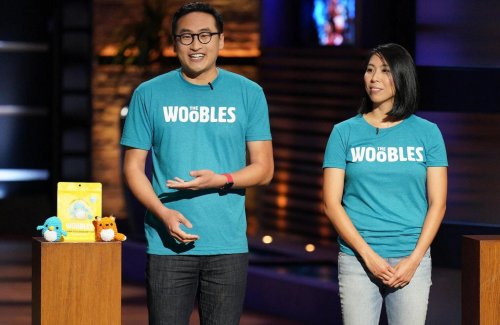
Justine Tiu, a former Google Classroom software engineer, started crocheting to unwind after work. After realizing its appeal, she and her ex-Wall Street director husband, Adrian Zhang, launched The Woobles, a crochet kit company.

On Friday’s “Shark Tank,” the two explained the hobby’s vast appeal. The firm made $3.1 million last year and $5.3 million since launching two years ago.

All five Sharks quickly decided they wanted a piece of the company, and they showed they were willing to betray their business partners to get it.

The Woobles is a crafting kit company that offers patterns, step-by-step video tutorials, and all the materials needed to do amigurumi crochet, a Japanese fiber art form, even if you are a complete beginner. Once your kit arrives with all the materials, a login code gives you step-by-step written and video instructions to make your craft and helpful hints when you get stuck.

Tiu and Zhang ultimately received a $450,000 investment offer from sharks Mark Cuban and Lori Greiner. In exchange, the company, which at the time of filming was on pace to generate $7 million in yearly sales, gave Cuban and Grenier a split of 6% equity.