Stories

May 12, 2025

SHARE:

Jennifer Chun, Uniformed’s designer, brings a refreshing collaboration of Korean-American heritage and sustainability practices. Her story began during the pandemic, when she discovered traditional natural dyeing techniques. After connecting with experts and artisans, she came to Korea and got directly involved in the dyeing lessons. “I had no idea Korea had its natural dyeing traditions,” Chun shared.

Her collection is a celebratory integration of hand-dyed materials and fabrics from traditional markets to create a sustainable, limited-edition line.
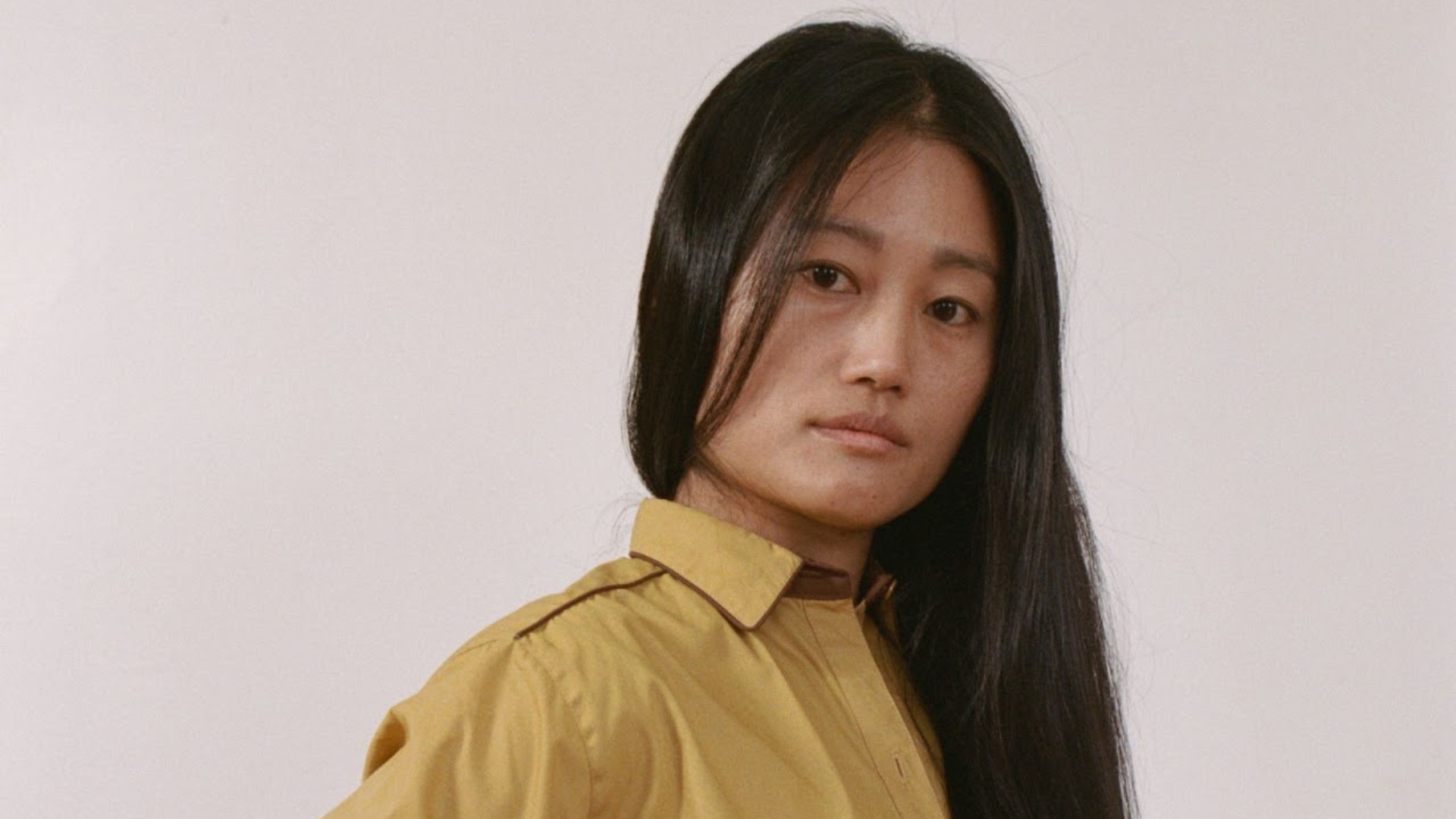
Jennifer Chun blends her Korean heritage into her sustainable fashion line, Uniformed. (Photo credit: Wayn Ohara Reid)

Overcoming the Challenges of Slow Fashion

Amidst the growing world of fast fashion, it is clear that Chun’s main challenge lies in maintaining sustainability while navigating an industry deeply accustomed to mass production and fleeting trends.

Fashion has changed so much that consumers want items faster or cheaper because we have gotten used to mass production. I make such limited quantities that it can be a challenge working with factories that would rather produce en masse and do not want to make specialized pieces that take thought or time, as producing less can increase manufacturing prices. It’s difficult to educate consumers on this when even people in my industry aren’t aware of what goes into the whole process.

During the global lockdown, designer Jennifer Chun found an unexpected bridge to her Korean heritage through a chance encounter with an article on Korea’s natural dyeing traditions—an art form predating the country’s unification.

I came across an article about Korea’s natural dyeing and artisans. I had no idea Korea had its own natural dyeing traditions and techniques that predated the formal unification of Korea. In the article, they interviewed a natural dyer outside of Seoul, and I decided to just email her. My mother was in lockdown, living in LA, and like many senior citizens, the isolation was incredibly difficult. So I asked her to collaborate with me by helping me communicate with the natural dyer.  

We all eventually became pen pals. Once travel restrictions were lifted, my husband and I visited my father, who was living in lockdown in Korea. We made arrangements to meet with the natural dyer and visited her indigo farm and studio. She taught me how to cut the indigo and showed me the basic process of her craft. She suggested we collaborate.

The line developed from there, eventually leading to a capsule collection, incorporating fabrics developed in Korea, including hand-dyed materials and fabrics purchased in traditional markets around the country. And constructed into limited edition pieces to ensure sustainability, and designed with a uniform aesthetic, in New York City’s garment district.

Working with Korean artists—who prioritize quality over quantity—has deepened her appreciation for true craftsmanship. ‘There is so much pride in the craft and process. They do not compromise sustainability at any cost, and I had to assure them that I wouldn’t either if we were to collaborate,’ she explains, highlighting Uniformed’s commitment to sustainability.

Jennifer, while in South Korea.

Integrating Heritage into Design

Jennifer is not one to shy away from how her heritage has a profound impact on her design. She takes great pride in how it informs her work, and she has learned to combine these cultural elements more skillfully as she refines her craft. “With Uniformed, I am really proud that I have been able to bring my Korean American heritage into my designs,” she shared. “None of this is easy or formulaic, but it is a new, interesting, and inspired challenge.”

The opportunities to reconnect with her roots, meet local artisans, and learn new techniques have been both humbling and transformative for Jennifer. “It can be a very humbling experience to adopt a new perspective and craft after working in this industry a certain way,” she reflected. “You’re almost starting over and sometimes have to prove yourself, but it’s all been worth it for the new experiences.” This humility and commitment to continuous learning form the foundation of her design philosophy and entrepreneurial values.

Fashion with a Global Vision

Jennifer’s ultimate goal for Uniformed is to collaborate with artisans around the world, incorporating the diverse experiences of Koreans globally. “I want to understand more about Koreans in different parts of the world,” she shared. By blending these cultural perspectives, she aims to create a brand that celebrates the universal appeal of the ‘uniform,’ merging tradition with modernity.

Jennifer Chun’s design (Photo Credit: Kim Jae Min)

Connect With Jennifer Chun

IG: @uniformed_world

Website: uniformedworld.com
Related Articles

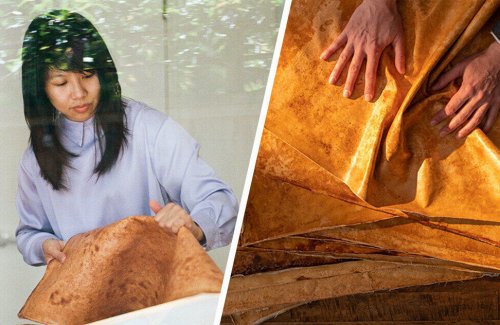
Image Source: Carla Tramullas / MycoWorks

Uncategorized

MycoWorks’ Sustainable Mushroom Leather Raised Over $187M From General Motors and Hollywood A-Listers

“Growing the future has only just started. This industry will continue to surprise people,” says Philip Ross, co-founder of MycoWorks, a mycelium material founder and producer.

As the innovator of high-quality mushroom “leather” for the luxurious Hermes bags, the business acquired $187 million from Natalie Portman, John Legend, and General Motors and will soon cover the latter’s electric car interiors.

Ross unintentionally discovered leather-like material in reishi mushrooms, a fungus he farmed for his cancer and AIDS more than four decades ago. He then became a mycelium artist and featured his fungus-based works at famous museums.

According to Sophia Wang, co-founder of MycoWorks whom Phil met six years before they founded the firm while working together on art ventures, Ross’s discovery marked the “leather’s” birth to the globe.

Wang and Ross continued to discover more about mycelium and later realized that the material is enticing to buyers who don’t like synthesized contaminants and materials which are produced from animals.

Alongside raising their funding source, the company also conducted a groundbreaking at South Carolina Factory with the aim of attaining a sufficient supply of their fancy product.

With about 200 employees, Matt Scullin, the company’s CEO, said that the “Brands are making very significant changes to address what is really a growing demographic of people who want to buy sustainable products that have provenance and traceability and a lower carbon footprint, lower water use—and mycelium does all of those things.”

Compared to animal leather, the mushroom leather-like material is far more environmentally friendly as the former adds up to about a million tons of carbon dioxide which is tantamount to 30 million cars’ yearly emissions.

Despite environmental and animal issues, people prefer biomaterials or “next-gen” materials over the past decade making it in-demand as multi-billion dollars are invested in the industry.

Nonetheless, Hermes’ firm in France is soon to release its $4,200-worth “Victoria” bag made from MycoWorks’ amber-hued exquisite mycelium.

Image Source: Ricci Chocolates & Michiko Liquete Facebook

Uncategorized

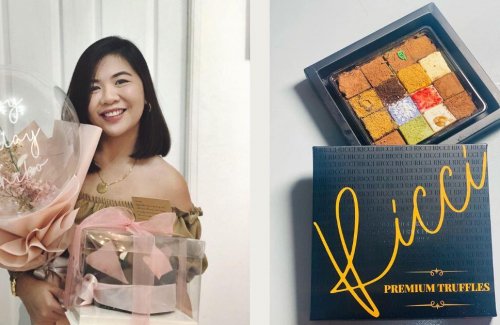
Mom Without Prior Baking Experience But Through Perseverance Finds Success With Homemade Chocolates

Despite having zero experience in baking, this mom entrepreneur was able to give birth to Ricci Chocolates, now branded as the “Home of the Best Tasting Truffles in Baguio City, Philippines” 

Mitchiko Liquete clarified that she is a dessert lover but never a chocolate fanatic. Initially having no interest in making desserts nor in cooking, she capitalized on believing in herself with the vision of making her products look off-the-peg.

To better her craft, Mitchicko heeded the DTI’s Kapatid Mentor ME (KMME) free online training program in September 2022 to learn about branding and marketing while in a ‘hit and miss’ process in chocolate-making, which she considered as a great help for business-starters like her. 

Mitchiko’s 100% homemade premium chocolates got 20 to 30 boxes of sales per day that eventually reached over and above 2,000 to 3,000 packs weekly and enabled the company to supply more than 100 resellers and distributors nationwide.

The success of Mitchicko’s purely hand-crafted, first-class, and domestically produced chocolates paved the way for opening four stores and actualized $17,000 income in one year alone making Mitchiko more than proud.

She plans to expand her sweet business by making Ricci Chocolates visible in every mall in the Philippines.

Image Source: Plant Habitat Facebook

Uncategorized

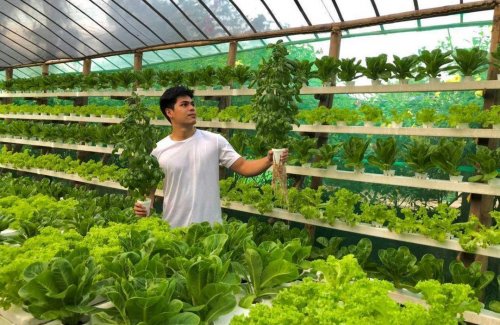
This Filipino Millennial Started With $20 To Pursue Hydroponics Farming Business

Nothing is impossible for this 21-year-old Filipino who engaged in modern farming with only $20 as a starting capital.

Despite being dissuaded by his grandfather who wanted him to become an engineer, Harold Zapata was determined to uplift farming, recognize farmers, and attest that farmers are the providers of our staple food and without them, it would be challenging for us to live.

As a farmer, his grandfather believed that farming is tantamount to poverty which made him influence his grandson to pursue a different profession.

However, the farmer’s blood runs in Harold’s veins, with Harold’s minimal capital and resourcefulness, he initially started hydroponics farming using used styrofoams which he asked from vendors in their local market.

Unlike traditional farming, hydroponics farming is cheaper as it is a type of farming where plants are grown in water and not in soil and a farmer would spend money only on styro cups, coco peat, feeds, and nutrients.

As a beginner, he only had a miniature greenhouse that could hold 80 pieces of lettuce and made him earn as much as $300 a month, which gradually allowed him to expand his business.

Harold’s hobby-turned-business serves him as a source of income not only from the harvests but from offering for-sale seedlings, building greenhouses, and providing consultations with his customers.

He also exclaimed that pursuing one’s interest unlocks many possibilities and that farming also teaches life lessons.

Image Source: Boy Isaw Instagram

Uncategorized

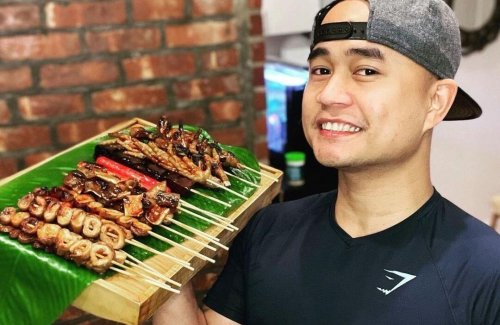
Hard Work Pays Off For Bringing Filipino Street Food “Boy Isaw” To New York, Now Makes 14$K A Month

The Filipino street food vendor admits that perseverance and hard work were really his main capitals in achieving his dream.

After introducing one of the most popular Filipino barbeque street food, “ihaw-ihaw,” especially the isaw (grilled chicken or pork intestines), to New York, Filipino street food seller Robin John Calalo has seen the fruits of his labor, earning more than $14,000 each month.

His shop, “Boy Isaw,” became well-known among fellow Filipinos and even foreigners who yearned for a taste of isaw, betamax (coagulated chicken blood), adidas (chicken feet), and other Filipino street food. 

Robin’s success came as a surprise considering that his small firm only had $50 when it was founded in 2019, during the onset of the pandemic. He claims that while in the supermarket, he suddenly made the decision to open his BBQ food cart due to a craving for Filipino food with his friends and family as the first customers.

According to Business News Philippines, Boy Isaw peddles in food bazaars and engages in online selling where he posts for-sale ready-to-grill street foods.

Aside from grilled food including hotdogs, chicken, and others which he posts on his Instagram, he also serves rice and chicharon bulaklak (deep-fried pork intestine) which is also a bestseller.