In Luffy Huang’s Vision for Pulse Events, Cultures Align Through EDM Music
Stories
September 22, 2024
SHARE:
CEO of Pulse Events Luffy Huang made waves across New York City this past Labor Day weekend. Known as “the world’s wettest party,” the S2O event made a splash in the Brooklyn neighborhood, delivering euphoric EDM melodies with Thai-inspired traditions that stretch across borders to America.
But as the CEO of Pulse Events, his vision yearns for unity and togetherness through the power of music. Throughout the years, Luffy has been a driving force behind the diversification of the EDM festival scene, condensing the beats into a spectacular celebration of culture and community.
The Sounds of Luffy Huang’s Chinese Upbringing and American Dream
Growing up in China, his early passion for music led him to a career as a singer and TV host between 15 to 20 years ago. Encouraged by the eclectic soundscape in the U.S., his American dream for a successful music career was granted by one of the artists he was touring along with, paving the way for his move to the States.
“I grew up in China and following my passion for music, I became a singer and TV host 15 to 20 years ago. Since it was always my dream to break into the music industry in the U.S., I began touring with artists and finally came to America with one of them in 2020.”
When he arrived in the U.S., Luffy was bewildered yet determined. The hustle in a foreign land might have caught him off guard for a moment but it also helped him head towards a new direction. “I found the industry here to be very open-minded and felt inspired and encouraged to start my own entertainment company here,” he says.
Luffy left China for the U.S., driven by the fast-paced music scene.
This geographic shift is a tableau of music inspirations, cultural shock and a deepening sense of identity, all of which prompted him to create Pulse Events, an event agency focused on bridging the Eastern and Western cultures through music and community.
Cultural Harmony Through Music and Luffy Huang’s Pulse Events Journey
“What inspired me the most was seeing people of different cultures embrace shows produced in Asia and influenced by Eastern traditions,” he says.
Such ethos were themselves echoed throughout his work, by introducing a global audience to the purpose he wanted to share more of, from highlighting notable Asian creatives and talents, to celebrating the vibrant culture of the Asian community. “I realized that this experience was missing in the U.S. and it became my mission to produce shows here that expose fans to the traditions and dance community culture in Asia,” he says. “I am proud that my shows include elements like Asian night markets, lion dances and spraying water that is the Songkran Thai New Year custom.”
One of the drawbacks of starting Pulse Events in a new country, however, is the balance and harmony among different communities, especially in the U.S. where multiculturalism has long been its celebrated trademark. Yet, despite this animated diversity, Luffy needs to traverse the tricky waters of inclusivity, representation and U.S. culture:
“Turning my vision into a reality took a bit of time. But once we put on our first Pulse Events show, we learned from the process and got into a good rhythm where we put on multiple shows annually and continued to expand. One of thechallenges I face on a daily basis is figuring out how to represent Asian culture in the most authentic way possible, while having our shows appeal to a diverse audience. Striking that balance takes a lot of thought and hard work, finding the right partners to bring that to life. Another challenge I face is that English is my second language, so I sometimes have to take the extra step of using translation tools or making a greater effort to make sure my ideas are communicated correctly.”
Luffy Huang leads Pulse Events with determination, expanding the reach of Asian culture through unforgettable shows
While those challenges might have vexed him in the beginning, every show, event and festival was an emblem of the connectivity that he always has in mind for Pulse Events. The 2023 Spring Festival that Pulse Events had orchestrated last year was an EDM-heavy event to honor Lunar New Year and pull together traditional elements, joyful moments and different communities. It was the first event to infuse electronic music and Asian culture that introduced the beauty of this cultural festival to more American youths:
“I am proud of every show Pulse Events has put on and the legacy we are slowly building by making them annual. We are gearing up for our second Winter Festival in November and our third Spring Festival next year, and planning to bring back S2O after debuting it to the U.S. this past Labor Day weekend. I feel fortunate that we have established a good working relationship with one of the most famous venues in New York City and the world, The Brooklyn Mirage. I am also proud to be the founder of the Krazy Super Concert elevating K-pop in America.”
When East Meets West in Luffy Huang’s Vision for Pulse Events
As an organization that holds the same values as AHN to uplift and highlight the Asian community, AHN takes this interview as a special opportunity to explore how Asian talents are being showcased and represented in the industry. Luffy’s vision remains unchanged:
“Themission and vision of Pulse Events is to bridge the East and the West through music events that unite people of all backgrounds and educate them. Through bringing fans of all kinds together through the common love of music, we are able to open their minds and hearts to understanding Asian culture and embracing the immense talent within our community, from music producers and DJs to entrepreneurs like myself and my colleagues.”
This determination and commitment has led Luffy on a road of success, producing annual mega shows like the Lunar New Year Spring Festival, the Winter Festival and most recently S2O New York, all to celebrate cultures and unite communities through EDM. Even just at the start, Pulse Events has landed performance deals with many prominent artists in the electronic music scene, from the enigmatic Marshmello to platinum record-selling DJ Afrojack.
Luffy’s goal is clear: bridge the East and West through music, uniting fans from all backgrounds while showcasing Asian talents.
Connect With Luffy Huang
Much of Luffy’s current success comes less from pure luck and more from a consistent performance of hard work and innovation. Whether it be electric live festivals, or getting deep down into his heritage, Luffy knows better than ever that Pulse Events was a child of hustle and resilience, no matter where you came from and who you are:
“From my own journey,I believe that if you hustle hard enough and never give up on your dreams, you will succeed, even in a foreign country or place outside of your comfort zone.”
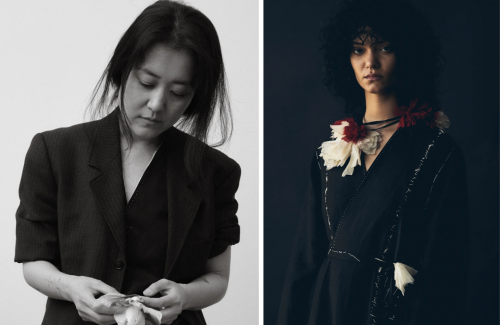
Each of us has a unique way of imparting the memories, stories, and mementos we want to pass on to our future generations. As for 39-year-old Japanese-American designer Sara Sakanaka, the way is by incorporating ancient tales into modern clothing.
In her studio in Brooklyn, Sara preserves a little drawstring bag that her grandmother sewed for her decades ago. One of Sakanaka’s oldest mementos, this heirloom represents a long-standing ideology and was made from leftover fabric.
You will also find in her studio, folded stacks of rescued textiles waiting for her to stitch them into something new, exactly like her grandmother used to do as a hobby.
After her grandmother passed away, Sara began studying the kimonos she had inherited from her. She realized that giving these garments a second chance through reconstruction was a means of healing and re-establishing her identity and cultural roots.
Her initial creation was a classic, collared, button-down shirt. She embroidered a tiered patchwork flower fashioned from leftover silk scraps inside each garment she produced.
“There’s this whole idea that objects have lives,” she says in a Vogue interview. “I like to see every piece as a truly considered object in that way,” thus, naming her label as Considered Objects.
Considered Objects offers tapered silk slacks, oversized coats, two-toned vests, draped dresses, and hand-sewn accessories. Each item is made of recyclable materials, and within each garment is a silk scrap flower and a tag. Each shirt comes with a drawstring bag, a keepsake designed to be handed on like the one she inherited from her grandma.
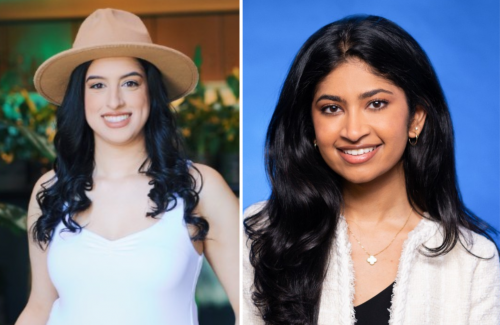
“Our culture has countless strict gender roles, one of which is that men manage money and women don’t,” Aashka Piprottar, the founder of Boss Betis, told Wealthy Wolfe’s Parween Mander over email. “So while men get to discuss money openly and proudly, women, if they ever discuss it, do so in hushed, quick voices.”
Those gender roles convinced Aashka from a young age “that I was just destined to be ‘bad with money’ and I would just have to rely on my father — and then in the future, probably my husband — to manage the money for me,” she adds.
Boss Betis is a community-based platform to destigmatize the conversation around money, specifically the unique challenges faced by desi women. The platform wants to instill that financial freedom and literacy are essential to women’s empowerment.
While Wealthy Wolfe is a digital financial coaching & education platform for women of color from immigrant upbringings specifically.
Aashka also told Parween that she’s unlearned the harmful money narratives of her childhood through working in the wealth management and financial wellness space.
By 27, Parween had a $150,000 net worth, so she could support herself and her parents without feeling burdened. She advised that we must put on our financial oxygen masks first, as well as to start a “Parent fund” account to save money for our families in case they need it, “This is a way to set a financial boundary so that you don’t feel resentful or sabotaged if they require funds from you.” Parween wrote on Business Insider.
Understanding the complexity of the South Asian culture, Parween has helped one of her clients to set up strategic savings accounts to separate her money, while still contributing funds when her client’s parents asked for it.
Parween affirms that cultural expectations and narratives play a huge role in their ability as South Asian women to make different decisions, especially when it comes to their money and building wealth.
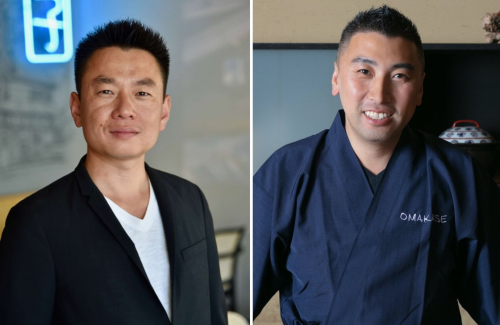
Kash Feng, co-founder and CEO of Omakase Restaurant Group, moved to the Bay Area at age 18. He was the only child of factory workers, so when he moved to the U.S. in 1999 with his buddies, he borrowed $20,000 from relatives and friends, promising to return them.
Feng started working as a dishwasher at a Chinese restaurant in the East Bay, and was quickly promoted to busboy. He progressed through various industrial occupations, frequently juggling three jobs at once, while also taking English classes.
In 2007, he met Jackson Yu, who eventually became his business partner and executive chef of Omakase sushi restaurant. Like Feng, Yu also had modest beginnings. At 16, he and his parents left China and moved to the Bay Area.
Yu was a Japanese buffet busboy and gas boy on his days off. He was once asked to help out when the sushi chef cut his fingers one day. Yu then became so skilled that he could manually shape 2,000 identically sized sushi rice balls per day. Other sushi establishments took notice of this, including the well-known Ebisu in the Sunset, where he worked for five years to master sushi making.
They were both 26 when they decided to start their own restaurant business, Live Sushi, pooling all their savings and borrowing from relatives. Their restaurant was a hit from the beginning. Eventually, they were able to pay off all their loans, and the rest is history.
Now, Omakase Restaurant Group is an ever-growing empire, with different establishments all over San Francisco.
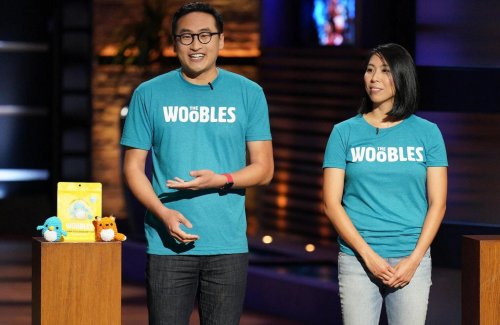
Justine Tiu, a former Google Classroom software engineer, started crocheting to unwind after work. After realizing its appeal, she and her ex-Wall Street director husband, Adrian Zhang, launched The Woobles, a crochet kit company.
On Friday’s “Shark Tank,” the two explained the hobby’s vast appeal. The firm made $3.1 million last year and $5.3 million since launching two years ago.
All five Sharks quickly decided they wanted a piece of the company, and they showed they were willing to betray their business partners to get it.
The Woobles is a crafting kit company that offers patterns, step-by-step video tutorials, and all the materials needed to do amigurumi crochet, a Japanese fiber art form, even if you are a complete beginner. Once your kit arrives with all the materials, a login code gives you step-by-step written and video instructions to make your craft and helpful hints when you get stuck.
Tiu and Zhang ultimately received a $450,000 investment offer from sharks Mark Cuban and Lori Greiner. In exchange, the company, which at the time of filming was on pace to generate $7 million in yearly sales, gave Cuban and Grenier a split of 6% equity.