In Luffy Huang’s Vision for Pulse Events, Cultures Align Through EDM Music
Stories
September 22, 2024
SHARE:
CEO of Pulse Events Luffy Huang made waves across New York City this past Labor Day weekend. Known as “the world’s wettest party,” the S2O event made a splash in the Brooklyn neighborhood, delivering euphoric EDM melodies with Thai-inspired traditions that stretch across borders to America.
But as the CEO of Pulse Events, his vision yearns for unity and togetherness through the power of music. Throughout the years, Luffy has been a driving force behind the diversification of the EDM festival scene, condensing the beats into a spectacular celebration of culture and community.
The Sounds of Luffy Huang’s Chinese Upbringing and American Dream
Growing up in China, his early passion for music led him to a career as a singer and TV host between 15 to 20 years ago. Encouraged by the eclectic soundscape in the U.S., his American dream for a successful music career was granted by one of the artists he was touring along with, paving the way for his move to the States.
“I grew up in China and following my passion for music, I became a singer and TV host 15 to 20 years ago. Since it was always my dream to break into the music industry in the U.S., I began touring with artists and finally came to America with one of them in 2020.”
When he arrived in the U.S., Luffy was bewildered yet determined. The hustle in a foreign land might have caught him off guard for a moment but it also helped him head towards a new direction. “I found the industry here to be very open-minded and felt inspired and encouraged to start my own entertainment company here,” he says.
Luffy left China for the U.S., driven by the fast-paced music scene.
This geographic shift is a tableau of music inspirations, cultural shock and a deepening sense of identity, all of which prompted him to create Pulse Events, an event agency focused on bridging the Eastern and Western cultures through music and community.
Cultural Harmony Through Music and Luffy Huang’s Pulse Events Journey
“What inspired me the most was seeing people of different cultures embrace shows produced in Asia and influenced by Eastern traditions,” he says.
Such ethos were themselves echoed throughout his work, by introducing a global audience to the purpose he wanted to share more of, from highlighting notable Asian creatives and talents, to celebrating the vibrant culture of the Asian community. “I realized that this experience was missing in the U.S. and it became my mission to produce shows here that expose fans to the traditions and dance community culture in Asia,” he says. “I am proud that my shows include elements like Asian night markets, lion dances and spraying water that is the Songkran Thai New Year custom.”
One of the drawbacks of starting Pulse Events in a new country, however, is the balance and harmony among different communities, especially in the U.S. where multiculturalism has long been its celebrated trademark. Yet, despite this animated diversity, Luffy needs to traverse the tricky waters of inclusivity, representation and U.S. culture:
“Turning my vision into a reality took a bit of time. But once we put on our first Pulse Events show, we learned from the process and got into a good rhythm where we put on multiple shows annually and continued to expand. One of thechallenges I face on a daily basis is figuring out how to represent Asian culture in the most authentic way possible, while having our shows appeal to a diverse audience. Striking that balance takes a lot of thought and hard work, finding the right partners to bring that to life. Another challenge I face is that English is my second language, so I sometimes have to take the extra step of using translation tools or making a greater effort to make sure my ideas are communicated correctly.”
Luffy Huang leads Pulse Events with determination, expanding the reach of Asian culture through unforgettable shows
While those challenges might have vexed him in the beginning, every show, event and festival was an emblem of the connectivity that he always has in mind for Pulse Events. The 2023 Spring Festival that Pulse Events had orchestrated last year was an EDM-heavy event to honor Lunar New Year and pull together traditional elements, joyful moments and different communities. It was the first event to infuse electronic music and Asian culture that introduced the beauty of this cultural festival to more American youths:
“I am proud of every show Pulse Events has put on and the legacy we are slowly building by making them annual. We are gearing up for our second Winter Festival in November and our third Spring Festival next year, and planning to bring back S2O after debuting it to the U.S. this past Labor Day weekend. I feel fortunate that we have established a good working relationship with one of the most famous venues in New York City and the world, The Brooklyn Mirage. I am also proud to be the founder of the Krazy Super Concert elevating K-pop in America.”
When East Meets West in Luffy Huang’s Vision for Pulse Events
As an organization that holds the same values as AHN to uplift and highlight the Asian community, AHN takes this interview as a special opportunity to explore how Asian talents are being showcased and represented in the industry. Luffy’s vision remains unchanged:
“Themission and vision of Pulse Events is to bridge the East and the West through music events that unite people of all backgrounds and educate them. Through bringing fans of all kinds together through the common love of music, we are able to open their minds and hearts to understanding Asian culture and embracing the immense talent within our community, from music producers and DJs to entrepreneurs like myself and my colleagues.”
This determination and commitment has led Luffy on a road of success, producing annual mega shows like the Lunar New Year Spring Festival, the Winter Festival and most recently S2O New York, all to celebrate cultures and unite communities through EDM. Even just at the start, Pulse Events has landed performance deals with many prominent artists in the electronic music scene, from the enigmatic Marshmello to platinum record-selling DJ Afrojack.
Luffy’s goal is clear: bridge the East and West through music, uniting fans from all backgrounds while showcasing Asian talents.
Connect With Luffy Huang
Much of Luffy’s current success comes less from pure luck and more from a consistent performance of hard work and innovation. Whether it be electric live festivals, or getting deep down into his heritage, Luffy knows better than ever that Pulse Events was a child of hustle and resilience, no matter where you came from and who you are:
“From my own journey,I believe that if you hustle hard enough and never give up on your dreams, you will succeed, even in a foreign country or place outside of your comfort zone.”
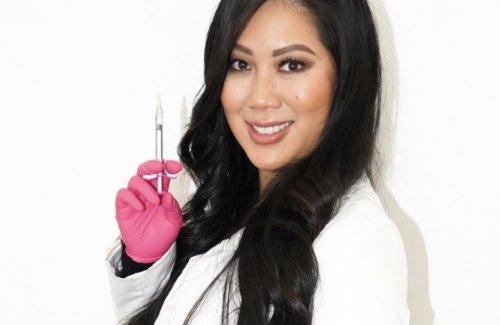
Dr. Lanna Cheuck, an Ivy-League Trained, Board Certified Urologic Surgeon turned entrepreneur has made a significant impact in the field of aesthetic medicine.
Today, she is the proud owner of LC Medical, a medical spa in Manhattan, and also leads FACE Med-Spa Training, where she shares her expertise with fellow medical professionals.
She has been featured in esteemed publications like Forbes and has been recognized as a Key Opinion Leader in the industry. Nevertheless, she remains grounded and motivated by the positive transformations she brings to her patients and the opportunity to guide others on their own professional journeys.
Beyond her entrepreneurial endeavors, Dr. Cheuck continues to excel as a Board Certified Urologic surgeon, practicing at Jacobi Hospital. She is a respected educator, sharing her knowledge on topics such as penile rehabilitation and making significant contributions to the ISSM.
In an interview with Asian Hustle Network, Dr. Lanna Cheuck shares her remarkable journey and insights into the world of aesthetic medicine. Join us as we delve into her experiences, challenges, and triumphs, discovering how she defied conventions and built a thriving career that empowers both herself and others.
HUMBLE BEGINNINGS OF DR. LANNA CHEUCK
I was born in Chinatown in the Smith Housing Projects and was later moved out to live with my grandparents on Long Island in the middle of second grade as the crime was increasing in our building and my parents had been mugged and beaten up multiple times.
My parents immigrated from China during the Cultural Revolution. They built a raft to escape to Macau, then paid to be smuggled through a vegetation boat before coming to Hong Kong. I grew up very poor and was one of five Asians living in a predominantly white neighborhood on Long Island.
For as long as I remember I wanted to become a Urologic Surgeon, but I didn’t realize the sacrifices I would make to get there. While it is a male-dominated field, I remember at the time I was one of 8% of women in urology.
I had my first child born prematurely with special needs and blindness and took off six months to be with her in the ICU. It was at this time that I realized if I wanted to provide for my family, especially my daughter who will be dependent on me and my husband for a very long time, then I would need to find a new trajectory to help me become more financially independent.
DR. LANNA CHEUCK’S RESILIENCE IN THE FACE OF INEQUALITY AS A UROLOGIC SURGEON
I asked the administrator at the hospital for a salary increase and he told me that I needed to prove why I needed to make more. So, I went and got a different job offer to become a program director of a New York City Academic Institution as their residency director with a 40% pay increase.
When I presented my job offer to the hospital administrator, he took one look and told me that I should leave and he could not match my salary. It was also at this time that my male counterparts were making six figures more than me while I was working with the toughest patients and doing the toughest work.
CHALLENGES AND OBSTACLES SHE OVERCAME
My father started as a busboy in a restaurant, then became a taxi cab driver, worked at a sweatshop, and then got into the spa business. He opened up a Spa called Eden Day Spa on Broadway. He asked me to help and that’s when I figured I can help my family business and go into aesthetics as a physician.
My biggest obstacle was being under the radar and so I couldn’t really grow. I asked the hospital administrator at the hospital for permission to pursue my second job and he gave me permission.
I was working full-time as a urologic surgeon doing the most difficult surgeries and on nights and weekends, I was taking care of my child and working at my father’s spa trying to grow the aesthetics part of the business.
I remember waiting for one patient to come at 9:00 pm because that was the only time I had available. I was missing my newborn and questioning whether this was worth it. In the beginning, it was very tough to garner any patients, I usually had one patient a week and most of the time they were a no-show. I would wait for hours and drive an hour from Harlem in hopes of seeing even one patient. The obstacles were juggling time, family, wondering if I was making the right decision, and whether or not it was worth being away from my child who was also breastfeeding.
DR. LANNA CHEUCK EMPOWERING THE AESTHETIC MEDICINE COMMUNITY
I realized that if nobody put me on their platform then I would make my own, therefore, I opened my own aesthetic training business.
When I was first starting, I took two training courses and realized that these courses do not prepare you for the field of aesthetic medicine neither clinically nor from a business standpoint.
As a surgeon, I’ve always been the type to see one; do one; teach one, and that’s exactly what I did. I started an online community for physicians to pivot into aesthetic medicine because one of the things we were never taught in school was business. Since then, I’ve trained hundreds–if not thousands–of physicians and nurses. Some other huge and field-relevant accomplishments include being featured in Forbes and named a Key Opinion Leader for InMode and Galderma as well as a GAIN Trainer.
HER ADVICE TO ASPIRING ENTREPRENEURS
Network with as many people as you know, be a connector.
Help other people and let everyone else know what you need, if you don’t ask you’ll never know how they could’ve helped you. Additionally, since I’m a visionary, I realized that I need processes and systems in place and strong integrators who help me to fulfill my visions.
This means hiring people who have strengths in other areas that I would consider my weaknesses thus allowing me to build a team that is good at operations.
We were never taught business in medical school which means everything from there on out is learning, absorbing, networking, connecting, and making opportunities out of meeting new people and helping others.
MOST REWARDING ASPECT OF HER CAREER TRANSITION
The most rewarding aspects of my career transition include feeling more valued by my work, patients, and staff and being compensated for something I’m good at, my techniques, and making people feel more confident.
I’m lucky to have patients from all walks of life; from the nurse’s aide who puts away money under her mattress to see me, to the successful CEOs, celebrities, models, actors, dancers, teachers, healthcare professionals, etc. What keeps me pushing forward is that I’m able to help other people pivot and transition.
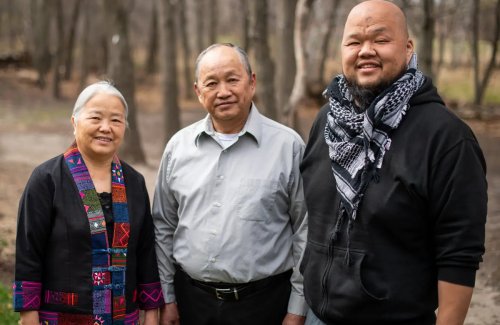
In recent times, Hmong cuisine and culture have been experiencing a remarkable surge in popularity and recognition within the United States, thanks to the efforts of Hmong restaurateurs and farmers.
One chef, Yia Vang, defied his parents’ wishes to have a traditional career and decided to follow his passion for cooking. Today, he takes immense pride in showcasing Hmong foodways to the world, weaving incredible stories through his culinary creations.
Different chefs are drawing in new customers by sharing dishes that remind them of home-cooked meals. The use of fresh Hmong-produced ingredients have been appealing to many.
Young Hmong entrepreneurs are also making a difference by starting businesses and helping older Hmong Americans enter larger markets. They have been instrumental in reshaping the economic landscape of the community.
Hmong farmers have also been pivotal in shaping the agricultural landscape of the United States. With over 50% of growers at the Twin Cities’ metro markets being Hmong, they have significantly contributed to the nation’s production of strawberries and poultry.
Initiatives like the Hmong American Farmers Association’s Food Hub have provided farmers with opportunities to grow and sell their produce, allowing the Hmong community to thrive in the agricultural sector.
The future looks promising for Hmong businesses and farmers as they continue to preserve their traditions while embracing new opportunities. Their dedication to their cultural heritage and entrepreneurial spirit are driving innovation and making a positive impact in the US.
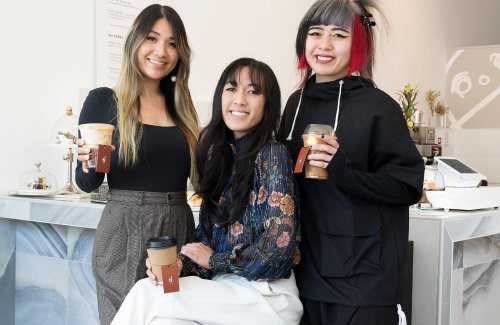
Tí: Cafe Ta, the first-ever Vietnamese coffee shop in Denver, celebrated its second anniversary with joy and pride. Founded by three sisters, Sashaline, Shominic, and Shasitie Nguyen, the café has become a warm and welcoming space for people to connect over coffee and culture.
The idea for the café came from the sisters’ love for their Vietnamese heritage. They wanted to share the joy of Vietnamese coffee with Denver’s residents and visitors. Opening during the pandemic was a leap of faith, but the response has been overwhelmingly positive.
The café offers a unique blend of flavors by using robusta beans and sweet condensed milk in their coffee. They take pride in slow-dripping the coffee through traditional filters, keeping the essence of Vietnamese coffee culture alive.
Beyond coffee, Tí serves up a variety of drinks like Vietnamese egg coffee, sodas with lychee whipped cream, and matcha drinks. They also host themed weeks, like Anime Week, where they serve beverages inspired by popular anime shows.
Despite opening amid the challenges of the pandemic, Tí: Cafe Ta has experienced overwhelming support from Denver residents. They have been embraced as a place where people can gather, share cultural experiences, and engage in conversation.
Looking ahead, the Nguyen sisters aspire to expand their brand while staying true to their roots. The goal is to continue curating new menu items, hosting more events, and fostering an even stronger sense of community within Denver and beyond.
Their vision for the next two decades includes opening new stores in different states, all while maintaining a commitment to delivering authentic Vietnamese coffee culture and providing a warm, inviting space for coffee enthusiasts and curious visitors alike.
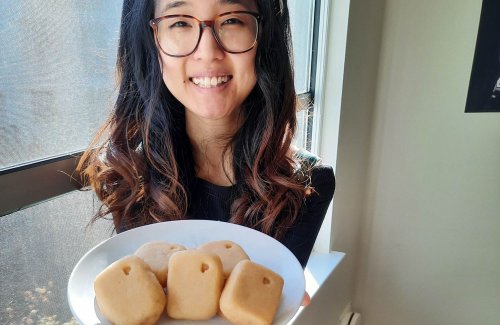
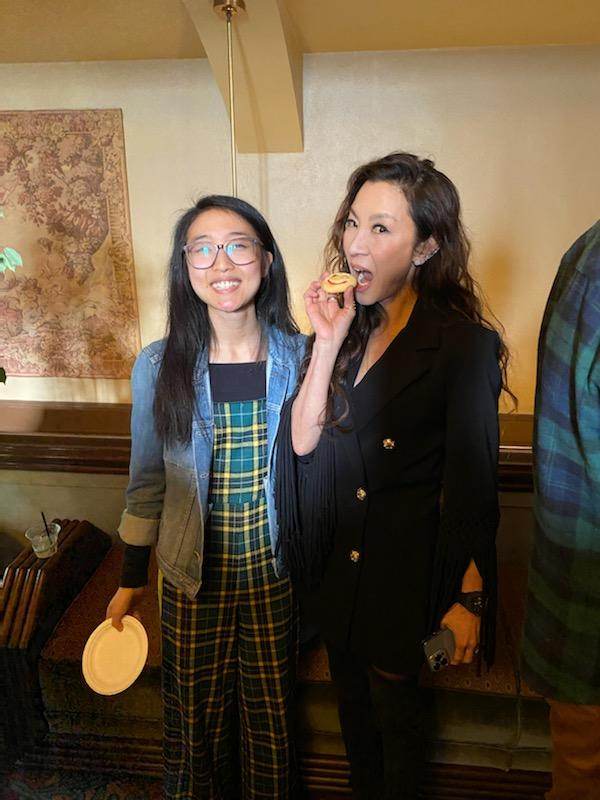
Annie Wang, a baker from Oakland, recently had the opportunity of making custom almond cookies for the premiere of Everything Everywhere All At Once.
Made from only the freshest, high-quality ingredients and created with sustainability in mind, Annie’s vegan, gluten-free, and upcycled Taiwanese Pineapple Cakes are perfect for anyone who cares for the environment and their taste buds.
In this interview, Annie shares her experience of growing up in rural towns in America, where she witnessed firsthand the harsh realities of food production, her journey of developing her recipes, her passion for reducing the use of animal products, and her experience of baking for the premiere of Everything Everywhere All At Once.
SEEING THE HARSH REALITIES OF HOW FOOD WERE BEING PRODUCED WHILE GROWING UP
I was born in New York City, but growing up, my family and I moved every three years. The towns we moved to in the later years were smaller and more rural than the others. During the time I lived in these states, I saw the harsh realities of how we produce and handle food in America.
In one town in Illinois, my classmates and I had to plug our noses to guard against the toxic smell wafting towards us from a nearby pig farm. When we lived in Arkansas, we lived 15 minutes away from a Tyson chicken factory where runoff from the factory sat in huge silos. Ironically, these rural towns where I got to school by walking through crop fields were the towns where neighbors often struggled the most with unstable access to nutritious and responsibly grown food.
These towns were also where I first learned about the enormous harm inflicted on people and animals by our current agricultural system and decided to adopt a plant-based diet. That decision meant a lot of the staples I grew up eating with my family were no longer an option.
After working at environmental nonprofits and food tech companies, I decided to start Annie’s T Cakes to help myself and others once again partake in culturally important foods while also helping to improve the food system.
MY DREAM AS A KID WAS TO OPEN A BAKERY
The first thing I ever cooked was a scrambled egg in fifth grade. I forgot to oil the pan so you could say the first go was a fail. I didn’t really bake growing up unless it was a box of brownie mix or Pillsbury cookies. Most of my time in the kitchen was spent working the stovetop via stir-frying, steaming, and boiling.
I’d watch my mom cook traditional dishes like tomato and scrambled eggs with noodles or filled buns. As I got older, I started taking on more responsibilities in the kitchen and would cook tea eggs, and steamed bread on my own. I loved getting experimental. I always made my bread and dumplings in unique shapes.
Last year, my dad told me that my dream as a kid was to open a bakery. It was news to me since the one fleeting dream I can remember was about being a vet. But hey, here we are! Definitely much further than my first failed scrambled egg.
The base of the Taiwanese pineapple cake recipe only took me three tries to make (the fastest I’ve yet to develop a recipe). I started by making milk bread and buns but I remembered how much I used to love Taiwanese pineapple cakes growing up and took a crack at it. A friend of mine in Oakland runs a business upcycling tofu fiber into flour (Renewal Mill). Since the pineapple cakes didn’t need to rise as the bread did, I thought it would be a perfect way to create a gluten-free option for customers and support her business as well.
VEGAN-IZING ASIAN SNACKS AND FOODS
I started to dig deep into climate change, including the impact of animal agriculture on the environment, when I was in college. At the time, I got involved in our school’s student-led fossil fuel divestment campaign (our school divested in 2020!).
I was taking classes and reading about all the intersections between society, the food system, policies, etc. with our environment. I also learned so much from the other passionate student activists I worked with. To this day, I still draw from the incredible strength and compassion I felt from the student leaders I worked with in those days as I think about how to build a team and partnerships.
A couple of years after I graduated college, I started working in food tech. I was interested in the field for its vast potential to positively impact the climate by shifting our food systems. I wanted to start a business ‘vegan-izing’ the Asian snacks and foods I grew up eating for years.
When the pandemic hit and I was laid off along with half of my team, I took the plunge. Building the business now, I think really deeply about sourcing ingredients and how to make things sustainable. In addition to building a vegan brand, I also use compostable packaging and try to reuse shipping materials to reduce waste.
We see more food products on the market these days that do not use animal products. Heavily reducing the use of animal products as a society would be huge for reducing our negative impact on the environment and taking care of all living things on our planet.
THE ‘EVERYTHING EVERYWHERE ALL AT ONCE’ EXPERIENCE
My experience baking for the premiere of Everything Everywhere All At Once was a whirlwind!
The week before the premiere, I was put in touch with A24. In each of the markets the studio had launched the movie in, they’d worked with local bakers to create the smiley face cookie that appeared in the movie, and they still needed someone for the San Francisco premiere.
When they reached out to me, I actually didn’t have my almond cookie recipe finalized yet. I had been working on the recipe for a year at that point and felt like I just had a couple of days to nail it. So, I told the studio I would get back to them, and I cranked out test batch after test batch over the weekend.
After a couple of days, I finally had it done! And just like that, the next week, I took the recipe I had just finalized, made and packed 800+ cookies for the premier. Two nights before the premiere, I had started baking at around 7 am and continued into the night packing half of them. I thought it wasn’t that late but when I looked at the time it was 4 am! Thankfully the next day my boyfriend and two of our close friends came and helped me pack the other half of the cookies and it only took us only a few hours.
To see a cookie I made in the hands of hundreds of people, including the cast and directors of a movie that has touched so many lives was a once-in-a-lifetime event, to say the least. At the premiere, one of the directors expressed his happiness to me. He told me I had been the only baker that had made an actual almond cookie. Remembering that moment, and countless others throughout the week, I am so grateful that I got to be a part of such a special event with incredible changemakers.
ADVICE TO BUSINESS OWNERS TOWARD SUSTAINABILITY
As small business owners, most of the time we’re just running around trying to get products out the door. Compromise happens daily because bandwidth is limited and nothing ever happens in an ideal way.
For those that are trying to find ways to be more sustainable, take small steps toward a long-term plan of sustainability. Take note of things like the ingredients you use, where you source everything from, the amount of packaging you use, etc. and make changes where and when you can to reduce your footprint. Start small and intentionally design your business in a way where you are putting yourself on the road toward your ultimate, climate-friendly operation.
WHAT TO EXPECT FROM ANNIE’S T CAKES
My vision for Annie’s T Cakes is to bring these nostalgic vegan treats to people across the globe, starting first in California. I also aim to support local agricultural efforts by donating profits to organizations focused on sustainable agriculture in their communities.
In the near term, I’ll be in my kitchen, continuing to bring delicious and culturally relevant foods to our community!