Stories

July 22, 2023

SHARE:

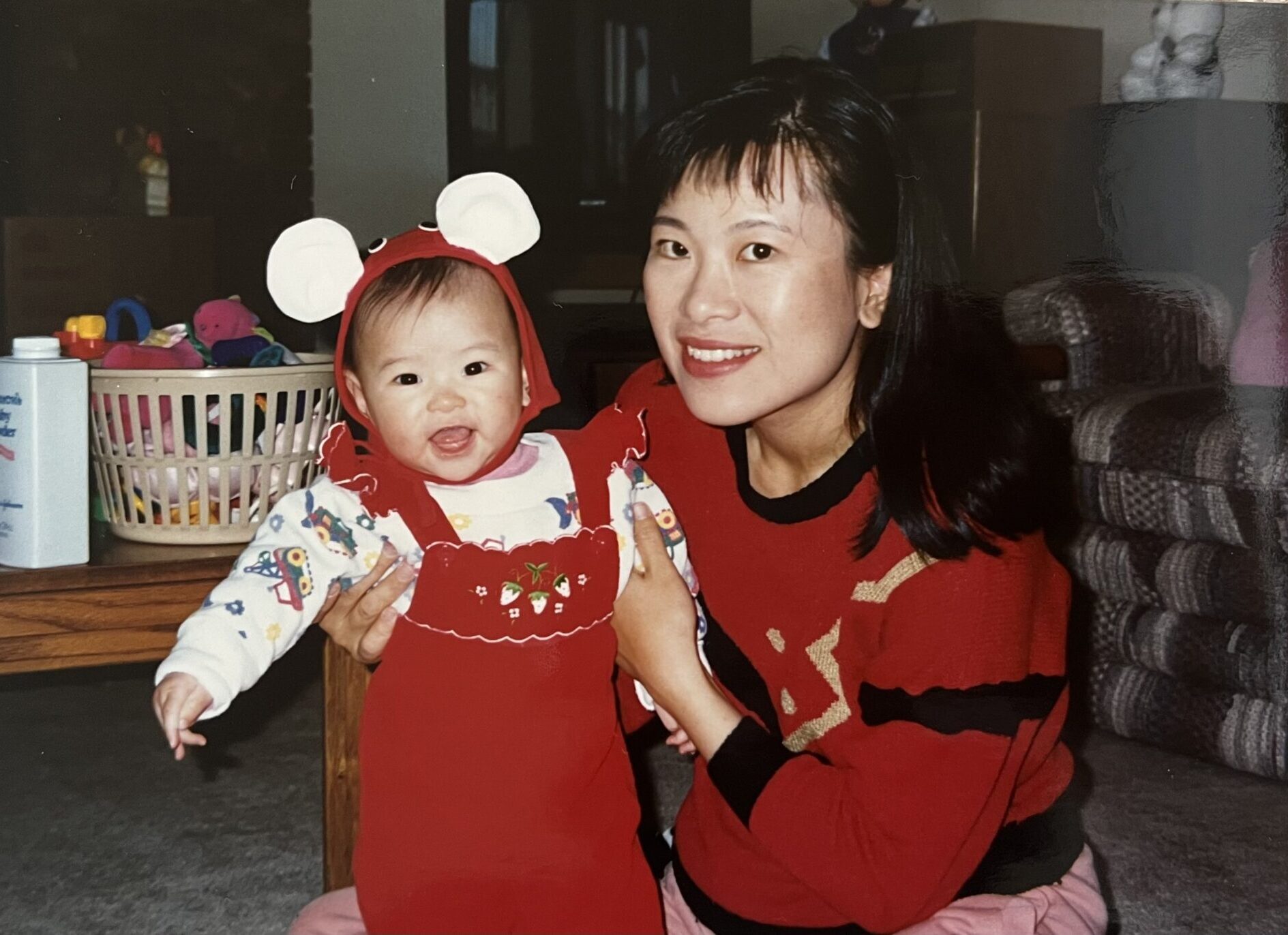
Michelle Jing Chan is a Chinese American artist and children’s book illustrator who, in an interview with Asian Hustle Network, opens up about her mother’s remarkable journey as a first-generation immigrant and the profound impact it has had on their relationship.

Michelle’s mother, May, is a survivor of Mao Zedong’s reign. She emigrated from Guangzhou, China, to California, facing numerous challenges along the way. She pursued her passion for fashion, but eventually put her dreams on hold to raise Michelle and her brother in Colorado.

After retirement, May embarked on a new venture where she creates Chinese-inspired baby clothes and puts them up for sale. The response from the community has been overwhelmingly positive, with many people showing keen interest in purchasing her creations.

In this article, Michelle shares a heartfelt glimpse into her mother’s story and their shared journeys. Join us as we explore May’s experiences as a first-generation immigrant, from surviving challenging times to embracing a new life in the United States.

HER MOTHER’S IMMIGRANT JOURNEY

Michelle: I’m a Chinese American artist and children’s book illustrator. I grew up in Colorado and now live in the Pacific Northwest. Although my background is in engineering and business, my passion is in art and storytelling–particularly in stories that empower queer and Asian youth to be their authentic selves.

My mom is a first-generation immigrant who grew up in Guangzhou, China, and emigrated to California in her early twenties. In China, she and her family survived Mao Zedong’s reign and the struggles that it brought, including facing famine, almost losing one of her sisters in an accident at a labor camp, and being targeted by Red Guards for my grandfather’s opposition to Mao during the Cultural Revolution.

When they emigrated to the US, they lived near LA and had a robust community of other Chinese immigrants. However, my mom and her family were poor and didn’t speak English. The rest of her family all found service jobs. Similarly, my mom worked as a waitress at a restaurant near Hollywood.

PUTTING DREAMS ON HOLD

Early in the morning before the restaurant opened, she would attend adult English classes. She always had an interest in fashion and it became even stronger after working near Hollywood and seeing designers and celebrities come into the restaurant. She saved up enough money to go to school and study fashion design. During that time, she continued to work at the restaurant on weekends and at a fashion company after school.

After completing her program, she planned to enter the fashion industry in California. However, she met my dad, a first-generation immigrant from Hong Kong, through a family friend. They got married and she moved to Colorado where my dad lived, and they had me and my brother shortly afterwards. In Colorado, opportunities in fashion design were much scarcer than in LA.

She decided to put her own dreams on the back burner and became a stay-at-home parent, dedicating the next decade and a half of her life to raising me and my brother. It wasn’t until I was in high school that she started working again, and she didn’t return to the fashion industry until a few additional years later.

MICHELLE’S RELATIONSHIP WITH HER MOM

Growing up, I was very close to my mom, but I don’t think I fully grasped the emotional weight of what it must have been like for her to sacrifice her career for her children. I definitely took for granted the fact that my mom was always able to pick us up after school and had the time and energy to make clothes and Halloween costumes for us, tailor clothes if they didn’t fit, and come up with other creative craft projects to keep us entertained.

As an adult now–especially as a creative myself–I understand more fully how isolating and difficult that sacrifice must have been. Also, our town in Colorado is conservative and not very diverse, so the adjustment for her coming from LA must have also been challenging and lonely. What strikes me now is how unselfish and giving she is. She has never voiced resentment for the educational or creative opportunities that I’ve had even though she didn’t have access to those same doors herself.

While my parents and I didn’t see eye to eye on my career in children’s book illustration at first, they are now some of my biggest cheerleaders. In fact, being in a creative career myself has allowed me to bond with my mom in a new way as she is embarking on her own creative journey. We can now connect over our creative passions, which is a new dimension to our relationship that didn’t exist before.

CREATING CHINESE-INSPIRED BABY CLOTHES

My mom loves kids and designing kids’ clothes. As I mentioned earlier, she made clothes for us growing up–including many of our Halloween costumes! She also loves Chinese fashion and still has suitcases of clothes from her life in LA. As she and my dad are now retired, pursuing this new venture seemed like a natural integration of these interests.

She uses Gerber brand onesies and transforms them into Chinese-inspired designs by adding ribbons, gold fabric, and traditional qipao-style buttons. She sews all these designs by herself in my childhood home.

She’s blown away by the response to her shop so far and is still processing the influx of orders! (Thank you again to the AHN community!) She wants to expand into clothes for toddlers and perhaps someday, older kids as well. In my eyes, the sky’s the limit for her and her talent and I’m excited to see where she goes from here.

VALUES MICHELLE INHERITED FROM HER MOM

The biggest thing she has taught me is how to have a strong work ethic. My mom, dad, and my grandparents work harder than anyone I know. Now as an adult, I carry that with me always.

MICHELLE’S MESSAGE TO HER MOM

Thank you for everything you’ve done for me and my brother. I know it’s a debt I will never be able to repay, but I hope I can give you a small fraction by supporting your creative dreams like you’ve come to support mine.

CONNECT WITH MICHELLE

Instagram: @michellieart

Twitter: @michellieart

Tiktok: @michellieart

Website: michellejingchan.com

CONNECT WITH MAY

Instagram: @pandacub.babywear

Website: etsy.com/shop/PandaCubBabyWear

Related Articles

Image Source: Koury Angelo / Forbes

Uncategorized

Rejections Didn’t Stop Kinside CEO Shadiah Sigala To Reach A Stellar Entrepreneurial Career

Shadiah Sigala co-founded HoneyBook, a $2 billion financial management software platform for small businesses, motivated by her ability to negotiate uncertainty while gathering information and making decisions.

When Shadiah was a child, her Mexican mother together with her two siblings moved to southern California. Despite most of her family members being unable to attend college, she was an honor student whose lifelong ambition was to acquire the greatest degree of education.

Shadia attended Pomona College for Latin American Studies and Harvard Kennedy School for public policy. As a result, she established a strategy for reaching goals she wasn’t sure about.

Before becoming an accomplished millennial, she finished her master’s degree and became the highest-earning member of their family as a project manager at Aetna, a health insurance company, where she learned about entrepreneurship, realized she is a “builder,” and thought starting her own company was the best option.

However, Shadia realized that she wouldn’t be happy there since she wouldn’t be valued. Shadia ultimately started a personal chef business in 2010, using her Pomona College alumni network to find well-off grads who wanted someone to cook for them.

In 2012, another realization occurred to her that cooking wasn’t for her. Shadiah then decided to move with her then-husband to San Francisco and found tech. She arranged informative interviews with everyone in the sector and learned that the problem she wanted to tackle was one she’d experienced as a business owner: no effective method to handle backend logistics like emails, payments, and bills.

With the three Israeli business people who have a similar concern as hers, they decided to digitize all these tedious procedures that micro small firms must complete to free them up to genuinely focus on doing what they love.

Using that concept, Shadia established HoneyBook in 2013 and worked there for five years according to CNBC.

As her most recent business, Shadia co-founded Kinside in 2018, a child-care marketplace that is available to employees that offers new parents a centralized location to look for daycare in their neighborhood, which has reached over $16 million, according to Crunchbase. 

Letting fear and excitement be one’s guide and being open-minded is what Shadia advises to other aspirants. According to her, opportunities that “feel like they are beyond your pay grade” are exactly how stellar is made.

Image Source Artbound

Uncategorized

ARTBOUND Features Giant Robot’s Asian-American Pop Culture Influence In Its Latest Episode

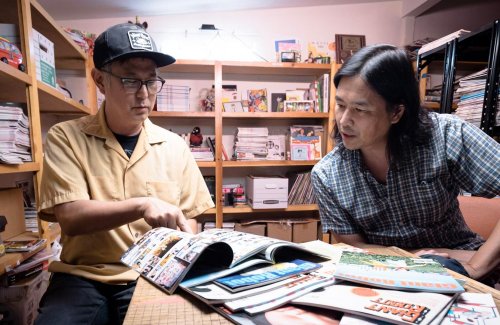
Highlighting the impact of the Asian-American pop culture publication Giant Robot, the debut of the latest episode entitled “Giant Robot: Asian Pop Culture and Beyond” was finally aired last October 26 in the acclaimed arts and culture series ARTBOUND on KCET.

The episode showed Giant Robot’s examination of Sawtelle Boulevard as a Japanese-American neighborhood, sparking interest in Asian and Asian-American popular culture which resulted to a long line of Asian American artists who won recognition on a global scale. 

Established in 1994, Giant Robot was a bimonthly journal that focused on Asian popular culture that soon included works by Asian-American artists including David Choe and James Jean.

Eric Nakamura began publishing Giant Robot as a digest-sized zine. The piece covered a variety of subjects, including trendy Asian American independent filmmakers, Japanese punk rock, and contemporary Hong Kong films. National media sources including the New York Times, Wired, and LA Weekly published the story.

In 2001, Nakamura opened his first store named “Giant Robot Store” in Sawtelle Japantown and expanded in 2003.

Giant Robot co-founder, Martin Wong edited all 68 issues of the glossy magazine on Asian, Asian-American, and new hybrid culture from 1994 to 2010, when it was still a punk zine. His wife Wendy Lau served as Giant Robot’s graphic designer beginning with issue 18. Even today, Martin continues to publish zines and contribute to them.

The popular weekly television program and online site ARTBOUND captures the essence of California’s expanding arts and cultural scene and investigates how it is transforming the state into the world’s creative capital. 

The KCET Original series investigates and clarifies contemporary cultural challenges, offering insightful in-depth study of how the arts and culture impact society.

Image Source: Julie’s Bakeshop

Uncategorized

Dreams Set No Limits To 50-Year-Old Who Started A Bakeshop Now The Philippines’ Most Famous Brand

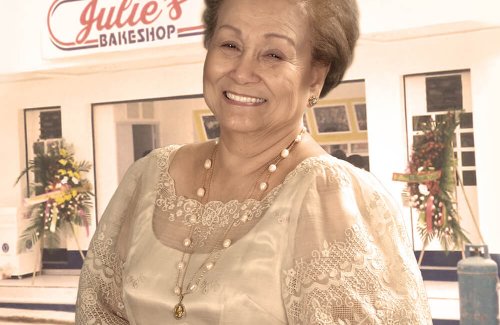
“In a way, I was poor. I was hungry, maybe not for food but for self-achievement. I thought there must be something more I can do than just being a housewife. I was very determined to succeed, in whatever came my way,” thus said Julie Gandionco as quoted by the Inquirer, the Philippines’ local newspaper.

In January 1981, then-50-year-old Julia Gandionco opened Julie’s Bakeshop to satisfy her thirst for proving that she is more than a housewife.

Julie’s Bakeshop gloriously celebrates being one of the Philippines’ largest bakery chains with more than 500 branches all over the country, which can be traced back to Mandaue City on the Island of Cebu as its place of origin.

In the 1970s, Julie was a canteen concessionaire at a rattan company, and subsequently became a manager of its sister company. She also opened another canteen a year later.

Having these three canteens being managed, she felt the rising demand for bread which made her take the chance of opening a bakeshop, despite having zero knowledge of baking.

Julie stressed that her bakeshop exists because of “a growing need for bread products and a strong trust in God,” and that she desires to encourage and uplift other mothers to dream big and strive for their goals.

Image Source: South China Morning Post

News

Veteran Actor James Hong Lauds Asian-American Representation In Entertainment Industry

During the Critics Choice Association (CCA)’s Inaugural Celebration of Asian Pacific Cinema & Television, veteran actor James Hong received the prestigious Icon award along with a few other awardees.

The veteran actor reflects on his over 700 roles and how Asian representation has changed: “When I was a kid, ‘The Good Earth’ was played by Caucasian leads that taped their eyes up.”

In his speech, Hong commended Asian-American creatives for “carrying through” work to advance their careers in the entertainment world and emphasized that his ultimate goal was to stop hatred and boost the whole level of Asian-Americans.

“To see an organization collect all these people together and work together and stop this hatred for Asians is our main goal, I think, and just boost the whole level of Asian-Americans,” Hong mentioned to the PA News Agency.

Held at Fairmont Century Plaza, CCA’s celebrity-filled event highlighted both new and experienced talents and featured other notable figures from the Asian film industry.

At the age of 93, the veteran vigorously demonstrated a few martial arts movements for the photographers with a smile on his face during the occasion.

In his more than six decades-old career, Hong is a well-accomplished actor with hundreds of film and television credits who co-founded the East West Players in 1965, making him more than deserving to receive the Icon award.

The actor stated that CCA is perhaps one of the pioneering organizations that promote culture.