Stories

July 5, 2023

SHARE:

Growing up with stereotypical Asian tiger parents, Angie had always been interested in entrepreneurship but was constantly discouraged.

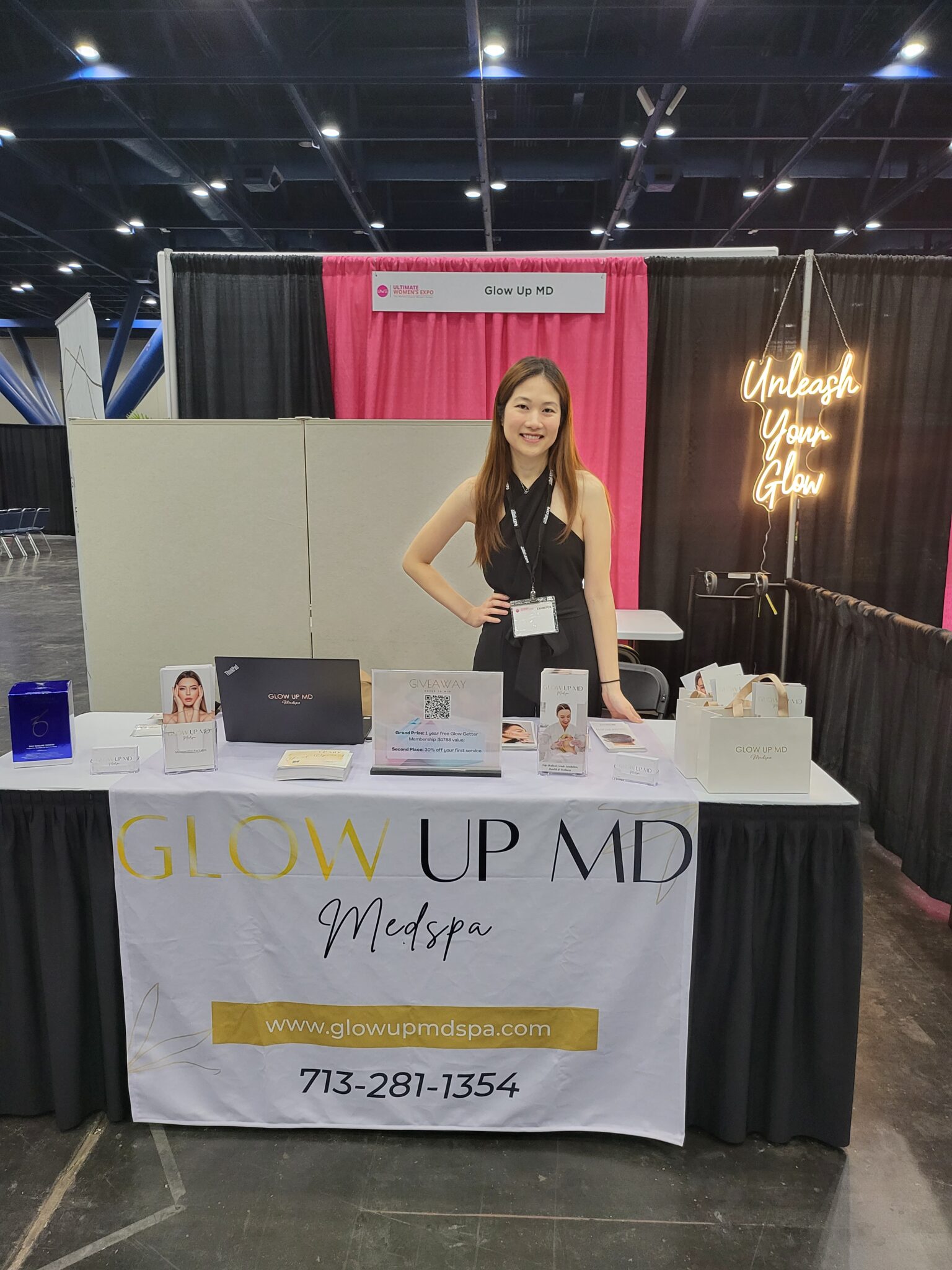
Angie Kim is the physician and CEO of Glow Up MD Medical Aesthetics and Wellness Practice. Her journey to success was far from easy. Angie grew up with traditional Asian immigrant parents who believed that taking risks in business was foolish.

She did all the stereotypical Asian things such as playing piano, being good at math, and going to a good college. She studied engineering and went on to complete medical school. And like most Asian women are expected to be, Angie was very quiet and had low self confidence.

But after completing her medical training, Angie realized that working for someone else was not what she wanted for her life. She refused to work for people without medical education and decided to take a chance on herself.

Starting her own business was an intimidating prospect for her. She had no background in business and had to navigate legal regulations, insurance requirements, and financial planning on her own. But with determination and persistence, she and her husband were able to set up a successful brick and mortar practice within just a few months.

Angie’s journey serves as a reminder that there is never a perfect time to start a business and that sometimes the best way to learn is by doing.

I DID IT ANYWAY

Even in middle school and high school, starting a business always piqued Angie’s interest. She had even presented a few ideas, such as a t-shirt business, to her parents when she was in middle school. Unfortunately, her parents always shot her ideas down, telling her they were stupid.

Angie’s parents have always been extremely risk averse and were against anything that required any type of investment with uncertain return. They wouldn’t even let her spend money to create a website.

Despite the discouragement, Angie was still very interested in entrepreneurship. She would constantly read articles about people who developed new apps or websites that became very popular. However, she had to put those aspirations on the backburner and focus on her education as her parents placed a high emphasis on education.

Even still, she would come up with ideas every so often and kept a list of these on her computer, hoping to return to them one day to get them started. “One thing that’s been constant since my childhood has been that whenever they told me I wouldn’t be able to accomplish something, I did it anyway,” she said.

BIGGEST CHALLENGES

Initially, one of their biggest challenges was trying to figure out the laws surrounding opening a medical practice. They looked at so many sources but kept finding contradicting or incomplete information.

The actual legalese was difficult to understand and they didn’t trust their interpretation of it. They finally spoke to a lawyer who confirmed what they understood. This allowed them to feel comfortable enough to continue on.

As of right now, the biggest challenge they’re facing is marketing and getting the word out. They are still trying to figure out the best way to do this. It has been mostly through trial and error. They are constantly trying different strategies, such as Facebook ads, in-person events, local SEO, local media and print, and direct mailing.

THE TURNING POINT

While working in the hospital, Angie began noticing little things over time that pointed towards the toxicity of the working environment, such as how little control and autonomy physicians have in taking care of their own patients, the backstabbing from other healthcare workers, and how physicians from other healthcare systems all had similar stories.

“I came to the realization that this would not change if I just changed jobs. The only solution was to start my own practice,” she said.

LOOKING BACK ON HER JOURNEY

The most rewarding aspect for Angie is the freedom to practice medicine the way it should be practiced. “I can spend as much time as I need to with patients. I don’t need to spend extra time trying to fight insurance companies. And my patients have been happy with their results,” she said.

She is hoping to grow her practice enough that she can open a second location and eventually franchise it, which would allow her to help even more patients and improve the healthcare system in her own small way.

“If I were to do it all over again, I would document my journey. I thought about it this time, but I felt like I didn’t know what I was doing the whole time.”

ANGIE’S ADVICE FOR OTHERS FACING SIMILAR CHALLENGES FROM THEIR FAMILIES

“People are always going to doubt you when you start, especially those closest to you. You can’t let that get to you. If it’s what you really want and you can’t stop thinking about it, then you should go for it. It’s going to be lonely and somewhat isolating when you start, but it’ll be worth it,” Angie said. 

She believes that there’s always a way to solve a problem. If you feel like you’ve hit a roadblock, you can try looking at the problem from a different perspective.

Right now, Angie still hasn’t told her parents about her business and she’s waiting for the right time when she can finally tell them.

CONNECT WITH ANGIE

Instagram: @glowupmdspa

Facebook: Glow Up MD Medspa

Related Articles

Image Source: Brendan Duong

Stories

A Secret Business Purchase Grew Into A Multi-million Dollar Enterprise

Tess Nguyen who is a trained physiotherapist was searching Gumtree, Australia’s marketplace, for a physiotherapy clinic to buy. Instead, a sleepwear ad called Midnight Mischief captured her eye, “I’d never heard of personalised pyjamas, and I was pretty up-to-date with trends, so I sent an inquiry,” she told 7life.

She consulted her friends who have accounting and business experience and told Tess it was worth nothing and advised her not to buy it. However, she liked the pyjamas’ style and name, plus she was able to bargain the business down to $15,000. So, a month later she bought the business.

Tess kept the purchase secret from her family. The business was going slow during the first two years, and running the business while working as a full time physiotherapist, took its toll.

When 2020 hit, the business was ready for the huge demand prompted by COVID and people staying at home. The big moment was when TV presenter Jules Sebastian posted a photo of herself wearing Midnight Mischief pyjamas.

The brand grew 165% in the year to July 2021. And Tess has gone from pyjama girl to Pyjama Queen – selling a set every 10 minutes. The designs retail for about $99.95 – and her sleepwear empire is now turning over $2.3 million.

“I’m so glad I did it and I’d tell anyone else to do the same,” Tess told 7Life, “Just go for it. You can figure it out as you go along. It’s worked for me.”

Image Source: Chris Pizzello/ Invision /AP file

Stories

Awkwafina Knows Best About How She Is Still More Financially Great Living On $500 A Month

Even though the Crazy Rich Asians actress’ wealth is likely in the millions, she believes that a mere $500 per month is sufficient to cover her expenses.

The 32-year-old actress recently told Harper’s Bazaar that her money philosophy goes back to when she was building her Awkwafina musical and comedy persona, which she used as an outlet for her creativity while she worked a day job in book publicity.

Her grandmother brought her up in a one-bedroom apartment in Queens, New York. Because her family’s restaurant went out of business and they were forced to sell their home, she has developed a greater appreciation for monetary gain than any other aspect of her life.  

Awkwafina remembers that funds were tight at home and that she would stay up late with her grandma, who worried about paying the bills.

She also claims that despite being in a better financial position to support her family and herself, she still maintains a just-the-basics mentality. The actress has been known to buy clothes at Target and not spend much money on anything. She set out with the simple objective of covering her living expenses. 

She explains to Harper’s Bazaar, “I went into this mode off, if I can make $500 a month, that’s all I need.” 

Awkwafina’s motivation and success are attributed mainly to her refreshingly optimistic view of financial considerations. She has kept herself busy acting in the years since, including launching her comedy series on Comedy Central and becoming the first Asian-American actress to win the Golden Globe for best actress for her lead role in the 2019 drama “The Farewell.”

Image Source: Photograph by Ken Richardson Boston Magazine

Stories

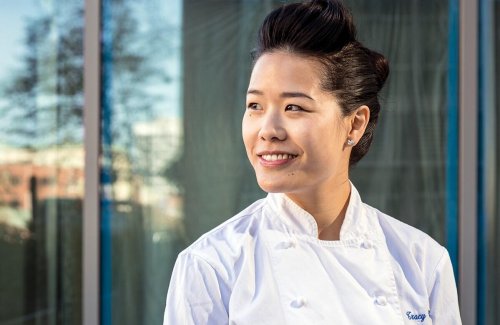
Chef Tracy Chang Gives Back To The Community Through The Language Of Food

Restaurateur Tracy Chang started the nonprofit Off Their Plate and Project Restore Us through the COVID-19 pandemic in 2020. 

The owner of the Japanese tapas restaurant,  PAGU, started Off Their Plate as a way to feed healthcare workers, and Project Restore Us sends nutritious and culturally appropriate grocery boxes to families living in food deserts. Both groups work to support local kitchens run by women and BIPOC and volunteers.

As a chef, Tracy also finds herself more in tune with customers than ever before. As someone who grew up lactose intolerant, she sources ingredients responsibly and remains mindful of the way guests feel after they leave her restaurant. This is also part of her restaurant’s ethos.

Her grandmother has also influenced Tracy’s cooking. Although her grandmother didn’t speak English, she spoke the language of food really well, said Tracy, and that was something that always resonated with her.

For Tracy, her personal experience has definitely come into play — trained in Spain but worked at a Japanese restaurant, and she grew up with a lot of Japanese and Taiwanese food, “The menu at PAGU is autobiographical and about my experience learning very specific dishes and techniques from people like my grandmother, my mentor and some of the chefs I’ve worked with.” she told TimeOut.

Image Source: CNN

Stories

Young Tech Startup Founders In Asia Make Mental Health Support Accessible To Break Stigma

Breaking down societal stigma and creating a new mental healthcare system for the Asia-Pacific area are two of Theodoric Chew’s objectives, founder of the digital mental health app, Intellect.

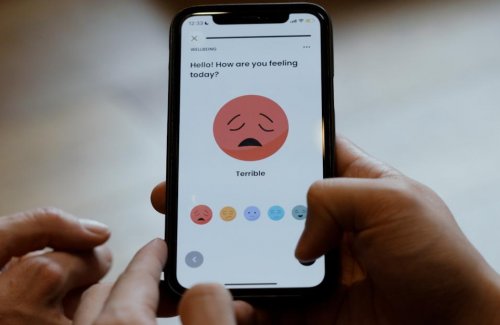
Founded in 2019, the mobile app frequently monitors users’ moods, delivers rescue sessions and exercises, and lets them chat with therapists in real-time. 

The 26-year-old explained that mental health is just as important as physical health, “You and I face things like stress, burnout, sleep issues, and relationship struggle as well.” he told CNN, “ That’s where actually a lot of us should start working on our mental wellbeing.”

Since early 2020, the startup serves over 3 million Asia-Pacific users in 15 languages. According to CNN Business, the Singapore-based mobile app has raised $20 million in its Series A funding, the largest amount raised by a mental health start-up in Asia.

Early this year, Singapore and Jakarta-based digital mental healthcare start-up, Ami, has raised at least $3 million from a number of investors, including Meta, the owner of Facebook. The firm was founded by Justin Kim, a Forbes 30 Under 30 Asia alum with Beknazar Abdikamalov.

Both digital mental health companies are targeting employers in their business models, where companies can subscribe to provide staff unlimited, private access to their services.

According to the WHO, depression and anxiety disorders cost the global economy $1 trillion a year in lost productivity. In March, it was reported that anxiety and sadness surged 25% worldwide in the first year of the pandemic.