Stories

July 5, 2023

SHARE:

Growing up with stereotypical Asian tiger parents, Angie had always been interested in entrepreneurship but was constantly discouraged.

Angie Kim is the physician and CEO of Glow Up MD Medical Aesthetics and Wellness Practice. Her journey to success was far from easy. Angie grew up with traditional Asian immigrant parents who believed that taking risks in business was foolish.

She did all the stereotypical Asian things such as playing piano, being good at math, and going to a good college. She studied engineering and went on to complete medical school. And like most Asian women are expected to be, Angie was very quiet and had low self confidence.

But after completing her medical training, Angie realized that working for someone else was not what she wanted for her life. She refused to work for people without medical education and decided to take a chance on herself.

Starting her own business was an intimidating prospect for her. She had no background in business and had to navigate legal regulations, insurance requirements, and financial planning on her own. But with determination and persistence, she and her husband were able to set up a successful brick and mortar practice within just a few months.

Angie’s journey serves as a reminder that there is never a perfect time to start a business and that sometimes the best way to learn is by doing.

I DID IT ANYWAY

Even in middle school and high school, starting a business always piqued Angie’s interest. She had even presented a few ideas, such as a t-shirt business, to her parents when she was in middle school. Unfortunately, her parents always shot her ideas down, telling her they were stupid.

Angie’s parents have always been extremely risk averse and were against anything that required any type of investment with uncertain return. They wouldn’t even let her spend money to create a website.

Despite the discouragement, Angie was still very interested in entrepreneurship. She would constantly read articles about people who developed new apps or websites that became very popular. However, she had to put those aspirations on the backburner and focus on her education as her parents placed a high emphasis on education.

Even still, she would come up with ideas every so often and kept a list of these on her computer, hoping to return to them one day to get them started. “One thing that’s been constant since my childhood has been that whenever they told me I wouldn’t be able to accomplish something, I did it anyway,” she said.

BIGGEST CHALLENGES

Initially, one of their biggest challenges was trying to figure out the laws surrounding opening a medical practice. They looked at so many sources but kept finding contradicting or incomplete information.

The actual legalese was difficult to understand and they didn’t trust their interpretation of it. They finally spoke to a lawyer who confirmed what they understood. This allowed them to feel comfortable enough to continue on.

As of right now, the biggest challenge they’re facing is marketing and getting the word out. They are still trying to figure out the best way to do this. It has been mostly through trial and error. They are constantly trying different strategies, such as Facebook ads, in-person events, local SEO, local media and print, and direct mailing.

THE TURNING POINT

While working in the hospital, Angie began noticing little things over time that pointed towards the toxicity of the working environment, such as how little control and autonomy physicians have in taking care of their own patients, the backstabbing from other healthcare workers, and how physicians from other healthcare systems all had similar stories.

“I came to the realization that this would not change if I just changed jobs. The only solution was to start my own practice,” she said.

LOOKING BACK ON HER JOURNEY

The most rewarding aspect for Angie is the freedom to practice medicine the way it should be practiced. “I can spend as much time as I need to with patients. I don’t need to spend extra time trying to fight insurance companies. And my patients have been happy with their results,” she said.

She is hoping to grow her practice enough that she can open a second location and eventually franchise it, which would allow her to help even more patients and improve the healthcare system in her own small way.

“If I were to do it all over again, I would document my journey. I thought about it this time, but I felt like I didn’t know what I was doing the whole time.”

ANGIE’S ADVICE FOR OTHERS FACING SIMILAR CHALLENGES FROM THEIR FAMILIES

“People are always going to doubt you when you start, especially those closest to you. You can’t let that get to you. If it’s what you really want and you can’t stop thinking about it, then you should go for it. It’s going to be lonely and somewhat isolating when you start, but it’ll be worth it,” Angie said. 

She believes that there’s always a way to solve a problem. If you feel like you’ve hit a roadblock, you can try looking at the problem from a different perspective.

Right now, Angie still hasn’t told her parents about her business and she’s waiting for the right time when she can finally tell them.

CONNECT WITH ANGIE

Instagram: @glowupmdspa

Facebook: Glow Up MD Medspa

Related Articles

seattle opera-jpeg

News

‘Bound’ Premieres at Seattle Opera Illuminating the Struggles and Triumphs of Asian Americans

Huang Ruo’s captivating chamber opera, “Bound,” made its highly anticipated premiere at Seattle Opera’s Tagney Jones Hall.

The opera sheds light on the enduring discrimination faced by Asian Americans, a social issue that has persisted since the enactment of the Chinese Exclusion Act in the late 1800s. Huang Ruo, a prominent Chinese composer, openly explores these themes, creating a thought-provoking, visually stunning, and musically intense work. Teaming up with librettist Bao-Long Chu, a Vietnamese poet, both artists made their Seattle Opera debuts, showcasing their impressive talents and expertise.

“Bound” narrates the experiences of second-generation Asian immigrants who grapple with their cultural heritage while striving to be fully embraced as Americans. Inspired by the true story of a high school student imprisoned due to truancy, the opera delves into the conflicts between individual aspirations and familial obligations. 

The characters in “Bound” are intricately bound in their own ways. Diane Tran, the protagonist portrayed masterfully by Karen Vuong, grapples with the rules and expectations of being a second-generation Asian adult, constantly torn between her family, work, and education. Khanh, Diane’s mother, haunted by guilt and memories, remains tied to her immigrant past. Judge Moriarty, who sentences Diane to imprisonment, represents an unjust system lacking empathy and understanding.

Huang shared with The Seattle Times that he aspires to fill every performance with a diverse audience, showcasing how opera reflects the lives and times of contemporary society. He firmly believes that opera is not solely for the elite few, as it reflects the diverse experiences of many.

Featured Image Source: Seattle Opera

cnbc-jpg

News

CEO Rose from Poverty to Build a Billion-Dollar Startup in Indonesia

EFishery, an agritech startup in Indonesia, has achieved unicorn status with a valuation of $1.4 billion, following a successful Series D funding round.

The company, co-founded by Gibran Huzaifah, who grew up in a disadvantaged neighborhood in Jakarta, raised $200 million in the latest funding round, led by Abu Dhabi’s 42XFund, with its value tripling from more than $410 million in 2022.

Notable participants in the funding round include Malaysia’s state pension fund Kumpulan Wang Persaraan, ResponsAbility Investments AG, 500 Global, and existing investors such as Northstar Group, Temasek Holdings Pte, and SoftBank Group Corp.

EFishery serves approximately 70,000 fish and shrimp farmers in Indonesia, providing them with technological solutions for their aquaculture operations. The recently secured funding will enable EFishery to fuel its expansion plans in Indonesia and India. Moreover, CEO Gibran Huzaifah expressed his ambition to pursue an initial public offering (IPO) in either the United States or Indonesia within the next two years.

According to Bloomberg, Huzaifah aims for EFishery to become a global leader in the aquaculture industry over the next five years, with an IPO potentially taking place as early as 2025.

Huzaifah grew up in the vicinity of slums in eastern Jakarta facing financial hardships due to his father’s job loss during his university years. With limited resources and no support network in a new city, Huzaifah found himself seeking shelter in various places, including the university campus and local mosques. At one point, he endured a three-day period without food. 

The personal story of CEO Gibran Huzaifah from poverty to building a billion-dollar startup serves as an inspiration to anyone facing adversity, showing that success can be achieved regardless of one’s humble beginnings.

Featured Image Source: CNBC

golden gate ventures-png

News

Jeffrey Paine Unveils the Secrets of Building a Successful Start-up

Entrepreneurship is often regarded as a skill that can be taught, but according to Jeffrey Paine, co-founder of Golden Gate Ventures, certain innate personality traits play a crucial role in a founder’s success.

According to The Peak Magazine, Paine believes that while 80% of entrepreneurship can be learned, the remaining 20% is an inherent quality. He emphasizes the importance of fluid intelligence, the ability to process information and make decisions with limited data and tight deadlines. However, he also highlights the need for founders to be disagreeable yet humble to make effective decisions.

Golden Gate Ventures was born out of Paine’s desire to solve a funding gap he observed in the South-east Asia (SEA) startup ecosystem. Alongside Vinnie Lauria, Paine launched the venture capital firm to bridge the gap between start-ups in the region and investors from the Bay Area.

Since its inception, Golden Gate Ventures has invested in nearly 70 companies across SEA, Greater China, and the US, including successful ventures like Carousell and RedMart. The firm is now expanding its operations in Vietnam, recognizing the country’s potential for growth and its pool of technical talent.

Paine identifies Vietnam, Singapore, and Indonesia as the region’s Startup Golden Triangle, each offering unique advantages for entrepreneurs and investors. Singapore boasts capital, talent, and ambitious founders with a global outlook. Indonesia’s large market size and potential returns make it an attractive investment destination. Vietnam, on the other hand, stands out with its technical talent and ability to tackle complex projects such as Web3 and cryptocurrency.

Looking ahead, Paine predicts that starting a business in the next decade will become more challenging due to a maturing startup ecosystem and the control exerted by a few dominant players. Entrepreneurs will need to identify untapped opportunities and build companies that can adapt to changing trends.

Golden Gate Ventures aims to support founders in this evolving landscape through its Founder First initiative, providing financial, human, and social capital to equip entrepreneurs for success.

Featured Image Source: Golden Gate Ventures

8newsnow-jpg

News

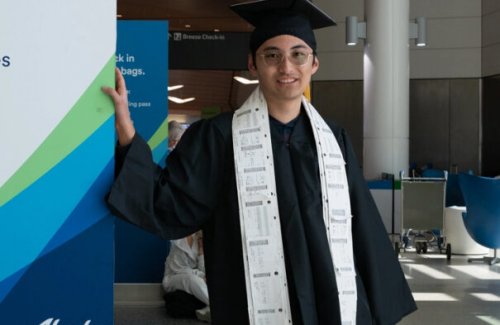
This LA Grad Student Flew Through an Academic Year to Save on Rent

A resourceful graduate student from Los Angeles has gained attention for his clever solution to cut down on housing costs while attending the University of California, Berkeley.

Known as Bill, he shared his story on Reddit in a post titled “I survived living in LA and commuting to Cal by plane over the past academic year to save on rent, AMA (ask me anything).”

Bill’s strategy was simple yet unconventional: he flew between Los Angeles International Airport (LAX) and San Francisco International Airport (SFO) multiple times a week for classes. Waking up early, he caught a 6 a.m. flight from LAX to SFO and then took the 8:30 a.m. train to reach Berkeley on time.

Despite the grueling nature of his commute, Bill approached it as an adventure rather than a burden. He never missed a class during the academic year.

Bill also managed to track his expenses, spending a total of $5,592.66 on flights between LAX and SFO. This included costs for train fares, parking, gas, inflight WiFi, and flights with different airlines.

Bill’s unique approach to saving on rent has impressed a lot of people, showing that creative solutions can help overcome financial challenges in pursuit of education.

Featured Image Source: 8NewsNow