Stories

June 23, 2023

SHARE:

At the helm of Aura, one of the world’s largest mental wellness content platforms, is Steve Lee, the co-founder and CEO with an inspiring story to tell.

Steve’s journey began as an immigrant in the United States, facing the challenges of language and cultural barriers. However, it was his parents’ bitter divorce, entangled in unfamiliar Korean laws, that deeply impacted his life. Witnessing his mother’s mental health struggles, Steve recognized the need for support and the stigma surrounding mental wellness, particularly within the Asian community.

Initially on a pre-med track at UC Berkeley, Steve’s true passion emerged through his involvement in founding non-profit organizations and self-reflection. Together with his brother Daniel, who shared the same vision, Steve embraced entrepreneurship as a means to create a societal-level impact. Thus, Aura was born.

With a grand vision to help a billion people find peace, Aura set out to democratize access to the knowledge and expertise of coaches and therapists. They created a platform that enabled coaches worldwide to record their voices and generate high-quality audio content from the comfort of their homes.

Aura is a revolutionary two-sided platform, comparable to Spotify and Netflix, that empowers coaches and therapists worldwide to create engaging mental wellness content. In contrast to earlier wellness apps functioning as content studios featuring only a limited number of coaches, Aura stands out by offering an extensive range of content and creators.

The platform goes beyond mere curation, with coaches hosting live streams and providing personalized 1-1 coaching sessions, making Aura the ultimate all-in-one destination for individuals seeking mental wellness support.

Aura proudly boasts the world’s largest mental wellness library, encompassing a wide array of topics including sleep, life coaching, cognitive-behavioral therapy (CBT), spirituality, breathwork, and much more. Additionally, Aura has fostered a thriving community where users can engage in live events hosted by coaches and benefit from one-on-one coaching sessions.

The platform’s commitment to offering comprehensive content, live engagement, and personalized support has revolutionized the way individuals access and experience mental wellness, firmly establishing Aura as a game-changer in the industry.

Aura has achieved unprecedented success and garnered recognition from reputable sources. In 2017, Aura was prominently featured in TechCrunch’s launch feature, drawing attention to its innovative approach. The following year, the platform received the prestigious honor of being listed in Apple’s “Best of Apps,” solidifying its reputation as a top player in the mental wellness space. To fuel further expansion, Steve secured significant venture capital funding from esteemed investors such as Cowboy Ventures and SkyDeck.

The impact of Aura’s efforts can be seen in the numbers and testimonials. Users flock to the platform, spending hundreds of millions of minutes engaging in meditation and self-care activities each year. This remarkable level of engagement demonstrates the profound influence Aura has on individuals’ well-being.

Steve extends a generous invitation to those who prioritize mental health to avail themselves of a special offer. By using the code “TOGETHERAHN” at aurahealth.io/redeem, individuals can gain free access to Aura for one year. While there is a limit to the number of available codes due to security measures, Steve encourages interested parties to reach out to him should the code become unavailable. More information about Aura can be found at aurahealth.io.

CONNECT WITH AURA

Website: aurahealth.io

Instagram: @aurahealthhq

Related Articles

Image Source: Koury Angelo / Forbes

Uncategorized

Rejections Didn’t Stop Kinside CEO Shadiah Sigala To Reach A Stellar Entrepreneurial Career

Shadiah Sigala co-founded HoneyBook, a $2 billion financial management software platform for small businesses, motivated by her ability to negotiate uncertainty while gathering information and making decisions.

When Shadiah was a child, her Mexican mother together with her two siblings moved to southern California. Despite most of her family members being unable to attend college, she was an honor student whose lifelong ambition was to acquire the greatest degree of education.

Shadia attended Pomona College for Latin American Studies and Harvard Kennedy School for public policy. As a result, she established a strategy for reaching goals she wasn’t sure about.

Before becoming an accomplished millennial, she finished her master’s degree and became the highest-earning member of their family as a project manager at Aetna, a health insurance company, where she learned about entrepreneurship, realized she is a “builder,” and thought starting her own company was the best option.

However, Shadia realized that she wouldn’t be happy there since she wouldn’t be valued. Shadia ultimately started a personal chef business in 2010, using her Pomona College alumni network to find well-off grads who wanted someone to cook for them.

In 2012, another realization occurred to her that cooking wasn’t for her. Shadiah then decided to move with her then-husband to San Francisco and found tech. She arranged informative interviews with everyone in the sector and learned that the problem she wanted to tackle was one she’d experienced as a business owner: no effective method to handle backend logistics like emails, payments, and bills.

With the three Israeli business people who have a similar concern as hers, they decided to digitize all these tedious procedures that micro small firms must complete to free them up to genuinely focus on doing what they love.

Using that concept, Shadia established HoneyBook in 2013 and worked there for five years according to CNBC.

As her most recent business, Shadia co-founded Kinside in 2018, a child-care marketplace that is available to employees that offers new parents a centralized location to look for daycare in their neighborhood, which has reached over $16 million, according to Crunchbase. 

Letting fear and excitement be one’s guide and being open-minded is what Shadia advises to other aspirants. According to her, opportunities that “feel like they are beyond your pay grade” are exactly how stellar is made.

Image Source Artbound

Uncategorized

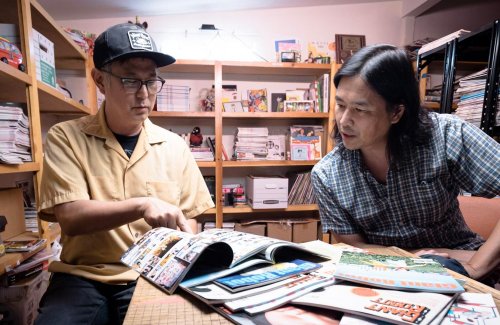
ARTBOUND Features Giant Robot’s Asian-American Pop Culture Influence In Its Latest Episode

Highlighting the impact of the Asian-American pop culture publication Giant Robot, the debut of the latest episode entitled “Giant Robot: Asian Pop Culture and Beyond” was finally aired last October 26 in the acclaimed arts and culture series ARTBOUND on KCET.

The episode showed Giant Robot’s examination of Sawtelle Boulevard as a Japanese-American neighborhood, sparking interest in Asian and Asian-American popular culture which resulted to a long line of Asian American artists who won recognition on a global scale. 

Established in 1994, Giant Robot was a bimonthly journal that focused on Asian popular culture that soon included works by Asian-American artists including David Choe and James Jean.

Eric Nakamura began publishing Giant Robot as a digest-sized zine. The piece covered a variety of subjects, including trendy Asian American independent filmmakers, Japanese punk rock, and contemporary Hong Kong films. National media sources including the New York Times, Wired, and LA Weekly published the story.

In 2001, Nakamura opened his first store named “Giant Robot Store” in Sawtelle Japantown and expanded in 2003.

Giant Robot co-founder, Martin Wong edited all 68 issues of the glossy magazine on Asian, Asian-American, and new hybrid culture from 1994 to 2010, when it was still a punk zine. His wife Wendy Lau served as Giant Robot’s graphic designer beginning with issue 18. Even today, Martin continues to publish zines and contribute to them.

The popular weekly television program and online site ARTBOUND captures the essence of California’s expanding arts and cultural scene and investigates how it is transforming the state into the world’s creative capital. 

The KCET Original series investigates and clarifies contemporary cultural challenges, offering insightful in-depth study of how the arts and culture impact society.

Image Source: Julie’s Bakeshop

Uncategorized

Dreams Set No Limits To 50-Year-Old Who Started A Bakeshop Now The Philippines’ Most Famous Brand

“In a way, I was poor. I was hungry, maybe not for food but for self-achievement. I thought there must be something more I can do than just being a housewife. I was very determined to succeed, in whatever came my way,” thus said Julie Gandionco as quoted by the Inquirer, the Philippines’ local newspaper.

In January 1981, then-50-year-old Julia Gandionco opened Julie’s Bakeshop to satisfy her thirst for proving that she is more than a housewife.

Julie’s Bakeshop gloriously celebrates being one of the Philippines’ largest bakery chains with more than 500 branches all over the country, which can be traced back to Mandaue City on the Island of Cebu as its place of origin.

In the 1970s, Julie was a canteen concessionaire at a rattan company, and subsequently became a manager of its sister company. She also opened another canteen a year later.

Having these three canteens being managed, she felt the rising demand for bread which made her take the chance of opening a bakeshop, despite having zero knowledge of baking.

Julie stressed that her bakeshop exists because of “a growing need for bread products and a strong trust in God,” and that she desires to encourage and uplift other mothers to dream big and strive for their goals.

Image Source: South China Morning Post

News

Veteran Actor James Hong Lauds Asian-American Representation In Entertainment Industry

During the Critics Choice Association (CCA)’s Inaugural Celebration of Asian Pacific Cinema & Television, veteran actor James Hong received the prestigious Icon award along with a few other awardees.

The veteran actor reflects on his over 700 roles and how Asian representation has changed: “When I was a kid, ‘The Good Earth’ was played by Caucasian leads that taped their eyes up.”

In his speech, Hong commended Asian-American creatives for “carrying through” work to advance their careers in the entertainment world and emphasized that his ultimate goal was to stop hatred and boost the whole level of Asian-Americans.

“To see an organization collect all these people together and work together and stop this hatred for Asians is our main goal, I think, and just boost the whole level of Asian-Americans,” Hong mentioned to the PA News Agency.

Held at Fairmont Century Plaza, CCA’s celebrity-filled event highlighted both new and experienced talents and featured other notable figures from the Asian film industry.

At the age of 93, the veteran vigorously demonstrated a few martial arts movements for the photographers with a smile on his face during the occasion.

In his more than six decades-old career, Hong is a well-accomplished actor with hundreds of film and television credits who co-founded the East West Players in 1965, making him more than deserving to receive the Icon award.

The actor stated that CCA is perhaps one of the pioneering organizations that promote culture.