Stories

July 5, 2023

SHARE:

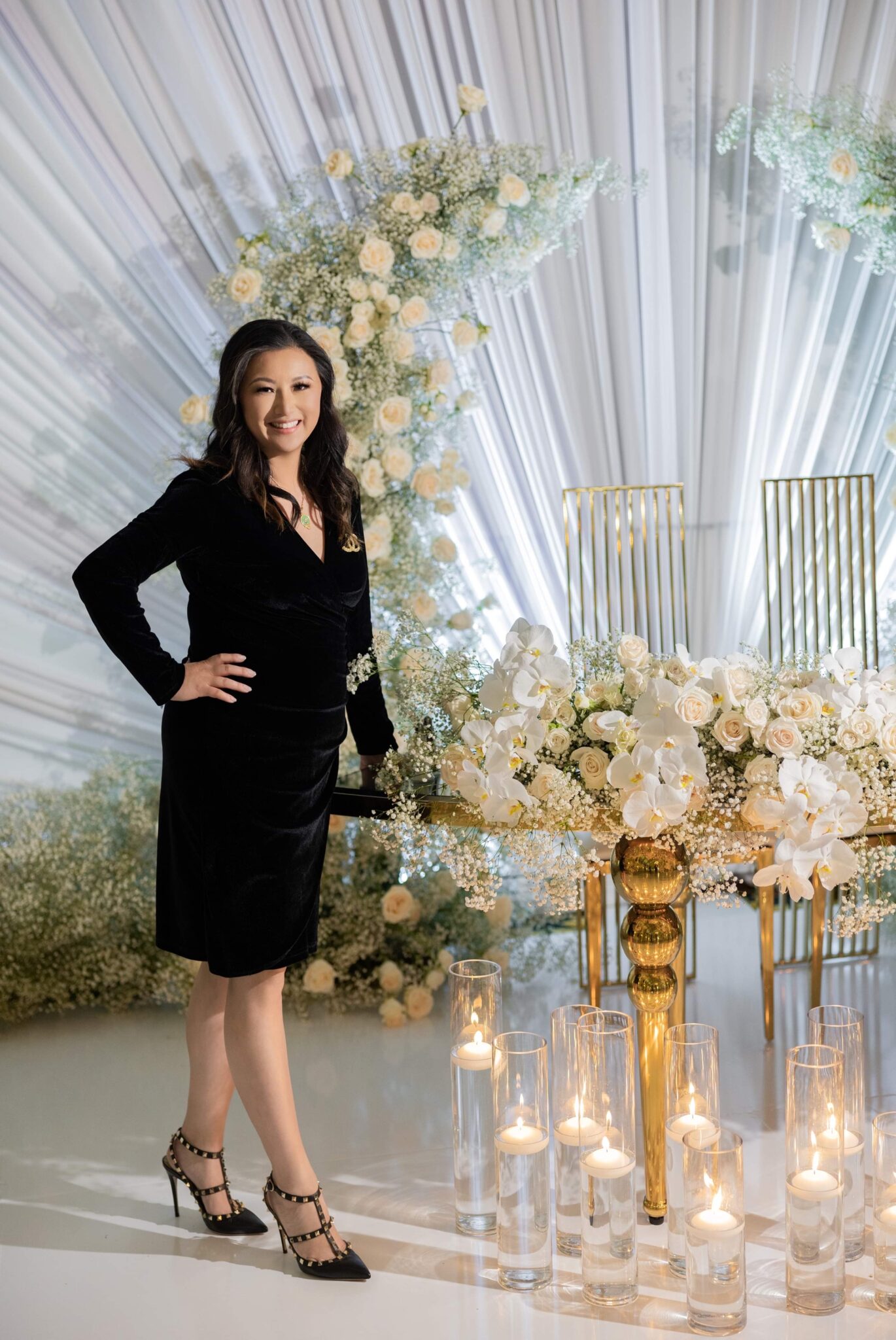
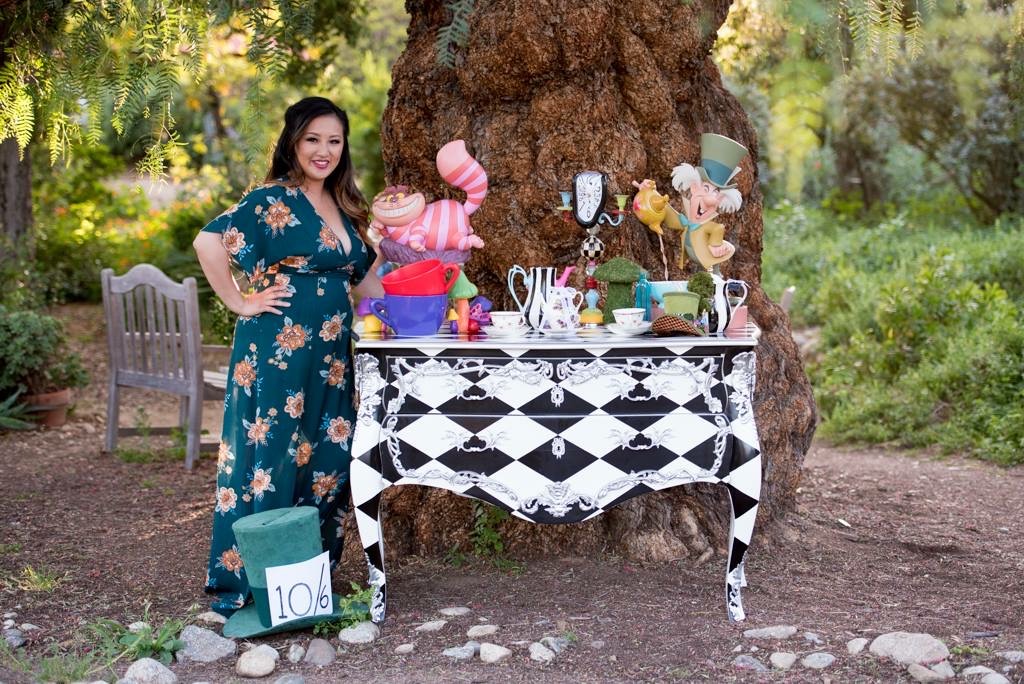
Dee Lee’s journey from being a middle school teacher to the founder of an award-winning event production company is a story that inspires us all to pursue our passion.

Despite facing various challenges and setbacks along the way, Dee persevered and learned from her mistakes, which ultimately led to her success. The road has been filled with ups and downs, but she never gave up.

Dee is a first-generation Teo-Chew Cambodian woman born in the United States. Her parents escaped from the Cambodian genocide and she is the oldest of three siblings. As a daughter of immigrants, she loves to use her platform to educate, inspire, and bless it forward to her AAPI community. 

Join us as we explore the challenges Dee faced and the valuable lessons she learned on her journey towards success.

FROM MIDDLE SCHOOL EDUCATOR TO EVENT PRODUCTION COMPANY OWNER

Dee was a middle school teacher in the largest school district, Los Angeles Unified, starting full-time teaching at just 23 years old. She had a talent for grant writing for the various schools she worked at. However, Dee’s pivot came when her daughters were born, and she felt unsupported.

“I was doing events and photography as a hobbyist. I quickly learned that I found a new love and pursued it part time. Eventually I retired from teaching and opened my first  LLC, got liability insurance, and the rest was history,” Dee said.

She faced a lot of challenges at first, mostly because she didn’t have enough business background to understand how to properly run a business. “Both my Bachelors and Masters were in education. I didn’t have a mentor. I learned a lot through trial and error.”

Eventually she found a network of event professionals that opened more doors for her. She started out in the Quinceañera market, where she made a name for herself as a designer in a Latino market. Although it was challenging, Dee thrived in it.

Along with the challenges she faced, she also encountered people who told her that she couldn’t make it. There was a time that she assisted a celebrity planner she admired, and was told that she was only good enough for small things. This was a devastating blow to Dee’s confidence. But despite these challenges, Dee persisted and emerged victorious. She continued to grow her business and inspire others with her journey.

MISTAKES SHE FACED ALONG THE WAY

Dee made a lot of entrepreneurial mistakes in the beginning of her journey. It was a new learning curve for her. She quickly learned why liability insurance was so important to have as a business owner, and she learned about quarterly taxes. She wanted to buy everything but she knew she shouldn’t.

“I still had a hobbyist attitude about pricing when I jumped into it full time. I didn’t know what market value was on anything and had to do a lot of research,” Dee said.

Networking was also a crucial part of her journey, as she learned the value of connecting with others in her industry and receiving valuable advice from them. Every piece of advice was like a gold nugget for her, and she took it all in. She was realistic with her expectations of growth and knew that success would not come overnight.

WHAT MOTIVATED HER DESPITE ALL HER SETBACKS

The honest truth about why Dee was so motivated and determined to succeed was the fact that she was the oldest daughter of her immigrant parents, and they thought that she was crazy to leave her profession as an educator and her two degrees. Even her cousins thought that she was just wasting her time in event planning.

She considered every mistake and situation as a learning experience, and worked tirelessly to establish herself and her business. Her goal was to become so successful that everyone would know who “Dee Lee” was.

HER CREATIVE PROCESS OF MAKING EACH EVENT UNIQUE AND PERSONAL TO EVERY CLIENT

When it comes to designing unique and personalized events for each client, Dee takes a meticulous approach. She is passionate about her work and loves the design process. She begins by sending her clients a list of discovery questions to help her gather information about their preferences and needs. She then schedules a virtual discovery call with her clients via Google Meet or Zoom, where she listens carefully to their ideas and aspirations.

Dee involves her clients in every step of the process, creating design boards together, and incorporating their personal preferences into the final product. Her approach is to make the process less transactional and more personable by humanizing the whole process.

Dee values building personal relationships with her clients, and they often embark on wedding planning and foodie adventures together. This helps her clients get to know her better, and it also enables Dee to understand her clients’ personalities and preferences. As a result, Dee is able to design events that are unique and tailored to each client’s needs.
ADVICE TO THOSE WHO WANT TO PURSUE THEIR PASSIONS AND THOSE WHO WANT TO ENTER THE EVENTS PLANNING INDUSTRY

Dee advises those who want to pursue their passions but don’t have the courage to do so to align themselves with a mentor to shadow. She emphasizes the importance of learning to do things the right way, which can be achieved by having a mentor who can guide and teach them. Dee also suggests networking and meeting new people, as it can lead to opportunities and connections in the industry.  Community is important to growth.

Dee receives a lot of emails from people who want to shadow or become a wedding planner until they see it unfold live. She acknowledges that this kind of job is not for the faint of heart.

“There is a reason it is not made for everyone and it is one of the top ten most stressful jobs. You have to know how to think on your feet, fix things on the fly, in order to survive,” Dee said.

CONNECT WITH DEE

Facebook: Dee Lee Designs

Instagram: @deeleedesigns

Pinterest: Dee Lee Designs

TikTok: @deeleedesings
Related Articles

Image Source: The Sacramento Bee

News

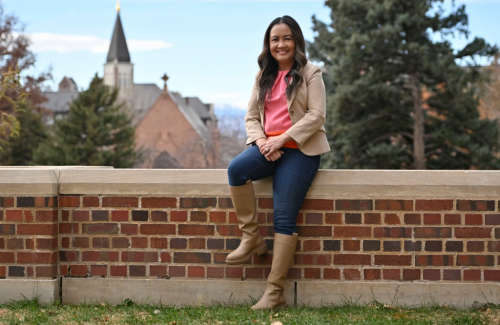
Asian American Community Is Prospering In Folsom Sacramento County

The number of Asian American immigrants in Folsom multiplied five-fold from 2000 until last year as found out by the US Census Bureau.

Among them are Chalamcherla of India, Steven Wang of China, and Marcus Yasatuke of Japan.

51-year-old Chalamcherla long decided to come to Folsom after falling in love with the city while attending the birthday celebration of a friend’s son, but it wasn’t until 2006 that he actually did so after spending two years in Singapore and the Bay Area.

Nearly ten years after arriving in the country, Steven Wang, who is currently Folsom’s city attorney, became a citizen.

Back then, it was hard for tourists to enter the US but Wang, together with her brother and mother, swiftly passed the immigration after saying that they would be visiting Disneyland, the only place he knew. 

Wang, who is now a lieutenant colonel, has been a member of the US Army Reserve since 2004. During that time, many of his fellow soldiers were losing their lives while serving, and Wang felt in danger.

Because of this, he worked in Folsom city before finishing the necessary time to serve in his Afghanistan deployment, and he told The Sacramento Bee, “I don’t know if every company is like this, but Folsom has been quite supportive of the military.”

Additionally, in 2003, Marcus Yasutake, 45, moved to Folsom with his wife after receiving job offers from Placerville and Roseville. They were able to reside there and raise a family of three children.

Communications director Christine Brainerd of the city of Folsom said that Asian Americans are likely attracted to the area on the same note as why many citizens choose to call Folsom home.

The head of the Sacramento Asian Pacific Chamber of Commerce’s economic development team believes that the tech-based companies in Folsom may be one factor for the recent increase in Asian residents.

Marcus cited the excellent school system in Folsom as one of the reasons why he came there, whilst Chalamcherla claimed that technology plays a significant role in the city’s increasing Asian population.

Racial discrimination is far from nonexistent in Folsom. That’s why Chalamcherla urges other Asians to immerse them in Asian culture.

Image Source: The Denver Post

News

Denver’s Vietnamese Refugees Share New Life While Keeping Family’s Heritage

Because of the chaos that was happening in their homeland in the 1970s, thousands of Vietnamese fled and some, later on, found a home in Colorado.

The melancholic memory is still fresh for Nga Vương-Sandoval, who, at the age of three, had to temporarily stay in refugee camps in the Philippines, Guam, and Arkansas.

She was with the about 2 million people who were unhoused and still have from within the shock of their suffering. 

It had been very challenging for them as they had to leave behind the good life they have in Vietnam and even depart from their relatives in order for them to leave safely.

Starting their life all over again, Denver has become a home to the 24,000-man Vietnamese Americans.

After being able to establish their community and found a home in the place, Nga said “I’m proud to say that it’s the city that I love, it’s the state that I love.”

Meanwhile, Vo, a 21-year-old grandchild of a Vietnamese who grew up in Aurora after his grannies and parents left Vietnam in the 1990s to seek a better life, had the experience of living in “a very diverse place.”

Knowing very little about his family’s past in Vietnam, he conducted a research project to unleash an “inherently American story,” according to him. 

Enabling people to have a glimpse of the refugees from a different perspective, Vo made use of his relatives as objects of his photography.

“Even though we moved here, they still lived a very Vietnamese life,” Vo said in Denver Post, 

It was also in his research that he found out how the majority of his family members were able to escape Vietnam while being robbed of cash and gold on their way.

He also mentioned how his family kept their culture by still practicing them in Denver which contributed to what America is, a place with diverse cultures. 

Despite having to start from scratch, they were able to begin life anew and even owned an Asian supermarket, Asian cinema, and Truong An Gifts.

His family also started the Far East Center shopping mall in 1987, home to him and his cousins and even to the Asian community.

Image Source: Silicon India

News

South Asians Found Second Home in Devon Avenue’s “Little India”

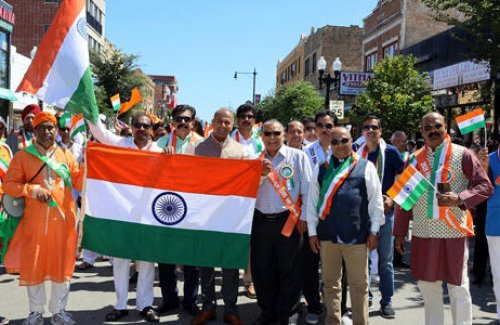
At Devon Avenue in Chicago, immigrants from India discovered a taste and comfort of their home country.

The area, commonly referred to as “Little India,” has served as a shelter for Indians who miss their culture.

Finding a home in it, Indians such as National Indo-American Museum board member Beverly Kumar, go there every now and then, especially when she craves Kalakand, a traditional Indian fudge.

According to Kumar, “It’s very comforting knowing that just 14 miles away from my house, there is an essence of Little India.” She also mentioned how reminiscing it is to see familiar sights, sounds, scents, and flavors when visiting Devon Avenue since it makes her feel as though she has never left home.

The area not only became a haven for Indians, but also for other South Asians who opened grocery stores, sari and jewelry stores, as well as many other enterprises in addition to food stores.

In the middle of 1960s, the place it became the second and fourth-largest enclave for Indian and Pakistani Americans, respectively.

The Federal Immigration and Naturalization Act of 1965 ushered in the first wave of South Asian immigration, which established settlements for South Asian professionals in Chicago, while the second phase arrived in the 1980s and 1990s.

Psychotherapist Ranjana Bhargava was one of the first immigrants who yearned for vegan food and searched for spices to sate her craving for Indian cuisines, which she found at Mexican places.

Between the first and second waves, businesses such as The Sari Palace sari store and Indian grocery stores began to thrive there.

Since then, a new community has been created where Indians continue to practice their culture through activities like viewing Indian movies, getting together, playing instruments, performing traditional dances, and eating.

The once Jewish-dominated place became a mainly Indian community which captivated more visitors where one can meet not only Indians but people of different races.

Image Source: Olivier Koning / Honolulu Magazine

Stories

Chinatown’s Oldest and Most Respected Businesses Proudly Carried On By Next Generation

The blood of entrepreneurship runs through the veins of Chinatown’s Chinese food business owners, as three of the longest-running businesses have their children enter the management fields of their family business.

Tony and Selina Chun, together with Alan and Helen Chun, who have been in the business for decades, fully trusted their children to run the meat market company they bought in the 1980s.

The older generation passed it down to their children believing that they would treat it the same way they had after 40 years of building and creating the Chinatown cornerstone with crispy roast pigs, burnished roast ducks, and glazed char siu along with butcher store and seafood vendor.

Frankie, 35, and his cousins are now in charge of running the company that they established through diligence and thrift. Given that they have a family business to manage, Frankie has known since then that he won’t take long in any career.

He was reported in Honolulu magazine as saying, “I knew that anything I was going to pursue wasn’t going to be lengthy, because the family would always ask us back for support.”

He and his cousins learned the operations as a result of early exposure to the business and used them as a means of support, which pleased their parents, especially when they took their first vacation in four decades.

Meanwhile, Liana Fang, whose parents Wesley and Jie Mei Fang founded Sing Cheong Yuan Bakery, assists in running the business.

The pair bought the bakery from its original owners and then expanded it by bringing in more goods. The homemade goods were prepared using original family recipes that they later improved.

The 27-year-old claims she adores Chinatown but acknowledges that she is more passionate about cooking than baking. “It’s so authentic. I love Asian food, the fresh markets, the mom-and-pop shops,” she said.

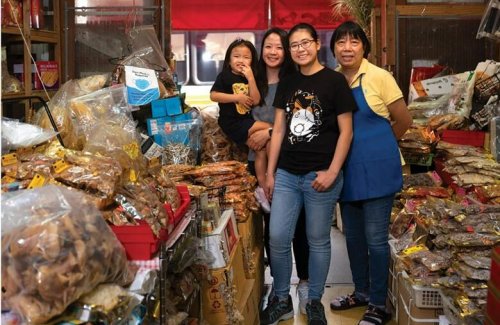
Completing the list, the 33-year-old daughter of Sun Chong supermarket co-owner Ann Sung also contributes to management of the business.

Sun helps them sell their products and other items by marketing it online and by helping accomplish other stuff needed in the business.

Sun, who grew up at the shop with her cousins, said that their business is like a thread that can connect generations. She also claimed that coming home after studying abroad was like paying back her mother, who had done everything for her. Sun plans to update and improve her mother and aunt’s traditional business structure.