Stories

April 19, 2024

SHARE:

Social media undoubtedly has brought our society many wonders. The connection it can bring and the impact it can make are undeniable. But along with the rise of platforms that prioritize online personas and shortcut conversations, profound connections feel like an endurance test.

Jenny Woo, taking an emotional and deep-dive reading of this pattern, decided to develop the 52 Essential Conversations. She then established Mind Brain Emotion with the hope of helping people stay in tune with their emotions, building happiness, serenity, and wisdom. 

AN INCUBATION AT HARVARD

It was an insightful experience to have this exclusive interview with Jenny Woo, whose keen observation and curiosity have led her to the creation of Mind Brain Emotion, educational card games, and mental health tools to help people build essential human skills and connections.

Delightfully quipping “I earned enough credentials so that my parents and grandparents could each have an honorary degree,” Jenny showcased a strong personality, one that is “resourceful, resilient, and hard-working.” As she would humorously refer to herself as a “knowledge smuggler,” Jenny dug up the problems in current education towards one’s emotional development:

During my study and research at Harvard, I was drawn to the intersection of emotional intelligence and cultural identity. Self-awareness, social awareness, and relationship skills were three key components of emotional intelligence. As a management consultant, executive coach, and HR leader, I had already observed how essential these skills were for career success. 

And yet, the education system did little to expose students to these skills. Teaching resources were scarce, expensive, and outdated, and only the most expensive private schools had access. I also interviewed Harvard and MIT students on what got them to be where they are today and realized that a large component was having access to essential conversations and connections with mentors and parents. 

Jenny also detailed the inspiration behind her first deck, 52 Essential Conversations, which came from careful investigation into neuroscience and social affairs:

My findings are also aligned with neuroscience research from Harvard/MIT on the power of conversations. For the average Joe or Jenny, like me, we had limited access to social capital and resources like this. So, it inspired me to translate emotional intelligence research and social capital into affordable and relatable card games to help everyone reach their potential. In my research, I also saw a lack of representation and conversations around diversity, equity, and inclusion in the emotional intelligence learning framework. For example, how could we practice self-awareness or social awareness if we didn’t discuss the role of race? Being socially aware is also understanding our privilege and past.

NAVIGATION THROUGH RACISM AND MISOGYNY 

Jenny’s journey was never met with only the appraisals but also the scathing criticism of her success as an Asian American. Her detractors claimed many misogynistic things upon her (“women like this die alone”) and called her a CCP spy, because it was never expected of a woman like her to achieve such success. However, it is the meaning of her work and the applauding reaction of her supporters that have kept her moving forward: 

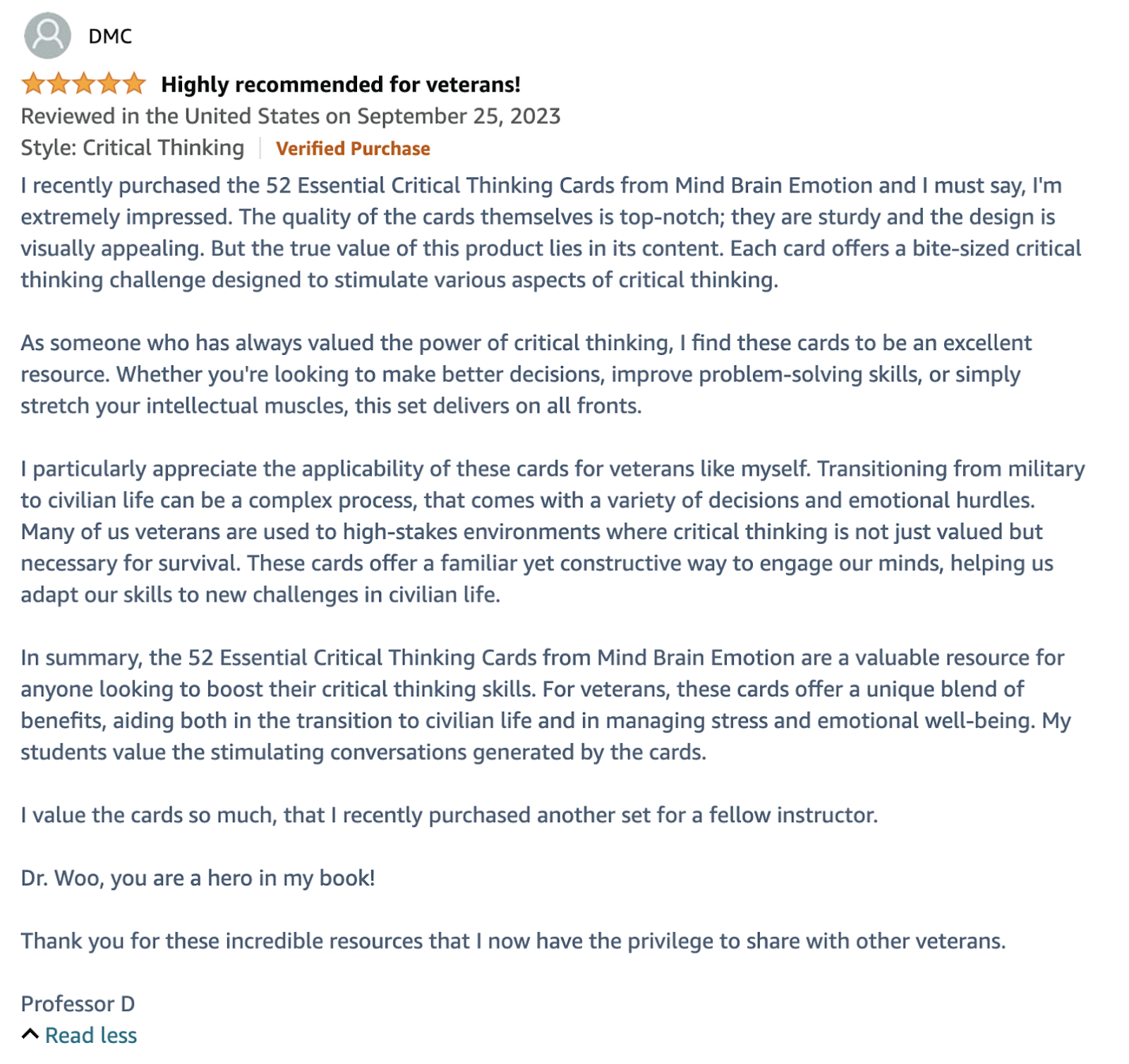
User testimonials are why I do what I do. My card decks are being used in ways that I had never imagined – in veteran hospitals and curriculums, in Federally-funded programs that support homeless youth and displaced families, in trauma-informed social work to help neglected and abused kids and adults, for Ukraine teen refugees, in speech-language therapy to help clients build reading comprehension, in community college and adult learning ESL classes to help immigrants learn language and networking, in gifted and talented programs to help students build both critical thinking and empathy, in workplaces for teambuilding and mentorship, etc. I’ve done university research on the utility of the card decks and it’s amazing to see it benefiting people from all socioeconomic classes, from poverty to affluence. 
At the end of a school district workshop I delivered, the school counselor told me that the divorced parents who had been on toxic non-speaking terms were surprisingly communicating warmly to each other and their child by the end of my hands-on workshop using the card decks. It’s anecdotes like this that keep me going.

AI, GEN Z, AND MIND BRAIN EMOTION

When asked about how AI has transcended society, she brought up the concerns for mental health, fearing the permeating scarcity of personal connection:

I was interviewed on an emerging study on the impact of AI on the mental health of workers (not just in the US, but also in the Asia Pacific) between the ages of 25 – 55. It found that workers were lonelier and craved more social interaction. I love tech and AI, and I believe they have improved the quality of our lives tremendously. However, in the context of emotional intelligence, it’s making it harder for people to experience authentic and unfiltered IRL emotional connections and social interactions. Lately, I’ve been interviewed a lot on emotional intelligence topics like how to initiate a conversation with strangers, phubbing, and how to cope with social anxiety and ghosting. Although people are now much more aware of the importance of mental health, I’m afraid that many are left with little practice (or willingness) for human-to-human connection. 

However, there’s always a silver lining. With the growing acceptance to talk about mental health among younger generations, Jenny sees a glimmer of hope in her products. They have the potential to support young people in fostering greater openness and understanding surrounding mental health issues:

I have a few more decks in the works that support Gen Alpha, GenZers, and Millennials. My card deck topics were created based on user feedback on their needs. For example, I created the 52 Essential Coping Skills during the pandemic to support my college students’ mental health. Many of the cards stemmed from a course I had been teaching, where I created practical Zoom games and assignments to help my students cope with the situations they were confiding in me. My class was oversubscribed with a long waitlist, so I made my exercises into this card game to offer instant support.
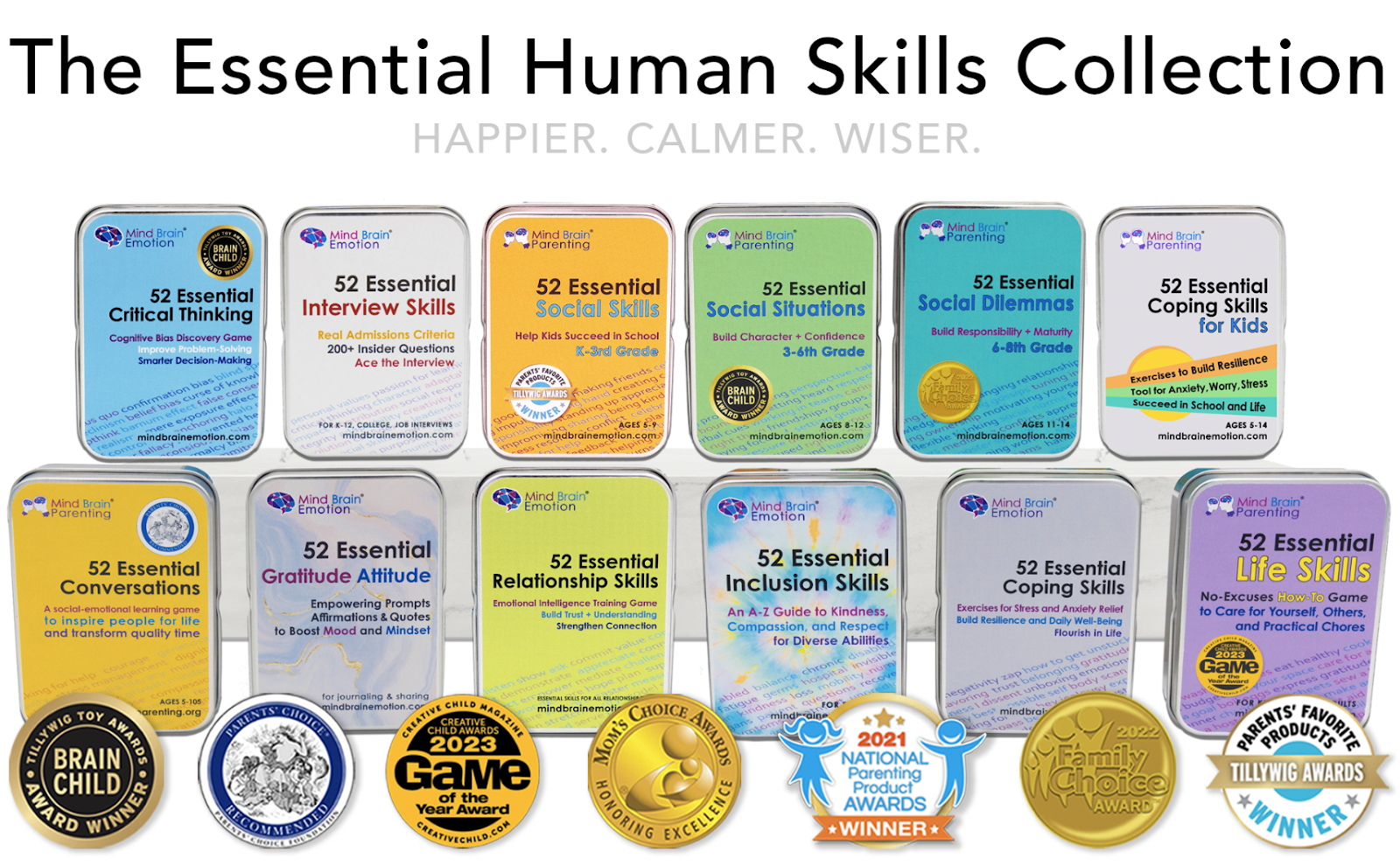
I created the 52 Essential Critical Thinking Skills in response to Black Lives Matter and Asian Hate crimes to give younger generations the tools for activism and advocacy. Most recently, a national youth-centered activism nonprofit organization contacted me to discuss collaborative partnerships to support our younger generations. We want to provide concrete tools to help our youth go from civic-conscious to civic-committed while managing the mental health toll of the geopolitical issues. Lastly, reaching younger generations through social media and YouTube would be great. I would love to collaborate with influencers who care deeply about mental health!

Speaking about her vision for Mind Brain Emotion, she expressed her desire to expand Mind Brain Emotion globally, especially in APAC:

I’d love to connect with publishers and distributors to bring evidence-based emotional intelligence resources into those countries. I believe these resources will benefit both the younger and older generations.

CONNECT WITH JENNY WOO / MIND BRAIN EMOTION

Website: http://mindbrainemotion.com

Socials: 

Related Articles

Image Source: Jane Nguyen / NBC News

Uncategorized

Kenneth Mejia Sits As Los Angeles’ New and First Filipino American City Controller

Taking the lead with a 21-point advantage, Kenneth Mejia, is now Los Angeles’ newly-elected City Controller assuming city-wide office after cutting the edge against City Councilmember Paul Koretz.

The 32-year-old is the first Filipino American to take the position. As a CPA and community militant, Mejia is pleased to embody the distinct community of L.A.

“We have a very diverse population in L.A. and I feel very proud and honored to represent that community and coming from a minority background makes you more empathetic about the people you’re fighting for,” Mejia said as quoted in NBC News.

He achieved a double-sweeping win after attaining more votes than any mayoral candidates and concluding the election with over 100,000 votes higher than Koretz, a radical and experienced public officer, which accordingly is a sign of many Angelenos’ renouncement of the status quo.

Mejia was also once an organizer of the L.A. Tenants Union who initiated the legalization of homelessness and made the concerned authorities liable for it.

The newly-elected City Controller mentioned that he eyes transforming the system and making it worker-friendly. He likewise shared that a controller is “the city’s accountant and paymaster,” which is different from high-profile City Council positions since he cannot promulgate a legislation or amend the city budget. These restrictions fit him wonderfully as a CPA and organizer, making his work more intriguing.

“You don’t really have to push an agenda when you’re running to present data and show numbers,” Mejia continues, “They have a story in themselves,” he added.

After the City Council decided to ban homeless encampments 500 feet from schools and daycare centers, Mejia calculated how many camps will be affected and created a digital map of 1,900 schools and daycare centers in the city, showing that 20% of the walkways would no longer be available as a campsite. Mejia’s staff employed computer technology to be more transparent to the public, especially regarding finances.

Image Source: Christopher DeVargas / Las Vegas Magazine

Uncategorized

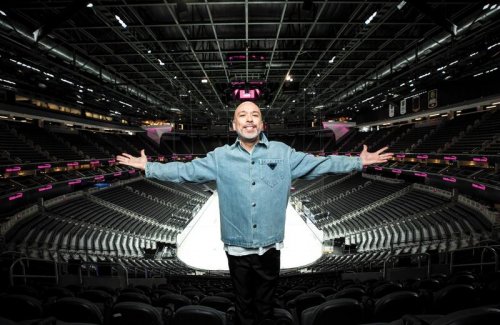
Jo Koy Makes History As The First Ever Comic Main Attraction At T-Mobile Arena

After Jo Koy’s recent successes, including the release of his two wildly popular Netflix specials,” In His Elements and Comin’ In Hot”, and the publication of his autobiographical debut book, entitled “Mixed Plate: Chronicles of an All-American Combo”, he is set to star as the first comic main attraction at Las Vegas’ T-Mobile Arena on November 19.

This year, the Filipino-American actor-comedian embarked on his first nationwide arena tour for Easter Sunday, a feature film based on those personal anecdotes and his other comedic content that hit theaters which also starred Lydia Gaston, Eugene Cordero, Tia Carrere, and Lou Diamond Philipps. 

It was a life-changing experience for the 51-year-old, and he plans to continue creating films from behind the camera and helping other Filipinos, Asian Americans, and artists from different races.

Jo Koy first experienced comedy while still a student in Las Vegas and will return to the same city to fulfill his dream of becoming the first primary comic attraction to play at T-Mobile Arena.

“When I play T-Mobile Arena, I discover that I’m the first cartoonist to ever do it, which is sort of cool,” he told Las Vegas Magazine, “There are other venues in Las Vegas, including some very large ones, but T-location Mobile’s right on the Strip has a unique appeal,” Jo Koy adds.

He also mentioned that performing at arenas and other famous places abroad is beyond anything he could have imagined and that the realization of it drives him crazy.

After finishing the book and movie he’s been working on for several years, Jo Koy said that the process was challenging because there were many obstacles and firsts to tackle; it was the first time a Filipino actor portrayed the main character in a Hollywood production. He felt good about himself and appreciated Dreamworks and Universal for helping him.

“I want to keep creating. I want to highlight the other talent that is out there because I have been addicted to being in front of the camera,” Jo Koy continued, “Knowing how difficult it was for me, I want to keep the door open and showcase more potential, not just Filipino talent but talent from other countries and races that want to be recognized — I want to see what I can do to help make it happen.”

Jo Koy also disclosed that he has his eye on a number of up-and-coming stand-up comedians, such as Matteo Lane, with whom he is now working, Asif Ali, and JR De Guzman.

Image Source: Wu Tsai Foundation

Uncategorized

Brooklyn Nets Owners Launched The Largest Business Accelerator for Minority-led Startups

After George Floyd’s controversial death in 2020, growing VC investments in businesses founded by people of color became a top priority. According to Crunchbase, just 2.4% of VC financing between 2015 and 2020 went to Black or Latinx enterprises. Funding for black entrepreneurs quadrupled to $1.8 billion in 2021. This year, however, saw a sharp decline in investments in minority founders.

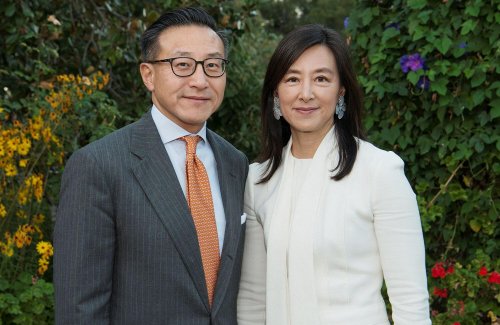
Entrepreneur and co-owner of the Brooklyn Nets, Clara Wu Tsai, launched BK-XL, the biggest business accelerator that aims to support 12 startups founded by Black, Indigenous, and other minority founders in 2023 by investing up to $500,000.

In an interview with The Associated Press, Wu Tsai stated that a shortage of finance is a major barrier to wealth growth for BIPOC businesses. She and her husband Joseph Tsai believe investing in BK-XL would be the greatest approach to overcome this challenge and generate wealth for the entrepreneurs and the jobs they create.

Wu Tsai stressed that she aims to highlight the underutilized entrepreneurial potential in Brooklyn to assist the neighborhood get back on its feet. She also thinks that BK-XL will demonstrate to the rest of the nation that investing in Black businesses pays off and is a smart move.

She added that any money made from investments in the BK-XL startups will be put back into Brooklyn-based companies. “The best way to demonstrate our faith in Brooklyn and Black-owned businesses,” she continued, “is to invest in them and demonstrate to the rest of the world that they are wise financial decisions.”

Prior to the release of BK-XL, Tsai’s Social Justice Fund also introduced “EXCELerate” last year, which offered no-interest loans to Black-owned small companies in need of assistance in order to recover from the closures caused by the COVID-19 pandemic.

As part of her strategy to leverage a combination of investments and donations to achieve goals for the neighborhood, she stated that BK-XL will shortly be followed by a philanthropic grant program to assist other businesses in Brooklyn.

All Brooklyn-based, BIPOC-led firms may submit a BK-XL application starting on December 5. But only companies in industries where the Tsais have the expertise, like e-commerce, will be approved.

Image Source Ken Chan Facebook

Uncategorized

Pandemic Turns Filipino Actor Ken Chan Into A Serial Entrepreneur

Ken Chan, a 29-year-old Filipino actor, proves that the pandemic has not only caused bad things but has also brought good fortune to some, being a celebrity-turned-entrepreneur after losing his job during the crisis.

Ken swiftly expanded his franchised iFuel gas station with 10 branches in different parts of the country in just a year. He also opened Cafè Claus, a Christmas-themed café, which has extended into three branches around Metro Manila, Philippines.

Nonetheless, he also braved the wellness industry with his Aromagicare Luxury Massage Chair. He mentioned that his triumph is also because of saving and spending wisely. 

Ken said he had taken to heart the financial lesson his parents had taught him wherein he learned not to overspend on himself.

During his recent interview, Ken said that he takes pride in the fact that he rarely makes purchases for himself and even makes the most of his cars while they are still roadworthy.

The actor realized during the pandemic that artists should secure their fallback in case they lose their jobs in the industry.