Stories

April 19, 2024

SHARE:

Social media undoubtedly has brought our society many wonders. The connection it can bring and the impact it can make are undeniable. But along with the rise of platforms that prioritize online personas and shortcut conversations, profound connections feel like an endurance test.

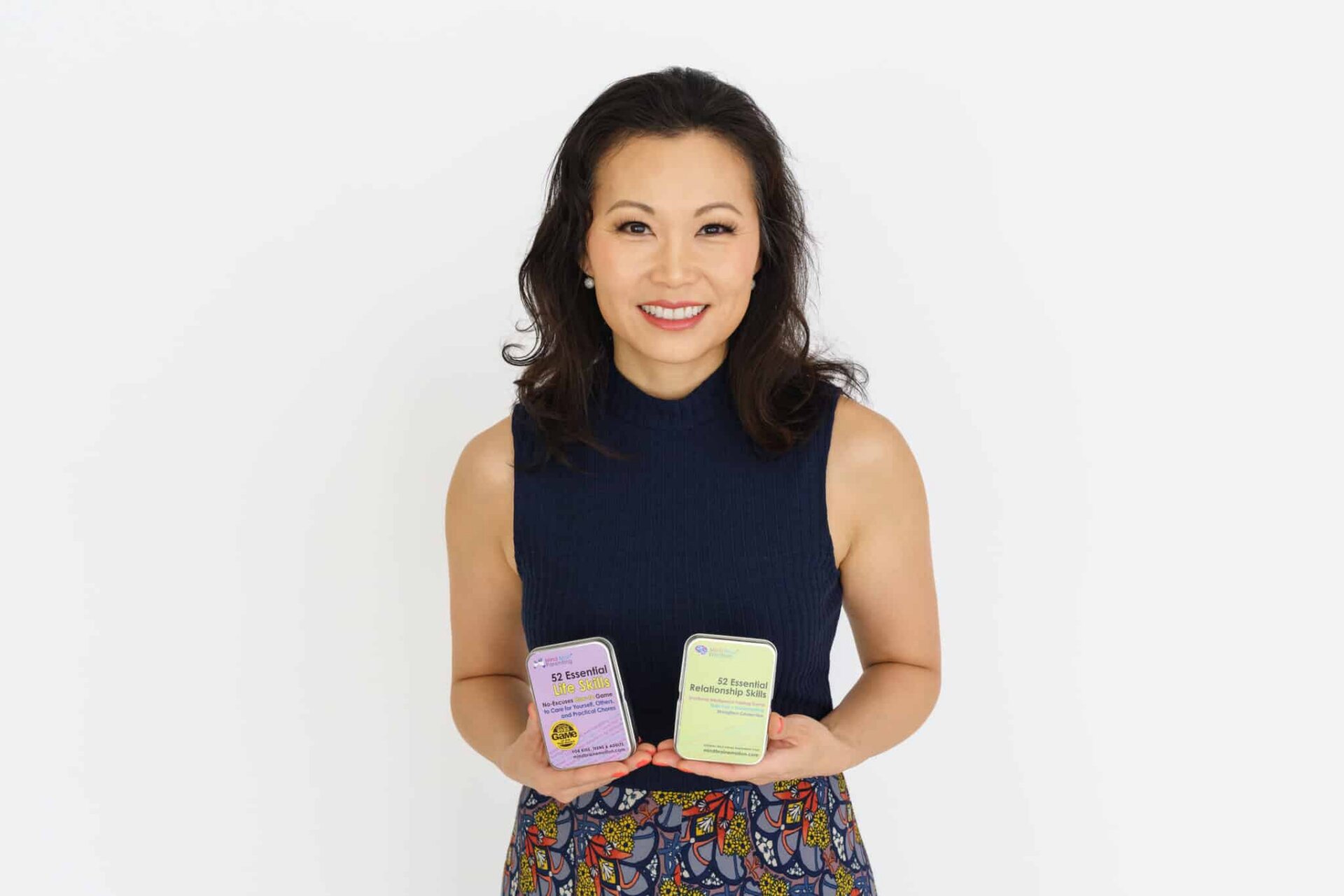
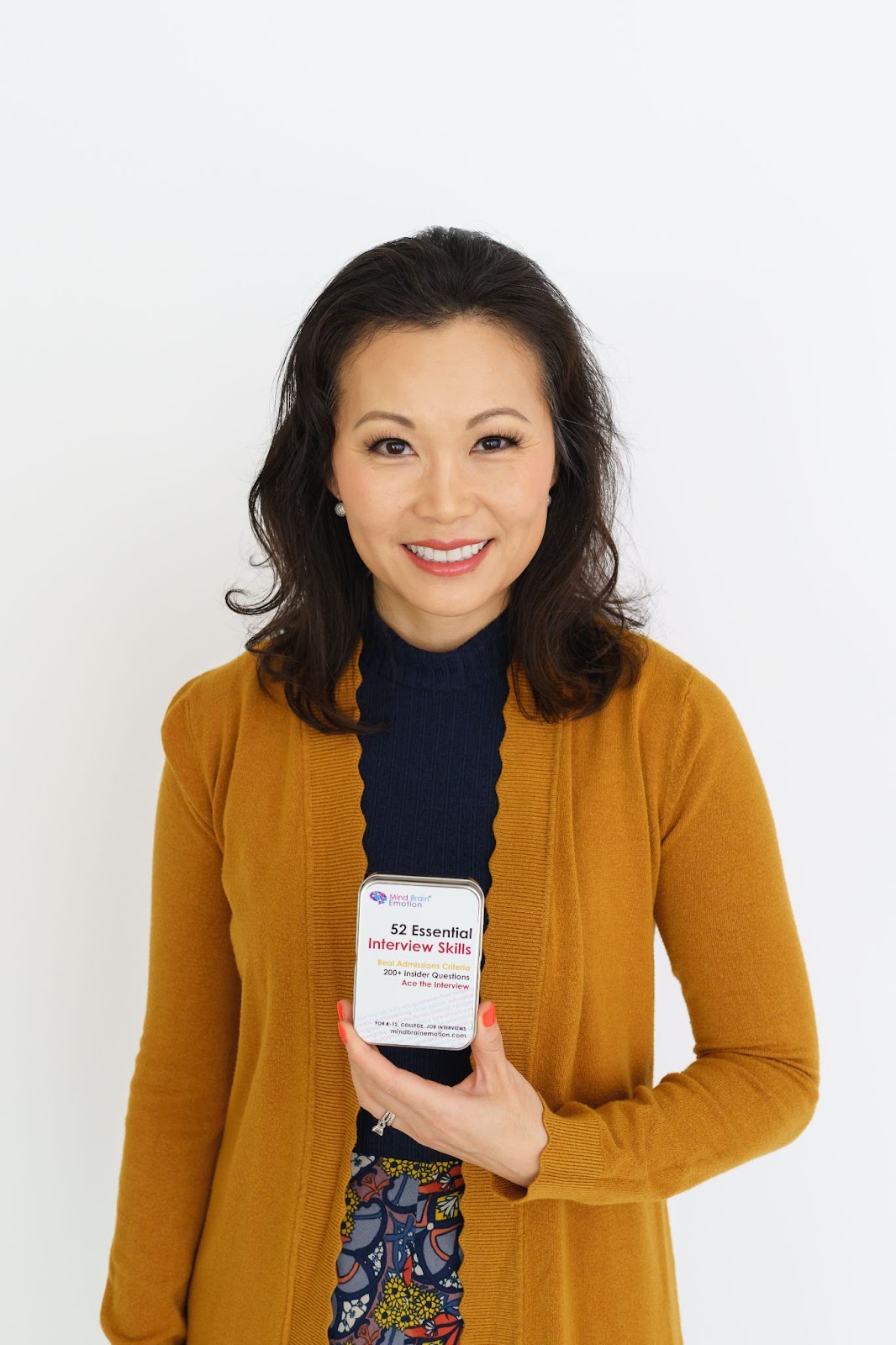
Jenny Woo, taking an emotional and deep-dive reading of this pattern, decided to develop the 52 Essential Conversations. She then established Mind Brain Emotion with the hope of helping people stay in tune with their emotions, building happiness, serenity, and wisdom. 

AN INCUBATION AT HARVARD

It was an insightful experience to have this exclusive interview with Jenny Woo, whose keen observation and curiosity have led her to the creation of Mind Brain Emotion, educational card games, and mental health tools to help people build essential human skills and connections.

Delightfully quipping “I earned enough credentials so that my parents and grandparents could each have an honorary degree,” Jenny showcased a strong personality, one that is “resourceful, resilient, and hard-working.” As she would humorously refer to herself as a “knowledge smuggler,” Jenny dug up the problems in current education towards one’s emotional development:

During my study and research at Harvard, I was drawn to the intersection of emotional intelligence and cultural identity. Self-awareness, social awareness, and relationship skills were three key components of emotional intelligence. As a management consultant, executive coach, and HR leader, I had already observed how essential these skills were for career success. 
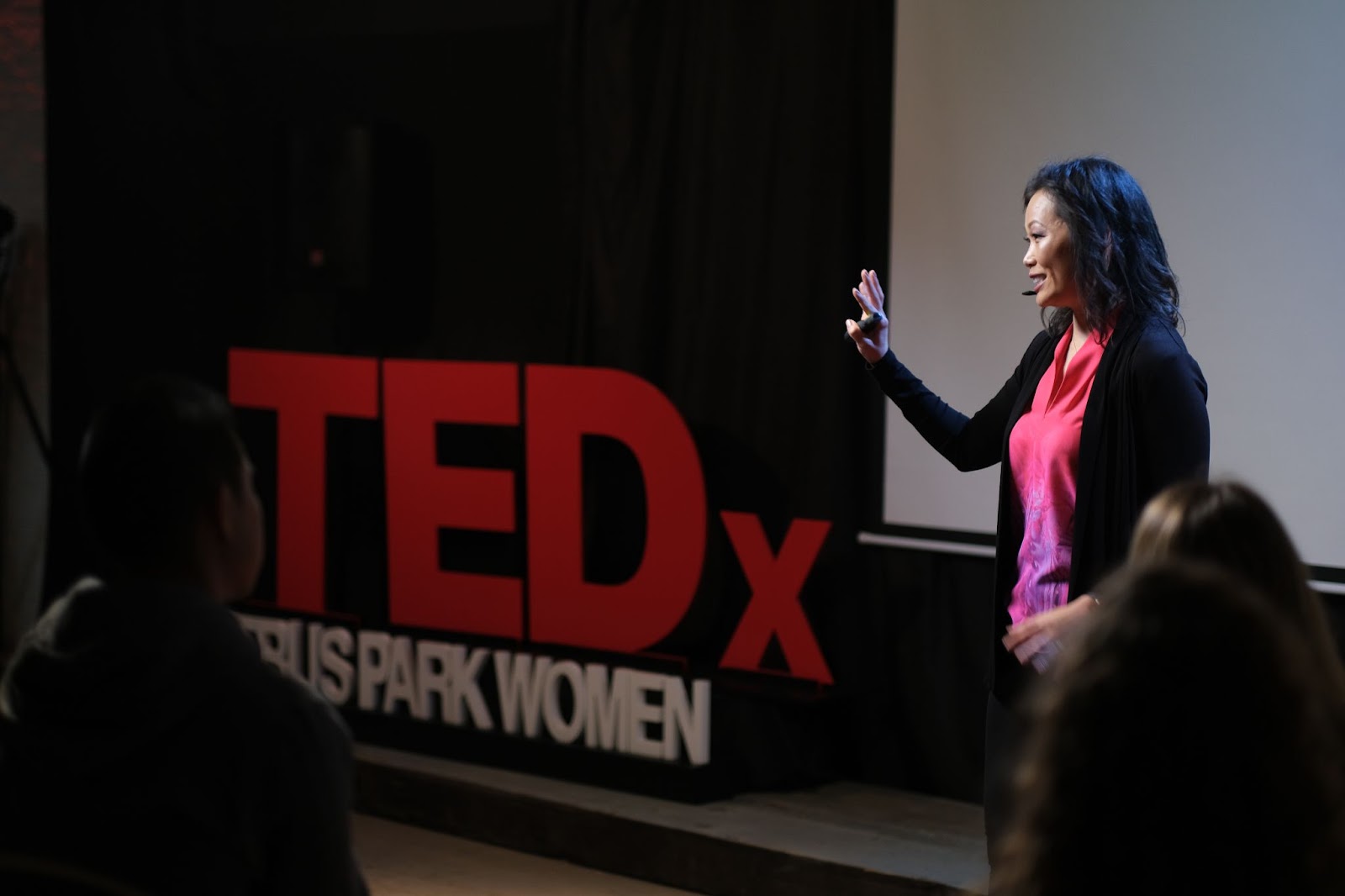
And yet, the education system did little to expose students to these skills. Teaching resources were scarce, expensive, and outdated, and only the most expensive private schools had access. I also interviewed Harvard and MIT students on what got them to be where they are today and realized that a large component was having access to essential conversations and connections with mentors and parents. 

Jenny also detailed the inspiration behind her first deck, 52 Essential Conversations, which came from careful investigation into neuroscience and social affairs:

My findings are also aligned with neuroscience research from Harvard/MIT on the power of conversations. For the average Joe or Jenny, like me, we had limited access to social capital and resources like this. So, it inspired me to translate emotional intelligence research and social capital into affordable and relatable card games to help everyone reach their potential. In my research, I also saw a lack of representation and conversations around diversity, equity, and inclusion in the emotional intelligence learning framework. For example, how could we practice self-awareness or social awareness if we didn’t discuss the role of race? Being socially aware is also understanding our privilege and past.

NAVIGATION THROUGH RACISM AND MISOGYNY 

Jenny’s journey was never met with only the appraisals but also the scathing criticism of her success as an Asian American. Her detractors claimed many misogynistic things upon her (“women like this die alone”) and called her a CCP spy, because it was never expected of a woman like her to achieve such success. However, it is the meaning of her work and the applauding reaction of her supporters that have kept her moving forward: 

User testimonials are why I do what I do. My card decks are being used in ways that I had never imagined – in veteran hospitals and curriculums, in Federally-funded programs that support homeless youth and displaced families, in trauma-informed social work to help neglected and abused kids and adults, for Ukraine teen refugees, in speech-language therapy to help clients build reading comprehension, in community college and adult learning ESL classes to help immigrants learn language and networking, in gifted and talented programs to help students build both critical thinking and empathy, in workplaces for teambuilding and mentorship, etc. I’ve done university research on the utility of the card decks and it’s amazing to see it benefiting people from all socioeconomic classes, from poverty to affluence. 
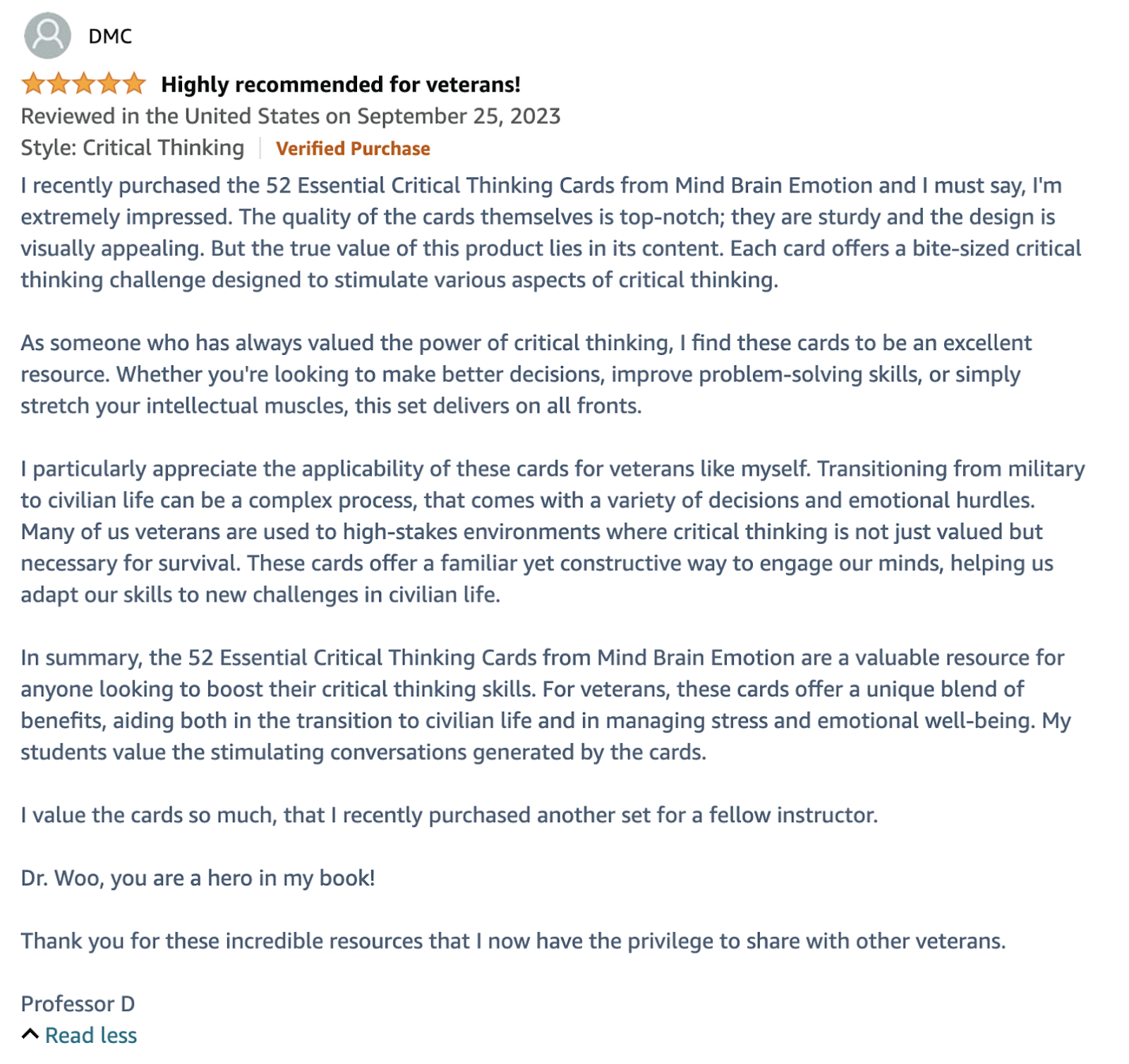
At the end of a school district workshop I delivered, the school counselor told me that the divorced parents who had been on toxic non-speaking terms were surprisingly communicating warmly to each other and their child by the end of my hands-on workshop using the card decks. It’s anecdotes like this that keep me going.

AI, GEN Z, AND MIND BRAIN EMOTION

When asked about how AI has transcended society, she brought up the concerns for mental health, fearing the permeating scarcity of personal connection:

I was interviewed on an emerging study on the impact of AI on the mental health of workers (not just in the US, but also in the Asia Pacific) between the ages of 25 – 55. It found that workers were lonelier and craved more social interaction. I love tech and AI, and I believe they have improved the quality of our lives tremendously. However, in the context of emotional intelligence, it’s making it harder for people to experience authentic and unfiltered IRL emotional connections and social interactions. Lately, I’ve been interviewed a lot on emotional intelligence topics like how to initiate a conversation with strangers, phubbing, and how to cope with social anxiety and ghosting. Although people are now much more aware of the importance of mental health, I’m afraid that many are left with little practice (or willingness) for human-to-human connection. 
However, there’s always a silver lining. With the growing acceptance to talk about mental health among younger generations, Jenny sees a glimmer of hope in her products. They have the potential to support young people in fostering greater openness and understanding surrounding mental health issues:

I have a few more decks in the works that support Gen Alpha, GenZers, and Millennials. My card deck topics were created based on user feedback on their needs. For example, I created the 52 Essential Coping Skills during the pandemic to support my college students’ mental health. Many of the cards stemmed from a course I had been teaching, where I created practical Zoom games and assignments to help my students cope with the situations they were confiding in me. My class was oversubscribed with a long waitlist, so I made my exercises into this card game to offer instant support.
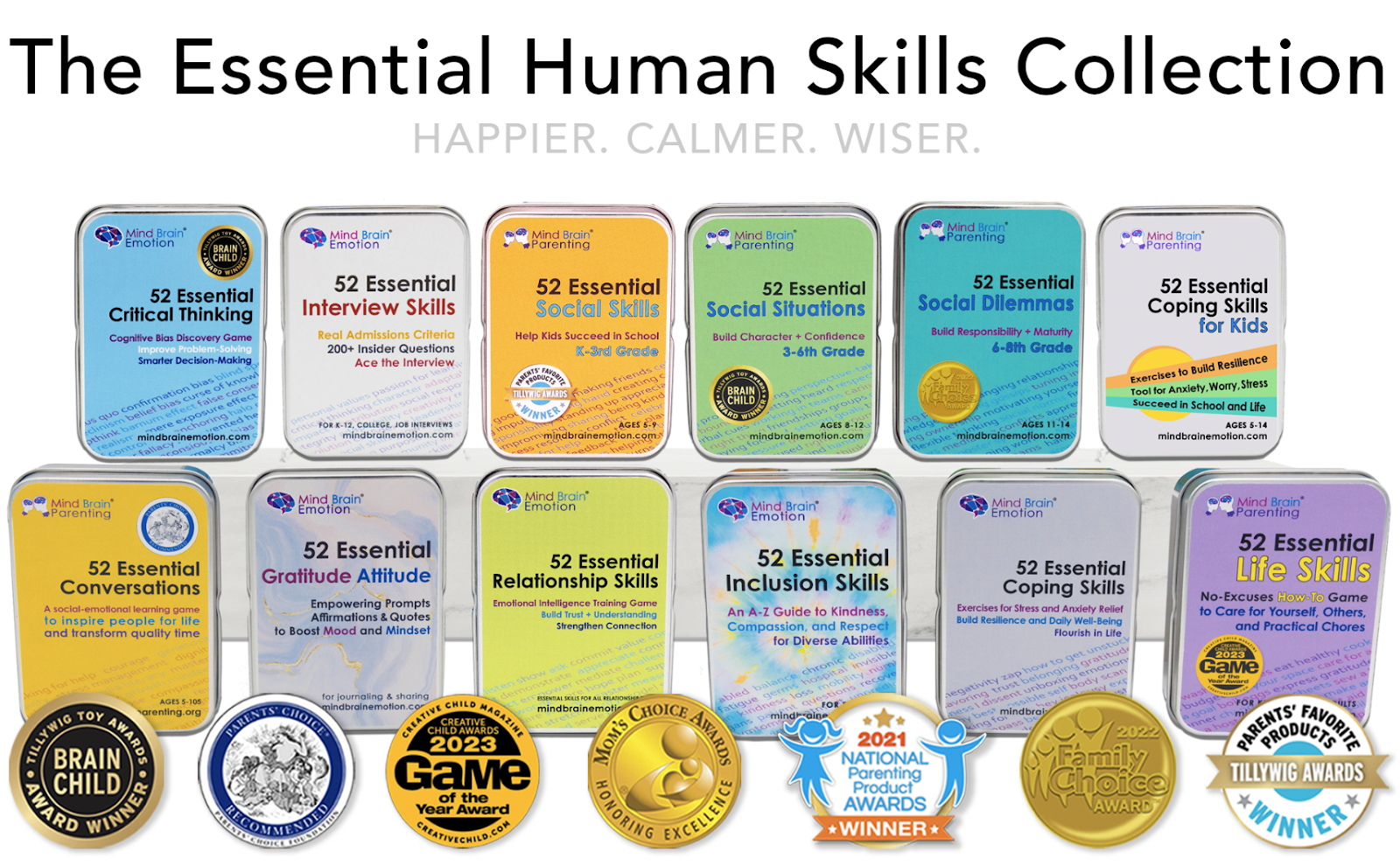
I created the 52 Essential Critical Thinking Skills in response to Black Lives Matter and Asian Hate crimes to give younger generations the tools for activism and advocacy. Most recently, a national youth-centered activism nonprofit organization contacted me to discuss collaborative partnerships to support our younger generations. We want to provide concrete tools to help our youth go from civic-conscious to civic-committed while managing the mental health toll of the geopolitical issues. Lastly, reaching younger generations through social media and YouTube would be great. I would love to collaborate with influencers who care deeply about mental health!

Speaking about her vision for Mind Brain Emotion, she expressed her desire to expand Mind Brain Emotion globally, especially in APAC:

I’d love to connect with publishers and distributors to bring evidence-based emotional intelligence resources into those countries. I believe these resources will benefit both the younger and older generations.

CONNECT WITH JENNY WOO / MIND BRAIN EMOTION

Website: http://mindbrainemotion.com

Socials: 

Related Articles

Image Source: Chinese Parade / Mark Andrew Boyer / KQED

News

Rich Ting Leads First San Francisco’s Chinese New Year Parade After Pandemic

Chinese American actor Rich Ting will serve as the grand marshal of San Francisco’s Chinese New Year parade in 2023.

The 42-year-old was reared by an athletic family, was born in Torrance, California, and spent time growing up in both Southern and Northern California.

Not only did he focus on being an athlete growing up, but also trained to be a Hollywood actor just what he always dreamed of. He made this goal come true by appearing in several films and TV shows, including Chicago P.D., NCIS: Los Angeles,  and Salt.

Succeeding Daniel Wu in leading the city’s Chinese New Year’s Year of The Rabbit parade, Rich stated “I am beyond words to express my gratitude for including me in such an iconic cultural celebration” in The San Francisco Standard.

The Chinatown exhibition will be celebrated for the first time since the pandemic with Harlan Wong serving as the parade’s director. Harlan Wong revealed that several rabbit sculptures will be placed throughout the city as part of the festivities and then sold at auction to benefit charities.

Michelle Yeoh, Jon Chu, and Mayor London Breed were hailed as grand marshals in prior years.

The Lunar New Year will be celebrated on January 22 at events hosted by the Chinese Chamber of Commerce, although festivities will get underway at Chinatown’s Flower Market on January 14.

On February 3, the Miss Chinatown Pageant will take place the day before the parade.

Image Source: Strait Times

Stories

What Motivated A Cleaner To Become Singapore’s Primech Services & Engineering CEO

Starting out poor and being dumped by a girl because she saw no better life with a cleaner is truly a successful and inspirational story for a man who now makes fortune.

Instead of getting frustrated, Vernon Kwek used his heartbreak and the discrimination he went through from his girlfriend who chose a university guy over him as a motivation of working hard and striving further in life.

The 48-year-old is now Singapore’s Primech Services & Engineering CEO who owns a 10% share in the company.

Simultaneously, Vernon also runs A&P Maintenance Services and Maint-Kleen, two other cleaning companies handling some of the biggest companies in Singapore, including Changi Airport Group, with over 3,000 employees under his power.

Vernon was born to a humble family. When he was barely 13 years old, he helped his father find a new job after losing the latter’s job as a salesman.

After his father was accepted as a cleaning supervisor, Vernon manifested his hard work and family-orientedness by helping his father in cleaning toilets and offices during the weekends.

A year after, he gave up school just to work as a full-time cleaner to help his family. Being a responsible teenager, he was shortly promoted to cleaning supervisor at the age of 14.

“I asked the manager if he was sure. My dad became a supervisor only when he was 40. I was only 14. But he said: ‘Don’t worry. You have your dad’s genes. He has leadership qualities, you should have the same too,’” Vernon shared in Strait Times

Later on, he was again promoted to a higher position as a senior supervisor until he finally became the company’s CEO.

Nevertheless, Vernon experienced many downfalls in his journey but never lost hope as he was determined to have a better life. Now, he is a successful family man with four kids.

Image Source: Weilyn Chong Linkedin

Stories

A College Freshman’s “Failure Class” Podcast Project Paved Her Way To Times Square

When Weilyn Chong’s name and photo appeared on a Times Square billboard from the Nasdaq Tower, it instantly went viral, inspiring many young Singaporeans to pursue entrepreneurial endeavors.

Weilyn acknowledges the value of entrepreneurship in Southeast Asia despite the fact that the majority of her work with founders is focused in the US.

Growing up, 20-year-old Weilyn Chong has lived from one place to another between Singapore, Hong Kong, and the Netherlands which made her immersed in varied cultures.

Weilyn’s global exposure enabled her to be more flexible in dealing with many kinds of people especially since their family annually joins in Singapore Global Network events.

Despite their frequent moves, Weilyn’s mother made sure to give them a strong sense of connection to their roots by taking them to see their grandparents, spending time with family, and eating Singaporean food. 

The Singaporean third-year economics student at Princeton University expressed how being among passionate individuals inspires her.

Weilyn started a podcast about women entrepreneurs with her failure project for “The Other ‘F’ Word” class when she was still a freshman, and she has since enjoyed it.

Together with her high school friend Ali Debow, she even converted it into a regular extracurricular activity by co-founding The Entrepre女ers Network, a podcasting startup that connects and promotes female entrepreneurs with topics including design, young changemakers, and Gen Z female founders.

Weilyn wants to increase the visibility of female business owners and give them connections opportunities. Her team has spoken with over 130 creators in a year and increased their listenership and social media reach to 30,000.

She said that they hope to get young females to dream of being an entrepreneur and understand that entrepreneurship doesn’t have to look a specific way.

Learning that bias happens between genders in the global arena as only 2% of total venture capital funding goes to women because they are women, she attended a conference put on by the Nasdaq Entrepreneurial Center (NEC) to address the complex issue of inequity in venture for entrepreneurs of color and women entrepreneurs.

There, she met people from the Center and expressed her interest to get involved in the work they do in any capacity. 

She was asked to join the NEC board in order to represent Generation Z and put a spotlight on young entrepreneurship.

“I grew up thinking those two things are mutually exclusive – either you do charity work or you make money. But what we’re seeing is that you can raise a lot of money and make a positive impact on the world,” she said on CNBC.

Image Source: Taho Klasiko

Stories

Former Teachers Went Outside of Their Comfort Zones, Found Success in MilkTea-Inspired Taho Shop

Both Filipino educators, Camille Ona and Marvin Paclibare found a different world and passion out of their classrooms during the pandemic as teachers-turned-entrepreneurs and founders of Taho Klasiko, a special milk tea-inspired taho shop.

Breaking free from their first-loved profession, the two sculpt their name as entrepreneurs who choose to walk into another path.

Marvin said that if not for the pandemic, he might still be teaching now just as he thought that he would forever be a teacher. He also added how he realized that there is a bigger world waiting outside teaching.

With people becoming more mindful of their health, especially during the onslaught of the pandemic, Marvin said that they eyed tendering a healthier version of milk tea.

The shop attained a grand slam as the two now earn 6-digit figures per month, an amount far way better than their incomes as teachers in the Philippines.

Camille mentioned in an interview that although they are still passionate about teaching, they just chose to be practical.

Despite entering the world of business, the owners are still having the vibe of teaching as entrepreneurs who are open to learning and improving their craft just like when they were still teaching.

They also shared that they hired working students to extend help to them. 

As a piece of advice, the former teachers said that would-be entrepreneurs should go outside of their comfort zones and open their ways to many opportunities.

“It’s not enough that you have a dream; you need to work hard to make it a reality,” Camille added.