Stories

April 19, 2024

SHARE:

Social media undoubtedly has brought our society many wonders. The connection it can bring and the impact it can make are undeniable. But along with the rise of platforms that prioritize online personas and shortcut conversations, profound connections feel like an endurance test.

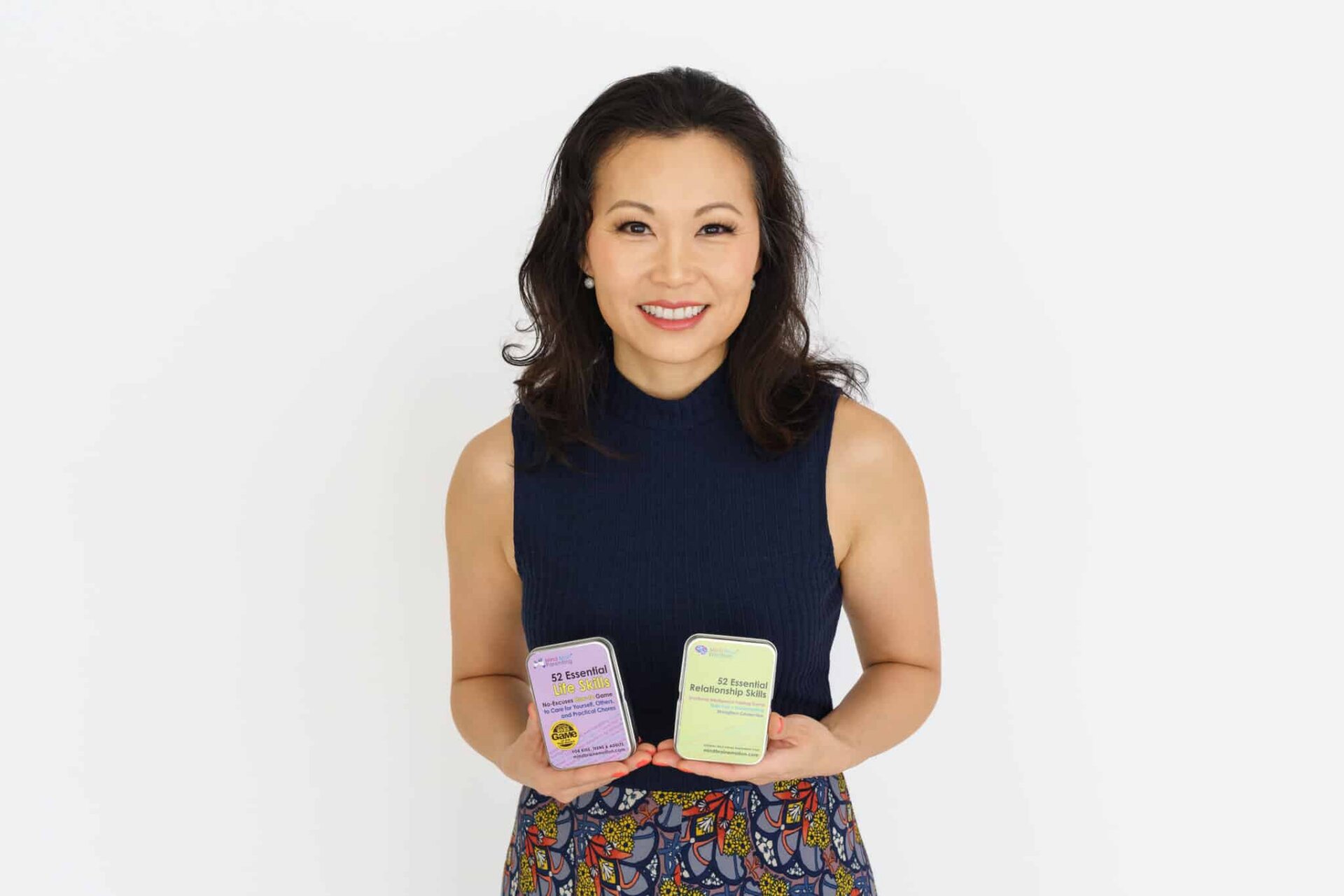
Jenny Woo, taking an emotional and deep-dive reading of this pattern, decided to develop the 52 Essential Conversations. She then established Mind Brain Emotion with the hope of helping people stay in tune with their emotions, building happiness, serenity, and wisdom. 

AN INCUBATION AT HARVARD

It was an insightful experience to have this exclusive interview with Jenny Woo, whose keen observation and curiosity have led her to the creation of Mind Brain Emotion, educational card games, and mental health tools to help people build essential human skills and connections.

Delightfully quipping “I earned enough credentials so that my parents and grandparents could each have an honorary degree,” Jenny showcased a strong personality, one that is “resourceful, resilient, and hard-working.” As she would humorously refer to herself as a “knowledge smuggler,” Jenny dug up the problems in current education towards one’s emotional development:

During my study and research at Harvard, I was drawn to the intersection of emotional intelligence and cultural identity. Self-awareness, social awareness, and relationship skills were three key components of emotional intelligence. As a management consultant, executive coach, and HR leader, I had already observed how essential these skills were for career success. 

And yet, the education system did little to expose students to these skills. Teaching resources were scarce, expensive, and outdated, and only the most expensive private schools had access. I also interviewed Harvard and MIT students on what got them to be where they are today and realized that a large component was having access to essential conversations and connections with mentors and parents. 

Jenny also detailed the inspiration behind her first deck, 52 Essential Conversations, which came from careful investigation into neuroscience and social affairs:

My findings are also aligned with neuroscience research from Harvard/MIT on the power of conversations. For the average Joe or Jenny, like me, we had limited access to social capital and resources like this. So, it inspired me to translate emotional intelligence research and social capital into affordable and relatable card games to help everyone reach their potential. In my research, I also saw a lack of representation and conversations around diversity, equity, and inclusion in the emotional intelligence learning framework. For example, how could we practice self-awareness or social awareness if we didn’t discuss the role of race? Being socially aware is also understanding our privilege and past.

NAVIGATION THROUGH RACISM AND MISOGYNY 

Jenny’s journey was never met with only the appraisals but also the scathing criticism of her success as an Asian American. Her detractors claimed many misogynistic things upon her (“women like this die alone”) and called her a CCP spy, because it was never expected of a woman like her to achieve such success. However, it is the meaning of her work and the applauding reaction of her supporters that have kept her moving forward: 

User testimonials are why I do what I do. My card decks are being used in ways that I had never imagined – in veteran hospitals and curriculums, in Federally-funded programs that support homeless youth and displaced families, in trauma-informed social work to help neglected and abused kids and adults, for Ukraine teen refugees, in speech-language therapy to help clients build reading comprehension, in community college and adult learning ESL classes to help immigrants learn language and networking, in gifted and talented programs to help students build both critical thinking and empathy, in workplaces for teambuilding and mentorship, etc. I’ve done university research on the utility of the card decks and it’s amazing to see it benefiting people from all socioeconomic classes, from poverty to affluence. 
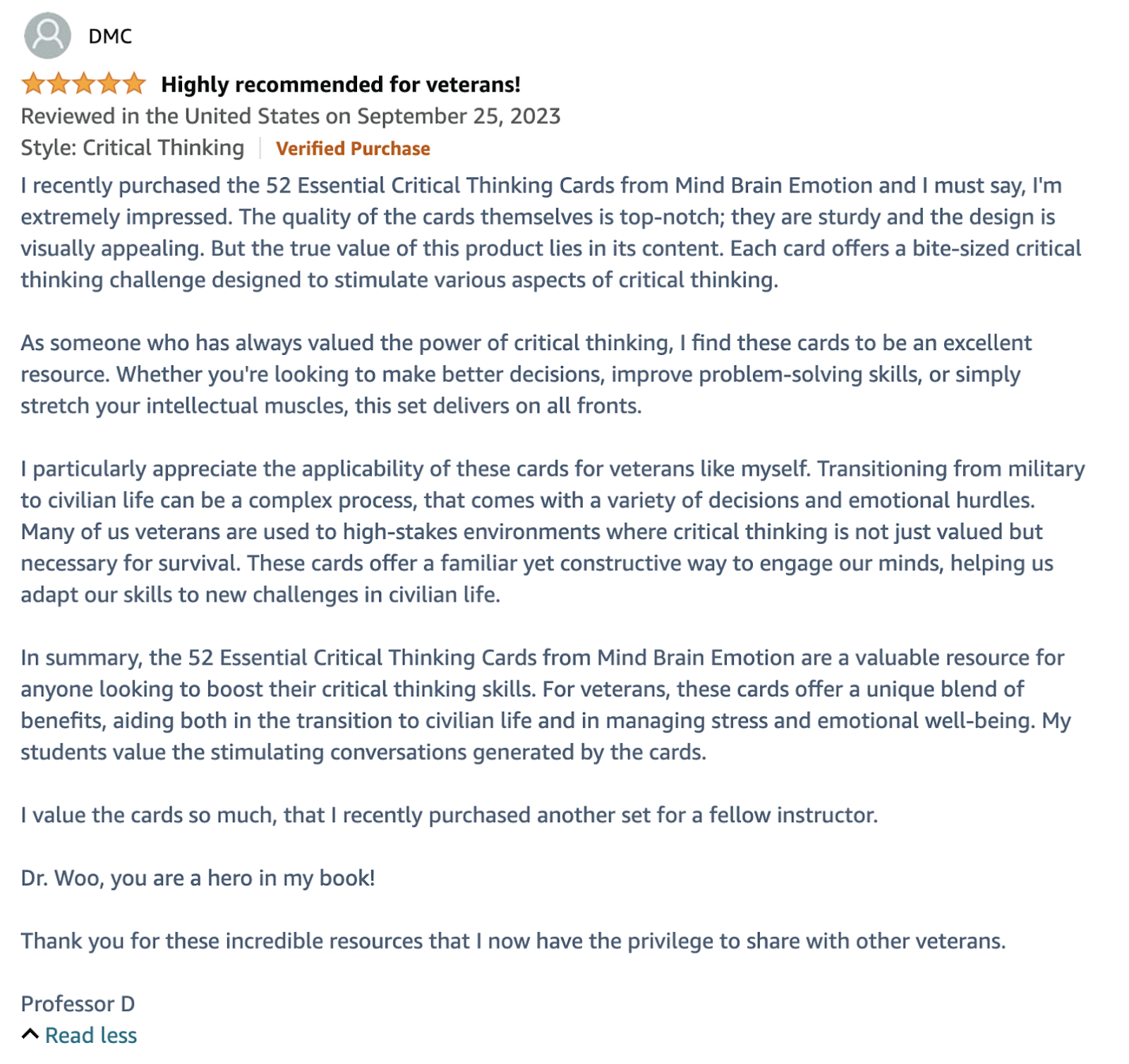
At the end of a school district workshop I delivered, the school counselor told me that the divorced parents who had been on toxic non-speaking terms were surprisingly communicating warmly to each other and their child by the end of my hands-on workshop using the card decks. It’s anecdotes like this that keep me going.

AI, GEN Z, AND MIND BRAIN EMOTION

When asked about how AI has transcended society, she brought up the concerns for mental health, fearing the permeating scarcity of personal connection:

I was interviewed on an emerging study on the impact of AI on the mental health of workers (not just in the US, but also in the Asia Pacific) between the ages of 25 – 55. It found that workers were lonelier and craved more social interaction. I love tech and AI, and I believe they have improved the quality of our lives tremendously. However, in the context of emotional intelligence, it’s making it harder for people to experience authentic and unfiltered IRL emotional connections and social interactions. Lately, I’ve been interviewed a lot on emotional intelligence topics like how to initiate a conversation with strangers, phubbing, and how to cope with social anxiety and ghosting. Although people are now much more aware of the importance of mental health, I’m afraid that many are left with little practice (or willingness) for human-to-human connection. 

However, there’s always a silver lining. With the growing acceptance to talk about mental health among younger generations, Jenny sees a glimmer of hope in her products. They have the potential to support young people in fostering greater openness and understanding surrounding mental health issues:

I have a few more decks in the works that support Gen Alpha, GenZers, and Millennials. My card deck topics were created based on user feedback on their needs. For example, I created the 52 Essential Coping Skills during the pandemic to support my college students’ mental health. Many of the cards stemmed from a course I had been teaching, where I created practical Zoom games and assignments to help my students cope with the situations they were confiding in me. My class was oversubscribed with a long waitlist, so I made my exercises into this card game to offer instant support.
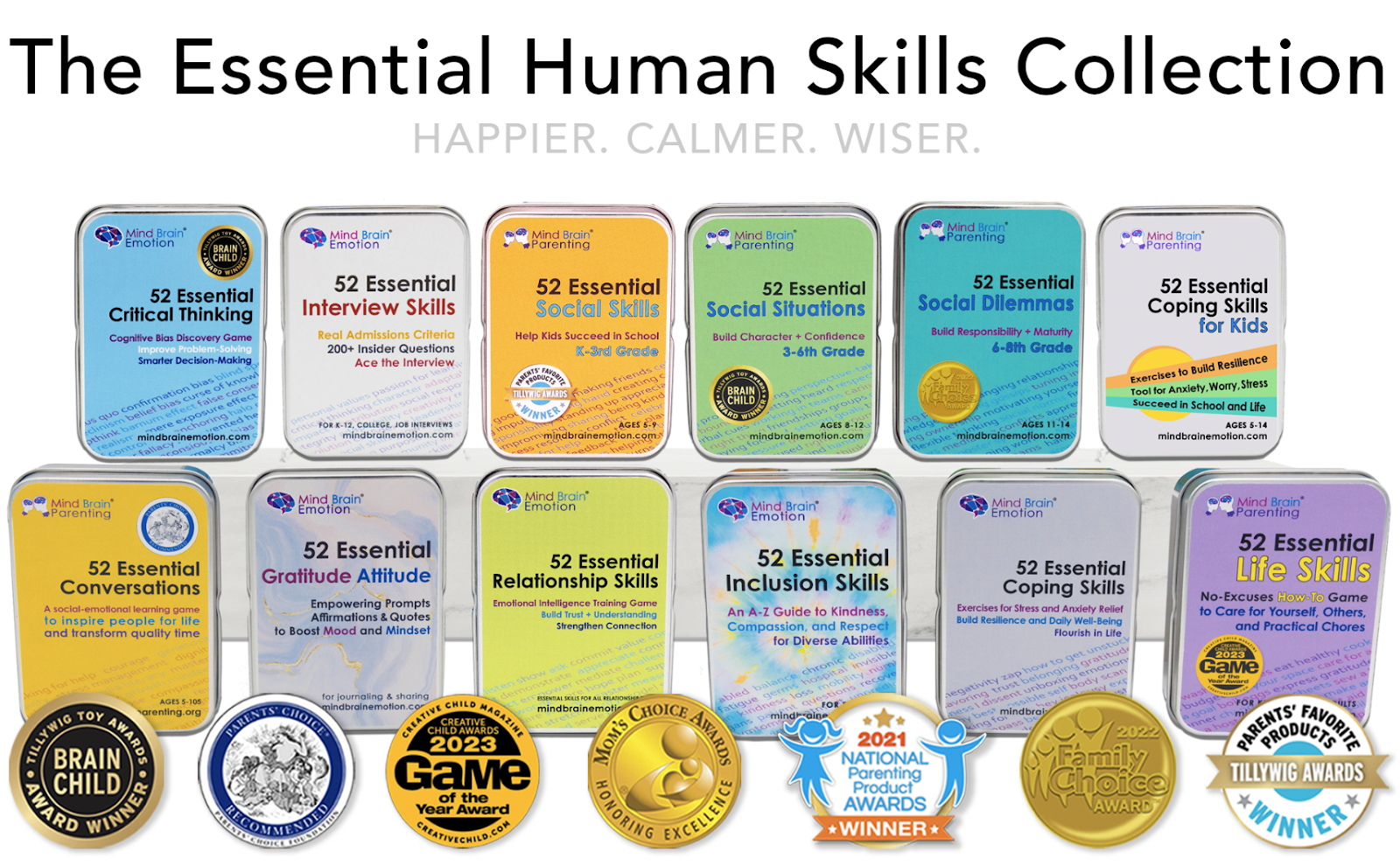
I created the 52 Essential Critical Thinking Skills in response to Black Lives Matter and Asian Hate crimes to give younger generations the tools for activism and advocacy. Most recently, a national youth-centered activism nonprofit organization contacted me to discuss collaborative partnerships to support our younger generations. We want to provide concrete tools to help our youth go from civic-conscious to civic-committed while managing the mental health toll of the geopolitical issues. Lastly, reaching younger generations through social media and YouTube would be great. I would love to collaborate with influencers who care deeply about mental health!

Speaking about her vision for Mind Brain Emotion, she expressed her desire to expand Mind Brain Emotion globally, especially in APAC:

I’d love to connect with publishers and distributors to bring evidence-based emotional intelligence resources into those countries. I believe these resources will benefit both the younger and older generations.

CONNECT WITH JENNY WOO / MIND BRAIN EMOTION

Website: http://mindbrainemotion.com

Socials: 

Related Articles

Image Source: tribune.com.pk

News

Wu Makes Historic Singles Match Grand Slam Win For China In 63 Years

Wu Yibing became the first male tennis player from China in 63 years to win a Grand Slam tennis match with a victory in this year’s US Open beating Nikoloz Basilashvili 6-3 6-4 6-0 in the first round.

The 22-year-old didn’t compete from March 2019 to January 2022 owing to elbow, back, shoulder, and wrist injuries, with elbow surgery being the most significant. But Wu didn’t want to use his injuries as an excuse.

“I don’t really like to talk about those injuries in too (much) detail because every player has injuries,” Wu had told the ATP website, “The mental strength that you have to go through the pain is part of the game,” he added.

Wu’s compatriot Zhang Zhizhen nearly joined him in the second round, but Tim van Rijthoven saved seven match points in the third set to win 3-6 6-7(4) 7-6(9) 6-1 6-4.

But Wu hopes they can both raise China’s flag, “We are both pushing Chinese men’s tennis levels and we’re still young… I think we’re going to get to the Top 100,” 

As of this writing, Wu is ranked 173rd in the world for men’s singles. However, he hopes to move up the ranks when the 2022 U.S.

Image Source: Pesconex Facebook, Latest Chika

News, Stories

Young Siblings’ Pest Control Startup Skyrocketed In Two Months After Their Tiktok Video Went Viral

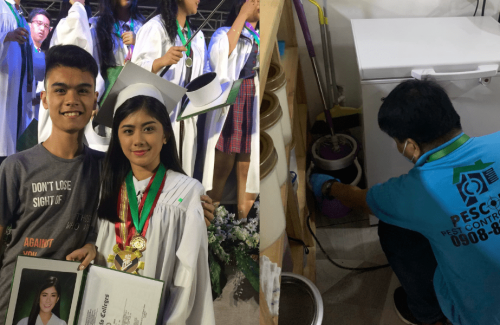
In just two months, these two siblings launched a pest control business that now serves a wide area around Quezon Province and nearby cities in the Philippines. They are like any other young adult with unfortunate life prospects, but they’ve persevered because they know there must be a better way. 

Pesconex Pest Control Services is owned jointly by its co-founders, Clark Dennies and Clarissa Joyce Demejes. They started their team with their cousin, who has grown to include four more members. 

What began as a training ground provided by their uncle is now a well-recognized business offering services with a quick phone call around Quezon Province and even reached the island of Palawan. 

Their uncle quickly loaned them money to help them start their own business. The effective pest control technique they use is a standardized process and is a convenient way to get rid of pests. They also made sure it is safe and environmentally friendly.

Within the first month, they serviced only a handful of clients, including a few homes, small sari-sari stores, and some bakeries — their parents even drove them to their clients. Nowadays, certain large companies and grocery stores are among the few that hire the team. 

Their success and customer acquisition began when Clarisse posted a TikTok video demonstrating the service they are providing. Many netizens have praised what the two have been doing, and some are so impressed that they would like to utilize their services. 

In just two short months, the siblings have established themselves financially and have also acquired their company car with their first significant earnings successfully.

Instead of focusing on the possibility that the endeavor will be unsuccessful, Clarissa encourages taking the risk. “Manifest that your business will be successful, do your best to succeed.” — she added. 

Image Source lawmagazine.bc.edu

Stories

Asian-American Woman in Law On Finding Her Voice That Lead To Her Success In The Courtroom

When looking at an Asian-American woman, certain implicit biases exist. They are often judged as being too meek, timid, or passive to achieve their goals. They may be held back by such an evaluation, preventing them from realizing their full potential.

It was difficult for Asian-American lawyer Debra Wong Yang to speak up throughout her early career. In the long run, she realized that her inability to stand up for herself did not only hurt her but also her clients.

“Eventually, we all find a voice — my advice is to just make sure the one you ultimately adopt is actually yours,” she advised in her essay published by Law360.

Yang graduated from law school in 1985 when women were still relatively powerless in the legal field. Since she was still working toward the goal of following the path she had chosen, she has faced many challenges along her journey. She has witnessed it all, from the very traditional Chinese upbringing she received to the various sacrifices, frustrations, and challenges she must face on a day-to-day basis in her chosen field.

After years of practicing law and facing challenges in the courtroom, she came to a number of important realizations that helped her become a successful attorney. She remembered when she thought up some strategies that she hoped would assist her in communicating effectively with others. 

Yang also tried to conquer her fear, and her motivation helped her cope with the situation and make further progress. With a lot of the many books she has read on leadership, she knows she has finally found her own approach to developing herself. 

She aspires on detailing how she was preparing for her court session with an outline of her questions and concerns, and other litigants will be able to better manage their time with counsel. She realized she was getting better at defending her clients in court because she was able to keep her attention solely on the issues and evidence in her case.

When she was currently going through a period of learning and challenges, she learned that holding a position of authority does not guarantee respect from subordinates. She came to understand that one of the responsibilities of a leader is to address concerns raised by those who doubt one’s abilities.

In her courtroom sessions, Yang strongly suggests analyzing the situation first and looking for authentic solutions carefully. She strongly believed that the solutions to some problems sometimes are not immediately obvious and have never been tried before, or that it’s extremely straightforward. However, she is challenged to keep turning the issue over and over in her mind until she begins to see it from a new perspective.

Yang also stressed the importance of having mentors to turn to for advice and insight. She was assertive in her belief that one should be guided by the process of sitting down, thinking it through, and acting in a way that is most beneficial to them. She went on to say that if the message comes from within, the receiver will perceive it as more genuine and at ease.

In 2002, She was appointed by President George W. Bush as United States Attorney and became a former judge serving the Los Angeles County Superior Court. The fact that her success can be attributed to her strong leadership and the bravery that she possesses as an individual is a reason why she wields her power. 

Not only does Yang share her own experiences, but she also provides valuable advice that other women can use to advance their careers. She stated, “My wish for each of you is that you will be brave when facing self-doubts, challenges, and obstacles. That you will dig deep, reach out if needed, do the research, make the tough decision and not be afraid of losing.”

The fact that Yang, an Asian American woman-in-law, was able to take control of her power demonstrates that one’s race should not determine the opportunities available to them or the path they choose to take in their professional advancement. However, by maintaining a positive attitude and giving oneself the power to make decisions, one will be able to live up to the standards and goals that have been established to assist in one’s own success.

Image Source: IGO online shop Ph Instagram

Blogs, Development, Ideas, Stories

Teen Student Entrepreneur Earns Millions Through Online Business Thanks To Mother’s Mentorship

16-year-old Irish Oloris from the Philippines has not only been successful in launching her beauty products business, but she also inspires others to follow their dreams and make them a reality. 

She wasn’t interested in starting her own business when she was young, but after being mentored by her entrepreneur mother, she learned the strategies and tried them. Today, she was able to make her first millions from the sale of skincare and other beauty products in her online shop Irish White Corp.

Irish has decided to invest in land in Zambales, Philippines, and is now a property owner at a very young age. With her motivation and inspiration, she desires to continue her online business to generate additional funds for her college education.

The young CEO encourages other young people like her to dream big and begin early. One of her favorite quotes is ‘Dream at a very young age,’ because for Irish there are no limits to dreams. She thinks it’s wise to lay the groundwork for future success by first focusing on the little things.  

Irish proved that any young person with an entrepreneurial spirit can establish a business at any age. Can you imagine what you could accomplish if you get going right this minute?