Stories

June 23, 2023

SHARE:

For William Lo, it’s a tool for change. In his non-profit project that aims to help talented underprivileged Chinese girls, he is using basketball to better their lives and further their education.


For Asian girls, pursuing sports like basketball can be challenging. Societal pressures, cultural barriers, and lack of resources often stand in the way of their dreams. In this article, we will explore the barriers that Asian girls face in sports, particularly basketball, and how William Lo’s project is breaking down those barriers, one basket at a time.

BASKETBALL HAS ALWAYS BEEN A BIG PART OF MY LIFE

I was born and raised in Hong Kong until I was 15 years old and went to school in New Jersey. My mother is from New Jersey and my father is from Hong Kong.

Basketball has always been a big part of my life and I was able to play at a Division 3 level. After college, I came back to Hong Kong and started “Strive” — a strength and conditioning facility mainly for basketball players looking to become better athletes. I did that for 6 years and then in 2019, we decided that it was time to expand into basketball training, as well as strength and conditioning to have a holistic training facility where basketball players could do basketball and fitness in one facility. I have been the Managing Director of Strive for almost 10 years.
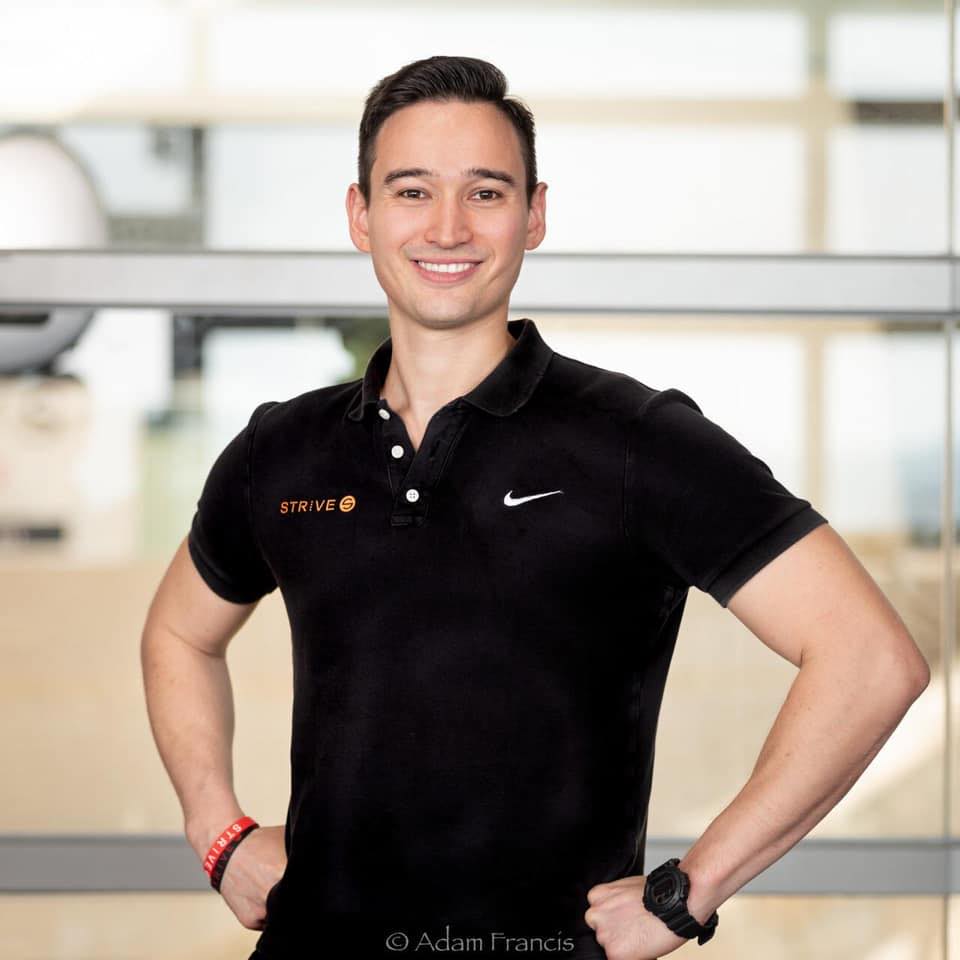
William Lo

THE GOLD TEAM

Our non-profit project, run by my wife Angela and I, is called “The Gold Team.” It’s a scholarship program where we help mainly talented and underprivileged Chinese girls, starting at ages 13-15, utilize basketball as a vehicle to further their education and better their lives.

We want our girls to be shining examples of what Chinese women are capable of on and off the court. Even if they don’t get the opportunity to play professionally, they could use the lessons they learned in the Gold Team and can move on to the next part of their life.

Gold Team is an elite training program, so we train 6 days per week on the court, 3 strength and conditioning sessions per week, and we also average 1 or more games against older women or boys.

We sign an agreement with all of our players and parents outlining what we will do for the girls and what is expected out of them. We also have a minimum GPA that we expect the girls to keep.

We believe in developing world-class players, students, and citizens at the same time. I take care of the basketball and training part, my wife Angela who was a much better student than I, monitors their grades closely. 

We want our girls to be shining examples of what Chinese women are capable of on and off the court.

William lo

CHALLENGES AND BARRIERS TO BECOME A SERIOUS ATHLETE

A lot of the challenges we see come from parents not understanding the point of why someone would want to become a serious athlete. I constantly hear “You can’t make a living on it so why spend so much time on it?” This is very common in our society and a lot of people do not see the value of how sports add value to a kid’s life mentally, emotionally and of course physically.

Another objection that I get a lot is the unwillingness to look outside of Hong Kong for bigger possibilities for basketball. Since there is a significant portion of Hong Kong people that have never traveled outside of Asia, they may not be aware of the possibilities of sports scholarships in countries such as the US, Canada, or Australia. I’m hoping that as we get more and more girls opportunities to play in the NCAA and other countries, this will change.

THE ROAD TO CHANGING ONE PLAYER’S LIFE FOREVER

Yannie Chan, who won Conference Player of the Year, is the first locally schooled Hong Kong girl in our city’s history to play in the NCAA, so that alone instilled a lot of hope for girls in our city. There will be more coming out of our program in the coming years!

In the classroom, we also have a girl who is now one of our best players — I got her when she was 13, she had a terrible track record at school and was ready to drop out and become a part-time waitress. I told her that in order to join the Gold Team she had to have a certain GPA. She immediately went to her teacher the next day and asked for tutoring, which left her teacher in shock! She has gone from a 2.5 GPA to a 3.4 GPA in 2 years. Now she has opportunities to play at prep school level in America. Her family is on government subsidies and now she is on the road to changing her life forever.

SKY’S THE LIMIT FOR CHINESE WOMEN ATHLETES

Men are often the first priority over women when it comes to sports. This is true, especially in our part of the world. However, after years of observation, I am very bullish on Chinese women’s sports. We have some of the best athletes in the world and girls who can compete with any country. Chinese women in the world cup are a perfect example coming in second after the US. I believe that if given the right opportunity, time, and love, the sky’s the limit for Chinese women athletes.

I want to also prove to parents that sports do, in fact, have a lot of value in the development of kids. Putting your sole focus only on studying is definitely not the way to developing a well-rounded adult in the future. If you are a great athlete and a great student, it opens up a lot more doors for you than only being good in the classroom.

Finally, as an Asian basketball player, I was not given a lot of respect just because of the color of my skin. Basketball in America is not an Asian-dominated sport and we need to be extra tough and extra skilled in order to earn that respect, which I’m totally fine with. I want to make a statement to the world that Asian players, when given the opportunity, can be just as good as anyone anywhere in the world. I firmly believe that.

Asian players, when given the opportunity, can be just as good as anyone anywhere in the world.

William lo

THE GOAL TO SHOOT FOR SUCCESS

My goal is to be able to travel with the girls multiple times per year around the world so that they can play against different competitions, learn about different cultures and see the world.

This June, My wife and I raised around 40-45,000 USD to sponsor 9 girls to come to the US and play on the AAU circuit (Amateur Athletic Union). Hopefully, with this trip many of our girls will be recruited to play in college.

SPREAD THE WORD

We are trying to change Asian sports and if you have any interest in knowing more you can contact me anytime. william@strivefitnesshk.com

Website: www.strivefitnsshk.com

Instagram: @willvlo
Related Articles

tatler asia-jpeg

News

A Korean Immigrant’s Journey to Becoming a Beauty Industry Icon

Toni Ko is a first-generation Korean immigrant who has made an indelible mark in the business world as the founder of NYX Cosmetics and a champion of women-run brands.

Toni is the visionary behind NYX Cosmetics and a fierce advocate for women-run brands. With her relentless work ethic and unparalleled business acumen, she has carved a path to success that has earned her a well-deserved place among Forbes magazine’s Richest Self-Made Women.

Despite facing numerous challenges after moving to California in 1986, the language barriers and unfamiliar surroundings, she thrived on the difficulties and developed a resilient character. She drew from her family’s background in the cosmetics industry to launch NYX Cosmetics in 1999 with $250,000 in seed money from her parents. Her vision was to provide high-quality cosmetics at affordable prices, bridging the gap between luxury and affordability.

Toni used social media to propel NYX Cosmetics to remarkable success. The brand gained traction through partnerships with influential beauty creators on platforms like YouTube, capturing a younger audience and solidifying its place in the market. In 2014, L’Oréal acquired NYX Cosmetics for an estimated $500 million.

Driven by her passion for empowering women, Toni established the Toni Ko Foundation in 2014. Through this foundation, she supports organizations dedicated to uplifting underprivileged children and championing women’s empowerment. In addition, she actively invests in women-owned businesses through her venture capital firm, Butter Ventures, fostering the growth and success of fellow female entrepreneurs.

Toni has been lauded with prestigious accolades, including the WWD Beauty Inc. Brand of the Year award for NYX Cosmetics and her inclusion on Forbes’ esteemed list of Richest Self-Made Women. More than a businesswoman, Toni is a beacon of inspiration, paving the way for a future where women’s voices are amplified and their dreams are within reach.

Featured Image Source: Tatler Asia

The Fresno Bee-jpeg

News

Hmong Baker “The Brioche Lady” Opens Her Own Asian Grocery Store in Fresno

Renowned for her fluffy French bread, The Brioche Lady has returned, assuming a new role as the proprietor of an Asian grocery store.

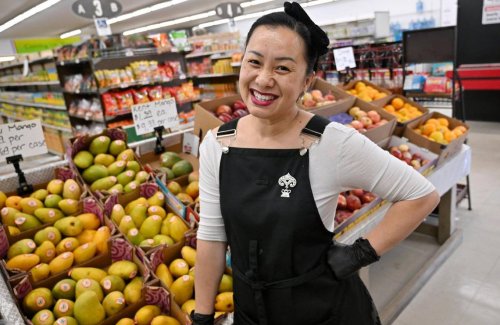
While many people are familiar with Nubchi Thao for her delectable French brioche bread sold at farmers markets and her previous bakery, The Brioche Lady Bakery, she has now taken on the role of an Asian grocery store owner. Thao is of Hmong descent and was raised in France, where she acquired her expertise in baking French bread.

Located in Tarpey Village at the intersection of Ashlan and Clovis avenues, the newly opened store named TBL Asian Market is situated between the Arco station and the Sno-White Drive-In, replacing the former Golden Phoenix Asian Market, which was owned by Thao’s relatives.

According to Fresnobee, customers can now immerse themselves in a culinary journey spanning Filipino, Vietnamese, and various other cuisines. The store’s fresh vegetable section showcases an assortment of items, including fresh Thai peppers, okra, lychee, and rambutan—a peculiar fruit adorned with distinctive red whiskers.

The market boasts an extensive selection of noodles and rice, catering to diverse tastes. Moreover, the snack aisle entices shoppers with an array of treats sourced from several countries. From cookies originating from various regions to chocolate-dipped Pocky sticks, Japanese mochi desserts, and even wasabi peas, the store caters to a wide range of palates. Adding a touch of warmth and familiarity, one is likely to encounter the Thao family’s children among the store’s employees. 

In addition to on-site baking, Thao is exploring alternative avenues for customers to enjoy her beloved bread. She intends to introduce a brioche mix, empowering customers to bake their own loaf at home by simply adding eggs, water, and butter.

Furthermore, she is developing a larger version of the mix tailored for bakeries and restaurants. Additionally, Thao seeks to establish partnerships that would allow others to bake her recipe and serve the thriving Hmong community, which holds a strong affinity for her bread.

Featured Image Source: The Fresno Bee

NY Times-jpg

News

How Asian American Brewers are Celebrating Their Roots in Craft Beer

The craft beer industry in the United States has long been dominated by white owners, but a new wave of Asian American brewers is making their mark and infusing their heritage into their beers.

Although the number of Asian American-owned breweries remains low, their presence is steadily growing, challenging the prevailing demographics. These brewers are breaking cultural barriers and embracing their identities, creating unique brews that reflect their heritage.

One pioneering example is Highland Brewing in Asheville, North Carolina, which opened its doors under the leadership of Oscar Wong, a Chinese immigrant. Being one of the few Chinese Americans in the craft beer scene at the time, Wong faced the challenge of standing out in a predominantly white industry. Now, his daughter, Leah Wong Ashburn, serves as the CEO of Highland Brewing, continuing her father’s legacy.

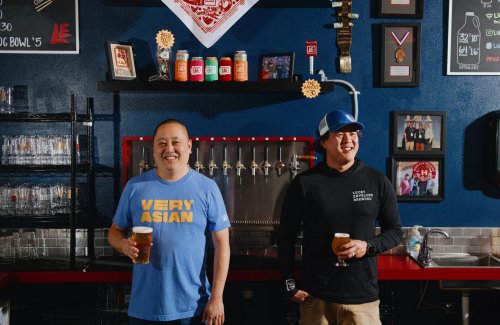
Raymond Kwan and Barry Chan, owners of Lucky Envelope Brewing in Seattle, both children of Chinese immigrants, made a significant career change when they decided to pursue their passion for brewing. According to the New York Times, they took the leap and started their own brewery over a few beers one night.

Similarly, Youngwon Lee, the Korean American founder of Dokkaebier in Oakland, California, as featured also in Asian Hustle Network, drew from his heritage to create unique flavors. Collaborating with his white head brewer, they used elements from homemade kimchi to develop a kettle sour beer, infusing it with the sourness, chile, and ginger found in Korean cuisine.

These Asian American brewers are not only making their mark through their beers but also actively participating in efforts to diversify the craft brewing industry. While challenges persist, these brewers are toasting to a future where diversity and inclusivity thrive in the world of craft beer.

Featured Image Source: NY Times

dk4-jpg

Stories

The Fastest-Growing Asian-Influenced Craft Brewery Dokkaebier All Started with a Dream for More Representation In The Industry

Youngwon Lee is the founder and CEO of Dokkaebier, an Asian-influenced craft brewery in Oakland, California. Dokkaebier takes its name from the ‘dokkaebi,’ the mysterious, shape-shifting creatures found throughout Korean folklore. Myths describe them as mischievous spirits who love to eat, drink, and be in the company of others. 

Lee started Dokkaebier after he discovered only 2% of people in the craft beer industry identify as Asian American. He knew then that he had to take action. Over the last three years, he worked tirelessly to create craft beers that not only pair well with Asian food but can make craft beer more diverse and inclusive.

Founded only three years ago, Dokkaebier is already one of the fastest-growing craft breweries in the U.S. Lee and his team have earned more than $1 million in sales, which they expect to increase to $3 million at the end of this year.

Dokkaebier’s Asian-influenced craft beers are available in more than 400 locations, including Whole Foods Market, H Mart, and BevMo!, plus their new flagship brewery and taproom in Oakland, California. They plan to create more than 30 new craft beers, launch in another 10 states and expand their footprint to a whopping 5,700 locations by the end of 2024. 

Lee has more than a decade of experience in the alcohol industry and has finally created something uniquely his with Dokkaebier.

WHERE DOKKAEBIER CAME FROM

Although I have worked in the alcohol industry for most of my career, I spent much of it in South Korea. It was not until I started working in the beer industry in the United States that I realized I was the only Asian person. I quickly realized I needed to be the change. 

Not only was the craft beer industry missing out on some much-needed diversity, but it also lacked creativity from unique and differing perspectives and experiences.

I wanted to create the first Asian craft beer brand. Everything would be Asian-influenced, including the design, packaging, name, and branding. Most importantly, it would also have an Asian-driven taste. I wanted to be authentic to myself and bring my history and heritage to an industry I love.

I have my wife to thank for the name. One day,  she said, “Why not just name the brand after dokkaebi?” 

Dokkaebi loves to eat, drink, and play but hides during the day. It was perfect for a craft beer brand! The creatures also capture our heritage as Korean Americans, so we combined dokkaebi with beer and got Dokkaebier.

IT HAS ALWAYS BEEN A PART OF WHO WE ARE

Aaron Weshnak, our head brewer, and I know beer, but we knew we had to do a lot of experimentation to come up with something original and do it consistently. It has always been a part of who we are; we experiment, shape-shift, and try new things—just like the dokkaebi which inspired our name. We always look for that perfect combination of flavors to share with others. 

When we started our experiments, we knew we had to start with Asian cuisine. We used flavors and ingredients we grew up with, like bamboo tea, Szechuan peppercorn, and even kimchi, which remains one of our most popular craft beers today. Then, we started thinking about what makes a great dining experience. 

We think Dokkaebier should be the Asian-inspired complement to your meal, even if you are not eating Asian cuisine, and if you are, then certainly an Asian-inspired craft beer would be the cherry on top.  

IT WAS CHALLENGING TO GET SET UP ONLINE AS AN EARLY-STAGE ALCOHOL STARTUP

I founded Dokkaebier in early 2020, just before the COVID-19 pandemic. We decided to launch a pop-up taproom in San Francisco for our debut. We worked with a former chef de cuisine from the two Michelin-star-restaurant Saison to have the perfect food pairing. But the pandemic shut everything down. 

We quickly found a new way to get our craft beer to the fans we had made in such a short time. It was challenging to get set up online as an early-stage alcohol startup, but we overcame it because we are all “shape-shifters” as dokkaebis. 

We then started to sample our beer at local beer festivals and events in the San Francisco Bay Area. It was important for us to be a part of the community, especially in uncertain times. We donated food and beer to first responders at Kaiser Permanente in Santa Clara, California, and worked on exclusive collaborations with local Asian American community groups and nonprofits. We also proudly supply our beer to local small businesses, including many Asian restaurants all across California. 

We are proud that Dokkaebier is available everywhere from local grocers, such as Berkeley Bowl, Bi-Rite Market, and Gus’s Community Market, and national retailers, like BevMo!, H Mart, Whole Foods Market, and Total Wine & More.

MOST PEOPLE GET BACK INTO LINE THREE OR FOUR TIMES BECAUSE THEY LOVE OUR F LAVORS AND INGREDIENTS

We have been blown away by the support of craft beer fans and Asian Americans who credit Dokkaebier for giving them the confidence to try craft beer for the first time. Our reception has been overwhelmingly positive. 

At every beer festival that we go to, people line up to try our beer. Most people get back into line three or four times because they love our flavors and ingredients. We typically have the longest lines of any brewery at any event and have even been recognized as the top or must-see beer at the LA Beer Festival and SF Beer Week.

Dokkaebier is also an award-winning beer. Craft beer fans and alcohol industry experts have recognized us with medals and international awards. We earned best-in-class recognition at the World Beer Championships and have won 10 times at the 2021 and 2022 Annual Brewski Awards. In 2022, every one of our craft beers won an award, with our milk stout taking home Beer of the Year and our kimchi sour and yuza blonde winning platinum medals. It’s truly amazing to see what we’ve accomplished in a short time.

Finally, we have been hard at work making Dokkaebier more accessible to more people. Dokkaebier is now carried in more than 400 restaurants and retailers, and we expect to see sales skyrocket this year. 

MY INDUSTRY EXPERIENCE HAS ALLOWED ME TO FOCUS MORE ON INNOVATION

The alcohol industry is heavily regulated and very complex. Even in the craft beer industry, every aspect of the business can be a massive undertaking, from manufacturing, distribution, and sales to operating a taproom. Fortunately, I have a lot of experience in the industry and have been able to navigate it all easily.

My industry experience has allowed me to focus more on innovation, especially research, and development. I believe Dokkaebier focuses more on ingredients and flavors than other craft beer companies or breweries. In only three years, we have developed and released more than 40 original craft beers. 

We can experiment more freely with all sorts of ingredients and collect feedback from craft beer fans about the flavors they want in ways other beer companies could not. Our relationship with our customers and community makes it easier for our craft beer to stand out.

STAYING TRUE TO OUR ROOTS MEANS EXPLORING THE WORLD AND SHARING OUR SPIRIT WITH OTHERS

We want to establish Dokkaebier as a nationally renowned Asian craft beer brand. When someone mentions one of our core beers, such as kimchi sour, we want them to think, “Isn’t that from Dokkaebier”? 

We hope that one day, Dokkaebier will be a household name and synonymous with Asian craft beer. In the near future, we might also move beyond craft beer. Dokkaebier could also introduce adults to other alcohol, like spirits, with our Asian-influenced style.

As a company, Dokkaebier values adventurousness, shape-shifting, and indulgence. We want to be available in other regions and different types of alcohol, as it aligns with our adventurous and shape-shifting spirit. For us, staying true to our roots means exploring the world and sharing our spirit with others.

ADVICE FOR THOSE WHO WANT TO ENTER THE CRAFT BEER INDUSTRY

The alcohol industry can be challenging as an entrepreneur, especially as a startup founder. I recommend working at a craft brewery or alcohol company for at least a few months. It is a great way to get paid to learn and find a mentor.

As an underrepresented minority in the industry, do not be shy. Once you find an opportunity, look for ways to bring your unique perspective to the business. Combining your unique voice is an important step to differentiate your personal and future craft beer brand from everyone else.

CONNECT WITH YOUNGWON

Website: enjoydkb.com

Instagram: @dokkaebier