Stories

June 23, 2023

SHARE:

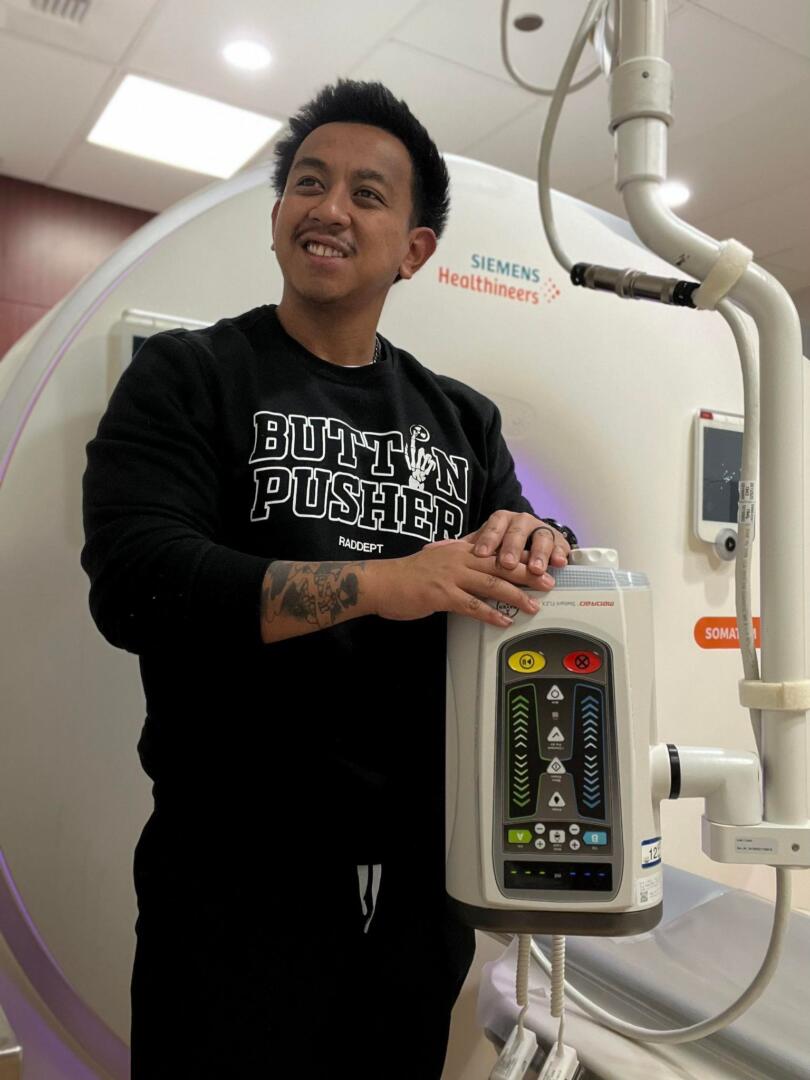
Jed is a first-generation Filipino-American who was born in Los Angeles, California and later on moved to San Diego when he was a teenager. He has spent 11 years in the military, serving as a Navy Corpsman for the Marines and later became a specialized X-ray tech. He was deployed to different countries like Afghanistan, Qatar, Japan, Philippines, Vietnam, Guam, Palau, and Solomon Islands. It was this during this time that he witnessed the need for better medical care in the world.

He always had an entrepreneurial mindset that started off early in high school, when he created a local clothing brand. This transitioned to his adult life where he continued to make fashionable lifestyle wear mixed with fitness culture.  Although he had a passion for creating merchandise for others to wear, he wanted to create something that would have a deeper meaning and have the ability to help more people. He realized that he could combine his entrepreneurial mindset with his TikTok audience and quickly discovered that he could reach more people.

He started to use his newfound influence to raise awareness about issues that he is passionate about, and that’s when he realized he could do more. 

This sparked an inspiration for him to rebrand his long-time lifestyle clothing line into RADDEPT. With every sale, his company donates 10% to a charity that provides radiological services in underserved communities around the world. His goal is to make fashionable clothing for healthcare workers while also making a positive impact on the world.
Jed is proof that one person can make a significant impact on the world. His story reminds us that even the smallest actions can lead to something greater. We all have the power to create positive change in the world, and it’s never too late to start.

HOW THE MILITARY MOLDED ME AS THE PERSON I AM TODAY

The military helped me mature as a person. People always compare their “10-year transformation,” how they have changed physically, and honestly, mine was a complete mental 180. I grew up as a child of a single mother. We were pretty poor, and at times we were homeless, bouncing around to my mom’s friend’s houses. She worked in the real estate realm, and the companies she worked for were either shutting down or downsizing due to the economy. 

I started rebelling around high school so she kicked me out to live with my uncle in San Diego. He was a prior Corpsman in the Navy and became a solid role model. Eventually, after high school, I worked as a Certified Nursing Assistant for 3 years while attempting to complete the prerequisites for nursing school. I ended up joining the Navy so I could have nursing school paid for when I finally applied.

What was supposed to be a 4 year in and out Naval career, turned into an 11-year career that molded me into the person I am today. I excelled with being able to do the grunt work while developing excellent leadership traits. I used my background to help mentor the junior personnel and still continue that habit to this day. I remain in contact with peers, mentors, and mentees, and they all have a significant impact on my life.

THE BIGGEST BARRIERS IN HEALTHCARE

With my military experience, I have noticed that the biggest barrier to accessing quality healthcare for underserved communities is their access to ancillary services. During my last deployment to pacific countries, I recognized that the host nation’s patients had access to primary care visits and surgeries, but the patients had to pay out of pocket for ancillary services like medical imaging.

If you asked me about the significance of radiology before I ended up in this role, I would have laughed and said, ”They don’t do anything but push buttons.” But after completing school, I learned that Radiology has a significant impact on medical treatment – from early detection for diagnosis to being the eyes in the operating room or figuring out the next step for lifesaving intervention.

This deployment opened my eyes to the fact that many patients outside the United States are seriously prone to a lot of diseases that are uncommon in our country. Healthcare quality (although heavily scrutinized by the media) is actually pristine in America and we are lucky to have all these safety protocols in place.

With my military experience, I have noticed that the biggest barrier to accessing quality healthcare for underserved communities is their access to ancillary services.

jed rodriguez

RAISING AWARENESS FOR ANCILLARY SERVICES THROUGH RADDEPT

The first step I hope to achieve this year is to establish a community with my brand RADDEPT. The power of a community can achieve great accomplishments. My first milestone this year is to give 10% of each purchase to charity. I hope to collaborate with more people to be able to give more.

I plan to shine light on the effectiveness and importance of ancillary services. There is always a spotlight on becoming a doctor or a nurse. I plan on creating relatable merchandise for ALL healthcare workers. I’d like to be able to create products that I could donate to countries like the other ones I have previously traveled to and administered care to.

ONE DAY AT A TIME

My biggest advice for someone who wants to make a positive impact on the world but doesn’t know where to start is to take the first step and go for what they want.

One thing that always resonated with me was “Lay one brick a day and eventually, you would have built a well.” This is how I tackle the majority of my life goals. Small baby steps and take it one day at a time. If I keep focusing on the bigger picture, then it becomes overwhelming. Small daily/weekly goals and all those combined will help accomplish the bigger goals.

Also, surround yourself with like-minded individuals. Have mentors and mentees, everything you learn is important, but it is more important to spread the knowledge to the next person!

My biggest advice for someone who wants to make a positive impact on the world but doesn’t know where to start is to take the first step and go for what they want.

jed rodriguez

CONNECT WITH JED RODRIGUEZ

Social media is super important in today’s society. One thing I have learned from having my previous brand for years was the power of ad spending and email marketing. Now, I realized that TikTok could also act as a running ad, and I plan to maximize social media by influencer marketing and collaborating with other creators in the healthcare niche, in order to drive awareness and change.

Tiktok: jroddynotricch

ig: radxdept

www.raddept.com
Related Articles

Image Source: Koury Angelo / Forbes

Uncategorized

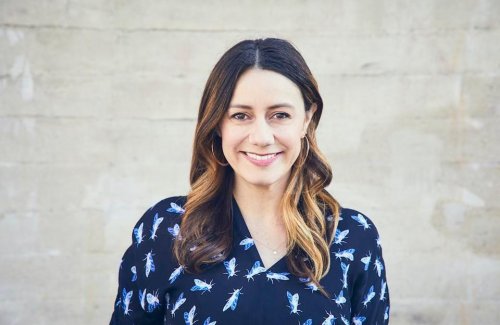
Rejections Didn’t Stop Kinside CEO Shadiah Sigala To Reach A Stellar Entrepreneurial Career

Shadiah Sigala co-founded HoneyBook, a $2 billion financial management software platform for small businesses, motivated by her ability to negotiate uncertainty while gathering information and making decisions.

When Shadiah was a child, her Mexican mother together with her two siblings moved to southern California. Despite most of her family members being unable to attend college, she was an honor student whose lifelong ambition was to acquire the greatest degree of education.

Shadia attended Pomona College for Latin American Studies and Harvard Kennedy School for public policy. As a result, she established a strategy for reaching goals she wasn’t sure about.

Before becoming an accomplished millennial, she finished her master’s degree and became the highest-earning member of their family as a project manager at Aetna, a health insurance company, where she learned about entrepreneurship, realized she is a “builder,” and thought starting her own company was the best option.

However, Shadia realized that she wouldn’t be happy there since she wouldn’t be valued. Shadia ultimately started a personal chef business in 2010, using her Pomona College alumni network to find well-off grads who wanted someone to cook for them.

In 2012, another realization occurred to her that cooking wasn’t for her. Shadiah then decided to move with her then-husband to San Francisco and found tech. She arranged informative interviews with everyone in the sector and learned that the problem she wanted to tackle was one she’d experienced as a business owner: no effective method to handle backend logistics like emails, payments, and bills.

With the three Israeli business people who have a similar concern as hers, they decided to digitize all these tedious procedures that micro small firms must complete to free them up to genuinely focus on doing what they love.

Using that concept, Shadia established HoneyBook in 2013 and worked there for five years according to CNBC.

As her most recent business, Shadia co-founded Kinside in 2018, a child-care marketplace that is available to employees that offers new parents a centralized location to look for daycare in their neighborhood, which has reached over $16 million, according to Crunchbase. 

Letting fear and excitement be one’s guide and being open-minded is what Shadia advises to other aspirants. According to her, opportunities that “feel like they are beyond your pay grade” are exactly how stellar is made.

Image Source Artbound

Uncategorized

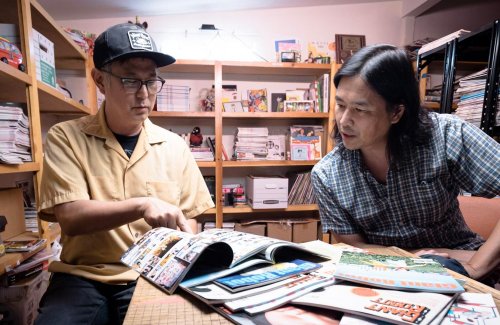
ARTBOUND Features Giant Robot’s Asian-American Pop Culture Influence In Its Latest Episode

Highlighting the impact of the Asian-American pop culture publication Giant Robot, the debut of the latest episode entitled “Giant Robot: Asian Pop Culture and Beyond” was finally aired last October 26 in the acclaimed arts and culture series ARTBOUND on KCET.

The episode showed Giant Robot’s examination of Sawtelle Boulevard as a Japanese-American neighborhood, sparking interest in Asian and Asian-American popular culture which resulted to a long line of Asian American artists who won recognition on a global scale. 

Established in 1994, Giant Robot was a bimonthly journal that focused on Asian popular culture that soon included works by Asian-American artists including David Choe and James Jean.

Eric Nakamura began publishing Giant Robot as a digest-sized zine. The piece covered a variety of subjects, including trendy Asian American independent filmmakers, Japanese punk rock, and contemporary Hong Kong films. National media sources including the New York Times, Wired, and LA Weekly published the story.

In 2001, Nakamura opened his first store named “Giant Robot Store” in Sawtelle Japantown and expanded in 2003.

Giant Robot co-founder, Martin Wong edited all 68 issues of the glossy magazine on Asian, Asian-American, and new hybrid culture from 1994 to 2010, when it was still a punk zine. His wife Wendy Lau served as Giant Robot’s graphic designer beginning with issue 18. Even today, Martin continues to publish zines and contribute to them.

The popular weekly television program and online site ARTBOUND captures the essence of California’s expanding arts and cultural scene and investigates how it is transforming the state into the world’s creative capital. 

The KCET Original series investigates and clarifies contemporary cultural challenges, offering insightful in-depth study of how the arts and culture impact society.

Image Source: Julie’s Bakeshop

Uncategorized

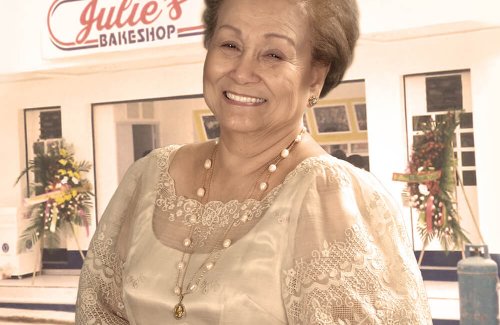
Dreams Set No Limits To 50-Year-Old Who Started A Bakeshop Now The Philippines’ Most Famous Brand

“In a way, I was poor. I was hungry, maybe not for food but for self-achievement. I thought there must be something more I can do than just being a housewife. I was very determined to succeed, in whatever came my way,” thus said Julie Gandionco as quoted by the Inquirer, the Philippines’ local newspaper.

In January 1981, then-50-year-old Julia Gandionco opened Julie’s Bakeshop to satisfy her thirst for proving that she is more than a housewife.

Julie’s Bakeshop gloriously celebrates being one of the Philippines’ largest bakery chains with more than 500 branches all over the country, which can be traced back to Mandaue City on the Island of Cebu as its place of origin.

In the 1970s, Julie was a canteen concessionaire at a rattan company, and subsequently became a manager of its sister company. She also opened another canteen a year later.

Having these three canteens being managed, she felt the rising demand for bread which made her take the chance of opening a bakeshop, despite having zero knowledge of baking.

Julie stressed that her bakeshop exists because of “a growing need for bread products and a strong trust in God,” and that she desires to encourage and uplift other mothers to dream big and strive for their goals.

Image Source: South China Morning Post

News

Veteran Actor James Hong Lauds Asian-American Representation In Entertainment Industry

During the Critics Choice Association (CCA)’s Inaugural Celebration of Asian Pacific Cinema & Television, veteran actor James Hong received the prestigious Icon award along with a few other awardees.

The veteran actor reflects on his over 700 roles and how Asian representation has changed: “When I was a kid, ‘The Good Earth’ was played by Caucasian leads that taped their eyes up.”

In his speech, Hong commended Asian-American creatives for “carrying through” work to advance their careers in the entertainment world and emphasized that his ultimate goal was to stop hatred and boost the whole level of Asian-Americans.

“To see an organization collect all these people together and work together and stop this hatred for Asians is our main goal, I think, and just boost the whole level of Asian-Americans,” Hong mentioned to the PA News Agency.

Held at Fairmont Century Plaza, CCA’s celebrity-filled event highlighted both new and experienced talents and featured other notable figures from the Asian film industry.

At the age of 93, the veteran vigorously demonstrated a few martial arts movements for the photographers with a smile on his face during the occasion.

In his more than six decades-old career, Hong is a well-accomplished actor with hundreds of film and television credits who co-founded the East West Players in 1965, making him more than deserving to receive the Icon award.

The actor stated that CCA is perhaps one of the pioneering organizations that promote culture.