Stories

June 23, 2023

SHARE:

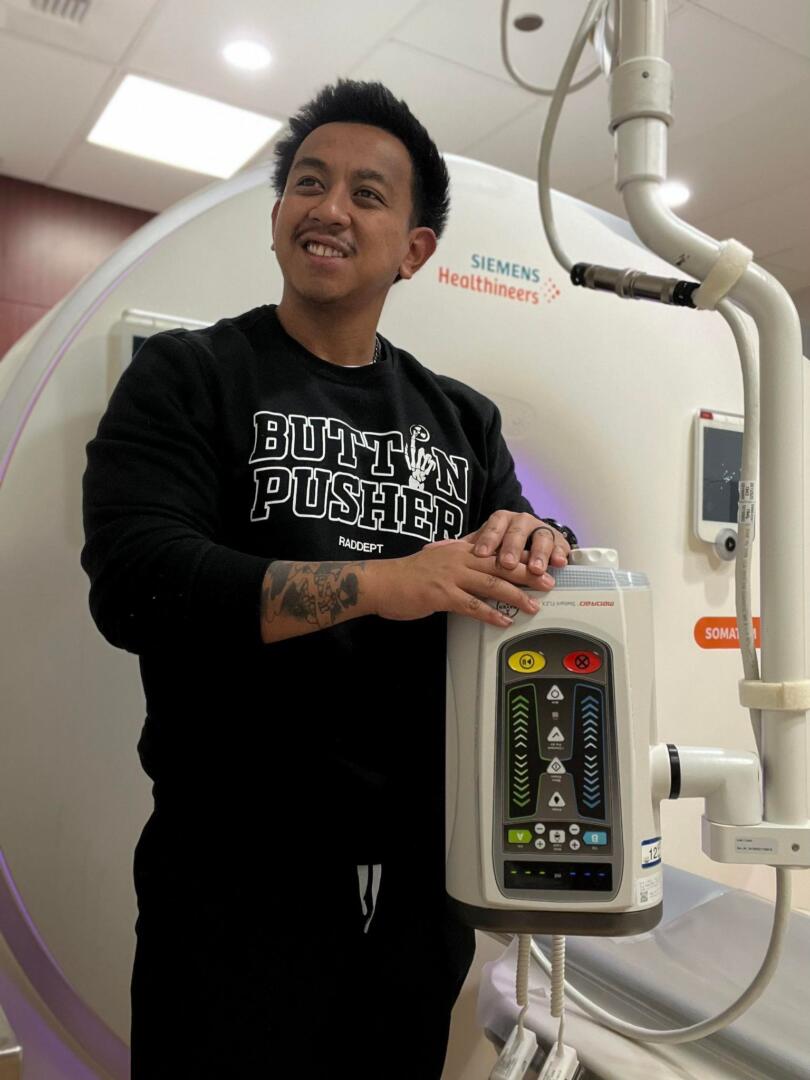
Jed is a first-generation Filipino-American who was born in Los Angeles, California and later on moved to San Diego when he was a teenager. He has spent 11 years in the military, serving as a Navy Corpsman for the Marines and later became a specialized X-ray tech. He was deployed to different countries like Afghanistan, Qatar, Japan, Philippines, Vietnam, Guam, Palau, and Solomon Islands. It was this during this time that he witnessed the need for better medical care in the world.

He always had an entrepreneurial mindset that started off early in high school, when he created a local clothing brand. This transitioned to his adult life where he continued to make fashionable lifestyle wear mixed with fitness culture.  Although he had a passion for creating merchandise for others to wear, he wanted to create something that would have a deeper meaning and have the ability to help more people. He realized that he could combine his entrepreneurial mindset with his TikTok audience and quickly discovered that he could reach more people.

He started to use his newfound influence to raise awareness about issues that he is passionate about, and that’s when he realized he could do more. 

This sparked an inspiration for him to rebrand his long-time lifestyle clothing line into RADDEPT. With every sale, his company donates 10% to a charity that provides radiological services in underserved communities around the world. His goal is to make fashionable clothing for healthcare workers while also making a positive impact on the world.
Jed is proof that one person can make a significant impact on the world. His story reminds us that even the smallest actions can lead to something greater. We all have the power to create positive change in the world, and it’s never too late to start.

HOW THE MILITARY MOLDED ME AS THE PERSON I AM TODAY

The military helped me mature as a person. People always compare their “10-year transformation,” how they have changed physically, and honestly, mine was a complete mental 180. I grew up as a child of a single mother. We were pretty poor, and at times we were homeless, bouncing around to my mom’s friend’s houses. She worked in the real estate realm, and the companies she worked for were either shutting down or downsizing due to the economy. 

I started rebelling around high school so she kicked me out to live with my uncle in San Diego. He was a prior Corpsman in the Navy and became a solid role model. Eventually, after high school, I worked as a Certified Nursing Assistant for 3 years while attempting to complete the prerequisites for nursing school. I ended up joining the Navy so I could have nursing school paid for when I finally applied.

What was supposed to be a 4 year in and out Naval career, turned into an 11-year career that molded me into the person I am today. I excelled with being able to do the grunt work while developing excellent leadership traits. I used my background to help mentor the junior personnel and still continue that habit to this day. I remain in contact with peers, mentors, and mentees, and they all have a significant impact on my life.

THE BIGGEST BARRIERS IN HEALTHCARE

With my military experience, I have noticed that the biggest barrier to accessing quality healthcare for underserved communities is their access to ancillary services. During my last deployment to pacific countries, I recognized that the host nation’s patients had access to primary care visits and surgeries, but the patients had to pay out of pocket for ancillary services like medical imaging.

If you asked me about the significance of radiology before I ended up in this role, I would have laughed and said, ”They don’t do anything but push buttons.” But after completing school, I learned that Radiology has a significant impact on medical treatment – from early detection for diagnosis to being the eyes in the operating room or figuring out the next step for lifesaving intervention.

This deployment opened my eyes to the fact that many patients outside the United States are seriously prone to a lot of diseases that are uncommon in our country. Healthcare quality (although heavily scrutinized by the media) is actually pristine in America and we are lucky to have all these safety protocols in place.

With my military experience, I have noticed that the biggest barrier to accessing quality healthcare for underserved communities is their access to ancillary services.

jed rodriguez

RAISING AWARENESS FOR ANCILLARY SERVICES THROUGH RADDEPT

The first step I hope to achieve this year is to establish a community with my brand RADDEPT. The power of a community can achieve great accomplishments. My first milestone this year is to give 10% of each purchase to charity. I hope to collaborate with more people to be able to give more.

I plan to shine light on the effectiveness and importance of ancillary services. There is always a spotlight on becoming a doctor or a nurse. I plan on creating relatable merchandise for ALL healthcare workers. I’d like to be able to create products that I could donate to countries like the other ones I have previously traveled to and administered care to.

ONE DAY AT A TIME

My biggest advice for someone who wants to make a positive impact on the world but doesn’t know where to start is to take the first step and go for what they want.

One thing that always resonated with me was “Lay one brick a day and eventually, you would have built a well.” This is how I tackle the majority of my life goals. Small baby steps and take it one day at a time. If I keep focusing on the bigger picture, then it becomes overwhelming. Small daily/weekly goals and all those combined will help accomplish the bigger goals.

Also, surround yourself with like-minded individuals. Have mentors and mentees, everything you learn is important, but it is more important to spread the knowledge to the next person!

My biggest advice for someone who wants to make a positive impact on the world but doesn’t know where to start is to take the first step and go for what they want.

jed rodriguez

CONNECT WITH JED RODRIGUEZ

Social media is super important in today’s society. One thing I have learned from having my previous brand for years was the power of ad spending and email marketing. Now, I realized that TikTok could also act as a running ad, and I plan to maximize social media by influencer marketing and collaborating with other creators in the healthcare niche, in order to drive awareness and change.

Tiktok: jroddynotricch

ig: radxdept

www.raddept.com

Related Articles

News

Chinese Paper Company Promotes Employee Well-Being through Running Incentives

Guangdong Dongpo Paper, a paper company based in Guangdong, China, is reshaping the conventional corporate bonus structure by tying annual bonuses to employees’ physical fitness levels.

Chairman Lin Zhiyong recently revealed an unconventional program where the size of the annual bonus is directly proportional to the number of miles an employee runs each month.

Under this fitness-centric initiative, employees must achieve a monthly running target of 62 miles to qualify for an annual bonus equivalent to 130% of their monthly salary. Those covering a more modest 31 miles per month still earn a bonus equivalent to one month’s salary. As an added incentive, employees who sustain a pace of 31 miles per month for six consecutive months are rewarded with a complimentary pair of running shoes.

Lin Zhiyong, who has scaled Mount Everest twice in 2022 and 2023, justified the program and said to Business Insider, “My business can only endure if my employees are healthy.” 

While some employees have embraced the initiative as a novel way to stay fit and earn extra income simultaneously, social media platform Weibo has witnessed skepticism.

Critics question the feasibility of expecting employees to run two miles daily to meet the ambitious monthly target, speculating whether the company aims to transform its workforce into track athletes. Concerns about potential health risks have also surfaced, with some individuals fearing that the rigorous physical requirements may lead to injuries or health complications. 

Despite the mixed reactions, Guangdong Dongpo Paper’s innovative approach to employee incentives has sparked discussions about the delicate balance between workplace motivation and individual health, leaving observers curious about the long-term impact of this incentive program on both the company and its employees.

News

A Global Celebration of API Excellence in the 21st Annual Unforgettable Gala

In a dazzling celebration of Asian and Pacific Islander (API) luminaries in the entertainment industry, Character Media presented the 21st Unforgettable Gala (UNFO). This black-tie event, held at the prestigious Beverly Hilton, attracted over 700 esteemed guests, including influential entertainers, leaders, and prominent API-led brands.

This year, UNFO expanded its reach globally by partnering with AsiaLab, an entertainment platform fostering collaboration among API stars internationally, with an aim to broaden awards categories, recognizing exceptional API contributions on a global scale.

The event, which took place on December 16th, featured an exquisite three-course gourmet dinner, special on-stage moments by honorees, live entertainment, and exclusive performances. The festivities continued at an extravagant after-party, ensuring an unforgettable night for attendees.

Simu Liu, Source: Variety

Special guests, including host Simu Liu, Selection Committee Co-Chairs Destin Daniel Cretton and Lisa Ling, added glamour to the evening. Notable honorees included Charles Melton, Steven Yeun, Greta Lee, Young Mazino, Adele Lim, Sung Jin Lee, Steven Lim, and the cast of “Never Have I Ever.” Global influencers, such as Mackenyu and Byeong Kyu Cho, were recognized for their groundbreaking contributions.

Keynote addresses by Destin Daniel Cretton and Lisa Ling, along with contributions from esteemed committee members, including Apl.de.Ap, Bing Chen, Sujata Day, Ken Jeong, Jeremy Lin, and Janet Yang, added to the event’s significance.

Founder James Ryu expressed pride in overcoming challenges, emphasizing the collective dedication and resilience of the entertainment community. The Gala not only celebrated API excellence but also highlighted the industry’s enduring commitment to inclusivity and representation.

Stories

How Saigon Cider Became The First Vietnamese Organic Cider

In every sip of cider, there’s a story waiting to be told—a narrative of flavors, a journey of craftsmanship, and a celebration of culture.

For Saigon Cider, it all began when Hannah Jefferys left her job as an architect in 2011 and moved to Vietnam when she was just 25 years old. Hannah grew up in a little place in the British countryside called Somerset, where she witnessed how cider evolved from being a farmer-associated drink to a cosmopolitan summer beverage.

Upon reaching Saigon and basking in the daily dose of sunshine, Hannah delved into the rich Vietnamese ‘nhậu’ culture, centered around shared dishes and toasts on plastic chairs lining the pavements of Saigon.

“There’s nothing quite like it elsewhere in the world — certainly not in the UK,” Hannah shared.

Yet, amidst the rich cultural tapestry, there was something she missed… cider.

A STORY OF INSPIRATION

Hannah found inspiration in the everyday scenes of Vietnamese individuals setting up shop just about anywhere and having a go. “Us British tend to think about risk rather than how things might work, and tend not to take the leap,” she says. She was also inspired by some local F&B brands that started their hustle in home kitchens, gradually expanding to a national and global scale.

This is how Saigon Cider was brought to life. What started as a humble stall at Saigon Outcast became the first organic craft cider in Vietnam.

CELEBRATING VICTORIES

Saigon Cider has notched up some impressive achievements on its journey. With their lineup of three ciders, they have been able to win 15 international awards, beating brands from established cider-making countries like the UK, US and France in some of the competitions.

Even despite the hurdles during the global pandemic and the challenges of being a small yet growing company in a bustling market, Saigon Cider has stood tall, and built a strong brand and following.

This year, Saigon Cider is entering new international markets, and they are incredibly proud to be able to share a taste of Vietnam with the world.

A NARRATIVE OF FLAVORS

Saigon Cider currently has three delightful flavors to offer:

  1. APPLE & GINGER: A blend featuring organic apples with a punch of Vietnamese ginger. This one is a revitalizing splash of a cider.
  2. ORIGINAL APPLE: This cider is crafted from fuji, gala and other favorite organic apples, perfect for a well deserved chill break after chaos.
  3. APPLE & CHILLI: A combination of organic apples with a Vietnamese chilli kick, delivering a dose of spice and sense of mischief.

Each flavor is thoughtfully crafted to bring a delightful and invigorating experience to everyone’s palate.

A GLOBAL TASTE WITH LOCAL ROOTS

Despite cider being an original British drink, Hannah is proud to present Saigon Cider as a Vietnamese brand.

“From the start, we have been a Vietnamese brand first and foremost, and proudly so. We were created here, grown here and inspired by here and I’m now personally rooted here with my Vietnamese family. 

Our Vietnamese-ness runs through everything we do, our choices of organically farmed ingredients, our labeling and of course, our name. In export markets we retain as much Vietnamese wording on our labels as we can and we hope that we are chosen with pride by Vietnamese and that wider Asian consumers will also feel some sense of ownership over our brand,” Hannah shared with Asian Hustle Network.

The brand currently has openings for exclusive distribution deals in various countries. They would love to grow with overseas Vietnamese distributors who know how to ‘nhậu’, so now is the time to hit them up and be a part of sharing Peace, Love & Apples globally.

CONNECT WITH SAIGON CIDER

Facebook: Saigon Cider

Instagram: @saigoncider

Linkedin: Saigon Cider

Fei-Fei_Li.original-png

News

Fei-Fei Li’s Exclusion from Influential List Fuels Debate on Gender Disparity in AI Leadership

In a recent revelation, the artificial intelligence (AI) community has been thrust into a contentious discussion surrounding gender representation after the omission of Fei-Fei Li from the New York Times’ “Who’s Who Behind the Dawn of the Modern Artificial Intelligence Movement” list.

The list, published on December 3, 2023, spotlighted twelve influential figures instrumental in the growth of AI over the past decade, including industry giants such as Sam Altman, Bill Gates, Elon Musk, and Mark Zuckerberg. However, a striking absence of women, notably Fei-Fei Li, has ignited a broader conversation about gender diversity in the AI landscape.

Image Source: IEEE Spectrum

Fei-Fei Li is a distinguished computer science researcher recognized for her creation of ImageNet, a pioneering dataset, that drove progress in computer vision, and paved the way for AlexNet. Her contributions, spanning nearly 15 years as a professor at Stanford University and co-director of the Stanford University Human-Centered AI Institute, have significantly shaped the AI field.

According to VentureBeat, the New York Times described the featured individuals as “a group of researchers, tech executives and venture capitalists” who “had worked for more than a decade to fuel AI” before chatbots “exploded in popularity.”

The list’s lack of gender diversity, particularly the absence of women like Fei-Fei Li, has sparked widespread criticism and calls for a more inclusive representation of the diverse talent within the AI community.

Featured Image Source: Caltech EE