Stories

June 23, 2023

SHARE:

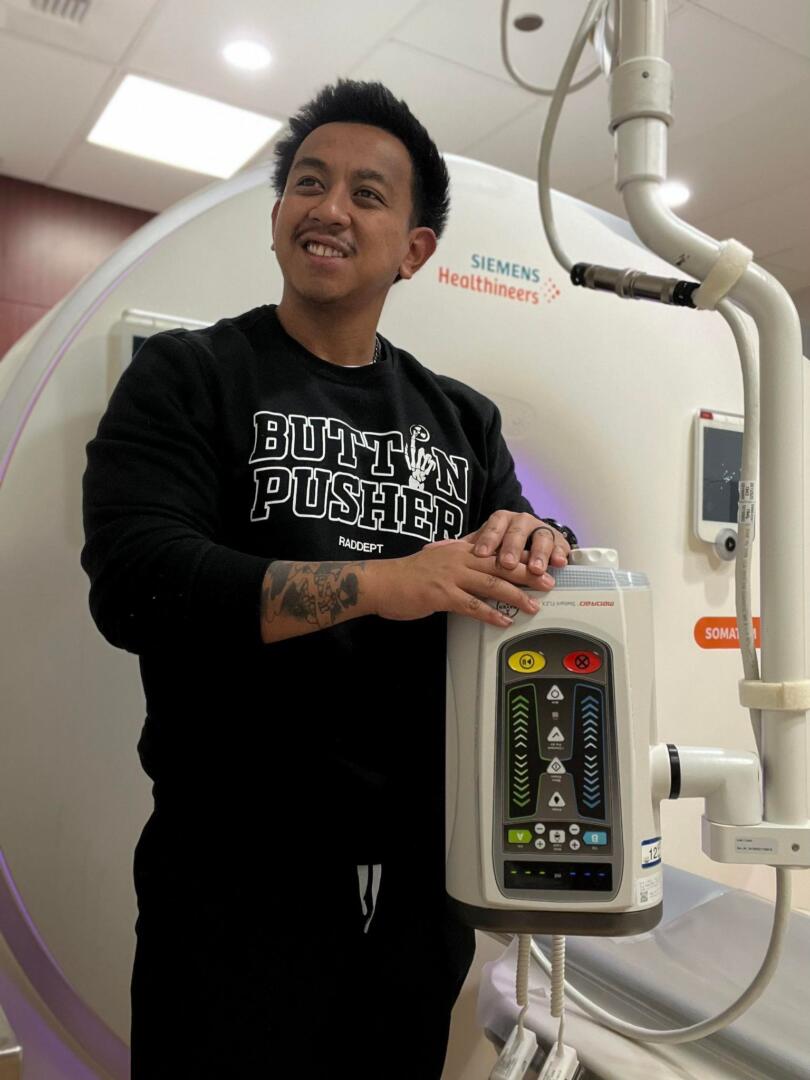
Jed is a first-generation Filipino-American who was born in Los Angeles, California and later on moved to San Diego when he was a teenager. He has spent 11 years in the military, serving as a Navy Corpsman for the Marines and later became a specialized X-ray tech. He was deployed to different countries like Afghanistan, Qatar, Japan, Philippines, Vietnam, Guam, Palau, and Solomon Islands. It was this during this time that he witnessed the need for better medical care in the world.

He always had an entrepreneurial mindset that started off early in high school, when he created a local clothing brand. This transitioned to his adult life where he continued to make fashionable lifestyle wear mixed with fitness culture.  Although he had a passion for creating merchandise for others to wear, he wanted to create something that would have a deeper meaning and have the ability to help more people. He realized that he could combine his entrepreneurial mindset with his TikTok audience and quickly discovered that he could reach more people.

He started to use his newfound influence to raise awareness about issues that he is passionate about, and that’s when he realized he could do more. 

This sparked an inspiration for him to rebrand his long-time lifestyle clothing line into RADDEPT. With every sale, his company donates 10% to a charity that provides radiological services in underserved communities around the world. His goal is to make fashionable clothing for healthcare workers while also making a positive impact on the world.
Jed is proof that one person can make a significant impact on the world. His story reminds us that even the smallest actions can lead to something greater. We all have the power to create positive change in the world, and it’s never too late to start.

HOW THE MILITARY MOLDED ME AS THE PERSON I AM TODAY

The military helped me mature as a person. People always compare their “10-year transformation,” how they have changed physically, and honestly, mine was a complete mental 180. I grew up as a child of a single mother. We were pretty poor, and at times we were homeless, bouncing around to my mom’s friend’s houses. She worked in the real estate realm, and the companies she worked for were either shutting down or downsizing due to the economy. 

I started rebelling around high school so she kicked me out to live with my uncle in San Diego. He was a prior Corpsman in the Navy and became a solid role model. Eventually, after high school, I worked as a Certified Nursing Assistant for 3 years while attempting to complete the prerequisites for nursing school. I ended up joining the Navy so I could have nursing school paid for when I finally applied.

What was supposed to be a 4 year in and out Naval career, turned into an 11-year career that molded me into the person I am today. I excelled with being able to do the grunt work while developing excellent leadership traits. I used my background to help mentor the junior personnel and still continue that habit to this day. I remain in contact with peers, mentors, and mentees, and they all have a significant impact on my life.

THE BIGGEST BARRIERS IN HEALTHCARE

With my military experience, I have noticed that the biggest barrier to accessing quality healthcare for underserved communities is their access to ancillary services. During my last deployment to pacific countries, I recognized that the host nation’s patients had access to primary care visits and surgeries, but the patients had to pay out of pocket for ancillary services like medical imaging.

If you asked me about the significance of radiology before I ended up in this role, I would have laughed and said, ”They don’t do anything but push buttons.” But after completing school, I learned that Radiology has a significant impact on medical treatment – from early detection for diagnosis to being the eyes in the operating room or figuring out the next step for lifesaving intervention.

This deployment opened my eyes to the fact that many patients outside the United States are seriously prone to a lot of diseases that are uncommon in our country. Healthcare quality (although heavily scrutinized by the media) is actually pristine in America and we are lucky to have all these safety protocols in place.

With my military experience, I have noticed that the biggest barrier to accessing quality healthcare for underserved communities is their access to ancillary services.

jed rodriguez

RAISING AWARENESS FOR ANCILLARY SERVICES THROUGH RADDEPT

The first step I hope to achieve this year is to establish a community with my brand RADDEPT. The power of a community can achieve great accomplishments. My first milestone this year is to give 10% of each purchase to charity. I hope to collaborate with more people to be able to give more.

I plan to shine light on the effectiveness and importance of ancillary services. There is always a spotlight on becoming a doctor or a nurse. I plan on creating relatable merchandise for ALL healthcare workers. I’d like to be able to create products that I could donate to countries like the other ones I have previously traveled to and administered care to.

ONE DAY AT A TIME

My biggest advice for someone who wants to make a positive impact on the world but doesn’t know where to start is to take the first step and go for what they want.

One thing that always resonated with me was “Lay one brick a day and eventually, you would have built a well.” This is how I tackle the majority of my life goals. Small baby steps and take it one day at a time. If I keep focusing on the bigger picture, then it becomes overwhelming. Small daily/weekly goals and all those combined will help accomplish the bigger goals.

Also, surround yourself with like-minded individuals. Have mentors and mentees, everything you learn is important, but it is more important to spread the knowledge to the next person!

My biggest advice for someone who wants to make a positive impact on the world but doesn’t know where to start is to take the first step and go for what they want.

jed rodriguez

CONNECT WITH JED RODRIGUEZ

Social media is super important in today’s society. One thing I have learned from having my previous brand for years was the power of ad spending and email marketing. Now, I realized that TikTok could also act as a running ad, and I plan to maximize social media by influencer marketing and collaborating with other creators in the healthcare niche, in order to drive awareness and change.

Tiktok: jroddynotricch

ig: radxdept

www.raddept.com

Related Articles

Elegant Cinematic Wedding Thumbnail HD 169 (4)-png

News

Việt Nam Vô Địch: The Phenomenon of “Đi Bão”

“Đi bão! Đi bão!” “Việt Nam vô địch, Việt Nam vô địch!” Chanted the brewing crowd filling Vietnam’s streets after the nation won the AFF Cup.

As the world witnessed the triumph of Vietnam’s soccer team, foreigners and tourists coming to Vietnam were captivated by something else, đi bão. 

The term đi bão is an Internet term that the Vietnamese people coined to describe a parade-like occasion to express national pride, the latest example being the AFF Cup celebration. Through the victory, the term has risen into international popularity as a cultural phenomenon in Vietnam. 

On the surface level, foreigners would witness Vietnamese people flooding the street on their motorcycles, cheering, and raising flags. Yet, in a deeper investigation, the term đi bão defies translation. To a Vietnamese, the definition of the term is as foreign to any expat, yet it invokes a meaning, a feeling, a glorious aspect of Vietnamese culture that anyone on this earth can understand as if it were their mother tongue. Pride. 

People flooded the streets at 1 A.M. to celebrate Vietnam winning the AFF Cup (Image Source: Báo Phụ Nữ)

As the Vietnam soccer team won over Thailand in the AFF Cup, everyone knew what was going down. Silence. Then horns blared, motorbike engines revved, and metal clanged as thousands of flags were raised. Was it the spirit of football? Unlikely. What Vietnamese people love the most is a chance to gather and celebrate, cheering for their national flag. 

Pots and pans were used during ‘đi bão’ to support the cheering effort (Image source: Lao Động)
Thousands of Vietnamese rejoice as the match ends, signifying Vietnam’s triumph (Image Source: Hải Long, Dân Trí)

Đi bão is a one-night chance for the Vietnamese people to parade, to party, and to celebrate a collective victory of the nation. The people dressed in red with a smear of yellow makeup, the color of the Vietnamese flag, as bikers violated every traffic rule imagined. It didn’t matter, as everyone was in a sense of euphoria. Cheeky cardboard signs went up, shirts went off, and occasionally, a person too hyped for the occasion would lead the crowd’s chant.

The people of Hanoi raise their glasses and celebrate (Image source: Mạnh Quân, Dân Trí)
A son and dad celebrating Vietnam’s victory (Image source: Nam Anh, Dân Trí)
A man in a costume leads the crowd (Image source: VOV)

Đi bão beautifully reflects an element of Vietnam’s culture, the Vietnamese identity. The emotions and the experience transcend beyond any boundaries, borders, and football team. It was the loud sounds filled with excitement and pride that made the term đi bão so understandable and relatable. It was the collective joy that made even foreigners experience what it is like to be a Vietnamese for a night.

Tiến Linh [left], Duy Mạnh [middle], Xuân Son [right] in AFF Cup 2024 (Image source: Mạnh Quân, Dân Trí)

Tomo Credit headshots-3538-jpg

Awaken* newsletter

Transforming Access to Credit: A Conversation with Kristy Kim, Founder & CEO of TomoCredit

In this month’s edition of the Awaken* Newsletter, we speak with Kristy Kim, Founder and CEO of TomoCredit, a fintech startup focused on improving access to credit for underserved consumers. By using AI to evaluate real-time cash flow data rather than traditional credit scores, TomoCredit connects consumers with lenders.

Kristy discusses her journey as an immigrant, an Asian female founder, and an entrepreneur working to transform the financial industry. Through her leadership, TomoCredit aims to provide more people with better access to capital and lending opportunities.

Can you start by giving us an overview of your company and what you’re trying to solve?

Kristy Kim: Sure! At TomoCredit, our mission is to bridge the gap between underserved consumers and lenders using AI technology. We are focused on serving individuals who have been left behind by traditional financial systems, especially those without credit scores or with limited credit history.

There are millions of people in the U.S. who are underbanked, and the financial institutions that could potentially help them either don’t have access to their data or don’t understand their risk profile. We leverage AI to evaluate consumers based on their cash flow instead of relying solely on traditional credit scores. This enables us to match these individuals with lenders who are willing to serve them without taking on additional risk. Our platform helps both consumers and lenders—consumers get access to capital, and lenders expand their market in a low-risk way.

What motivated you to start TomoCredit?

As a first-generation immigrant from South Korea, I moved to the U.S. at eleven. In my early twenties, I faced the challenges of building my own credit history. After graduating from UC Berkeley, I worked in investment banking.

Despite having a stable income, I was denied an auto loan five times because I lacked a credit score. This experience highlighted a significant gap in the financial system, where many immigrants, young adults and many other underserved communities are excluded due to the absence of a credit history. After being turned down multiple times, I knew something had to change. I saw that the traditional credit system wasn’t serving millions of people, particularly immigrants, who had the ability to repay but lacked a credit history to prove it.

That experience of being excluded from the financial system really motivated me to find a way to help people like myself access the credit they needed. Determined to address this issue, I founded TomoCredit to provide credit solutions for those who, like me, struggle to access traditional credit avenues.

I wanted to create a system that didn’t rely on traditional credit scores but instead used alternative data, like cash flow, to assess creditworthiness. The idea was to connect underserved consumers to lenders in a way that wouldn’t increase their risk. TomoCredit was born out of this desire to make the financial system more inclusive—so others wouldn’t face the same rejections I did, and would have the chance to access capital and thrive.

As an immigrant founder, have you faced any challenges or biases in fundraising or building relationships with big institutions?

Kristy Kim: Yes, there are definitely challenges that come with being an immigrant founder, and at times, it can feel like an uphill battle. But, interestingly, my background has also played to my advantage.

As an immigrant, I have a unique lens on the problems facing underserved communities. I know firsthand what it’s like to struggle with the traditional credit system. I’ve faced the same barriers that many of our customers face, and that gives me an edge when I’m speaking to financial institutions. I’m able to say, “Look, I know my customers better than anyone else. These people are creditworthy, but they’re being overlooked by the traditional system.”

There is some bias, of course, especially when you’re dealing with legacy institutions, but I think they also recognize that I bring something different to the table—an intimate understanding of the market and the customers they often don’t have access to. Lenders are willing to listen because they know that by partnering with us, they can expand their pool of potential customers without taking on additional risk.

You’ve been in this industry for over five years now. What keeps you motivated despite the challenges you’ve faced?

Kristy Kim: That’s a great question. Honestly, the progress we’ve made keeps me motivated. Every year, I see the interest in our approach growing, and it reinforces that we’re heading in the right direction.

When we first started, it felt like I was an outsider trying to convince traditional financial institutions to embrace an entirely new way of evaluating credit. But now, year after year, we see more and more mainstream players realizing that there’s a huge market for underserved consumers—and that these consumers are creditworthy if we just use the right tools to understand them. It’s exciting to be at the forefront of this change.

For me, it’s not just about building a business—it’s about creating lasting impact. The U.S. consumer credit industry is worth over $4 trillion, and the fact that we are focusing on a largely ignored segment of that market feels like we’re making a real difference. And, of course, as a founder, seeing our technology evolve and improve with time and data is incredibly motivating.

How does your solution differ from other competitors in the market who are also targeting underserved consumers?

Kristy Kim: The key differentiator is that we don’t just rely on traditional credit scores to assess risk.

Our AI model is powered by cash flow data—essentially, we evaluate consumers based on their spending and income patterns, which gives a far more accurate picture of their financial health. Over the past five years, we’ve accumulated a wealth of data that allows us to refine our model, and with every new data point, we get better at underwriting.

Unlike competitors who may be using generic data or building from scratch, we have a more granular understanding of how underserved consumers behave financially. Additionally, the beauty of our system is that we’re not just looking at data from one financial institution—we’re aggregating data from multiple sources. Our customers might have accounts with multiple banks, and that gives us a fuller picture of their financial habits. In comparison, other companies might only have access to data from one bank, which limits their ability to assess risk accurately.

As a founder, what has been the most rewarding part of your journey so far, and what has been the hardest?

Kristy Kim: The most rewarding part has been seeing the validation from both the industry and our customers. When leaders of financial institutions tell me that TomoCredit makes sense, it’s incredibly validating. It’s a feeling of affirmation that, yes, we’re on the right path. But it’s also rewarding to see the real-world impact we’re having on people’s lives. We’ve helped thousands of people access capital who otherwise wouldn’t have had the chance.

On the flip side, the hardest part has been dealing with the mental burden of being a startup founder. When things are going well, it feels like everything is moving at full speed, but when challenges arise—whether it’s fundraising hurdles, market uncertainty, or hiring struggles—the pressure is immense. Unlike larger companies with more resources, startups have less margin for error. It can feel like one wrong move could jeopardize everything, and that can be emotionally exhausting. But it’s in those moments that you really find your resilience, and you learn that, no matter how tough it gets, you have to push forward.

As a seasoned founder, what key lessons from your previous startup experience have you applied to building TomoCredit?

When I launched my first company, I was in my early twenties, full of energy but lacking experience. It was a trial-and-error journey, where I learned a lot, but I quickly realized that having a clear vision and understanding the real impact you want to make is crucial.

Starting TomoCredit was a completely different experience. This time, I approached it with a clear strategy, having learned the importance of tackling a problem that I was personally passionate about. My previous startup experience taught me how to make more strategic decisions, prioritize what matters most, and stay resilient through the inevitable ups and downs of entrepreneurship.

What advice would you give to aspiring founders, particularly those who may be feeling discouraged after a tough year?

Kristy Kim: My advice would be to stay grounded in your purpose and conviction. It’s easy to get distracted by the ups and downs of the startup world, but at the end of the day, your mission should drive you more than the fear of failure or the setbacks you face along the way.

When I first started my company, it wasn’t about just building a business—it was about solving a real problem that I deeply cared about. The passion for the idea needs to be stronger than the fear of failure. Even if things don’t work out the way you hope, you can still be proud knowing that you tried to create something that could have made a real impact.

The most successful founders I know are the ones who are able to maintain a strong sense of purpose, even when it feels like everything is falling apart. If you believe in what you’re doing and are committed to the long-term vision, that will carry you through the hard times.

What are some recent key achievements or milestones that you’re excited to share?

Kristy Kim: Thanks for asking. First, our AI-driven platform continues to help underserved consumers access credit by using cash flow data to connect them with lenders.

We’ve also made significant strides in improving our underwriting capabilities by leveraging years of data to assess creditworthiness more accurately. This year, we paused issuing new credit cards to focus on refining our AI and underwriting technology. While we haven’t issued new cards yet, we’re still accepting customers and offering other financial services. Additionally, our partnerships with larger financial institutions are also growing, with increasing interest from major players. These collaborations are essential to our mission of expanding access to lending for underserved communities.

And lastly, on the team front, we’ve made several key hires, including the former CTO at Experian and the former CEO of LegalZoom. Their expertise in open banking and scaling high-growth companies will help us continue to expand our offerings and further our mission.

Looking ahead, what’s next for TomoCredit?

Kristy Kim: We’re expanding our offering, bringing more lenders into the network, and continuing to refine our AI technology to provide better risk assessments.

We’ve been growing the B2B side of our business over the last year, and we’re seeing significant interest from bigger players in the financial sector. We’re also planning to expand our product offerings to include more types of loans, like auto loans and mortgages, to help more customers get the access they need.

We’re also actively hiring, which is very exciting for us. We’re looking for a talented marketing person to help us build our brand and spread the word about what we’re doing. Our mission is to make financial access easier for everyone, and we’re excited to continue growing and impacting even more lives.


Kristy Kim’s journey proves that determination, a clear vision, and a deep understanding of your market can break through even the toughest barriers. At TomoCredit, she’s not just building a company; she’s seeking to reshape how credit is accessed, especially for those often left behind by traditional systems. Stay tuned for more updates on TomoCredit’s journey, and learn how they’re challenging the status quo while creating new opportunities for underserved communities.

Author: Donna Yu

24-10-05_JILLY-BING-jpg

News

Jilly Bing Brings Riley, the First Doll to Celebrate Mixed Asian Heritage and Diversity

Jilly Bing, the company known for the Jilly Doll and its mission to break down stereotypes about Asian American girls, is once again pushing boundaries for its community. Celebrating its heritage, Jilly Bing is expanding its collection with the Riley Doll, a new character designed to represent mixed Asian and Caucasian backgrounds.

A Founder’s Dream

Elenor Mak, the Chinese American founder of Jilly Bing, was inspired by her search for a doll that reflected her daughter’s heritage. This pursuit brought the Jilly Doll to life as a collection aimed at bringing representation to playtime, helping Asian children make sense of the world, their identities, and the roots of their traditions.

Elenor Mak, the Chinese American founder of Jilly Bing with the Riley Doll (Left) and the Jilly Doll (Right).(Image source: Jilly Bing)

Elenor Mak, the Chinese American founder of Jilly Bing with the Riley Doll (Left) and the Jilly Doll (Right).(Image source: Jilly Bing)

Mak stated to PR Newswire, “As the number of Americans identifying as mixed-race Asian grows, the Riley Doll offers children a reflection of their experiences, showing they can be 100% Asian, 100% Caucasian, and 100% themselves.”

From Dream To Reality

Riley is confident, loves snacks from her favorite Asian stores, and enjoys adventure. Mak continued, “The Riley Doll was created in response to strong consumer demand, as a mixed Asian doll was the top request from the Jilly Bing community. For so many of us, growing up meant feeling pressured to choose one side of our heritage. The Riley Doll is here to show kids they don’t have to choose—they can celebrate every part of who they are.”

The Riley Doll was created to help children celebrate their identity. (Image Souce: Jilly Bing)

The Riley Doll was created to help children celebrate their identity. (Image Souce: Jilly Bing)

The doll further propels Jilly Bing’s mission of bringing Asian American characters to life, representing the community’s diversity in backgrounds, appearances, interests, and personalities. Priced at $68, Riley is now available exclusively online at jillybing.com.

Featured Image Source: Jilly Bing

Headshot White copy-png

Stories

DJ Kim’s Legacy of Uplifting Founders Through Cherry Assistant

Not knowing what to do when starting his business, DhungJoo “DJ” Kim burnt through a whole sum of cash during his early days and later got himself in an environment full of volatility and bad actors. 

Yet after years of honing his entrepreneurial experience, DJ founded and grew RevGenius to a 30,000-member community at $1M ARR, sold three businesses, and helped over 50 business owners scale their companies with offshore staff.

Propelled by a passion for uplifting the community, he founded Cherry Assistant, a bridge dedicated to providing global talents for founders. 

Whether you are a young founder or a seasoned leader looking for something to kindle your entrepreneurial spirit, DJ’s story will redefine what it means to have a legacy that extends beyond business success.

An Entrepreneur Hero

DJ’s inspiration for entrepreneurship started with his admiration for his father, who had been an entrepreneur for over 30 years. As a child, he saw firsthand how his father had traversed challenges, empowered his team, and innovated his business to stay competitive. 

“He faced the ups and downs of the industry with resilience and dedication, which taught me the importance of hard work, adaptability, and long-term commitment,” DJ explains. 

DJ learned that entrepreneurship is more than starting a business but creating something that can evolve and endure the test of time. This drive nurtured DJ’s entrepreneurial spirit, invoking his desire to make an impact through his ventures. 

“His passion for his work, even after decades, has inspired me to build my path in business, with the same drive and perseverance,” DJ reflects.

His father's passion is what drives DJ to build his business.

His father’s passion is what drives DJ to build his business.

Shaky First Steps

Like many young founders, DJ was eager but inexperienced when starting his entrepreneurial journey. During his first years, he recalled wasting a lot of money for not knowing the fundamentals. 

DJ states, “We outsourced development to a team in India, only to realize that without the technical know-how to properly manage and guide the project, we were burning through cash with little return.”

These struggles were further burdened by DJ’s struggle to reconcile with his Asian heritage and the pressures of assimilating into a Western environment. As a Korean who immigrated to the US at a young age, DJ regularly felt he was losing parts of himself, specifically in spaces where Asian representation was lacking. Yet, these challenges also drove DJ to give the Asian community a turning point. 

“I want to create opportunities for others in the Asian community to embrace their identities fully and bring their cultural strengths into the business world,” he exclaimed. 

An Entrepreneur’s Passion

Startup was DJ’s passion even as early as his college days when he launched his first mobile app startup with an initial $250K raise. Transitioning from a startup incubator to co-founding RevGenius, DJ fostered a community with 30,000 members and hit $1M ARR in one year. 

Eager to expand and hone his experience in software, e-commerce, and B2C ventures, DJ moved to LA to explore crypto/Web3, where he found himself in an environment of bad actors and volatility. 

Looking back, DJ states “It tested my resilience and taught me the importance of diligence, research, and staying true to my ethical standards in any venture.”

This experience inspired DJ to found Cherry Assistant, a business dedicated to helping founders scale their companies with virtual assistants. 

Building Cherry Assistant was no simple feat. DJ has encountered numerous challenges in hiring offshore talent sifting through scams and dishonest individuals to identify reliable people. He understands that clients are wary of offshore workers as there is a misconception that these laborers are somehow ‘lesser’ or incapable. Hence, he made it his mission to show clients that there are hardworking, skilled professionals who simply happen to live in different countries.

He states, “I learned that, at its core, a community thrives on mutual benefit and authentic connections.”

Throughout DJ's business journey, he learned that community is core to success.

Throughout DJ’s business journey, he learned that community is core to success.

The Strength of a Community

During this journey of scaling Cherry Assistant, DJ found Asian Hustle Network (AHN). 

“AHN became instrumental in expanding my network, showcasing the power of community support in entrepreneurship,” DJ excitedly claimed.

As Cherry Assistant attracted many home cleaning businesses seeking offshore support, including one business owner who offered DJ mentorship, he decided to open his third business: a remote home cleaning company. Within just a year, DJ successfully scaled and sold it to a local entrepreneur thanks to AHN’s community. 

“Through AHN’s supportive community, I eventually found a local entrepreneur interested in buying the business. This network not only enabled me to close the deal but also highlighted the power of community and connection in the Asian business world,” DJ excitedly claimed.

A Vision to Help the Community

Focusing on scaling Cherry Assistant and his experiences building three businesses, DJ’s mission is to empower entrepreneurs and small business founders by providing them with the resources to achieve similar success.

DJ states, “With Cherry Assistant, my goal is to create a bridge for founders to access global talent, helping them streamline operations, save time, and focus on growth. This mission is personal to me as a Korean American, knowing firsthand the value of hard work, resilience, and the importance of leveraging opportunities.”

DJ’s vision is to foster a diverse and inclusive workforce, all while building a platform that provides businesses with skilled support. For the Asian community, this mission holds a greater significance in DJ’s heart.

“By sharing my experiences and the lessons I’ve learned, I hope to empower other Asians and Asian Americans to pursue their ambitions, leverage their networks, and give back to their communities,” DJ states.

DJ’s true legacy goes far beyond the success of his business—it lives in his unwavering passion to uplift and empower other founders.

Connect with DJ Kim

Instagram: @dhungjookim

Twitter: DJ Kim

LinkedIn: DJ Kim