Stories

July 28, 2024

SHARE:

In the ever-evolving landscape of healthcare technology, few startups have captured the imagination and promise of Hona. With a mission to empower speech pathologists through innovative AI solutions, Hona stands at the forefront of a transformative wave in healthcare.

We had the privilege of sitting down with Adam Steinle, CEO of Hona, to delve into the inspiration, challenges, and achievements that have shaped their journey.

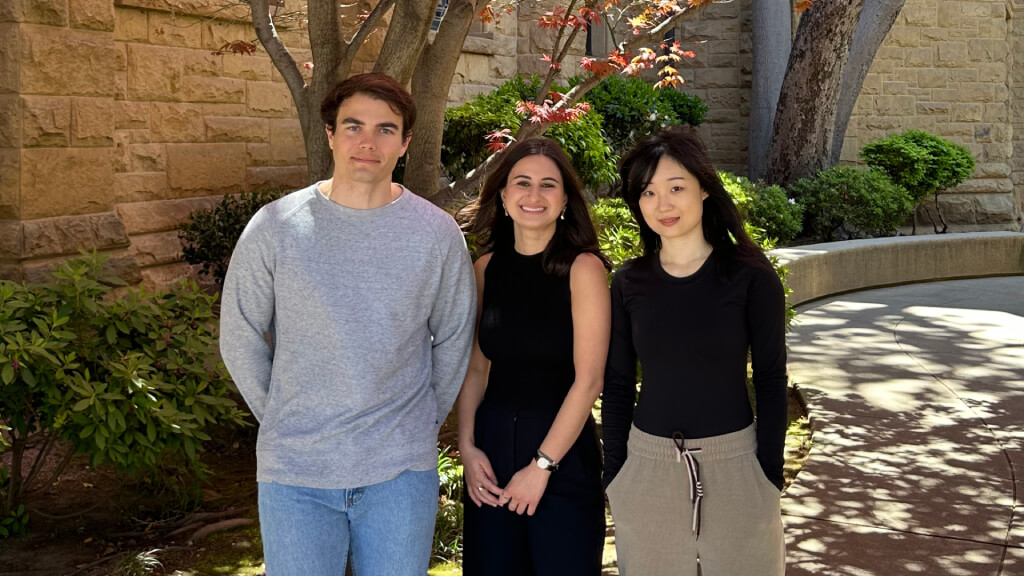
The Trio Behind Hona

For Adam Steinle, the entrepreneurial spirit runs in the family. “My parents met by building a software company together. I quite literally wouldn’t be here without tech entrepreneurship and it’s always something I aspired to do myself.” he shared. This early exposure to the power of technology and entrepreneurship set the stage for Adam’s own career, which has seen him move from biomedical engineering to roles at Goldman Sachs and Facebook before founding Hona.

As for Danielle Yoesep, Hona’s COO, she found her entrepreneurial path through a passion for building. She fell into entrepreneurship in her last venture within research and wanted to get back to the building. In her last role, she realized that she’s super energized by the early stages of company building.

Shuying Zhang, the CTO, brought a unique blend of technical expertise and a desire to make a real-world impact.  As a former big tech SWE and biomedical engineer, she wanted to find a way to apply her skills to improve healthcare. Further, entrepreneurship allowed her to work in a faster-paced environment with more ownership.

Overcoming Challenges

The journey to success is rarely smooth, and Hona has faced its share of challenges. One of the most significant hurdles was pivoting from their original AI-automated patient intake product. “Despite initial success, we realized it wasn’t effectively addressing provider burnout. We improved one workflow aspect but added complexity with another portal to manage,” Adam explains.

The team made the tough decision to end existing customer relationships and explore more fundamental problems. After a month of interviews and brainstorming, they identified a significant issue in speech pathology that resonated with them. This led to a full pivot into developing vertical software for speech pathologists, aiming to support every aspect of their work. This experience underscored the importance of user feedback and adaptability in product development.

Proud Achievements

One of Adam’s proudest achievements is the ability to consistently surround himself with inspiring and talented individuals. “I’ve consistently invested in my network – from my Facebook RPM program to B-School to YC – and this has paid great dividends. I’ve been able to use this network for resources, advice, and sourcing great teammates.”

As a team, Hona takes pride in the difficult decision to leave comfortable jobs to make a meaningful impact in healthcare. Their dedication to improving the lives of speech pathologists and their patients is a testament to their commitment and vision.

A Vision for the Future

Hona’s mission is clear: to empower speech pathologists to operate independently without the burden of administrative overhead. “We aim to create a dynamic marketplace that efficiently connects speech pathologists with various opportunities, including cash-based services, school contracts, and insurance-covered treatments,” Adam explains.

Their vision extends to developing a platform where speech pathologists can easily build their own client base and manage their practice with minimal administrative work. This approach will allow therapists to focus on providing care while maintaining control over their income and work-life balance. By streamlining the connection between patients and therapists, Hona aims to reduce waitlists and ensure that more people can receive the care they need in a timely manner.

Empowering the Asian Community

While Hona’s primary goal is to support speech pathologists and improve access to speech therapy for all, they recognize the potential benefits for the Asian community. Their initiatives provide flexible work opportunities for Asian speech pathologists and increase access to culturally competent care for Asian patients. By reducing language and cultural barriers to accessing speech therapy, Hona is making it easier to match patients with therapists who understand their specific needs.

Connect with Hona

Instagram: @hona_care

Linkedin: Hona

Facebook: Hona Care

For more information about Hona and its innovative solutions, visit honacare.com.
Related Articles

Image Source: Shoutout LA

Uncategorized

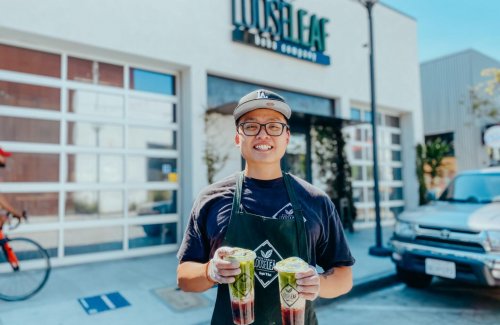
Loose Leaf Boba Company Blends Third-wave Coffee And Tea With Cultural Inclusion

Loose Leaf Boba Company is not only well-known for its expert “bobaristas.” but also for its diverse cultural representation including Burmese, Thai, Filipino, and Hispanic. “Going out for boba” was a childhood tradition that assisted the company’s mission of unifying people by normalizing cultural differences.

The brand constantly values cultural inclusivity and also empowers BIPOC, AAPI, women, and the LGBTQ+ community.

Loose Leaf Boba Company’s sharp vision of “Building a Better Boba Company” comes to life every time a customer experiences a foreign favorite, for which they make beverages for customers to try global favorites. This means making tasty beverages like Vietnamese Egg Coffee or Mexican-inspired Guava Atole.

Founded in 2012 by husband and wife duo Thomas and Jasmine Liu in West Covina, the viral third-wave shop has locations across the United States, including Connecticut, California, and Massachusetts.  This bubble tea tycoon has big plans to grow large retail sites in metro Dallas, TX, Northampton, MA, and Hadley, MA.

Image Source: Forbes Asia

Stories

Farm of the Future: Farm66 Cultivates Vegetables Within Hong Kong’s Skyscrapers

In the course of COVID-19, a significant number of people have reported having insufficient access to fresh food entirely for sustainable living.

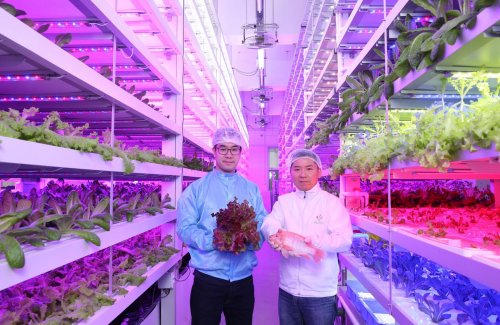
Gordon Tam has created an urban farm that solves this problem. He is the co-founder and CEO of the Hong Kong-based vertical farming – Farm66. With advanced farming technology, he grows fresh vegetables inside skyscrapers in Hong Kong. 

In 2013, Tam and Billy Lam, Farm66’s COO, founded Hong Kong’s first high-tech vertical farm and developed LED lighting and wavelength innovations for farms. Tam and his team found that different light wavelengths affect plant growth. Red LEDs generate longer, stronger stems, whereas blue LEDs produce larger, stronger leaves.

The technological and robotic advances at Farm66 are also both groundbreaking. The 20,000-square-foot indoor farm is managed with IoT sensors and robots for quality assurance and other tasks. 

When asked about the challenges facing conventional farming, Tam cites a lack of talent as a significant issue. “It’s because the children of many remaining farmers don’t want to take over the farms. They think it’s a very tedious job.” – he told Forbes. This is why he placed a premium on technology and saw it as a means to attract young people to farming by making the industry more appealing.

Farm66’s latest farming mechanism impressed billionaire Tang Yiu’s tech-focused venture capital firm ParticleX. The Alibaba Entrepreneurs Fund, Sino Group, and the Hong Kong government’s Cyberport and Science & Technology Parks are also investors. A total of over $4 million in funding has been acquired so far. Hengqin Financial Investment and the City University of Hong Kong have also backed Farm66.

There are currently fifteen full-time workers at Farm66, including data analysts, food scientists, and mechanical engineers, who can harvest as much as seven tons of vegetables every month. Tam hopes to share its company’s urban farming methods and success in Hong Kong with other cities. For instance, Farm66 converted a shipping container into a mobile farm for use in Middle Eastern desert cities.

Image Source: Jack X. Li/Eater Chicago

Stories

Chicago’s Khmai Fine Dining: A Daughter’s Tribute To Mother’s Healing From Khmer Rouge

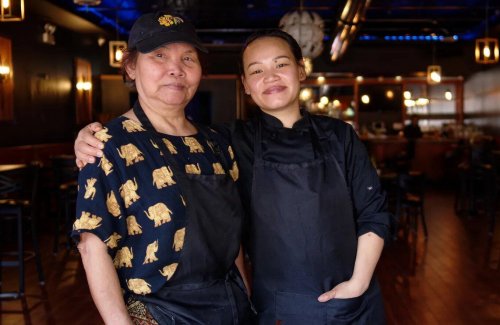
Khmai Fine Dining is a unique Cambodian restaurant in Rogers Park, Chicago. Owned by executive chef Mona Sang, the name is a mix of “Khmer,” the language and ethnicity of native Cambodians, and “me,” the Khmer term for mother, to emphasize her mother’s important role in presenting traditional Cambodian cuisine.

Mona, together with her sister, two brothers, and mother Sarom Sieng came to the US in early 1980 after surviving the Cambodian genocide. The Khmer Rouge tortured Sarom and executed her husband as the family fled to Thai refugee camps.

A single mother who never spoke English, Sarom began cooking for other families in the Cambodian community in order to survive and eventually expanded into catering events at Living Water Community Church in Rogers Park.

Mona hasn’t heard every detail of Sarom’s experience during the genocide, but the trauma her mother went through is still very clear to her. “I don’t know the whole story, but she tells it little by little when she’s cooking,” Mona told Eater Chicago. “I think there’s a lot of other people out there who have been through the same thing, but their story has never been told.”

In 2018, another family tragedy came when one of Mona’s brothers died unexpectedly in his sleep. Her mother discovered him the next morning and that image haunted Sarom.

Now that she is almost 80 years old, Sarom spends her days with her 13 grandchildren or assisting at Khmai.

According to Eater, Mona isn’t simply conveying a message to its customers with Khmai’s name. It is also a way of healing and writing a love letter to her mother who has fought for them to survive through the restaurant.

Khmai’s mesmerizing dishes include “Nom Bahn Chok”, a vermicelli noodle dish with minced tilapia marinated in kreoung and prahok, simmered in coconut fish stock, “Sach Koh Ang”, beef skewers marinated in lemongrass, Khmer spices and chili peppers, and Mai’s famous eggrolls stuffed with ground chicken, bean thread noodles and taro root.

Image Source: Liezel Nudalo Formentera

Uncategorized

Filipina Mom Started Her Career Selling Vegetables Got Her Degree At 32 To Become A Teacher

Liezel Nudalo Formentera is now ready to work toward achieving her lifelong ambition in the field of education.

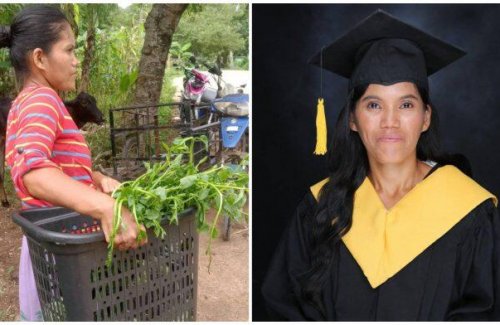
Formentera works as a street vendor in Cebu, Philippines, and hopes to improve her family’s situation someday. The only way she can see doing so is to further her education and get a better job. She could not finish elementary and high school, but she was determined and decided to join the DepEd’s ALS (Department of Education’s Alternative Learning System) program. 

ALS is a parallel learning system in the Philippines that gives students an alternative to the formal education they already got. She didn’t have to miss out on her primary education because of ALS.

In 2018, Formentera finished high school, and she began to sign up for college. She went to Cebu Technological University to earn a Bachelor of Industrial Technology with a major in Computer Technology (CTU). 

Because she also has to look after her children while she is in school, there were times when she felt physically exhausted from her work. They also experienced financial difficulties, but her farmer husband assists and supports her. There were times when she wanted to give up on her studies when times were tough, but she considered her children and the life she has worked so hard to provide for them. Thus, she worked harder for it.

She understood that there is no age limit on learning. Today, she remains overjoyed and grateful that she never expected to graduate from college. “Life is like this when you are confronted with hard times; simply pray to the Lord, and your blessing will arrive when you least expect it. This is for my children and my hope for the prosperity of my family. My children will not face poverty as I did.” – she happily shared with their local newspaper, The Philippine Star.