Stories

December 13, 2022

SHARE:

This may have happened to you (maybe not the musical writing part), or you may know someone from an Asian background who is currently struggling as their parents had strongly expected or already had chosen a job for them.

But how many of you have bravely rejected your parents’ desires, and followed your true passion? Take it from this courageous girl, Joy Regullano. You might remember her from the viral YouTube sketch called White Fetish, or various random acting gigs like the TV Series Crazy Ex-Girlfriend (her line was “Yeah, bitch!”) or Modern Family (with her line was “You fools!”).

That’s right, Joy is quite too far from wearing a white coat. She’s an actress, comedian, and writer — every Asian parents’ nightmare. So when she told her parents that she didn’t want to be a doctor anymore, her father didn’t talk to her for 8 months. Years later, she wrote a comedy musical about it, called Supportive White Parents.

“Working on this musical has been a major part of my healing journey (my parents are imperfect people who were just passing down intergenerational trauma) and maybe it can be part of yours too,” Joy expresses.

Read through as Joy shares how she has discovered her passion for comedy, and her journey to healing and acceptance through her musical.

MY WHOLE LIFE, I THOUGHT I WAS GOING TO BE A DOCTOR JUST LIKE MY PARENTS

My parents were born and raised in the Philippines. My dad grew up very poor in one of the provinces, but after scoring in the top percentage of all students across the country on an exam, he got a scholarship to a prestigious science high school in Manila that was all expenses paid. My parents met in medical school, and soon after graduating, they came to the US by way of New York. Eventually, they made their way across the country to Eagle Rock in LA and then Orange County, where I grew up. 

My whole life, I thought I was going to be a doctor just like my parents. I tried my best to be the perfect daughter. I got straight A’s and took piano lessons since I was 3 and violin lessons starting at 8. (Well, actually, I got one B+ in AP/IB Physics, but we don’t talk about that B+) I studied math outside of school at Kumon and played educational computer games because it was a productive use of my time. I read medical books my parents had lying around the house and had subscriptions to science magazines in high school, for fun.

But as I grew older, there was a part of me that was starting to love writing and making people laugh. For 7th-grade vocabulary exercises, I cared more about making my sentences funny than using the word right. My favorite part about English and Spanish group projects was writing the scripts and acting in them. I wrote bad high school poetry. But I didn’t think that was an acceptable thing to want to do with my life, so I shoved that part down, deep inside me. I did write for the school newspaper and compete in speech contests and debate teams, but that was about the extent of my (public) creative life. 

But as I grew older, there was a part of me that was starting to love writing and making people laugh.

-Joy Regullano

I LOVED FEELING LIKE I COULD MAKE THE AUDIENCE LAUGH AND CRY JUST BY TELLING AN HONEST STORY

I went to UC Berkeley pre-med and was planning to take over my dad’s clinic when he retired. But in the first semester of my freshman year, I got a B on my first math test and a C on my first chem test, and I panicked. After some soul-searching, I realized I wasn’t actually passionate about any of that and ended up cycling through a bunch of different majors before landing on Theater and Southeast Asian Studies.

I wrote a play in college about a friend who had passed away in high school, and when I put it up in front of an audience, I was hooked. I loved feeling like I could make the audience laugh and cry just by telling an honest story. Just by being myself. I wanted to do that for the rest of my life. I loved Tina Fey and Amy Poehler’s work so much that I couldn’t even watch them for a long time because it hurt that I wasn’t doing what they were doing. 

WHITE PARENTS: A MUSICAL INSPIRED BY MY LIFE

I wrote the book and the lyrics to a comedy musical called “Supportive White Parents” about an Asian girl who tells her parents she doesn’t want to be a doctor anymore, and when they’re disappointed, she wishes on a shooting star for supportive white parents. Eventually, she learns to love her Filipino parents for who they are. My friends Sam Johnides and Tony Gonzalez wrote the music.

The musical was inspired by my life. When I told my parents I didn’t want to be a doctor like them and take over my dad’s clinic, my dad yelled at me, called me selfish, and didn’t talk to me for 8 months. I was absolutely devastated, even though I knew that making people laugh and cry was what I had been put on this earth to do. 

I felt so jealous of my white theater classmates with their seemingly endlessly supportive white parents. And funny enough, they were jealous of me because I had something called “discipline”, played multiple instruments, and knew other languages. And thus, the seed of a musical was born.

Eventually, she learns to love her Filipino parents for who they are.

-Joy Regullano

LAUGHING AT OURSELVES CAN BE ONE OF THE BEST WAYS TO HEAL

There aren’t many Asian American musicals, let alone comedy Asian American musicals. One of my teachers says that comedy is the back door to the truth. I think that laughing at ourselves can be one of the best ways to heal, as well as realizing that we are not alone. 

We as a generation are going through this together, and also, we, as well as our parents, are the products of society and intergenerational trauma. We are all imperfect people who are trying the best we can with the tools we have. 

ACCEPTANCE IS THE QUICKEST WAY TO SANITY AND PEACE

I love the serenity prayer. There are some things that we can change, and we should do what we can to change those things. There are some things we can’t change, and it’ll drive you crazy trying to. You can’t control other people. You can only control yourself. The sooner you can accept other people are how they are, the sooner you’ll stop giving your energy away. 

Also, one thing I learned that blew my mind is that it’s actually not love, to wish that your parents or family were different than who they are. If what I was asking from them was to love me for exactly who I am, with all my imperfections, isn’t that what I should be giving them too? Unconditional love and acceptance? (That’s not to say that you shouldn’t have boundaries – that could be a whole other article.) But accepting things you can’t change is the quickest way to sanity and peace. 

If what I was asking from them was to love me for exactly who I am, with all my imperfections, isn’t that what I should be giving them too?

-Joy Regullano

It’s a daily practice. But try it! After reading “The Subtle Art of Not Giving a F*ck”, I tried to imagine that I only had one f– to give a day. How much energy would I be saving by only getting bent out of shape over the most important things!? I’m not really good at giving only one f– a day. But I’ll keep trying.

One more thing – some people need to be angry before they move to acceptance. I know I did, and I still feel angry sometimes. Accepting yourself and your feelings is part of the process too. Wherever you are in your journey is okay.

CONNECT WITH JOY

Instagram: @supportivewhiteparents @joyregullano

Twitter: @swpmusical @joyregullano

Website: www.supportivewhiteparents.com

Be on the lookout for the upcoming Supportive White Parent concept album, to be released in January 2023, with singles leading up to it! 
Related Articles

Image Source: Forbes Asia

Stories

Farm of the Future: Farm66 Cultivates Vegetables Within Hong Kong’s Skyscrapers

In the course of COVID-19, a significant number of people have reported having insufficient access to fresh food entirely for sustainable living.

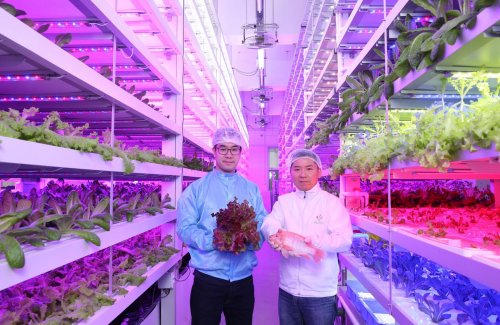
Gordon Tam has created an urban farm that solves this problem. He is the co-founder and CEO of the Hong Kong-based vertical farming – Farm66. With advanced farming technology, he grows fresh vegetables inside skyscrapers in Hong Kong. 

In 2013, Tam and Billy Lam, Farm66’s COO, founded Hong Kong’s first high-tech vertical farm and developed LED lighting and wavelength innovations for farms. Tam and his team found that different light wavelengths affect plant growth. Red LEDs generate longer, stronger stems, whereas blue LEDs produce larger, stronger leaves.

The technological and robotic advances at Farm66 are also both groundbreaking. The 20,000-square-foot indoor farm is managed with IoT sensors and robots for quality assurance and other tasks. 

When asked about the challenges facing conventional farming, Tam cites a lack of talent as a significant issue. “It’s because the children of many remaining farmers don’t want to take over the farms. They think it’s a very tedious job.” – he told Forbes. This is why he placed a premium on technology and saw it as a means to attract young people to farming by making the industry more appealing.

Farm66’s latest farming mechanism impressed billionaire Tang Yiu’s tech-focused venture capital firm ParticleX. The Alibaba Entrepreneurs Fund, Sino Group, and the Hong Kong government’s Cyberport and Science & Technology Parks are also investors. A total of over $4 million in funding has been acquired so far. Hengqin Financial Investment and the City University of Hong Kong have also backed Farm66.

There are currently fifteen full-time workers at Farm66, including data analysts, food scientists, and mechanical engineers, who can harvest as much as seven tons of vegetables every month. Tam hopes to share its company’s urban farming methods and success in Hong Kong with other cities. For instance, Farm66 converted a shipping container into a mobile farm for use in Middle Eastern desert cities.

Image Source: Jack X. Li/Eater Chicago

Stories

Chicago’s Khmai Fine Dining: A Daughter’s Tribute To Mother’s Healing From Khmer Rouge

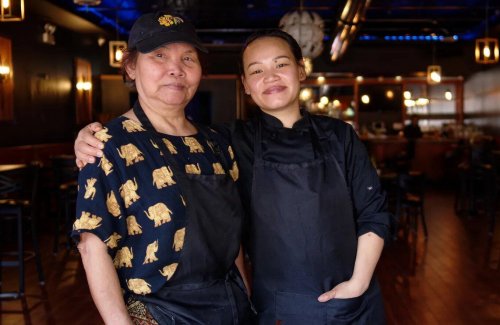
Khmai Fine Dining is a unique Cambodian restaurant in Rogers Park, Chicago. Owned by executive chef Mona Sang, the name is a mix of “Khmer,” the language and ethnicity of native Cambodians, and “me,” the Khmer term for mother, to emphasize her mother’s important role in presenting traditional Cambodian cuisine.

Mona, together with her sister, two brothers, and mother Sarom Sieng came to the US in early 1980 after surviving the Cambodian genocide. The Khmer Rouge tortured Sarom and executed her husband as the family fled to Thai refugee camps.

A single mother who never spoke English, Sarom began cooking for other families in the Cambodian community in order to survive and eventually expanded into catering events at Living Water Community Church in Rogers Park.

Mona hasn’t heard every detail of Sarom’s experience during the genocide, but the trauma her mother went through is still very clear to her. “I don’t know the whole story, but she tells it little by little when she’s cooking,” Mona told Eater Chicago. “I think there’s a lot of other people out there who have been through the same thing, but their story has never been told.”

In 2018, another family tragedy came when one of Mona’s brothers died unexpectedly in his sleep. Her mother discovered him the next morning and that image haunted Sarom.

Now that she is almost 80 years old, Sarom spends her days with her 13 grandchildren or assisting at Khmai.

According to Eater, Mona isn’t simply conveying a message to its customers with Khmai’s name. It is also a way of healing and writing a love letter to her mother who has fought for them to survive through the restaurant.

Khmai’s mesmerizing dishes include “Nom Bahn Chok”, a vermicelli noodle dish with minced tilapia marinated in kreoung and prahok, simmered in coconut fish stock, “Sach Koh Ang”, beef skewers marinated in lemongrass, Khmer spices and chili peppers, and Mai’s famous eggrolls stuffed with ground chicken, bean thread noodles and taro root.

Image Source: Liezel Nudalo Formentera

Uncategorized

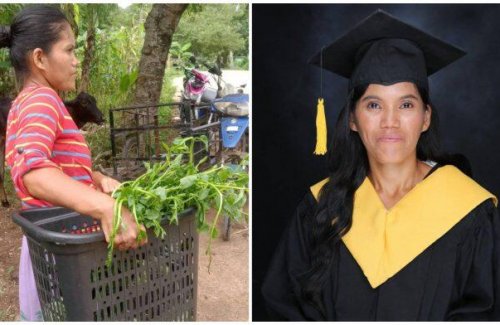
Filipina Mom Started Her Career Selling Vegetables Got Her Degree At 32 To Become A Teacher

Liezel Nudalo Formentera is now ready to work toward achieving her lifelong ambition in the field of education.

Formentera works as a street vendor in Cebu, Philippines, and hopes to improve her family’s situation someday. The only way she can see doing so is to further her education and get a better job. She could not finish elementary and high school, but she was determined and decided to join the DepEd’s ALS (Department of Education’s Alternative Learning System) program. 

ALS is a parallel learning system in the Philippines that gives students an alternative to the formal education they already got. She didn’t have to miss out on her primary education because of ALS.

In 2018, Formentera finished high school, and she began to sign up for college. She went to Cebu Technological University to earn a Bachelor of Industrial Technology with a major in Computer Technology (CTU). 

Because she also has to look after her children while she is in school, there were times when she felt physically exhausted from her work. They also experienced financial difficulties, but her farmer husband assists and supports her. There were times when she wanted to give up on her studies when times were tough, but she considered her children and the life she has worked so hard to provide for them. Thus, she worked harder for it.

She understood that there is no age limit on learning. Today, she remains overjoyed and grateful that she never expected to graduate from college. “Life is like this when you are confronted with hard times; simply pray to the Lord, and your blessing will arrive when you least expect it. This is for my children and my hope for the prosperity of my family. My children will not face poverty as I did.” – she happily shared with their local newspaper, The Philippine Star.

Image Source: Business Wire

Uncategorized

Takashi Cheng Honored With A Special Award For Exemplary Initiatives On Elevating The AAPI Creator Community

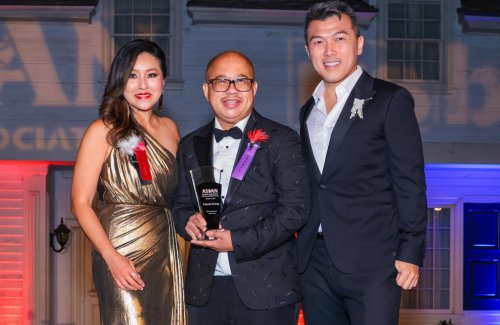
The Gala hosted by the Asian Business Association was in full swing during the evening spent celebrating AAAPI contemporaries. The evening’s events revolved around the concept of authentic old Hollywood, and its guest list included several famous personalities. 

Takashi Cheng was honored with the Media Visionary of the Year Award, one of the night’s main highlights. He is one of the business leaders from the Los Angeles community who highlights the accomplishments of prosperous business owners and corporations and has contributed to advancing the ABA’s goals and mission. 

Cheng serves as the Chief Executive Officer of Society One. He is known to be a creative investor and a public intellectual. Cheng has seen many ups and downs, but he credits his success to the American Bar Association (ABA), which he calls a shelter for young professionals seeking mentorship and employment. He attributed a significant portion of his success to the support of his wife and their young children.

Cheng’s Bling Empire castmate and friend Kane Lim called him a visionary. Lim is proud and happy that Cheng is in the spotlight for investing in people and projects that aim to elevate the Asian community. He is amazed at how Cheng invests in people and projects that seek to promote the Asian community.

Besides all the recognition that night, Cheng modestly used his platform to show the world that a large investment in the AAPI creator community is needed to provide a perspective and a complete spectrum of content that better understands the underrepresented. 

Cheng pledged $100 million to create new films, programs, resources, and infrastructure for Asian American business leaders. This showed Society 1’s support for AAPI creators. He concluded that he had “come full circle” from being a spectator in the crowd to receiving recognition from highly regarded community members.