Stories

July 1, 2025

SHARE:

Embracing Heritage Through Style

Kỳ Lân is the first activewear brand deeply rooted in Asian aesthetics, created with a powerful mission: to empower second-generation Asians worldwide to embrace their heritage with pride. Born from Hải’s personal journey growing up Vietnamese in Hungary and struggling to find a sense of belonging, Kỳ Lân reflects what it truly means to live between cultures, and finally feel proud of that identity.

For Hải, Kỳ Lân isn’t just about clothing. It’s about rewriting the narrative for second-generation Asians and bringing Asian representation to the forefront of mainstream sports- and streetwear. 

Kỳ Lân’s mission is to help second-gens embrace their Asian heritage through clothing

The Meaning Behind Kỳ Lân: A Symbol of Heritage and Unity

Kỳ Lân is a mythical creature from Asian folklore, often described as having the head of a dragon, the body of a horse, and the tail of a lion. It symbolizes peace, prosperity, and good fortune. Versions of the Kỳ Lân appear in Vietnamese, Chinese (Qilin), Japanese (Kirin), Korean (Girin), and Thai (Kilen) cultures, highlighting the deep cultural connections shared across Asia.

Hải chose this name to honor that shared heritage. As part of his efforts to reconnect with his roots, he began volunteering in the Vietnamese community and eventually became the organizer of a 6,000-member Asian Meetup and Discord group. This community centered around 1.5-generation and second-generation Asians, those who either immigrated as kids or were born abroad to immigrant parents. Together, they explored questions of identity, belonging, and the desire to reconnect. These conversations sparked the idea for Kỳ Lân: a brand that celebrates Asian aesthetics but, more importantly, gives voice to the in-between experience many second-generation live daily.

Kỳ Lân is more than just a clothing brand, it’s a tribute to these stories and a movement towards proudly reclaiming culture.

Hải volunteering in his local Vietnamese community

The Origin Story: From Hungary to the U.S. and Back to His Roots

Growing up in Hungary in the 1990s, often as the only Asian kid in school, Hải vividly remembers the bullying, the stares, and the relentless pressure to fit in. Like many second generation Asians, he spent much of his youth trying to blend in, often distancing himself from his Vietnamese roots just to feel accepted.

It wasn’t until years later, after moving to the U.S., that everything shifted. For the first time, Hải saw second-generation Asians unapologetically taking up space, celebrating their identities through art, food, fashion, and film. Vietnamese cafés were opening everywhere, Asian artists topped the charts, and streetwear inspired by Asian heritage became more mainstream. Gradually, pride replaced shame.

He became proud to be Asian, and curiosity toward his culture blossomed.

Hải, his little brother and his mom in Budapest

His parents’ story deeply influenced him, too. They immigrated to Soviet-era Hungary on scholarships and chose entrepreneurship over low-paying engineering jobs after graduation. Their hard work and resourcefulness deeply shaped Hải’s values, even though they initially encouraged him to take a safer path.

That growing sense of cultural pride deepened during a visit to Vietnam, where Hải saw relatives and locals running small storefronts straight from their homes. Every corner was buzzing with hustle. “That’s when it clicked,” he says. “Entrepreneurship is ingrained in our DNA. No wonder I felt this constant pull to build something of my own.” 

From Software Engineer to Fashionpreneur: Finding Purpose

For Hải, the realization that entrepreneurship was in his blood didn’t make the decision to quit his job any easier. Like many children of Asian immigrants, he grew up with a very clear definition of success which included stability, a good education and a respectable job. And he achieved exactly this: a successful career in software engineering, after decades of hard work and sacrifice from his parents, who had moved to Hungary in search of a better future.

For a while, he was unsure whether to commit to building a business or return to the comfort of a tech job. However, the dread he felt preparing for software interviews made it clear that he had to make some kind of business idea work, no matter what.

Like so many second-generation Asians, Hải carried an unspoken responsibility to make his parents’ struggles worth it, to succeed and stay on the path they paved.

Eventually, the pull toward his purpose was stronger than the fear of failure.

In a twist of fate, Hải is following in his parents’ footsteps. After immigrating to a foreign country and getting a degree in Engineering, he decided to leave it all behind and pursue Entrepreneurship.

Hải’s parents threw away their Engineering degree to open their heavy metal t-shirt business back in the ‘90s.

The Birth of Kỳ Lân: A Perfect Fit 

Inspired by his parents’ own clothing business selling heavy metal t-shirts at marketplaces, Hải worried initially that they might disapprove of him following a similar path. Instead, they became his biggest supporters once they saw his dedication.

While it might seem like a waste to throw away his engineering career, Hải’s background turned out to be a great asset in building Kỳ Lân. His time at Amazon Ads taught him how to run effective digital campaigns, his logistics experience at Convoy helped him navigate supply chains, and his coding skills meant he could build his own websites without outsourcing. Even his parents’ experience running a clothing business became unexpectedly useful. 

Looking at it all together, it started to make sense. This wasn’t him starting from scratch, it was him finally using all of his skills in one place.

A Movement Rooted in Identity, Representation, and Pride

Kỳ Lân is more than just activewear, it’s a cultural movement. It celebrates the rich fusion of Asian cultures and modern sportsmanship while giving second-generation Asians a platform to proudly reclaim their identities.

Through Kỳ Lân, Hải is not only creating clothing but also rewriting the story for second-generation Asians around the world – one that embraces heritage, community, and pride.

Kỳ Lân’s mission is to help second generation Asians embrace their heritage through clothing

Connect With Hải Bùi & Kỳ Lân Activewear

To celebrate Kỳ Lân’s pre-sale, Kỳ Lân is offering the Asian Hustle Network community an exclusive 20% off with the code AHN20 – valid for one week only.

Website: Kỳ Lân Activewear

IG: @kylan.athletics

Related Articles

cnbc-jpg

News

CEO Rose from Poverty to Build a Billion-Dollar Startup in Indonesia

EFishery, an agritech startup in Indonesia, has achieved unicorn status with a valuation of $1.4 billion, following a successful Series D funding round.

The company, co-founded by Gibran Huzaifah, who grew up in a disadvantaged neighborhood in Jakarta, raised $200 million in the latest funding round, led by Abu Dhabi’s 42XFund, with its value tripling from more than $410 million in 2022.

Notable participants in the funding round include Malaysia’s state pension fund Kumpulan Wang Persaraan, ResponsAbility Investments AG, 500 Global, and existing investors such as Northstar Group, Temasek Holdings Pte, and SoftBank Group Corp.

EFishery serves approximately 70,000 fish and shrimp farmers in Indonesia, providing them with technological solutions for their aquaculture operations. The recently secured funding will enable EFishery to fuel its expansion plans in Indonesia and India. Moreover, CEO Gibran Huzaifah expressed his ambition to pursue an initial public offering (IPO) in either the United States or Indonesia within the next two years.

According to Bloomberg, Huzaifah aims for EFishery to become a global leader in the aquaculture industry over the next five years, with an IPO potentially taking place as early as 2025.

Huzaifah grew up in the vicinity of slums in eastern Jakarta facing financial hardships due to his father’s job loss during his university years. With limited resources and no support network in a new city, Huzaifah found himself seeking shelter in various places, including the university campus and local mosques. At one point, he endured a three-day period without food. 

The personal story of CEO Gibran Huzaifah from poverty to building a billion-dollar startup serves as an inspiration to anyone facing adversity, showing that success can be achieved regardless of one’s humble beginnings.

Featured Image Source: CNBC

golden gate ventures-png

News

Jeffrey Paine Unveils the Secrets of Building a Successful Start-up

Entrepreneurship is often regarded as a skill that can be taught, but according to Jeffrey Paine, co-founder of Golden Gate Ventures, certain innate personality traits play a crucial role in a founder’s success.

According to The Peak Magazine, Paine believes that while 80% of entrepreneurship can be learned, the remaining 20% is an inherent quality. He emphasizes the importance of fluid intelligence, the ability to process information and make decisions with limited data and tight deadlines. However, he also highlights the need for founders to be disagreeable yet humble to make effective decisions.

Golden Gate Ventures was born out of Paine’s desire to solve a funding gap he observed in the South-east Asia (SEA) startup ecosystem. Alongside Vinnie Lauria, Paine launched the venture capital firm to bridge the gap between start-ups in the region and investors from the Bay Area.

Since its inception, Golden Gate Ventures has invested in nearly 70 companies across SEA, Greater China, and the US, including successful ventures like Carousell and RedMart. The firm is now expanding its operations in Vietnam, recognizing the country’s potential for growth and its pool of technical talent.

Paine identifies Vietnam, Singapore, and Indonesia as the region’s Startup Golden Triangle, each offering unique advantages for entrepreneurs and investors. Singapore boasts capital, talent, and ambitious founders with a global outlook. Indonesia’s large market size and potential returns make it an attractive investment destination. Vietnam, on the other hand, stands out with its technical talent and ability to tackle complex projects such as Web3 and cryptocurrency.

Looking ahead, Paine predicts that starting a business in the next decade will become more challenging due to a maturing startup ecosystem and the control exerted by a few dominant players. Entrepreneurs will need to identify untapped opportunities and build companies that can adapt to changing trends.

Golden Gate Ventures aims to support founders in this evolving landscape through its Founder First initiative, providing financial, human, and social capital to equip entrepreneurs for success.

Featured Image Source: Golden Gate Ventures

8newsnow-jpg

News

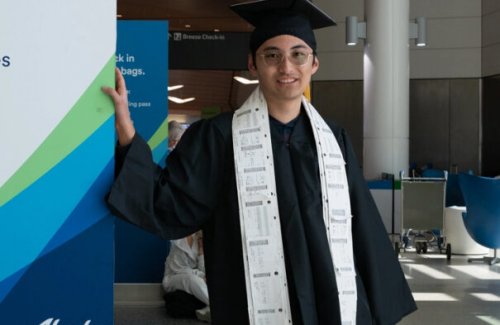
This LA Grad Student Flew Through an Academic Year to Save on Rent

A resourceful graduate student from Los Angeles has gained attention for his clever solution to cut down on housing costs while attending the University of California, Berkeley.

Known as Bill, he shared his story on Reddit in a post titled “I survived living in LA and commuting to Cal by plane over the past academic year to save on rent, AMA (ask me anything).”

Bill’s strategy was simple yet unconventional: he flew between Los Angeles International Airport (LAX) and San Francisco International Airport (SFO) multiple times a week for classes. Waking up early, he caught a 6 a.m. flight from LAX to SFO and then took the 8:30 a.m. train to reach Berkeley on time.

Despite the grueling nature of his commute, Bill approached it as an adventure rather than a burden. He never missed a class during the academic year.

Bill also managed to track his expenses, spending a total of $5,592.66 on flights between LAX and SFO. This included costs for train fares, parking, gas, inflight WiFi, and flights with different airlines.

Bill’s unique approach to saving on rent has impressed a lot of people, showing that creative solutions can help overcome financial challenges in pursuit of education.

Featured Image Source: 8NewsNow

IG ravthechef-png

News

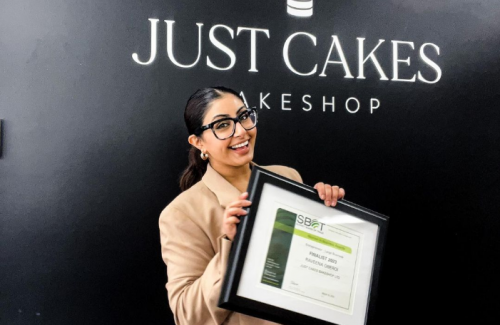
How This 29-Year-Old Entrepreneur Turned a Home Business into a South Asian Culinary Sensation

29-year-old Raveena Oberoi has successfully incorporated South Asian flavors into her business, Just Cakes Bakeshop.

Raveena’s passion for baking began during her high school years when she turned to the kitchen as an outlet for dealing with bullying. Inspired by shows like Food Network and Cake Boss, she developed a deep love for baking and crafting unique cake designs.

Starting as a home business, she faced challenges when she moved to Vancouver for her psychology studies at UBC, as she no longer had access to a kitchen. Undeterred, she commuted back to her hometown of Abbotsford every weekend to fulfill cake orders. After graduating in 2015, Raveena took a leap of faith and traveled to Paris to study pastry arts at Ecole Bellouet Conseil.

Upon her return, she opened Surrey’s first Just Cakes Bakeshop (JCB) in 2017.

Raveena’s hard work paid off, and today she serves as a judge on Food Network’s Wall of Bakers, operates two JCB storefronts, and supplies products to over 85 retailers in the province. Proudly representing the young South Asian community, she infuses nostalgic flavors into her creations, such as the popular cardamom dream mousse.

A significant milestone for JCB occurred in April 2023 when their signature cakes in a jar became available at all Blenz Coffee locations in British Columbia and Alberta. Raveena reflects on the remarkable growth of this product, going from making just 100 jars a month in her mother’s kitchen to producing close to 15,000 jars monthly from their dedicated facility.

Since its establishment in 2017, Just Cakes has experienced substantial growth, expanding its team to 30 employees and generating $2.2 million in revenue this fiscal year. The company’s innovation is exemplified by the introduction of Canada’s first cake jar vending machine, the Jar Bar, currently located at Burnaby’s Brentwood Mall and Abbotsford’s Sevenoaks Mall.

Featured Image Source: @ravthechef