Stories

July 4, 2023

SHARE:

Mai Hlee’s journey is a testament to the power of resilience and hard work.

Mai’s entrepreneurial spirit comes from her mother, who taught her life-long skills. Mai’s resilience is evident in her journey to paying off her student loans, living frugally, and raising a family of 6. She started her first online business documenting her journey on her blog where she shared savings tips to help others save too

Despite experiencing mental health challenges and social anxiety, she found strength in vulnerability and persevered to become a public figure in her community. Her tenacity and resourcefulness show that with hard work and determination, anything is possible.

THE HUSTLE STARTS EARLY

Born in a refugee camp in Thailand after her family fled the aftermath of the Vietnam War, Mai’s parents and older siblings swam across the Mekong River in the middle of the night to escape to Thailand, where they lived in a refugee camp for seven years. Mai was born in 1984 and when she was 3 years old, Mai and her family were accepted into the United States. Mai became the first in her family to receive a full public school education.

Mai learned to hustle at an early age. Her dad was a machine operator and made $6 an hour while her mother found odd jobs and became a seamstress while taking care of her and her other 8 siblings. Mai had to learn how to use a sewing machine at an early age so that she could help her mom. While she was sewing letters on college sweatshirts and hoodies alongside her mom, other kids her age were playing outside. “Now that I look back, I am so grateful for the life-long skills that my mom taught me. My entrepreneurial spirit comes from her,” Mai said.

TURNING ADVERSITY INTO MOTIVATION

When her parents were able to buy their first personal computer that she had to share with her siblings, she took the opportunity to learn how to code in HTML. And at the age of 12, she secured an internship at Ohio.com.

But despite how hard she worked, she still struggled financially in college. There was a time when she had no more than $5 in her pocket and faced the dilemma of using it to either buy gas or get a slice of pizza. You could say that she starved most days.

During her childhood, church people would knock on their door on weekends and bring giant, clear trash bags filled with donuts. Donuts that no one else wanted. It was one of her best memories as a child because she never got to eat sweets. Only to find out that all those years, she has been eating expired donuts. “I came home one night crying my eyeballs out and telling myself that one day I would never ever be poor again or allow my future children to experience what I did.”

FROM FRUGAL LIVING TO INFLUENCER SUCCESS 

After graduating from the College for Creative Studies with her Bachelor of Fine Arts in 2007, she already had a full-time job as a Web Designer lined up for her at an advertising agency. She used the money from her job to publish her own cultural Hmong magazine, with 10,000 in circulation at its peak, and eventually, she went to work for a startup company as a Frontend Developer. She took on side jobs, building websites, designing logos, and doing photography.

When she was pregnant with her first daughter in 2011, she still had over $50,000 in student loan debt, and was paying the bare minimum. She wasn’t taught or prepared to manage her own finances and her parents worked so hard to provide for a family of 11 that even they were stretched thin.

She made a promise to herself to pay off all her loans before her daughter started her own educational path. So she started to live as frugally as possible. She sold anything she had that was worth anything, learned how to extreme coupon. She documented her journey, shared deals and saving tips on a blog and on social media. She amassed a 170,000+ following on Facebook and 50,000 on Instagram.

Before the term Influencer even became popular, she was already working with brands like Nestle, Pampers, Kellogg’s, Walmart, and Sam’s Club. She was able to make multiple six-figures in passive income from Amazon, Google Adsense, and other sources. Eventually, she was able to pay off the full amount of her student loan, and even took her kids to Disney World twice.

Just last year, Mai received two scholarships and a fellowship to attend Harvard University and Michigan State University to further enhance her public speaking and leadership skills. This year, she became an honorary Ambassador and was chosen to travel to Japan to learn about the culture, economy and its people.

FINDING STRENGTH IN VULNERABILITY

Despite her digital and online success, she was diagnosed with PTSD due to a harrowing situation that caused her to have social anxiety and mental health problems, including self-doubt. “Meeting my husband saved me. While others pointed their fingers and laughed at me, he was my protector and my biggest supporter.”

While Mai was in college, she entered a Hmong pageant and became the Miss Lao-Hmong Wisconsin in 2004 without any experience or formal training. The pageant became a platform for Mai to advocate for her community while bringing awareness to the Hmong genocide in Laos. She joined two more pageants after that but shortly after the last pageant and in the summer of 2008, Mai became the victim of a cyber stalker.

Her perpetrator used social media to harass, terrorize and sabotage her life. He had spent weeks gathering images of her, from creating a fake social media account to friending her, lifting and gathering photos of her, and making video collages with explicit messages to taunt her. 

Mai couldn’t trust anyone around her because she had no idea who it was. She just knew it had to be someone who had been watching her for a long time. She reached out to the police but they were unable to identify the cyberstalker.

One night, she decided to use her technical background in Web Design to track her cyber stalker, and the perpetrator was eventually found and arraigned. However, Mai faced backlash from her community when they found out her cyber stalker was a Hmong man. Relatives that supported her initially turned against her, and the woman she had interviewed for her magazine’s front cover dropped out. Mai’s parents were pressured by the Hmong elders to drop the case. Traditionally, Hmong girls are taught to be quiet, timid, and domesticated at an early age.

But Mai was their daughter, so they supported her. Mai had to face her stalker in court and be judged, after a year of waiting for her case to be brought to a trial because the cyberstalker did not budge or take a plea.

The case lasted one week, and the jury found the stalker guilty.

THE LIGHT AT THE END OF THE TUNNEL

After a decade of healing and overcoming her anxiety and fear of being around people, she was voted by the people to be a public figure in her community. Mai now oversees a more than a billion dollar annual budget, attends conferences, public events and is proud to share her experiences with others.

Overcoming PTSD and her mental health challenges made Mai a more resilient person. After the cyberstalking, becoming an outcast in her community, and facing a grueling trial, she looked back on her life and what she went through and realized that she came out as a stronger person. There was nothing anyone could say or do that would hurt her. She had been at the lowest of the low and now, there was nowhere else to go, but up.

During the trial, Mai met her now husband, Adam. Although he knew what happened to Mai, his kindness and support for her never wavered. While everyone was quick to judge her and cast her away, he protected her.

Mai’s parents didn’t live long enough to see her success, and her husband lost his parents when he was younger, so raising their family has been challenging.

But despite all the hardships she has been through, Mai has overcome adversity and continues to thrive in her personal and professional life through hard work and determination.

“When my darkest clouds lifted, I saw just how beautiful the sunlight really was. There is a light at the end of the tunnel.” -Mai

TIPS ON PASSIVE INCOME

  1. Define your niche. Usually, it’s what you love to do or what you’re very interested in. For me, it was personal finance.
  2. Be consistent. Just like a full-time job, show up on time and schedule your tasks and get them done, consistently  
  3. Show up as your true self and you’ll build the right audience –people who are eager to know you and be in your circle
  4. Pitch to brands that you’re passionate about. I would look at things I already have in my house and look up the brand’s story, the founders, and identify what I can bring to the table to make them even better
  5. Automate or outsource anything that you don’t like to do so that you can focus on the things that spark your passion

ADVICE FROM ONE HUSTLER TO ANOTHER

Don’t ever let people tell you that you can’t do it. Don’t let people define your future. Listen to your intuition, that inside voice that is telling you what feels right. When you get rejected by clients or hiring managers, ask them what you can do to be better next time and the kind of person they’re looking for. 

Forge a different path: when people are “Zig-ing” –you “Zag.”  

CONNECT WITH MAI

Facebook: Mai Hlee

Instagram: @maihleex

Website: maihleex.com
Related Articles

india today-jpg

News

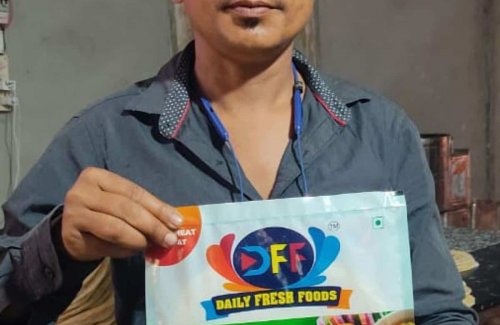
Diganta Das’ Journey from being a Daily Wage Worker to Paratha Business Owner

Diganta Das’ journey to becoming a successful food entrepreneur in Assam from a humble beginning as a daily wage worker despite facing numerous hardships is a testament to the power of determination and perseverance.

Originally from Gohpur town in Assam, Diganta had different jobs to support his family. He worked as a cook, security guard, and even in a coal mine. But he didn’t give up on his dreams.

One of Diganta’s friends started a paratha business in Andhra Pradesh, and Diganta joined him to handle the marketing. Through hard work and dedication, he not only succeeded in the marketing venture but also helped expand the business.

Eventually, with his love for travel and cooking, he was able to start his own paratha business. He created DFF (Daily Fresh Food), offering tasty parathas that people can enjoy on the go. Today, DFF is well-known for its delicious ready-to-eat parathas.

It was not an easy journey for Diganta. He faced financial struggles and at one point, even got partially paralyzed in an accident. But he didn’t lose hope and he kept going.

Diganta’s journey shows that with enough determination and courage, anyone can overcome challenges and achieve their dreams.

Featured Image Source: India Today

ezgif.com-webp-to-jpg (2)-jpg

News

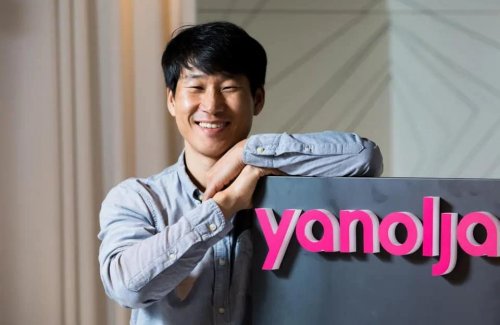
Lee Su-jin’s Rise from Motel Janitor to Billionaire Entrepreneur with Yanolja

Lee Su-jin, the founder and chairman of Yanolja, one of the world’s leading hotel booking sites, has a remarkable journey from being a motel janitor to amassing a net worth of $1.2 billion. 

Yanolja, a Korean phrase meaning “Hey, let’s play,” began its operations in 2007 and quickly evolved into a popular travel app, boasting over 57 million downloads worldwide.

Lee had a challenging upbringing, losing his parents at a young age and spending most of his childhood with relatives. At the age of 23, Lee found himself working as a janitor at a love hotel, which offers short-term accommodations at hourly rates.

But despite the difficult circumstances, Lee saw an opportunity to save money and invest in stocks. He even attempted a salad business, which unfortunately didn’t work out. However, these experiences laid the groundwork for his future in the hospitality industry.

The love hotel business faced societal stigmas and challenges in the early 2000s, particularly with the passage of an anti-prostitution law in South Korea in 2004. Lee aimed to make love hotels more appealing to a broader audience, emphasizing safety, convenience, and affordability, eventually skyrocketing Yanolja’s success.

The company achieved “unicorn” status in 2019, reaching a valuation of over $1 billion during a funding round. SoftBank Vision Fund 2 further bolstered Yanolja’s growth by acquiring a minority stake for $1.7 billion at a $6.7 billion valuation. Speculation about an IPO arose, but the company prioritized the industry’s post-pandemic recovery.

Beyond its travel booking services, Yanolja expanded its offerings to include Yanolja Cloud, an AI-powered software for hospitality and leisure platforms. Currently, its combined software platforms serve 19 million users, facilitating booking, travel, and property management operations.

 As Yanolja continues to make strides in the global travel industry, its impact extends far beyond its bottom line, transforming an entire sector and enriching the experiences of travelers worldwide.

Featured Image Source: Forbes

ezgif.com-webp-to-jpg (1)-jpg

News

Anjali Barman is the Only Indian Woman at Stanford University’s Special Program and This is How

From a small town called Raniganj in Bengal to the prestigious Stanford University, Anjali Barman’s journey is truly amazing.

She became famous for making an app called ‘Ema’ that lets people chat with their friends. And now, she’s the only Indian woman chosen for the special program at Stanford University.

Anjali kindly shared how she got into Stanford with Local 18 so that other Indian students can learn from her experience. According to her, Stanford has two types of classes for executives. One is for individuals who want to learn something specific. They apply on the university’s website, and if they’re chosen, they get a notification. Some short courses can also be done online.

The second type is for bosses like CEOs and directors. Their organizations apply for them to go to Stanford. Stanford also picks some cool start-up companies from all over the world and invites them. Anjali’s start-up was one of the lucky ones.

Anjali got the invitation because her company did really well. It became famous in other countries, not just India. Stanford noticed how quickly her company grew, and they wanted her to join their program.

Stanford will pay for everything, including her research, study costs, and even her stay there. Anjali is leaving for California soon, and her story shows us that with hard work and smart ideas, we can achieve big things no matter where we come from.

Featured Image Source: Indian Express Bangla

erik (1)-jpeg

Stories

How Erik Sun’s Unwavering Passion for Food Led Him to Entrepreneurship

Erik Sun is a lot of things. More than a businessman, he is a spearfisher, hunter, chef, and now farmer of the finest meats.

Erik is part of restaurants Bestia and Bavel located in Los Angeles, head chef of Intercrew in Koreatown, and 2 more restaurants in San Francisco. The focuses of the restaurants are fun, vibrant vibes with original recipes and unique takes on food.

He is also the founder of Pursuit Farms, perhaps the most interesting of his ventures yet. What started off originally as direct purchasing at the Japanese Auctions to import Wagyu Beef has transformed into a full farm that will support his most anticipated Asian BBQ with Mangalitsa Pork (think Iberico, but even bigger and more dynamic), and fat-tail sheep (so legendary, the first three US Presidents had flocks of these sheep).  

When it comes to ingredients, Erik only chooses or raises the best. 

And to make his pursuit of food even more delicious, he recently launched his new business, XXHEAT – a high-quality seasoning powder to take your food to the next level.

He learned some of the ingredients of this powder from a master chef from Sichuan and decided to blend 5 different chilies and 2 of the highest quality Sichuan peppercorns available in all of Asia.

ERIK AND HIS LOVE FOR SPEARFISHING

Erik Sun grew up in Orange County, California, where he discovered his deep passion for spearfishing and the ocean’s treasures.

What started as a personal hobby soon became a business venture, as he began making spearguns in South Africa and connecting with fellow underwater hunters worldwide. Erik’s love for spearfishing allowed him to experience the physical and mental aspects of diving in a single breath, with each day on the water offering new adventures.

His inspiring story showcases how pursuing one’s passion can lead to remarkable achievements and a lasting impact on a global community.

CONNECTIONS MADE OVER FOOD

Erik Sun’s journey into the food business began with a memorable encounter at a renowned Los Angeles restaurant helmed by the esteemed Italian chef, Gino Angelini. Captivated by the exceptional dining experience and the sommelier’s generous pouring of wine, Erik felt compelled to reciprocate the hospitality in his own unique way.

Determined to express his gratitude, Erik made a bold promise to the sommelier: “I’m going to bring you some fish.” With that, he embarked on a mission to deliver an assortment of seafood delicacies, including lobster, scallops, scorpionfish, and octopus.

When he presented the bountiful catch to the sommelier, the sommelier said, “Show up for dinner tomorrow.” Erik told him that those were for him but the sommelier insisted on inviting him over saying, “If you don’t show up for dinner, you’re never allowed back here.” He prepared an extraordinary feast using the ingredients Erik had brought and they have been friends ever since.

The sommelier turned out to be Ori Menashe. And when Ori expressed his desire to open his own restaurant, Erik was the first to pledge his support, eventually becoming a partner of Bestia Restaurant, and occasionally cooking there.

CHALLENGES THAT ERIK FACED

Erik encountered a lot of challenges while establishing his businesses, particularly in the demanding landscape of San Francisco. The process of obtaining permits and navigating the intricacies of building regulations proved to be a daunting task. The estimates provided by architects and project managers fell significantly short of the actual time required to transform a small coffee shop into a larger restaurant.

To compound matters, the unexpected arrival of the COVID-19 pandemic brought construction to a grinding halt, and Erik dealt with some fraudulent contractors. Shifting his focus away from construction woes, he channeled his energy into enhancing the customer’s journey and creating memorable dining moments.

ABOUT XXHEAT SEASONING

XXHEAT is Erik’s latest venture, introducing a distinctive blend of seasonings that promises to elevate the flavor profiles of various dishes, particularly when used on the grill. The inspiration for this unique blend came from Erik’s desire to infuse meats, including Sichuan fried chicken, with boldness and aromatic richness. The reception of XXHEAT has been overwhelmingly positive, with its captivating fragrance and exceptional taste capturing the attention of culinary enthusiasts.

Erik uses XXHEAT on 烧烤, the Chinese term for barbecue skewers. Unlike many alternatives that offer one-dimensional flavors, XXHEAT boasts a blend of the top two peppercorns and a harmonious combination of five blended chilies.

ERIK’S ADVICE TO FELLOW HUSTLERS WHO WANT TO START A BUSINESS

  1. Start and figure it out – There’s always going to be naysayers but if you believe in it, give it a shot and live with no regrets. Problems will come? Figure them out. Not starting is a worse problem. It’d be like playing poker and never playing a hand, just losing your ante every round.
  1. Research and Development – For me, eating is my “research” and then getting back to the kitchen is the “development.” Try all the top that’s available in your sector and figure out how to make it better.
  1. Customer Service – Focus on your customers and when you get negative feedback, do your best to fix it. At one point, we had a lot of shipping issues and UPS / Covid-related delays. Turning a bad situation into good is powerful and having people who rave about your company/service will keep you in business.

CONNECT WITH ERIK

Pursuit Farms Website: pursuitfarms.com

Pursuit of Food Website: thepursuitoffood.com

XXHEAT Website: xxheat.com

Instagram: @pursuitoffood @pursuitfarms @xxheatofficial